Chetan Mudrabettu

7.7K posts

Chetan Mudrabettu banner
Chetan Mudrabettu

Chetan Mudrabettu

@chetanmudrabett

Physician, Nephrologist, PGI Chandigarh Alumnus

Hubli, India Katılım Mayıs 2011
709 Takip Edilen637 Takipçiler
Chetan Mudrabettu retweetledi
Ahmed Bennis MD 🫀
Ahmed Bennis MD 🫀@drbennisahmed·
Iron deficiency and risk of heart failure and cardiovascular events in CKD: Insights from the ASCEND-ND trial ID defined by low transferrin saturation is associated with increased risk of heart failure and cardiovascular death in CKD academic.oup.com/eurjhf/advance…
Ahmed Bennis MD 🫀 tweet media
English
0
12
24
1.2K
Chetan Mudrabettu
Chetan Mudrabettu@chetanmudrabett·
Fascinating!!! Empirically, this territorial hypothesis correlates with the fact that people with impairment in one sense organ have a heightened perception in the others..... #Dreams #Neurosciences
Ihtesham Ali@ihtesham2005

A Stanford neuroscientist published a paper a few years ago that quietly answered one of the oldest questions in human history, and almost nobody outside his field has heard of it. The question is why we dream. Not what dreams mean. Why they exist at all. Why your brain spends a third of its sleep hallucinating images instead of just resting like every other organ in your body. His name is David Eagleman. He runs a lab at Stanford. The paper is called "The Defensive Activation Theory", and the moment you read it the explanation collapses every other theory you have ever been taught about dreams. Freud said dreams were repressed desires. He was guessing. He had no brain scans. He had no electrodes. He had a couch and a notebook and a century of credibility that nobody has been able to fully scrub off the subject since. Modern neuroscience replaced him with the memory "consolidation theory". The idea that dreams are your brain sorting through the day, filing things away, deciding what to keep. That story is partially true. Sleep does consolidate memory. But it does not explain the single strangest thing about dreams, which is that they are almost entirely visual. You do not dream in pure sound. You do not dream in taste. You do not dream in smell. You dream in pictures. Vivid, detailed, often impossible pictures that activate the back of your brain so hard a scientist scanning you would think your eyes were wide open. Eagleman started from one fact almost nobody outside neuroscience knows. The brain is territorial. Every region holds its turf through constant electrical activity. The moment a region goes quiet, its neighbors start invading. They take the silent territory and reassign it to themselves. This is called "cortical takeover", and it is not slow. It is not a long process measured in years. In experiments where adults are blindfolded, the visual cortex starts processing touch and sound within an hour. One hour of darkness, and the territory is already being annexed. In congenitally blind people, the visual cortex is fully repurposed. It runs language. It runs hearing. It runs touch. The hardware never went unused. It was just reassigned to whoever showed up first. Now sit with the implication of that for a second. Every night, when you close your eyes and fall asleep, the sun has set. The planet has rotated. The visual cortex, which takes up roughly a third of your entire cortex, is suddenly receiving zero input. For eight hours. Every single night. For your entire life. And evolution has shaped your brain inside a planet that has been spinning into darkness for billions of years. If cortical takeover happens in an hour, the visual cortex should have been lost a long time ago. Stolen by hearing. Stolen by touch. Reassigned by morning. Humans should have evolved into a species whose vision works fine during the day and then degrades every time the sun goes down because the territory keeps getting renegotiated overnight. But that did not happen. Vision works the moment you open your eyes. Which means something is defending the territory while you sleep. Eagleman's claim is that dreams are that defense. Every 90 minutes through the night, a precise burst of activity fires from the brainstem into the visual cortex. Pontine-geniculate-occipital waves. PGO for short. They are anatomically aimed. They are not general arousal. They are a targeted volley of signal launched directly at the back of the brain where vision lives. The cortex lights up as if it is receiving real images, and you experience that artificial activation as a dream. The bizarre narrative your conscious mind invents around it later is just your brain trying to make sense of the noise. The dream is not the point. The dream is the side effect. The point is keeping the territory occupied. The evidence for this is the part that should haunt you. Newborns spend roughly 50% of their sleep in REM. Adults spend twenty. Old adults spend fifteen. The amount of dreaming you do tracks almost perfectly with how plastic your brain is. Newborns have the most plastic brains on earth. Their visual cortex is in the highest danger of being overrun by neighboring senses while it develops. So evolution gave them an enormous defense budget. As you age, your brain becomes less plastic, the takeover risk drops, and the defense system scales down accordingly. Eagleman and his co-author ran the same correlation across twenty-five primate species. The more plastic a species' brain, the higher the proportion of REM sleep. The relationship held across the entire primate family tree. Plasticity and dreaming move together. They are two halves of the same evolutionary equation. A species that ranks higher on flexibility and learning also dreams more. A species that is born ready to walk and survive dreams less. Plasticity is the asset. Dreaming is the insurance premium. And the prediction the theory makes is the one that quietly closes the case. Of all your senses, only one is disadvantaged by darkness. You can still hear in the dark. You can still feel in the dark. You can still smelll and taste in the dark. The only sense that depends on light is vision. Which is exactly the sense your dreams are made of. The defense system is targeted at the only territory that is actually vulnerable while you sleep. Memory consolidation is real. Emotional processing is real. Your brain does do those things at night. But Eagleman's argument is that those functions piggyback on a much older system whose original job was simpler and more brutal. Keep the lights on inside the visual cortex while the planet is dark, or lose it. For thousands of years, people have asked what dreams mean. Prophets wrote about them. Poets wrote about them. Freud built a discipline on them. None of them had access to the actual answer, which is that dreams may not mean anything in the symbolic sense at all. They may be the visible flicker of a defense system running in the background, the way a screen saver protects a monitor by keeping the pixels moving even when nobody is looking. The strangest thing about the theory is how cleanly it explains why dreams feel so real. Your visual cortex cannot tell the difference between a PGO wave and an actual photon. It is the same hardware lighting up the same way. The cortex does its job. It builds an image. Your conscious mind, half-awake, wraps a story around it and calls it a dream. You are not seeing your subconscious tonight. You are watching your brain defend a piece of itself from being stolen. Every animal that has ever closed its eyes on this planet has done the same thing.

English
0
0
0
18
Chetan Mudrabettu
Chetan Mudrabettu@chetanmudrabett·
@drrbalu @NITIAayog @svym Congratulations 🎊 Sir!!! @NITIAayog will surely benefit greatly from your vast experience of the lived reality of our most undeserved popularion. Wishing you a great tenure!!
English
0
0
0
22
Dr R Balasubramaniam
Dr R Balasubramaniam@drrbalu·
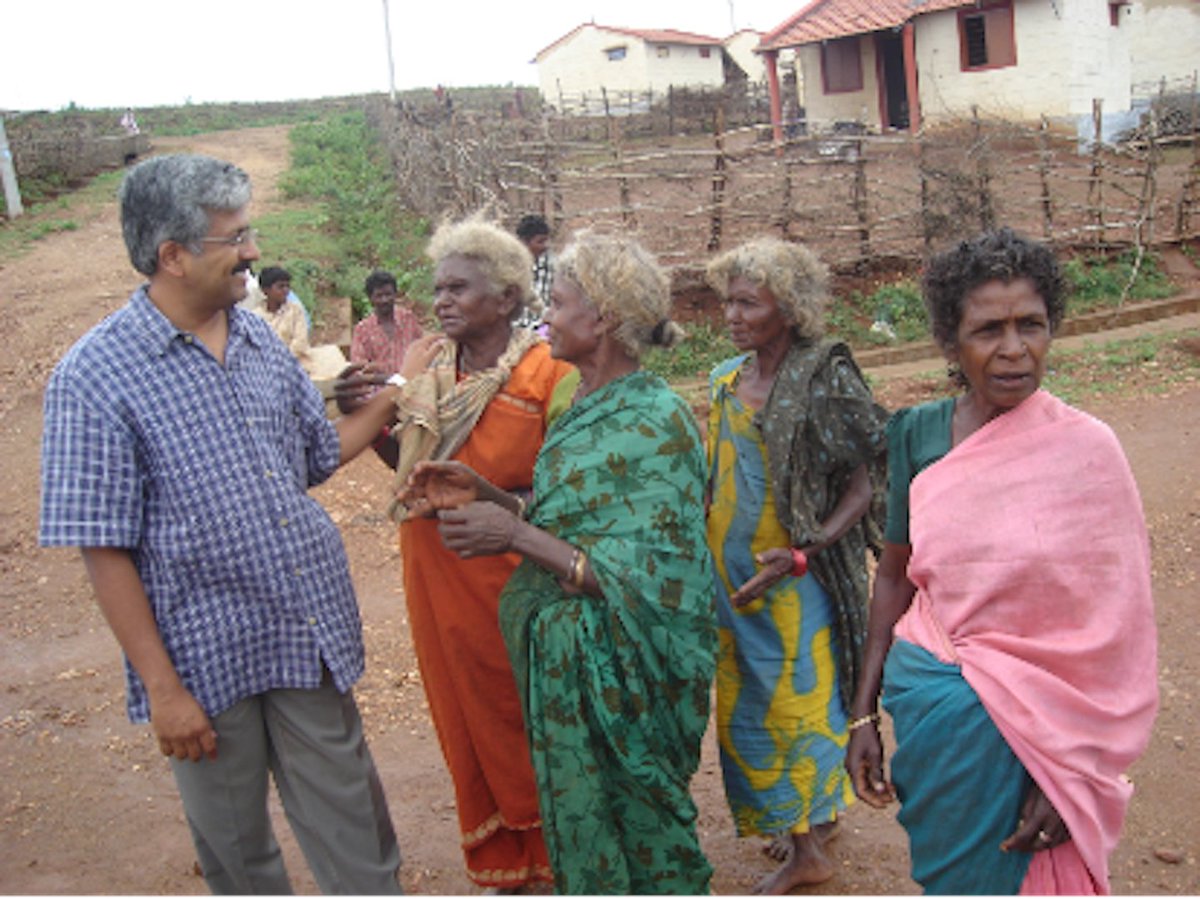
Took charge this week as Member of @NITIAayog From 40 years in the grassroots & forests to India's highest policy making body has been quite a journey. The conviction that I had when i founded @svym at 19 is the same conviction I carry into this responsibility today.
Dr R Balasubramaniam tweet mediaDr R Balasubramaniam tweet media
English
18
17
104
4.1K
Chetan Mudrabettu retweetledi
The Seeker
The Seeker@TheSeeker268·
What happened during COVID, from 2020 to 2026, will remain as one of the greatest information manipulation scandals in human history. But the men who oversaw it? They continue as if nothing has happened. - Proximal Origin authors still cash federal checks. - Francis Collins keeps giving medical talks. - Anthony Fauci is now trying his hand at theater. - Jeremy Farrar, the back-channel fixer, is still the Assistant DG for Health Promotion and Disease Prevention at the WHO. - And Peter Daszak simply rebranded, now peddling the same shit through an entirely new outfit. They got David Morens. Good. Maybe next time, the fear of raid and prosecution will make some hesitate. But those who orchestrated it? (and yes, all of them explicitly or implicitly collaborated to hide the truth) Nothing. They simply moved on. No consequences. No accountability. No reckoning.
English
43
238
876
47.2K
Chetan Mudrabettu
Chetan Mudrabettu@chetanmudrabett·
@serioustaurean Sigh.... ಮನ್ನಣೆಯ ದಾಹ ಎಲ್ಲಕುಂ ತೀಕ್ಷ್ಣತಮ explains the greatest Cardiologist's desire? I guess your mentor was either Dr HSB or Dr AG, Sir??
English
0
0
0
53
Somalaram Venkatesh
Somalaram Venkatesh@serioustaurean·
Wrong place wrong time! June 2002. The very first drug eluting stent was being released commercially across the country. Stent was called Cypher (Arabic word sipher means Zero - zero reblocks seen in Rapamycin trials) My mentor, the most prolific PCI exponent was supposed to implant the first stent in the region in Chandigarh. We waited for the stent to arrive with the patient on table. Finally it did, at 5pm. We then heard that the greatest cardiologist of the country had to successfully implant the first one before others could! THE SECOND PLACE DOESN’T REALLY COUNT!
gaut@0xgaut

You’re telling me a guy Ran a 1:59:41 marathon On his debut with the marathon distance And finishes second

English
2
0
19
2.1K
Chetan Mudrabettu retweetledi
Ahmed Bennis MD 🫀
Ahmed Bennis MD 🫀@drbennisahmed·
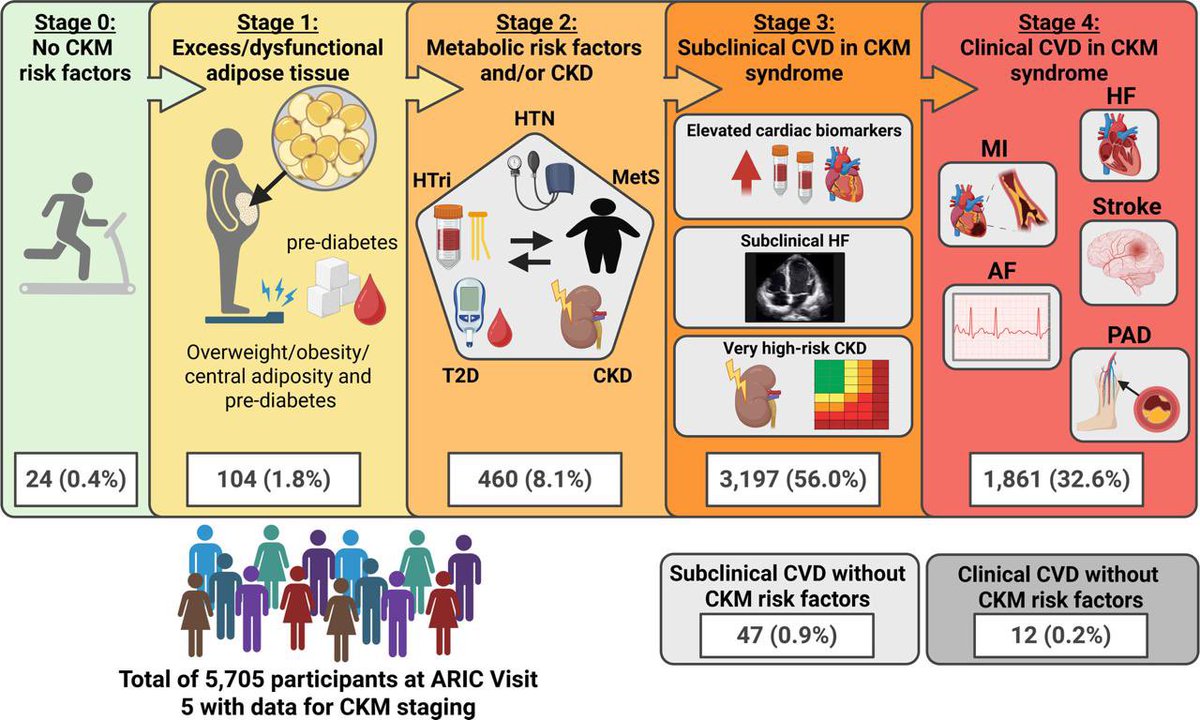
Cardiovascular–Kidney–Metabolic Syndrome Stages, Echocardiographic Characteristics, and Heart Failure Risk: The Atherosclerosis Risk in Communities Study Higher CKM stage was strongly associated with a stepwise increase in incident heart failure (HF) risk, with stage 4 conferring markedly greater HF incidence than earlier stages. @CircHF @CircAHA @JavedButler1 @mvaduganathan @ShahzebKhanMD @HSkouri @ShelleyZieroth @DrMarthaGulati @hfcollaboratory @HFA_President ahajournals.org/doi/10.1161/CI…
Ahmed Bennis MD 🫀 tweet media
English
1
21
46
3K
Chetan Mudrabettu retweetledi
Indian Society of Nephrology
@isn_india is organising a webinar on Advances in Podocytopathy in collaboration with ISGD. The webinar is on 29th May, from 6.30 PM onwards IST. Learn from experts across the world You can register for the webinar by clicking the registration link: in.eregnow.com/ticketing/regi…
Indian Society of Nephrology tweet media
English
1
17
22
1.5K
Chetan Mudrabettu retweetledi
Hans-Joachim Anders
Hans-Joachim Anders@hjanders_hans·
Now open access in @NDTsocial UACR and UPCR with kidney failure: a pooled analysis of clinical trials 🧐UACR and UPCR are robust predictors of kidney failure, but UACR has stronger associations, particularly in CKD+diabetes. ▶️academic.oup.com/ndt/article/do…
Hans-Joachim Anders tweet media
English
0
14
36
1.7K
Chetan Mudrabettu retweetledi
Vivekanand Jha | विवेकानन्द झा
This dropped just now - ➡️Creatinine-based eGFR equations overestimate kidney function in Indians. ➡️Recalibrating EKFC with Indian Q and K cut bias to near zero. ➡️48% of patients reclassified to a lower stage. ➡️More work needed before rollout. doi.org/10.1016/j.ekir…
Vivekanand Jha | विवेकानन्द झा tweet media
English
2
21
32
1.8K
Chetan Mudrabettu retweetledi
Shikha Wadhwani
Shikha Wadhwani@SWadhwaniMD·
🎉🎉🎉Historic day for the #FSGS community— the FDA has fully approved Sparsentan as the first drug for patients with FSGS!! And in addition to adults, it’s approved for children ages 8 and over too 🙌 Special shout out to the #PARASOL ☂️ project that played a pivotal role in defining endpoints for FSGS trials! So proud to be a part of this amazing community (& former investigator for the DUPLEX trial). And grateful my patients now have a therapy to treat a devastating kidney disease 🙏🏼 @ISGDtweets @nephcure @LauraMarianiMD @ASmith_Stats @mehelmuth @KretzlerM @rheault_m @kirkcampbell streetinsider.com/Business+Wire/…
English
6
38
90
5.1K
Chetan Mudrabettu retweetledi
NDT
NDT@NDTsocial·
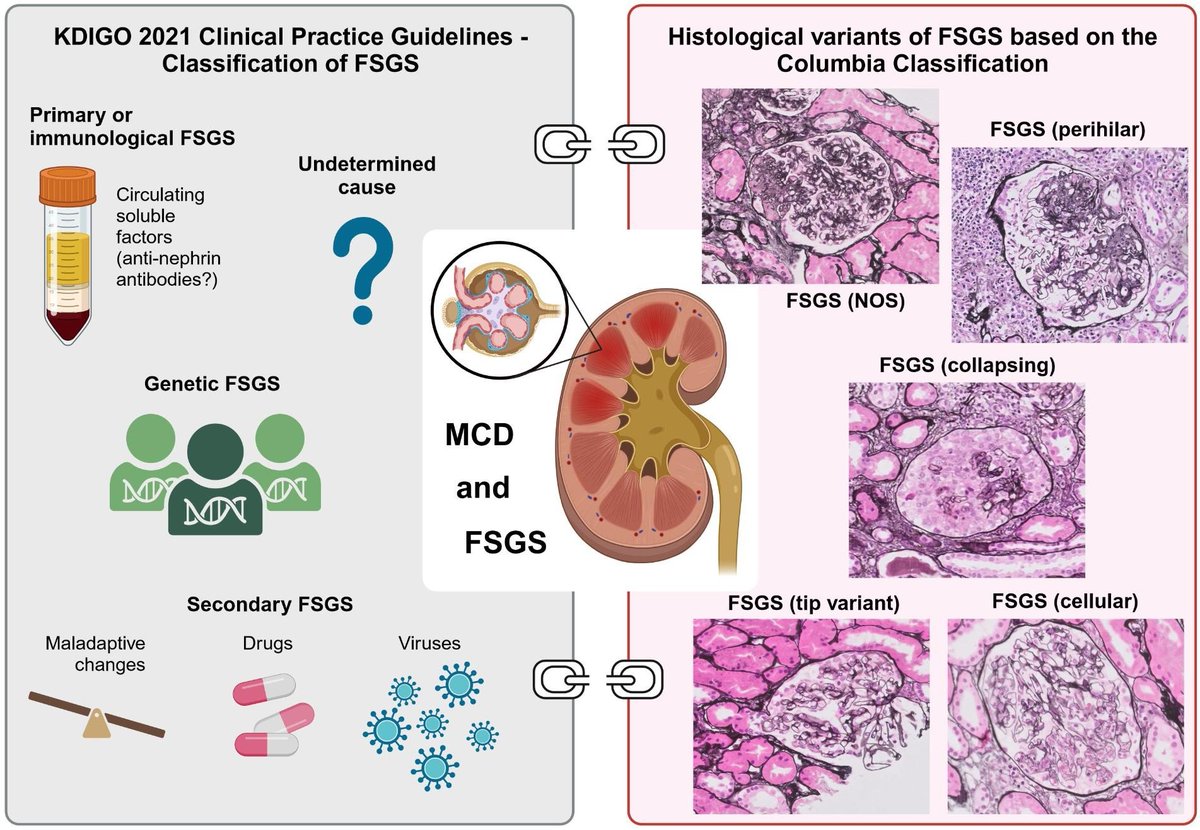
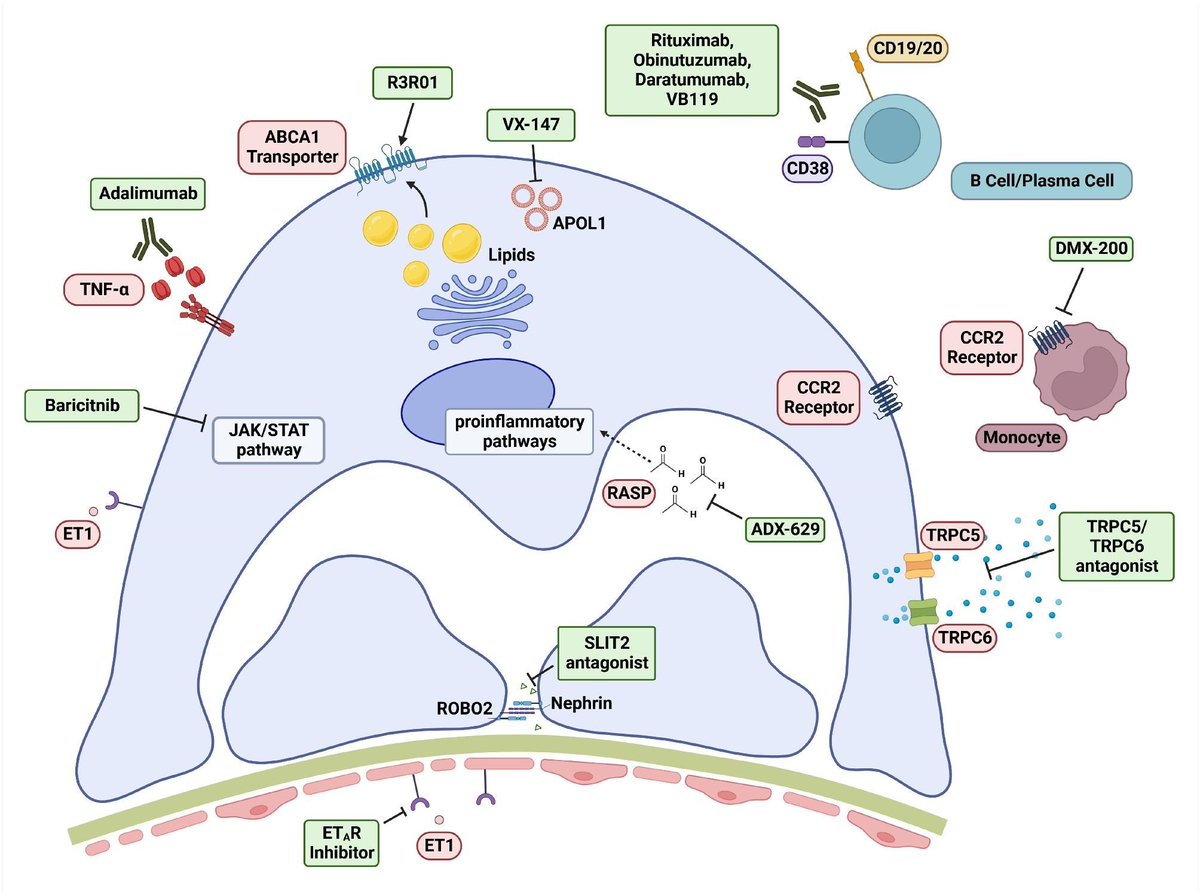
Management of adult patients with podocytopathies: an update from the ERA Immunonephrology Working Group 🆓doi.org/10.1093/ndt/gf… @ERAkidney
NDT tweet mediaNDT tweet mediaNDT tweet mediaNDT tweet media
English
0
89
204
11.4K
Chetan Mudrabettu retweetledi
KIReports
KIReports@KIReports·
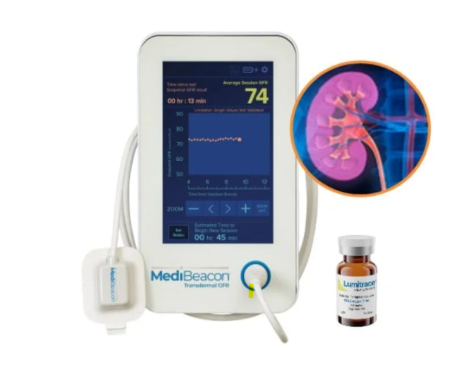
1/ Hey #NephTwitter!👋 We’re back with a fresh #XTorial We spend half our lives worrying about how bad creatinine is.. then keep using it anyway. What if we could measure GFR at the bedside - no serial blood samples? Let’s talk transdermal GFR (tGFR). #MedTwitter @ISNkidneycare
KIReports tweet media
English
3
32
61
6K
Chetan Mudrabettu
Chetan Mudrabettu@chetanmudrabett·
Interesting perspective!! It reflects all the way down in the remuneration drawn by Doctors and other health care workers too!!!
Nithin Kamath@Nithin0dha

I recently had dinner with Dr Devi Shetty, the founder of Narayana Hospitals. For those who don't know him, he's the guy who figured out how to do open heart surgery for a few hundred dollars when the same procedure costs a bomb in the US. Narayana has 18,000 beds across India, and if you ask most middle-class people in Bangalore about it, they'll speak highly of it. There was one thing I kept thinking about over and over again after meeting him. Narayana's market cap is around ₹38,000 crore. Now compare that to pretty much any half-decent financial services business in India, and it'll be valued more than that, including Zerodha. A brokerage, worth more than a hospital chain, that has probably saved hundreds of thousands of lives. I get the arguments. If you're a fund manager/analyst, you can immediately explain it away using margins, capex, asset-light vs asset-heavy, and all that, and I'm not saying the market is wrong. But it's still a strange world we've built, where the businesses closest to money get valued the highest, and the ones doing the hard and essential things get priced like boring utilities. A hospital carries physical infrastructure, enormous liability, thin margins and the actual weight of keeping people alive. And somehow that's worth less than a platform for buying and selling stocks. I don't have a clean take on this. All of this just felt odd. Ps: Nothing here is investment advice. For that, go to @zerodhavarsity

English
0
0
0
79