CryptoProphet

231 posts

CryptoProphet banner
CryptoProphet

CryptoProphet

@crptprpht

Passionate about crypto and always on the lookout for promising projects to invest in. Focused on innovation and long-term potential. #Crypto #Blockchain

Katılım Kasım 2024
94 Takip Edilen72 Takipçiler
CryptoProphet retweetledi
Chain INK
Chain INK@0xchainink·
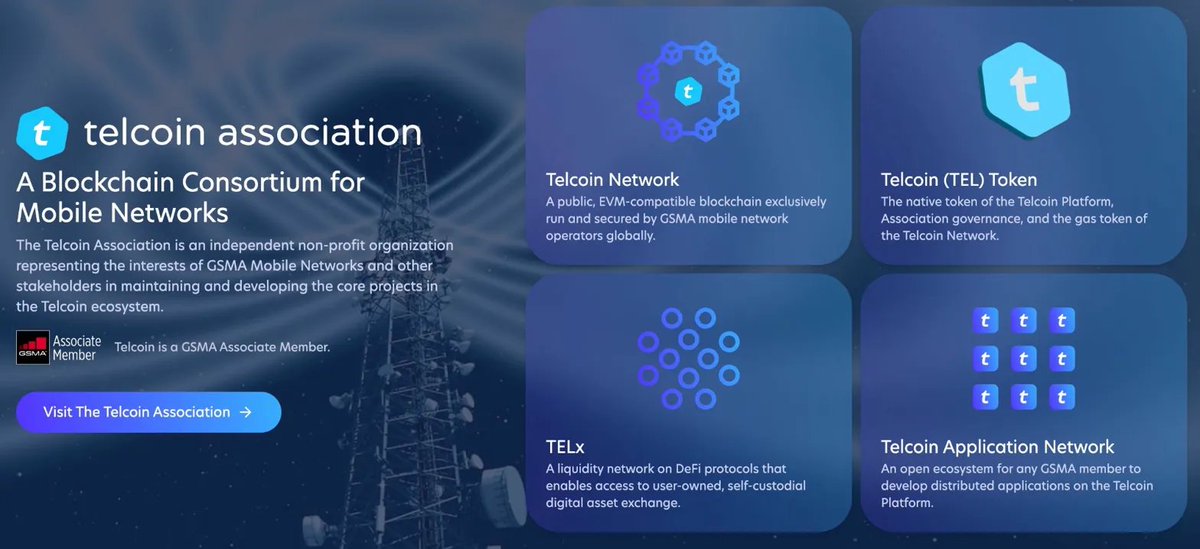
$TEL : Review 📜 What if the first federally regulated crypto bank in America was built not by Wall Street bankers but by telecom engineers who spent 20 years connecting the world's unbanked to mobile networks? Meet Telcoin - a blockchain-powered mobile financial platform that just made U.S. banking history. First Digital Asset Depository Institution charter in America. Bank-backed eUSD stablecoin. Connected to Federal Reserve payment rails. Remittances to 20+ countries at under 2% fees. An EVM-compatible L1 validated by mobile network operators. GSMA member since 2018. Regulated in 6 countries. Targeting the $700 billion remittance market through the phones already in people's pockets. Let's explore how Telcoin is building the Internet of Money. 👇 ⚪ Telcoin at a Glance Telcoin (TEL) is a blockchain-based fintech project that integrates telecommunications and regulated banking to deliver accessible, low-cost financial services to mobile users globally. The platform partners with mobile network operators to distribute wallet services, cross-border remittances, and token swaps. The $TEL token has a maximum supply of 100 billion with ~96 billion in circulation (~96%). TEL functions as the gas token for the upcoming Telcoin Network, staking asset, and governance token. As of May 2026, $TEL trades around $0.003 with a market cap of approximately $280M. ATH was $0.064 in May 2021. Telcoin Digital Asset Bank received a final charter from Nebraska in November 2025, making it the first regulated digital asset depository institution in the US. Marketplace Insight: Telcoin CEO participated in a private MWC roundtable hosted by Accenture and GSMA alongside executives from Mastercard, Huawei, and Standard Bank, discussing Accenture's report predicting up to $13 trillion in transaction volume could shift from traditional banking to alternatives like telecom finance and stablecoins by 2030. The Nebraska bank charter, eUSD stablecoin, and Telcoin Network mainnet make TEL one of the most regulatory-forward projects in crypto. ⚪ Mission Telcoin's mission is to provide fast, affordable, and user-owned financial products to every mobile phone user in the world. The company's mission is to provide financial products to mobile phone users worldwide, targeting the estimated 1.7 billion unbanked individuals. By leveraging existing telecom infrastructure (5 billion+ subscribers globally), Telcoin bypasses the need to build new distribution networks, instead turning mobile operators into the on-ramps for decentralized finance. 🔵 A Brief History Telcoin operates as a platform that combines mobile telecommunications networks with blockchain-based financial services. Founded in July 2017 by Paul Neuner, who has over 20 years of experience in telecommunications and cybersecurity, and Claude Eguienta, the company started in Singapore as Telcoin Pte. Ltd. Paul Neuner's background in telecommunications, cybersecurity, and telecom fraud management, having founded Mobius Wireless Solutions, is central to Telcoin's strategy of partnering with mobile network operators to reach a broad user base. Eguienta brought deep technical expertise from distributed systems and crypto startups including CyberAgent and Kabotip. In 2018, Telcoin became the first blockchain firm to join the GSMA, the global telecom industry body, signaling serious intent to operate within the existing telecom ecosystem rather than against it. By 2020, Telcoin had integrated with mobile money services across 20+ countries, maintaining fees under 2% while traditional money transfer services charge 6-10%. The Telcoin Wallet launched on iOS and Android, enabling users to store, send, and swap 100+ digital assets. In 2021, the company raised $10 million in a Series A funding round to support expansion. Telcoin also supported the Nebraska Financial Innovation Act, which created the framework for digital asset bank charters. Everything changed in 2023-2024 as Telcoin pivoted from pure remittances toward comprehensive digital banking. The company secured regulatory licenses across six countries: US (Money Services Business), Singapore (Major Payment Institution), Canada, Australia, Lithuania, and Argentina. In November 2025, Telcoin Digital Asset Bank received a final charter from Nebraska, making it the first regulated digital asset depository institution in the US. The bank can take deposits, connect to Federal Reserve payment rails, and issue the FDIC-insured eUSD stablecoin. TEL surged 95% on the announcement. Earlier in 2025, Telcoin secured $25 million in additional funding specifically to capitalize the Digital Asset Bank. The Adiri testnet launched in December 2025, with full mainnet launch expected in 2026. By May 2025, Telcoin achieved SOC 2 Type I certification, validating its security infrastructure. In March 2026, CEO Paul Neuner joined a Mobile World Congress roundtable alongside Mastercard, Huawei, and Standard Bank executives discussing the $13 trillion payment migration opportunity. 🔵 Ecosystem Narrative Telcoin's ecosystem is built on a simple but powerful insight: 5 billion people already have mobile phones. Instead of building new infrastructure, use the telecom networks they're already on as the distribution layer for decentralized financial services. Key dynamics include: ➛ Telcoin Digital Asset Bank (Nebraska charter) is the first federally regulated Digital Asset Depository Institution in the U.S. Can accept crypto deposits, connect to Federal Reserve payment rails, and issue eUSD stablecoin backed by USD deposits and short-term Treasuries. ➛ eUSD is a bank-issued, regulated stablecoin designed for cross-border remittances and mobile payments. Unlike algorithmic stablecoins, eUSD is backed by actual bank deposits and Treasuries with regulatory oversight. ➛ Telcoin Wallet is a self-custodial mobile app for storing, sending, and swapping 100+ digital assets. Remittances to 40+ e-wallets across 20+ countries at under 2% fees. ➛ Telcoin Network is an EVM-compatible Layer-1 blockchain validated by mobile network operators (MNOs). Turning telecom companies into blockchain validators aligns the incentives of the existing mobile infrastructure with DeFi. ➛ TEL burn mechanism activates with mainnet launch: TEL used for gas fees is burned, creating deflationary pressure tied directly to network usage. ➛ GSMA membership since 2018 gives Telcoin access to the global telecom industry body representing 750+ mobile operators and 400+ companies. Telcoin is the only blockchain project with this level of telecom industry access. ➛ Regulated in 6 countries (US, Singapore, Canada, Australia, Lithuania, Argentina) with additional corridors expanding. ➛ SOC 2 Type I certified, validating enterprise-grade security and compliance controls. ⚪ Token Utilities $TEL powers the mobile-first financial ecosystem: ➛ Gas Token (Telcoin Network) - TEL pays for all transaction fees on the Telcoin Network. Gas fees are burned, creating deflationary pressure as usage scales. ➛ Staking & Validation - Stake TEL into the validator and liquidity layers of the Telcoin Network. MNOs serve as primary validators, with TEL stakers supporting network security. ➛ Governance - TEL holders participate in governance through the Telcoin Association and decentralized Miner Councils. ➛ Liquidity Mining - Provide liquidity on TELx (decentralized exchange) and earn fees from global exchange activity. ➛ Remittance Medium - TEL facilitates cross-border transfers through the Telcoin Wallet, with fees under 2%. ⚪ Key Features ➛ First U.S. Digital Asset Bank - Nebraska DADI charter (November 2025). Can accept deposits, connect to Federal Reserve rails, and issue regulated eUSD stablecoin. Historic. ➛ eUSD Stablecoin - Bank-issued, FDIC-insured, backed by USD deposits and short-term Treasuries. Designed for compliant cross-border payments at scale. ➛ Remittances to 20+ Countries - Telcoin Wallet sends money to 40+ e-wallets globally at under 2% fees. Targeting the $700 billion remittance market. ➛ Telcoin Network (L1) - EVM-compatible blockchain validated by mobile network operators. Turns existing telecom infrastructure into blockchain validators. ➛ GSMA Member Since 2018 - First and only blockchain project as a GSMA Associate Member. Access to 750+ mobile operators and 400+ companies globally. ➛ Regulated in 6 Countries - US (MSB), Singapore (MPI), Canada, Australia, Lithuania, Argentina. One of the most regulatory-forward crypto projects in existence. ➛ SOC 2 Certified - Enterprise-grade security and compliance validation. ➛ TEL Burn Mechanism - Gas fees burned on mainnet usage, creating deflationary pressure tied to real transaction volume. 🔵 Meet the Telcoin Team Telcoin is led by telecom and fintech veterans who spent decades inside the mobile infrastructure industry before applying blockchain to solve its biggest problem: financial exclusion. ▶️ Core Members: ➛ Paul Neuner [ @TelcoinPaul ] - Co-Founder & CEO | 20+ years in telecommunications, cybersecurity, and telecom fraud management. Founded Mobius Wireless Solutions, providing solutions for mobile network operators globally. Championed the Nebraska Financial Innovation Act. Speaks at MWC, DIGITAL BANKING, and Flyover Fintech alongside executives from Mastercard, Citi, and Standard Chartered. His vision: telecom operators as the primary gateway for mainstream DeFi adoption. ➛ Claude Eguienta - Co-Founder | Master's degree in Computer Science with a focus on distributed systems. Previously co-founded Kabotip and served as lead systems architect at CyberAgent. Brings deep fintech and blockchain technical expertise that balances Neuner's telecom vision. ➛ Patrick Gerhart - President of Banking Operations | Formerly at P4Cap. Spearheads U.S. regulatory initiatives and Telcoin Digital Asset Bank operations. Leads the eUSD stablecoin rollout and Federal Reserve payment rail integration. ➛ Jeff Quigley - EVP Business Development & Communications | Former regional manager for Southeast Asia at Fenox Venture Capital. Drives partnerships, exchange listings, and ecosystem communications. ➛ Ryan Neuner - Core Team | Contributes to Telcoin's operational and strategic initiatives. ➛ Telcoin Association (Lugano, Switzerland) - Swiss non-profit overseeing the Telcoin platform through decentralized Miner Councils and governance. 🔵 Ratings ➛ Use Case: ★★★★✦ (4.5/5) - Telcoin has what almost no other crypto project can claim: a federally regulated U.S. bank charter, a working remittance app in 20+ countries, and GSMA membership giving access to 750+ mobile operators globally. The use case is tangible and massive: $700 billion remittance market, 1.7 billion unbanked people, 5 billion mobile subscribers. eUSD as a bank-issued, regulated stablecoin connected to Federal Reserve rails is a genuine innovation. The Telcoin Network with MNO validators is a unique architecture. The 0.5 deduction is because despite 8+ years of development, actual user adoption remains modest relative to the vision. The mainnet hasn't launched yet. The bank hasn't begun full operations. The regulatory moat is real, but the execution gap between "chartered" and "scaling" is significant. ➛ Tokenomics: ★★★✦ (3.5/5) - 100 billion max supply with ~96% already circulating is a double-edged sword: there's minimal future dilution (positive), but the massive float at a sub-$0.01 price creates psychological barriers for retail investors. The upcoming burn mechanism (TEL burned as gas on mainnet) ties deflationary pressure directly to network usage, which is the right design. Staking and validator participation will lock supply. However, the burn mechanism isn't live yet (mainnet pending), and TEL is down ~95% from ATH. The tokenomics become genuinely strong IF mainnet launches and transaction volume scales, but until then, the value capture remains theoretical. ➛ Audits: ★★★★ (4/5) - Telcoin's security posture is uniquely strong for a crypto project because it operates under actual banking regulation. SOC 2 Type I certified. Nebraska DADI charter required rigorous compliance validation. Regulated as a Major Payment Institution in Singapore, MSB in the US and Canada. The Telcoin Wallet has operated since 2020 without a major fund-loss incident. The codebase is open-source. The 1-point deduction is because the Telcoin Network mainnet hasn't launched yet (and therefore hasn't been battle-tested), and the transition from Polygon to a custom L1 introduces new smart contract risk that will need comprehensive auditing. ➛ Community: ★★★★★ (5/5) - Telcoin has one of the most loyal, patient, and active communities in all of crypto. The "TEL Marines" have held through a 95% drawdown from ATH for 5+ years with unwavering conviction in the mission. The community rallied 95% on the Nebraska charter announcement and 76% on the MWC news, proving they respond to real catalysts, not hype cycles. Extremely active on X with constant engagement, technical discussions, and ecosystem updates. The community spans crypto natives, telecom enthusiasts, and financial inclusion advocates who genuinely believe in connecting the unbanked. Active across Discord, Telegram, and X. When the bank charter was announced, the community didn't just celebrate the price pump, they celebrated the regulatory milestone. That's the difference between a community built on speculation and one built on mission. 8+ years of loyalty through a bear market, a delayed mainnet, and a 95% drawdown. That's conviction that rivals Bitcoin's early believers. 🔵 Conclusion Telcoin is the most regulatory-forward crypto project in the world, and it just made American banking history. The first Digital Asset Depository Institution charter in the United States. A bank-backed stablecoin connected to Federal Reserve payment rails. Remittances to 20+ countries at under 2% fees. GSMA membership since 2018. Regulated in 6 countries. SOC 2 certified. And an EVM-compatible L1 where mobile operators serve as validators. All built by a team that spent 20 years inside the telecom industry before deciding that blockchain was the missing piece. The patience required to invest in Telcoin has been extraordinary. 8+ years of development. A 95% drawdown from ATH. A mainnet that keeps getting pushed back. Slow user adoption despite a massive addressable market. The gap between "we have a bank charter" and "we have a million daily users" is measured in years, not months. But here's the fundamental case: 1.7 billion people are unbanked. 5 billion have mobile phones. The $700 billion remittance industry charges 6-10% fees for what should cost 2% or less. Traditional banks won't solve this because the unit economics don't work at their cost structure. Telcoin's model, using existing telecom infrastructure as distribution, a regulated bank as the compliance layer, and blockchain as the settlement rail, is the only architecture that connects all three pieces. If mainnet launches, eUSD scales, and even a fraction of the $13 trillion projected payment migration materializes through telecom rails, the project trading at $280M market cap with a U.S. bank charter is either the most patient long-term play in crypto or the most frustrating. The charter is real. The app works. The regulation is done. The only question left is execution.
Chain INK tweet media
English
23
127
388
25.9K
CryptoProphet retweetledi
Alli Gibb
Alli Gibb@AlligibbGibb·
telcoin:native $telfam The old money system makes you wait. ⏳ eUSD is built to move at internet speed. ⚡ While legacy rails batch, delay, and charge fees, digital cash can settle faster, move globally, and operate natively online. This isn’t upgrading payments. It’s replacing friction. 🌍💸 Traditional finance asks for middlemen. eUSD reduces dependence on them. 🔄 Why route value through layers of cost when programmable digital cash can support: • Faster payments • More efficient settlement • Global interoperability Old rails extract. New rails enable. 🚀 The choice is becoming clear: ❌ Closed banking hours ❌ Slow settlement ❌ Expensive cross-border transfers ✅ Always-on digital cash ✅ Internet-native payments ✅ Financial access through mobile networks 📱 Don’t think “better dollars.” Think digital cash for a new system. 🔓🌐 telcoin:native $telfam
Alli Gibb tweet media
English
2
28
120
1.9K
CryptoProphet retweetledi
Captain Crypto
Captain Crypto@CaptCryptoX·
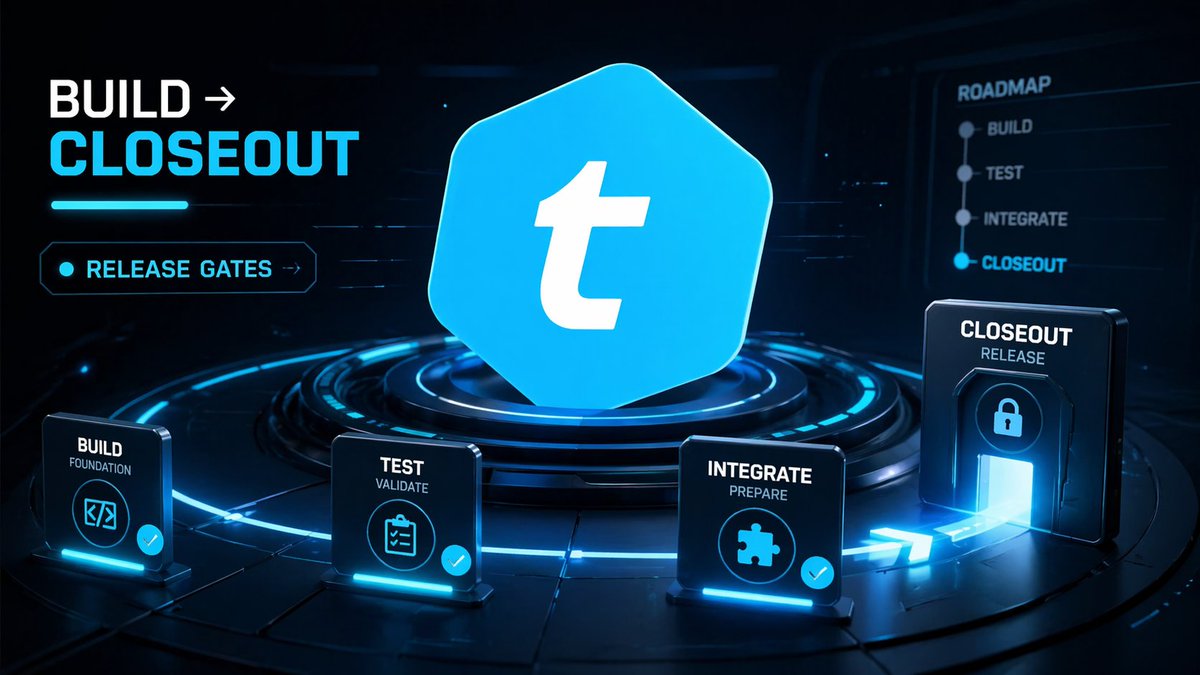
$TEL/#Telcoin just gave CT the kind of update that matters: not vibes, release gates. Roadmap moved Apr 20 + Apr 24, after nearly a month. Adiri shows no visible queue; 3 Phase 2 items and 4 Phase 3 items are in progress. Quiet build phase → closeout phase. 1/7
Captain Crypto tweet media
English
8
62
201
11.1K
CryptoProphet retweetledi
𝕃𝟙𝕓𝕖𝕣ⓣ𝕪 𝕃𝕒𝕕☘️
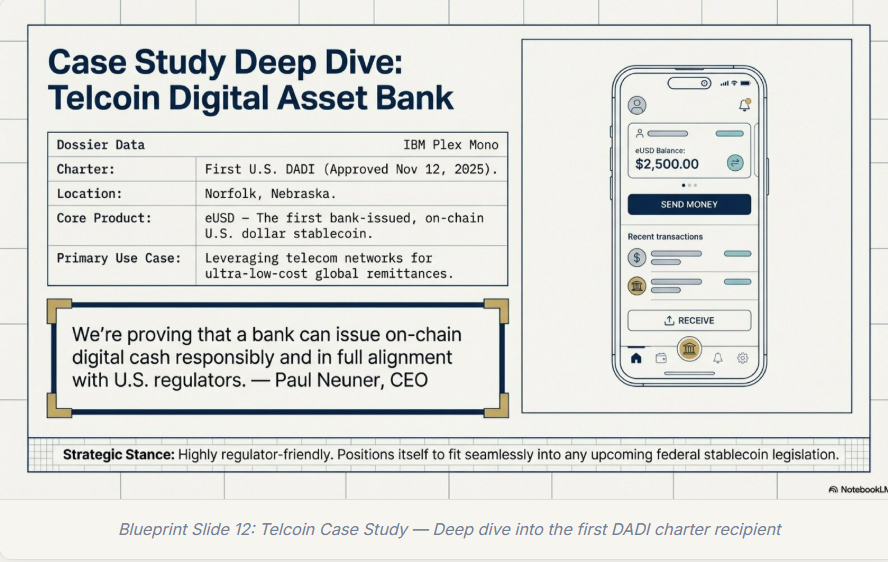
Went through a full crypto banking thesis comparing @Telcoin, @krakenfx, @custodiabank and others.. Written by a fintech operator with 20+ years across banking, payments, and digital assets. $TEL is the only one in that group with a state bank charter specifically built for digital assets.
𝕃𝟙𝕓𝕖𝕣ⓣ𝕪 𝕃𝕒𝕕☘️ tweet media
English
1
47
143
8K
CryptoProphet retweetledi
Project Jackal
Project Jackal@projectjackal26·
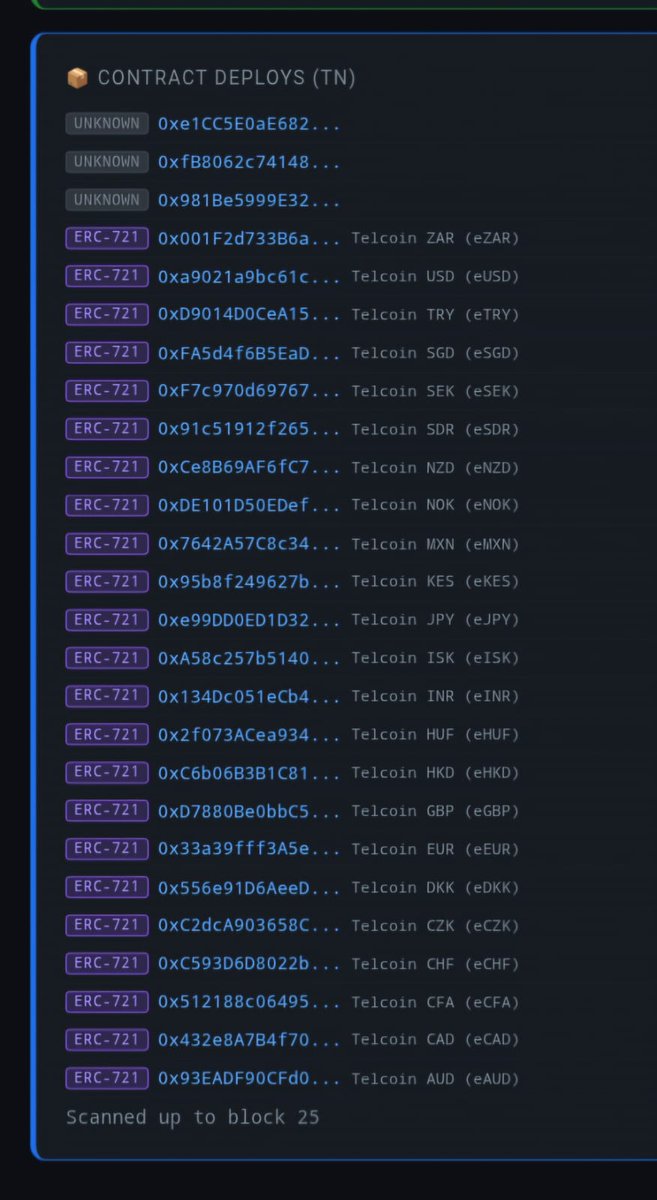
#telcoin $tel Again Testnet reset. They just mass-deployed 20+ (stablecoins) fiat contracts straight out of the gate! We are moving from basic infrastructure testing to full end-to-end product simulation. The global remittance layer is coming alive right before our eyes. 🌐⚡️
Project Jackal tweet media
English
22
70
253
14.3K
CryptoProphet retweetledi
Marsey ⓣ
Marsey ⓣ@Marsey58725086·
@B3_4_all Genius move by #Telcoin, installing confidence by publicly testing its product for all to see and participate. Transparency at its best. Know what you hold. #tel is life changing for holders, the only crypto left with generational wealth opportunity. You ain’t seen nothing yet 🚀
English
2
25
94
3K
CryptoProphet retweetledi
TEL Pets
TEL Pets@TEL_Pets·
🐾 Welcome to TEL Pets Official 𝕏 Account! We’re live on the Adiri Testnet! TEL Pets is a gamified way for the $TEL community to help stress-test & strengthen the Telcoin Network ahead of mainnet Your pets + activity = real on-chain transactions that support devs & validators
TEL Pets tweet media
English
3
20
55
7.1K
CryptoProphet retweetledi
BZ
BZ@BZ_crypto1·
Over the last 12 hours, TELpets.xyz has generated 120k+ in stress testing transactions on Adiri Testnet. Across multiple rpcs and multiple smart contracts via individual addresses all over the world, this is simulating real time network conditions that no internal test would ever be able to replicate in preparation of Telcoin Network mainnet launch. That's invaluable data for MNO validators and for network developers. Be a part of Adiri testnet and see what it means to develop on Telcoin Network at TELpets.xyz $TEL
BZ tweet media
English
8
44
155
7.3K
CryptoProphet retweetledi
BZ
BZ@BZ_crypto1·
viettelfamily.com/news/viettel-m… $TEL This is huge. “Within the framework of the Mobile World Congress MWC 2026, VDS held a meeting with Telcoin (USA) to discuss potential cooperation in the field of cross-border payments and digital assets. The meeting took place on the sidelines of MWC – the world's largest mobile technology exhibition, held from March 2-5 in Barcelona, Spain. According to the discussions, the two sides focused on assessing the potential for deploying international payment models based on blockchain technology, and also considered the possibility of integrating stablecoins into digital payment platforms in the future.”
English
14
70
215
6.9K
CryptoProphet retweetledi
X Finance Bull
X Finance Bull@Xfinancebull·
A follower asked me to deep dive on $TEL. What I found is impressive 🤯 👇 $267M market cap. 96B tokens already circulating. Non-inflationary by design with deflationary burns planned once mainnet launches. The infrastructure stands out. Telcoin Network: EVM-compatible blockchain secured by GSMA mobile operators globally. Digital Cash stablecoins live on Ethereum, Polygon, Base, and Solana. Remittances to 40+ wallets in 20+ countries at under 2% fees. Regulatory moat? First U.S. Nebraska Digital Asset Depository charter. SOC 2 certified. GSMA Associate Member since 2018. Catalysts loading: Wallet V5 early 2026. Mainnet launch Q1. MWC26 rollout in March. Burns activate with mainnet. Low cap. Real utility. Regulatory clarity. Worth watching. What crypto should I look into next? 👇
X Finance Bull tweet media
English
22
74
222
24.9K
CryptoProphet retweetledi
Telcoin
Telcoin@telcoin·
eUSD is now live on Base and Solana. Availability grows to four chains, with more to follow. bank.telco.in/eUSD
English
47
280
878
63.1K
CryptoProphet retweetledi
BZ
BZ@BZ_crypto1·
the biggest shift is $TEL stops being just a token riding someone else’s rails and becomes native fuel for its own settlement layer. Post launch it starts behaving like economic bandwidth for the network. Gas, security participation, validator economics, liquidity routing incentives, all start anchoring directly to $TEL demand instead of external L1 fee markets. That matters because external fee markets are chaotic. You already know this if you are participating in TELx and watching how fee volatility changes behavior. Native rails means predictable cost curves. Enterprises love predictable cost curves. Regulators love deterministic settlement and auditability. That is where real volume lives, not retail swapping memes at 2am. On chain level, noticeable change number one is transaction finality feel. Narwhal + Bullshark style DAG based mempool and consensus pipelines are built for high throughput and low latency finalization. Translation: transactions should feel closer to “telecom fast” than “crypto wait and refresh Etherscan fast”. TTF is so much more important than TPS. Second big change is validator composition. If MNOs and regulated entities are actually sitting in the validator set, you get a weird but powerful property. The network is economically secured by actors who already run national critical infrastructure and are used to regulatory audits. That changes how governments and banks perceive settlement risk. That is a quiet but massive unlock if it plays out as designed. Now zoom into the Tel wallet side, because this is where retail notices stuff. The wallet should evolve from “crypto wallet that can send TEL” into something closer to a financial identity + payment + credential container. Think mobile number as primary routing key. Think programmable transfers. Think compliance hooks that do not feel like compliance because they are abstracted behind UX. The average user should not care that blockchain exists. They should care that sending money internationally feels like sending a text. Stablecoin side gets interesting too. If eUSD or similar regulated stable rails sit native on network, then Tel wallet starts looking less like a crypto wallet and more like a cross border bank account with programmable logic. Instant settlement, audit trail, composability with DeFi and enterprise flows. That is where things get spicy from a macro adoption standpoint. From a $TEL holder perspective, the most noticeable change is likely structural demand sources. Today demand is mostly speculative + LP + some utility narrative. Post launch, if execution lands, you get fee demand, validator demand, staking demand, enterprise liquidity demand, and potentially regulatory driven usage demand. Multiple non correlated demand vectors is how assets escape pure cycle driven price behavior over long horizons. THEN you get into TELx and the association incentivizing the eXYZ LP pools , the meta shift is subtle but important. If base network activity rises, fee density inside active ranges should structurally improve over time assuming real transaction volume shows up. High in range time + fee growth + incentive overlay. If network activity actually compounds, passive disciplined liquidity starts looking like infrastructure yield instead of mercenary farm yield. This attracts even more outside LP. The funny cosmic irony here is the end game of successful blockchain infra is invisibility. If it works perfectly, most users will never know they are using it. Like TCP/IP. Or DNS. Or SSL. You only notice it when it breaks. The deeper rabbit hole is what happens when telecom identity, regulated stablecoins, and programmable settlement all converge on one stack. That starts looking less like “a crypto project launching an L1” and more like “financial routing layers getting rewritten underneath the internet.”
English
10
59
176
17.3K
VirtualBacon
VirtualBacon@virtualbacon·
Worth keeping an eye on the coins holding strength. These are the ones that run first on a bounce.
English
150
20
452
44.7K
CryptoProphet retweetledi
BZ
BZ@BZ_crypto1·
"Stablecoin prepaid visa and mastercards on apple/andriod pay will onboard the next 10m+ crypto users" Bitcoin cannot be swapped permissionlessly to a stablecoin, therefore doesn't have the architecture foro this. "The solution being adopted is high speed, near-free (gas) Layer 1 chains with regulated stablecoins. ADP will pay salaries and wages on these chains. BANKS WILL MAKE STABLECOIN ACCOUNTS FOR CUSTOMERS and the world is oging to stablecoin wages, payments and taxation." "Invest in high-speed L1's" IDK if there's a better use case made by @martypartymusic for @telcoin and the very first stablecoin issued by a bank (eUSD) and backed by a lightining-fast L1 validated by mobile network operators with near-instant finality. What's at the heart of it all? $TEL as the native gas token and yield distribution mechanism of the infrastructure. The stars are aligning. fade it if you want.
English
4
42
154
7.4K
CryptoProphet retweetledi
Telcoin Association
Telcoin Association@TelcoinTAO·
$TEL is coming to Kraken, expanding US access to the token powering the telecommunications blockchain standard. Kraken’s commitment to regulated infrastructure aligns with Telcoin Association’s mission: uniting mobile operators around shared blockchain infrastructure to connect billions of users on Telcoin Network.
Kraken@krakenfx

Coming soon to Kraken 📱 $TEL, the native token of Telcoin Network. @TelcoinTAO aligns mobile networks around a shared blockchain standard, connecting global users to the Internet of Money. Trading starts on Jan 22 at 14:00 UTC. Get ready → app.kraken.com/JDNW/TEL

English
56
286
993
86K
CryptoProphet retweetledi
Telcoin
Telcoin@telcoin·
The first bank-issued US dollar stablecoin is on Ethereum and Polygon. And we're bringing eUSD to more chains soon.
Ethereum@ethereum

Ethereum is the #1 choice for global financial institutions. Over the last few months, adoption has accelerated. Here are 35 stories of how institutions are building on Ethereum. 1/ @krakenfx launched xStocks on Ethereum, issuing tokenized versions of popular U.S. stocks and ETFs as ERC-20 tokens. Kraken’s eligible clients can now deposit and withdraw fully collateralized equities, directly on Ethereum. 2/ @OndoFinance launched Ondo Global Markets on Ethereum with 100+ tokenized U.S. stocks & ETFs. 24/7 access to programmable equities, backed by real securities, is now available alongside DeFi integrations for lending, trading, and more. 3/ @ChinaAMC_HK launched its Select USD Money Market Fund on Ethereum, one of the first tokenized funds from a major Chinese asset manager. One of Asia’s largest firms (over $449B AUM) now provides access to high-quality, short-term USD instruments with 24/7 settlement. 4/ @Fidelity introduced the FDIT tokenized money market fund on Ethereum. The Fidelity Digital Interest Token (FDIT) brings the bank’s investors the speed of onchain settlement alongside the stability of traditional instruments. 5/ @Google announced the Agent Payments Protocol (AP2), enabling AI agents to autonomously execute payments using stablecoins on Ethereum. Built in collaboration with The Ethereum Foundation, Coinbase, MetaMask, and others, AP2 allows AI to transact securely, bridging the gap between automated intelligence and finance. 6/ @UBS, @PostFinance, @sygnumofficial, and the Swiss Bankers Association successfully piloted Deposit Tokens on Ethereum. By demonstrating legally binding cross-bank settlement on Ethereum’s public infrastructure, the proof-of-concept paves the way for programmable, instant, cross-institution settlement. 7/ Santander’s @openbank_es launched ETH trading services in Germany, allowing customers to buy, sell, and custody ETH directly through their bank accounts. This integration is a strong signal of institutional confidence in ETH under MiCa regulation. 8/ @AmericanExpress launched Amex Passport, blockchain-based travel stamps minted as NFTs on Ethereum L2 @base. Cardholders can now create an onchain record of experiences and memories from international trips, blending loyalty rewards with digital ownership. 9/ The first tokenized S&P 500 Index Fund licensed by @SPDJIndices, SPXA, was launched by @centrifuge on Base. 10/ SWIFT and 30+ banks are designing a blockchain ledger to support tokenized assets and real-time, 24/7 cross-border payments alongside existing financial systems, starting with a prototype with Consensys. @swiftcommunity connecting 11,500+ institutions globally will create a bridge between traditional finance and onchain value. 11/ @SocieteGenerale FORGE, an integrated subsidiary of the 161-year-old commercial bank, deployed EURCV & USDCV lending and trading on Ethereum DeFi protocols Morpho and Uniswap. One of the largest custodians in Europe now provides institutional-grade collateral and liquidity for DeFi markets. 12/ @Stripe expanded its crypto support on Ethereum to include stablecoin-based subscriptions and recurring billing. Hundreds of thousands of companies that use Stripe can now accept USDC for subscriptions with automatic renewals, building on Ethereum for lower-cost payments with near-instant settlement. 13/ @Securitize and @FGNexusio tokenized the FGNX stock on Ethereum, representing the first NASDAQ-listed preferred equity issued fully onchain. Ethereum is the platform to build programmable assets that bring public markets to the digital age. 14/ @AntGroup, the fintech behind @Alipay, launched @JovayNetwork, a L2 for institutional tokenization. The company behind one of the world's largest retail platforms is now building global institutional settlement for tokenized assets on Ethereum. 15/ @jpyc_official launched the world's first yen-pegged regulated stablecoin on Ethereum. Complaint, programmable yen transactions are now available worldwide, backed 1:1 by yen reserves under Japan’s Payment Services Act. 16/ @BNYglobal and Securitize announced a tokenized AAA-rated CLO fund on Ethereum. Institutional credit moving onchain brings liquidity and transparency to traditional asset classes. 17/ Google partnered with @Polymarket, integrating onchain prediction market data to Google search results. The largest search provider now leverages the Ethereum ecosystem as a primary source of truth. 18/ @StartaleGroup released the Startale App, a SuperApp for @soneium's growing Ethereum L2. Mainstream users in the Soneium L2 ecosystem can now access simple onchain interactions and rewards with a unified platform for wallets, assets, and apps. 19/ @jpmorgan migrated its tokenized deposit product, JPM Coin (JPMD), from its internal permissioned blockchain to Base. Moving from a private chain to an Ethereum L2 will meet demand from JPMorgan’s institutional clients for payments, collateral, and margin settlement on public infrastructure. 20/ @Mastercard announced it will build on Ethereum L2 @0xPolygon to expand its Crypto Credential program to self-custody wallets. Working with @mercuryo_io, the expansion will allow Mastercard users to send crypto using verified, human-readable aliases. 21/ @Amundi_ENG, Europe’s largest asset manager ($2.75T AUM), launched a tokenized share class of its euro money market fund on Ethereum mainnet. Bringing traditional cash management onchain unlocks 24/7 settlement and composability for euro-denominated capital. 22/ Sony Bank announced plans to launch a USD-pegged stablecoin on @soneium, its Ethereum L2, in early 2026. From gaming to finance, Sony is building its ecosystem’s home base on Ethereum. 23/ @WisdomTreeEU introduced the world’s first physically-backed ETP for @LidoFinance Staked Ether. The fund will provide European investors with regulated exposure to the spot price of stETH and its ETH staking rewards. 24/ The @CFTC announced a pilot program that will allow ETH, BTC, and USDC to be used as collateral in US derivatives markets, alongside new guidance on using tokenized assets as collateral. This marks a significant shift in how ETH and other digital assets can be integrated into regulated US markets. 25/ @BlackRock filed for a staked ETH ETF. Following the success of their spot ETH ETF, this filing seeks to unlock the value of Ethereum's native staking reward rate for traditional investors. 26/ The @ADI_Foundation, backed by IHC, announced the mainnet launch of institutional L2 @ADIChain_, part of the @zksync Elastic Network. Supported by the UAE's largest conglomerate, ADIChain will host the country's regulated stablecoins and aims to bring 1 billion people onchain across the Middle East, Asia and Africa. 27/ JP Morgan launched MONY, their first tokenized money market fund, on Ethereum mainnet. The firm seeded the fund with $100M of its own capital, signaling their commitment to public chain tokenization. 28/ @coinbase announced Coinbase Tokenize, built on Base, as their new end-to-end institutional platform for tokenizing RWAs. Combining issuance, custody, compliance, trading, and infrastructure, the new product will streamline the process of bringing assets like tokenized stocks, equities, funds, and real estate onchain in the Ethereum ecosystem. 29/ @RobinhoodApp added 500 tokenized assets on @arbitrum, bringing their platform to nearly 2000 assets tokenized. With over $14M in total tokenized value, Robinhood continues deepening their integration with Ethereum’s L2 ecosystem. 30/ @BlackRock, @Mastercard, and @FTI_Global partnered with the ADI Foundation in the UAE, builders of the ADIChain L2. The group will explore tokenized asset structures, digital asset regulatory frameworks, stablecoin settlement, and cross-border payment infrastructure. 31/ @SoFi became the first national US retail bank to issue a stablecoin (SoFiUSD) on a public, permissionless blockchain. Launched on Ethereum, SoFiUSD will first be used for faster, cheaper internal settlements for the fintech giant and its partners. 32/ @telcoin launched eUSD on Ethereum and Polygon, a regulated U.S. dollar stablecoin issued by Nebraska state-chartered digital asset depository institution Telcoin Digital Asset Bank. The launch marks another milestone in U.S.-regulated banks issuing stablecoins directly on public blockchains, bringing traditional regulated banking to the Ethereum ecosystem. 33/ @Grayscale distributed the first ETH staking rewards to ETHE ETF shareholders. In a first for US regulated products, investors received Ethereum’s native yield directly, proving that staked ETH ETFs can deliver the economic utility of the network. 34/ @MorganStanley filed for a Staked Ether ETF, doubling down on its crypto strategy. One of the world’s largest wealth managers is moving beyond spot exposure to capture Ethereum’s native staking yield for clients, signaling a shift to productive participation. 35/ The ADI Foundation partnered with M-Pesa to bring 60M+ users onchain. Africa’s largest mobile money platform is integrating blockchain rails to power instant cross-border payments and stablecoin transactions, merging massive fintech scale with Ethereum’s global settlement layer. — Ethereum is the trusted, global settlement layer for real-world adoption, used by institutions, governments, and enterprises worldwide. Learn more about building on the institutional liquidity layer: institutions.ethereum.org

English
43
241
723
44.3K
Ethereum
Ethereum@ethereum·
Ethereum is the #1 choice for global financial institutions. Over the last few months, adoption has accelerated. Here are 35 stories of how institutions are building on Ethereum. 1/ @krakenfx launched xStocks on Ethereum, issuing tokenized versions of popular U.S. stocks and ETFs as ERC-20 tokens. Kraken’s eligible clients can now deposit and withdraw fully collateralized equities, directly on Ethereum. 2/ @OndoFinance launched Ondo Global Markets on Ethereum with 100+ tokenized U.S. stocks & ETFs. 24/7 access to programmable equities, backed by real securities, is now available alongside DeFi integrations for lending, trading, and more. 3/ @ChinaAMC_HK launched its Select USD Money Market Fund on Ethereum, one of the first tokenized funds from a major Chinese asset manager. One of Asia’s largest firms (over $449B AUM) now provides access to high-quality, short-term USD instruments with 24/7 settlement. 4/ @Fidelity introduced the FDIT tokenized money market fund on Ethereum. The Fidelity Digital Interest Token (FDIT) brings the bank’s investors the speed of onchain settlement alongside the stability of traditional instruments. 5/ @Google announced the Agent Payments Protocol (AP2), enabling AI agents to autonomously execute payments using stablecoins on Ethereum. Built in collaboration with The Ethereum Foundation, Coinbase, MetaMask, and others, AP2 allows AI to transact securely, bridging the gap between automated intelligence and finance. 6/ @UBS, @PostFinance, @sygnumofficial, and the Swiss Bankers Association successfully piloted Deposit Tokens on Ethereum. By demonstrating legally binding cross-bank settlement on Ethereum’s public infrastructure, the proof-of-concept paves the way for programmable, instant, cross-institution settlement. 7/ Santander’s @openbank_es launched ETH trading services in Germany, allowing customers to buy, sell, and custody ETH directly through their bank accounts. This integration is a strong signal of institutional confidence in ETH under MiCa regulation. 8/ @AmericanExpress launched Amex Passport, blockchain-based travel stamps minted as NFTs on Ethereum L2 @base. Cardholders can now create an onchain record of experiences and memories from international trips, blending loyalty rewards with digital ownership. 9/ The first tokenized S&P 500 Index Fund licensed by @SPDJIndices, SPXA, was launched by @centrifuge on Base. 10/ SWIFT and 30+ banks are designing a blockchain ledger to support tokenized assets and real-time, 24/7 cross-border payments alongside existing financial systems, starting with a prototype with Consensys. @swiftcommunity connecting 11,500+ institutions globally will create a bridge between traditional finance and onchain value. 11/ @SocieteGenerale FORGE, an integrated subsidiary of the 161-year-old commercial bank, deployed EURCV & USDCV lending and trading on Ethereum DeFi protocols Morpho and Uniswap. One of the largest custodians in Europe now provides institutional-grade collateral and liquidity for DeFi markets. 12/ @Stripe expanded its crypto support on Ethereum to include stablecoin-based subscriptions and recurring billing. Hundreds of thousands of companies that use Stripe can now accept USDC for subscriptions with automatic renewals, building on Ethereum for lower-cost payments with near-instant settlement. 13/ @Securitize and @FGNexusio tokenized the FGNX stock on Ethereum, representing the first NASDAQ-listed preferred equity issued fully onchain. Ethereum is the platform to build programmable assets that bring public markets to the digital age. 14/ @AntGroup, the fintech behind @Alipay, launched @JovayNetwork, a L2 for institutional tokenization. The company behind one of the world's largest retail platforms is now building global institutional settlement for tokenized assets on Ethereum. 15/ @jpyc_official launched the world's first yen-pegged regulated stablecoin on Ethereum. Complaint, programmable yen transactions are now available worldwide, backed 1:1 by yen reserves under Japan’s Payment Services Act. 16/ @BNYglobal and Securitize announced a tokenized AAA-rated CLO fund on Ethereum. Institutional credit moving onchain brings liquidity and transparency to traditional asset classes. 17/ Google partnered with @Polymarket, integrating onchain prediction market data to Google search results. The largest search provider now leverages the Ethereum ecosystem as a primary source of truth. 18/ @StartaleGroup released the Startale App, a SuperApp for @soneium's growing Ethereum L2. Mainstream users in the Soneium L2 ecosystem can now access simple onchain interactions and rewards with a unified platform for wallets, assets, and apps. 19/ @jpmorgan migrated its tokenized deposit product, JPM Coin (JPMD), from its internal permissioned blockchain to Base. Moving from a private chain to an Ethereum L2 will meet demand from JPMorgan’s institutional clients for payments, collateral, and margin settlement on public infrastructure. 20/ @Mastercard announced it will build on Ethereum L2 @0xPolygon to expand its Crypto Credential program to self-custody wallets. Working with @mercuryo_io, the expansion will allow Mastercard users to send crypto using verified, human-readable aliases. 21/ @Amundi_ENG, Europe’s largest asset manager ($2.75T AUM), launched a tokenized share class of its euro money market fund on Ethereum mainnet. Bringing traditional cash management onchain unlocks 24/7 settlement and composability for euro-denominated capital. 22/ Sony Bank announced plans to launch a USD-pegged stablecoin on @soneium, its Ethereum L2, in early 2026. From gaming to finance, Sony is building its ecosystem’s home base on Ethereum. 23/ @WisdomTreeEU introduced the world’s first physically-backed ETP for @LidoFinance Staked Ether. The fund will provide European investors with regulated exposure to the spot price of stETH and its ETH staking rewards. 24/ The @CFTC announced a pilot program that will allow ETH, BTC, and USDC to be used as collateral in US derivatives markets, alongside new guidance on using tokenized assets as collateral. This marks a significant shift in how ETH and other digital assets can be integrated into regulated US markets. 25/ @BlackRock filed for a staked ETH ETF. Following the success of their spot ETH ETF, this filing seeks to unlock the value of Ethereum's native staking reward rate for traditional investors. 26/ The @ADI_Foundation, backed by IHC, announced the mainnet launch of institutional L2 @ADIChain_, part of the @zksync Elastic Network. Supported by the UAE's largest conglomerate, ADIChain will host the country's regulated stablecoins and aims to bring 1 billion people onchain across the Middle East, Asia and Africa. 27/ JP Morgan launched MONY, their first tokenized money market fund, on Ethereum mainnet. The firm seeded the fund with $100M of its own capital, signaling their commitment to public chain tokenization. 28/ @coinbase announced Coinbase Tokenize, built on Base, as their new end-to-end institutional platform for tokenizing RWAs. Combining issuance, custody, compliance, trading, and infrastructure, the new product will streamline the process of bringing assets like tokenized stocks, equities, funds, and real estate onchain in the Ethereum ecosystem. 29/ @RobinhoodApp added 500 tokenized assets on @arbitrum, bringing their platform to nearly 2000 assets tokenized. With over $14M in total tokenized value, Robinhood continues deepening their integration with Ethereum’s L2 ecosystem. 30/ @BlackRock, @Mastercard, and @FTI_Global partnered with the ADI Foundation in the UAE, builders of the ADIChain L2. The group will explore tokenized asset structures, digital asset regulatory frameworks, stablecoin settlement, and cross-border payment infrastructure. 31/ @SoFi became the first national US retail bank to issue a stablecoin (SoFiUSD) on a public, permissionless blockchain. Launched on Ethereum, SoFiUSD will first be used for faster, cheaper internal settlements for the fintech giant and its partners. 32/ @telcoin launched eUSD on Ethereum and Polygon, a regulated U.S. dollar stablecoin issued by Nebraska state-chartered digital asset depository institution Telcoin Digital Asset Bank. The launch marks another milestone in U.S.-regulated banks issuing stablecoins directly on public blockchains, bringing traditional regulated banking to the Ethereum ecosystem. 33/ @Grayscale distributed the first ETH staking rewards to ETHE ETF shareholders. In a first for US regulated products, investors received Ethereum’s native yield directly, proving that staked ETH ETFs can deliver the economic utility of the network. 34/ @MorganStanley filed for a Staked Ether ETF, doubling down on its crypto strategy. One of the world’s largest wealth managers is moving beyond spot exposure to capture Ethereum’s native staking yield for clients, signaling a shift to productive participation. 35/ The ADI Foundation partnered with M-Pesa to bring 60M+ users onchain. Africa’s largest mobile money platform is integrating blockchain rails to power instant cross-border payments and stablecoin transactions, merging massive fintech scale with Ethereum’s global settlement layer. — Ethereum is the trusted, global settlement layer for real-world adoption, used by institutions, governments, and enterprises worldwide. Learn more about building on the institutional liquidity layer: institutions.ethereum.org
English
574
1.2K
5.6K
768.8K