cy:₿Ξħ 🌱🌍

27K posts

cy:₿Ξħ 🌱🌍 banner
cy:₿Ξħ 🌱🌍

cy:₿Ξħ 🌱🌍

@cy_beh

•*¨*•♫♪ iCame . iSaw . iVegan  ♫♪•*¨*•........ •VΞGΛNIVΞRSΞ🌱 •STL🖇 •SG🏖 •PG🏝 •*¨*•♫♪ #Bitcoin 🧡🧘🏻‍♂️∞/21M ♫♪•*¨*• ...........

🌏ΔxΔp ≥ ħ/2🌎 Katılım Ocak 2012
346 Takip Edilen372 Takipçiler
Sabitlenmiş Tweet
cy:₿Ξħ 🌱🌍
cy:₿Ξħ 🌱🌍@cy_beh·
"The first principle is that you must not fool yourself -- and you are the easiest person to fool." ~ Richard Feynman #ThinkDifferent
cy:₿Ξħ 🌱🌍 tweet media
English
3
4
36
0
Sumit Roy
Sumit Roy@sumitroy2·
The CEO of the biggest company on earth had never posted on social media in his life. Until this week. He broke his silence to stop the US government from doing something, and it put him on the same side as China, against America's own top AI labs.
English
57
404
4.3K
62.6K
cy:₿Ξħ 🌱🌍
“Problems are inevitable. Solutions are not guaranteed, but they can continue to emerge wherever institutions permit conjecture, experimentation, criticism, and error correction.” @saylor The beginning of ♾️ @DavidDeutschOxf Carved in stones:
cy:₿Ξħ 🌱🌍 tweet mediacy:₿Ξħ 🌱🌍 tweet media
cy:₿Ξħ 🌱🌍@cy_beh

@logangraham Moonshot is far more impressive & cooler than Anthropic in every conceivable aspect! Welcome to the Dark Side of The Moon — 月之暗面 🌖 😉

English
0
0
0
8
Dustin
Dustin@r0ck3t23·
Scott Galloway just explained why China doesn’t need to build better AI than America. It only needs to make American AI worthless. Galloway: “I think China is beginning to engage in what I’ll call AI dumping.” Not competing. Dumping. It’s the term economists use for flooding a foreign market with below-cost goods until the domestic industry collapses. Galloway: “They’re going to have a series of open-weight models. About a third of corporations now are supposedly using Chinese lightweight open-weight models that are cheaper.” Not better. Cheaper. A third of corporations. Already. China isn’t trying to out-innovate Silicon Valley. It’s trying to collapse the economics beneath it. Price warfare at the infrastructure layer. Galloway: “If I were Xi, I would just dump cheap AI into the US market.” This playbook is old. China ran it with steel. Ran it with solar. Ran it with semiconductors. Flood a market with a cheaper version until the domestic industry can’t sustain itself. AI is next. Galloway: “The moment large corporations start announcing they’re disengaging these multi-million dollar site licenses with Anthropic or OpenAI, they’re using these inexpensive Chinese models…” One CFO after another decides the Chinese model at a fraction of the cost is good enough. Not better. Good enough. “Good enough” at a lower price has killed more market leaders than any superior product ever has. Galloway: “…and the market realizes that there’s no way they can justify these incredible valuations, I think the US market crashes.” Not because the technology failed. Because the business model did. American AI companies are valued on the assumption that corporations will pay premium prices for premium models. China’s whole strategy is to make that assumption false. Galloway: “40% of the S&P now is directly or tangentially related to this giant bet America’s making on AI.” 40% of the S&P. Tied to one sector. Galloway: “The majority of GDP growth over the last two years has come from AI CapEx.” The majority of GDP growth. From one source. America didn’t diversify its future. It concentrated everything into a single bet, then left that bet undefended. Galloway: “If that slows down, we are immediately in a recession.” Immediately. Not gradually. Not over quarters. The distance between AI boom and American recession is one procurement decision. America built the most advanced AI on Earth and forgot to build an economy that survives someone selling it cheaper. The threat to American AI was never that China would build something smarter. It was that China would build something cheaper, and American corporations would choose the price. China’s real weapon isn’t Chinese technology. It’s American capitalism. The same rational self-interest that built the AI industry will dismantle it the moment a cheaper alternative appears. The market has no patriotism. Only price sensitivity. The technology race was never the real race. The real race was always whether America could turn its AI dominance into something that survives being undercut. America hasn’t even started running it. China already has.
English
597
855
2.8K
736.7K
cy:₿Ξħ 🌱🌍
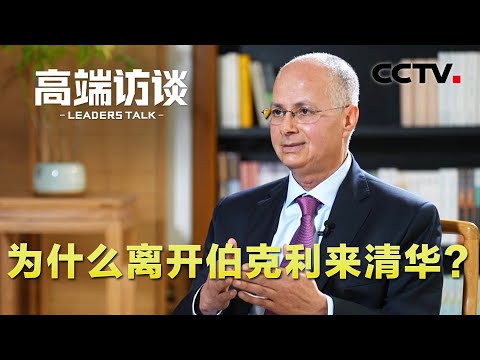
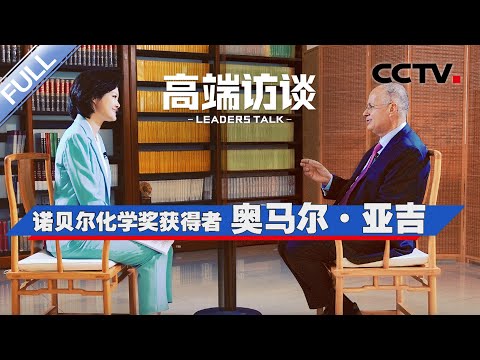
Why did the 2025 Nobel Prize-winning chemist Omar M. Yaghi leave UC Berkeley and join Tsinghua University to lead Tsinghua’s newly established AI Chemistry and Materials Research Institute (AIMATRY)? 👀 youtu.be/BjeZc0-XnU8?si…
YouTube video
YouTube
English
1
0
0
28
Theresa Fallon
Theresa Fallon@TheresaAFallon·
Yang Zhilin did his PhD in the US and his first jobs were w/ US companies. He then moved back to🇨🇳to found Moonshot AI. “Many of Moonshot’s founding researchers studied alongside him either at Tsinghua University, where he graduated top of his computer science class, or at Carnegie Mellon University, where he completed his PhD. During his CMU years, Yang had stints at Google Brain and Meta.”
Theresa Fallon tweet media
English
13
15
36
8K
cy:₿Ξħ 🌱🌍
@honestMLac @weijie444 @OpenAI 😂 prove it, dumbass. Here’s the brutally honest truth: x.com/bluebearmonkey…
cy:₿Ξħ 🌱🌍 tweet media
Blue Bear@Bluebearmonkey

@wags1236 @TheresaAFallon It’s like this… wypipos can’t do mafs. So y’all’s got to train chinx and hope a few will stay to carry your deadweight. Some will stay, some will not. It’s the luck of the draw. Beggars can’t be choosers. If y’all’s don’t like it, maybe you shoulda done your mafs homework. 🤷‍♂️

English
0
0
1
35
Weijie Su
Weijie Su@weijie444·
i asked myself to tweet less, but couldn't resist this time: Huge congratulations to my 3 fellow students (2@pku and 1@stanford) and 1 soon-to-be colleague (@openai) for winning the fields medal today!
English
32
35
1K
104.3K
Chris McGuire
Chris McGuire@ChrisRMcGuire·
Worth noting that nothing in this letter about the importance of open-weight AI models is inconsistent with what @SecScottBessent and other officials have said this week. What follows is my assessment of what the administration's main concerns are related to Chinese AI models, and what steps it could take to address these risks. The administration has been clear that it is supportive of American open weight AI models, but that it has substantial concerns about Chinese AI models that are trained using illicit distillation attacks to steal IP from leading U.S. models, and also pose real national security risks. Its concerns about Chinese models have nothing to do with the fact that many Chinese models are open-weight, and apply equally to closed-weight Chinese models. This letter from industry doesn't dispute those concerns. Indeed, the letter states that, "unlawful efforts to extract value from closed models raise legitimate concerns. Those concerns should be addressed through targeted legal and commercial frameworks". Here's where I think the current policy debates about Chinese AI models could end up, which would be consistent with both the administration's statements to date and this letter from industry: The Department of Commerce uses its ICTS authorities to prohibit U.S. businesses from selling access to Chinese models (irrespective of whether they are open-weight or closed-weight models) or otherwise enabling such transactions (e.g., U.S. companies routing traffic to Chinese AI companies' API). Commerce could additionally impose export controls that prohibit U.S. and foreign cloud providers from using controlled AI chips to develop or run Chinese models. And simultaneously, the administration will reiterate its continued support for U.S. open-weight AI model development, consistent with this letter. This would: (1) force U.S. cloud providers to drop Chinese models; (2) prohibit U.S. companies from purchasing access to Chinese models via the Chinese company's API, which is likely hosted on a Chinese cloud provider; and (3) ensure that all AI infrastructure owned by U.S. providers, as well as any infrastructure brought online by foreign cloud providers from this point forward, are not used to train or run Chinese models (there may not be a mechanism to capture foreign cloud providers' current AI chip install base, but this will diminish in importance over time). Crucially, this would NOT: (1) criminalize the use of Chinese models by U.S. individuals - that is not how the United States has ever enforced sector-wide bans on Chinese products in the past and we should not do so here, particularly given that capturing cloud providers would address the vast majority of the risk; nor (2) impose any restrictions that relate specifically to open-weight models or to any non-Chinese firms. A more aggressive option would be for the Treasury Department to also impose financial sanctions on all Chinese labs engaged in illicit distillation campaigns, which would likely force them to shut down. A less aggressive option would be for Commerce to impose transaction/hosting bans on just those named Chinese labs known to be engaged in illicit distillation, effectively playing whack-a-mole with the Chinese AI industry. A sector-wide restriction on hosting/enabling transactions involving all Chinese labs is a reasonable middle ground given that nearly every Chinese AI lab appears to be engaged in large-scale illicit distillation - and would also cut them off from the infrastructure they need to run these models, making it harder for Chinese labs to benefit from distillation. But just to be very clear: none of these restrictions would inherently apply to open-weight models, they would only apply to Chinese models, be they open- or closed-weight). U.S. and allied open-weight models would be completely unaffected. The U.S. government's concern has nothing to do with the nature of the weights of these models, but rather the country they originate from and the illicit methods it used to build them, as well as the national security risks that they pose. This would be a responsible and prudent step to address these risks.
Jensen Huang@JensenHuang

For my first post, I’m sharing a letter @NVIDIA signed on why open models matter. AI will transform every industry, power every company, and be built by every country. Open models strengthen safety and cybersecurity, accelerate innovation and diffusion, and enable sovereignty. The world needs both frontier closed models and frontier open models. images.nvidia.com/pdf/Open-Weigh…


English
78
15
66
24.3K
cy:₿Ξħ 🌱🌍
@RnaudBertrand …All day long, we are learning from one another. AI also has to learn from something.” — Jensen Huang
English
0
0
0
15
cy:₿Ξħ 🌱🌍
@RnaudBertrand "Distillation—learning from AI, learning from other people, & learning from other sources of knowledge, is fundamental to intelligence. We are constantly learning from other people. I am learning from you through the questions you are asking, & you are learning from me…
English
1
0
0
17
Arnaud Bertrand
Arnaud Bertrand@RnaudBertrand·
Quite funny to see that 3 countries claim Fields Medal winner Hong Wang as theirs. When in her case, as in the case of so many top researchers throughout history, the clear lesson is that greatness in science is almost always a collaborative product of multiple countries and cultures. Even if you go back to Marie Curie: same thing, she wasn't originally French but Polish, studying first in Warsaw and then in Paris. Or Einstein who studied and worked in 4 countries. Or take Maryam Mirzakhani, the first woman to win the Fields Medal: she was born and educated in Iran, then did her PhD in the US. There is obviously something special that opens the mind about being exposed to different scientific traditions and different ways of thinking. Which all means that there is a special irony, at least in the case of France and the US, in both countries increasingly treating collaboration with China as a security threat while simultaneously celebrating a scientist whose brilliance is literally the product of that collaboration. The US's National Science Foundation is even presently straight-up banning scientific collaboration with almost all Chinese scientists (science.org/content/articl…) while Europe is doing the equivalent with its flagship Horizon Europe research program, barring Chinese institutions from its grants which, in effect, also bans scientific collaboration with China (nature.com/articles/d4158…). In other words, both countries want to claim Hong Wang but both are actively fighting the scientific spirit of openness that produced her. China is, somewhat ironically, moving in the opposite direction, continuing to "reform and opening up." China's NSFC, the Chinese equivalent of the US's NSF, continues to actively fund foreign researchers to come work in China across all fields (nsfc.gov.cn/english/site_1…). Fields medals, as is the case of Nobel prizes, are very much lagging indicators, by 1 or 2 decades: Hong Wang left China in 2011, at a time when the situation was arguably the reverse of today - the West was open, China was relatively more closed. Which means that 1 or 2 decades from now, don't be surprised if the Fields Medal goes to a French or American researcher who had to go to China to find the openness that produces the very best science.
Arnaud Bertrand tweet mediaArnaud Bertrand tweet mediaArnaud Bertrand tweet media
English
60
209
1.3K
109.2K