

Looool
4.6K posts
Looool retweetledi

If you follow me, you know that it's *always* about learning rate!
Though, as this cool work shows, what exactly and where exactly the learning rate is, is not always obvious:
Michael Beukman@mcbeukman
1/ As compute continues to grow and simulators continue to improve, it is becoming feasible to train RL agents for billions or trillions of timesteps. However, this is only useful if agents can continue learning over such long training horizons, which is far from given 👇
English
Looool retweetledi

InfoTok is selected as a #iclr2026 Oral!
Some fun information theory analysis that lead to more efficient video tokenization📽️
Great job led by @haotian_yeee in collaboration with @nvidia
Haotian Ye@haotian_yeee
Finally getting to share one of my favorite projects. ICLR Oral! 🏆 It’s so strange how rigid video tokenization is. Think about it: why should a still landscape cost the same amount of tokens as a busy street? We built InfoTok. We went back to basics with Shannon’s information theory to make tokens "adaptive" in a principled way. Its 2.3x better compression and 11x faster inference demonstrates the magic of the old-school theory ✨ Check it out: research.nvidia.com/labs/dir/infot…
English
Looool retweetledi

sorry was just thinking about @yoonholeee ‘s Meta-Harness too much, you should read it
x.com/yoonholeee/sta…
Yoonho Lee@yoonholeee
How can we autonomously improve LLM harnesses on problems humans are actively working on? Doing so requires solving a hard, long-horizon credit-assignment problem over all prior code, traces, and scores. Announcing Meta-Harness: a method for optimizing harnesses end-to-end
English
But messages communicated in {images, language, audio} should already have parity checking bits baked in. Otherwise, why can we humans use our senses to decode and get similar output when seeing the same image/sentence/video?
Looool@datawarmup
yeah I think 3d is very much like the other 3bits for the 4/7 hamming code.
English
Looool retweetledi

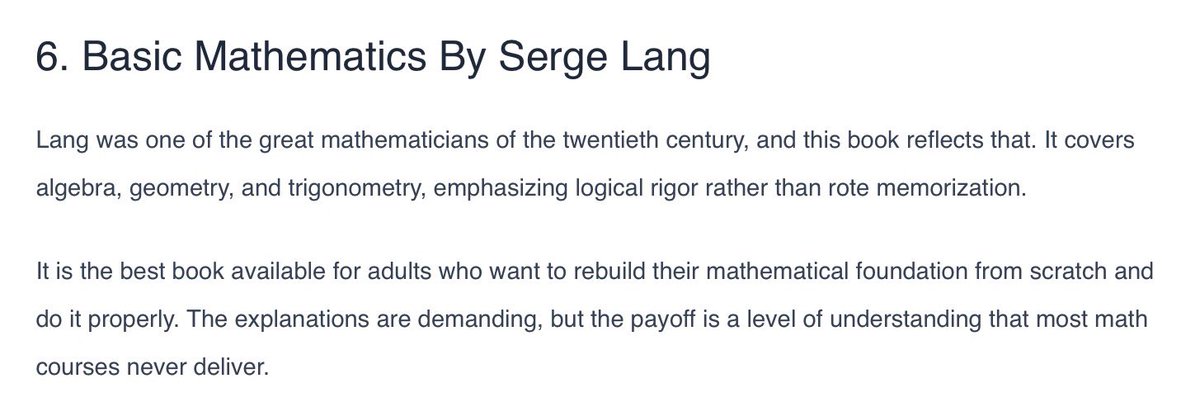
Great list.
I’ve been going through Lang’s book as a way to go back to the basics with more rigor than when I first learned them. It’s a very clear book (and free online).
Steven Strogatz@stevenstrogatz
How to be good in math -- 10 book recommendations newtraderu.com/2026/03/29/how…
English
Not against slam and usage. 3D representation in the physical world almost functions like language as the code for verbal communication and reasoning. In 3D space, we introduced a layer of metrics and rules for transforming (which does not exist in information space imo), and it evolved long enough to be robust as long as we can reliably convert sensing measurements to that space and are fine with the information loss. Just saying 3D and 3d slam solutions are just one instantiation of more generic inference. It is hard to resist using 3D and Slam, imagine the difficulty to resist using language and LLMs.
Chris Paxton@chris_j_paxton
@datawarmup If nothing else humans need to know where their robots are, so even if everything is *implicit* -- which i agree is the future -- something must be doing the job of slam
English
Looool retweetledi

“The possibilities with AI are almost unlimited. If you think about what intelligence is and let’s take human intelligence, first of all. Human intelligence always astounds me, and I don’t think we think about this enough. It’s created modern civilisation around us. Sometimes when I’m flying over to the US for a business trip or something on a 747, I sometimes look out the window and think, “how have we as humanity manage this with our sort of primate brains?” It seems incredible to me, and I don’t think people stop and think how magical that really is.”
- chemistry laureate Demis Hassabis on the possibilities of artificial intelligence.
Hassabis was awarded the 2024 chemistry prize for presenting an AI model called AlphaFold2. With its help, it's possible to predict the structure of virtually all known proteins.
Read the full interview with him: nobelprize.org/prizes/chemist…

English
hmm this reminds me Sergey Levin’s implicit scene understanding paper and someone else’s comments on “3d as intermediate might not be necessary if your end is not 3d”, but I agree 3d will help ai and human co-present. It looks to me slam is one sample of the solution space of more generic POMDP .
Chris Paxton@chris_j_paxton
Anyone who says they do not need SLAM is fundamentally not serious about robotics (unless the robot actually just doesnt move)
English
Looool retweetledi

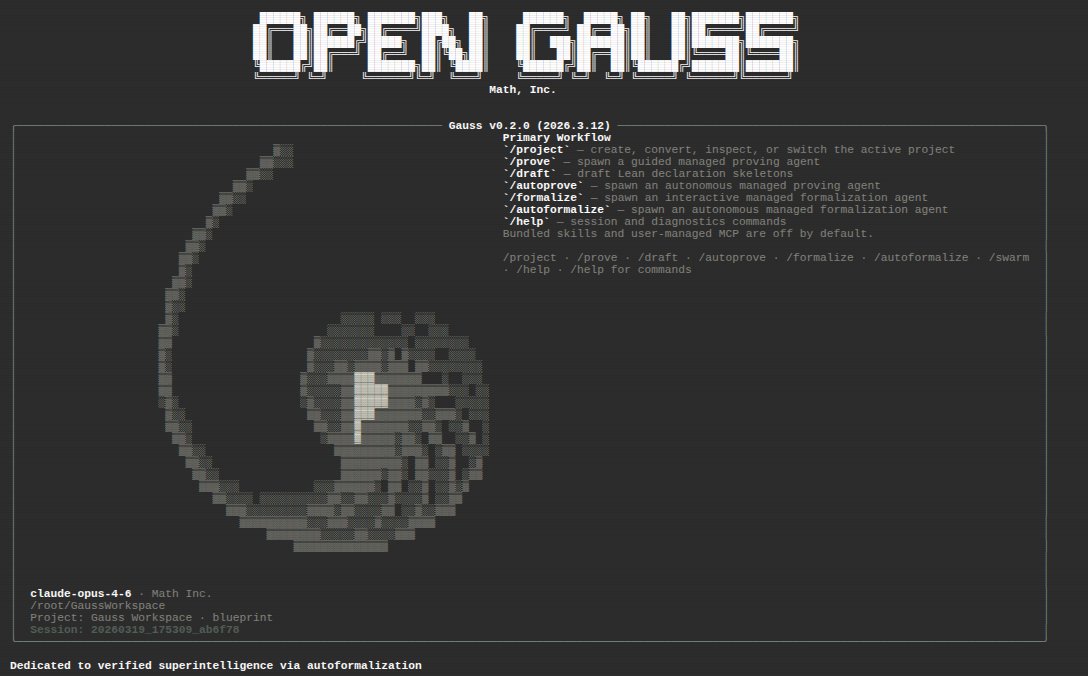
Today, at the @DARPA expMath kickoff, we launched 𝗢𝗽𝗲𝗻𝗚𝗮𝘂𝘀𝘀, an open source and state of the art autoformalization agent harness for developers and practitioners to accelerate progress at the frontier.
It is stronger, faster, and more cost-efficient than off-the-shelf alternatives. On FormalQualBench, running with a 4-hour timeout, it beats @HarmonicMath's Aristotle agent with no time limit.
Users of OpenGauss can interact with it as much or as little as they want, can easily manage many subagents working in parallel, and can extend / modify / introspect OpenGauss because it is permissively open-source. OpenGauss was developed in close collaboration with maintainers of leading open-source AI tooling for Lean.
Read the report and try it out:
English
Looool retweetledi

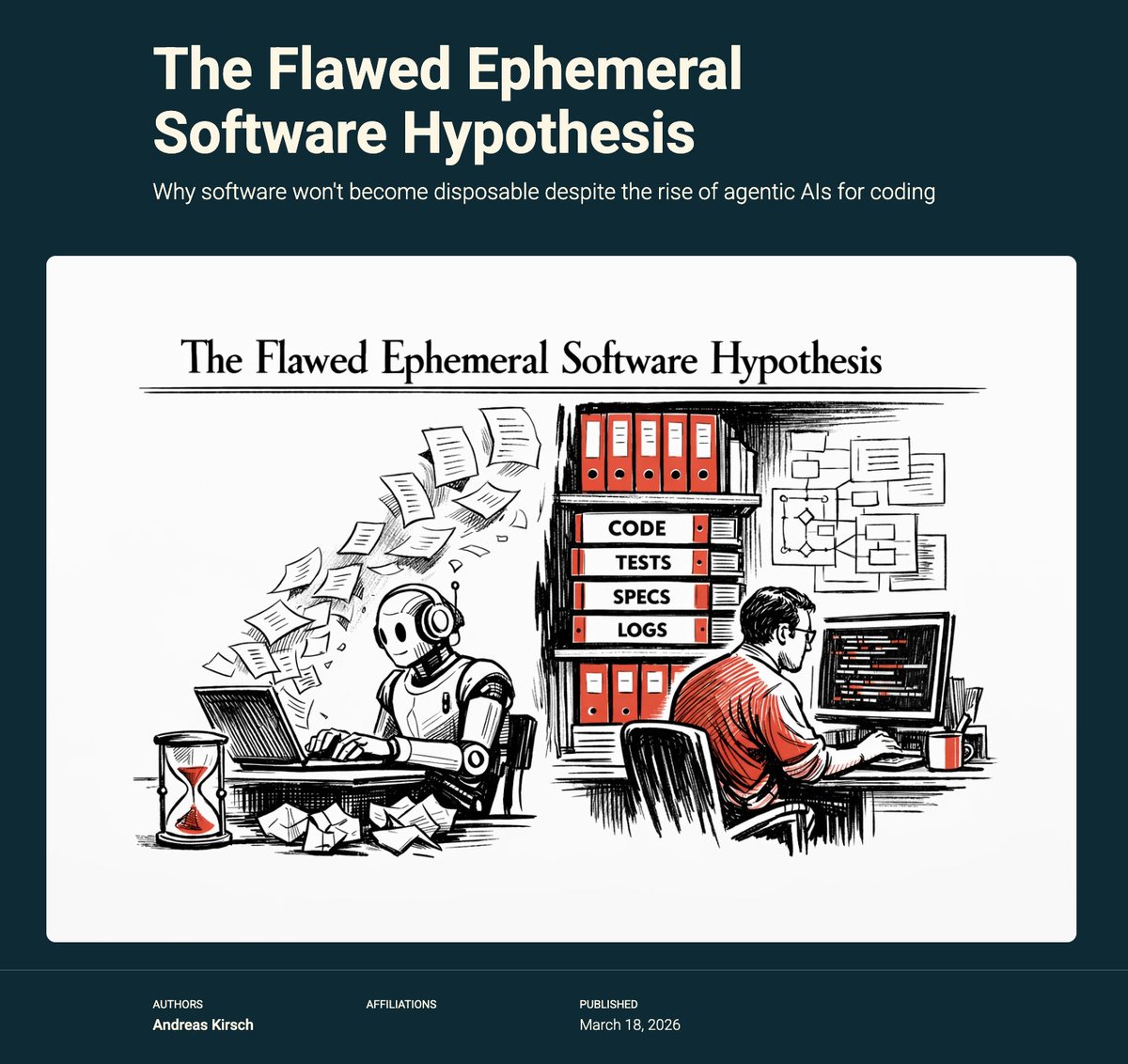
A while back, Andrej Karpathy said the app store will be replaced by generated, disposable software," and Amjad Masad predicted that the value of all application software will go to zero
I think this "ephemeral software hypothesis" is wrong, though, and I want to explain why:
English
Looool retweetledi

MolmoPoint from @allen_ai was a recent foundation model release that feels criminally underrated to me, while not a robotics model it has great potential for various use cases
labels are great even for wrist view!
x.com/allen_ai/statu…
Ai2@allen_ai
Grounding lets vision-language models do more than describe—they can point to where a robot should grasp, which button to click, or which object to track across video frames. Today we're releasing MolmoPoint, a better way for models to point. 🧵
English
Looool retweetledi

Cheng Lou(之前在 React、Messenger、Midjourney 团队干过)他发的这条帖子,已经快800 万浏览了。
这个帖子很多人乍一看,估计心情跟我一样:“我完全不知道这是什么但看起来很重要"。
实际上,他做了一个纯 TypeScript 的文字测量库,叫 pretext。
网页上文字怎么排列,之前是浏览器帮你算的。一段话塞进一个 300px 的框,会换几行、总共多高,你提前不知道。唯一的办法是先把文字塞进 DOM,让浏览器排完,再回头问它:这段话占了多高?
浏览器回答这个问题的过程叫 reflow。reflow 是网页卡顿的头号原因。
过去 20 多年没有别的办法。想知道文字高度就得触发 reflow。一个死循环:你想在渲染之前知道尺寸,但得先渲染才能知道。
所以聊天记录往上翻会跳,瀑布流先闪一下再归位,"虚拟滚动 + 不定高"在前端是公认的噩梦级问题。
Cheng Lou 用纯 JavaScript 复刻了浏览器的文字排版算法。不碰 DOM,不触发 reflow,直接算。
效果:
- 10 万个不定高文字卡片,120fps 滚动
- 聊天气泡自动收缩到最窄宽度
- 杂志式多栏排版,响应式动态重排
- 自动增高文本框、手风琴展开,全变成了附赠小功能
他在 thread 里说了句我觉得挺准的话:
"Web 搞了 20 年,弄出一个巨复杂的东西。效果就这样的话,砍掉 90% 的 API 也够用了。要对得起这个复杂度,效果应该好 10 倍才对。结果两头都没占到,读文章不好用,做交互也不好用。"
这件事在 AI 时代还有一层意义。文字布局变成了一个纯函数:输入文字、字体、容器宽度,输出精确的高度和位置。AI 生成 UI 的时候可以直接调这个函数,不用去理解 CSS 那套复杂的规则。
前端正在发生一个有意思的变化,就是有人发现可以不再等 CSS 进化了,直接绕过去。
Cheng Lou@_chenglou
My dear front-end developers (and anyone who’s interested in the future of interfaces): I have crawled through depths of hell to bring you, for the foreseeable years, one of the more important foundational pieces of UI engineering (if not in implementation then certainly at least in concept): Fast, accurate and comprehensive userland text measurement algorithm in pure TypeScript, usable for laying out entire web pages without CSS, bypassing DOM measurements and reflow
中文
Looool retweetledi

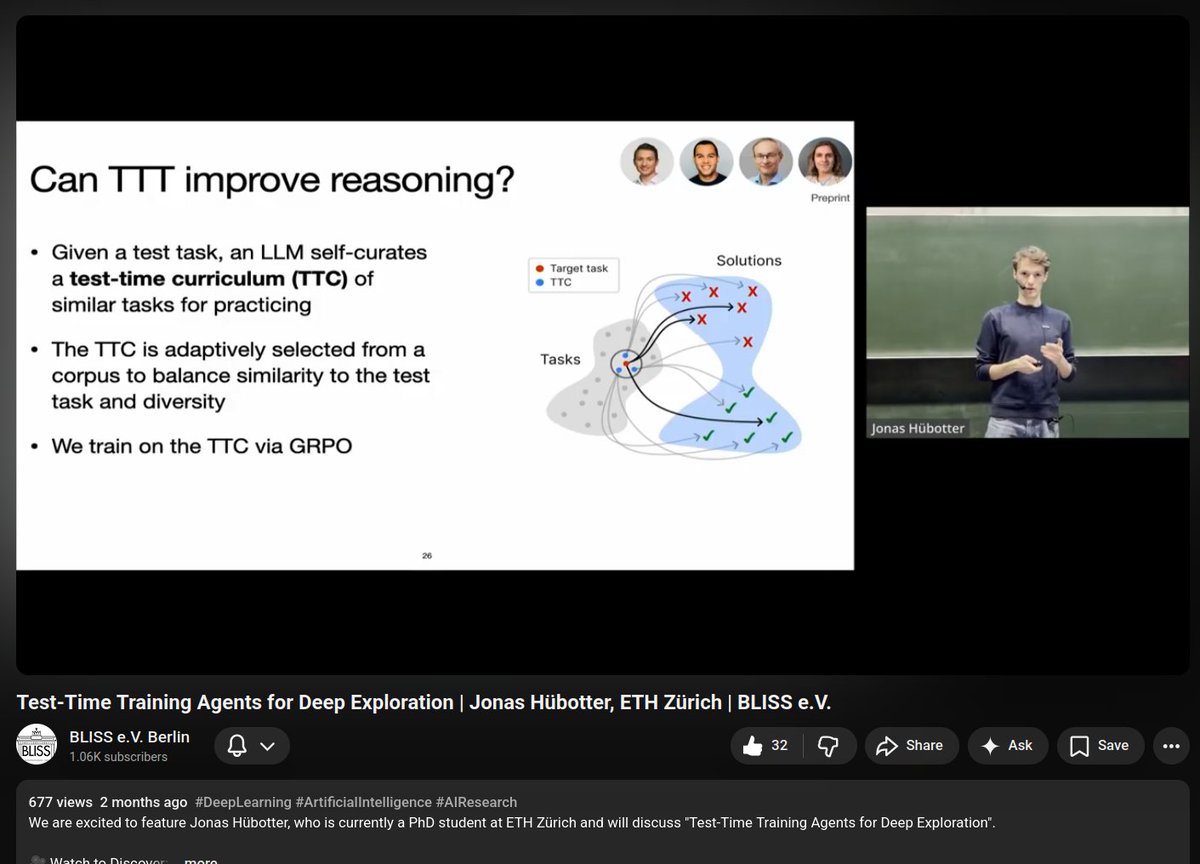
I didn't even register until tonight that I watched this talk by @jonashubotter like a month ago and loved it
Yacine Mahdid@yacinelearning
very underrated technical deep learning channel btw it’s like grade AAA lectures but somewhat chill?
English
Looool retweetledi
