

David S. Hong MD
2.5K posts

@DavidHongMD
MD Anderson Cancer Center medical oncologist, Deputy Chair of Dept. Investigational Cancer Therapeutics. Phase I clinical trials.Tweets are mine.


Was not ready for Eric Church to deliver the best commencement speech I’ve ever heard. Six guitar strings. Six pillars of a life. Faith. Family. Spouse. Ambition. Community. You. Tune them when you’re whole, not just when you’re broken. Watch the whole thing.

This will not end well for the US biopharma industry. The BMS/Hengrui deal announced yesterday includes co-commercialization which is the last piece after manufacturing and discovery that has not been present in Chinese drug cos. If we want to maintain our lead in US biotechnology we need to: 1. Drop cost and increase speed of phase 1 clinical trials in US. Good progress here recently from @US_FDA 2. Drop cost and increase speed of the lab work that drives product development in therapeutics. At @ginkgo we believe you do this via autonomous robotic labs, but I'll take anything that works -- right now discovery is 1/3 the cost in China as bench scientists there are 1/3 the labor cost. 3. Improve IP protections so its not too easy to fast-follow a biologic -- often the ultra-risky first clinical work on a new target is done in US and Chinese startups are fast-following and easily designing around patent limitations on protein sequences. 4. Leverage the fact that US consumers are paying for 70% of the profits in the biopharma industry to put in place the sort of trade restrictions we use to protect domestic automotive, defense, AI, and other strategic industries. Easy way to get started here is add biotech to the COINS Act list of strategic technologies alongside chips, AI, quantum, drones, etc. We need to do it now. Democracies should control genetic engineering - it's not more complicated than that. "Hengrui, which has the option to co-develop certain assets and participate in commercialization globally, gains access to some of the fruits of BMS’ drug discovery engine, plus its partners’ global R&D, regulatory and commercial capabilities." fiercebiotech.com/biotech/bms-in…


I have been so impressed by the recent Daraxonrasib data that I forgot the 25 year anniversary of the precision medicine OG - STI571 (Gleevec). What a triumph of modern medicine. And congratulations to @MelDMann - still going strong all these years later! npr.org/2026/05/10/nx-…

RevMed is such a cool story. The trip from academia to a failed biotech (WarpDrive) to huge success is a microcosm of the circuitous path often taken in drug development. nytimes.com/2026/05/12/hea… via @NYTimes

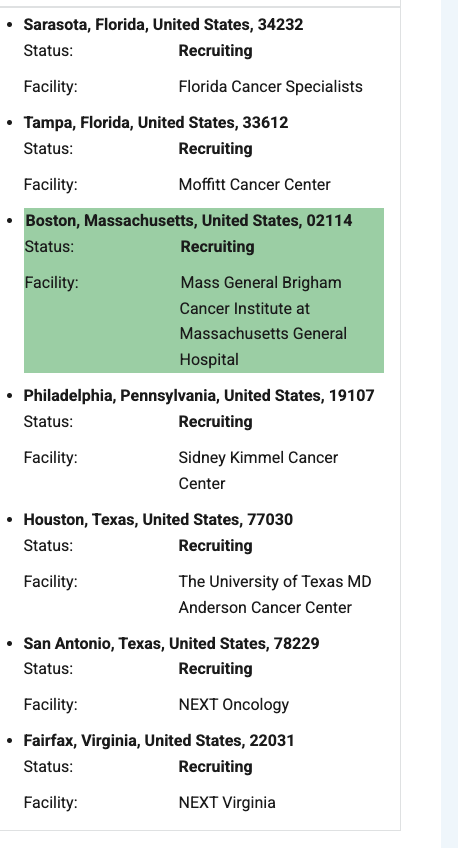
expansion to Mass General KST-6051


new KRAS inhibitor trial A Phase 1 Dose-escalation Trial of KST-6051 in Participants With Advanced Solid Tumors With Kirsten Rat Sarcoma Viral Oncogene Homolog (KRAS) Mutation to open in April 2026 phase 1, 145 pts clinicaltrials.gov/study/NCT07458… "KST-6051 is a potent and selective inhibitor of KRAS, with balanced activity against KRAS in the active (GTP-bound) and inactive (GDP-bound) states..." kestreltherapeutics.com/patients/

What a nice comment! Papa Heme was amazing to work with— brilliant ideas.

Channing J. Der, PhD, and Jen Jen Yeh, MD, describe the scientific foundations of a phase 1–2 study of daraxonrasib to treat metastatic pancreatic ductal adenocarcinomas. Learn about the science behind the study in the editorial “Advances in RAS Therapeutics for Pancreatic Cancer,” from the University of North Carolina at Chapel Hill (@unc): nej.md/4neOTCE


Channing J. Der, PhD, and Jen Jen Yeh, MD, describe the scientific foundations of a phase 1–2 study of daraxonrasib to treat metastatic pancreatic ductal adenocarcinomas. Learn about the science behind the study in the editorial “Advances in RAS Therapeutics for Pancreatic Cancer,” from the University of North Carolina at Chapel Hill (@unc): nej.md/4neOTCE

In a phase 1–2 study of daraxonrasib, treatment-related adverse events of grade 3 or higher occurred in 30% of patients with previously treated RAS-mutated pancreatic cancer, and up to 35% of patients had an objective response. Full study results: nej.md/4f7xfhX Science behind the Study: Advances in RAS Therapeutics for Pancreatic Cancer nej.md/4neOTCE