David Lee

857 posts

David Lee banner
David Lee

David Lee

@davidyhlee

Boston Katılım Mart 2007
1.6K Takip Edilen1.4K Takipçiler
David Lee retweetledi
TFTC
TFTC@TFTC21·
Ken Griffin went home on a Friday "fairly depressed" after watching AI agents at Citadel do work that used to take teams of PhDs in finance months to complete. Done in days. His words: "These are not mid-tier white collar jobs. These are extraordinarily high skilled jobs being automated by agentic AI." This is the head of one of the most successful hedge funds in history saying the people he pays seven figures to analyze markets and structure deals are being replaced by software that works in hours instead of months. Not theoretically. In his own office. Right now. The Coatue deck we covered earlier this week called agents "the biggest unlock" in AI. Griffin just confirmed it from the buy side. The shift from copilots to agents is not a future event. It is already happening at the highest levels of finance.
English
712
1.7K
12K
5.6M
David Lee retweetledi
Ejaaz
Ejaaz@cryptopunk7213·
god i’ve watched this entire thing twice now. krishna is a force at anthropic & he’s masterfully given them a winning hand. the amount of alpha in this episode: > the #1 place anthropic spends compute isn’t model training or customers… it’s the research team. he explains: - research team uses compute to build a better model - better model uses LESS tokens so the same amt of compute can serve MORE people in the future. “we could’ve earned billions more in revenue but then we would’ve lost the model race” > anthropic’s the only lab to train AND inference their models across 3 different chip architectures. krishna: “one morning we will run an inference block on trainium and by the afternoon it’s used to train claude” the unique advantage = they don’t rely on a single supplier. > krishna says people don’t fully comprehend how advanced each model version gets. agents, long-horizon tasks, cost effectiveness improve ALL AT ONCE “we went from $9B to 30B in months” - that wasn’t just because the chatbot got better. bonus: krishna uses claude to generate the companies monthly financial report. it does it in 30 mins and is 95% accurate. the highest token-consumer on his team is the tax guy. there’s so much more i want to share but honestly just watch the interview @patrick_oshag you killed it
Patrick OShaughnessy@patrick_oshag

Krishna Rao is the CFO of Anthropic, and this is his first podcast appearance. He joined the company two years ago when run-rate revenue was about $250M. Today it is $30B. He has helped raise ~$75B and is responsible for the procurement and allocation of compute. I feel lucky we get to hear what it is like to sit inside a company this consequential at a moment this pivotal. We discuss: - The cone of uncertainty - How he allocates compute across Trainium, TPUs, and GPUs - What investors misunderstand about model companies - Why the returns to frontier intelligence keep rising - Platform vs application and where Anthropic builds its own products - How Anthropic uses Claude internally I have asked my closing question about the kindest thing more than 500 times. Krishna's answer is one I have never heard before. Enjoy! Timestamps: 0:00 Intro 2:38 The Compute Canvas 6:51 The "Cone of Uncertainty" 11:58 Why the Returns to Frontier Intelligence Are So High 16:45 Recursive Self-Improvement 20:20 Scaling Laws 23:30 Sourcing $100 Billion in Compute 28:05 Platform vs. Application Strategy 32:52 Pricing Dynamics 38:48 How Anthropic’s Finance Team Uses Claude 43:24 Raising Capital & Overcoming Investor Skepticism 52:32 Public Perception, Risks, and Government Regulation 57:25 Mythos Release 1:12:33 What Could Derail the AI Revolution? 1:13:47 Biotech and Healthcare 1:15:31 The Kindest Thing

English
12
40
484
105.7K
David Lee retweetledi
Chamath Palihapitiya
Key to winning: Choose to be positive and grateful. Then, just keep at it. Time is the great compounder and will do the rest. So many people just don’t have the discipline to stay positive and grateful. Then time compounds the bitterness instead.
English
314
1.1K
10.6K
395.4K
David Lee retweetledi
Garry Tan
Garry Tan@garrytan·
Airbnb isn't the problem. AOC is.
Brivael Le Pogam@brivael

AOC vient d’accuser Airbnb d’être responsable de la crise du logement américain. C’est exactement comme accuser le thermomètre d’être responsable de la fièvre. Le niveau d’inversion causale est tel qu’on se demande si elle ment ou si elle ne comprend vraiment rien à l’économie qu’elle prétend réguler. Reprenons calmement. La crise du logement aux États-Unis (et en France, et partout en Occident) a une cause unique, parfaitement documentée par 60 ans de littérature économique : la pénurie d’offre, créée par la régulation publique. Quand l’offre de logements est artificiellement bloquée par les zonages restrictifs, les permis impossibles à obtenir, les normes empilées, les contrôles de loyers, et les protections excessives qui rendent louer plus risqué que de garder vide, le résultat mathématique est une explosion des prix. Pas à cause d’Airbnb. À cause des élus comme AOC. San Francisco est le cas d’école. Entre 2010 et 2020, la ville a créé environ 50 000 emplois pour chaque 10 000 logements autorisés. Le prix médian d’une maison y a dépassé 1.5 million de dollars. Pas parce que des “billionaires” achètent tout. Parce que la ville interdit littéralement de construire. New York, le district même d’AOC, c’est pire. Les règles de zonage de 1961 sont encore largement en vigueur. Le rent control bloque la rotation du parc. Les permis de construction prennent en moyenne 5 ans. Résultat : un loyer médian à Manhattan qui dépasse 4500$ et des jeunes qui partent en Floride ou au Texas. Pendant ce temps, Houston, qui n’a presque pas de zonage, construit massivement et reste l’une des grandes villes américaines les plus accessibles. Tokyo, qui a libéralisé son marché du logement en 2002, a vu ses loyers stagner pendant que ceux de Paris, Londres, et New York doublaient. Ce n’est pas une opinion. C’est un fait observable. Anecdote personnelle. Quand je suis arrivé à San Francisco pour Y Combinator l’an dernier, trouver un logement a été l’une des expériences les plus surréalistes de ma vie. Des studios à 4000$ par mois, des listes d’attente de 6 mois, des landlords qui demandent 3 mois de caution plus du “key money”, des annonces avec 40 candidats en 24 heures. Pas parce que la ville manque physiquement d’espace. Parce qu’il est interdit d’y construire. Et qui défend ces régulations ? Exactement les gens comme AOC. Ceux qui veulent “protéger” les locataires en gelant le marché, qui finit par les exclure complètement. Maintenant, la partie sur Airbnb est une inversion totale. Airbnb ne crée pas la pénurie. Airbnb existe parce que la pénurie existe. Quand louer en longue durée devient juridiquement et fiscalement absurde (procédures d’expulsion de 18 mois, plafonnements de loyers, taxes punitives sur les revenus locatifs), les propriétaires basculent rationnellement vers la location courte durée. Airbnb est le symptôme, pas la cause. Voulez-vous que les propriétaires reviennent au long terme ? Simplifiez le code locatif, raccourcissez les procédures, supprimez les contrôles de loyers, et la location longue durée redeviendra plus rentable que le tourisme. Le marché s’autorégule, à condition qu’on cesse de l’étrangler. Sur le lobbying, la lecture d’AOC est inversée également. Pourquoi Airbnb dépense-t-il en lobbying ? Parce que la régulation existe et menace son existence à chaque mandat. Dans un marché libre, personne ne ferait de lobbying parce qu’il n’y aurait rien à arracher aux politiques. Le lobbying est l’enfant naturel de l’État interventionniste. Plus l’État régule, plus le lobbying devient rentable. Plus le lobbying devient rentable, plus les grandes entreprises s’installent confortablement dans la rente réglementaire. Plus elles s’installent, plus les nouveaux entrants sont écrasés. C’est exactement l’inverse du capitalisme. C’est du corporatisme étatique. Et c’est AOC qui le crée, pas qui le combat. Sur le mythe des “millions d’évictions à cause d’Airbnb”, les chiffres sont disponibles. Les études sérieuses (Barron, Kung, Proserpio 2021) estiment l’impact d’Airbnb sur les loyers à entre 0.4% et 1.5% selon les marchés. Le zonage restrictif et le rent control, c’est entre 30% et 50% du prix dans les grandes villes (Glaeser, Gyourko). Airbnb est statistiquement du bruit comparé à la régulation. AOC veut nous faire croire qu’un sous-locataire à Bushwick est viré de chez lui parce qu’un cadre de Goldman a réservé un Airbnb. La réalité, c’est qu’il est viré parce que sa ville n’a pas autorisé la construction d’un seul immeuble dans son quartier en 30 ans, alors que la demande explosait. Le pattern politique est toujours le même. La gauche progressiste crée le problème par excès de régulation, puis désigne un bouc émissaire privé pour expliquer le résultat, puis utilise ce bouc émissaire pour justifier encore plus de régulation. Boucle fermée. Toujours la même. L’addiction à la régulation a un nom en économie : le syndrome de l’homme au marteau. Quand votre seul outil est l’État, chaque problème ressemble à un problème étatique. AOC ne peut littéralement pas envisager qu’un problème puisse être résolu par moins d’État, parce que sa carrière entière repose sur la prémisse inverse. La vérité est inconfortable mais simple. Si vous voulez vraiment aider les locataires, les jeunes, les familles modestes, vous voulez plus de logements. Plus de logements veut dire moins de zonage, moins de permis, moins de normes empilées, moins de contrôles de loyers. C’est-à-dire l’exact opposé du programme d’AOC. Le marché du logement n’est pas cassé par excès de liberté. Il est cassé par excès d’intervention. Et les premiers payeurs sont précisément les pauvres qu’AOC prétend défendre. Si vous voulez vraiment le bien des pauvres, arrêtez de toucher au marché. Le marché se régule toujours. Ce qui ne se régule jamais, c’est l’arrogance des gens qui n’ont rien construit et qui pensent savoir mieux que des centaines de millions d’individus comment allouer un toit. Airbnb n’est pas le problème. AOC l’est.

English
56
74
2.3K
93.2K
David Lee
David Lee@davidyhlee·
@AOC @AOC cherry pickers should work on 🍒 farms, not in congress. Atlassian & Qualtrics valued well into the billions before they hired lobbyists. Facebook (Meta) valuation was in the billions before hiring its first lobbyist in 2007. And your AirBnB example is pretty shaky, too.
English
1
0
3
2.2K
Alexandria Ocasio-Cortez
Someone can certainly *make* a billion dollars. That’s not the same thing as earning. Growing fast and disrupting markets also often means chasing and wielding market power, political influence, and scale. Take Airbnb. They heavily lobby politicians against passing housing laws to protect working class residents because it’s bad for their business model. Airbnb could not exist at its current scale and size without the housing market destabilizations, displacements, and exploits that are supercharging the evictions of working people everywhere from Puerto Rico to Jackson Hole. Now young people are planning for a future where they will never be able to afford to own a home while others have 20 and live off renting it out to them at extortionate rates with zero protections. Yes, a tiny amount of people can make billions of dollars doing that. And millions of everyday Americans are bearing the cost.
Paul Graham@paulg

Sure you can earn a billion dollars. I've been teaching people how to do it for 20 years. The way you do it is to start a company that grows fast. You don't have to do anything bad to make a company grow fast. You just have to make something people want. paulgraham.com/ace.html

English
5.8K
2.1K
17.9K
4M
David Lee
David Lee@davidyhlee·
@AOC @grok are there any examples of companies that achieved a valuation in excess of a billion dollars prior to having engaged lobbyists
English
1
0
0
3K
David Lee
David Lee@davidyhlee·
@AOC @grok @grok are there any examples of companies that achieved a valuation in excess of a billion dollars prior to having engaged lobbyists
English
1
0
0
173
David Lee
David Lee@davidyhlee·
@AOC @grok did AirBnB engage any lobbyists en route to becoming valued at a billion dollars?
English
2
0
0
1.5K
David Lee
David Lee@davidyhlee·
@RoarkShana writes about going from hating her job as a middle school teacher, to persisting for 2190 days (now 2306 days, and counting!) as a poet in NYC. This is what it looks like to write your own story in life. open.substack.com/pub/supergirlr…
English
0
0
0
41
David Lee retweetledi
Claude
Claude@claudeai·
We’ve agreed to a partnership with @SpaceX that will substantially increase our compute capacity. This, along with our other recent compute deals, means that we’ve been able to increase our usage limits for Claude Code and the Claude API.
English
4.8K
12.1K
131K
23.8M
David Lee retweetledi
andrew chen
andrew chen@andrewchen·
bullish on the PM role quietly becoming the most important role in tech again when anyone can build, the person who decides WHAT to build becomes the bottleneck
English
283
181
2.3K
229.4K
Zach Tratar
Zach Tratar@zachtratar·
I’m thrilled to announce that Embra is joining Notion! 🥳 Notion is the ultimate interface and data platform for agent <> human collaboration. At Embra, we’ve spent 3 years building a Graph Context Engine to power B2B AI. Let me tell you why I’m so excited. 👇
Zach Tratar tweet media
English
75
28
334
144.4K
David Lee
David Lee@davidyhlee·
@johnkonrad I’m also deliberately using fewer em dashes because of AI. Tbh em dashes are a reflection of the way I think as I speak — I should go back to using more em dashes. 🤓
English
1
0
2
38
John Ʌ Konrad V
John Ʌ Konrad V@johnkonrad·
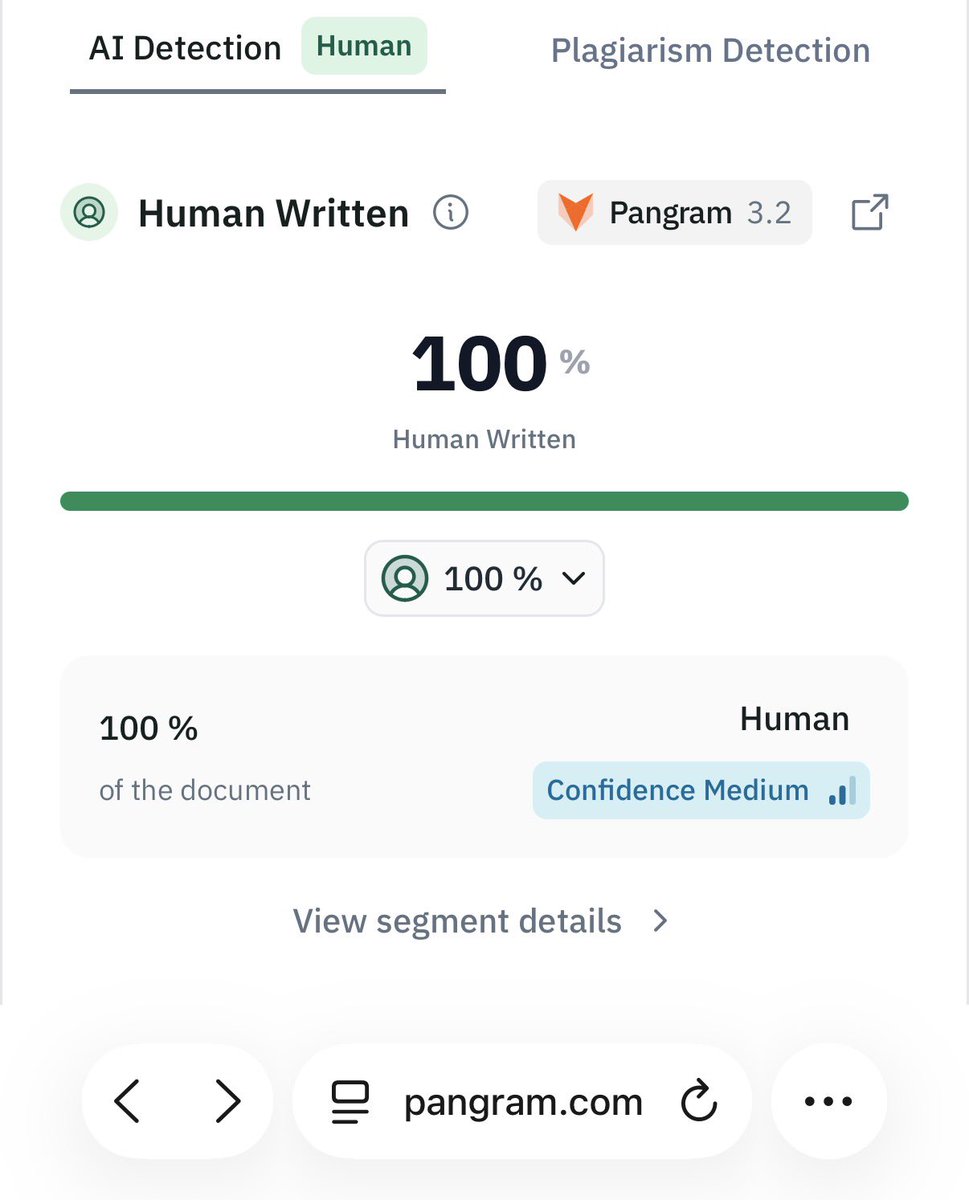
I’m done pretending. AI is an incredible tool but it is making me spend more time writing posts and articles, not less. Go back through my old posts. I was a heavy user of the em dash. Now I have to edit them out. I do use AI for spelling and grammar. Sometimes I use it to adjust tone. It works, but it too often changes the meaning of what I wrote. The old process was a spell check. It took time, but when you finished, you were done. The new process is to slowly reread everything AI has touched, looking for the places where it quietly rewrote my thinking. That takes longer. I also use AI to fact check, occasionally. The problem is that fact checking sends me down rabbit holes that can eat hours of time. Finally, regardless of what I write, I have to edit it to sound more human. That means I have to keep learning the latest AI tells, like the em dash, in order to scrub them out. @TheStalwart did an exhaustive review of the human-versus-AI detectors for his podcast. He found Pangram the most accurate. The post Mankosmash is calling out scored 100 percent human. Not 99. Not 80. One hundred. And yet Manko called me out anyway, and his comment has hundreds of likes. I do not blame him. The way I write is stream of consciousness. You get your thoughts on the page, then you edit. Stop to think about sentence structure mid-flow and you lose the thread. Bestselling author Anne Lamont calls this writing Bird by Bird. It promotes writing "shitty first drafts," overcoming perfectionism, and getting content out in your voice one paragraph at a time. That is what I did on this post. Problem is when I reread it, I had the same reaction Manko did: this sounds like AI. I thought I could get away with it because AI does not stack negatives the way I do (probably why Pangram gave me 💯). I was wrong. I got called out. I have also spent more time than I want to admit asking myself whether AI has changed how I write. I am not an English savant. I am not a natural writer. I cannot keep all the rules of the language in my head. I have become a competent writer by reading for hours every day. I edit by ear. I read my drafts out loud and listen for what sounds wrong. Which means if everything I read is AI slop, AI slop could start to sound right. I read old books every day to inoculate against that. Still, trends are insidious and AI slop is certainly trendy. Pangram says the post is 100 percent human. The harder question is whether I arrived at that word structure naturally, or whether I picked it up because I am marinating in too much AI-written content from everyone else. I do not know. What I do know is that AI has nearly doubled my workload as a journalist.
John Ʌ Konrad V tweet media
Mankosmash@Mankosmash

@johnkonrad > It wasn’t electric. It wasn’t rhetoric. It was reciprocity. Please stop using AI to write your posts. I stopped reading when I saw this. AI is incredibly stupid & weird in style, and worst of all it is ridiculously verbose & is hugely disrespectful of the readers time.

English
59
19
306
29K
David Lee
David Lee@davidyhlee·
@ycombinator @garrytan Housing. Transportation. Food. These 3 buckets are where people spend the most $$. This is one of the 3 calls for startups we need to bring down cost of living. @garrytan just "prompted" hybrid human-machine agents to take action for a 10x reduction in cost of living!
English
1
1
16
20.6K
Y Combinator
Y Combinator@ycombinator·
AI for Low-Pesticide Agriculture @garrytan Farmers are stuck in a bad loop: use more chemicals, get diminishing results, pay more, take on more risk. And they can't just stop, because if pests win, crops die. AI that can identify individual weeds in real time, robotics that can treat one plant instead of blanketing a field, and new biological solutions mean this problem finally looks solvable.
English
60
56
716
398.8K
Y Combinator
Y Combinator@ycombinator·
AI has stopped being a feature and started being the foundation. We're excited about a new wave of startups rebuilding software, services, and silicon— and pushing AI into the physical world. ycombinator.com/rfs
Y Combinator tweet media
English
210
957
8.9K
4.4M
David Lee
David Lee@davidyhlee·
@ewarren In the best case scenario, you're being naive in advocating for these guardrails. Ultimately, your guardrails will make it too expensive for people who need AI for upward mobility. Better to redirect your attention to rethinking education from the ground up.
English
1
0
2
704
Elizabeth Warren
Elizabeth Warren@ewarren·
Big Tech is building an AI bubble with the same dangerous playbook we saw in 2008. No rules. No accountability. Plenty of risk for everyone else. I’m fighting to put guardrails in place—so working families don’t get stuck bailing out reckless CEOs again.
English
386
249
1.4K
337.2K
David Lee
David Lee@davidyhlee·
The 2026 US labor market isn't collapsing and it isn't booming. It's splitting by cohort. A small technical group is gaining real leverage fast; entry-level workers in cognitive occupations are getting priced out of the careers they trained for. The two roughly cancel in the headline numbers, which is why the aggregate looks fine and the optimistic spin has somewhere to live. substack.com/home/post/p-19…
English
0
0
1
58
David Lee
David Lee@davidyhlee·
Someone needs to do some deep research on the dollar gains on the line for @elonmusk and @sama in the single most consequential-to-human-intelligence legal battles now underway. This way, we'll better understand how hard we're being spun by the news media that is trying to curry favor with either/both of them.
GIF
English
0
0
0
50
David Lee
David Lee@davidyhlee·
@APompliano this thread leans on a 640,000 jobs number from LinkedIn. But about half of those are data annotators. i.e. gig labor training the models that won't need them once trained. Another big chunk is "Head of AI" titles, which is just renaming job titles for managers/leaders/execs. The LinkedIn economist who actually ran the analysis told reporters the number wasn't enough to move the labor market. That qualifier didn't make it to your analysis. -_-
English
1
0
0
91
Anthony Pompliano 🌪
Anthony Pompliano 🌪@APompliano·
I have changed my mind on how AI will impact jobs in America. Previously, I believed AI would replace many entry level roles typically filled by young employees. The technology would then work its way up the organization and eventually reduce the total number of jobs in a company. The data is saying something different, so when I get new information I am willing to change my mind. The number of software engineers being hired has been increasing. The number of open software engineer roles is growing. The number of new college grads who get hired has increased 5.6% over the last 12 months. The unemployment level for people aged 20-24 years old who have a college degree has fallen from nearly 9% to almost 5% as well. The Wall Street Journal recently wrote “AI created 640,000 jobs between 2023 and 2025 in the U.S., according to an analysis by LinkedIn of job posting data, including new white-collar positions such as Head of AI and AI engineer.” And I am starting to see companies throughout our portfolio aggressively hiring to keep up with the demand for their products and services. If AI can make employees more productive, which is widely accepted as fact, then companies are going to want as many productive units of labor as possible. This is a key reason why I am changing my mind. AI appears to be a magical technology that will make companies more productive and more profitable. The net result will be more corporations, more startups, and more jobs. All three are big, positive wins for the American economy.
English
796
675
6.6K
2M