Sabitlenmiş Tweet

I have some extra time in the coming months and I'd like to use it to start a small research project: I want to make a catalog of the security / privacy clauses that large enterprises often require in their contracts.
English
Stijn Muylle
1.3K posts
@ddccffvv
Will tweet once in a while, about whatever interests me. Likely subjects: tech, indiehackers, infosec, climate change

@AccidentalCISO how do you manage CIO or CTO that does not support/collaborate with security programs? Example lowering time to patch. CIO does not have (counter) proposal to trying to achieve any improvement just restating manpower, skill, tooling blockers.


A gem form the LessWrong community: 'Humans are not automatically strategic.' "A large majority of otherwise smart people spend time doing semi-productive things, when there are massively productive opportunities untapped."


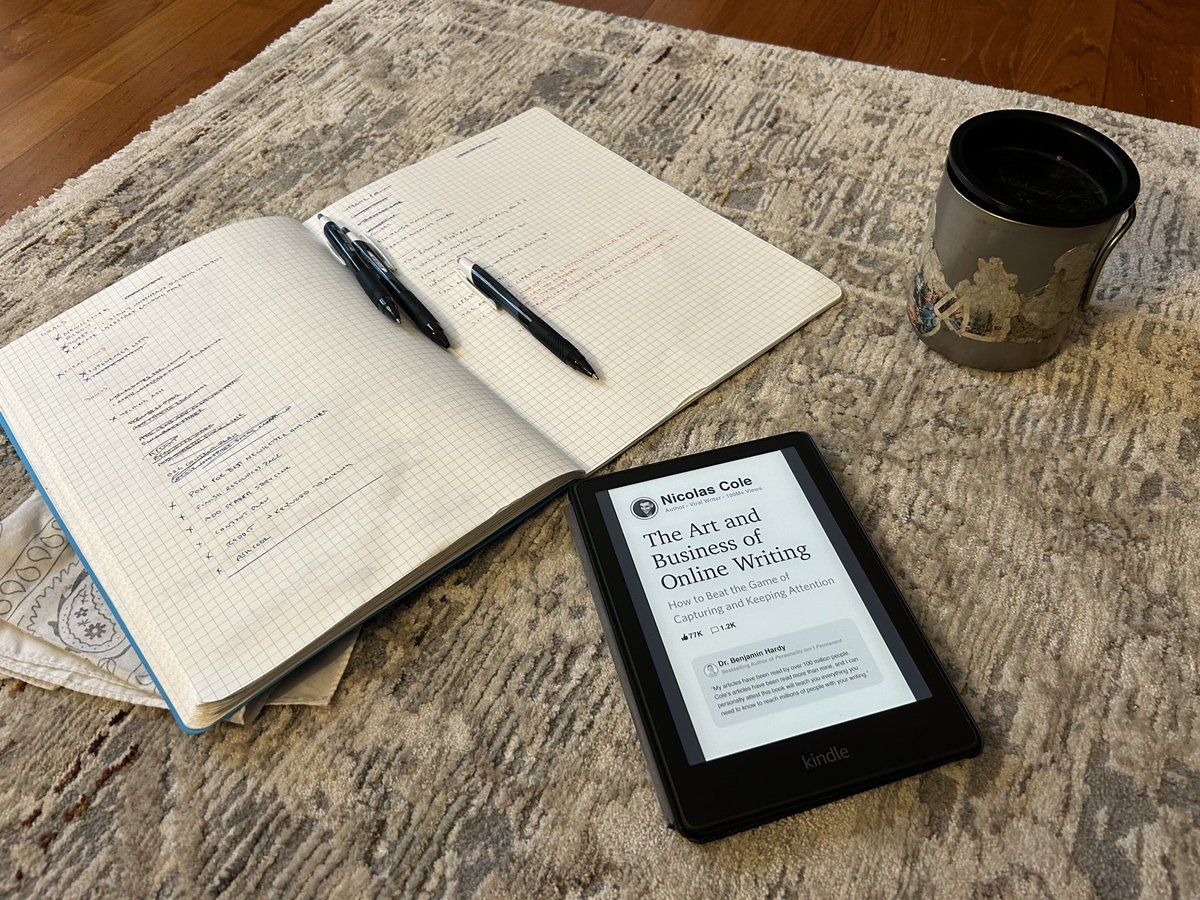
Economist and bestselling author @tylercowen reads 100+ books a year. Here are 18 tips from him on how to read fast, read well, and read widely: 1) Cowen’s first rule of reading is as follows: You need not finish. He takes up books with great hope and no mercy, and when he is done—sometimes after five minutes—he abandons them in public, an act he calls a “liberation.” 2) The important thing is to be ruthless with the books that are not good. Just stop reading, put them down, usually throw them away, don’t give them away – if you give them away you could be doing harm to people. 3) So the way you read well is just by reading a lot, and by reading a lot your whole life. And then when you go to read actual books you’re like “I know that, I know that, I know that,” and you keep on going, and you read much more quickly. And that’s really the way to read a lot. There are these compounding returns to being obsessed with reading, and starting young, and never stopping. 4) Sometimes readers just go on and on with blather, or with personal detail that has no relevance to the argument. Or there are just pages of terminology and it’s like, well, you might still give the book a chance, but you start turning the pages more rapidly. And you’re just waiting for some bit of meat, you’re like out there desperate, giving the author still a chance, and then at some point you’re like “No, sorry. ” Zap – throw it in the trash, on to the next one. 5) Most books are not half great and half horrible. And you should look at a few different parts of the book. But especially these days an author should be able to signal by putting some good stuff up front. Because people are less patient than they used to be. A nineteenth century book you need to give it more time, it may not get good until chapter three, but these days, my goodness – you can tell so much sometimes just from the font of a book. Like there are books with bad font – management books – and you’re like “Oh my God! It’s that font again!” And you just throw it out – you don’t have to read it at all. 6) The best reading is focused reading, when you’re trying to solve some kind of problem. So if I’m doing one of own podcasts with a guest, and then I’ll read or re-read everything the guest has written. Typically it’s a re-read because I have on guests I like, and if I like them I’ve already read a lot of their stuff. So you’re re-reading with an eye toward what is actually interesting about this person, and you learn much more that way than if you just randomly pick up books. 7) I advocate reading books in cluster – the author can be the clustering factor, it can be the topic, it can be the historical period – but you really get into a person’s mind if you re-read everything they’ve done within the span of a few weeks or months, and then watch them on YouTube, and just try to think about and write out notes, “What am I going to ask them?” One of the very best ways to read is to have your own podcast. 8) You want to start with a problem or question when you’re reading. And again you want to read books together in groups, and you want one of the early books to make the whole thing real or emotionally vivid to you. If you travel to a place that’ll do it automatically, but if you’re not travelling you want the book to do it, so your early book choice is quite important. 9) My first recommendation would be fiction. Reading fiction is important to understand the cross-sectional variation in humanity, to understand how difficult generalisations can be, to just get a sense of how different social pieces fit together, and to get a sense of different historical eras – and plus, reading fiction is often just plain flat-out fun. 10) Every area you don’t given a damn about you probably should read at least one book in. Because the very best book in that area is superb, and you’re not going to know what it is. So if tennis is something you don’t know anything about, well, read Andre Agassi’s memoir. That’s a wonderful book. You don’t have to know about or care about tennis. And just go through other areas – gardening, dogs, turtles, whatever. Find the best book about dogs and read it, and the less you like dogs, actually, the better that book is going to be, because you are not sick of the topic. 11) People don’t read enough, and I think as a society we’re under-investing in reading. People feel compelled to finish books they’ve started – that’s just a tax on your reading. Why would you do that to yourself? Imagine a world where any restaurant you tried you had to keep on going there for days or weeks, you’d hardly ever go out to eat. 12) Take reading seriously, develop a passion for it, and view it as part of your practice as a knowledge worker to get ahead, but along the way, having fun doing so. 14) The best way to read quickly is to read lots. And lots. And to have started a long time ago. Then maybe you know what is coming in the current book. 13) Reading quickly is often, in a margin-relevant way, close to not reading much at all. 15) Note that when you add up the time costs of reading lots, quick readers don’t consume information as efficiently as you might think. They’ve chosen a path with high upfront costs and low marginal costs. 16) Another way to read quickly is to cut bait on the losers. I start ten or so books for every one I finish. I don’t mind disliking a book, and I never regret having picked it up and started it. I am ruthless in my discards. 17) Fairfax and Arlington counties have wonderful public library systems, and I go about five times a week to one branch or another. Usually I scan the New Books shelf and look at nothing else. I can go shopping at the best store in the world, almost any day, for free. 18) Here is another reading tip: do less of other activities.

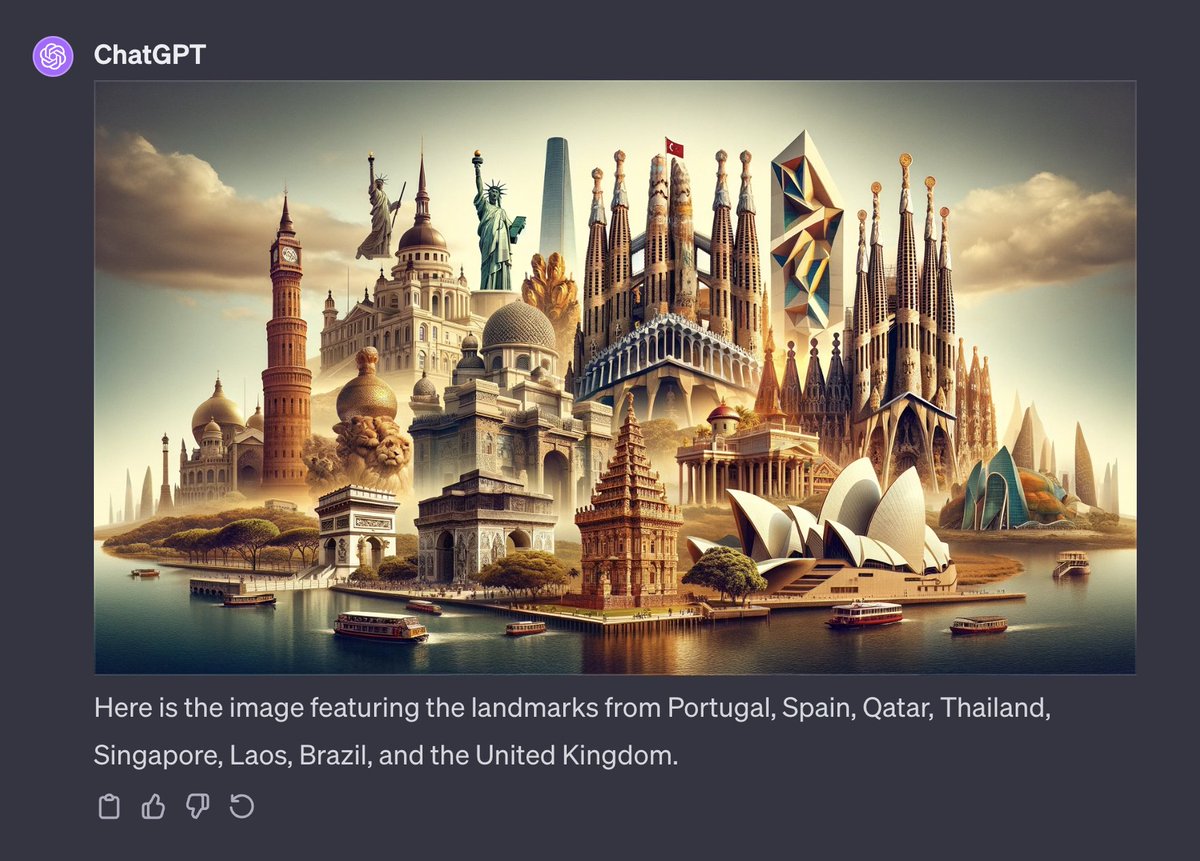
1 year ago, ChatGPT was released and shook the world. While most people are missing out, AI enthusiasts are building the future. Here’s a summary of the best developments from last year and what you can expect from 2024🧵