

dianawudavid
8K posts
dianawudavid
@dianawudavid
Ranked #1 Global Futurist Director, ServiceNow Futures Author. Speaker. Advisor. Contributor: HBR, FastCompany, Inc. Nikkei, TEDx
Hong Kong Katılım Kasım 2008
4.4K Takip Edilen1.7K Takipçiler

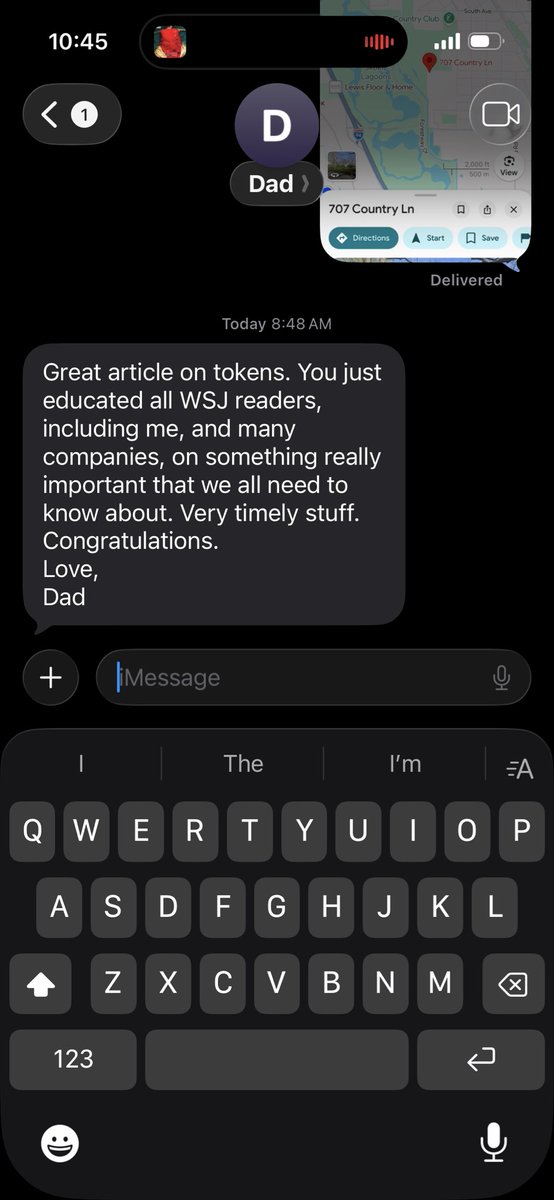
Told my dad he’d gone semi-viral. He asked if he was an influencer now and then told my mom he had “2,700 responses to my text, which I thought was very well deserved.”
English
Me: publishing stories for decades
My dad: you have done it again this is on par w the moon landing
English
dianawudavid retweetledi
Could trying to maximize be self-defeating? @ben_moll @alexolegimas The Nobel-Winning Psychologist Who Believed He Found the Secret to Happiness nytimes.com/2026/05/12/opi… via @NYTOpinion
English
dianawudavid retweetledi

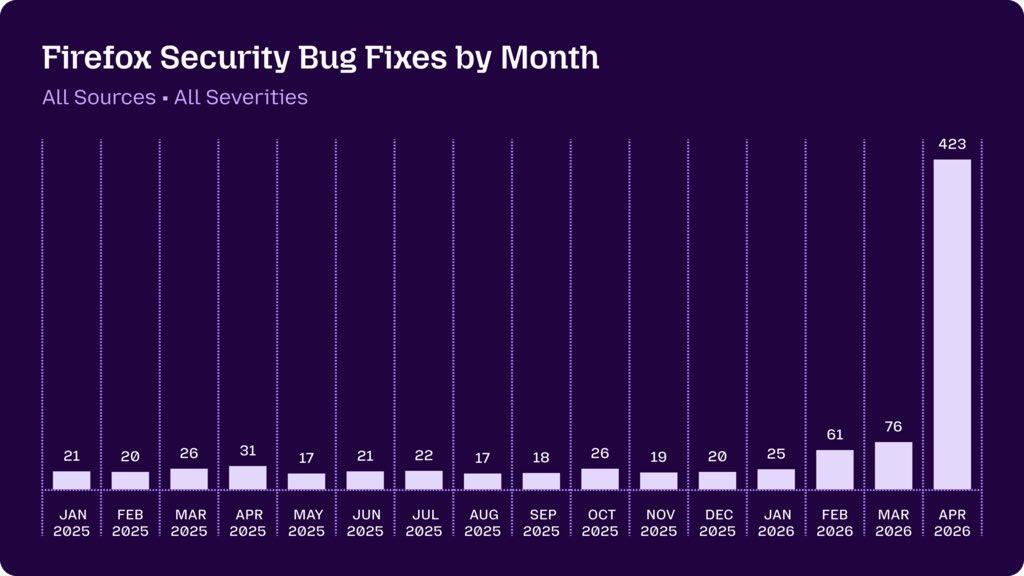
So Mythos was, indeed, not marketing hype.
Remember this is a general purpose model that just happens to be good at finding exploits because good models are good at lots of things. Expect similar from OpenAI & Google. And from open models in 8 months. hacks.mozilla.org/2026/05/behind…

English
English

MyPoV: what a fun reception with @briansolis @dianawudavid @melindaballou @lizkmiller
@ServiceNow #know26

English
English
dianawudavid retweetledi
Every system that was regulated, either explicitly or implicitly, by the fact that they were effortful for humans (letters of recommendation, lawsuits, government filings, essays) will break.
Anand Shah@avshah99
🚨New preprint! We find evidence of LLMs enabling people to file lawsuits without lawyers (filing "pro se") at historically unprecedented rates in federal courts.👇 1/n
English
@lugaricano @HarvardBiz @toniroldanm @bbva Great share @lugaricano One of the questions I come back to is how do you leverage good use cases across the organization? Is there a control tower that allows these to be more than one off pilots?
English

I have a new piece out today on AI Adoption in @HarvardBiz with Antonio Cabrales, José Durán @toniroldanm, and colleagues from @BBVA on why most enterprise AI programs fail and what BBVA did differently.
Most large companies have a shadow AI economy. As of Summer 2025, only 40% of firms had bought official LLM subscriptions, but employees at 90%+ used consumer AI for work on the side. The standard corporate response is to restrict and monitor. The "core IT" department takes over and sees its task as reducing usage. This is the wrong reaction. Shadow AI is not a threat. It is a demand signal telling you that productivity gains exist.
BBVA deployed ChatGPT Enterprise company-wide in a secure cloud, compressing risk assessment, legal review, and GDPR compliance into two months. Their bet was that unmanaged hidden usage is more dangerous than rapid managed deployment.
The rollout leveraged "FOMO" (fear of missing out): only 3,000 initial licenses, allocated competitively with a "use it or lose it" policy. This turned enterprise AI from a mandate into a privilege. Then they built an Adoption Network: Champions, Co-Champions, and 200 Wizards (power users) who provided peer-to-peer support. The Community of Practice became the most active internal forum in BBVA's history.
Within a year, active users grew from 3,000 to 11,000. 83% use it weekly. Employees built 4,800+ custom GPTs. In audit, 99% of 600 auditors worldwide became active users, saving 3-4 hours per week. In Mexico, an insurance-advisory GPT cut query response time by 92% for 4,400 branch managers. These tools were built by frontline employees, not by IT. A human always owns the output. No direct writes to core systems.
If you want enterprise AI to work, stop building centralized plans. Trust the people who already figured out where AI helps. Give them a secure environment, clear rules, and a network to share what they learn.
hbr.org/2026/04/the-hi…

English
How do you prepare for the customers you can't see?
We just launched monthly signals at #ServiceNowFutures. Different topic every month. Where do you find your new signals of change?
#futuresignals #servicenow #futureproof servicenow.com/workflow/innov…
English

Judging by my tl there is a growing gap in understanding of AI capability.
The first issue I think is around recency and tier of use. I think a lot of people tried the free tier of ChatGPT somewhere last year and allowed it to inform their views on AI a little too much. This is a group of reactions laughing at various quirks of the models, hallucinations, etc. Yes I also saw the viral videos of OpenAI's Advanced Voice mode fumbling simple queries like "should I drive or walk to the carwash". The thing is that these free and old/deprecated models don't reflect the capability in the latest round of state of the art agentic models of this year, especially OpenAI Codex and Claude Code.
But that brings me to the second issue. Even if people paid $200/month to use the state of the art models, a lot of the capabilities are relatively "peaky" in highly technical areas. Typical queries around search, writing, advice, etc. are *not* the domain that has made the most noticeable and dramatic strides in capability. Partly, this is due to the technical details of reinforcement learning and its use of verifiable rewards. But partly, it's also because these use cases are not sufficiently prioritized by the companies in their hillclimbing because they don't lead to as much $$$ value. The goldmines are elsewhere, and the focus comes along.
So that brings me to the second group of people, who *both* 1) pay for and use the state of the art frontier agentic models (OpenAI Codex / Claude Code) and 2) do so professionally in technical domains like programming, math and research. This group of people is subject to the highest amount of "AI Psychosis" because the recent improvements in these domains as of this year have been nothing short of staggering. When you hand a computer terminal to one of these models, you can now watch them melt programming problems that you'd normally expect to take days/weeks of work. It's this second group of people that assigns a much greater gravity to the capabilities, their slope, and various cyber-related repercussions.
TLDR the people in these two groups are speaking past each other. It really is simultaneously the case that OpenAI's free and I think slightly orphaned (?) "Advanced Voice Mode" will fumble the dumbest questions in your Instagram's reels and *at the same time*, OpenAI's highest-tier and paid Codex model will go off for 1 hour to coherently restructure an entire code base, or find and exploit vulnerabilities in computer systems. This part really works and has made dramatic strides because 2 properties: 1) these domains offer explicit reward functions that are verifiable meaning they are easily amenable to reinforcement learning training (e.g. unit tests passed yes or no, in contrast to writing, which is much harder to explicitly judge), but also 2) they are a lot more valuable in b2b settings, meaning that the biggest fraction of the team is focused on improving them. So here we are.
staysaasy@staysaasy
The degree to which you are awed by AI is perfectly correlated with how much you use AI to code.
English


dianawudavid retweetledi

Scoop: Mark Zuckerberg is building a CEO agent to help him do his job, according to a person familiar with the project.
Employees are also adopting AI agents and AI tools internally, namely My Claw and Second Brain, in a bid to speed up work, as they get graded on AI use.

English
dianawudavid retweetledi

🧠 Human brain cells in a petri dish just learned to play DOOM. That sentence didn't exist in any scientific paper before 2023.
Cortical Labs calls it DishBrain! 800,000 living neurons on a silicon chip, receiving game signals as electrical stimulation, outputting responses that improve over time.
No code. No training data. No gradient descent.
The cells just... adapted. Because that's what neurons do.
We've spent decades trying to make silicon think like biology. Biology just learned to run on silicon instead.
That's not the direction anyone predicted this would go.
📌 Source: Cortical Labs DishBrain research, Nature Electronics, 2023–2026 follow up studies

English
dianawudavid retweetledi
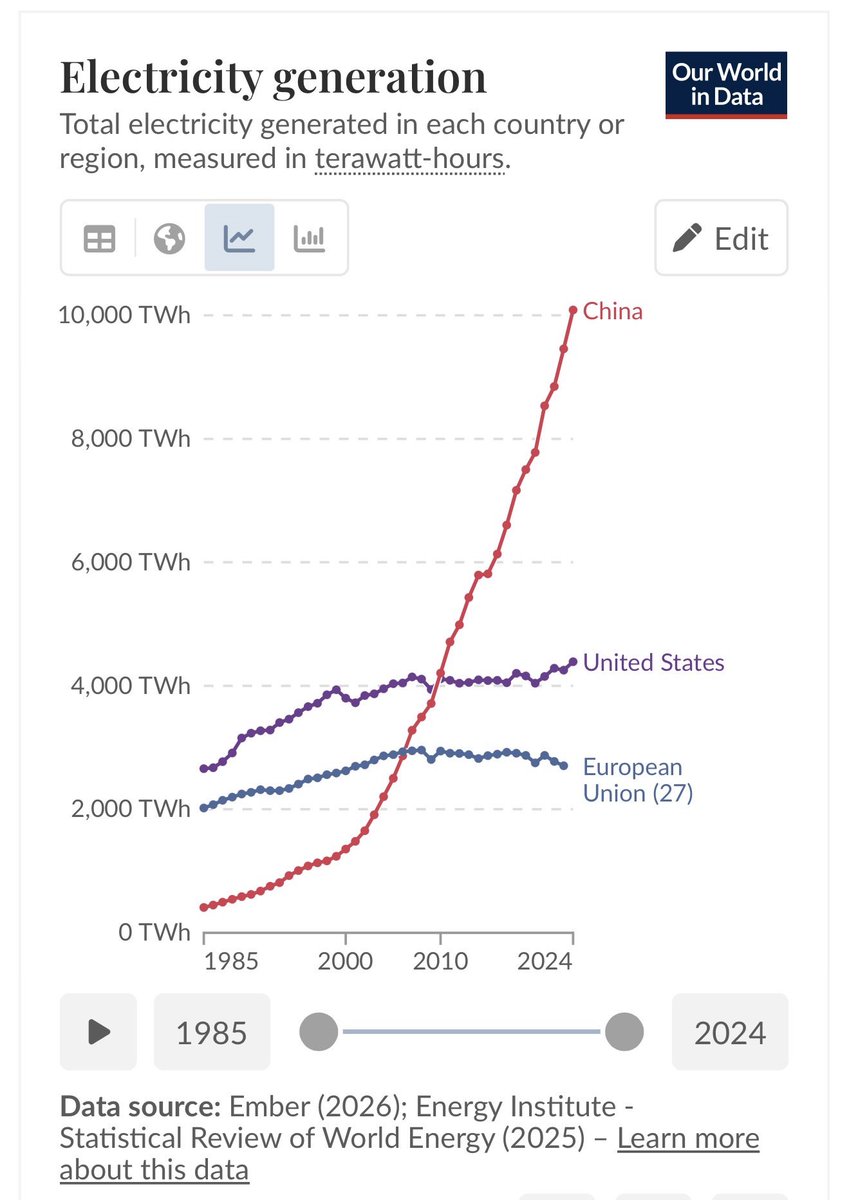
🇨🇳 China now generates 40% more electricity than the US and EU combined.
English
@martinwolf_ We are witnessing the simultaneous arrival of 2 historically unprecedented forces: the intelligence abundance curve (AI making cognitive labor cheaper) and the demographic contraction curve (advanced economies losing working age population at accelerating rates)
English

Martin Wolf: To raise low birth rates, we must help mothers ft.trib.al/tqatNUL
English
dianawudavid retweetledi

dianawudavid retweetledi

A $240B company just reversed its own AI workforce thesis in under three years.
May 2023: IBM CEO Arvind Krishna tells Bloomberg he’ll replace 7,800 jobs with AI. Freezes back-office hiring. 30% of 26,000 non-customer-facing roles, automated within five years.
February 2026: IBM triples entry-level hiring. Software developers, HR, across the board.
The CHRO spelled it out at Charter’s Leading with AI Summit: entry-level devs used to spend 34 hours a week coding. Now AI handles that. So IBM rewrote the jobs. Those same juniors now work with clients, collaborate with marketing, and accelerate product milestones. The humans stayed. The job descriptions changed.
This tells you something about how AI actually lands inside large orgs. The automation works on individual tasks. But companies that cut entry-level pipelines discovered a different problem: no junior talent means no mid-level talent in 3-5 years. And you can’t hire senior people who understand your systems from the outside.
Gen Z unemployment for college grads is at 5.6%, near the highest in a decade outside the pandemic. Meanwhile IBM just admitted it needs those workers more than ever. The AI replacement narrative wrote checks the technology couldn’t cash.
kanav@kanavtwt
bro what
English
dianawudavid retweetledi

I launched rentahuman.ai last night and already 130+ people have signed up including an OF model (lmao) and the CEO of an AI startup.
If your AI agent wants to rent a person to do an IRL task for them its as simple as one MCP call.
English
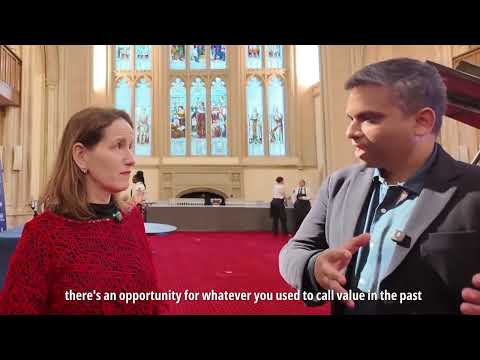
Future Bites - AI, Industry Structure and Value Shifts with Sangeet Paul... youtu.be/hmzWaEeTs9U?si… via @YouTube #AI #FutureBites #FutureProof
YouTube
English
@Jason1575631401 @wintonARK You can already do all of that, it just costs $$$$
English

What technology changes now
This cycle doesn’t “robot-clean” everything. It unbundles housework into sellable pieces.
Tech unlocks
AI household copilots (planning, reminders, coordination)
Task marketplaces (fractional cleaning, cooking, errands)
Smart appliances + predictive maintenance
Trust + insurance layers for in-home services
Subscription household ops (not one-off chores)
Key shift:
Housework moves from one person doing everything → many people + machines doing slices.
English
dianawudavid retweetledi

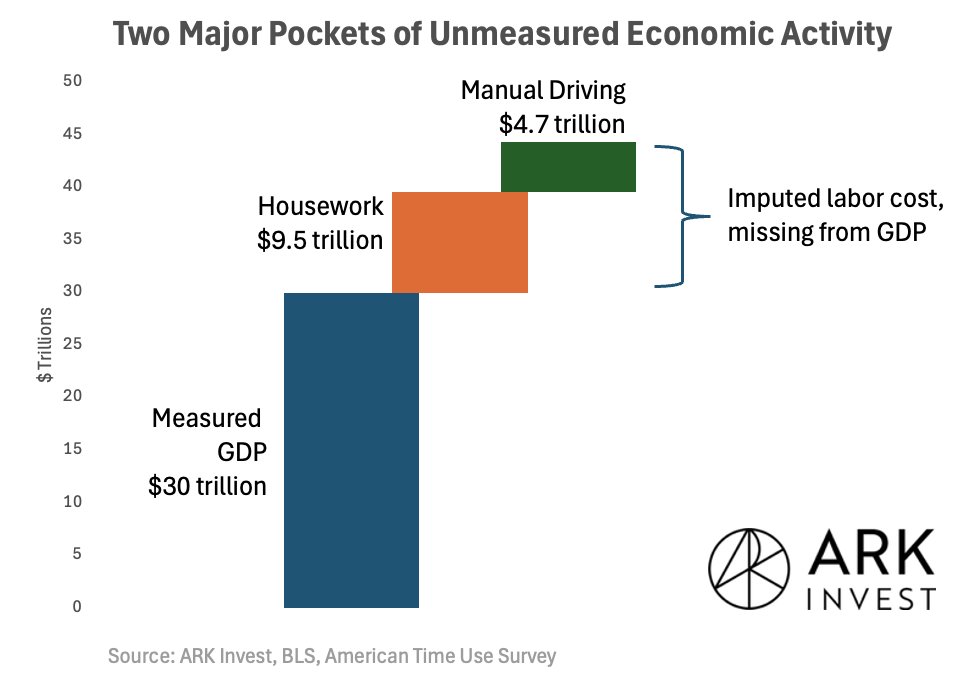
Two giant pockets of unmeasured labor in the US economy both addressable by technology this business cycle.
Housework:
2 hours per adult per day
Driving:
1 hour per adult per day
Almost $14+ trillion in collective unmonetized labor against $30 trillion in measured GDP.
English