

Alexey Zhokhov
475 posts

Alexey Zhokhov
@donbeave
CTO at @ChainArgos / Principal Architect at @Scentbird
Hong Kong Katılım Eylül 2012
255 Takip Edilen97 Takipçiler

@dhruvtwt_ Curious if others are thinking in the same direction or have run into similar limitations with current agent tooling.
English
@dhruvtwt_ That’s the direction I’m exploring right now — treating governance and security as first-class concerns, not an afterthought on top of orchestration.
English

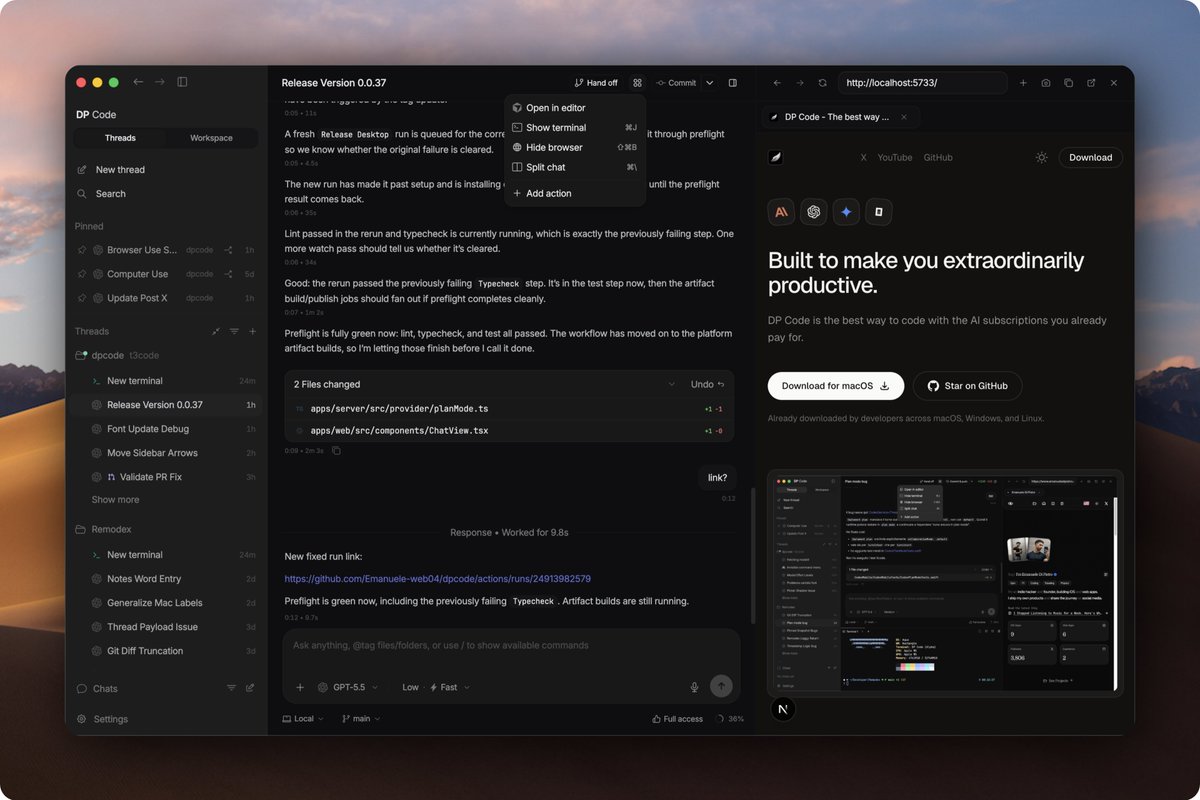
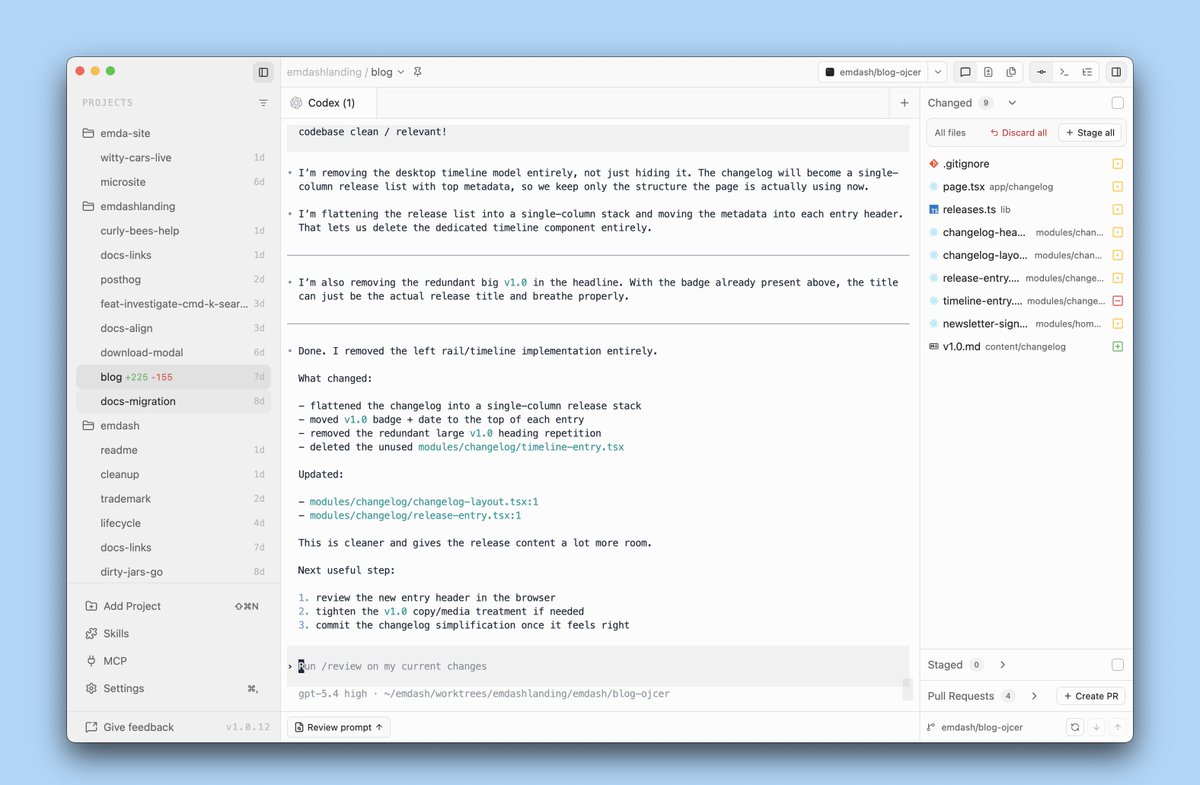
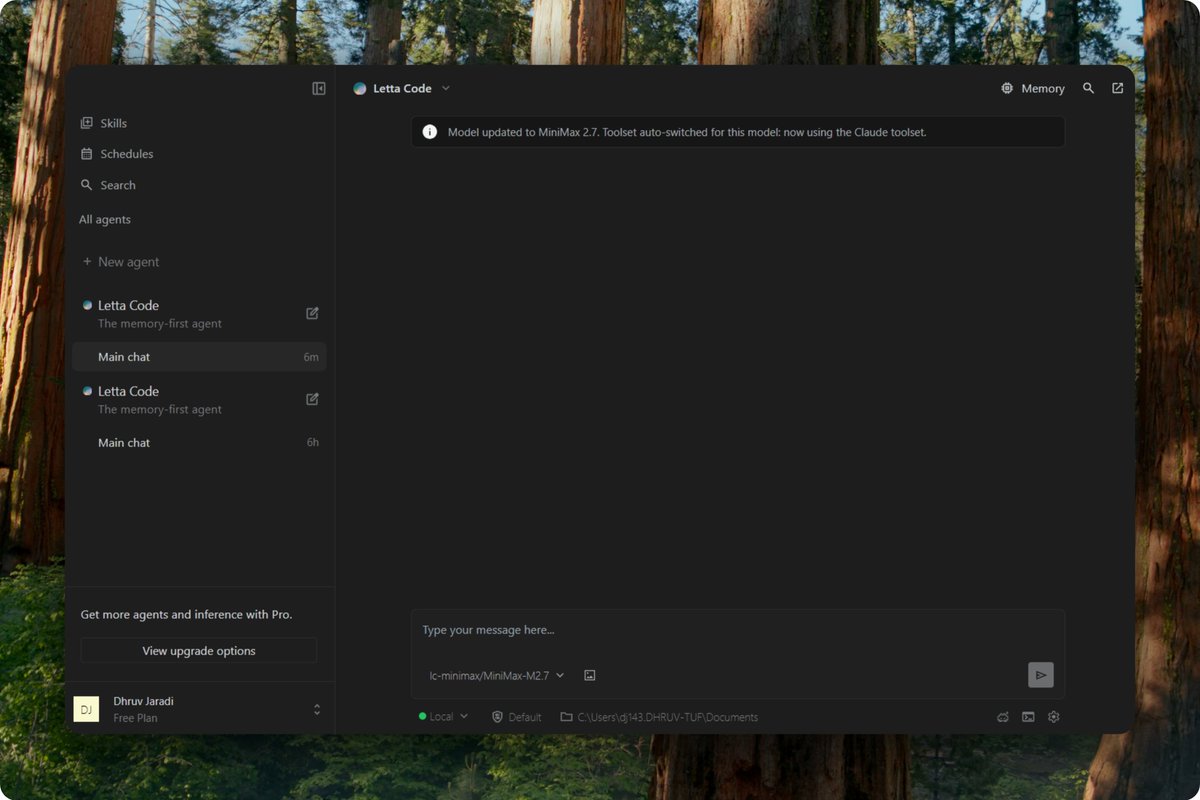
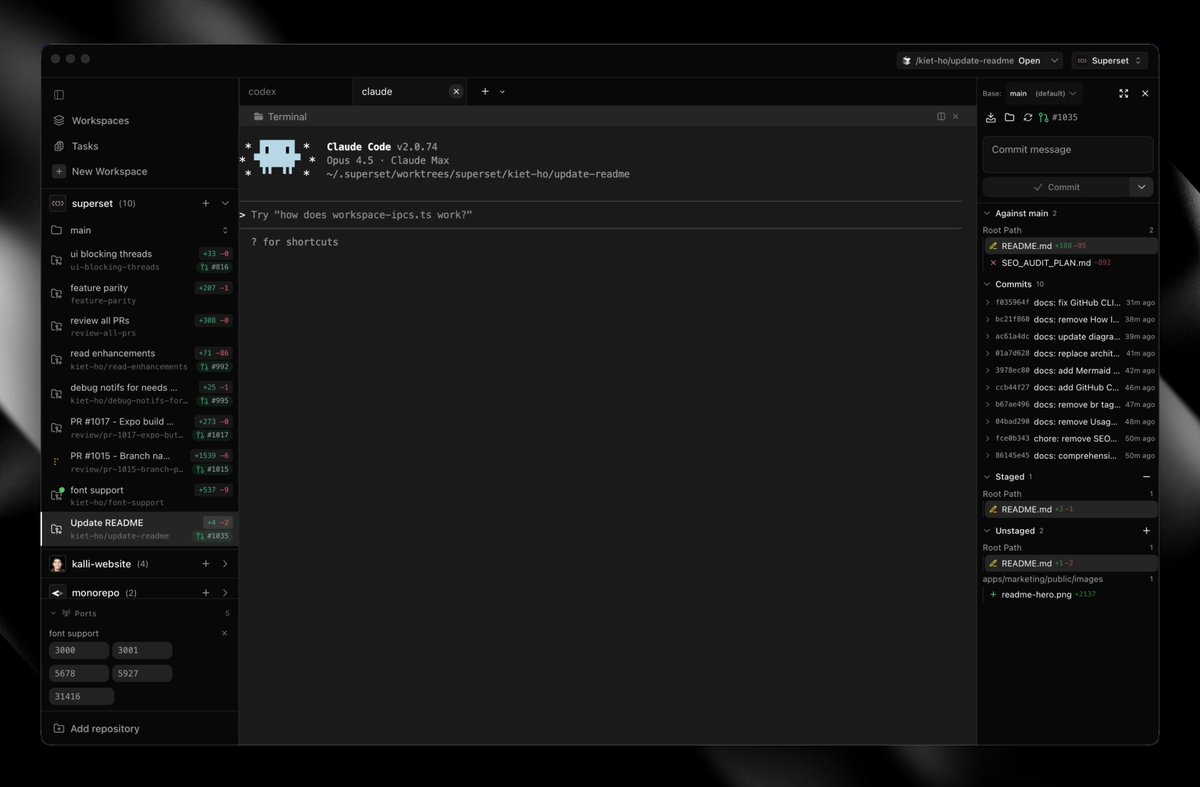
Over the last few days, I explored 4 AI agent orchestrator apps:
- DP Code
- Emdash
- Letta Code
- Superset
Most of them position themselves as a "harness aggregator" or an Agentic Development Environment, a layer on top of your existing AI tools that tries to unify workflows and coordinate multiple agents.
I connected my Claude Code, Codex, Cursor, Minimax API, and OpenCode across these platforms and spent a few hours with each to understand how they actually perform in real usage.
Here’s what I found:
DP Code
> Started off as a T3 Chat–style clone, but has gone through multiple revamps, currently in alpha and now looks very close to the Codex app
> Lets you connect Gemini, Claude, OpenAI, and OpenCode
> You can split work across multiple chats and run multiple agents in parallel
> Switching providers mid-task is supported, which is a really nice touch
Emdash
> YC-backed and focused on running multiple coding agents in parallel
> Supports 20+ AI providers in a single project with separate Git workflows
> Has UI-based plugin, MCP, and skills installation
On Windows it felt a bit sluggish under the hood it was opening separate terminals per agent and lagged a bit (might be smoother on macOS)
Letta Code
> A memory-first coding agent similar to hermes agent i guess
> Automatically detects already logged-in AI providers and lets you use them directly which didn't work with others
> Feels quite similar to OpenCode, but with stronger memory handling
> Also supports cron jobs, which is useful for automation workflows
Superset
> Very similar to Emdash (or vice versa) in terms of positioning
> Currently macOS-only, I tried running it via an Electron wrapper, but it didn’t work well
> Focuses on monitoring multiple agents from a single interface
> Each agent’s changes are isolated, which is helpful for managing parallel workflows
Overall, all of them are pushing in the same direction of multi-agent workflows and provider abstraction, it will be interesting to see which stays in the long term game.
English
@vasuman From my personal perspective, that point seems quite simple and naive. However, I have seen others share your view, so in some sense, you’re right as well.
English

In my experience there’s no better way to destroy your credibility than to use cheap knockoffs of popular software
If you send a client a Docusign link you at least appear to have a real business
If you send them something else they immediately just assume you’re broke
Also if your company has 10 people who need to send the maximum amount of documents, you’re probably making many millions
To the aspiring b2b founders reading this, don’t cheap out on any client facing part of your stack
Anyone telling you otherwise has not played this game seriously before
Nav Toor@heynavtoor
DocuSign Personal: $10 to $15 per month. DocuSign Standard: $25 to $45 per user per month. DocuSign Business Pro: $40 to $65 per user per month. A 10-person team on Business Pro pays $4,800 to $7,800 a year. To put signatures on PDFs. A team of 50 pays $24,000 to $39,000 a year. And there is a 100-envelopes-per-year cap on most plans. Send more contracts and you pay extra. Need SMS delivery? $0.40 per send. Need ID verification? $2.50 per attempt. Need premium support? $5,000 to $50,000 per year add-on. You are rationing digital signatures in 2026. DocuSign is a $10 billion company built entirely on this pricing model. Now meet DocuSeal. A free and open source alternative to DocuSign. Created in 2023 by a Ruby developer named Alex who was simply trying to sign one document and realised every solution online was overpriced or required a subscription. Three weeks later he had a working alternative. He pushed it to GitHub under the AGPL-3.0 license. Today it has 11,800+ stars and over 1,000 forks. Bootstrapped. No VCs. No paywalls. Here is what DocuSeal does: - Upload any PDF and turn it into a fillable, signable form - Drag and drop signature fields, dates, checkboxes, file uploads, and 13 field types - Send to multiple signers with custom signing order - Automated email reminders - Mobile signing on any device - PDF signature verification built in - Audit trail for every document - Bulk send and templates - Full API access - Self-host with one Docker command Here is what DocuSeal costs: Zero. Forever. Unlimited documents. Unlimited signers. Unlimited storage. DocuSign limits envelopes. DocuSeal doesn't. DocuSign charges per SMS. DocuSeal doesn't. DocuSign charges for ID checks. DocuSeal doesn't. DocuSign sees your contracts on their servers. DocuSeal doesn't. Here is the wildest part: The median DocuSign contract per Vendr is $17,250 per year. One Reddit thread has people saying "they want me to pay $4.80 per e-signature." Self-host DocuSeal on a $5 cloud server and a 50-person team can sign as many contracts as they want without paying a single dollar. Your contracts never leave your server. Your client lists. Your NDAs. Your employment agreements. None of it touches a third-party company. For individuals who only sign a few contracts a year, you save $180. For small teams of 10, you save up to $7,800 a year. For a 50-person company, you save up to $39,000 a year. Your documents. Your signatures. Your server. 100% Open Source. (Link in the comments)
English
@jdxcode WOW! I’ll give it a try — this looks exactly like what I’ve been looking for. Thanks for building mise!
English

@jdxcode Because just supports subdirectory tasks, unless I’m missing that feature in mise?
English

If only there was a @Docker product to Offload these containers... 🤓
max guy 😐@GolerGkA
I've never utilized my local machine that hard before. 30 coding agent, and a full test suite with testcontainers on every commit. worth it
English
@johncrickett Of course, this is just an outside perspective. Only people close to GitHub and Microsoft would know how accurate this really is.
English
@johncrickett So you end up in a familiar situation:
you delay fixing systemic issues while things are still manageable…
and then later you’re forced to deal with them under pressure.
Now it looks like priorities are correcting — but at a much higher cost.
English

"GitHub's scale is unprecedented." No, it really isn't.
GitHub: 150M total users.
Office 365: 345M total users.
Xbox: 500M monthly active users.
Bing: 100M+ daily active users.
The company that runs Office, Xbox and Bing can run GitHub.
If reliability is slipping, that's a priorities problem, not a scale problem.
English
@graemerocher Wow, this is awesome! I’m definitely borrowing some of these ideas for my own project: jackin.tailrocks.com
English

Maintaining Micronaut with AI agents linkedin.com/pulse/micronau…
English