Duke of Drizzland

7.8K posts

Duke of Drizzland

Duke of Drizzland

@dookiedrizzle

Sometimes, sh$t hits the fan

Katılım Ocak 2020
376 Takip Edilen149 Takipçiler
Duke of Drizzland retweetledi
Dan Bilzerian
Dan Bilzerian@DanBilzerian·
.@RepFine came into government to help jews and Israel, not you. He wants to spend money to kill foreigners instead of helping Americans. He is the problem
Dan Bilzerian tweet media
English
578
4.7K
28.6K
305.8K
based16z
based16z@based16z·
If everyone agrees not to sell Saylor coins below 98k, he will still buy them from you!
English
20
6
230
12.3K
Duke of Drizzland
Duke of Drizzland@dookiedrizzle·
@GRITCULT Slavery ended when it became economically feasible bc of the Industrial Revolution. But nice try.
English
0
0
0
65
GRITCULT
GRITCULT@GRITCULT·
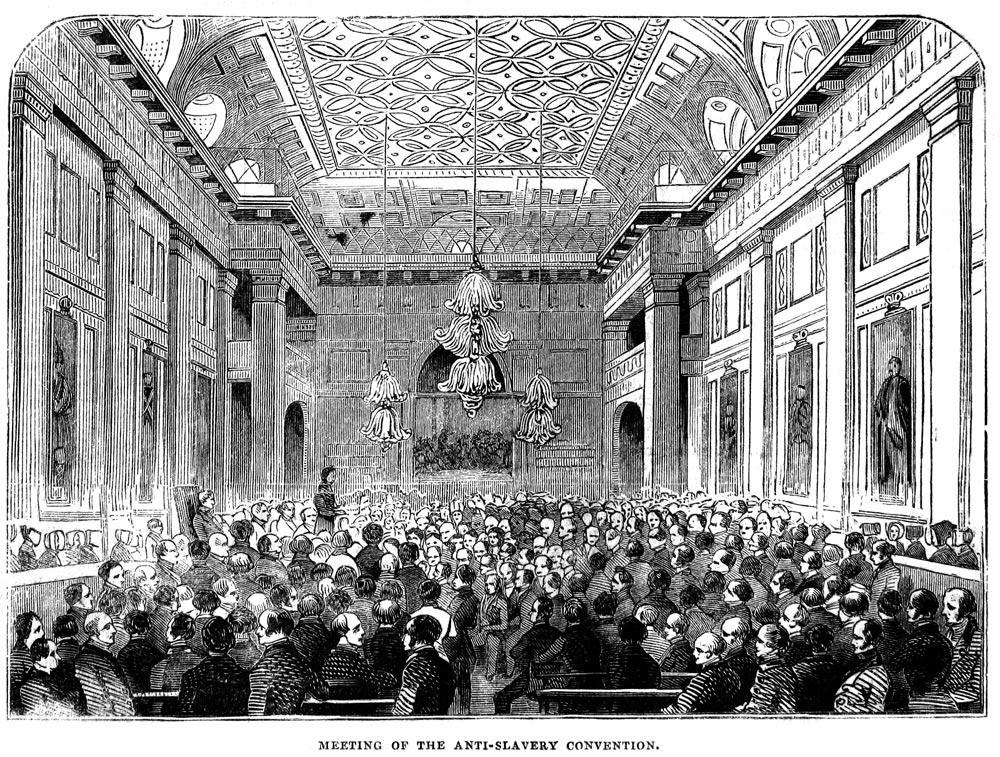
The British Empire was a greater civilisation than Rome. Rome ran on slavery for a thousand years and produced no abolitionist movement. Its philosophers found no language to oppose the institution. Its emperors never legislated against it. Even the famous slave revolts, including Spartacus, fought for the freedom of those enslaved; the end of slavery itself was never their cause. Britain abolished its slave trade while its empire was still expanding. The difference is structural. One civilisation could transform under the weight of its own contradictions. And it still is transforming, the other could only calcify. Roman slavery was total. By the late Republic, perhaps a third of the Italian population was enslaved. Manumission was common, so many free Romans walked the streets knowing their own ancestors had once been chained. Slavery was the foundation of the Roman household, the basis of large-scale agriculture and mining, and a major part of the spoils system that paid the legions. Stoics like Seneca, in his 47th letter, urged kindness toward slaves and never argued the institution itself was wrong. Christianity, after Constantine, regulated slavery without abolishing it. The Theodosian Code preserved it. The institution carried on into Byzantium and persisted there, in evolving forms, until the empire fell in 1453. Rome had no internal contradiction strong enough to break the system. Power justified hierarchy. Hierarchy justified slavery. No language existed inside Roman civilisation that could indict the institution from outside of it. Rome was coherent, and coherence in a civilisation is the absence of the friction that makes growth possible. Britain was the opposite. Henry VIII's break from Rome in the 1530s set in motion a century of religious turbulence that ended in 1649 with Parliament executing Charles I. Out of that rupture came the Quakers, who became the first organised religious body in the English-speaking world to formally condemn slavery, beginning with their Germantown petition in 1688 and crystallising into corporate opposition through the eighteenth century. The Evangelical revival of the 1700s, including the rise of Methodism under John Wesley, extended the indictment further. By the time Britain became the dominant slave-trading power in the world, it had already produced generations of religious traditions that built their entire theology on the literal universality of the human soul. Rome's only major theological revolution, the conversion under Constantine, left slavery untouched. Britain's revolutions reached the institution directly. By 1787, when the Society for Effecting the Abolition of the Slave Trade was founded, Britain was four things at once: the dominant Atlantic slave power, the centre of an evangelical revival, an industrialising economy whose new modes of production were beginning to make plantation labour look archaic, and a parliamentary system newly capable of mass mobilisation. The abolitionist campaigns of the 1780s and 1790s, including the national petition drives and the sugar boycotts joined by hundreds of thousands of Britons, were among the first true mass political movements in modern history. Although I do personally say one should try to free themselves first before trying to free others in the modern world, boycotts and petitions can and do work. Abolition won because it became useful across every axis of British power at the same moment. It satisfied the evangelical conscience. It aligned with the cultural prestige of industrial capitalism. It gave Parliament a galvanising cause. It supplied the empire with a moral grammar, the future "civilising mission," that legitimised its global expansion. You have to remember at the time, many other countries and empires were still openly practicing it. When it was finally abolished the Royal Navy, ended up protecting and patrolling the world as a moral world power. And it had to justify its morality to itself. It seized slave ships, freed tens of thousands of captives and pressured other nations. The 1807 Slave Trade Act and the 1833 Slavery Abolition Act were the legislative output of those four pressures resolving in the same direction. Rome could never have produced this convergence. Roman civilisation generated none of these pressures. There was no evangelical Christianity universalising the soul, no industrial economy reframing labour itself, no mass parliamentary politics, no civic narrative of progress. Rome had power and order. Britain had power, order, and contradiction. This is what makes Britain's abolition historically distinctive. It was self-imposed at the height of imperial power. France abolished slavery in 1794 under the combined pressure of revolution and the Haitian uprising, and Napoleon reinstated it in 1802. Denmark formally ended its slave trade in 1803, four years before Britain, but on a far smaller imperial scale. The United States abolished slavery only after a civil war that killed more than 600,000 people. Britain abolished its slave trade while its empire was still expanding outward, and committed its colonial economies to manumission through Parliament, without coercion. No empire of comparable size had ever done this. That is the marker of a higher civilisation. The capacity to recognise sin while still in power, and to end it without being forced to. To have the ability to look inward and change. Rome accepted slavery because nothing inside Rome could indict it. Britain abolished slavery because everything inside Britain was indicting it at once. Rome had no soul capable of turning on itself. Britain did. Civilisations resolve their contradictions or they fall to them. The stable system with no internal contradiction does not reform; it calcifies. The stable system with sustained internal contradiction either collapses or transforms. Britain transformed. Rome calcified, until something else replaced it entirely. The British Empire was the greater civilisation, because it could carry a contradiction inside itself and resolve it on its own terms. Rome never could. Rome never did. This isnt the first time Britain had transformed internally either, as I mentioned before with the Church of England, and the magna carter. A civilisation that can adapt, integrate new dialectics and still thrive.
GRITCULT tweet media
Dwarkesh Patel@dwarkesh_sp

Rome was a massive slave society: about one person in every ten was a slave. Slaves weren’t a different race, or a different religion, or anything that would make people think they were a fundamentally different type of person. Many free Romans were aware they were descended from slaves. But despite all of this, Rome never developed an abolition movement. Free Romans were convinced that slavery was justified.

English
4
8
72
6.1K
Flood
Flood@ThinkingUSD·
If she really loved you she’d delete her instagram
English
120
298
4.1K
142.7K
John Kiriakou
John Kiriakou@JohnKiriakou·
Personally I am pro choice, but honestly Robby makes a very strong and principled argument. The American body politic seriously needs to have conversations like this. Americans also need to learn that it's ok to agree to disagree. Disagreement doesn't make someone an enemy.
Robby@PutinBotGaming

I say life begins at conception. @JamarlThomas disagrees. Who's right? Link to the full debate below.


English
38
9
117
14.3K
based16z
based16z@based16z·
160k. One monthly candle.
English
114
42
1.4K
99.7K
based16z
based16z@based16z·
At least oil beat earnings
English
14
33
731
32.5K
Shadow of Ezra
Shadow of Ezra@ShadowofEzra·
Acting U.S. Attorney General Todd Blanche says people on X are just as guilty as the mainstream media of politically violent rhetoric, which led to the attempted assassination of President Trump. He says everyone on X is being overly critical and using mean names associated with President Trump with no evidence. It looks like massive censorship is coming.
English
2.4K
1.6K
4.5K
226.8K
Fed
Fed@lord_fed·
Two camps right now: A: market crowded, top is in. B: nobody owns this, melt-up coming. One of these is going to look very stupid in three months. lordfed.co.uk/p/positioning-…
English
57
43
943
1.3M
Charles Edwards
Charles Edwards@caprioleio·
For those who say it doesn't matter if Satoshi's coins get taken by a Quantum hacker, the risk is not his coins, it's the contagion that follows. - KELP was just hacked for a $0.29B. - Aave token mcap fell over 20%. - $12B was drained from Aave TVL in days (40X the hack) Now imagine if over $90B in Bitcoin (just Satoshis coins) were hacked and market dumped. It's the widespread collapse in trust and ensuing bank run we need to plan for now.
English
57
6
99
23.9K
Flood
Flood@ThinkingUSD·
Some off topic fun book recommendations: Women - Charles Bukowski Rules of attraction - Bret Easton Ellis Bright Lights, Big City - Jay McInerney
English
24
8
312
31.5K
Marc Andreessen 🇺🇸
This is the way.
Anthony Pompliano 🌪@APompliano

I have changed my mind on how AI will impact jobs in America. Previously, I believed AI would replace many entry level roles typically filled by young employees. The technology would then work its way up the organization and eventually reduce the total number of jobs in a company. The data is saying something different, so when I get new information I am willing to change my mind. The number of software engineers being hired has been increasing. The number of open software engineer roles is growing. The number of new college grads who get hired has increased 5.6% over the last 12 months. The unemployment level for people aged 20-24 years old who have a college degree has fallen from nearly 9% to almost 5% as well. The Wall Street Journal recently wrote “AI created 640,000 jobs between 2023 and 2025 in the U.S., according to an analysis by LinkedIn of job posting data, including new white-collar positions such as Head of AI and AI engineer.” And I am starting to see companies throughout our portfolio aggressively hiring to keep up with the demand for their products and services. If AI can make employees more productive, which is widely accepted as fact, then companies are going to want as many productive units of labor as possible. This is a key reason why I am changing my mind. AI appears to be a magical technology that will make companies more productive and more profitable. The net result will be more corporations, more startups, and more jobs. All three are big, positive wins for the American economy.

English
107
175
3K
773.2K
illuminatibot
illuminatibot@iluminatibot·
ARGENTINA TO ACCEPT 300K ISRAELIS & CREATE MINI-STATE A confidential report from the Argentina Secretariat of Strategic Coordination & Assistance in Emergencies has been leaked to the press outlining a plan to: - Receive 300K Israelis - Establish a mini-country for Israelis in the burned parts of Patagonia called “Private Neighborhood Josué, Prophet of Israel”
English
692
1.6K
2.4K
109K