@HML_Compounder @AllocateSmartly also looked at elm’s approach a ways back…
allocatesmartly.com/excess-earning…
English
dave r. cantor
300 posts

@drctypea
actuary/investment advisor to pension funds, german shepherdsx2, cocktails, husband, dadx2, catsx2, new yorka, nature, bodybuilding, hiking, coffee
Totally missed this, but Elm has a dynamic allocation ETF now called $ELM. #Investing #Finance #ETF 🌳


Here’s an idea that I haven’t tested, but seems likes it would make sense: Unconstrained trend following, but with a beta capped at zero. . . not through limiting trend exposure, but through a long short factor portfolio using BAB, CMA, and RMW factors. I.e., when the beta of the trend portfolio is 0.5, you add long short defensive factors until the beta is zero. when the trend portfolios beta is zero or below you wouldn’t have any long short factor exposure. Rational being that you want to curb beta during uptrends so that you don’t double down on market risk, but you also don’t necessarily want to limit your trend signals with an explicit beta cap, since the signals are valuable. You could implement the beta cap with potentially rewarded factors. Basically, your BAB/CMA/RMW portfolio is your “first responder” to equity stress, and your managed futures is your second responder. This also might have validity from a factor timing perspective. An AQR paper (link in comment) discusses the fact that the BAB factor has strongest returns following equity uptrends. That’s referring to a beta neutral BAB and I’m talking about a negative beta version, but should be the same principal. You’d also probably avoid a lot of the crashes that BAB sometimes has at the trough of bear markets (similar to momentum crashes) Curious if anyone has seen this suggested somewhere

Recent CTA performance seemed less than expected during this new 10% S&P 500 Index drawdown (Intraday close to low). I ran the numbers and it's actually almost exactly as it has been historically, proving me wrong. CTAs, as defined by the SG CTA index, only made gains once through the first 10% drawdown in stocks.




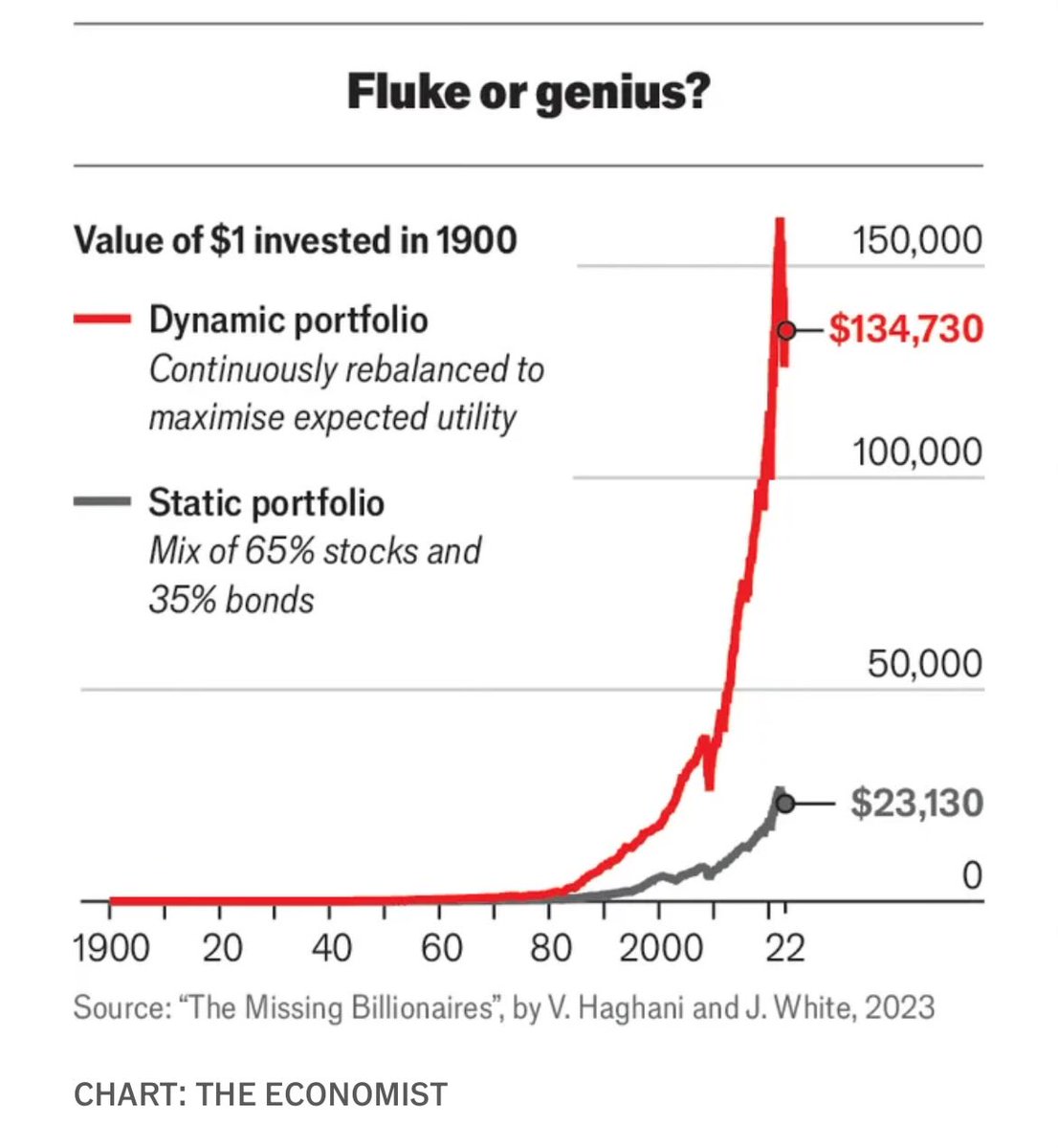
5) The Merton Share balances risk and reward to maximize your happiness (not just returns): Where: - E(R): Expected return of risky asset (e.g., stocks) - Rf: Risk-free rate (e.g., bonds) - σ: Volatility of risky asset - γ: YOUR risk aversion