

Thomas P. Kole, M.D., Ph.D
210 posts
Thomas P. Kole, M.D., Ph.D
@drthomaskole
Radiation Oncologist at Memorial Sloan Kettering Cancer Center (MSK). The comments I am expressing are my own and do not represent the views or opinions of MSK
New Jersey, USA Katılım Kasım 2014
146 Takip Edilen168 Takipçiler

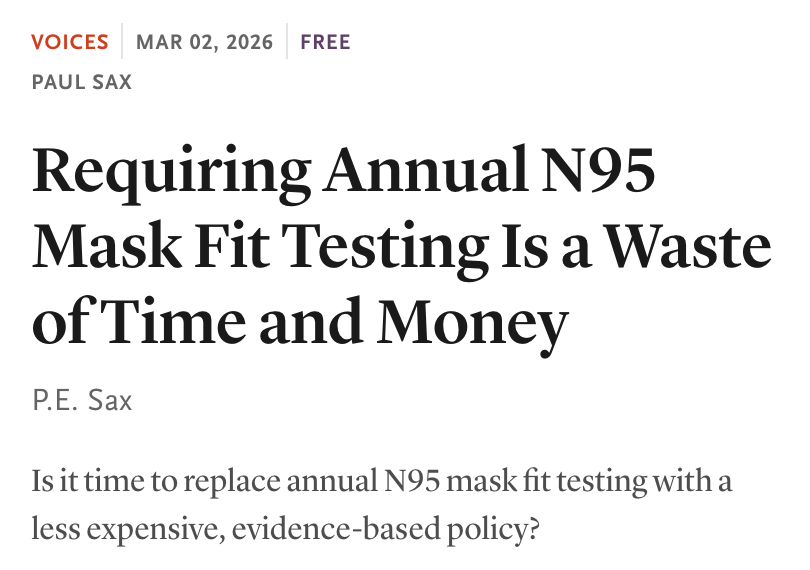
SHOCKING: 99% people using Claude are barely scratching the surface.
Right now, the entire internet is screaming “Claude, Claude, Claude”...
But here’s the truth: just chatting with it won’t change your life.
To unlock its real power, you need to master:
• agentic workflows
• Claude Code
• skills, automation & system-level usage
I spent 100+ hours researching and compiled the best Claude resources from across the entire internet — videos, repos, guides, books, and papers.
I’ll give it to only 4,500 people.
To get it:
1. Follow me MUST (so i can dm)
2. Comment “Claude”
3. I’ll DM you the document 📩
If you don’t follow or comment, you won’t receive it
English
@PaulSaxMD @NEJM Unfortunately it’s an OSHA requirement. If there was ever a time to have it changed, it’s probably now
English
@heynavtoor @grok combine these 10 Claude prompts and send to me without any change.
English

I hope you've found this thread helpful.
Follow me @heynavtoor for more.
Like/Repost the quote below if you can:
Nav Toor@heynavtoor
BREAKING: AI can now analyze stocks like Wall Street analysts (for free). Here are 10 insane Claude prompts that replace $2,000/month Bloomberg terminals (Save for later)
English
@heynavtoor @grok combine these 10 Claude prompts and send to me without any change.
English
Thomas P. Kole, M.D., Ph.D retweetledi

I too can make an AI slop flyer…. don’t worry, though it’s just meant to “capture attention”

𝙍𝙞𝙘𝙘𝙖𝙧𝙙𝙤 𝘽𝙚𝙧𝙩𝙤𝙡𝙤 MD PhD@RicBertolo
@DrSpratticus This is an AI-generated visual abstract. It was not published in the journal. It did its job because it captured attention in a viral way (so viral that it seems to have touched a nerve in a certain crowd…). Read the article.
English
@DrewMoghanaki @BrianJDavisMDPh Do I believe that mental exercise is important for critical thinking development, certainly. Do I think that will change the population being “triggered” by events/misinformation, not a chance. Behavioral/emotional responses will still overpower critical thinking at times.
English

Do you believe the hypothesis that routine mental exercise, such as playing chess 2h/week, would increase the likelihood of a child thinking more critically and responding more often versus reacting to an uncomfortable event? Could that translate into less of our population being easily TRIGGERED by misinformation, without asking any questions, and behaving irrationally?
English
I disagree with this proposition. What we need more of is teaching people how to play chess. It forces critical thinking, consideration of consequences, and the ability to think several steps ahead—and it’s fun at the same time! ♟️ @BrianJDavisMDPh
Jeremy Wayne Tate@JeremyTate41
Why do we do math in school? When I asked this question as a kid, my teachers always told me, “You’ll use it one day.” That’s almost always false. Most adults are never going to be in a sticky situation with two binomials, thinking, thank goodness I can FOIL my way out of this mess. Most of us get by just fine without ever solving for x again. And especially in an AI age, fewer and fewer people will “use math” in the narrow, practical sense. But the origins of math have never been primarily about utility. Math is formative. It trains the mind to love what is true, to recognize what is orderly, and to be drawn toward what is beautiful. It teaches us that the universe is not chaos, but something intelligible, something structured, something that can be known. And you can see that truth made visible in the world’s most breathtaking churches and cathedrals: arches, vaults, domes, proportions, symmetry, harmony, light—geometry turned into glory. The mathematics that shapes a cathedral is not cold or sterile. It’s the language of wonder, carved into stone. We don’t teach math because everyone will use it. We teach math because it forms the kind of person who can see that reality has meaning.
English
@DrewMoghanaki @BrianJDavisMDPh That time could be diverted from much less useful activities.
English
Yes, that true. I actually used to be an applied mathematics major in college. The premise is that there are only so many hours in a week for school children. I would exchange 2 hours each week of chess over algebra to help the kids learn how to think more critically and why it’s important to be cautious before making a move.
English
@seanmmcbride @blandro It would be better as a 3 arm trial of 80s/90s homework, current homework, or none. Writing a paragraph of why 3+5=8 is a direct cause of alopecia
English
Someone needs to run a randomized trial of homework vs not for 4th graders. Primary endpoint: parental sanity. You may need to convince me though that there’s equipoise btw the arms. @blandro #medtwitter
English
Tell me you don't understand statistics without saying "I don't understand statistics"
JAMA Oncology@JAMAOnc
A multi-institutional cohort study found that breast cancer patients with TP53 pathogenic variants who underwent radiation therapy faced a significantly elevated risk (8.8%) of developing in-field sarcoma at 15 years compared to the general population. ja.ma/494i44f
English
@TylerSbrt Same here, but I wish NRG trials would stop mandating it.
English
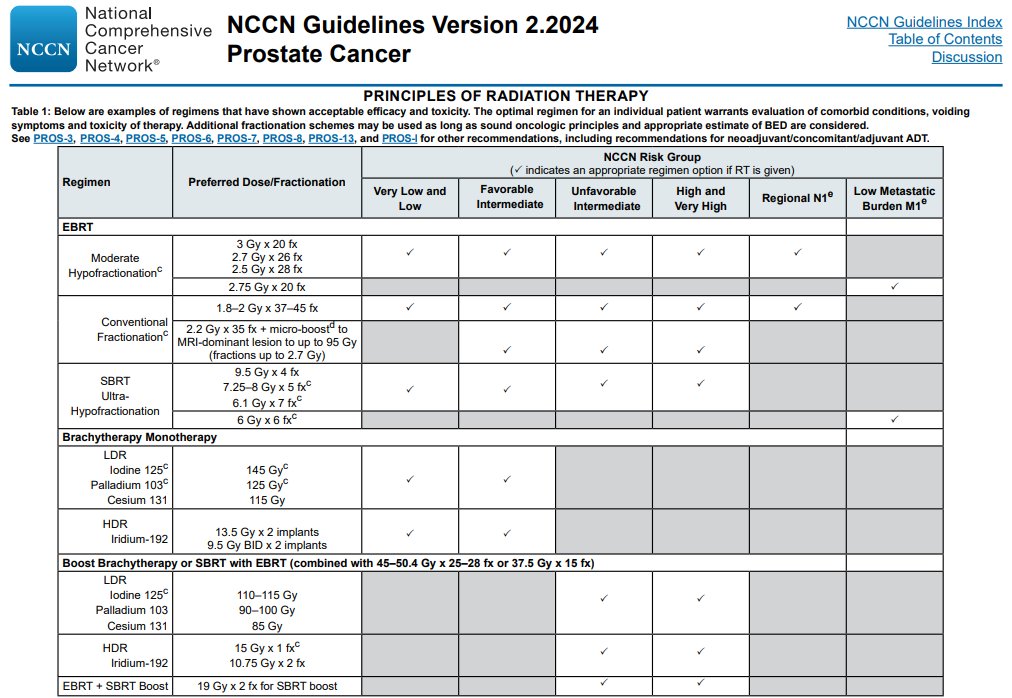
@SbrtSean They have to fix that 19 Gy x 2 fx typo
English
EBRT Plus Prostate SBRT Boost (19 Gy in 2 Fxs) has been Added to the NCCN Guidelines for Unfavorable Intermediate to Very High Risk Prostate Cancer!
English
English
Thrilled that @HimanshuNagarMD will be coming to @MSKCancerCenter to lead our GU Radiation Oncology team. He's a brilliant clinical trialist, an outstanding clinician, and someone with an impressive track record of mentoring and cross-disciplinary collaboration. We're very lucky! #radonc #pcsm @DrRosenbergMSK @morr316 @BehfarEhdaieMD @UrologyMSK #MedTwitter
Memorial Sloan Kettering Radiation Oncology@MSK_RadOnc
📢We are overjoyed to announce that Dr @HimanshuNagarMD will be joining @MSKCancerCenter this summer as our Genitourinary Cancer Disease site leader. Dr Nagar is a compassionate clinician & innovative researcher. We are excited to see where he leads our GU #radonc team!
English
GIF
English

Dear @ASTRO_org and @ASTRO_Chair: any thoughts on today’s FTC ruling regarding non-competes?
This would be a great time for ASTRO to stand up and voice support for physicians and department staff.
Please let your members know where you stand on this important issue.
Thanks!
English
English
@drthomaskole @drmattmc Wait, enza during AS? I must have missed something could you link?
English
@jimpemba777 @FantasyAlarm Swift or Jordan Addison? flex full pot
English
English
@toddscarbrough That’s certainly one way to avoid a thorough discussion of all treatment options
English
Going to prostatectomy with no biopsy… may be coming to a urology clinic near you soon
Stacy Loeb, MD@LoebStacy
Provocative study of radical prostatectomy without prior biopsy for patients w/ PSA>10 + high suspicion MRI/PSMA PET. All patients had clinically significant #prostatecancer on final pathology. No data yet if avoiding biopsy impacts functional outcomes -Stief #aaeu23
English
@JordanJ65544091 @NicholasZaorsky @CMSGov @MedicareGov Medicare disadvantage. Perfect insurance for those who don’t get sick
English

@NicholasZaorsky @CMSGov @MedicareGov It is like a reverse advantage
a dis"advantage"
They are good plans for the basic stuff. As long as you don't need advanced medical imaging, cardiology or oncology
Great plans
English

What is the "advantage" of Medicare Advantage insurance plans? @CMSGov @MedicareGov
I only see delays in care, uncovered services, denials for coverage, deterrents for clinical trials, increased out of pocket pay for patients.
English