Edward Larkin

91 posts

Edward Larkin banner
Edward Larkin

Edward Larkin

@ealarkin7

Valius. Palantirian forever.

San Francisco, CA Katılım Mart 2011
723 Takip Edilen690 Takipçiler
Edward Larkin
Edward Larkin@ealarkin7·
@arampell The great what-if is whether Federer would have plateaued if he knew the number to beat was 20+ and not 14.
English
0
0
0
45
Edward Larkin
Edward Larkin@ealarkin7·
Not the main reason I own, but I love $TXG for tail upside here re: #3. All the big AIxBio projects (Arc, Chan-Zuck, etc) use single cell readouts, and supra-majority are TXG. I have a feeling single cell will be a huge part of the story for future drug discovery (at least until virtual cells are perfect!) Also, much much cleaner balance sheet and FCF profile than most of LS tools and diagnostics (ignoring the super high SBC).
English
0
1
2
592
TheLAPurchaser
TheLAPurchaser@TheLAPurchaser·
AI x Healthcare intersection: Let's be clear. It's early. You're not getting paid on a AI thesis today. That said, Where to look? 1) $ISRG: Only clear play today. Autonomous robotics: it's a 5-10yr roadmap, but this is what the 1000x compute on DV5 enables. Case Insights is the first step (think early days of TSLA where you got safety warnings, autocorrect steer, etc). ISRG monetizing today at $50k/system/yr. 2) Diagnostic Imaging: The LLM creates a picture from partial information. Lot of data to parse through. Separates signal from noise. $SHL.GY $GEHC are the obvious public plays. $ISRG comments last night made me think of this: This quarter, we received FDA clearance for a significant software release that improves workflow and imaging options, including upgraded system software that uses real-time AI to enable even more precise airway navigation and tomosynthesis integration, broadening the suite of imaging offerings when cone-beam CT is not available 3) Drug discovery: This is clearly the most exciting opportunity, and where we'll see meaningful breakthroughs over the MT/LT. Every LLM has a project here, but I struggle with a real way to express this view in the public mkts. The genomics labs ( $NTRA $TEM $CAI ) in theory play a part given the large amounts of data they aggregate, but there's a lot left to be proven out. Bioprocessing players ( $DHR, $RGEN, $DIM.FP, $TMO) will benefit from greater [volumes], personalization, and more complicated biologic production.
English
14
10
128
50.4K
Edward Larkin
Edward Larkin@ealarkin7·
@moonbeeaam What’s your Lerner stack rank? Atocha > Topeka > 10:04 for me.
English
1
0
0
1K
anna
anna@moonbeeaam·
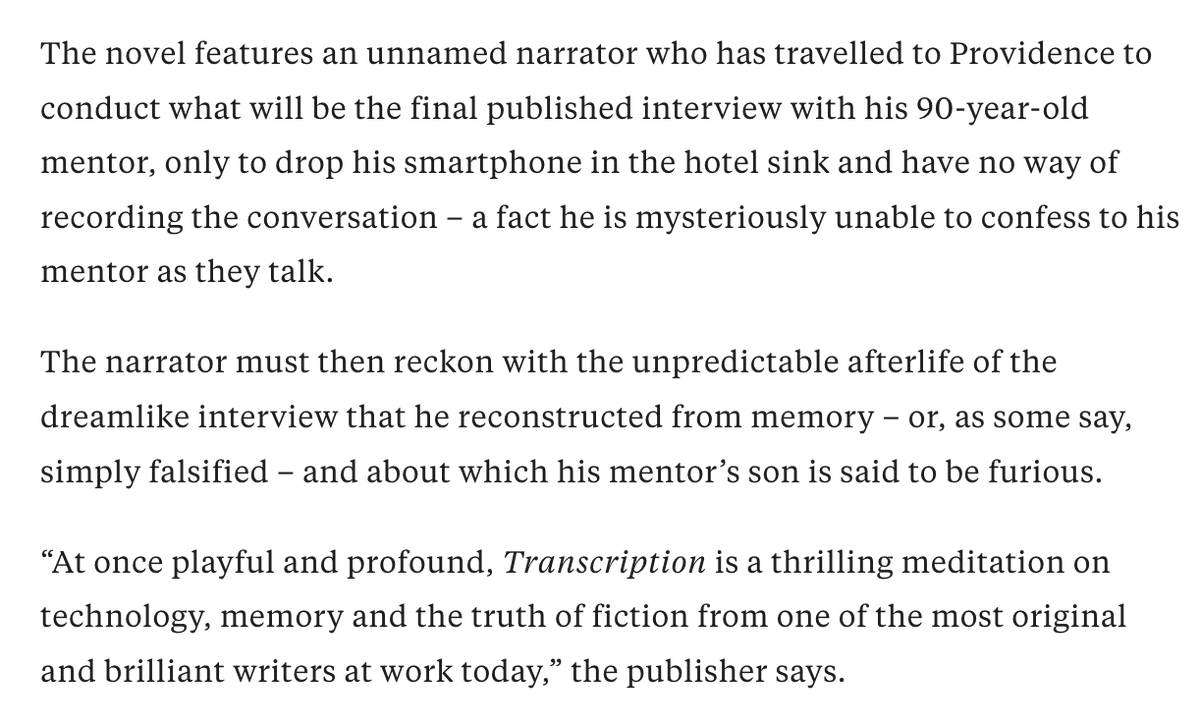
This is the premise for Ben Lerner's next novel, which is supposed to be out in April 2026
anna tweet media
English
19
18
684
74.5K
Edward Larkin
Edward Larkin@ealarkin7·
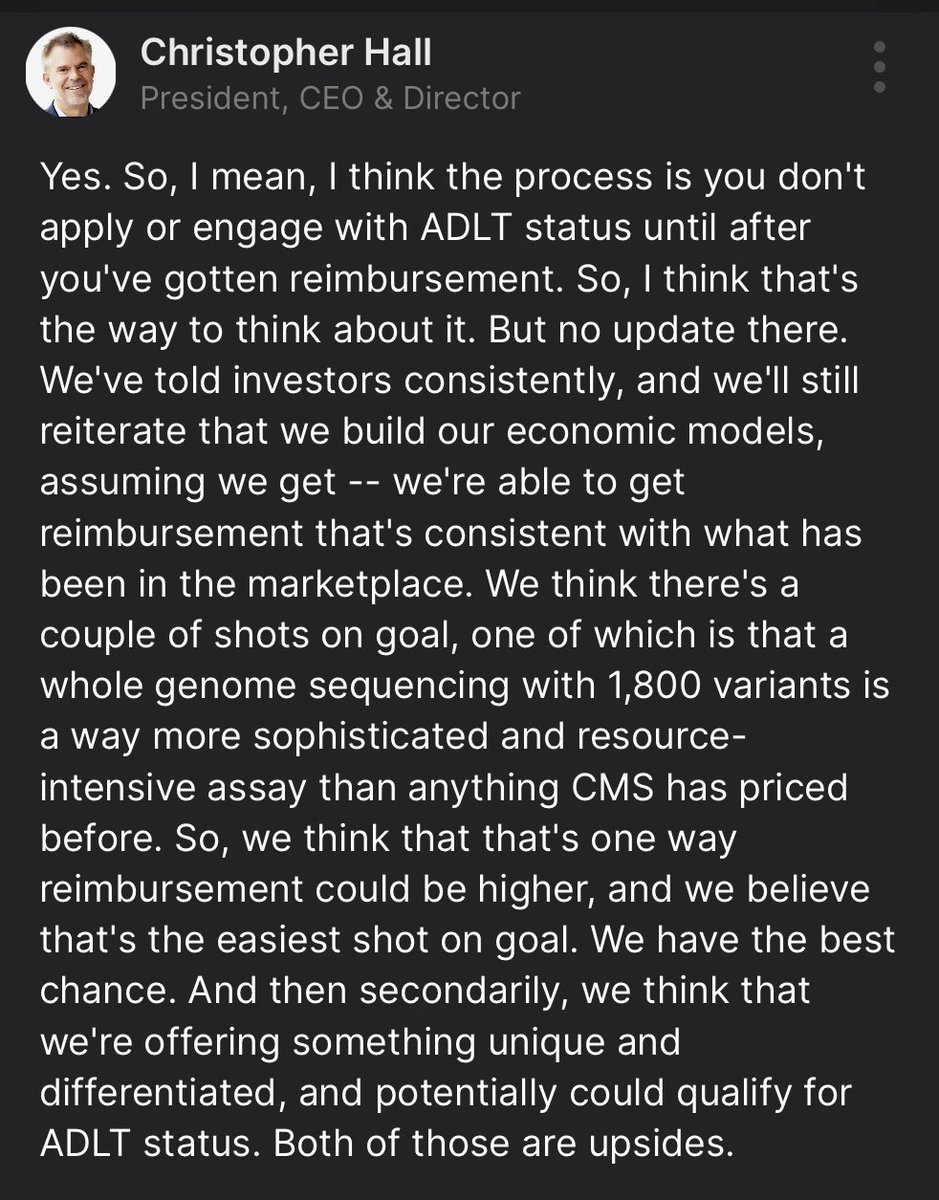
@midwit_capital @SimonDBarnett @updating_priors Interesting. Do you think they’ll get ADLT status? I wonder whether Signatera Genome being on the market changes their likelihood to do so. If I recall, Signatera Genome is getting reimbursed same amount by Medicare as classic Signatera, right?
English
2
0
0
177
Edward Larkin
Edward Larkin@ealarkin7·
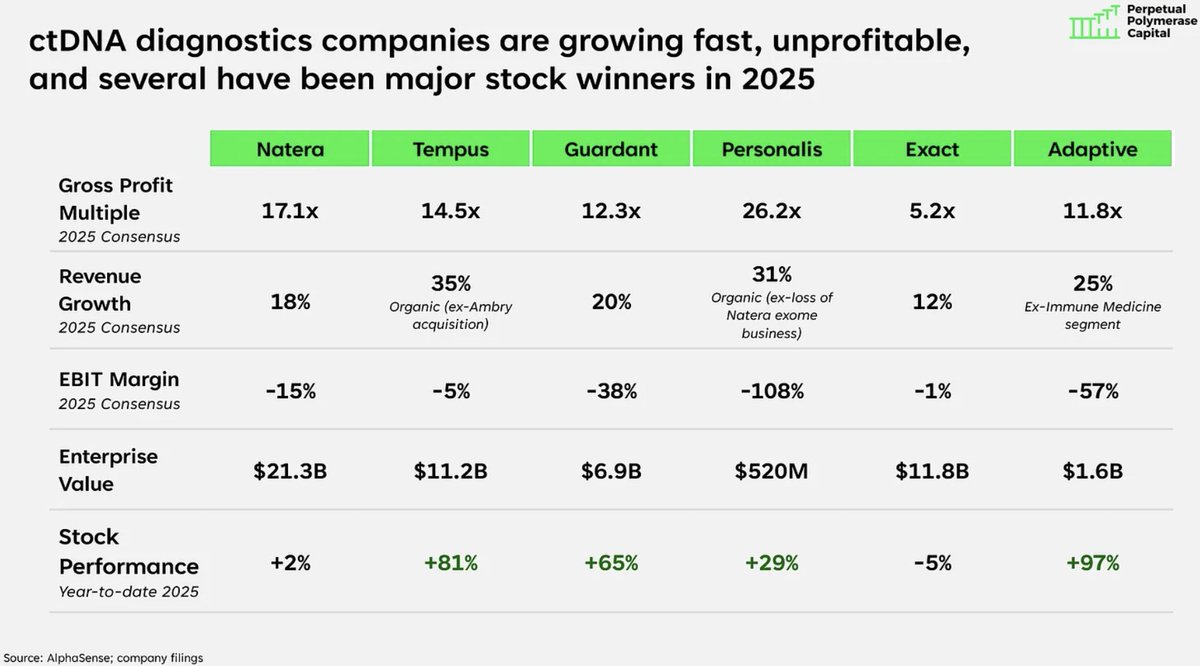
In my most recent post, I dive deep on ctDNA testing and why it stands to profoundly change oncology. This is an area where my own thinking has evolved recently.
Edward Larkin tweet media
English
4
7
36
9.7K
Edward Larkin
Edward Larkin@ealarkin7·
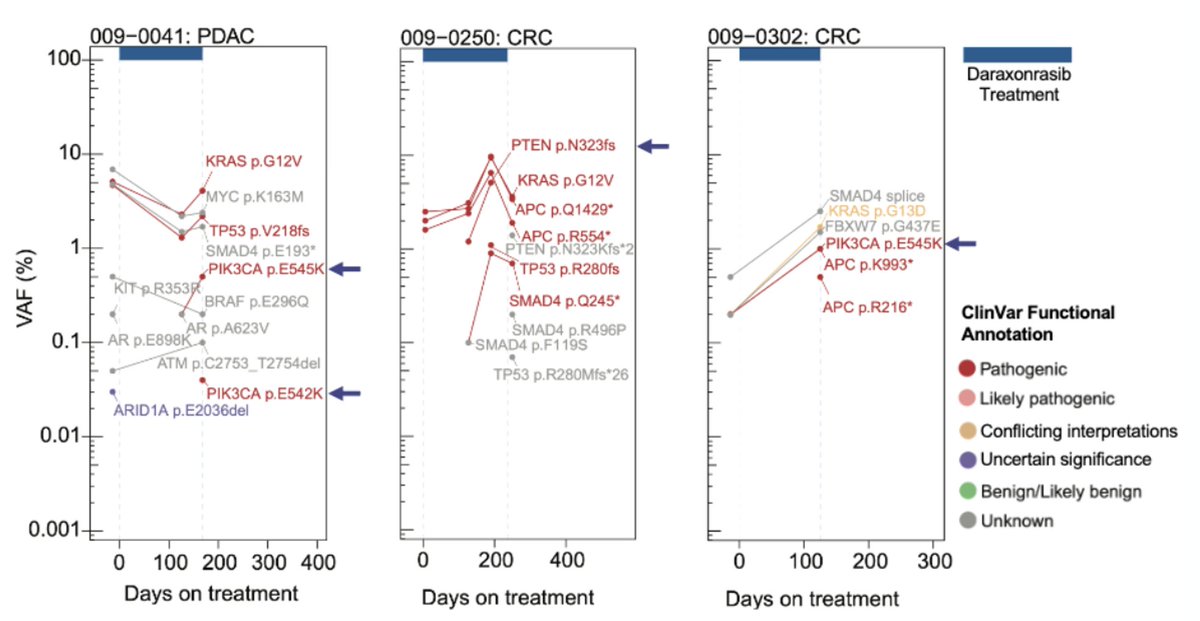
@ronfleix This is so cool. This one I think is pre-clinical? So probably no ctDNA assay needed. But really seems like the direction of travel for ctDNA assays in clinic.
English
1
0
0
57
Gustave Ronteix
Gustave Ronteix@ronfleix·
@ealarkin7 There was a very cool poster at AACR too where they were tracking the appearance of mutations in PDAC patients under pan-RAS(ON) therapy. You could see the tumor escape in "real time". The potential seems enormous to do real-time therapy adjustments.
English
1
0
1
55
Edward Larkin
Edward Larkin@ealarkin7·
I wonder how far away we are from being able to visualize the core cancer-causing cellular pathways akin to an engineering diagram and showing visually how aberrant they are in a specific person’s cancer, based on everything shown in a standard gene panel + transcriptomic profile. Having this sort of visual of what’s driving the cancer and what other pathways might lead to resistance feels like it could help physicians reason about what to do when they need to off-road.
English
1
0
1
221
Simon Barnett
Simon Barnett@SimonDBarnett·
It’s great if you’re selling exploratory content to pharma companies, but I’ve only seen it hurt in the clinic. A lot of the time, even established reports like Guardant360 or Foundation CDX can be hard for docs to read. No knock on them, their jobs are hard. But I’ve talked with lots of market access consultants who beg and plead the big reference labs to make it easier for community docs to be able to interpret even standard biomarker tests. If you start putting tons of exploratory content on there, ouch!
English
1
0
0
311
Simon Barnett
Simon Barnett@SimonDBarnett·
I am not following the space as closely as @ealarkin7. The $3900 isn’t unique to Natera, it’s the CPT code for ctDNA serial monitoring. It’s common for newer entrants to get cross-walked to the same code, provided their assays are non-inferior and have the same application. I see no scenario where Personalis’s test isn’t analytically superior. That said, payers will not give you more because your test is better or has more content. There isn’t really a ‘best-in-class’ effect in diagnostics. Getting CMS reimbursement is a big deal, make no mistake, but it still requires a heavy commercial push (and a cost-inefficient one at that). Commercial payers are harder. You’ll grind your operating margin down with collections. Payer mix massively affects ASP.
English
2
0
3
314
Edward Larkin
Edward Larkin@ealarkin7·
I think that’s right - I believe Natera gets paid highly for their Signatera recurrence tests because of ADLT status and smart contracting (diagnostics reimbursement is horrifically opaque). But a lot of time payers refuse to pay at all, so blended across all Signaters tests, I think they’re still around $1,100 and have guided to a bull case of like $1,700 per test. If I were building a model, I would model payers grinding that down the $3,000+ test substantially over time :)
English
1
0
2
104
rush
rush@updating_priors·
@SimonDBarnett @ealarkin7 Wow. Is that $3900 roughly confirmed?? This should be insanely positive for personalis, no?
English
2
0
2
280
Edward Larkin
Edward Larkin@ealarkin7·
So not sure if decreasing costs more with dPCR makes a huge difference at the low end of the market. And high end I think will be super sensitive with variant tracking. That's my bet. Are there other advantages to dPCR? I'm a bit less familiar with dPCR as a methodology overall, beyond it being qPCR without the reference curves. Is there a much more ambitious future for dPCR in 10 years?
English
1
0
3
108
Edward Larkin
Edward Larkin@ealarkin7·
Thank you! Interesting question that I haven't considered. But Signatera is already super cheap on sequencing costs. The upfront genome/exome is pricy, but after that, I think they use <$30 sequencing consumables per test. So a small fraction of COGS (probably $200).
English
1
0
1
153
Edward Larkin
Edward Larkin@ealarkin7·
In conclusion, this is an incredibly fun time to invest and operate in diagnostics. ctDNA is perhaps the biggest oncology measurement technology revolution in the last 25 years, and I expect it to meaningfully change the field going forward.
English
3
1
6
840
Edward Larkin
Edward Larkin@ealarkin7·
Additionally, while Signatera is the overwhelming leader right now, it's not a sure thing that they'll win the market. Other companies - especially Guardant - have an interesting angle of attack on the market (Guardant360 moreso than Reveal).
English
1
0
3
840