eamm18

4.6K posts

eamm18 banner
eamm18

eamm18

@eamm18

Un tipo que le gustan los juegos, MGZ, aprendiendo MDU en la UC. Escuchanos en #ElPosturno en #Spotify!

Santiago, Chili Katılım Nisan 2009
1.3K Takip Edilen402 Takipçiler
eamm18 retweetledi
Felipe👨‍💻- e/acc
Felipe👨‍💻- e/acc@FelipeTechPM·
> O ano é 2006 > Você chega da escola > Vai direto pro computador > Abre o uTorrent > Percebe que ainda faltam alguns minutos > Sua internet de 200kb não é lá essas coisas > Ok, você tem tempo de almoçar > Meia hora depois retorna > Legal, a ISO terminou de baixar! > Deixa o seed ligado por um tempo > Outra pessoa quer baixar também > Abre o Nero (quem lembra?) > Burning… > Grava a ISO! > Abre o Daemon Tools (os de verdade sabem) > Monta a imagem > Instala o jogo! > Inicia… ainda está pedindo um CD > De volta pra internet > Procure um crack No-Cd > Baixe o crack > AVAST grita: uma ameaça foi detectada! > De volta pra internet > Encontre um keygen russo misterioso > Você vê dois botões, mas não fala russo > Escolha com sabedoria > Apareceu um código na tela! > Copia, cola, copia, cola, copia, cola… > Inicia o jogo de novo > Tá rodando, bora caralho > EA GAMES, challenge everything! 🫦 > Tun de run dun, de run de run dun oooh 🔈 > Through the window, to the wall (the wall)🔉 Eu vivi isso, tempos bons que não voltam mais 🥹
Old Internet@OldInternetFeel

Português
1.1K
3.4K
32.7K
2.3M
eamm18 retweetledi
Ernesto 🇨🇱
Ernesto 🇨🇱@gnapse·
@CoraxBzh "Ya es tiempo de mirar hacia el futuro con Chile, no hacia el pasado contra Chile." No podría estar más de acuerdo. Desde Chile pienso que Argentina y Chile podrían ganar mucho más colaborando que enfrentándose.
Español
5
5
174
2.6K
eamm18 retweetledi
Harrison Ford
Harrison Ford@HarrisonFordLA·
May the fourth be with you
GIF
English
2.9K
51.8K
220.8K
6.8M
eamm18 retweetledi
Sachin H. Jain, MD, MBA
When I was a third-year medical student on my obstetrics and gynecology rotation, I spent time working with an Ob-Gyn named Bruce who had a favorite line. As he scanned the bellies of expectant mothers, he would ask: “Do you have a name for the baby?” If they did, he would enthusiastically discuss the name. If they didn’t, he would grin and say: “You know, if it’s a boy, Bruce is a pretty great name.” As the rotation went on, I started doing admission histories and physicals for women arriving in labor. They say we absorb our clinical style from our teachers. So one day, while taking a history from a woman who had recently immigrated from Cape Verde, I decided to imitate my attending. “Do you have a name for the baby?” I asked. She told me she was still thinking about it. Without much thought, I replied: “Sachin is a pretty great name.” She paused. “What does it mean?” I told her: “It roughly translates as truth.” She smiled. “I like it.” I was suddenly caught off guard. What had started as a throwaway conversation starter borrowed from my attending had unexpectedly become something real. A few hours later, another “Sachin” was born into the world. I have thought about that moment many times over the years. Medicine gives us extraordinary access to people’s lives at moments of enormous vulnerability, hope, fear, and possibility. Sometimes we underestimate how much even small interactions can matter. And sometimes, without realizing it, we leave pieces of ourselves behind in other people’s stories.
English
46
149
5.1K
490.8K
eamm18 retweetledi
Schwartzmann Salvador
Schwartzmann Salvador@S_Schwartzmann·
En una cena en la Casa Blanca, Carlos III le dijo a Trump: “He notado los cambios que has hecho en el Ala Este. Debo decir que nosotros, los británicos, también, a nuestra modesta manera, intentamos renovar la Casa Blanca…, allá por 1814”. Todos se rieron y chiste es que, en 1814, los británicos incendiaron la Casa Blanca. El Rey también le regaló a Trump la campana de un submarino británico dado de baja llamado “Trump”, y le dijo: « - “Tócala si alguna vez nos necesitas, Donald”
Español
1
8
78
11.5K
eamm18 retweetledi
Dr. Chacón-Lozsán F .'.
Dr. Chacón-Lozsán F .'.@franciscojlk·
🫀🤔 Rethinking renal perfusion in critical illness We often default to MAP targets, but this review challenges that simplicity. 🔑 Key insight: Renal perfusion pressure (RPP) = MAP- venous pressure (or CVP/MSFP) → Meaning both hypotension and venous congestion can drive AKI. 📌 What stands out: • The kidney is highly autoregulated… until it isn’t • In critical illness, autoregulatory failure occurs earlier than expected • AKI can develop even with “normal” macrocirculation → microcirculation matters • Fixed MAP targets ignore inter- and intra-patient variability 💡 Clinical implications: • Think beyond MAP → consider mean perfusion pressure (MPP) • Avoid venous congestion (CVP, intra-abdominal pressure, fluid overload) • Move toward individualized perfusion targets • Use multimodal monitoring (Doppler, biomarkers, tissue oxygenation) ⚠️ Bottom line: Renal protection is not just about pressure — it’s about gradients, flow, and congestion. A shift from “one-size MAP” → precision hemodynamics is coming. 📚 Reference Panwar, R., (2025) Annals of Intensive Care, 15, 115. doi.org/10.1186/s13613…
Dr. Chacón-Lozsán F .'. tweet media
English
2
40
115
5.7K
eamm18 retweetledi
Ahmed Bennis MD 🫀
Ahmed Bennis MD 🫀@drbennisahmed·
A simple echo ratio predicts who dies after STEMI. 🧵 TAPSE/sPAP — a bedside measure of RV-PA coupling — is now a powerful, independent predictor of 1-year mortality post-primary PCI. New data from 973 patients. The headline number: ⚠️ HR for 1-year mortality: 9.62× (reduced vs. preserved coupling, p<0.001) 1-year all-cause mortality: 🔴 Reduced RV-PA coupling: 27.1% 🔵 Preserved RV-PA coupling: 3.22% 🎯 Optimal cutoff: TAPSE/sPAP < 0.405 mm/mmHg Measured by pre-discharge echocardiography — no invasive workup needed. Study: 973 STEMI patients, 2 German tertiary centers, 2014–2023, median follow-up 4.2 years. 💡 RV-PA uncoupling is detectable at routine echo before discharge. It may be one of the most powerful tools we have to risk-stratify STEMI patients early. Graesser C, et al. JACC Cardiovasc Interv. 2026;19(7):874–885. #STEMI #Cardiology #RightHeart #Echocardiography #TAPSE #MedEd #MedTwitter
Ahmed Bennis MD 🫀 tweet media
English
3
68
215
10.9K
eamm18 retweetledi
Marta Peirano
Marta Peirano@minipetite·
Me sumo a la advertencia: Sci-Hub ha pirateado más de 85 millones de artículos de investigación y ahora encima han añadido un bot que responde preguntas utilizando artículos completos y recientes. Esto es un escándalo. Dejo el enlace abajo para que sepas cómo evitarlo.
Mushtaq Bilal, PhD@MushtaqBilalPhD

Sci-Hub is an evil website that pirated 85M+ research papers and made them freely available And now they've added AI to their database to make Sci-Bot. It answers your questions using latest, full-text articles. But DO NOT use it. We should all try to make billion-dollar academic publishers richer. I'm putting the link below so you know how to avoid it.

Español
117
3.1K
14.6K
687.1K
eamm18 retweetledi
Khalid M. Alkhalifah, MD
من اكثر الكتيبات المختصرة والي يجمع لك اشياء كثيرة ويفيد اغلب التخصصات للانتيرن والرزدنت واستعماله سهل من الفهرس اضغط على الموضوع وينقلك له مباشرة👌🏻 هو بالاساس يصدر من قسم الباطنة باحد مستشفيات هارفرد لكن يخدم تخصصات كثيرة وماعرفته الا من روتيشن الICU dropbox.com/scl/fo/84heg7t…
Khalid M. Alkhalifah, MD tweet mediaKhalid M. Alkhalifah, MD tweet media
العربية
2
81
706
53.7K
eamm18 retweetledi
Orlando RPN
Orlando RPN@OrlandoRPN·
El Estudio ANDROMEDA SHOCK-2 fue elegido como el Mejor Estudio Clínico de 2025 por el Editor de @JAMANetwork por su importancia (Choque Séptico, causa número 1 de muerte hospitalaria) e innovación (manejo por perfusión, resultado compuesto y jerárquico) Si aún no lo has leído, qué esperas? jamanetwork.com/journals/jama/…
Español
2
107
393
16.8K
eamm18 retweetledi
Benigno Valderrábano Salas
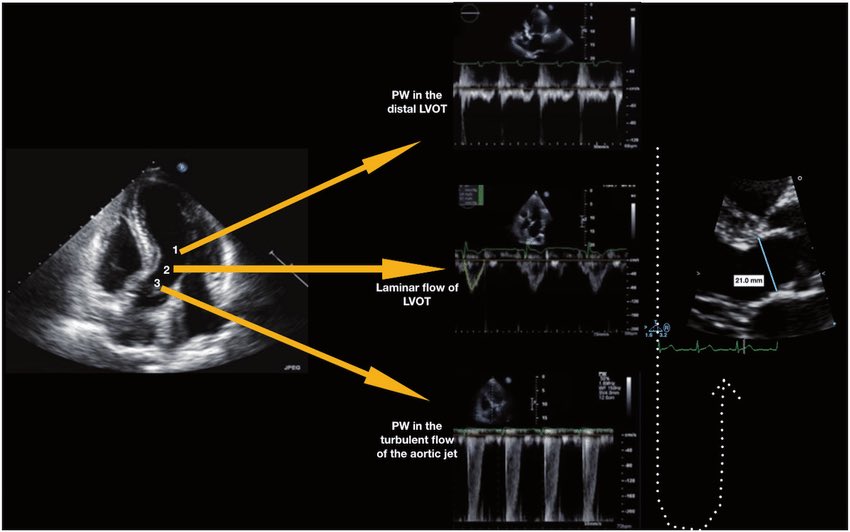
🫀 Did you know where the recommendation to place the pulsed wave Doppler sample volume 0.5–1 cm from the aortic valve to measure LVOT VTI comes from? The answer is more interesting than it seems. It doesn’t come from a single study or an experiment designed for that purpose. It comes from a historical chain spanning nearly 40 years: 🔬 1982–1984 — The physical foundation Pasipoularides and Murgo demonstrated using invasive catheters and mathematical models that in aortic stenosis there is a real zone of flow acceleration in the LVOT, just proximal to the valve, without any second anatomic obstruction. Pure hemodynamics — no Doppler yet. 👉 Bird et al. Circulation 1982 → doi.org/10.1161/01.CIR… 👉 Pasipoularides et al. Am J Physiol 1984 → doi.org/10.1152/ajphea… 📐 1984 — The apical 5-chamber view Lewis, Kuo and Quinones were the first to validate cardiac output measurement using pulsed wave Doppler from the cardiac apex. They described placing the sample volume “immediately proximal to the aortic valve leaflets” — but without specifying any distance in centimeters. 👉 Lewis et al. Circulation 1984 → doi.org/10.1161/01.CIR… 📏 1985 — The first numerical distance Skjaerpe, Hegrenaes and Hatle (the Norwegian group) were the first to quantify this in Doppler: they empirically observed that flow acceleration began 0.5 to 1.5 cm proximal to the valve, and placed the sample volume just proximal to that zone. They directly cited Pasipoularides as supporting evidence. This was the first time a numerical distance appeared in the technique. 👉 Skjaerpe et al. Circulation 1985 → doi.org/10.1161/01.CIR… 📊 1986–1988 — Practical consolidation Otto et al. used ~1.0 cm. Oh, Tajik and the Mayo Clinic group explicitly established the range of 0.5 to 1.0 cm in 100 patients, justifying it as necessary to avoid the subvalvular acceleration zone. This is the figure we all recognize today. 👉 Otto et al. JACC 1986 → doi.org/10.1016/S0735-… 👉 Zoghbi et al. Circulation 1986 → doi.org/10.1161/01.CIR… 👉 Oh et al. JACC 1988 → doi.org/10.1016/0735-1… 📋 2002 — It becomes “official” Quinones, Otto, Zoghbi and colleagues codified it in the ASE guidelines as “~5 mm proximal to the aortic valve”… but without citing any specific study to support it. It had already become expert consensus. 👉 Quiñones et al. JASE 2002 → doi.org/10.1067/mje.20… ⚔️ 2017 — The debate reopens Baumgartner et al. (EACVI/ASE) maintained the 0.5–1 cm recommendation. However, Hahn and Pibarot responded with a critical letter pointing out that the original articles from the 1980s measured at the aortic annulus, not 0.5–1 cm below it, and that moving away from the annulus introduces errors due to the elliptical and irregular shape of the subannular LVOT. 👉 Baumgartner et al. Eur Heart J Cardiovasc Imaging 2017 → doi.org/10.1093/ehjci/… 👉 Hahn & Pibarot. JASE 2017 → doi.org/10.1016/j.echo… 💡 Bottom line: The 0.5–1 cm figure was never experimentally validated as the optimal distance. It emerged from empirical observations in the 1980s aimed at avoiding a flow acceleration zone that had been demonstrated with invasive catheters. It was adopted through accumulated clinical practice and later elevated to a formal recommendation by consensus. The debate over whether to measure at the annulus or 0.5–1 cm below it remains open to this day. One of those recommendations we all follow but few know where it actually came from 🙂 Dr Benigno Valderrábano Salas @MDBeni @JaeKOh2 @ottoecho @WilliamZoghbi @ASE360 @EACVIPresident @NephroP @iamritu @PPibarot @hahn_rt @MAecocardio @SISIACOficial @SONECOM_AC @VazyurVasquez @Cardiotweets83 @HEARTof_echo @echobasics
Benigno Valderrábano Salas tweet media
English
17
131
410
53.6K
eamm18 retweetledi
Carlos-cryptofinanzaslibres
Carlos-cryptofinanzaslibres@escapasistema·
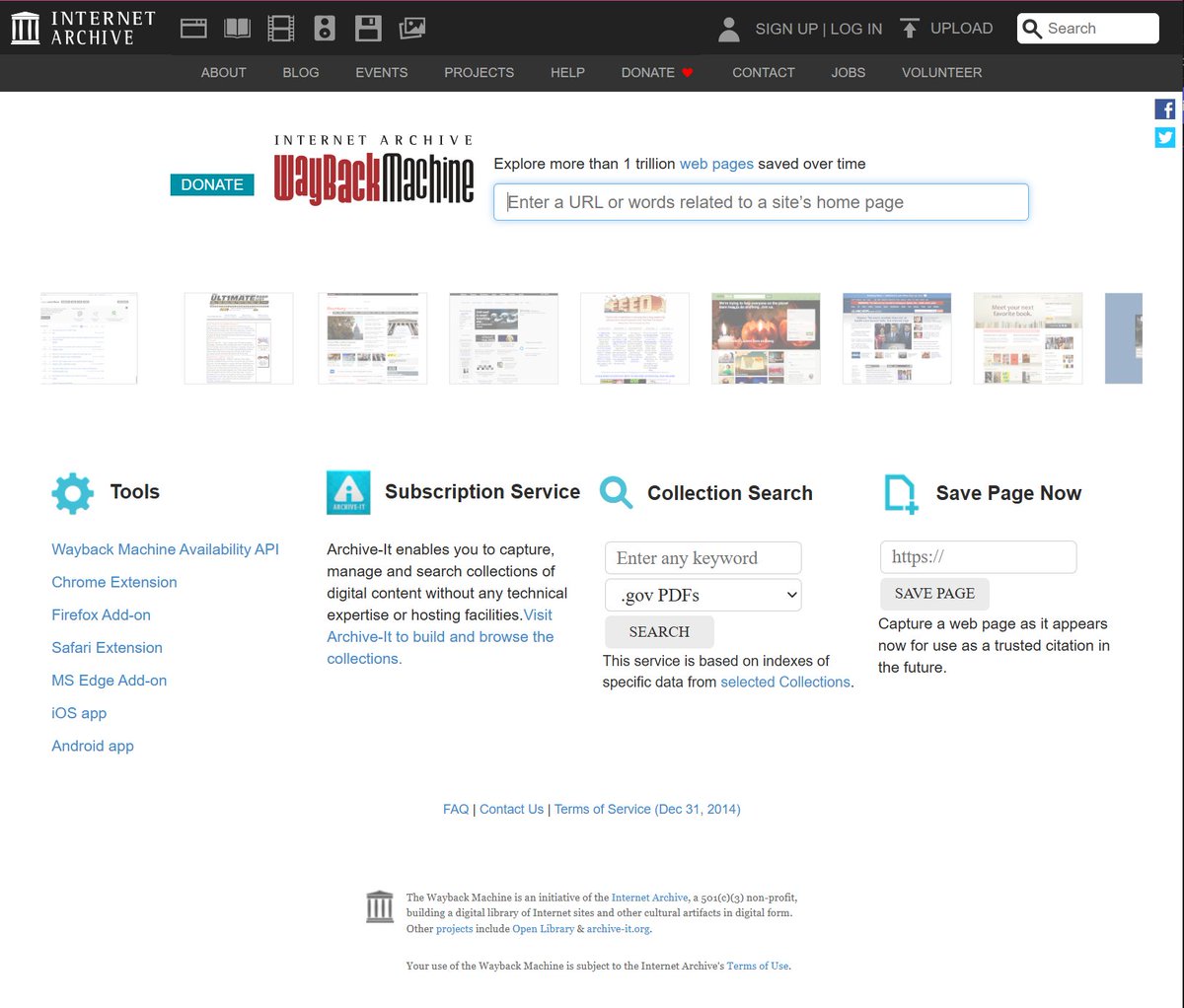
Sitios web que parecen ilegales de conocer 1) FlightRadar24: Muestra la ubicación en vivo de los aviones. Puedes rastrear vuelos específicos. 2) 10 Minute Mail: Te da una dirección de correo temporal que caduca después de un corto tiempo. 3) Hosting Nigeria: Consigue nombres de dominio y hosting extremadamente baratos para tus webs. 4) Temp-number: Te ofrece números extranjeros temporales de forma gratuita. 5) Wayback Machine: Busca una web y mira cómo era en el pasado. Útil para encontrar contenido eliminado. 6) BugMeNot: Proporciona datos de inicio de sesión compartidos para algunas webs. Permite acceder sin crear cuenta. 7) Whois: Permite verificar quién es el dueño de un dominio. Muestra cuándo se creó y cuándo caduca. 8) Down For Everyone Or Just Me: Comprueba si una web se ha caído. Te dice si el problema es global o solo tuyo. 9) FutureMe: Escríbete un correo a ti mismo y recíbelo en el futuro. Tú eliges la fecha de entrega. 10) Remove. bg: Elimina el fondo de las imágenes de forma automática. 11) WindowSwap: Muestra vistas desde ventanas de todo el mundo. Puedes saltar entre ubicaciones aleatorias. 12) ScanWP: Detecta si una web está hecha con WordPress y muestra qué tema y plugins utiliza. 13) Privnote: Permite enviar notas que desaparecen tras ser leídas. El mensaje se autodestruye al abrirse. ¿Sabías que la Wayback Machine (de Internet Archive) ha guardado más de 800 mil millones de páginas web desde 1996? Lo más increíble es que este proyecto no solo sirve para la nostalgia; se ha convertido en una herramienta crucial para el periodismo de investigación y la justicia. En varios casos legales, las capturas de pantalla de la Wayback Machine han sido aceptadas como evidencia en juicios, demostrando que lo que se publica en internet deja una huella digital casi imposible de borrar por completo, incluso si el autor original intenta eliminar el rastro. En el mundo de la soberanía digital, estas herramientas son tus "sensores": te permiten auditar quién tiene el poder, proteger tu privacidad y recuperar información que el sistema preferiría que olvidaras. ¿Cuál de estas herramientas te parece más útil para proteger tu soberanía personal en un entorno donde cada clic que haces está siendo rastreado?
Carlos-cryptofinanzaslibres tweet media
Español
26
943
5.5K
389.4K
eamm18 retweetledi
Dr. Chacón-Lozsán F .'.
Dr. Chacón-Lozsán F .'.@franciscojlk·
🫁 Why I always ask for paired blood gases! CO2 and hemodynamics 🧪 For years, we have relied on: ▪️ Lactate ▪️ ScvO₂ / SvO₂ ▪️ Clinical perfusion But all of them share a critical limitation: 👉 They do not reliably detect ongoing tissue hypoperfusion ⚠️ The problem You can have: ✔️ Normal ScvO₂ ✔️ Decreasing lactate ✔️ “Stable” hemodynamics …and still have microcirculatory failure 👉 This is where CO₂ enters the game 🧠 The physiology in short CO₂ behaves differently from oxygen: ➡️ ~20x more diffusible than O₂ ➡️ Accumulates when flow is insufficient ➡️ Reflects flow adequacy, not just oxygenation 👉 Pv-aCO₂ ≈ inverse of cardiac output 🔥 What the CO₂ gap really tells you 🟢 Pv–aCO₂ < 6 mmHg → Likely adequate flow 🔴 Pv–aCO₂ ≥ 6 mmHg → Suggests low flow / impaired perfusion BUT: ❗ It is NOT a marker of hypoxia alone ❗ It is a marker of flow–metabolism mismatch ⚡ The real upgrade: the CO₂/O₂ ratio 👉 Pv-aCO₂ / Ca-vO₂ This is the missing piece. ✔️ Approximates respiratory quotient ✔️ Detects anaerobic metabolism ✔️ Reacts faster than lactate 📈 >1 = ongoing anaerobic metabolism 🚨 Clinical implications 🩸 Septic shock High CO₂ gap despite ScvO₂ >70% → hidden hypoperfusion Persistent Pv–aCO₂ ≥6 mmHg → ↑ mortality 🫀 Fluid responsiveness ↓ Pv–aCO₂ after fluids → likely responder 🫁 Weaning failure ↑ CO₂ gap during SBT → inadequate DO₂ vs VO₂ 🏥 Post-op patients Elevated CO₂ gap predicts complications better than lactate ❌ Common mistakes ❌ Using lactate alone ❌ Ignoring normal ScvO₂ “false reassurance” ❌ Interpreting CO₂ gap without context (pH, Hb, ventilation) ❌ Treating numbers instead of physiology 🚀 Modern hemodynamic approach We should integrate: 1. Macrocirculation → MAP, CO 2. Oxygen markers → ScvO₂ 3. Metabolic markers → Lactate 4. Flow markers → Pv–aCO₂ 5. Anaerobic markers → Pv–aCO₂ / Ca–vO₂ 👉 Not one variable 👉 A physiology-driven bundle 🎯 Take-home CO₂ is not a waste product. 👉 It is a real-time marker of perfusion adequacy 👉 It detects what oxygen variables miss 👉 It bridges macro and microcirculation 📚 Mallat J et al. (2025) Annals of Intensive Care DOI: 10.1186/s13613-025-01569-2
Dr. Chacón-Lozsán F .'. tweet media
English
6
112
353
30.1K
eamm18 retweetledi
Anish Moonka
Anish Moonka@anishmoonka·
A parasite that has been eating people for 3,500 years is about to be wiped off the planet. It infected 3.5 million people in 1986. Last year, it infected 10. And I have not seen it make a single front page. It is called Guinea worm. You drink contaminated water from a pond in a poor village. A year later, a worm up to three feet long starts coming out of your leg through a burning blister. There is no pill that stops it and no surgery that works. You wrap the worm around a stick and pull it out slowly, over days or weeks, inch by inch. If you rush, the worm breaks inside you and causes a fresh infection. Guinea worm is ancient. Preserved worms have been pulled out of Egyptian mummies from around 1000 BCE. The Ebers Papyrus, an Egyptian medical scroll from 1550 BCE, describes pulling the worm out with a stick. For three and a half thousand years, that was the best humans could do. Then in 1986, public health workers decided to kill the parasite off. They had no vaccine and no drug. What they had was cheap cloth water filters and a small army of volunteers willing to walk from village to village for decades. The plan was simple. Give everyone who drinks from a pond a cloth filter to strain out the tiny water fleas that spread the parasite. Then send volunteers walking house to house, year after year, teaching people how to use the filters and keeping anyone with an emerging worm out of the water. It worked. From 3.5 million cases a year to 10. Four were in Chad, four in Ethiopia, two in South Sudan. The other four countries where the worm used to be common, Angola, Cameroon, the Central African Republic, and Mali, had zero human cases for the second year in a row. The World Health Organization has already certified 200 countries as Guinea worm free. Six are left. The last hurdle is dogs. Cameroon had 445 infected animals last year and Chad had 147, so a lot of the remaining work is on animals, not humans. Strays get leashed, and crews treat ponds to kill any remaining worms. The campaign keeps watching until the number hits zero. When Guinea worm hits zero, it becomes the second human disease ever erased from the planet. The first was smallpox. It will also be the first parasite humans have ever wiped out, and the first disease ever ended without a single dose of medicine. Volunteers walked village to village with cloth filters for 40 years. Now a plague from the age of the pharaohs is about to be gone.
ً@prinkasusa

Give me the kind of good news from around the world that nobody ever talks about... but should.

English
732
20.7K
129.5K
7.9M
eamm18 retweetledi
Dr. Chacón-Lozsán F .'.
Dr. Chacón-Lozsán F .'.@franciscojlk·
🩺 Arterial line ≠ just a number on the monitor If you’re only looking at MAP… you’re missing most of the physiology. 🧠 Invasive BP is a real-time hemodynamic language Every component tells a different story: ▪️ MAP → organ perfusion ▪️ DAP → vascular tone ▪️ SAP → LV afterload ▪️ Pulse Pressure (PP) → stroke volume surrogate ➡️ It’s not one number. It’s a dynamic physiological system ⚠️ First rule, often ignored: 👉 If the waveform is wrong → everything is wrong Before interpreting: ✔️ Check damping ✔️ Perform fast flush test ✔️ Look for: Rapid upstroke Dicrotic notch Smooth diastolic decay ➡️ Bad waveform = bad decisions 📉 MAP alone is NOT enough We target MAP ≥65 mmHg… but: ▪️ Duration of hypotension matters ▪️ Individual physiology matters ▪️ CVP matters 👉 Think instead: 🎯 Perfusion pressure = MAP − CVP (MPP) ➡️ A “normal MAP” can still mean hypoperfusion 🔥 DAP = your vasopressor trigger Low DAP = low vascular tone ▪️ Septic shock → ↓ DAP ▪️ Early signal before MAP collapses 👉 Use it to: ✔️ Start norepinephrine earlier ✔️ Avoid delayed vasopressor therapy ➡️ It’s one of the most underused variables in ICU ⚡ Pulse Pressure = hidden CO monitor PP reflects: ▪️ Stroke volume ▪️ Arterial stiffness 👉 Dynamic changes = key: ✔️ PLR ✔️ Fluid challenge ✔️ Ventilator cycles (PPV) ➡️ You can track CO trends without a CO monitor 🧬 Next-level physiology (very underrated): New indices: ▪️ DSI = HR / DAP → identifies vasoplegia early ▪️ VNERi = DAP / (HR × NE dose) → detects norepinephrine resistance 👉 These may define who needs vasopressin early 💡 Mindset shift Don’t ask: ❌ “What’s the MAP?” Ask: ✔️ “What is the physiology behind this waveform?” 🧠 Take-home Arterial line monitoring is not passive. It’s: ▪️ Diagnostic ▪️ Therapeutic ▪️ Predictive ➡️ If you read it correctly… it becomes a precision resuscitation tool 📚 Bertrand M et al. (2025)Annals of Intensive Care DOI: 10.1186/s13613-025-01608-y
Dr. Chacón-Lozsán F .'. tweet media
English
0
157
522
46.7K
eamm18 retweetledi
goma
goma@soigomaa·
My "Roman Empire is the realization that my life is a lottery win. Somewhere in Sudan, Pålestine, iran, Afghanistan, Iraq or Congo, there is a boy smarter than me. He is more disciplined, more resilient, and holds more potential in his single finger than I do in my entire career. The only difference? I am siting in a train and he is sting in the rubble of his dreams. My "bad days" are his wildest dreams. My "burnout" is a luxury he can't afford because his only job is staying alive. It's geographical luck and it's a haunting injustice that we all refuse to acknowledge and look away
໊smolaraa@kesikesiluv

Hit me with the harshest reality truth.

English
776
26.3K
122.9K
3.9M
eamm18 retweetledi
Aakash Gupta
Aakash Gupta@aakashgupta·
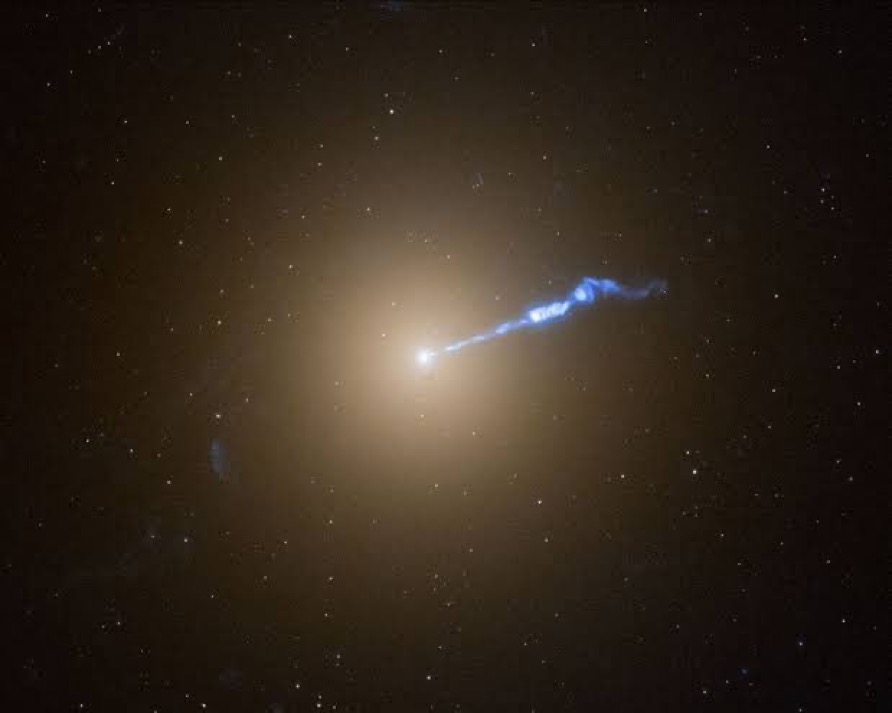
The math on this black hole should mass-humble every physicist who thinks we understand gravity. M87's central black hole is 6.5 billion times the mass of our Sun. It's 38 billion kilometers across. It spins at 80% of the theoretical maximum speed allowed by physics. And it's firing a plasma beam at near light speed that stretches 5,000 light-years into space. To put 5,000 light-years in perspective: if you started driving at highway speed when the Egyptian pyramids were built, you'd have covered roughly 0.0005 light-years by now. This beam covers ten million times that distance. The plasma travels in a spiral along a coiled magnetic field. Hubble watched it for 13 years just to confirm the motion pattern. And the beam isn't just decorating empty space. Stars near its path explode twice as often as stars elsewhere in the galaxy. Nobody knows why. The lead researcher at Stanford said they don't understand the mechanism at all. The black hole eats roughly 90 Earth masses of material per day. The energy output from that feeding process matches the power of the jet itself, somewhere between 10^33 and 10^37 joules per second. The upper end of that range is a number so large it has no human analogy. Your brain runs on 20 watts. This thing outputs more energy per second than every star in the Milky Way combined. And we photographed it with a telescope in 2019.
Aakash Gupta tweet mediaAakash Gupta tweet media
English
160
872
6K
326.5K
eamm18 retweetledi
Moon
Moon@moondailys·
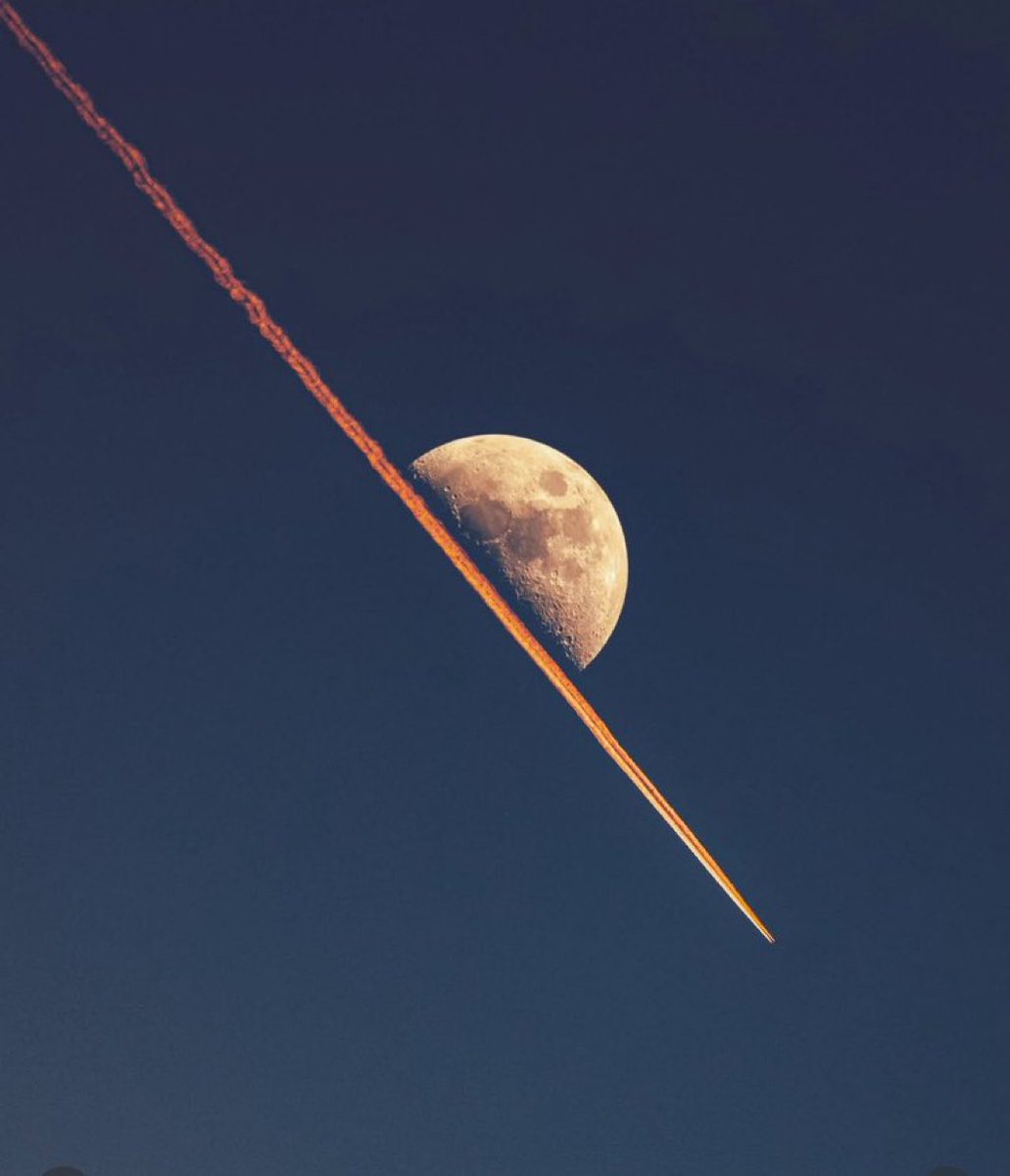
Moon tweet media
ZXX
309
30K
337.2K
5.2M