Adela Navarro Echeve retweetledi
Adela Navarro Echeve
148 posts

Adela Navarro Echeve retweetledi

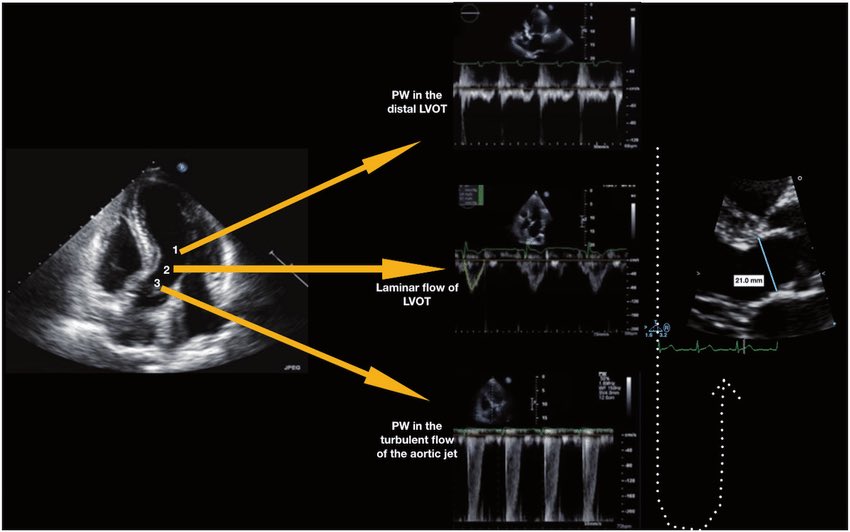
🫀 Did you know where the recommendation to place the pulsed wave Doppler sample volume 0.5–1 cm from the aortic valve to measure LVOT VTI comes from?
The answer is more interesting than it seems. It doesn’t come from a single study or an experiment designed for that purpose. It comes from a historical chain spanning nearly 40 years:
🔬 1982–1984 — The physical foundation
Pasipoularides and Murgo demonstrated using invasive catheters and mathematical models that in aortic stenosis there is a real zone of flow acceleration in the LVOT, just proximal to the valve, without any second anatomic obstruction. Pure hemodynamics — no Doppler yet.
👉 Bird et al. Circulation 1982 → doi.org/10.1161/01.CIR…
👉 Pasipoularides et al. Am J Physiol 1984 → doi.org/10.1152/ajphea…
📐 1984 — The apical 5-chamber view
Lewis, Kuo and Quinones were the first to validate cardiac output measurement using pulsed wave Doppler from the cardiac apex. They described placing the sample volume “immediately proximal to the aortic valve leaflets” — but without specifying any distance in centimeters.
👉 Lewis et al. Circulation 1984 → doi.org/10.1161/01.CIR…
📏 1985 — The first numerical distance
Skjaerpe, Hegrenaes and Hatle (the Norwegian group) were the first to quantify this in Doppler: they empirically observed that flow acceleration began 0.5 to 1.5 cm proximal to the valve, and placed the sample volume just proximal to that zone. They directly cited Pasipoularides as supporting evidence. This was the first time a numerical distance appeared in the technique.
👉 Skjaerpe et al. Circulation 1985 → doi.org/10.1161/01.CIR…
📊 1986–1988 — Practical consolidation
Otto et al. used ~1.0 cm. Oh, Tajik and the Mayo Clinic group explicitly established the range of 0.5 to 1.0 cm in 100 patients, justifying it as necessary to avoid the subvalvular acceleration zone. This is the figure we all recognize today.
👉 Otto et al. JACC 1986 → doi.org/10.1016/S0735-…
👉 Zoghbi et al. Circulation 1986 → doi.org/10.1161/01.CIR…
👉 Oh et al. JACC 1988 → doi.org/10.1016/0735-1…
📋 2002 — It becomes “official”
Quinones, Otto, Zoghbi and colleagues codified it in the ASE guidelines as “~5 mm proximal to the aortic valve”… but without citing any specific study to support it. It had already become expert consensus.
👉 Quiñones et al. JASE 2002 → doi.org/10.1067/mje.20…
⚔️ 2017 — The debate reopens
Baumgartner et al. (EACVI/ASE) maintained the 0.5–1 cm recommendation. However, Hahn and Pibarot responded with a critical letter pointing out that the original articles from the 1980s measured at the aortic annulus, not 0.5–1 cm below it, and that moving away from the annulus introduces errors due to the elliptical and irregular shape of the subannular LVOT.
👉 Baumgartner et al. Eur Heart J Cardiovasc Imaging 2017 → doi.org/10.1093/ehjci/…
👉 Hahn & Pibarot. JASE 2017 → doi.org/10.1016/j.echo…
💡 Bottom line:
The 0.5–1 cm figure was never experimentally validated as the optimal distance. It emerged from empirical observations in the 1980s aimed at avoiding a flow acceleration zone that had been demonstrated with invasive catheters. It was adopted through accumulated clinical practice and later elevated to a formal recommendation by consensus. The debate over whether to measure at the annulus or 0.5–1 cm below it remains open to this day.
One of those recommendations we all follow but few know where it actually came from 🙂
Dr Benigno Valderrábano Salas
@MDBeni
@JaeKOh2 @ottoecho @WilliamZoghbi @ASE360 @EACVIPresident @NephroP @iamritu @PPibarot @hahn_rt @MAecocardio @SISIACOficial @SONECOM_AC @VazyurVasquez @Cardiotweets83 @HEARTof_echo @echobasics

English
Adela Navarro Echeve retweetledi

¿Eres graduado/a en Enfermería y te atrae la investigación?
En nuestro grupo de IdiSNA buscamos personal de apoyo. Trabajo clínico, wearables y bases de datos para IA.
🗓️ Plazo: 27 de marzo (12:00h).
🔗 Detalles y requisitos: idisna.es/rrhh/ref--26-0…
¡Se agradece difusión! RT
Español
Adela Navarro Echeve retweetledi

Alcanzamos el reto de los 50 pacientes en estudio #ANGIODAPT!! Muchas gracias a Juan y @CARDIVAGROUP por el apoyo!
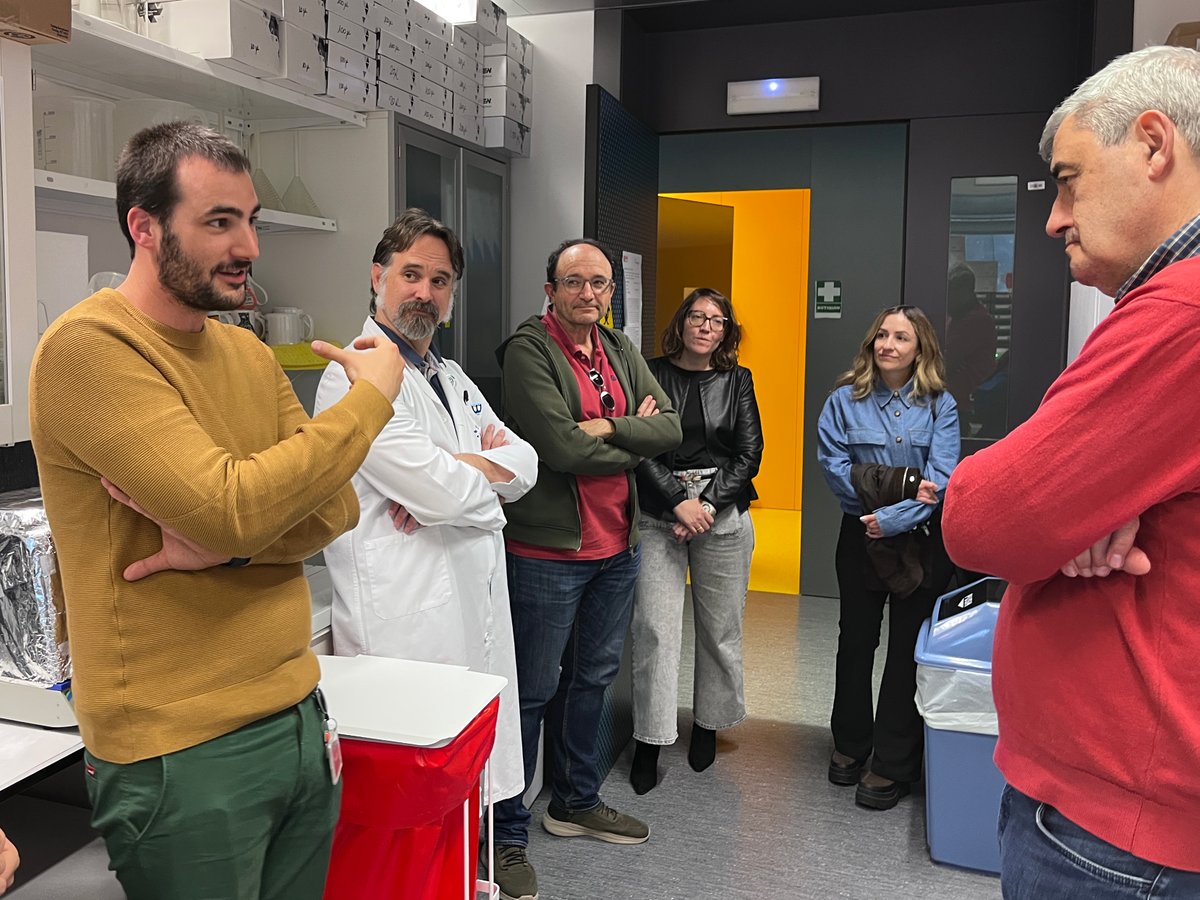
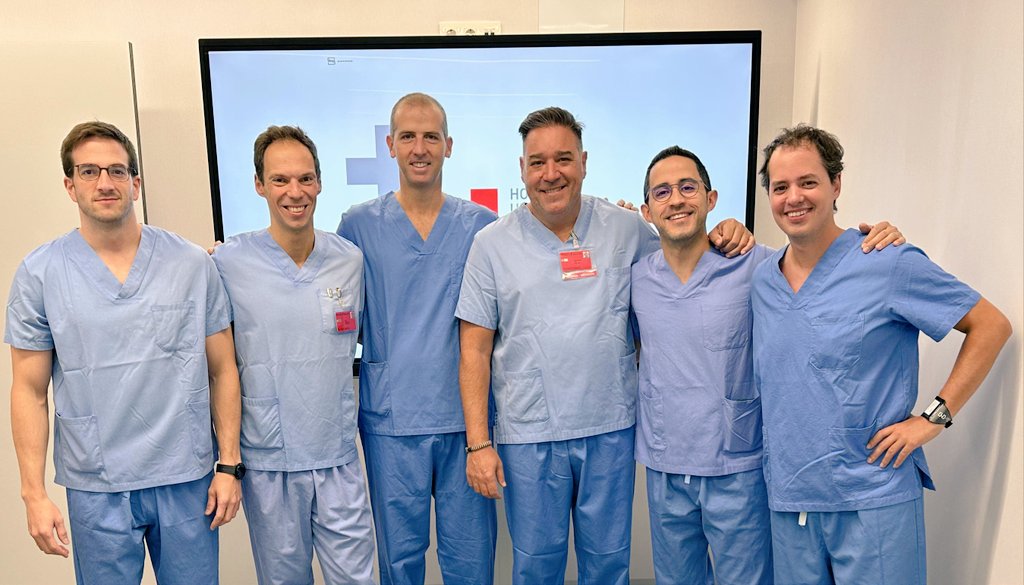
En la foto, pequeña representación del equipo de @HemodinamicaC del día de la celebración en el HUN! 👏🏻👏🏻👏🏻👏🏻
CARDIVA@CARDIVAGROUP
🎉 ¡50 pacientes reclutados en el #HospitalUniversitariodeNavarra para #ANGIODAPT! El estudio evalúa los resultados clínicos del stent con liberación de sirolimus de @iVascularGlobal. ¡Felicidades a todo el equipo! #CardiologíaIntervencionista #HemodinámicaPamplona @HemodinamicaC
Español
Adela Navarro Echeve retweetledi

✨¡Estamos de enhorabuena!
🪙Este 2025 nuestro grupo ha conseguido 3 proyectos nacionales que nos permitirán seguir investigando para mejorar la salud cardiovascular 🫀🔬. @navarrabiomed @idisnanavarra

Español
Adela Navarro Echeve retweetledi

1️⃣ Proyecto de Generación de Conocimiento de la @AgEInves, liderado por Jaime Ibarrola (@Jai_Ibarrola):
👉 “Diferencias de sexo en la rigidez arterial asociada a la obesidad – análisis de nuevas dianas”.

Español
Adela Navarro Echeve retweetledi

2️⃣ Proyecto I+D+i en Salud (AES-LEIS 2025) del @SaludISCIII, liderado por Eva Jover y Alberto Vera.
👉 “Identificación de marcadores patológicos y pronósticos paciente-específicos mediante evaluación multiparamétrica de la fibrilación auricular posoperatoria. Papel del MR.”

Español
Adela Navarro Echeve retweetledi

📢 ¡Ya tenemos nueva doctora! 👩🏼🎓 Enhorabuena @AmaiaGPU por una brillante defensa de tesis doctoral. ¡Estamos muy orgullosos! 🎉👏🏼


Español
Adela Navarro Echeve retweetledi

Check out our recent paper "Expression of the lymphangiogenic reelin is associated with sex-dependent calcific aortic stenosis in men" in @ATHjournal by Jover et al. @navarrabiomed
sciencedirect.com/science/articl…
English
Adela Navarro Echeve retweetledi

Special thanks to a group of authors at @CardioTrasNB for bringing us today's #ArticleinPress, Sex Differences in Aortic Valve #Inflammation and Remodeling in #Chronic #Severe Aortic Regurgitation (@Carolina_tgel and @EMN87 et al.):
ow.ly/pAQl50UXVT8

English

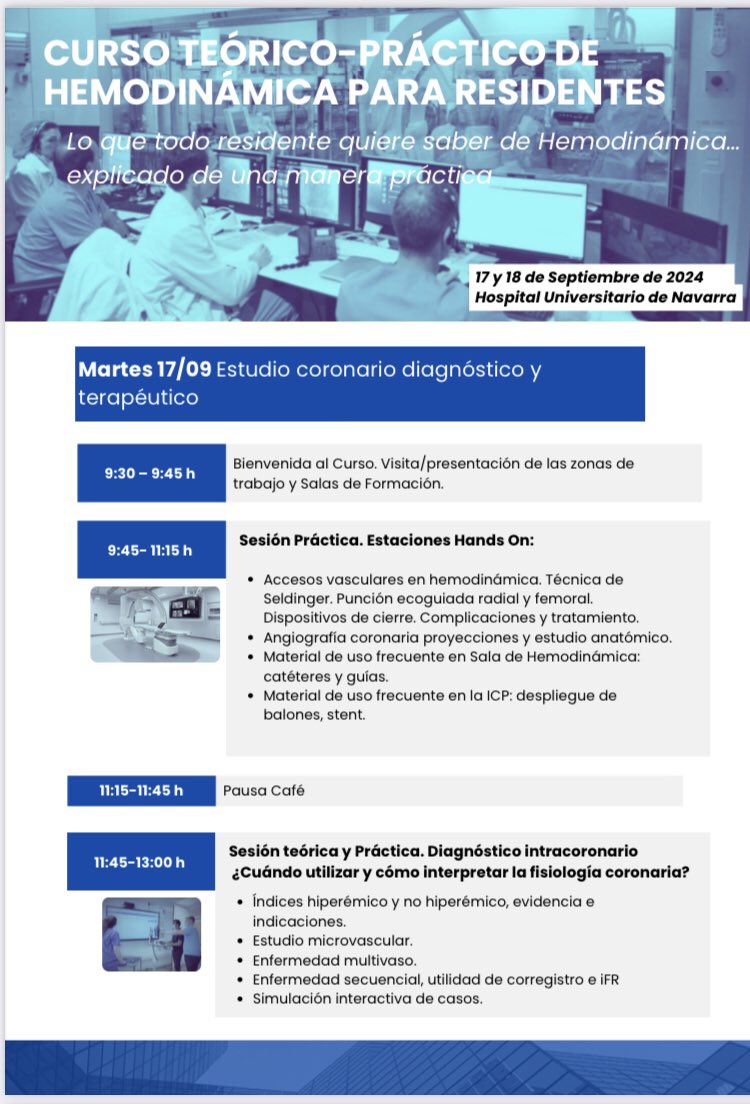
🥇First time in Spain 🇪🇸🇪🇸🇪🇸
by @HemodinamicaC 🏥 Univ. Navarra
1️⃣6️⃣ Fr Lightning Flash for the treatment of acute pulmonary embolism @penumbrainc @MercElectromed
🔈🔉🔊 sound-guided
@vruizquevedo @pabl0salinas
@belcid7 @shci_sec @JuradoRomanAl @maitevelazquezm @Guiro_IRad


English
Adela Navarro Echeve retweetledi

🆕First case carried out successfully!
Congrats to @Octavio_JiMelo for the great result!! 👏🏻👏🏻👏🏻👏🏻
⬇️⬇️⬇️⬇️⬇️⬇️⬇️⬇️⬇️⬇️⬇️
Octavio_Jimenez-Melo@Octavio_JiMelo
🥇First time in Spain 🇪🇸🇪🇸🇪🇸 by @HemodinamicaC 🏥 Univ. Navarra 1️⃣6️⃣ Fr Lightning Flash for the treatment of acute pulmonary embolism @penumbrainc @MercElectromed 🔈🔉🔊 sound-guided @vruizquevedo @pabl0salinas @belcid7 @shci_sec @JuradoRomanAl @maitevelazquezm @Guiro_IRad
English
Adela Navarro Echeve retweetledi

Muy contento y orgulloso de publicar esta revisión conjunta con Jóvenes Cardiólogos @JovenesSec (y una joven Geriatra) sobre el tratamiento del SCA en pacientes ancianos.
mdpi.com/2077-0383/13/7…

Español
Adela Navarro Echeve retweetledi

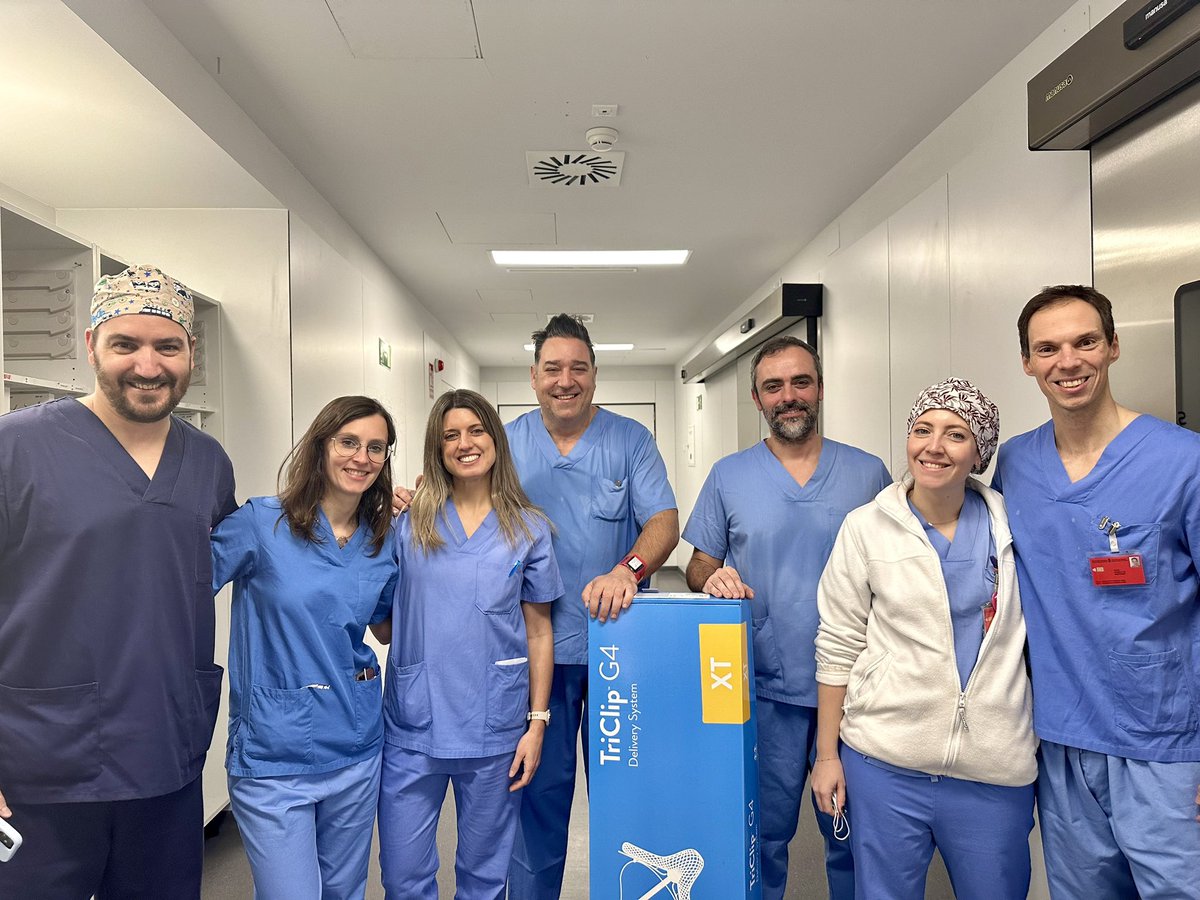
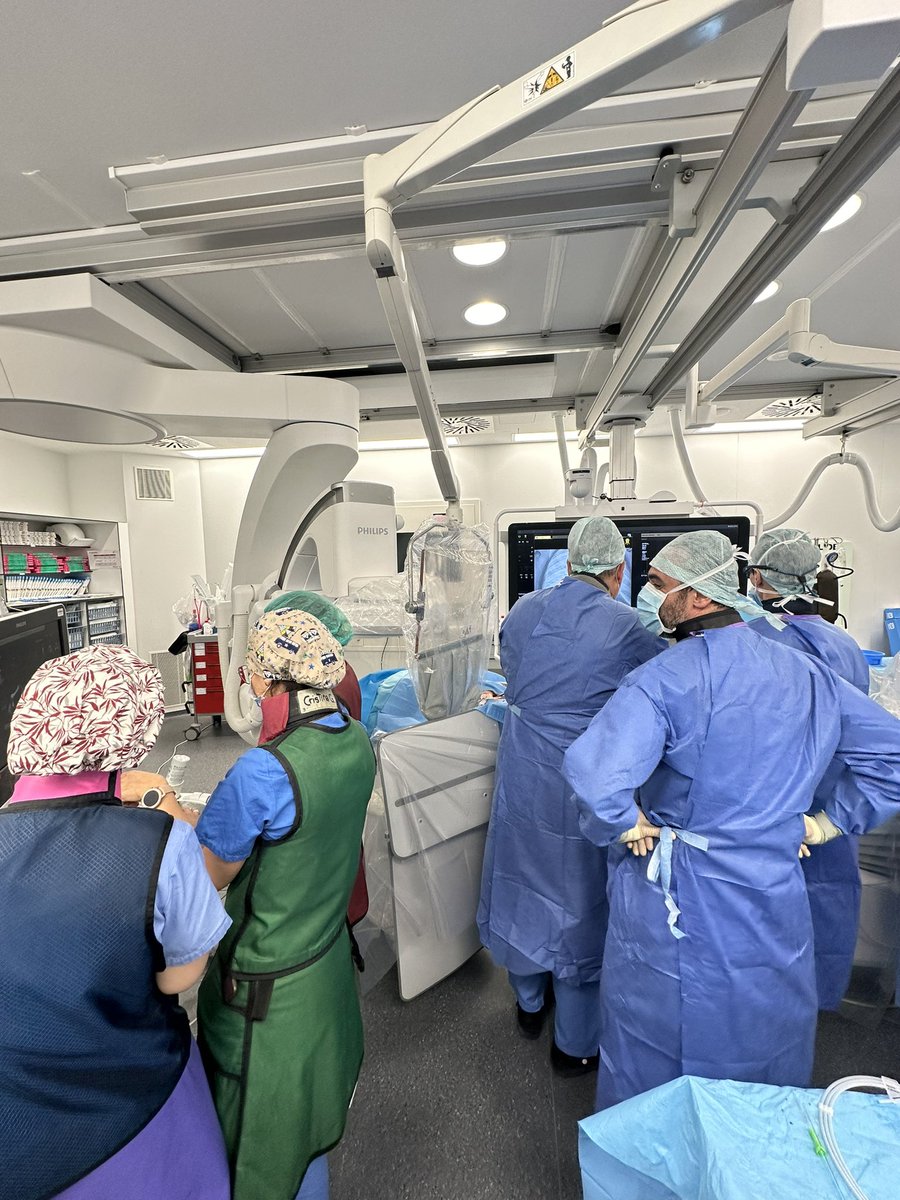
Hoy hemos empezado el programa de triclip en el HUN con 2 casos complejos. Hemod contado con la ayuda de Xavi Freixa y Laura Sanchís . Excelente resultado en ambos.
Trabajo equipo imagen& hemodinámica
@freixa_xavier
@lsanchisruiz
@echeve_adela
@RamallalRaul
@edurnealonso86


Español
Adela Navarro Echeve retweetledi

We keep making contributions to the better understanding of #sexdifferences in #valvedisease👩🦰👨🫀. Check out our new work on the sex-specific role of galectin-3 in #aorticstenosis.
@navarrabiomed @BiologySexDiff
bsd.biomedcentral.com/articles/10.11…
English
Adela Navarro Echeve retweetledi

Latest paper 📣📣! Happy to share our new study in collaboration with @ecardioresearch on the sex-specific influence of diabetes mellitus on the pathological features of aortic stenosis.
cardiab.biomedcentral.com/articles/10.11…
English
Adela Navarro Echeve retweetledi

Really excited to see this wearable defibrillator designed for WOMEN!
#HRX2023
@KestraMedical #assure
Studied by #Women
For Women
Who would imagine we would have a life vest for women!?

English