Derek Brand

13K posts

Derek Brand banner
Derek Brand

Derek Brand

@echo_nyc

Have spent 15+ yrs fostering a better ecosystem for life science entrepreneurship in NYC. Now Dir. Strategic Partnerships @Columbia. Tweets and opinions my own

New York, NY Katılım Eylül 2010
1.5K Takip Edilen1.8K Takipçiler
Derek Brand
Derek Brand@echo_nyc·
@Sanctuary_Bio @rbellini Mike has won our Fantasy hockey league three years running (and currently ahead of me in the finals). I think fortunately, even with that high bar, he may actually be a better CEO than he is a Fantasy Hockey manager It's a high bar, but I think patients will appreciate it
English
0
0
2
103
Tim
Tim@TimurNegru·
@dougboneparth Another one is “then” and “than”
English
5
0
3
2.6K
Douglas A. Boneparth
Douglas A. Boneparth@dougboneparth·
The number of people who confuse “to” and “too” is two high.
English
1.6K
3.4K
30.4K
510.3K
Paul D. Rennert
Paul D. Rennert@PDRennert·
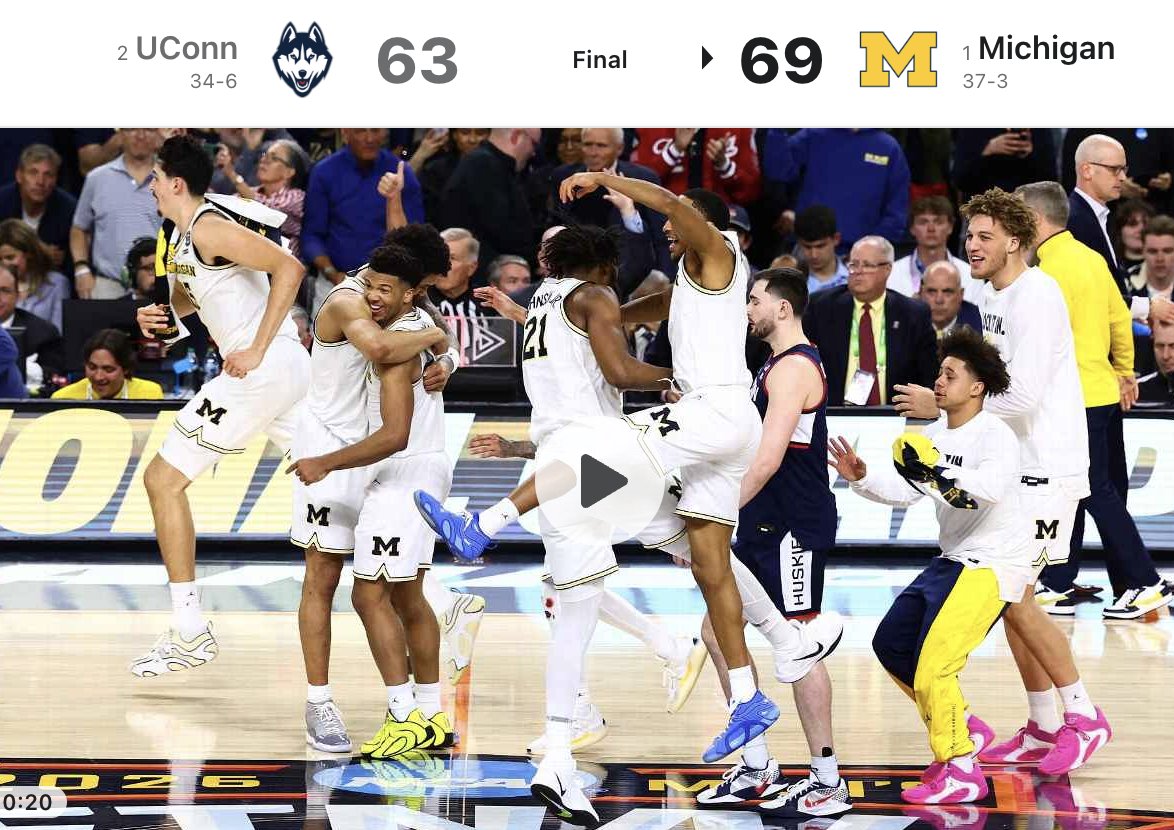
I won the family NCAA pool, "so I got that going for me too"
Paul D. Rennert tweet media
English
1
0
2
686
Derek Brand
Derek Brand@echo_nyc·
No, sorry, the real villain is the guy who said "I can scam people with fake drugs and AI marketing slop to put money in my own pocket". Scamming people out of money isn't a "loophole"
Dennis Omari@DennisOmar50313

@RobertFreundLaw That said the brother just found a loophole and used it. The real villian is facebook for allowing fake scams moreso in medical field on thier platform

English
0
0
0
216
Derek Brand
Derek Brand@echo_nyc·
Every single word of this...
Dr. Jon Slotkin@slotkinjr

I really did not want to be writing this morning. But this issue is too important. It’s been said that the last thing the weather person should do before going on the air is look out the window. The _day before_ @eringriffith profiled Medvi in @nytimes as the AI company of the future, the FDA approved Lilly’s new oral medication: orforglipron. *Not tirzepatide.* In fact, it’s not even a peptide. It’s the first non-peptide, small-molecule oral GLP-1 receptor agonist. Lilly owns tirzepatide. They invented it. If you could put tirzepatide in a pill, Lilly would do it. They would desperately want to. Instead, they spent millions and nearly eight years licensing a completely different kind of molecule, because oral tirzepatide is a biological impossibility. Tirzepatide is a 39-amino-acid, 4,813-dalton peptide. Your gut does not distinguish it from a piece of chicken. SNAC, the absorption enhancer that barely gets oral semaglutide to 1% bioavailability, is compound-specific. It failed with liraglutide, another GLP-1 peptide, and has no demonstrated mechanism for tirzepatide. There is no published human study of oral tirzepatide. There is no plausible mechanism. Medvi sells it starting at $279 a month. A RICO class action against its supply chain partners has already called the product modern-day snake oil. Lilly’s own strategy is the best witness. We can hear the lawyers now: “So doctor, what was your assumption on why Lilly was not pursuing oral tirzepatide despite that in not doing so they would instead pursue an entire entirely different type of molecule and possibly create market confusion with their new entrant?” The Times profile actually described an accountability architecture whose impact in part is that no single entity owns the patient and process. Medvi handles marketing. CareValidate provides the clinical workflow. OpenLoop provides prescribers and pharmacy fulfillment. The marketing layer can say the doctors make the decisions. The doctor platform can say the brand controls the messaging. The prescribers say the pharmacy fills what’s ordered. Everyone can point at everyone else. That structure explains a lot of the financials. Medvi reported a 16.2% net margin. Hims, with 2,442 employees selling the same drug categories, reported 5.5%. The 10.7-point spread represents in part everything Medvi may not pay for: extensive clinical oversight, advanced adverse event monitoring, satisfactory regulatory compliance, sound quality systems. The Times says they verified Medvi’s revenue. They did not seem to verify or note many other aspects. Six weeks before the profile ran, the FDA had issued Warning Letter #721455 for misbranding compounded GLP-1s. OpenLoop had disclosed a data breach: a threat actor claimed access to 1.6 million patient records, and multiple class actions were filed. The company’s ad network included fabricated physician personas, “Professor Albust Dongledore,” “Dr. Tuckr Carlzyn MD,” running over 5,000 Meta ads alongside a website disclaimer that these individuals “may be actors or AI portraying doctors.” The Times told the story of a man who used AI to build a billion-dollar company alone. The article was really a transcript of a Silicon Valley fever dream. A byproduct of regulatory lag and consumer desperation A billion dollars in pharmaceutical transactions running through an organization with no one seeming to care if a product can survive contact with the human stomach better than a chicken nugget.

English
0
0
5
748
Derek Brand
Derek Brand@echo_nyc·
@PearlF @ramez Bingo. Said the same thing yesterday - helpful for investors yes, but doesn't really do anything for the Pharma Co. (Maybe better decsions in Phase III, although not necessarily...)
English
0
0
1
20
Pearl Freier
Pearl Freier@PearlF·
I'm not sure how helpful this is to a biopharma company once a Phase 3 trial is already under way and/or completed. One question is how to prevent failure in Phase 3 after years of development & clinical trials & possibly >$1B invested. Predicting failure at earlier stages would probably be more helpful
English
3
0
7
512
Derek Brand
Derek Brand@echo_nyc·
@WassimLaroussi3 @anthonystaj True, but the point is a good one - better prediction of clinical success is a genuinely good advance that will help the sector (I say this even though I posted about this not clearing the "bottleneck" in drug development - it won't do that IMHO but it's still valuable)
English
0
0
1
14
Wassim Laroussi
Wassim Laroussi@WassimLaroussi3·
@anthonystaj This is great… but I’ve fell into this trap. Clinical success doesn’t necessarily mean clinically relevant or commercially relevant. MLTX is a great example
English
1
0
5
453
Anthony
Anthony@anthonystaj·
to be clear I think that systems or people who do this are super valuable to biotech. I am of the mind that eliminating/ terminating/ nuking grifters from this space will unlock the true talent base that gets overlooked and ultimately grow the pie for everyone and accelerate biotech development. this is the true bio/acc. what do I mean? last year I had a chance to look at a really nice private company. I did the DD the concluded it was a great scientific thesis and management was pretty solid with previous exits. I grilled them as best I could and they answered everything I had. solid. but the people who brought me the deal were skeeved out by the financing structure. the company bringing investors in were taking a massive cut of shares, mega diluting everyone. I thought about it and this company probably had to do it this way given how tough it was last yr to raise. all the biotech specialists were saying no to early stage stuff and they all passed on a good company imo. so these guys had to go to generalists. The issue for many generalists is they can't tell good from bad science. all the normal tools you use to disect a company's business model/ management competence go out the window when you deal with a biotech that has a good grift going. This keeps many generalists (and their pools of capital) out of the space. good companies *do* die on the vine as a result of lack of capital. so i welcome more people and more tools to chop up and tear these companies apart so we can engender more confidence in the biotech markets and level the playing field a bit. imo it would lead to more actual innovation and better outcomes for patients
Rohil Badkundri@rohilbadkundri

We used AI to predict the failure of a Phase 3 trial before the results were announced. Today, we're publishing 10 more predictions for the future. Thread 🧵

English
1
5
65
18.1K
Derek Brand
Derek Brand@echo_nyc·
How is forecasting the bottleneck to a cure? Sure if it works you make $$$ but how does it solve any bottlenecks? If it told you what trials to run & the drugs to run them with, that would be great (dramatic risk reduction). But this isn't that, unless I'm mssing something...
Rohil Badkundri@rohilbadkundri

We believe that superhuman clinical trial forecasting is the critical bottleneck to curing all diseases. AI may compress a century of biological discovery into a decade, but if we don’t fix the broken clinical trial ecosystem, very few of those discoveries will make it to patients.

English
0
0
0
253
Derek Brand
Derek Brand@echo_nyc·
This is great advice.
University of Austin (UATX)@uaustinorg

To: Admitted Students on Ivy Decision Day From: UATX Congratulations. Getting in was hard and you should be proud. Now here’s some unsolicited advice so you don’t waste the next four years. Go to class. We know this sounds obvious. But as the New York Times reported recently, Harvard students routinely skip class, rarely speak up when they're there, and focus on their devices instead of the discussion. Faculty say few students do enough preparation to contribute meaningfully. The average college student spends about 20 hours a week on class and studying combined. At UATX, we aim for 50. That’s the difference between a part-time commitment and a full-time job. You (or your parents) are about to spend upwards of $90K a year. If you don't show up, you're paying roughly $250 per skipped lecture for the privilege of sleeping in. Read the books yourself. Your generation is the first to arrive at college post-literate — raised on short-form video, dependent on algorithms, and increasingly incapable of sitting with a difficult text long enough to let it change your mind. Ninety percent of college students use AI academically. This makes you more reliant on the authority of others. Most professors will also stand between you and the text. They’ll tell you what Marx “really meant,” what Aristotle “failed to see,” as though an academic in 2026 has outsmarted minds that shaped civilizations. The good professors do the opposite: they put you in front of the book and they work with you to find what a great mind has to teach us directly. Find those professors, and read everything yourself. Say what you actually think. Seventy-three percent of conservative students report withholding their political views in class out of fear their grades will suffer. Our advice isn't political; it's intellectual. If you spend four years learning to say what's expected instead of what's true, you’ll graduate roughly where you started — just older, more credentialed, and more practiced at self-censorship. One study finds that nearly half of students show no measurable gains in “critical thinking” after two years in college. Keep this in mind as you make decisions about which professors to take and how to do your assignments. Taking a small hit on your paper to gain integrity and wisdom is usually worth it. Ask for real grades. Sixty percent of Harvard undergraduate grades are now A’s. Twenty-five years ago, it was 20%. It got so bad that the legendary Harvard professor, Harvey Mansfield, started giving students two grades: the official one for their transcript, and a private one reflecting what they actually earned. He called the official grades “ironic.” So here's a suggestion: Take your A, but also ask your professors for a “Mansfield grade” so that you know where you stand. And don’t avoid difficult courses to keep your transcript clean for law school. Get work experience before you graduate. Forty-two percent of recent college graduates are working jobs that don't require a degree. Many employers are projecting the next few years to be the worst college grad job market in years. A degree alone — even from an Ivy — is not a job guarantee. Seek out apprenticeships, internships, and real work starting freshman year. The students at UATX are connected with entrepreneurs and business leaders from day one. Many will graduate with four years of work experience alongside their degree. You can build something similar at your school, but you'll have to do it yourself. Understand how debt shapes your life. If you're paying full freight or even half, do the math with your eyes open. Your decision to take on debt will quietly reshape the trajectory of your adult life through countless small surrenders: the job you take because it’s safe instead of starting the company. The city you choose to live in. The relationship you delay and the kids you don’t have. For women, a $1,000 increase in student loan debt lowers the odds of marriage by 2% per month in the first four years after graduation. None of that shows up in the college brochure. If you're going to take on debt, treat it like the constraint it is from day one: save aggressively and make sure every dollar is buying something that will actually compound in your favor. Find the people who take school seriously. The best thing about a great school isn't the lectures or the library. It's the handful of professors and students who are genuinely there to learn — who read ahead, argue in good faith, and push you to be sharper. Find them. UATX is a small community of those who seek a serious education. At a larger university, you have to build this community yourself. * The most dangerous thing about an elite university is that it is very easy to do nothing for four years and still come out looking successful. The transcript will say you excelled. The diploma with the fancy crest will open certain doors. Your parents will be proud. And yet you will have coasted — through inflated grades, unread books, and borrowed opinions. Getting in is an accomplishment. Making the next four years worth it will be harder, and the right decisions will change everything. We wish you luck.

English
0
0
1
164
Antoun Nabhan
Antoun Nabhan@AntounNabhan·
@elonmusk But you have to already have the three kids, because owning a Cybertruck makes you unfuckable.
English
1
0
3
47
Elon Musk
Elon Musk@elonmusk·
The Cybertruck rear bench has three sets of isofix attachments and is wide enough to fit three child seats or three adults
English
8.2K
7.2K
114.8K
83.8M
Derek Brand
Derek Brand@echo_nyc·
@AntounNabhan @Ronalfa We should be able to parse out the impact of AI on biopharma in about a decade - it may make some stuff better/faster but basincally until we have a cycle of things going through clinical POC we have <handwaving> (also love the assumption that LargeCos arent doing anything...)
GIF
English
1
0
1
46
Antoun Nabhan
Antoun Nabhan@AntounNabhan·
@Ronalfa AstraZeneca has already done this, and maybe (probably) other big pharmas as well. But they are still big orgs with diffuse accountability and matrixed reporting, so everything happening upstream and downstream is happening at Big Pharma pace, not Clawdbot pace.
English
1
0
4
303
Ron Alfa
Ron Alfa@Ronalfa·
If I were heading pharma AI, would license best in class protein model and bio foundation model, then connect them into agentic harness that can reason over internal data and execute from natural language.
English
9
2
40
5.4K
Derek Brand
Derek Brand@echo_nyc·
@sarah_cone @gregisenberg Fred Wilson is pretty good too. This seems like something that should or could be true, but it just isn't. There are often lots of paths to being good at a thing...
English
0
0
0
35
GREG ISENBERG
GREG ISENBERG@gregisenberg·
you shouldn't be allowed to be a VC if you haven't worked/built a startup idk why this would be controversial
English
367
77
1.5K
280.5K
Derek Brand
Derek Brand@echo_nyc·
@robgo So glad you posted this. Absolutely loved the book and just could not fathom how they would put it into one movie. Now excited to see it.
English
0
0
1
35
Rob Go
Rob Go@robgo·
Really enjoyed Project Hail Mary. Overall good choices about what simplify, cut, or speed up in order to keep it at 2.5 hours. The small additions were quite effective. Book was still better, but very good overall. Curious if folks who didn't read the book liked it.
English
3
0
6
821