Elad Ferber

133 posts

Elad Ferber

Elad Ferber

@eferber

Tech entrepreneur, building the fastest growing Healthcare company in history with AI. [email protected]

Cambridge, MA Katılım Mart 2010
267 Takip Edilen92 Takipçiler
Elad Ferber
Elad Ferber@eferber·
@bhalligan @jack @brian_armstrong @tobi @HarryStebbings But jokes aside, these things tend to go full circle. Eventually you need to hire people you trust and empower them to make decisions. There is so much more you as a founder can do with AI but eventually you need more progress to be made than you can drive individually
English
0
0
0
15
Brian Halligan
Brian Halligan@bhalligan·
.@jack started it, @brian_armstrong built on it, most 2025 vintage startups are running it. What is it called? Manager Mode -> Founder Mode -> _____ Mode
English
11
1
20
5.8K
Elad Ferber
Elad Ferber@eferber·
@bhalligan @RayDalio The transcripts are the real source of truth in your company. Every decision, every discussion, every issue- much more real than a memo or an internal wiki. There is still a need for the correct synthesis to pull the relevant information and not blow up context windows
English
0
0
1
562
Brian Halligan
Brian Halligan@bhalligan·
It turns out @RayDalio was right all along. The top AI-pilled CEOs I work with use the recorded meetings that we're now used to (Granola, Otter, Fireflies etc) to get to ground truth. Every insight is surfaced in a daily digest. Misalignments get flagged instantly against core priorities. Priorities updated. The age of radical transparency and real-time alignment has arrived. Dalio called it over a decade ago. AI just made it unstoppable. 🔥 cnbc.com/2016/12/22/the…
English
26
30
384
111.6K
Questrom School of Business, Boston University
Jetson Leder-Luis Assistant Professor of Markets, Public Policy, and Law at Questrom School of Business has been appointed Deputy Executive Director of the newly established White House Task Force to Eliminate Fraud. Read here: spr.ly/6014B6xn2E
Questrom School of Business, Boston University tweet media
English
1
3
8
2.8K
Elad Ferber
Elad Ferber@eferber·
@bhalligan But not sure how this might hold if we scaled from 30 to 300
English
0
0
0
10
Elad Ferber
Elad Ferber@eferber·
@bhalligan Each team can act independently and make decisions because of rapid information availability. This mimics an agent spinning multiple agents to solve a problem, allowing for orchestrated action much faster than it would take to plan centrally. Coordination happens once a week
English
3
0
0
24
Brian Halligan
Brian Halligan@bhalligan·
I got a chance to interview Jack Dorsey for the Long Strange Trip pod about his new article (in comments) on how to build a modern ai native company in 2026. I took some of his ideas and mixed them with some observations about the hyper scaling ai native CEOs I work with every day. This is a first draft. Thoughts? If this is landing, I can flesh it out more.
Brian Halligan tweet media
English
39
25
264
42.4K
Elad Ferber
Elad Ferber@eferber·
@bhalligan We tripled our team and more or less tripled our speed. We have three core agentic products that evolve as fast as the one we had a year ago..
English
1
0
0
21
Elad Ferber
Elad Ferber@eferber·
@bhalligan At Synthpop we call it “fractal organization”- we replicate the speed we had as a 3-person ai-native founding team, now that we’re 30 and growing into scale-up mode. Teams ship product daily and coordination is still an overhead, but much lower than I’ve ever experienced before.
English
1
0
0
208
Brian Halligan
Brian Halligan@bhalligan·
Being a startup founder is relatively easy Being a scaleup CEO is extremely hard
English
46
13
240
41.2K
Elad Ferber retweetledi
Hiten Shah
Hiten Shah@hnshah·
Most people have no idea what it actually takes to be a founder. They talk about vision, grit, or passion. Those words are props. What you really sign up for is a life where every decision feels like it costs something real. You will spend years being misunderstood. By your team, your family, even the people you hire to help you. You will fail in public and still need to keep the energy up in private. Every founder lives with the weight of knowing that you can do everything right and still get crushed by luck, timing, or somebody else’s mistake. Founders aren’t braver than anyone else. They just get used to uncertainty, then stop waiting for clarity. Most of your wins won’t feel like wins at all. The first revenue will be too small. The first team will outgrow you or leave. The first product that feels right will barely matter to the market. You will doubt yourself in private, sometimes every week. The founders who last figure out how to keep moving while the ground shifts underneath them. Most outsiders want the founder badge but none of the scars. They want the upside, not the drag. The hardest part is sticking around after every plan gets blown up and you have to rebuild with less optimism and more scar tissue. What makes it work isn’t relentless hustle or some mythical trait. It’s learning to make peace with constant discomfort, and then making decisions anyway. If you need constant reassurance, you’ll give up before the real work begins. If you want everyone to like you, you’ll never make the calls that matter. If you can’t handle months where nothing feels certain, this life will eat you alive. But if you can hold your own in chaos, get better at being wrong, and still want to show up and try again, you just might have a shot at building something that matters. That’s what it actually takes. And nobody cares until you make it work.
English
230
366
2.3K
314.4K
@levelsio
@levelsio@levelsio·
Someone on HN said the current AI boom is a lot like the car maker boom in Detroit in 1910 after the Model T's success Almost 2,000 car companies were founded then, and 99% failed Only Ford, GM and Chrysler survived! en.wikipedia.org/wiki/List_of_d…
@levelsio tweet media
English
64
10
254
40.9K
Elad Ferber retweetledi
Medha Agarwal
Medha Agarwal@mkhandel·
🚀 AI is rewriting the rules of startup success. In our latest Crunchbase piece, Noah Lin and I dive into how we @defyvc have seen AI-first companies scale smarter with value model tactics—leveraging predictive power and network effects to reshape industries. 🚀 From defying traditional metrics to building data moats, these strategies are a game-changer for founders. 💡 Stay tuned for a deeper follow-up where we’ll share actionable tactics for founders to scale their AI ventures! Full article 👇
English
1
1
4
567
Elad Ferber retweetledi
Aaron Levie
Aaron Levie@levie·
Context engineering is increasingly the most critical component for building effective AI Agents in the enterprise right now. This will ultimately be the long pole in the tent for AI Agents adoption in most organizations. We need AI Agents that can deeply understand the context of the business process that they’re tied to. This means accessing the most important data for that workflow, using the appropriate tools at the right moment, having proper objectives and instructions, and understanding the domain that they’re in. Some of the big open items for anyone building enterprise agents are: * Narrow vs. General agents. The smaller the task, the easier it is to give the AI Agents the right context to be successful. But the smaller the task, the less value there will be. Finding the optimal task size for value generation will be an important factor for the next few years. * Getting data into an agent-ready system. Enterprise data is often fragmented between dozens or hundreds of systems, many of which are not prepared for a world of AI. Most companies will still need to modernize their data environments to get the full benefit of AI Agents. * Accessing the *right* data for the task is paramount. Even when you have data in a modern environment, getting access controls perfectly aligned to what the AI Agent is going to need access to is critical. Further, deciding what to do RAG on vs. just a general search vs. what to put fully into the context window will matter a ton per task. * Choosing what should be deterministic vs. non-deterministic. If you demand too much from the models, you’re likely to see some drop off in quality. Yet, if you have the model do too little, then you’re dramatically underutilizing what’s possible with AI. This of course is a moving target because the models themselves are improving at an accelerating rate. * The right user interface to get the AI Agents context deeply matters. Half of the problem for getting context to agents doesn’t look like an AI problem at all. It’s all about where the agents show up in the workflow and how the user interacts with them to provide them the context necessary to do the task. The race for the next few years in AI in the enterprise is to see who best to deliver the right context for any given workflow. This will determine the winners and losers in the AI race.
English
62
98
780
137.4K
Elad Ferber retweetledi
Garry Tan
Garry Tan@garrytan·
Alexandr Wang: The future isn't humans vs AI - it's humans managing AI chaos. Even self-driving cars need 1 human operator per 5 cars to handle edge cases. The last 10% of accuracy? That's where humans shine.⁣ ⁣ Management isn't going away, it's evolving.
English
209
762
6.1K
840.7K
Elad Ferber
Elad Ferber@eferber·
@jjen_abel As a second time founder or industry insider, that’s a little different- there’s a huge benefit to a wide rolodex and reputation to get those first few customers.
English
0
0
0
82
Jen Abel
Jen Abel@jjen_abel·
almost all early-stage sales pipeline came from cold outreach AND running through walls -- not from asking folks/investors for intros the next phase of pipeline comes from startup’s existing customers (i.e. referrals) this is just my experience ...
English
14
12
290
16.9K
Elad Ferber retweetledi
Nikunj Kothari
Nikunj Kothari@nikunj·
The best founders operate on a different clock - and it drives most of their employees crazy..
Nikunj Kothari tweet media
English
53
249
2.3K
235.3K
Erez Druk
Erez Druk@ErezDruk·
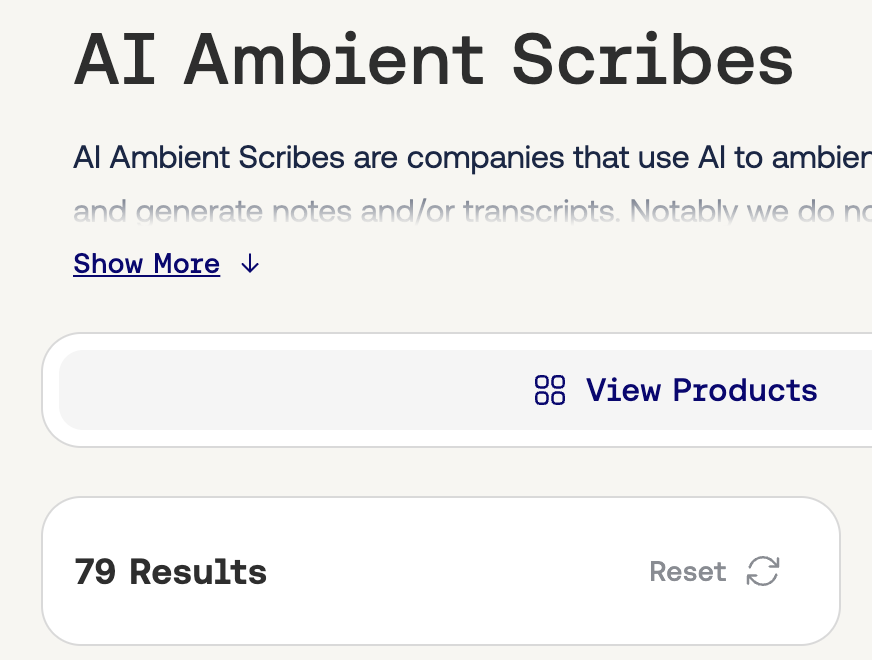
Freed has close to 100 competitors now. This is good because clinicians will end up with the best product out of 100. Not that I like having competition, but you don't need to like things that make you better.
Erez Druk tweet media
English
3
0
22
2.2K
Elad Ferber retweetledi
Medha Agarwal
Medha Agarwal@mkhandel·
It was an absolute pleasure speaking with Winnie da Silva for the latest episode of her podcast, Transformative Leadership Conversations. The title, "Dream Big, Iterate Fast" beautifully reflects what we discussed and the essence of how I view successful company building. Founders have to dream the dream while simultaneously learning fast and iterating accordingly to get there. A few others topics that came up: 💡 The Pitch Shift That Works – Why some founders may undersell their vision without realizing it and how simple shifts in storytelling can make all the difference 🏗️ How to Pick the Right Startup to Join – Why choosing the right founder and team matters more than your initial role 🚀 Investing in Female Founders – Why women make exceptional CEOs and how they can sometimes undersell their vision 🏆 Lessons from Rowing & Leadership – What I've learned from rowing about choosing the right team, adapting in fast-moving startups, pushing past perceived limits and other leadership lessons I've carried from the water to VC 👀  Why I Hate the Spotlight – Just like my discomfort posting about this conversation, I'd prefer talking about my founders and being behind the scenes 🎧 Tune in via the link below or on your podcast platform of choice for our full conversation. cc: @defyvc
English
1
1
3
548