Sham Chukoury

10.5K posts

Sham Chukoury

Sham Chukoury

@eleusis7

Perth, Australia Katılım Ocak 2008
1.6K Takip Edilen543 Takipçiler
Object Zero
Object Zero@Object_Zero_·
Modularised Manufacturing Processes One way to accelerate reindustrialisation is to make plant and process equipment that all has a standard size. This way it becomes very easy to plan and adapt factory layouts, and very easy to maintain and replace broken equipment old for new. The best standard format we have today is the isofreight container, the entire global logistics chain is already built around this standard. Iso containers have a gross weight limit of 30 tonnes and you can stack them such that there is 192 tonnes on the floor (6 high at max load). We should be making containerised conveyors and handling equipment, because containerised equipment can achieve faster delivery to site, faster commissioning and replacement than bespoke setups. You essentially eliminate on site commissioning, everything can be commission tested at FAT. A huge win. Whilst you might not match the $/m^2 throughput of highly bespoke equipment the economics of the containerised process benefit from speed of setup, much more flexible scaling, and iterative improvement over time, everything is moddable including the layout itself. There is less risk and less depreciation for equipment that is easier to resell as it can be easily shipped and integrated elsewhere with standard interfaces. This massively improves capitalisation and capital efficiency. Essentially all you need is an agreed interfaces standard, the result is a design framework for manufacturing plants that combines the principles of factorio and lego. This is not a crazy idea. You could then design machining, forming, joining, welding, pressing, turning, assembling, even casting and printing and basically every process method you can think off and put the elements in containers such that they receive inputs in a standard way and present outputs in a standard way. It doesn’t need to fit in one single container, the point is the elements of each subprocess fit in containers and stay in containers. For maintenance you can swap old for new with a runway crane and just backload the old asset for refurbishment off site. Predictive maintenance would really minimise downtime because swapping old for new would take minutes instead of months. Everything becomes plug and play because every interface is standardised whether electrical, hydraulic, pneumatic, mechanical, comms, controls, monitoring, etc. By stacking you can achieve high density with equipment stacked up 6 decks, using containerised conveyors and lifts. Once you see it, it’s obvious.
Object Zero tweet mediaObject Zero tweet mediaObject Zero tweet mediaObject Zero tweet media
English
25
53
425
28K
Sham Chukoury
Sham Chukoury@eleusis7·
@MapTiler This is really useful. Which underlying DEM(s) are being used to calculate this, and what's the spatial resolution of those?
English
1
0
0
15
Twonks
Twonks@twonkscomics·
Not me
Twonks tweet media
English
23
922
42.5K
938K
Sham Chukoury retweetledi

zack
zack@zack_overflow·
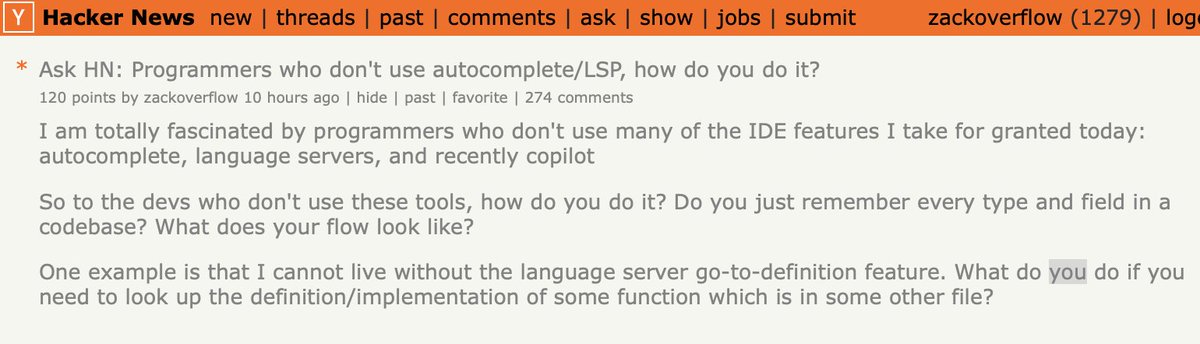
I've been fascinated by a special type of programmer, the devs who don't use IDE features like: -autocomplete/copilot -LSP - go-to-def What allows them to just rawdog text editors? Do they have superhuman coding ability? I asked them and here is a thread of what they said:
zack tweet media
English
334
209
4.5K
741.9K
Sham Chukoury retweetledi
gian
gian@giansegato·
my father-in-law is an extremely talented electrical engineer. founded a super successful chip manufacturing biz. if you have an italian coffee-making machine, you likely have one of his chips in your home right now. he only codes in assembly. learned the thing on his own building alarms. didn’t even go to college. a true hacker when i talk to him about my job, and the high-level programming concepts we have today, he doesn’t get it. his mental model of programming machines is so low-level that it’s a completely different discipline from whatever i do, and we can’t really connect the two that’s because, between us, there’s a compiler looking at how our users are interacting with AI today, and the democratization of code that LLMs are enabling, i’m seeing what is happening to software after code these users are not even looking at code anymore. they’re just copy-pasting it around, molding it with english, stitching it through the clipboard. they're programmers, but not coders. it’s a new type of compiler, in the form of probabilistic models instead of deterministic rules, that is empowering a new type of behavior our current generation of developers struggle to relate (“you’re not a real developer,” “you can’t control it,” “clean code??”) but the new generations of software builders don’t care about code anymore. they just focus on the high-level architecture of systems, and are much closer to users needs. just as i don’t have to care about ASM, i don’t have to, i can let the compiler handle the machine code for me while i can focus on product this is the birth of a new discipline
Paul Graham@paulg

Amjad just showed me Replit's latest AI code-generation stuff. When I was aghast at all the boilerplate it generated (probably no more than a normal Python app to be fair), Amjad said "Don't look at it. That's object code. You're programming in English now."


English
91
352
3.2K
622.9K
Sham Chukoury retweetledi
Andrew McCarthy
Andrew McCarthy@AJamesMcCarthy·
Totality: An HDR composite image of yesterday's eclipse. This photo used 5 cameras to capture thousands of photos during a 4 minute period. My goal was to capture the magic of the visual experience, and I hope this photo evokes similar emotions I experienced while watching it.
Andrew McCarthy tweet media
English
984
6.8K
49.6K
2.7M
Chairman Birb Bernanke
Chairman Birb Bernanke@Bonecondor·
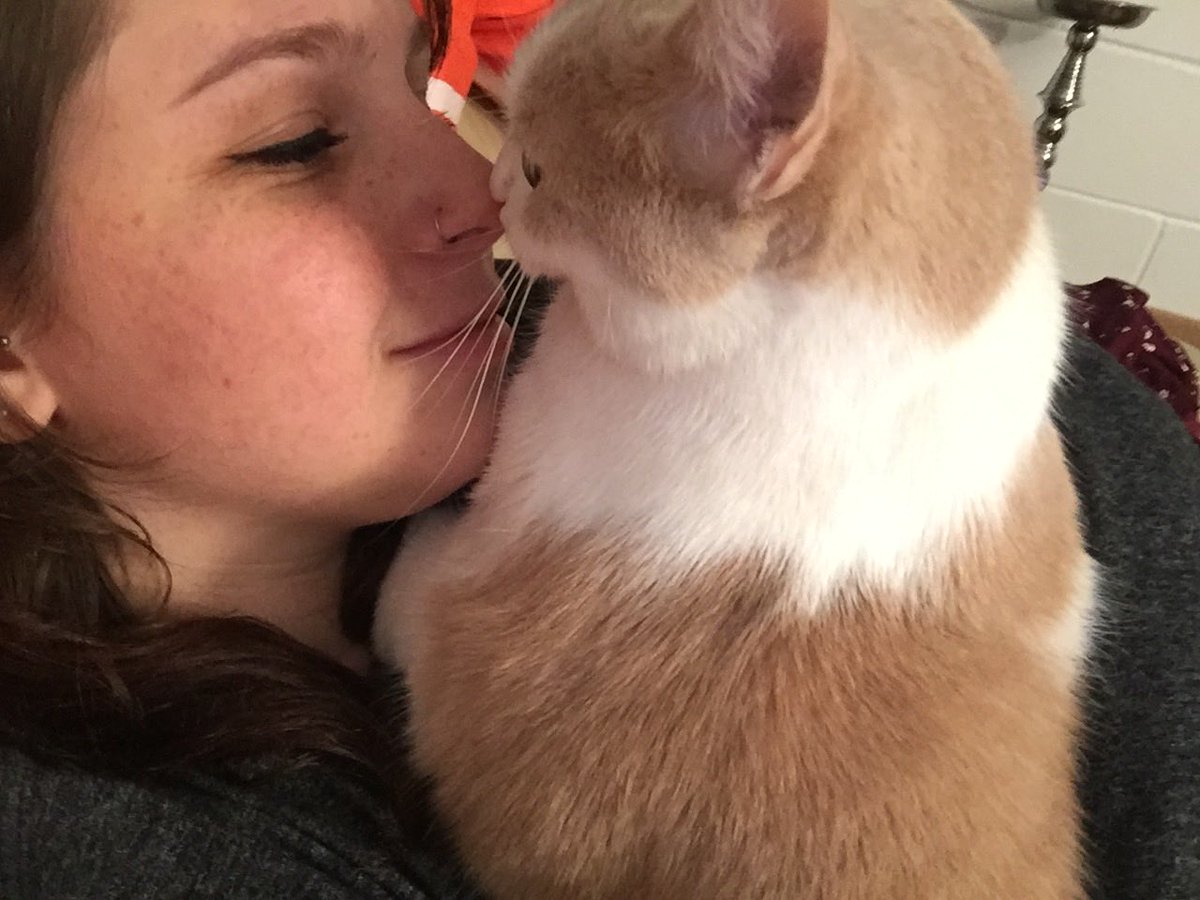
Pancake, my cat, who has been my best friend and with me for 11 years, and seen me through some of the worst times of my life, has cancer. I’m not okay, I wasn’t ready for this. I’ve said before that i don’t know who saved who more, and it’s true. I love this silly cat.❤️
Chairman Birb Bernanke tweet mediaChairman Birb Bernanke tweet mediaChairman Birb Bernanke tweet mediaChairman Birb Bernanke tweet media
Taito-ku, Tokyo 🇯🇵 English
118
1
616
54.2K
Sham Chukoury retweetledi
Latif Nasser
Latif Nasser@latifnasser·
Last January, I noticed something peculiar in my 2yo’s bedroom that - after a year of obsessive reporting - led me to a profound cosmic revelation about what’s even possible in our universe. A 🧵.
Latif Nasser tweet media
English
1.4K
25.7K
136.8K
17.5M
Sham Chukoury
Sham Chukoury@eleusis7·
@nickj69 It's not rocket science, is it.. social science? 🤔
English
0
0
0
29
Sham Chukoury retweetledi
Liv Boeree
Liv Boeree@Liv_Boeree·
Show me anything sexier than this shot of Concorde going Mach 2 to keep up with the shadow of the 1973 solar eclipse for a record breaking 70 minutes
Liv Boeree tweet media
English
149
761
9.6K
965K
antzpantz.bky.social
antzpantz.bky.social@antzpantz·
What's for dinner tonight? (Don't @ me about the coffee... I'm just trying out this coffee press from Buy Nothing)
antzpantz.bky.social tweet media
English
2
0
1
140
Sham Chukoury retweetledi
Historic Vids
Historic Vids@historyinmemes·
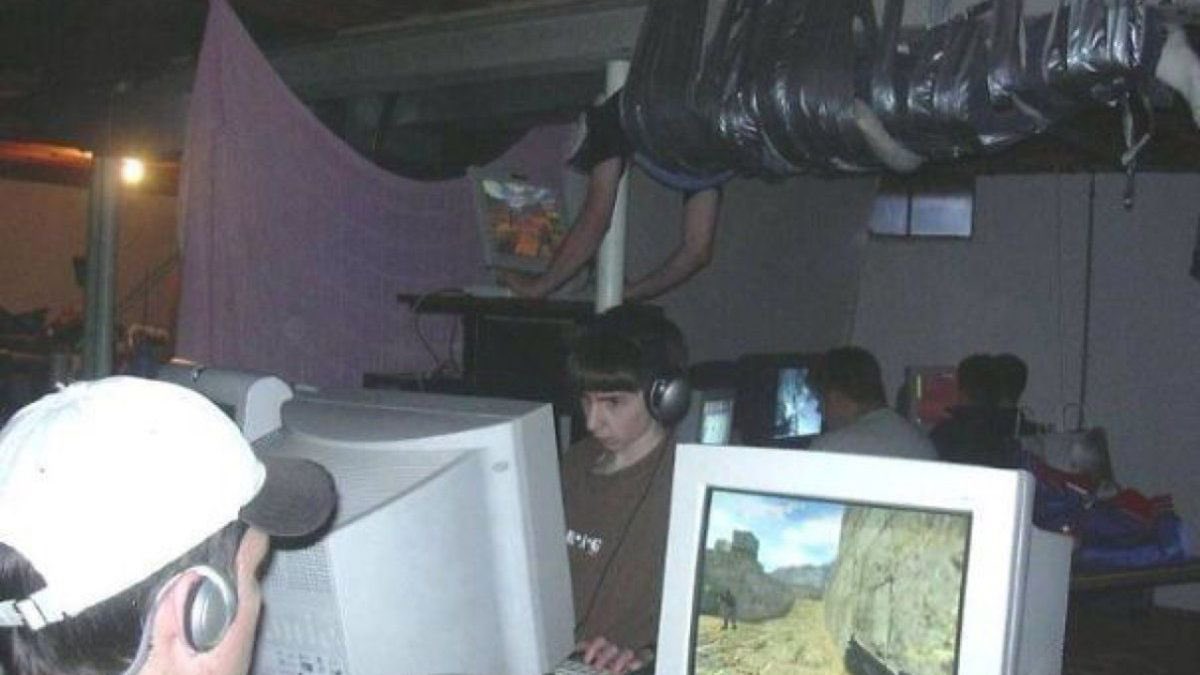
In the late 1990s and early 2000s, LAN parties were a cornerstone of young gamers' social lives. These gatherings, typically hosted in someone's basement or a local community center, revolved around connecting multiple computers through a local network. This allowed groups of friends to delve into the world of multiplayer gaming in an era where high-speed internet was still a luxury. Amidst the dim glow of computer screens, young enthusiasts would engage in epic battles in games like Age of Empires and Quake, all while sipping on caffeinated sodas and indulging in a smorgasbord of snacks, from pizza to candy bars. These LAN parties often stretched late into the night, much to the exasperation of concerned parents and the delight of the participants. These gatherings were about more than just gaming; they were about forging lasting friendships, honing teamwork skills, and creating unforgettable memories in an era when online gaming as we know it today was still in its infancy.
Historic Vids tweet mediaHistoric Vids tweet mediaHistoric Vids tweet mediaHistoric Vids tweet media
English
476
1.2K
9.2K
2.5M
Chairman Birb Bernanke
Chairman Birb Bernanke@Bonecondor·
Men turn 35 and are presented with three choices: knowing every battle in world war II, obsessing about the roman empire, or grilling
Manhattan, NY 🇺🇸 English
80
16
356
45.8K
Sham Chukoury retweetledi
Lily Craven
Lily Craven@TheAttagirls·
Woman of the Day road safety engineer Barbara Sabey (1928-2013) of Northampton, “probably the most significant contributor to road safety that you have never heard of”. Barbara graduated with a PhD in physics, her dissertation concentrating on the friction between tires and roads, especially during wet conditions. Her work on skidding, road surface and tyre characteristics contributed to British Standards. She analysed specific accident black spots, roads and entire areas, looking at the cost of accidents and how to prevent them, considering seat belts, lighting, road layouts and drivers’ perceptions of hazards. Later, she led some of the first roadside surveys of blood alcohol content in drivers which highlighted the extent and consequences of drunk driving. Barbara’s meticulous research demonstrated that human error contributes to about 95% of all road accidents, and her work at the Transport Research Laboratory in Berkshire made significant contributions to road safety engineering including tire tread depth rules, mandatory seat belt laws, blood alcohol limits, and better road design. She led the Urban Safety Project, a large-scale exploration of hazard reduction systems in urban settings. Many traffic calming concepts originate from this work. A competitive driver herself, Barbara competed in the RAC Rally of Great Britain in 1968, 1969, and 1970, in her Mini Cooper. Safely.
Lily Craven tweet mediaLily Craven tweet media
English
25
697
2.5K
119.8K