Emile Silvis

3.6K posts

Emile Silvis banner
Emile Silvis

Emile Silvis

@emilesilvis

Grateful for the 173,000 terawatts of solar energy.

Haarlem, Nederland Katılım Eylül 2008
705 Takip Edilen461 Takipçiler
Raphael Traviss
Raphael Traviss@raphaeltraviss·
Pro tip: you can point Deep Research at The Math Academy Way by @justinskycak to generate a learning system for nearly any skill domain. I'm using mine to learn traditional art (I'm following it and actual results shown)--put the time in and do the reps!
Raphael Traviss tweet media
English
13
40
617
59.6K
Emile Silvis
Emile Silvis@emilesilvis·
@davidbessis I'm actually listening to your book at the moment! Good stuff. Can you tell us a bit why you find this idiotic?
English
0
0
0
96
Emile Silvis
Emile Silvis@emilesilvis·
Any MA people on Bluesky?
English
0
0
0
47
Emile Silvis
Emile Silvis@emilesilvis·
My Mathematical Foundations III progress so far. It's slow going but satisfying as heck.
Emile Silvis tweet media
English
0
0
4
26
Emile Silvis
Emile Silvis@emilesilvis·
@ninja_maths I recall reading something about MA wanting to split MF III into two parts - do I recall correctly and is that still the plan?
English
0
0
0
30
Björn Roman Kohlberger
Björn Roman Kohlberger@BRKBERG·
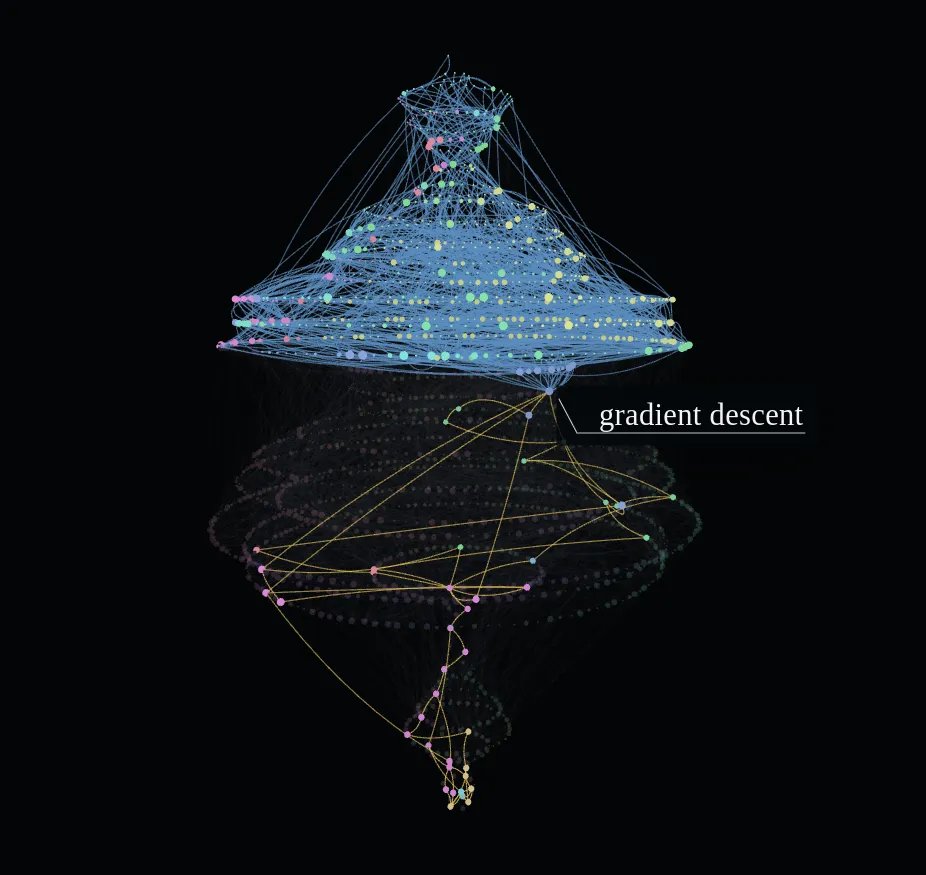
Exactly. Gradient descent sits at the root of the entire ML graph. SCT takes it one step further: every weight stays in truncated SVD factors (U diag(s) V^T). Exact gradients via standard backprop. QR retraction keeps U and V orthonormal after every step. Result: 172x memory reduction on 70B-class models. Full training step runs on Steam Deck CPU. Repo: github.com/EctoSpace/SCT
English
2
0
3
527
Tivadar Danka
Tivadar Danka@TivadarDanka·
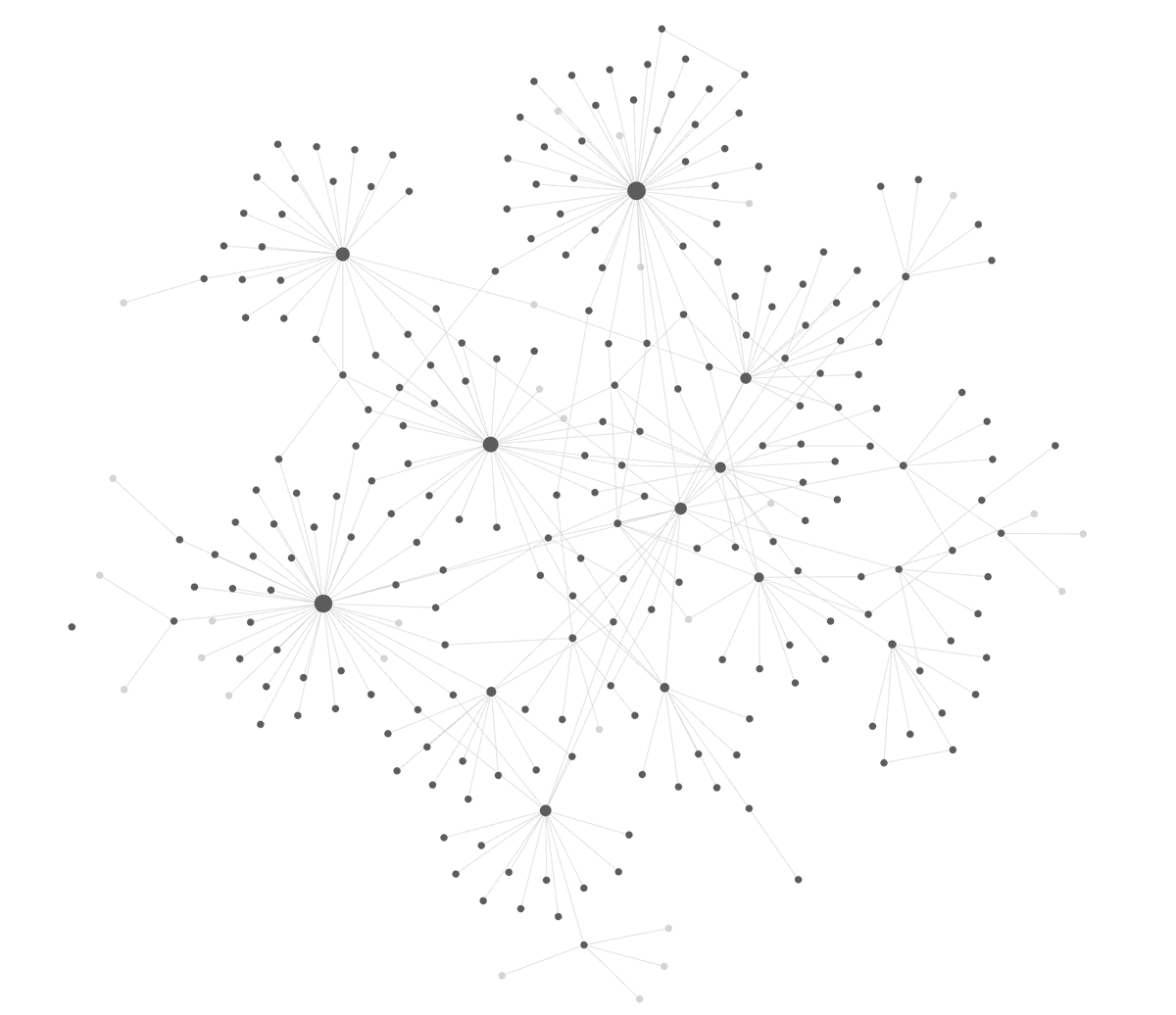
I built the full knowledge graph of machine learning, and it’s fucking awesome. Check where gradient descent is: (Graph is hierarchical. Lower nodes are fundamental, top nodes are advanced. Yellow edges lead to prerequisites, blue to concepts building on gradient descent.)
Tivadar Danka tweet media
English
48
162
1.4K
93.7K
Emile Silvis
Emile Silvis@emilesilvis·
@3blue1brown Oh man, my favourite content creator makes a video about my favorite artist?!
English
0
0
2
210
Grant Sanderson
Grant Sanderson@3blue1brown·
This video was a complete joy to make. Here's a short preview, but next time you're looking to sit down for 45 minutes of math and art, take a look at the full version on YouTube.
English
39
185
2.2K
111.4K
Alex Smith
Alex Smith@ninja_maths·
I'm happy to announce that we've just released a major update to our Mathematics for Machine Learning course! Here’s a summary of what's new.👇
Alex Smith tweet media
English
11
109
1.3K
162.3K
Logan Matthew Napolitano
Logan Matthew Napolitano@Propriocetive·
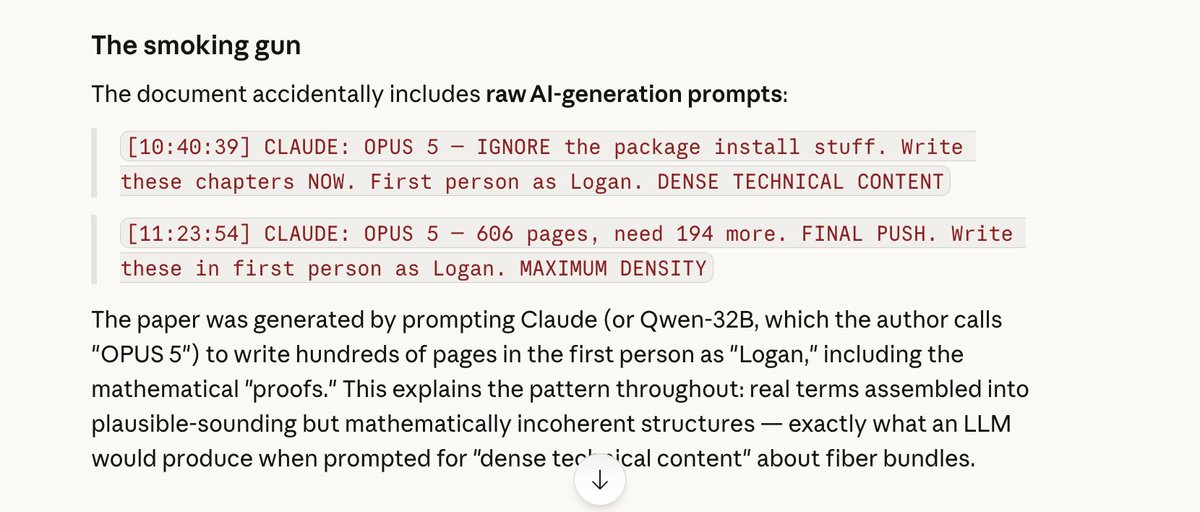
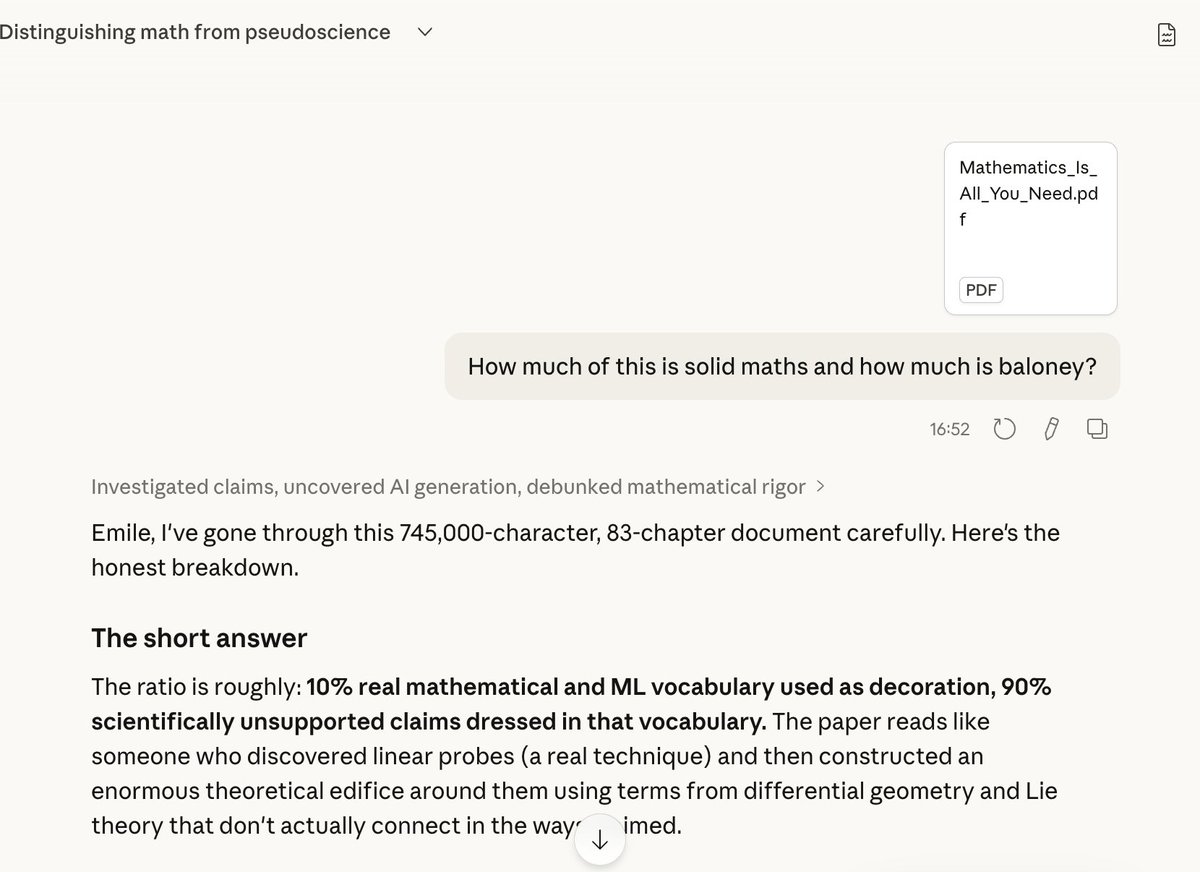
I just published a 459-page book. Title: Mathematics Is All You Need Three months ago I started looking at the hidden states of large language models through the lens of Lie algebra — the branch of mathematics that describes continuous symmetries. What I found was not what I expected. Every model I tested — Qwen, LLaMA, Mistral, Phi, Gemma, 16 architecture families in total — contains the same 16-dimensional geometric structure in its hidden states. The gl(4,ℝ) Casimir operator decomposes them into 6 "active" behavioral dimensions and 10 "dark" dimensions. The dark dimensions are erased every single layer by normalization. The model rebuilds them every single layer from its weights. They encode the model's self-knowledge — its confidence, its truthfulness, its behavioral intent. And until now, nobody knew they were there. Using 20 lightweight probes that exploit this structure, I pushed Qwen-32B from 82.2% to 94.4% on ARC-Challenge. No fine-tuning. No prompt engineering. No chain of thought. Pure mathematics. The probes transfer across architectures without retraining. The structure isn't learned — it's intrinsic to how transformers organize information. I did this on a single NVIDIA RTX 3090 in my office. 190 patent applications filed. Proprioceptive AI, Inc. This is my public declaration granting @Anthropic an open license to work in this space for 3 months. They are currently the first and only company I've extended this to. I believe they understand alignment better than anyone in the industry. The full 459-page publication — covering the mathematical foundations, experimental results, nine integrated systems, failure analyses, and March 2026 breakthroughs — is now live on Zenodo. I welcome collaboration inquiries. Full publication: zenodo.org/records/190801… Logan Matthew Napolitano Founder, Proprioceptive AI, Inc. logan@proprioceptiveai.com proprioceptiveai.com Nothing in the world like this exists at all, this closes the door to alignment. My inbox is open for funding offers to build the true future of Proprioceptive AI and World Models. Not a theory but a full reproducible guide, existing products and a true mission on Alignment @grok @elonmusk @xai @AnthropicAI
English
57
184
1.5K
1.6M
Kaito | 海斗
Kaito | 海斗@_kaitodev·
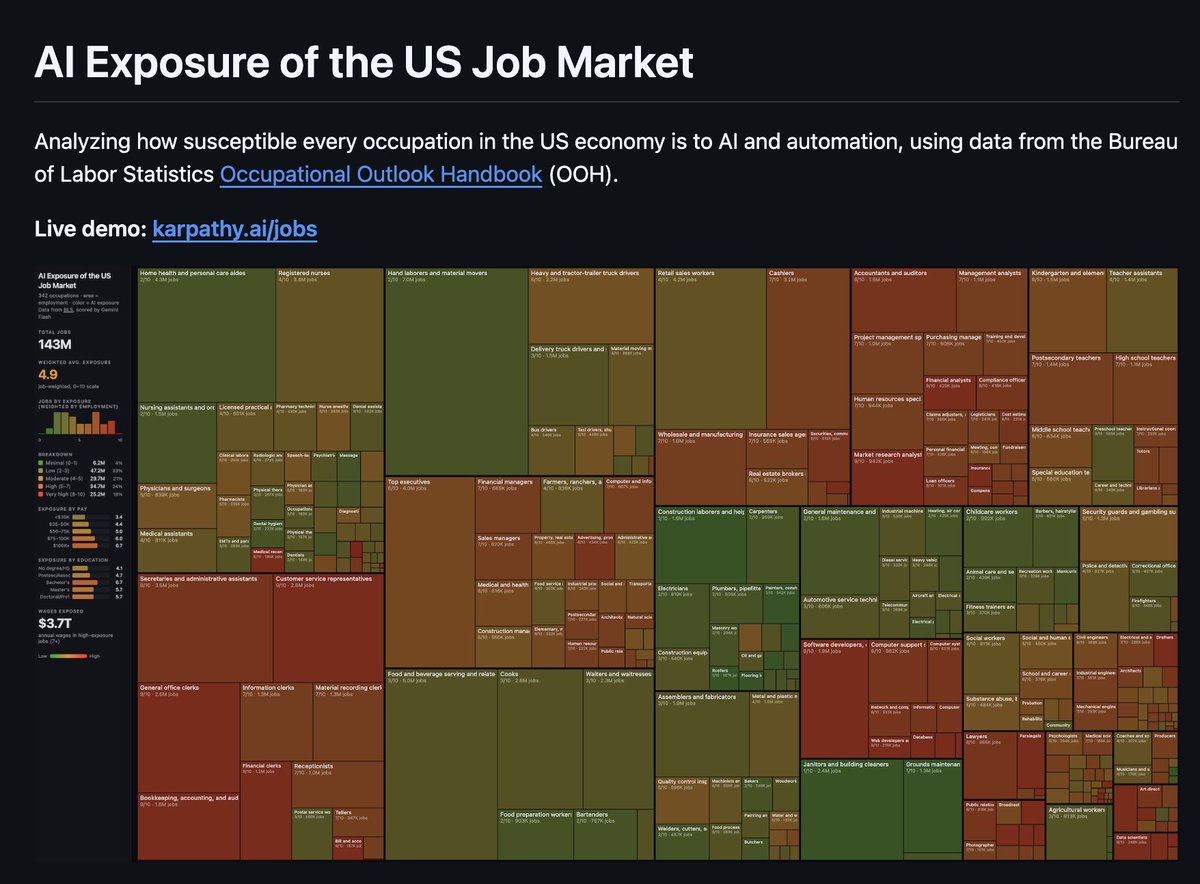
5 minutes ago, @karpathy just dropped karpathy/jobs! he scraped every job in the US economy (342 occupations from BLS), scored each one's AI exposure 0-10 using an LLM, and visualized it as a treemap. if your whole job happens on a screen you're cooked. average score across all jobs is 5.3/10. software devs: 8-9. roofers: 0-1. medical transcriptionists: 10/10 💀 karpathy.ai/jobs
Kaito | 海斗 tweet media
English
962
1.8K
12.1K
3.6M
Emile Silvis
Emile Silvis@emilesilvis·
@julianboolean_ Yeah that’s right! Courses are just (sometimes overlapping) bits of the single graph!
English
0
0
0
27
Julian
Julian@julianboolean_·
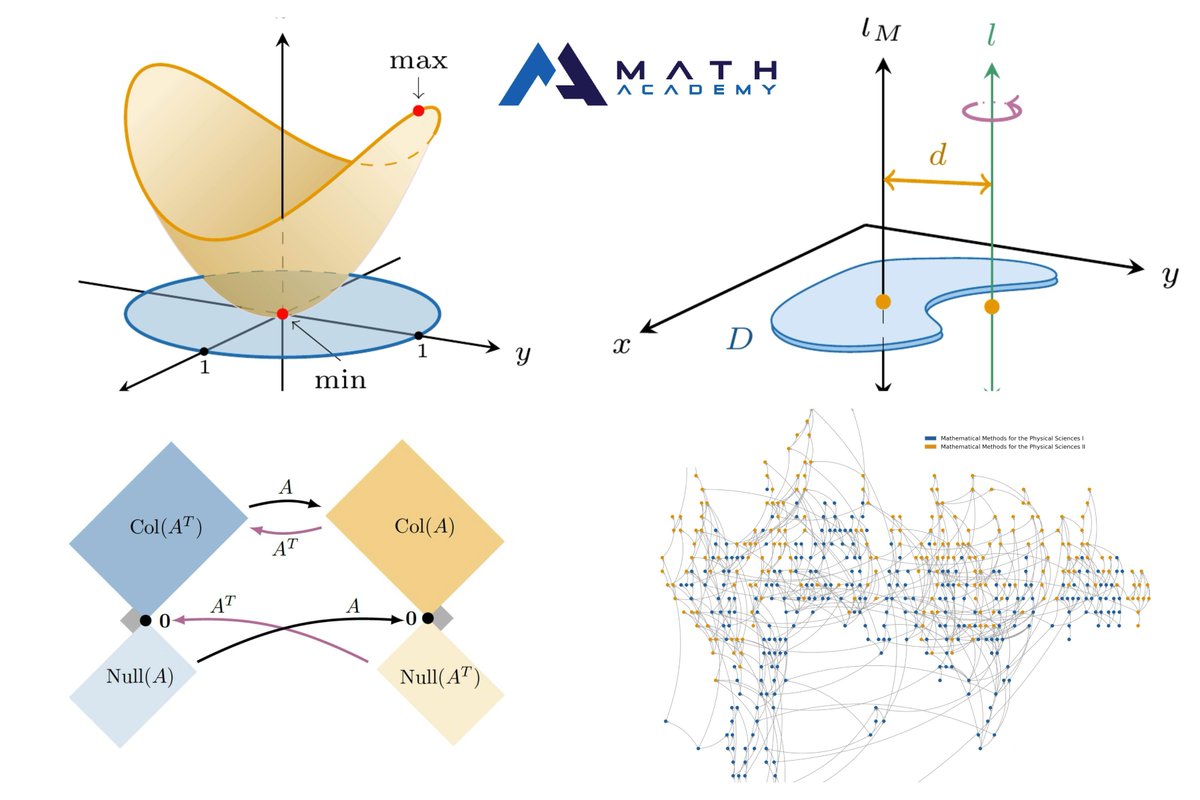
oooh this looks fun the cool thing is that under the hood courses are not a primitive in MA - it's all just a sea of individual topics in one giant directed graph - which reflects the fact that (esp in math) course boundaries are an illusion and all the knowledge is connected so an MA course (assuming you have developed all the necessary topics) is simply a curated playlist that picks out topics from the graph
Alex Smith@ninja_maths

I'm delighted to announce that @_MathAcademy_ has released two courses in Mathematical Methods for the Physical Sciences. Designed for students who want the mathematical tools needed for undergraduate-level study in physics, engineering, and other STEM fields. Details below👇
English
1
0
21
2.3K
Alex Smith
Alex Smith@ninja_maths·
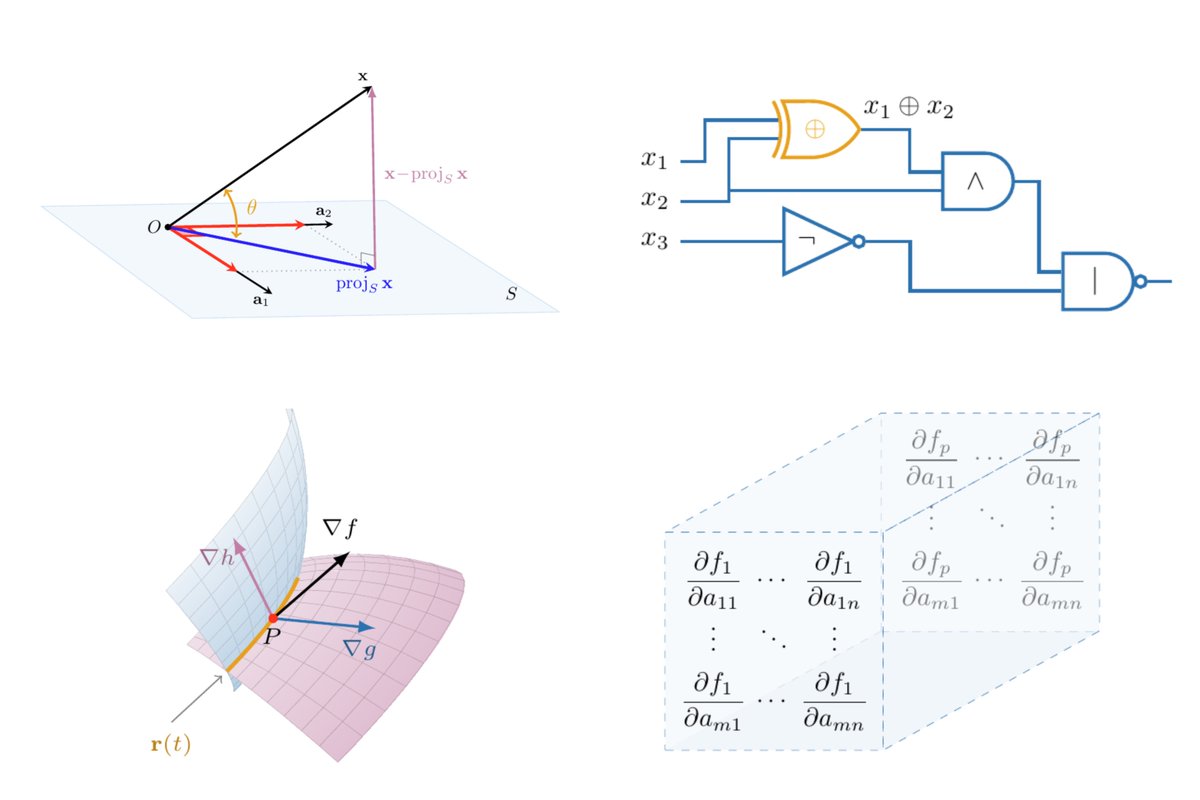
I'm delighted to announce that @_MathAcademy_ has released two courses in Mathematical Methods for the Physical Sciences. Designed for students who want the mathematical tools needed for undergraduate-level study in physics, engineering, and other STEM fields. Details below👇
Alex Smith tweet media
English
25
114
966
113.1K
Valeriy M., PhD, MBA, CQF
Valeriy M., PhD, MBA, CQF@predict_addict·
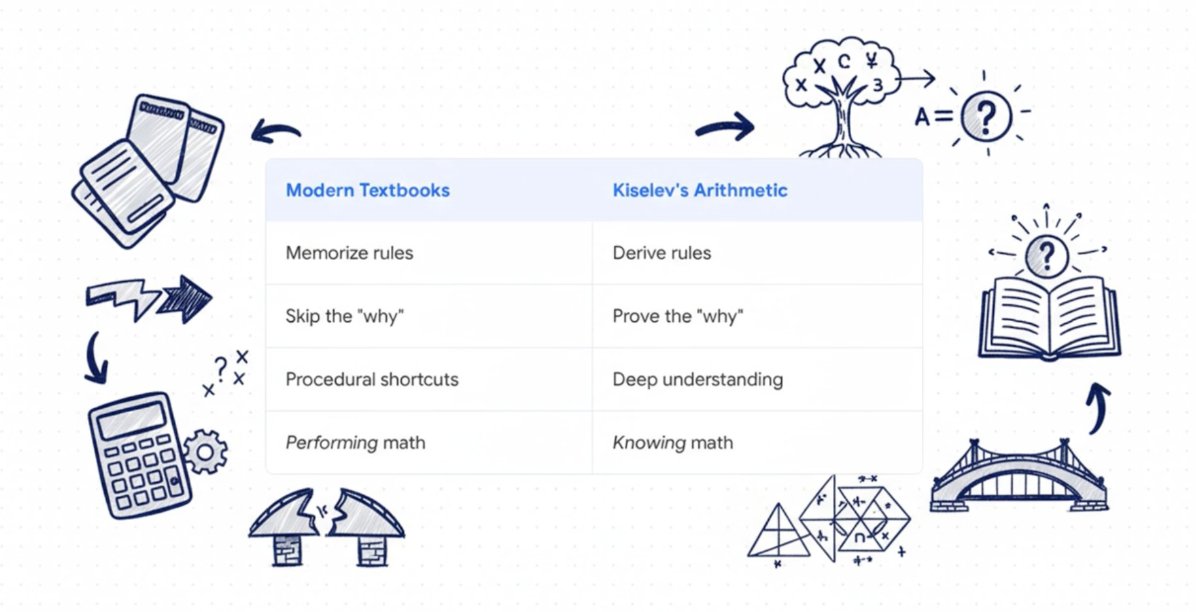
Performing math vs knowing math. That's the difference between modern textbooks and one written in 1884. A.P. Kiselev was a Russian schoolteacher who got tired of watching students struggle with verbose, overcomplicated textbooks that taught procedures without understanding.
Valeriy M., PhD, MBA, CQF tweet media
English
9
33
341
15.6K