

eman
967 posts

eman
@emomoh
⚡️⚡️⚡️• powerful data-backed voice agents that anyone can build and deploy by calling our agentic concierge hotline at 808-468-5554⚡️⚡️⚡️
San Francisco Katılım Ekim 2008
592 Takip Edilen2K Takipçiler

@_chenglou What is this madness? HTML5 from 2012 is not “foundational piece of UI engineering”
It’s also functionally pointless 😅
English

My dear front-end developers (and anyone who’s interested in the future of interfaces):
I have crawled through depths of hell to bring you, for the foreseeable years, one of the more important foundational pieces of UI engineering (if not in implementation then certainly at least in concept):
Fast, accurate and comprehensive userland text measurement algorithm in pure TypeScript, usable for laying out entire web pages without CSS, bypassing DOM measurements and reflow
English

Every website you’ve ever used is broken in a way you never noticed and it’s been this way for 30 years...
A Midjourney engineer finally just fixed it.
It’s called Pretext:
A tiny library that lets websites lay out text the way magazines and newspapers do, with text flowing around images, wrapping into columns, and fitting perfectly into any shape, all at 120fps.
This has been basically impossible on the web for 30 years. Every website you’ve ever used relies on the same clunky system from the 90s to figure out where text goes on screen. Pretext bypasses it entirely. 500x faster.
The demos look like they shouldn’t be possible in a browser. Go look.
Cheng Lou@_chenglou
My dear front-end developers (and anyone who’s interested in the future of interfaces): I have crawled through depths of hell to bring you, for the foreseeable years, one of the more important foundational pieces of UI engineering (if not in implementation then certainly at least in concept): Fast, accurate and comprehensive userland text measurement algorithm in pure TypeScript, usable for laying out entire web pages without CSS, bypassing DOM measurements and reflow
English

@TukiFromKL This is an obvious problem to anyone who’s been building with top models. I default to memory off because I understand how context works and every signal influences output in small/subtle and huge ways
English

🚨 Are you paying attention to what Karpathy just admitted..
the founding member of OpenAI.. the guy who trained the models you use every day.. just said every single LLM has the same problem..
ask it one question two months ago and it treats it like your entire identity..
oh wait.. you mentioned crypto once in January? congratulations.. you're now a crypto guy forever.. you also asked about a recipe? every conversation starts with "as someone who enjoys cooking.."
these models don't remember you.. they stereotype you.. off a single data point..
we gave AI a photographic memory and forgot to give it the ability to forget.. and forgetting is the most human thing there is..
Andrej Karpathy@karpathy
One common issue with personalization in all LLMs is how distracting memory seems to be for the models. A single question from 2 months ago about some topic can keep coming up as some kind of a deep interest of mine with undue mentions in perpetuity. Some kind of trying too hard.
English

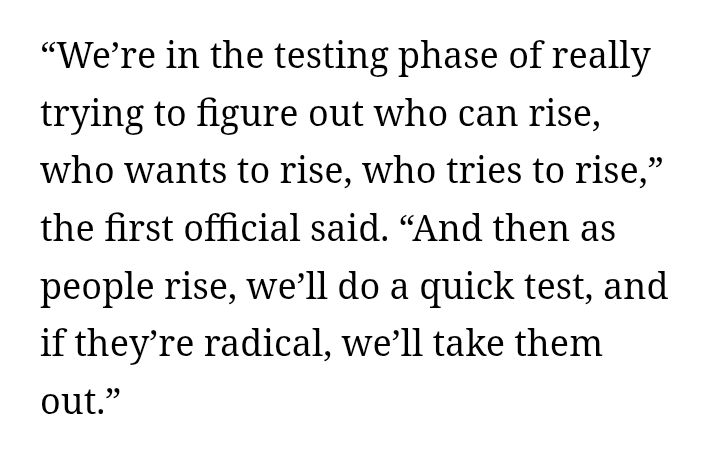
Exactly it seems like an almost obvious tactical adjustment one would make to settle into an open ended attritional campaign with a super power. And we must know this but still choose to sell the 90% drop argument. I think it’s also a sign of ongoing denial about the reality of this campaign that DoW continue to set expectations high. The expectations that Iran is all but defeated, when the public can see what is looking to be an unexpectedly complex fight
English

I don’t understand how any serious analyst could even talk about how Iran’s launch rates are down. Clearly they can’t launch 200 missiles per day if they plan on fighting this war for another 6 months. They would need 36,000 missiles so obviously they’ll launch less but have gotten ready for a war of attrition
English

The "Iran is losing" narrative is tracking the wrong number. Yes, missile and drone launch rates are down 90%+.
But hit rate (or confirmed impacts per projectile fired) has been climbing steadily since Day 1.
A 🧵 on what the data actually shows.
English
@HugoBandanna @MaxAbrahms In hindsight I think you’re right and their restraint in past flair ups was tragically misinterpreted as weakness
English

@MaxAbrahms Actually, most countries will assess that Iran is one nest of mad hornets who should not have been disturbed by the US and Israel to begin with. I imagine we'd have the same gigantic level of mess created in East Asia if North Korea was attacked by the US and its allies.
English

There’s a fundamental problem with the Iranian regime’s strategy in the war.
On one hand, it wants to inflict maximum pain on the world by sowing as much chaos as possible to deter future military interventions.
On the other hand, this only expands the widespread belief the regime must go.
English
This prediction is the result of a gross misunderstanding of why spreadsheets have been around and thriving for 50 years.
Specifically, this is hilariously not true:
“The only reason spreadsheets won is that the barrier to writing real software was too high.”
AI can help businesses with the spreadsheets and phone calls that overwhelmingly dominate how they operate, but replacing them won’t happen anytime soon.
Bookmark this
English

prediction re the end of spreadsheets
AI code gen means that anything that is currently modeled as a spreadsheet is better modeled in code. You get all the advantages of software - libraries, open source, AI, all the complexity and expressiveness.
think about what spreadsheets actually are: they're business logic that's trapped in a grid. Pricing models, financial forecasts, inventory trackers, marketing attribution - these are all fundamentally *programs* that we've been writing in the worst possible IDE. No version control, no testing, no modularity. Just a fragile web of cell references that breaks when someone inserts a row.
The only reason spreadsheets won is that the barrier to writing real software was too high. A finance analyst could learn =VLOOKUP in an afternoon but couldn't learn Python in a month. AI code gen flips that equation completely. Now the same analyst describes what they want in plain English, and gets a real application - with a database, a UI, error handling, the works. The marginal effort to go from "spreadsheet" to "software" just collapsed to near zero.
this is a massive unlock. There are ~1 billion spreadsheet users worldwide. Most of them are building janky software without realizing it. When even 10% of those use cases migrate to actual code, you get an explosion of new micro-applications that look nothing like traditional software. Internal tools that used to live in a shared Google Sheet now become real products. The "shadow IT" spreadsheet that runs half the company's operations finally gets proper infrastructure.
The interesting second-order effect: the spreadsheet was the great equalizer that let non-technical people build things. AI code gen is the *next* great equalizer, but the ceiling is 100x higher. We're about to see what happens when a billion knowledge workers can build real software.
English

I spend a shocking amount of time thinking about land use, zoning, and building code for new Primers.
There's an enormous opportunity to compress multi-month local muni processes into hours with LLM's.
If you're building this, I'd love to invest and connect you with cities & counties who need you.
(Related: unlocking progress in the physical world is a wonderful mission — we need many more founders attacking such problems!)
English
Big AI will win? Maybe at the model layer. But real value lives where work happens.
SaaS today is too much software, too little solution. Companies juggle 20+ tools and still depend on spreadsheets.
The next era isn’t software to run your business, it’s your business as software.
That’s the foundation LineAI is building.
English

I understand why many smart people feel this way but I’m not worried about this scenario one bit. In the heydays Google and Facebook there were similar predictions. Google was going to swallow the Internet, FB apps were going to replace everything etc. They weren’t the slow incumbents we think of them today. They were scary. I wasn’t around in Microsoft’s heydays but I bet it was similar.
One company to rule them all never works out. Especially in the application layer where every design decision is a trade off. That’s why even in the same category, you can have many successful companies based on minor differences. There isn’t one way to find restaurants, learn things, connect socially, organize an event or shop online. You can always find weaknesses of an existing service and build something better for certain customers.
If anything, the foundational model companies have much weaker moats than Google, FB and MS had. No models have a monopoly on anything. Distribution and capital is way more accessible for startups than it was 10-20 years ago.
OpenAI and Anthropic have some momentum right now. But when they’ve to compete in 10+ categories, you’ll be competing with a PM there, not their founders. These organizations also have significant cultural weaknesses you can leverage. Their coveted researchers want to solve math problems, not hear complaints from soccer moms in Ohio or compliance teams of regional hospitals.
So I’ll say game is on. You can’t win if you don’t play.
Yishan@yishan
My AI investment thesis is that every AI application startup is likely to be crushed by rapid expansion of the foundational model providers. App functionality will be added to the foundational models' offerings, because the big players aren't slow incumbents (it is wrong to apply the analogy of "fast startup, slow incumbent" here), they are just big. Far more so than with any other prior new technology, there is a massive and fast-moving wave that obsoletes every new app almost as fast as it can be invented. There is almost no time to build a company and scale it. There are two ways AI application startup founders can make money: - Make a flash-in-the-pan app that generates a ton of cash and bank the cash (my estimate is that you have about 12-18 months cashflow generation) - Make a good enough app that you get acquired by one of the big players for sufficient equity The situation is highly unstable - we don't know if it's going to crash or go to the moon but both scenarios make it very unlikely that any AI application startup will independently become a generational supercompany (baseline odds are low to begin with). The best odds are finding an application niche in a highly specialized field with extremely unique and specific data barriers, ideally ones relating to real atoms (hardware or world-related) data and not software/finance.
English
This misses the real-world complexity of software that actually solves business problems. SaaS has been too much software, too little solution. The average company runs 20+ tools and still lives in spreadsheets.
The AI opportunity isn’t “software to run your business.” It’s your business as software.
That’s what we’re building with LineAI — AI infrastructure for teams to encode and solve their own domain problems.
English

My AI investment thesis is that every AI application startup is likely to be crushed by rapid expansion of the foundational model providers.
App functionality will be added to the foundational models' offerings, because the big players aren't slow incumbents (it is wrong to apply the analogy of "fast startup, slow incumbent" here), they are just big. Far more so than with any other prior new technology, there is a massive and fast-moving wave that obsoletes every new app almost as fast as it can be invented. There is almost no time to build a company and scale it.
There are two ways AI application startup founders can make money:
- Make a flash-in-the-pan app that generates a ton of cash and bank the cash (my estimate is that you have about 12-18 months cashflow generation)
- Make a good enough app that you get acquired by one of the big players for sufficient equity
The situation is highly unstable - we don't know if it's going to crash or go to the moon but both scenarios make it very unlikely that any AI application startup will independently become a generational supercompany (baseline odds are low to begin with).
The best odds are finding an application niche in a highly specialized field with extremely unique and specific data barriers, ideally ones relating to real atoms (hardware or world-related) data and not software/finance.
English
@hpierrejacques @HarlemCapital And to this person, what do you bring? Serious question
English

The founders who inspire me most are the ones who show up when the odds are stacked against them.
Over the years, we’ve seen a pattern in what qualities make those founders win. At @HarlemCapital, we call it the BRAVE Framework. To us, a winner is someone who is:
Bold: willing to take risks and build what has not been done before
Relentless: unyielding in pursuit of their vision, pushing through obstacles and refusing to settle for “good enough”
Adaptive: able to learn quickly, solve problems, and pivot when challenges come
Visionary: seeing the future on their own terms, creating new rules and reshaping the game
Excellent: scaling with discipline and delivering with precision, even as they grow fast
The entrepreneurs with these traits are the ones who push entire industries forward. They set new standards for what is possible, build companies that outlast trends, and create opportunities that reach far beyond themselves.
These are the founders we want to partner with and they remind us why our belief has always been the same: All Winners Welcome.
English

Knowledge graphs for representing information are unbeatable.
After this, you will never build a RAG system without knowledge graphs.
It will take you five lines of code to build a knowledge graph with your data.
I recorded a video to show you how you can do this.
I used Cognee, an open-source library that outperforms any basic vector search approach in terms of retrieval relevance. They are collaborating with me on this post.
Cognee is:
• Easy to use
• Reduces hallucinations
• Open-source
Here is a link to the repository: github.com/topoteretes/co…
They also offer a comprehensive platform and UI with Python notebooks you can utilize to manage your data. Here is the link:
cognee.ai
English