Ender

255 posts

Ender

Ender

@enderventures

A simple man trying to learn & understand while building a life worth living for my family

Katılım Kasım 2025
133 Takip Edilen63 Takipçiler
Sabitlenmiş Tweet
Ender
Ender@enderventures·
A brand new account, but I'm not new to this platform. Hello everyone! I'm trying to learn and understand as I build a life worth living. The world is a chaotic but beautiful place. It's changing faster than ever. Or at least, it seems that way. A calm mind is essential in these times. It's easy to overthink and stress about things with all the access to information we have today. However, I believe there is a way to scan the world for signals that occasionally flare up between all the noise without going crazy. I'm trying to look for these signals. And if I find some, I'd like to share the signals with you and you're very welcome to come and join my journey! Looking forward to enjoy each others thoughts and company! 🤝
Ender tweet media
English
1
0
10
245
Moore Dividends
Moore Dividends@MooreDividends·
Ich werde irgendwie das Gefühl nicht los, dass ich mehr Bitcoin im Portfolio brauche.
Deutsch
41
5
262
8.7K
Ender
Ender@enderventures·
@FinFreedom414 And, if their goal is to increase BTC/share (which it is), and they actually achieve this long-term, the price should be even higher
English
0
0
2
437
FinancialFreedom
FinancialFreedom@FinFreedom414·
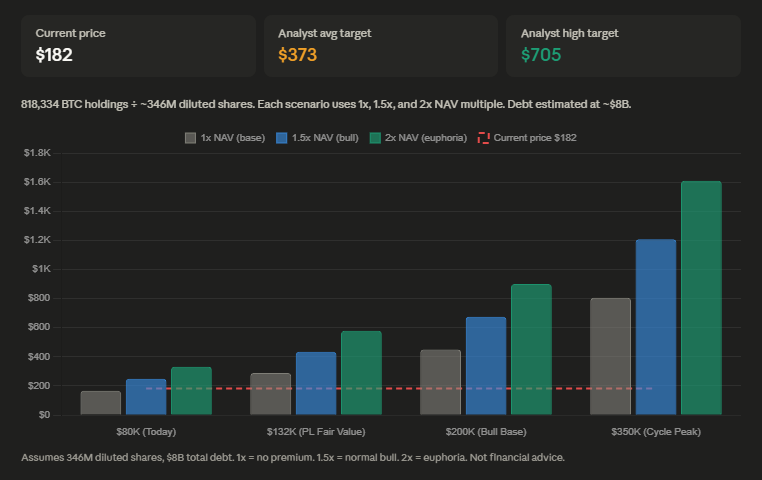
$MSTR is currently at $182. ATH was $543. Here's why the math points at the share price being much higher. Strategy currently owns 818,334 $BTC. Take that figure and divide it by 346 million diluted shares. That's 0.00236 $BTC per share. The Power Law says $BTC fair value is $132K today. The model that's been right for 16 years with an R² of 0.961. At $132K $BTC and a 1.5x NAV multiple — conservative for a bull market — $MSTR is worth ~$468 a share. At $200K $BTC, you're looking at $750. Current price: $182. Average analyst target: $373. High target: $705.
FinancialFreedom tweet media
English
32
52
510
29.5K
Michael Saylor
Michael Saylor@saylor·
How often would you prefer to be paid dividends?
English
793
348
2.9K
345.1K
Curiosity
Curiosity@CuriosityonX·
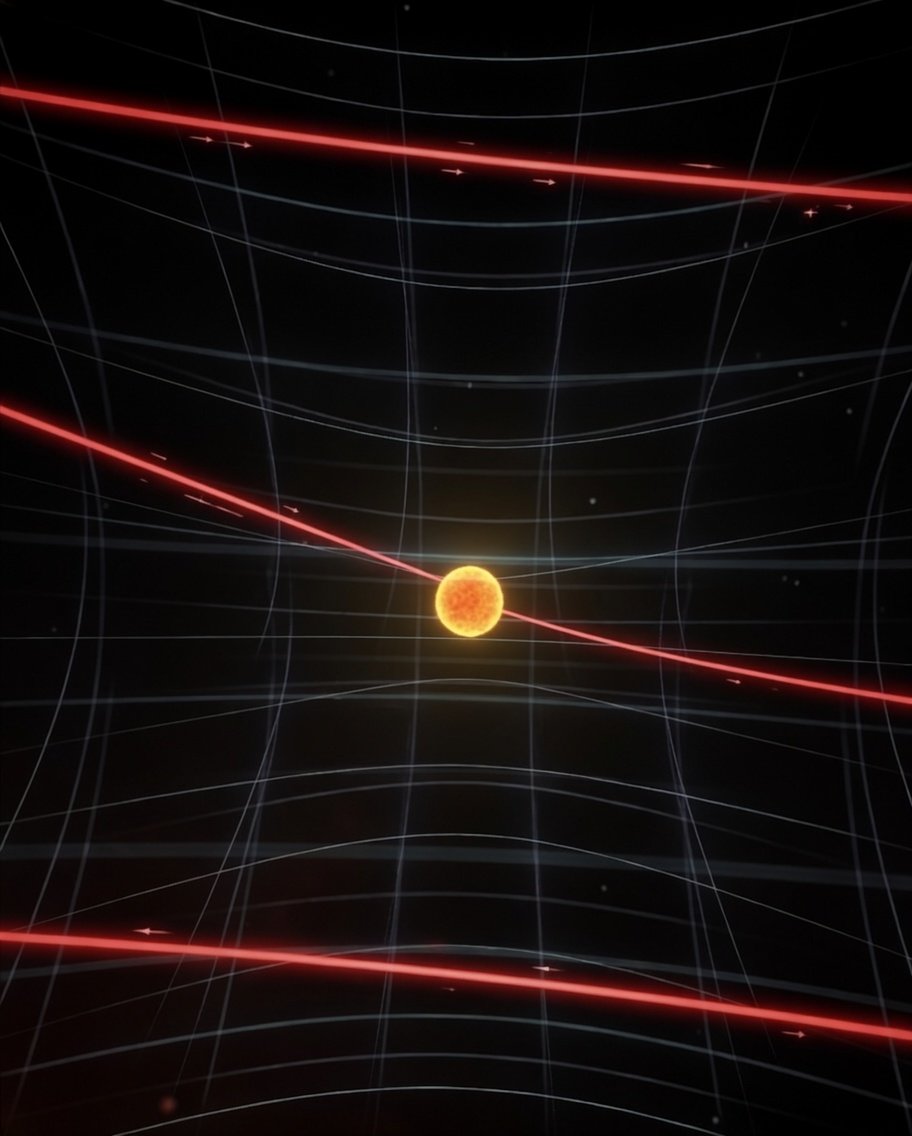
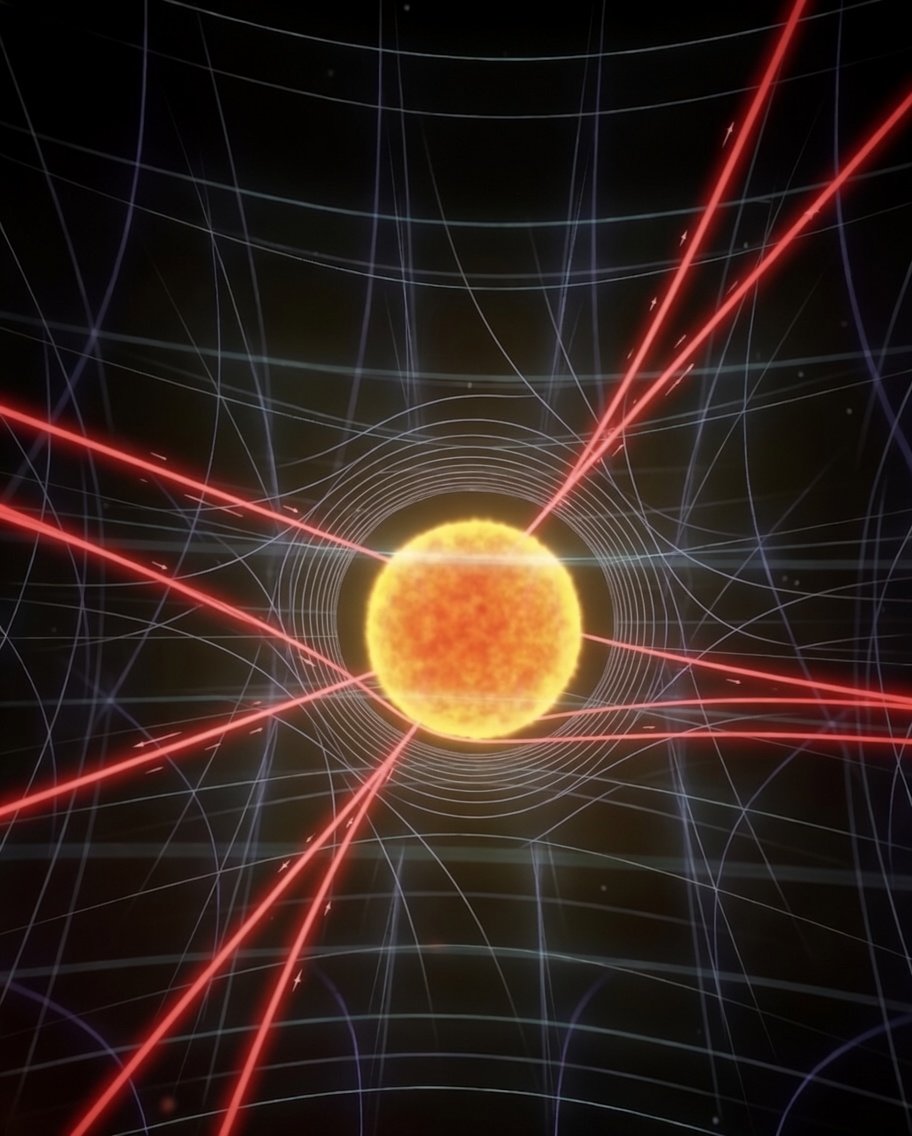
"Gravity only affects things with mass." Light has no mass, it still obeys gravity how?
Curiosity tweet media
English
509
101
1.6K
187.9K
stevenmarkryan
stevenmarkryan@stevenmarkryan·
Name a single thing more awesome than this:
English
436
145
2.4K
83.4K
Ender
Ender@enderventures·
@plainionist Yes, because AI does not (yet) produce clean code. You still need to guide it (or have good processes in place that enforce guidance)
English
0
0
1
10
Seb
Seb@plainionist·
Serious question: Do you still recommend Clean Code to junior developers? 🤔
Seb tweet media
English
69
0
77
13.7K
Ender
Ender@enderventures·
@realBigBrainAI It still works in small and limited cases because the hubris is to believe the human doing the thing before could do it without errors a 100% of the time
English
0
0
0
2K
Big Brain AI
Big Brain AI@realBigBrainAI·
Meta's Chief AI Scientist Yann LeCun: building agentic systems on LLMs is a recipe for disaster.
English
150
252
1.3K
281.9K
Ender
Ender@enderventures·
This absolutely resonates with my thinking but I keep flip-flopping between omega-candles and power law, because I believe there will always be people willing to sell at a lower price „because it’s good enough for them“. So, yes, supply is finite. But supply might come back „online“ because people are willing to sell for lower?
English
0
0
0
11
Ender
Ender@enderventures·
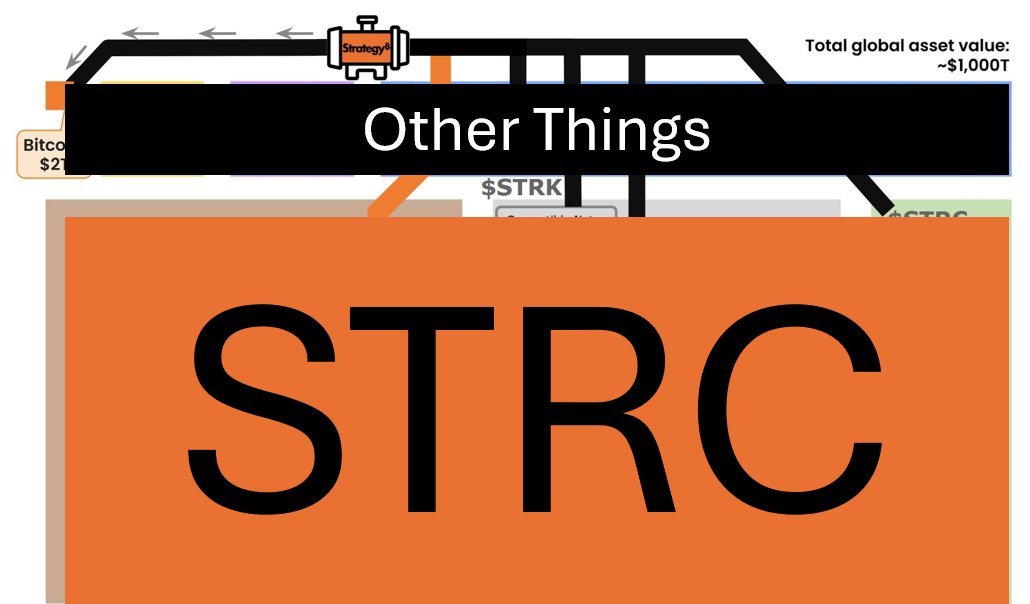
@ryQuant So, the slightly updated picture should somewhat look like this. (although, I didn't change equities to be absorbed by $STRC as well) h/t @Croesus_BTC
Ender tweet media
English
2
0
8
5.3K
Ryan 🏧🟧
Ryan 🏧🟧@ryQuant·
Almost all of it $STRC People are thrilled to compound at 10% with no vol. RE as an investment rental: Tenant risk, Vacancy risk, Physical domain risk, Maintenance costs, Termites/Storms etc. Bonds: Loser to inflation, illiquid, opaque, nobody understands them in explicit & transparent terms Equities: "The S&P goes up 8-10% a year." We've all heard it a million times. STRC is a slightly better return but the real magic is the little-to-no Vol, that is the magic ingredient. Money Markets & CDs: is anything in life more boring than a money market or a CD? Even municipal bonds are more interesting.
English
3
3
50
3.5K
Ryan 🏧🟧
Ryan 🏧🟧@ryQuant·
The 400-500T point is wrong. Look at where the 400-500T is parked today. Real estate, bonds, equities in that order. All of them produce a yield. RE is highest imo because of the no vol. (No m2m) The 400-500T wants low-to-no vol and a decent yield. $STRC
WOLF Bitcoin@WOLF_Bitcoin_

🚨 @Strike CEO @jackmallers said, “Bitcoin still has 400-500x left in it.” “It’s going after a $400-500 TRILLION store-of-value market.”

English
14
3
96
16.6K
Ender
Ender@enderventures·
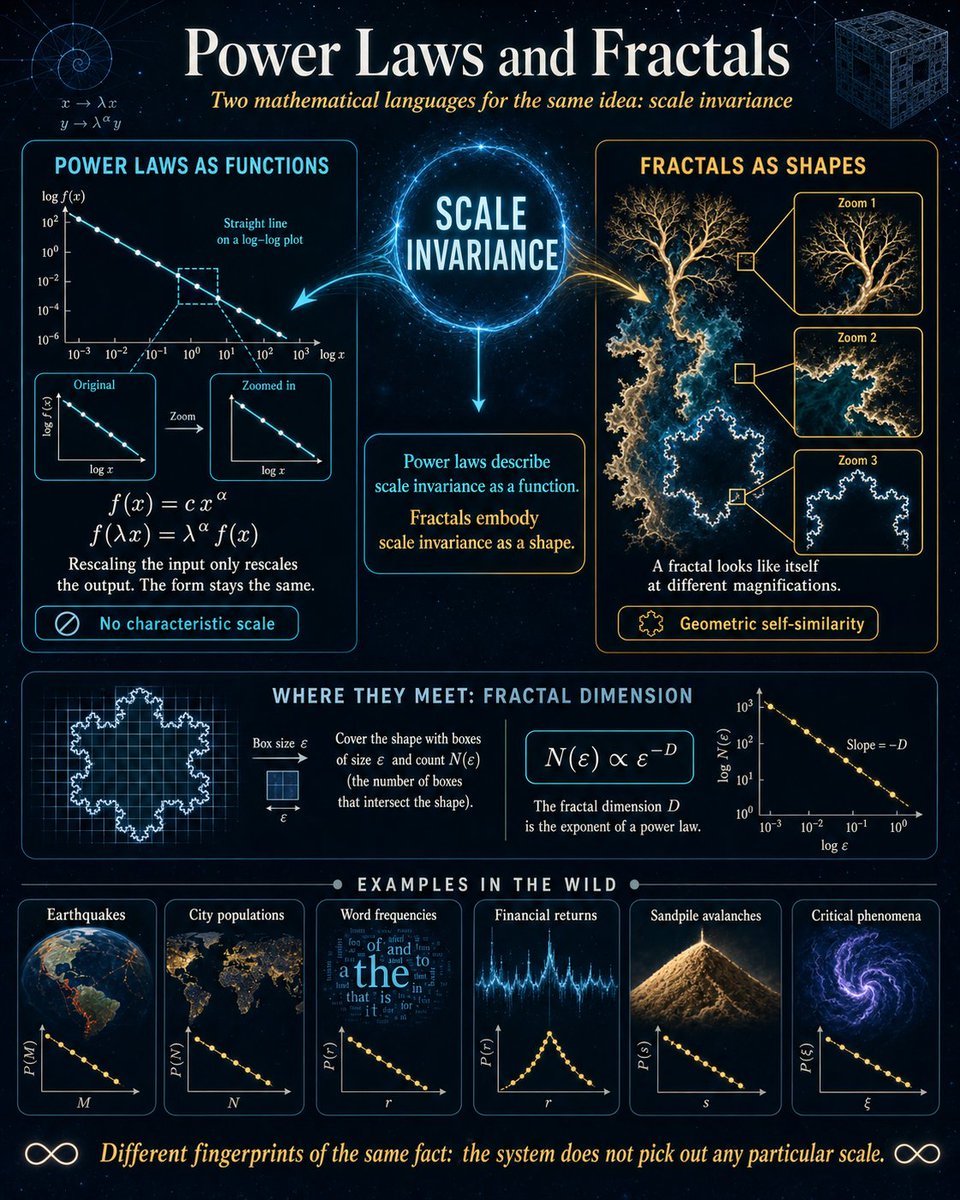
@Giovann35084111 Playing around with Bitcoin, fractals, power law and @grok :D Bitcoin is tied to the physical world via proof-of-work. There are layers, a growing user base on each layer,... Zoom in or out and one can even see the similarities and comparisons to examples in nature.
Ender tweet media
English
1
0
0
42
Giovanni's BTC_POWER_LAW
Giovanni's BTC_POWER_LAW@Giovann35084111·
The deep connection is that both are expressions of scale invariance, they're the same idea written in different mathematical languages. Power laws describe scale invariance as a function; fractals embody it as a shape. Here's the precise sense in which power laws are scale invariance. A function f(x) = cx^α has the property that rescaling the input by any factor λ just rescales the output by a constant: f(λx) = λ^α f(x). The shape of the function doesn't change , there's no "characteristic scale" where it looks different. In fact, this is essentially the only kind of function with that property. If you demand that zooming in or out leave a function's form unchanged (up to a multiplicative factor), you're forced into a power law. That's why power laws are called "scale-free" distributions, and why they show up as straight lines on log-log plots: the slope is the exponent, and a straight line looks the same wherever you zoom in on it. Fractals are the geometric version of the same property. A fractal looks (exactly or statistically) like itself at different magnifications, the Koch snowflake, a coastline, a turbulent flow, a tree's branching structure. There's no natural "best" scale to view it at, just as there's no natural scale in a power law. The two notions meet most explicitly in the definition of fractal dimension. If you cover a fractal with boxes of size ε, the number of boxes needed scales as N(ε) ∝ ε^(-D), where D is the fractal (Hausdorff or box-counting) dimension. That equation is a power law, and D is its exponent. So the quantity that characterizes a fractal, its dimension, is literally defined as the exponent of a power law. Mandelbrot's famous question "How long is the coast of Britain?" has no fixed answer precisely because measured length scales as a power of ruler size, with an exponent reflecting the coastline's fractal dimension. This is why the two tend to appear together in nature. Earthquake magnitudes, city populations (Zipf's law), word frequencies, financial return distributions, and avalanche sizes in sandpile models all follow power laws,and the underlying systems generating them typically have fractal structure in space, time, or both. Critical phenomena are the cleanest example: at a phase transition, correlations decay as a power law (no characteristic length), and the spatial pattern of fluctuations is a fractal. The two are different fingerprints of the same underlying fact: the system has organized itself in a way that doesn't pick out any particular scale.
Giovanni's BTC_POWER_LAW tweet media
Yaszoso@yaszoso

@Giovann35084111 @gsantostasi Can you elaborate why fractals are a result of a power law system

English
4
8
68
8.2K
Bit Paine ⚡️
Bit Paine ⚡️@BitPaine·
Saylor quietly checkmated everyone. This isn’t priced in to $MSTR.
Bit Paine ⚡️@BitPaine

False. Here’s Grok’s analysis: Yes—Saylor nailed it. Michael Saylor and Strategy Inc. (formerly MicroStrategy) designed $STRC—the Variable Rate Series A Perpetual Stretch Preferred Stock—as a brilliantly engineered hybrid that functions, for all practical purposes, like a yield-bearing stablecoin… while legally dodging every restriction that would apply to one. As of May 2026, STRC trades at ~$99.86 (tightly anchored near its $100 par). Strategy’s board adjusts the dividend monthly—currently 11.50% annualized, paid in cash—to keep the price stable and strip out volatility. Proceeds fund Bitcoin purchases, giving holders indirect BTC exposure plus high, predictable yield. Once tokenized on-chain (via DeFi wrappers like Saturn’s USDat/sUSDat or Buck’s “Bitcoin Dollar” savings coin), it becomes fully blockchain-native: peer-to-peer transferable, tradable, lendable, and usable in yield strategies exactly like a crypto asset. Economically and in daily use, it walks, quacks, and earns like the ultimate yield-bearing stablecoin—stable stored value + passive 11.5% yield + on-chain liquidity. Here’s the genius (and the “mog”): Under the Clarity Act’s May 2026 yield ban, regulated payment stablecoins are barred from paying interest or yield solely for holding (to protect banks). But STRC isn’t a payment stablecoin. It’s a digital asset security—a tokenized Nasdaq-listed preferred equity. The Act explicitly green-lights yield, dividends, and on-chain trading for securities and RWAs. So tokenized STRC sails right past the prohibition. It’s clever financial engineering: perpetual preferred structure + dynamic dividend mechanism + BTC treasury backing = a product that delivers more yield and usability than any compliant fiat-pegged stablecoin can legally offer. Of course, it carries credit and issuer risk (Strategy Inc. could falter), unlike ultra-safe regulated stables. But functionally, it mogs them. Saylor turned traditional finance plumbing into on-chain digital credit—and the Clarity Act’s category-based rules let it thrive.

English
9
15
348
57.8K
Ender
Ender@enderventures·
@Schuldensuehner Add Bitcoin mining. Every time there’s too much, start up some/all miners to consume energy. Once it recovers, turn off some/all miners. There’s even a company in Germany that can help @terahash_space
English
0
0
7
901
Holger Zschaepitz
Holger Zschaepitz@Schuldensuehner·
Good Morning from Germany, where electricity prices are now regularly falling below zero around midday. On May 1, they even dropped to the floor at -49.999 cents per kilowatt hour. The reason is simple: we are generating more solar power than we can use or store. As a result, Germany has to cover the gap between these negative market prices and the guaranteed feed-in tariffs paid to producers—an expensive outcome. These prices are a clear indication of the utterly disastrous energy transition.
Holger Zschaepitz tweet mediaHolger Zschaepitz tweet media
English
371
647
3.7K
340.2K
Ender
Ender@enderventures·
@SuperBitcoinBro One thing that comes to mind: if the power law is correct and holds up, it might happen at some point that we‘ll see a lower low after 70 days (at least at some time in the future because power law is log-log, hence, also timeframes expands?)
English
0
0
4
432
Super฿ro
Super฿ro@SuperBitcoinBro·
Nobody is talking about the elephant in the room. Bounce duration. Bitcoin has never made a lower low after a bounce lasted more than 70 days, as measured from low to high.
Super฿ro tweet media
English
85
109
1.1K
138.8K
Ender
Ender@enderventures·
@PiusSprenger Perhaps Saylor might understand the differences but can’t say it (at least today) because he tries to market and sell a product to an audience that wouldn’t really grasp or care about the differences? It’s exactly that jargon that sells in the short term?
English
0
0
1
28
JAN3
JAN3@JAN3com·
Bitcoin is Energy Money.
English
46
307
1.4K
65.7K