Richard Entrup

4.1K posts

Richard Entrup banner
Richard Entrup

Richard Entrup

@entrup

Enterprise Innovation @KPMG_US | ex @Verizon @ChristiesInc @Disney @MuseumModernArt | Art, Music, Film, AI, & Quantum | Personal Account | Views are my Own

New York, USA Katılım Nisan 2008
5.2K Takip Edilen3K Takipçiler
Richard Entrup
Richard Entrup@entrup·
Post‑Quantum risk is no longer theoretical. Twelve months ago, leaders were asking whether quantum mattered. Today, the question is how far behind are we? @KPMG_US and the @ChicagoQuantum invite you to the KPMG ‘Post‑Quantum Readiness Forum’, an executive working session focused on real exposure, regulatory timelines, and what organizations need to do now. Nation‑states are harvesting encrypted data today, NIST standards are final, and Federal deadlines are approaching. This session moves beyond awareness and into action. Diversity of expertise and perspective will be rounded out with from experts at @IBM, @PaloAltoNtwks, @ServiceNow, Founders Law, and @KPMG_US. Join us for hands‑on analysis, live lab experience at KPMG Ignition, and a practical roadmap you can act on immediately. 📍 KPMG Chicago Office 🗓 May 20, 2026 ⏰ 8:30 a.m. – 1:00 p.m DM me or Kerri Watson (KPMG) on LinkedIn if you’d like to attend. #PostQuantum #Chicago #QuantumRisk #Quantum #CyberSecurity #KPMGQuantum
Richard Entrup tweet media
English
0
0
0
55
Richard Entrup
Richard Entrup@entrup·
BIP-361: Why Bitcoin's Quantum Moment is a Wake-Up Call for PQC ⚛️ 🗝️ ⚛️ The Bitcoin (BTC) community is in the middle of one of its most consequential debates in years, and it has nothing to do with price, ETFs, or regulation. It's about whether Bitcoin can survive the coming age of quantum computing, and what BTC holders are willing to sacrifice to make sure it does. Formally titled "Post Quantum Migration and Legacy Signature Sunset," BIP-361 was co-authored by six developers including Casa CTO Jameson Lopp. It's a structured plan to move Bitcoin's cryptographic foundations toward quantum-resistant (PQC) alternatives. Academic road maps place a cryptographically relevant quantum computer as early as 2027 to 2030!! Just to be clear, if BIP-361 is adopted, it would force all Bitcoin holders to migrate their coins to new quantum-resistant wallet addresses within five years, or permanently lose the ability to transfer or spend them. That's a hard pill for a community built on the ethos of self-sovereignty. The proposal has sparked backlash from parts of the Bitcoin community, who argue that freezing coins violates the cryptocurrency's core promise of sovereign, permissionless control, while developers frame it as a necessary defensive measure. Phase A, roughly three years after activation, prohibits new transactions from being sent to legacy address types. Phase B, five years out, invalidates old-style signatures entirely. This mirrors how we counsel enterprise clients: start early, build in grace periods, set a firm deadline. Deadlines drive action. More than one-third of all BTC in circulation falls into vulnerable categories. In a quantum attack scenario, those funds could be compromised, potentially destabilizing the network. Worse, researchers flag the possibility of a covert attack — a quantum actor draining addresses quietly over weeks or months without triggering any onchain alerts. Any organization with Bitcoin treasury exposure carries that tail risk today. Unlike traditional financial systems, Bitcoin's decentralized nature requires broad consensus to change anything. Your organization has centralized decision-making, and you can mandate a PQC migration. The question is whether you're using that advantage or waiting. See my previous posts on waiting vs getting started with a PQC migration. This is coming - not if, but when. BIP-361 is Bitcoin's quantum reckoning. #QuantumComputing #PostQuantumCryptography #Bitcoin #KPMGQuantum #PQC
Richard Entrup tweet media
English
1
0
4
79
Richard Entrup
Richard Entrup@entrup·
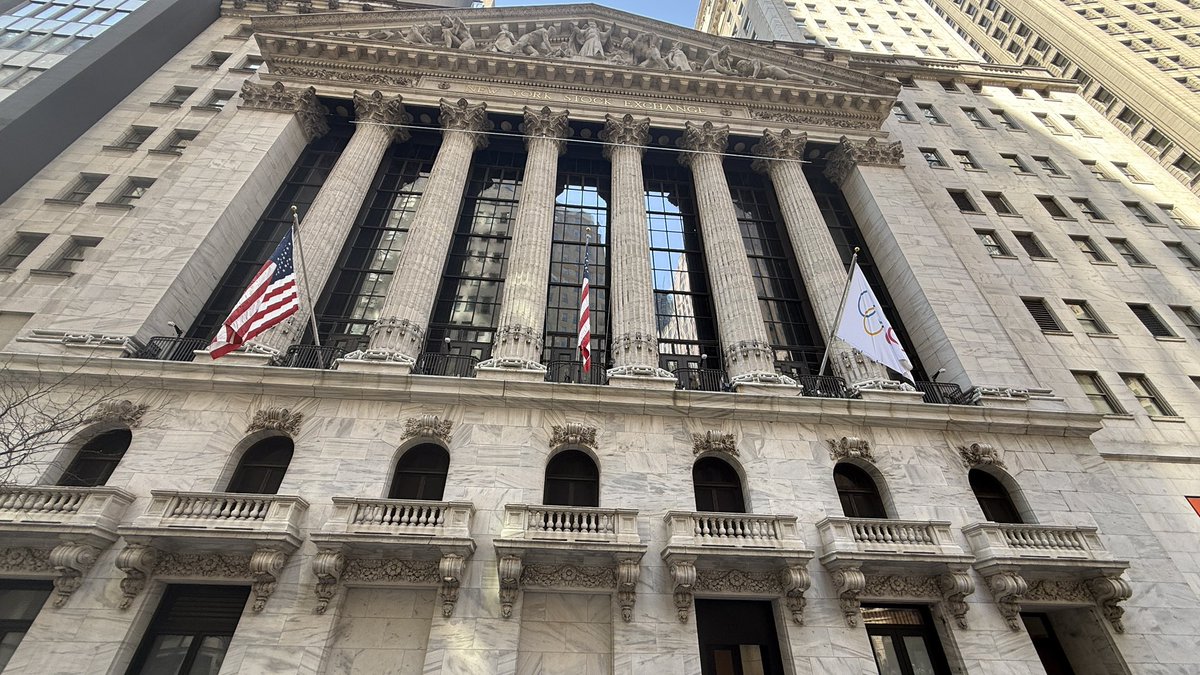
Great day at the @NYSE for #WorldQuantumDay! Appreciate the invite by my new friends at @IonQ_Inc for an informative product update and client case studies. It was also fun to watch the CEO, @NiccoloDeMasi, ring the Closing Bell. 🛎️ The quantum community is out in full force today, and the momentum is unmistakable. Across the industry, leaders like IBM, Google, Microsoft, Rigetti Computing, D-Wave, IonQ, Infleqtion, PsiQuantum, Quantinuum, and many others, are all chasing qubit stability, and things are advancing at an incredible pace. Quantum isn’t coming. Quantum is NOW! Two-qubit gate fidelities are pushing toward 99.99% and beyond, error rates are dropping rapidly, and logical qubits are moving from theory into practical testing. The hardware is maturing faster than most expected, bringing us closer to fault-tolerant systems every quarter. That’s why PQC (Post-Quantum Cryptography) isn’t a future concern anymore, it’s an urgent priority right now. NIST standards are finalized, migration timelines are tightening, and organizations across finance, government, and critical infrastructure need to be executing their quantum-safe transitions today. The window for “wait and see” is closing. At @KPMG_US, our Quantum Cyber Tech Risk PQC practice, as well as our newly created Quantum Research group, are at the forefront of this shift. Through frameworks like our Quantum Preparedness and Readiness Evaluation Program (Q-PREP), we’re helping organizations conduct comprehensive cryptographic inventories, assess quantum-vulnerable assets, develop tailored migration roadmaps, and implement NIST-standardized PQC algorithms. From pilot testing and performance benchmarking to full-scale deployment, training, and crypto-agility strategies, KPMG is building practical, enterprise-ready solutions that turn quantum risk into long-term resilience and competitive advantage. Happy #WorldQuantumDay to the full quantum community and everyone driving this revolution. #QDay #PQC #Quantum #NYSE #KPMGQuantum
Richard Entrup tweet mediaRichard Entrup tweet mediaRichard Entrup tweet mediaRichard Entrup tweet media
English
0
0
5
83
Aakash Gupta
Aakash Gupta@aakashgupta·
Anthropic just mass-obsoleted every agent orchestration startup in a single launch. The screenshot tells the full story. That's a production fleet dashboard. 8 agents running. 247 completed tasks. Active status. MCP-connected to HubSpot, pulling deals, generating proposals, reading attachments. This isn't a demo. It's a managed production environment where you define the agent and Anthropic runs the infrastructure. The timing here is surgical. Four days ago, Anthropic blocked OpenClaw and every third-party harness from using subscription credentials. The message was clear: stop building on top of our consumer auth layer. Now here's the replacement. A first-party managed agent platform with fleet monitoring, production-grade MCP integrations, and prototype-to-launch timelines measured in days. Manus spent six months on five harness rewrites. LangChain spent a year on four architectures. Anthropic just shipped the managed version that eliminates the need to build one at all. The real bet: most companies don't want to build agent infrastructure. They want agents that work. Anthropic is pricing this into the platform the same way AWS priced server management into EC2. The 46% of enterprises citing "integration with existing systems" as their primary agent challenge just got a first-party answer from the model provider itself. Every agent startup that raised on "we make Claude reliable in production" just lost their pitch deck.
Claude@claudeai

Introducing Claude Managed Agents: everything you need to build and deploy agents at scale. It pairs an agent harness tuned for performance with production infrastructure, so you can go from prototype to launch in days. Now in public beta on the Claude Platform.

English
179
271
3.3K
1.1M
Richard Entrup
Richard Entrup@entrup·
Significant announcement from @Cloudflare today, accelerating their full post-quantum security roadmap (including authentication) to 2029 is precisely the kind of decisive action the industry needs right now. Full post here: blog.cloudflare.com/post-quantum-r… Recent breakthroughs have clearly compressed the timeline: Google Quantum AI’s optimized resource estimates for breaking elliptic curve cryptography, paired with the Oratomic/Caltech paper demonstrating Shor’s algorithm at cryptographically relevant scales with as few as 10,000–26,000 reconfigurable atomic qubits, have shifted the conversation dramatically. What once seemed like a distant 2035+ risk now demands urgent attention. At @KPMG_US, we’re helping clients across all sectors conduct quantum risk assessments, inventory cryptographic assets, and develop pragmatic phased migration strategies to post-quantum cryptography (PQC). The “harvest now, decrypt later” threat is no longer theoretical — organizations that act early will gain a significant resilience and competitive edge. Enterprise leaders: the window for preparation is narrowing faster than expected. It could be 3, 5, or even 10 more years before Quantum cracks RSA or ECC, but you may need that much time to identify and remediate the encryption embedded throughout your organization globally. #QuantumComputing #PQC #Cybersecurity #DigitalTrust #KPMGQuantum
English
0
0
1
64
Josh Kale
Josh Kale@JoshKale·
This is big... Anthropic just announced a model so powerful they won't release it to the public out of fear over the damage it will cause 😨 Claude Mythos Preview found thousands of zero-day exploits in every major operating system and web browser... The numbers are hard to believe: > $50 to find a 27-year-old bug in OpenBSD, one of the most security-hardened operating systems ever built > Under $1,000 to find AND build a fully working remote code execution exploit on FreeBSD that grants unauthenticated root access from anywhere on the internet > Under $2,000 to chain together multiple Linux kernel vulnerabilities into a complete privilege escalation exploit For context: these are the kinds of findings that previously required elite security researchers working for weeks. Anthropic engineers with no formal security training asked Mythos to find exploits overnight. They woke up to working code the next morning. The results were so impressive Anthropic assembled Apple, Google, Microsoft, Amazon, NVIDIA, and seven other organizations into Project Glasswing: A $100M defensive coalition. They're not releasing this model publicly. Instead, they're racing to patch the world's infrastructure before models like this proliferate.
Anthropic@AnthropicAI

Introducing Project Glasswing: an urgent initiative to help secure the world’s most critical software. It’s powered by our newest frontier model, Claude Mythos Preview, which can find software vulnerabilities better than all but the most skilled humans. anthropic.com/glasswing

English
708
2.5K
18.1K
4.1M
Cloudflare
Cloudflare@Cloudflare·
Recent advances in quantum hardware and software have accelerated the timeline on which quantum attack might happen. Cloudflare is responding by moving our target for full post-quantum security to 2029. cfl.re/4v674Oi
English
25
72
334
224.7K
Richard Entrup
Richard Entrup@entrup·
The TLS Deadline That’s Actually Preparing Us for Quantum On March 15, 2026, the maximum validity for publicly trusted TLS certificates dropped from 398 days to 200 days. In under a year it tightens again to 100 days, and by March 2029 we’ll be down to just 47 days. If you’re a CISO, CIO, or CTO, you and your team have already felt the impact: renewal cycles are compressing, automation is finally getting real budget, and teams are scrambling to build clean certificate inventories. These shorter-lived certificates are forcing much-needed discipline such as frequent rotation, proper discovery, automated issuance, and hybrid signing during the transition. The old “set it and forget it” era of encryption is officially over! If you’re still running 13-month certificates on autopilot, consider this your wake-up call. Treat the new 200-day window as a live pilot for the much bigger migration ahead. Use it to map your cryptographic inventory, test hybrid post-quantum (PQC) certificates in non-production, and harden your automation pipelines. When the quantum clock really starts ticking, you won’t have time to learn these lessons on the fly. This isn’t just another compliance headache, it’s the perfect dress rehearsal for post-quantum cryptography. Quantum computers will break RSA and ECC. It’s no longer a question of if, but when. Even if it takes another 5–10 years to get enough stable, error-corrected qubits online, that doesn’t give you 5–10 years to fix your encryption estate. At enterprise scale, discovering, testing, migrating, and standing up new solutions can easily take that long, or longer. The NIST PQC standards are already published. The hard part isn’t picking the algorithms. It’s building real cryptographic agility, the ability to swap primitives without tearing apart your entire PKI. If you’ve built, managed, and protected systems as long as I have, you already know the real headache won’t be automation or renewal cadence. It will be the mountain of undocumented legacy systems still running mission-critical processes 15–20+ years later. Think ancient internal apps, custom ERP modules, and manufacturing control systems where no one has the source code, architecture diagrams, or institutional knowledge anymore. Certs embedded in scripts no one owns. The developer who built it left years ago and isn’t answering calls. IYKYK. Just completing a full crypto inventory on these systems can take 12–18 months, before you’ve even started testing hybrid PQC certificates or figuring out how to rotate them without breaking production. And the ones that “can’t be touched”? You’re looking at multi-year re-platforming projects, seven-figure budgets, and serious business risk. Bottom line: Start treating these shorter SSL/TLS cert cycles as mandatory quantum prep/training today, because when the qubits finally arrive, there won’t be time for a learning curve. #PQC #CryptoAgility #Cybersecurity #QuantumPQC #QuantumPreparedness #KPMGQuantum
Richard Entrup tweet media
English
0
1
2
87
Richard Entrup
Richard Entrup@entrup·
Quantum Computing Modalities: Different Paths, One Big Prize 🏆 Quantum computing could revolutionize drug discovery, supply chains, finance, and materials. But quantum “modalities” (superconducting, trapped ions, photonics, and annealing) make it sound overly technical. These are simply different engineering ways to build the same powerful machine. Like rival EVs, battery vs. hydrogen vs. hybrid, each has pros/cons, all chasing the same goal. Main Modalities ⚛️Superconducting (IBM, Google, Rigetti): Chip circuits at near absolute zero. Fast, scaling fast (IBM Heron 156 qubits, Google Willow 105 w/ error demos) ⚛️Trapped ions (IonQ, Quantinuum): Atoms controlled by lasers. Top accuracy & coherence ⚛️Photonics (PsiQuantum, Xanadu, Quandela): Light particles in optical networks. Easier scaling, fiber-tech friendly ⚛️Annealing (D-Wave): Settles into optimal solutions—strong for routing/scheduling. 4,400+ qubits now Emerging Modalities ⚛️Silicon spin (Intel, others): Builds on chip tech for easier scaling ⚛️Topological (Microsoft): Aims for built-in error resistance ⚛️Diamond defect: Room-temp potential for sensors + computing ⚛️Neutral atoms (QuEra, Pasqal, Atom—1,000+ qubits), silicon spins Rare mentions include flying-electron qubits, quantum dots, or even hybrid systems combining modalities. Nuclear magnetic resonance (NMR) exists for small educational systems but isn't competitive for large-scale computing. Key Differences & Business Impact ⚛️ Speed vs. stability: Superconducting fast but noisy; ions slower but precise ⚛️ Scaling: Photonics/neutral atoms avoid extreme cooling; annealing delivers big systems today ⚛️ Sweet spots: Annealing wins optimization now (logistics, finance). Others target simulation (pharma, AI) As of 2026: Superconducting & trapped ion lead mid-scale reliability/error correction; photonics/atoms advance scaling. Goal: fault-tolerant systems (auto error correction at scale). Industry is in “fault-tolerant foundation era”, IBM eyes advantage by late 2026, full fault-tolerance by 2029. The Chase All target quantum advantage: solving key problems faster/cheaper/better than classical computers. Examples include faster drugs, optimized portfolios, efficient fleets, and better batteries/carbon capture. There are multiple paths because qubits are really tough. Competition speeds progress and the future will be specialized + hybrid, so not any one winner. Think more modalities = more shots on goal. The one (or combo) that hits fault-tolerant, useful scale first for your industry wins. Many experts predict a future of specialized + hybrid systems rather than one dominant hardware type. Bottom Line Don’t pick a “best” modality. Instead, ask which delivers value for your industry in 3–7 years? Cloud pilots (IBM, IonQ, D-Wave) give first-mover edge. Quantum shifts from hype to ROI, so track it, and test proofs-of-concept. #QuantumComputing #Quantum
Richard Entrup tweet media
English
0
0
0
83
Richard Entrup
Richard Entrup@entrup·
I get asked constantly what the nexus is between AI and Quantum Computing and what they actually mean together. As someone who was all-in on GenAI and Quantum preparedness/Post-Quantum Cryptography (PQC) as early as 2022, as an advisor and investor, I’ve been pondering the intersection for some time. The connection isn’t hype. It’s bidirectional, practical today, and will define competitive advantage tomorrow. Here are my Top 5 insights: ⚛️AI is the accelerator quantum desperately needs: AI/ML is already solving quantum’s biggest bottlenecks: error correction, qubit calibration, and real-time control. Without AI-driven orchestration, scaling to fault-tolerant quantum systems stays theoretical. ⚛️Quantum supercharges AI where classical limits hit the wall: Optimization problems that take classical AI days or weeks (portfolio rebalancing, supply-chain routing, molecular simulation for drug discovery) can collapse to minutes or seconds on quantum hardware. ⚛️Hybrid quantum-classical systems are the “now” play: You don’t need a million perfect qubits. Smart orchestration between classical GenAI and quantum processors (optimization, sampling, simulation) is delivering ROI today. ⚛️PQC is non-negotiable to protect AI’s crown jewels: Quantum will eventually break today’s encryption, exposing the massive datasets and trained models that power GenAI. ⚛️The economic multiplier is exponential: When you combine trusted GenAI with quantum-ready infrastructure, you unlock entirely new value creation layers: faster R&D pipelines, hyper-personalized customer experiences at scale, and entirely new asset classes. So what are the potential use cases? ⚛️Optimization Problems: Portfolio rebalancing in finance, supply-chain/logistics routing, energy grid management, scheduling, and hyperparameter tuning for AI models. ⚛️Drug Discovery & Molecular Simulation: Accurate quantum simulation of molecules/protein folding speeds up candidate identification. ⚛️Materials Science & Chemistry: Discovering new materials, batteries, or catalysts via quantum-accurate simulations that classical computers approximate poorly. ⚛️Financial Modeling & Risk Analysis: Real-time risk assessment, fraud detection enhancement, and complex derivative pricing. ⚛️Machine Learning Acceleration: Quantum feature extraction, quantum support vector machines, or quantum neural networks for pattern recognition in high-dimensional data; potential for faster training of large models or better handling of scarce data. ⚛️Cybersecurity & Threat Detection: Quantum-safe encryption prep + faster analysis of massive datasets for anomaly detection. Bottom line: AI is turbocharging quantum's path to reliability, while quantum promises to break through classical AI's hardest bottlenecks in optimization, simulation, and scaling. #QuantumComputing #QuantumAI
Richard Entrup tweet media
English
2
1
3
88
Richard Entrup
Richard Entrup@entrup·
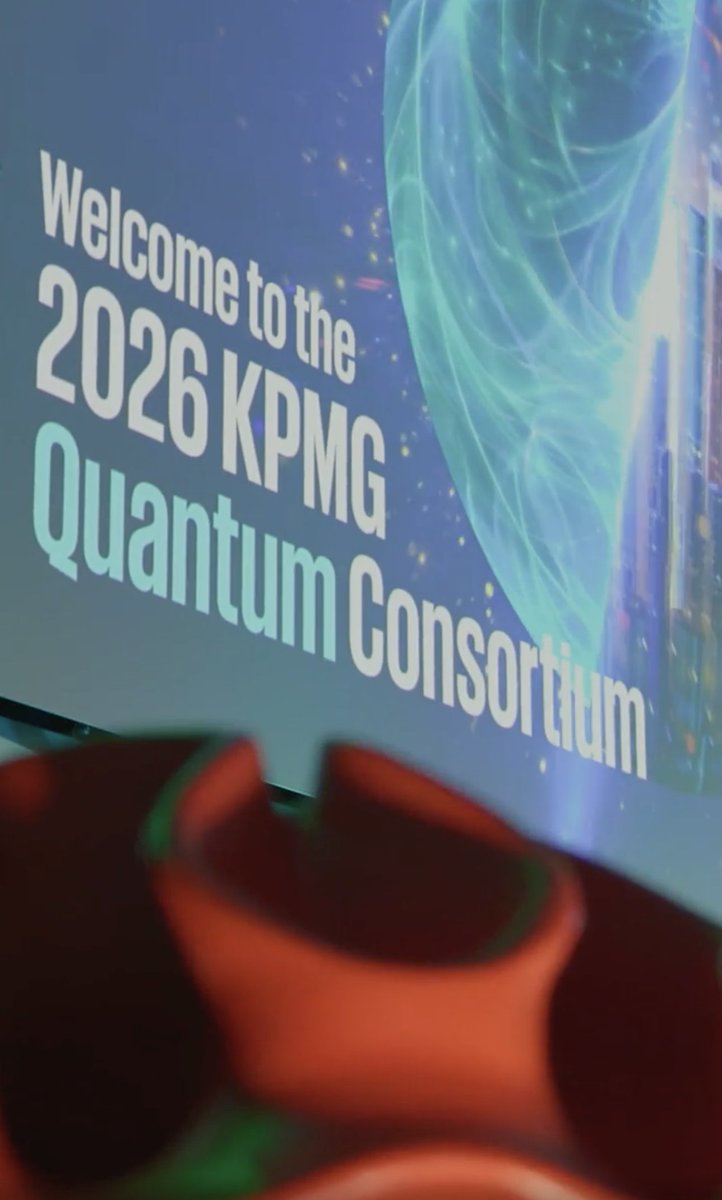
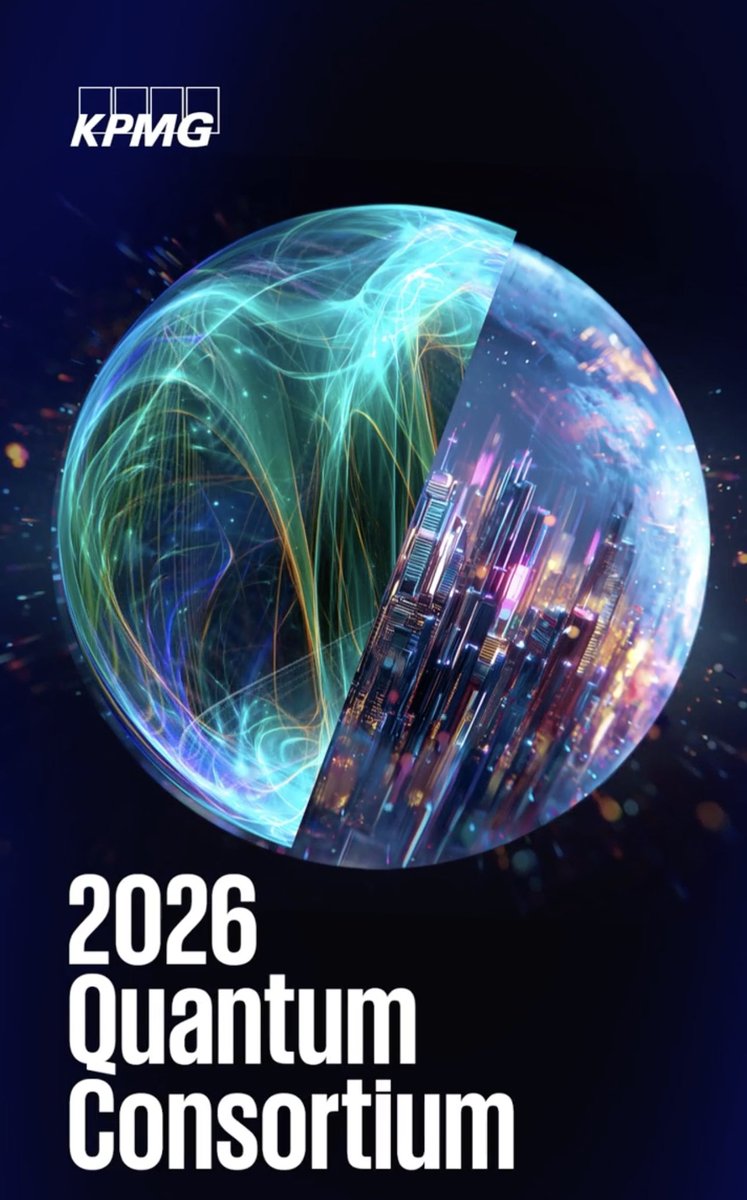
Still buzzing from hosting the inaugural @KPMG_US 'Quantum Consortium' at the stunning KPMG Lakehouse in Orlando's Lake Nona - explore.kpmg.com/2026-quantum-c… The energy was incredible all the way through the event and the feedback from speakers and attendees has been overwhelming. A huge thank you to everyone who made this inaugural event a huge success. There were many powerful discussions and presentations on post-quantum cryptography (PQC) and quantum preparedness, as well as optimization, sensing, networking, and more. We also announced our recent research paper published along with @IBM and @KipuQuantum. We were honored to have brought together such an exceptional cast of speakers and attendees, and we're excited to keep building this vibrant ecosystem of luminaries and partners advancing and pioneering quantum experimentation, research, and real-world adoption. A full recap of the event, including videos of all the great sessions, will be available soon—stay tuned! #KPMGQuantumConsortium #Quantum @ChicagoQuantum @UCLA @Microsoft @infleqtion @BMO @Moth_Quantum @LockheedMartin @Founderslaw @QunnectInc
Richard Entrup tweet mediaRichard Entrup tweet media
English
3
1
4
154
Itamar Golan 🤓
Itamar Golan 🤓@ItakGol·
Software engineers in 2026 be like:
English
25
94
808
667.1K
Richard Entrup
Richard Entrup@entrup·
Probably nothing. A Citi Institute report drops a bombshell: A single quantum-enabled cyberattack disrupting one major U.S. bank's Fedwire access could put $2–$3.3 TRILLION of U.S. GDP at risk—10-17% of the entire economy. The real kicker? 'Harvest now, decrypt later' attacks mean the threat is already live. Q-Day isn't coming—it's here for long-lived data. Post-quantum crypto exists. Execution is the bottleneck. Time to act is NOW! #QuantumThreat #Cybersecurity #PQC #KPMGQuantum #QuantumReadiness thequantuminsider.com/2026/02/10/cit…
English
11
1
11
165
Claire Silver 🌸
Claire Silver 🌸@ClaireSilver·
This is a playable video game. It took about 5 minutes to make with AI via Google’s Genie 3. I’m controlling her movement with WASD & the camera with arrow keys. When she nears an object, she subtly interacts with it. Hey storytellers, you were born in the right time after all.
English
205
104
1.2K
94.8K
Richard Entrup
Richard Entrup@entrup·
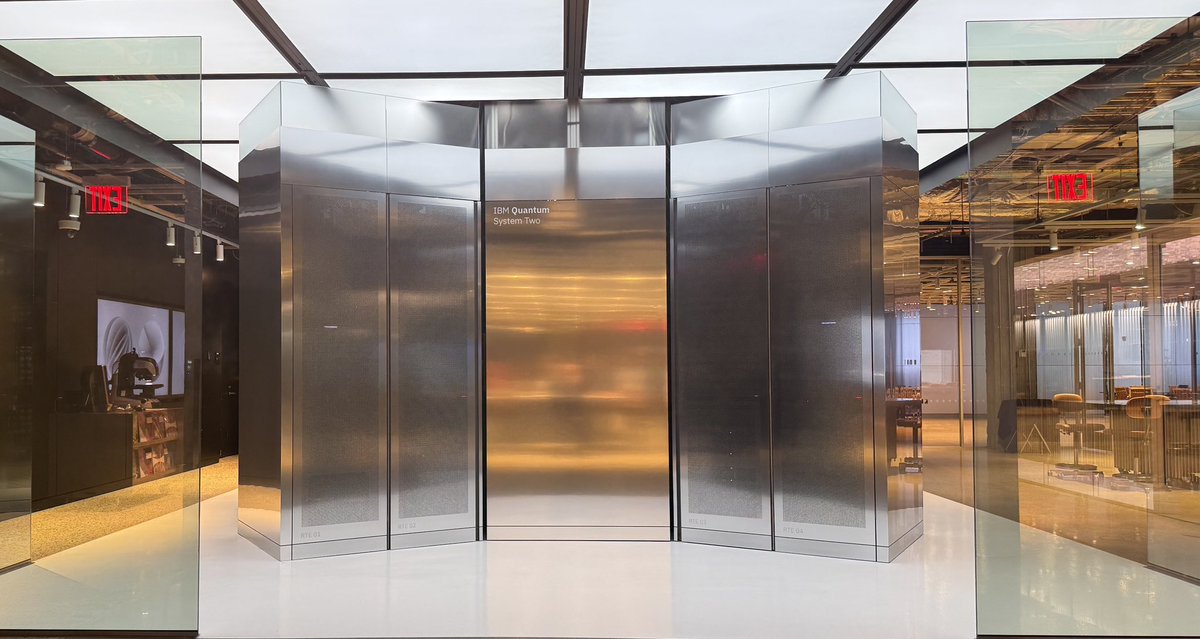
Amazing work is happening on Quantum computing at the @IBM Thomas J Watson Research Center in Yorktown Heights, NY. Useful, utility-scale quantum applications—delivering advantage in optimization, materials discovery, drug development, financial modeling, and complex scientific simulations—are moving from "if" to "when," and sooner than many anticipated. IBM's updated roadmap positions the community to demonstrate verifiable quantum advantage by the end of 2026, with a clear path to large-scale fault-tolerant systems by 2029. The future is quantum—and it's arriving fast. I’m grateful to witness and contribute to this era-defining shift in the future of compute and tech innovation. #QuantumComputing #IBMQuantum #QuantumAdvantage #FaultTolerantQuantum #Qiskit #Innovation
Richard Entrup tweet mediaRichard Entrup tweet mediaRichard Entrup tweet media
English
3
2
8
313