David Townsend

2K posts

David Townsend

David Townsend

@eship_prof

Entrepreneurship Faculty @virginia_tech @VTManagement | I study knowledge problems, AI & entrepreneurship | EIC: https://t.co/0dCQ6ViKLx | Field Editor: JBV

Blacksburg, VA Katılım Kasım 2010
1.2K Takip Edilen709 Takipçiler
David Townsend retweetledi
JMS
JMS@JMS_Journal·
📢 New Special Issue TOC Alert Artificial Intelligence: Organizational Possibilities and Pitfalls Journal of Management Studies (Mar 2026) Research on AI, work, governance, trust, strategy & ethics in organizations. 🔗 bit.ly/3NzxHu2 #JMS #AI #ManagementResearch
English
0
4
5
343
David Townsend retweetledi
Alex Prompter
Alex Prompter@alex_prompter·
🚨 BREAKING: Researchers at UW Allen School and Stanford just ran the largest study ever on AI creative diversity. 70+ AI models were given the same open-ended questions. They all gave the same answers. They asked over 70 different LLMs the exact same open-ended questions. "Write a poem about time." "Suggest startup ideas." "Give me life advice." Questions where there is no single right answer. Questions where 10 different humans would give you 10 completely different responses. Instead, 70+ models from every major AI company converged on almost identical outputs. Different architectures. Different training data. Different companies. Same ideas. Same structures. Same metaphors. They named this phenomenon the "Artificial Hivemind." And the paper won the NeurIPS 2025 Best Paper Award, which is the highest recognition in AI research, handed to a small number of papers out of thousands of submissions. This is not a blog post or a hot take. This is award-winning, peer-reviewed science confirming something massive is broken. The team built a dataset called Infinity-Chat with 26,000 real-world, open-ended queries and over 31,000 human preference annotations. Not toy benchmarks. Not math problems. Real questions people actually ask chatbots every single day, organized into 6 categories and 17 subcategories covering creative writing, brainstorming, speculative scenarios, and more. They ran all of these across 70+ open and closed-source models and measured the diversity of what came back. Two findings hit hard. First, intra-model repetition. Ask the same model the same open-ended question five times and you get almost the same answer five times. The "creativity" you think you're getting is the same output wearing a slightly different outfit. You ask ChatGPT, Claude, or Gemini to write you a poem about time and you keep getting the same river metaphor, the same hourglass imagery, the same reflection on mortality. Over and over. The model isn't thinking. It's defaulting to whatever scored highest during alignment training. Second, and this is the one that should really alarm you, inter-model homogeneity. Ask GPT, Claude, Gemini, DeepSeek, Qwen, Llama, and dozens of other models the same creative question, and they all converge on strikingly similar responses. These are models built by completely different companies with different architectures and different training pipelines. They should be producing wildly different outputs. They're not. 70+ models all thinking inside the same invisible box, producing the same safe, consensus-approved content that blends together into one indistinguishable voice. So why is this happening? The researchers point directly at RLHF and current alignment techniques. The process we use to make AI "helpful and harmless" is also making it generic and boring. When every model gets trained to optimize for human preference scores, and those preference datasets converge on a narrow definition of what "good" looks like, every model learns to produce the same safe, agreeable output. The weird answers get penalized. The original takes get shaved off. The genuinely creative responses get killed during training because they didn't match what the average annotator rated highly. And it gets even worse. The study found that reward models and LLM-as-judge systems are actively miscalibrated when evaluating diverse outputs. When a response is genuinely different from the mainstream but still high quality, these automated systems rate it LOWER. The very tools we built to evaluate AI quality are punishing originality and rewarding sameness. Think about what this means if you use AI for brainstorming, content creation, business strategy, or literally any task where you need multiple perspectives. You're getting the illusion of diversity, not the real thing. You ask for 10 startup ideas and you get 10 variations of the same 3 ideas the model learned were "safe" during training. You ask for creative writing and you get the same therapeutic, perfectly balanced, utterly forgettable tone that every other model gives. The researchers flagged direct implications for AI in science, medicine, education, and decision support, all domains where diverse reasoning is not a nice-to-have but a requirement. Correlated errors across models means if one AI gets something wrong, they might ALL get it wrong the same way. Shared blind spots at massive scale. And the long-term risk is even scarier. If billions of people interact with AI systems that all think identically, and those interactions shape how people write, brainstorm, and make decisions every day, we risk a slow, invisible homogenization of human thought itself. Not because AI replaced creativity. Because it quietly narrowed what we were exposed to until we all started thinking the same way too. Here's what you can actually do about it right now: → Stop accepting first-draft AI output as creative or diverse. If you need 10 ideas, generate 30 and throw away the obvious ones → Use temperature and sampling parameters aggressively to push models out of their comfort zone → Cross-reference multiple models AND multiple prompting strategies, because same model with different prompts often beats different models with the same prompt → Add constraints that force novelty like "give me ideas that a traditional investor would hate" instead of "give me creative ideas" → Use structured prompting techniques like Verbalized Sampling to force the model to explore low-probability outputs instead of defaulting to consensus → Layer your own taste and judgment on top of everything AI gives you. The model gets you raw material. Your weirdness and experience make it original This paper puts hard data behind something a lot of us have been feeling for a while. AI is getting more capable and more homogeneous at the same time. The models are smarter, but they're all smart in the exact same way. The Artificial Hivemind is not a bug in one model. It's a systemic feature of how the entire industry builds, aligns, and evaluates language models right now. The fix requires rethinking alignment itself, moving toward what the researchers call "pluralistic alignment" where models get rewarded for producing diverse distributions of valid answers instead of collapsing to a single consensus mode. Until that happens, your best defense is awareness and better prompting.
Alex Prompter tweet media
English

333
902
3K
483.8K
David Townsend
David Townsend@eship_prof·
Congratulations! This is a brilliant paper. We have been developing a parallel stream of research re: what we describe as an AI information paradox. A fundamental pattern/paradox is surfacing across different fields of study. This second-order, behavioral recursion mechanism will be quite interesting to observe over the next few years.
English
0
0
1
92
Eddie Yang
Eddie Yang@ey_985·
New paper at AJPS: "The limits of AI for authoritarian control." The more repression there is, the less information exists in AI's training data, and the worse the AI performs. Ironically, data from democracies can help improve repressive AI.
Eddie Yang tweet media
English

14
60
228
42.3K
David Townsend retweetledi
Zhang Heqing
Zhang Heqing@zhang_heqing·
Heavy snow blankets Xi’an on the seventh day of the Lunar New Year! ❄️ The ancient city walls, pagodas and lanes are all covered in white. In an instant, Xi’an is magically transformed into Chang’an, full of timeless charm and poetic atmosphere. The vibe is absolutely perfect! #XiAnSnow #XiAnBecomesChangAnWhenSnowFalls
English
16
199
988
31.1K
David Townsend retweetledi
Ethan Mollick
Ethan Mollick@emollick·
I think agentic AI would work much better if people took lessons from organizational theory, which has actually spent a lot of time understanding how to deal with complex hierarchies, information limits, and spans of control. Right now most agentic AI systems seem to pretend that models have basically unlimited ability to manage subagents when that is clearly not true. We need measures of spans of control for AI. A human tops out at less than 10 direct reports. I am pretty sure that 100 subagents is too much for an orchestrator agent - suspect we need middle management agents (yes, I get it, insert middle management joke here). Similarly, we need more attention to boundary objects. These are what is handed between groups (marketing to IT to sales) in organizations to convey meaning as a project crosses group boundaries, like a prototype or a user story. Right now agents pass raw text & maybe code back and forth. Structured boundary objects that multiple agents of different ability levels can read and write to would solve a huge number of coordination failures & reduce token use. I also think aboht coupling, which is how tightly units inside organizations are bound. Most agentic systems are either too tightly coupled (every step needs approval) or too loose (Moltbook). This tradeoff is well-studied in organizations, I bet a lot would apply to agents. Other known issues like bounded rationality also apply, I suspect. Everyone is rushing towards the (terribly named) agent swarm, but the issue won’t just be how good the model is, it will be org design choices. I am not sure the labs see this, but we definitely need a lot more experiments with organizing agents done by people who understand real coordination issues.
English
169
209
1.9K
145K
David Townsend retweetledi
Anthropic
Anthropic@AnthropicAI·
On December 8, the Perseverance rover safely trundled across the surface of Mars. This was the first AI-planned drive on another planet. And it was planned by Claude.
English
296
874
8K
1.6M
David Townsend retweetledi
Dario Amodei
Dario Amodei@DarioAmodei·
The Adolescence of Technology: an essay on the risks posed by powerful AI to national security, economies and democracy—and how we can defend against them: darioamodei.com/essay/the-adol…
English
828
2.7K
15.3K
6.2M
David Townsend retweetledi
Per Bylund
Per Bylund@PerBylund·
Please help spreading the word: the Entrepreneurship Researchers' Exchange is live. With two posts available already! linkedin.com/posts/perbylun…
Per Bylund tweet mediaPer Bylund tweet media
English
3
12
32
2.9K
David Townsend retweetledi
Mind Matter
Mind Matter@MindMatterr·
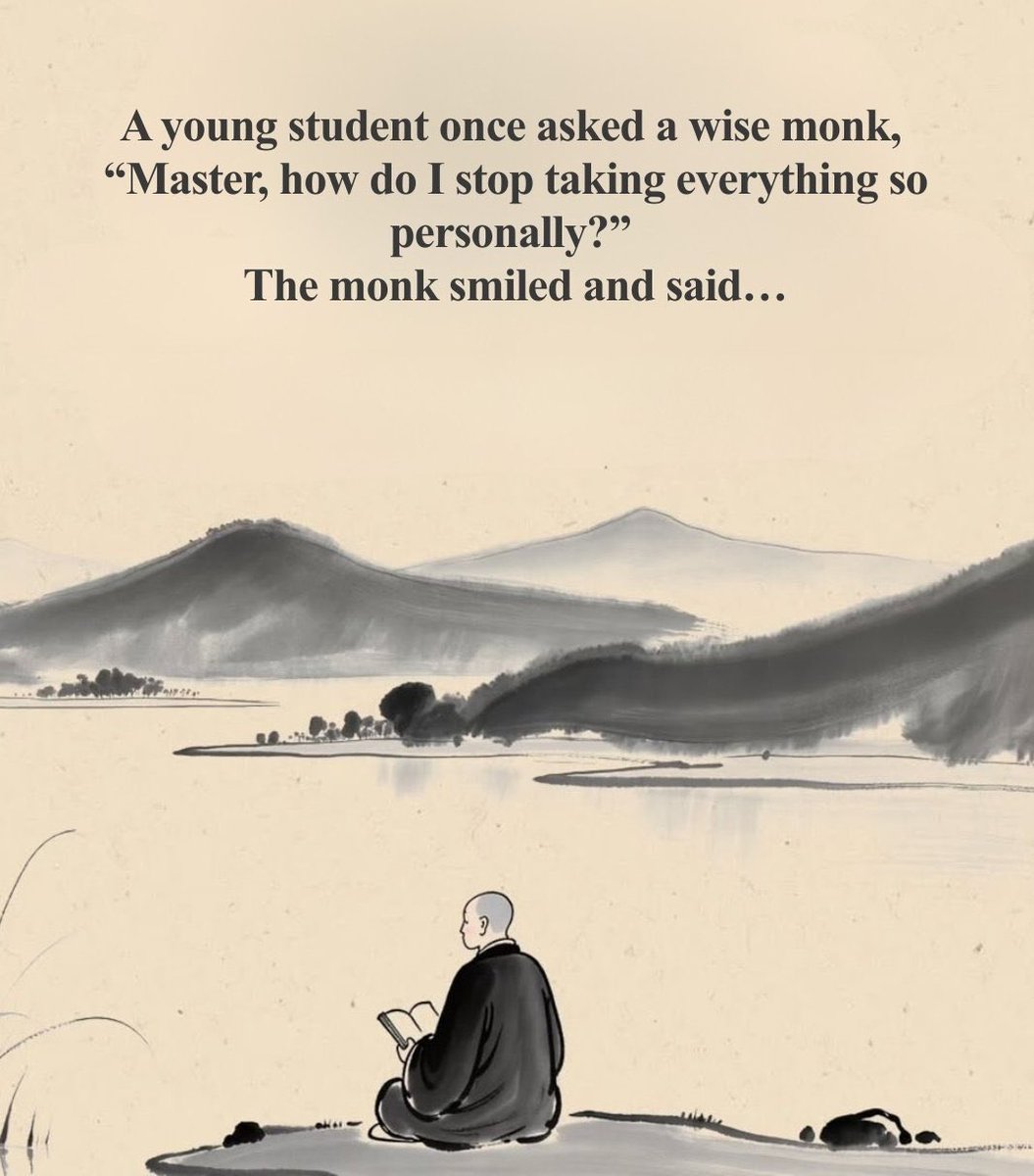
A young student once asked a wise Monk.... MUST READ.. 🧵
Mind Matter tweet media
English
37
813
4.1K
1.1M
David Townsend retweetledi
Carlos E. Perez
Carlos E. Perez@IntuitMachine·
New research just dropped showing ChatGPT isn't just writing your emails—it's birthing entire companies. Study of 12M+ Chinese firms proves GenAI = the world's most prolific "co-founder." Here's what nobody's talking about yet: 🧵👇 Traditional startup playbook: Raise $$$ for engineers Hire marketers Find a COO Pray you survive burn rate GenAI playbook: One founder One ChatGPT subscription Ship product in weeks The data backs this—hard. Nov 2022: ChatGPT drops. Researchers tracked every new business registration in China through end of 2024. They compared neighborhoods with AI expertise vs. those without. Result? 6% of ALL new national firms directly traced to the ChatGPT shock. 🤯 Here's where it gets wild: SMALL firms ⬆️ (explosive growth) LARGE firms ⬇️ (actually declined) Meaning: GenAI isn't making mega-corps stronger. It's atomizing entrepreneurship—enabling "tiny teams" to compete. Pro-competitive, not monopolistic. Why? Three channels proven in data: 1️⃣ Experience: First-timers now launch viable firms (serial entrepreneurs' share DROP by 2.5%) 2️⃣ Capital: Fewer shareholders needed (down 1.4%) 3️⃣ Labor: Exec teams shrink 0.8% AI = substitute for managerial know-how + specialized labor. Winners (massive spikes): ✅ Retail ✅ Business services ✅ Tech services ✅ Entertainment/media Losers (flat/negative): ❌ Construction ❌ Manufacturing ❌ Real estate Pattern? Knowledge work > physical capital Researchers used hexagonal 5km grids (!) to compare neighboring areas within same cities. This controls for policy, economy, culture—isolates pure AI human capital effect. Placebo tests with non-AI patents? Zero effect. Random assignment? Zero effect. Rock-solid ID. Even veteran founders are adapting: When they launch post-ChatGPT, they deliberately go 7x smaller in capital vs. their previous ventures. They're not launching less—they're launching leaner. The "minimum viable team" just got microscopic. While everyone panics about AI "taking jobs"... ...this shows AI is creating employers. New firms = net job growth engine (per Haltiwanger et al.). The displacement fear may be real, but entrepreneurship channel is the antidote—and it's firing on all cylinders. GenAI isn't just a tool. It's a structural shift in how businesses form. Lower fixed costs → more entrants → more competition → more innovation. The "digital co-founder" is democratizing who gets to play the game. And the game just got 6% bigger. 🚀 Retweet, bookmark or reply (DON'T LIKE)!!!
Carlos E. Perez tweet media
English
9
38
208
10K
David Townsend retweetledi
JMS
JMS@JMS_Journal·
📢 New Paper Alert: How GenAI expands entrepreneurial ideas while increasing uncertainty. Ramoglou, Chandra & Jin propose the ECR model - AI for ideation, humans for curation - to spot real opportunities. 🌐 bit.ly/49V8gMv #GenAI #Entrepreneurship #JMS #JMS_Journal
English
0
3
7
1.3K
David Townsend retweetledi
Sam Rodriques
Sam Rodriques@SGRodriques·
Today, we’re announcing Kosmos, our newest AI Scientist, available to use now. Users estimate Kosmos does 6 months of work in a single day. One run can read 1,500 papers and write 42,000 lines of code. At least 79% of its findings are reproducible. Kosmos has made 7 discoveries so far, which we are releasing today, in areas ranging from neuroscience to material science and clinical genetics, in collaboration with our academic beta testers. Three of these discoveries reproduced unpublished findings; four are net new, validated contributions to the scientific literature. AI-accelerated science is here. Our core innovation in Kosmos is the use of a structured, continuously-updated world model. As described in our technical report, Kosmos’ world model allows it to process orders of magnitude more information than could fit into the context of even the longest-context language models, allowing it to synthesize more information and pursue coherent goals over longer time horizons than Robin or any of our other prior agents. In this respect, we believe Kosmos is the most compute-intensive language agent released so far in any field, and by far the most capable AI Scientist available today. The use of a persistent world model also enables single Kosmos trajectories to produce highly complex outputs that require multiple significant logical leaps. As with all of our systems, Kosmos is designed with transparency and verifiability in mind: every conclusion in a Kosmos report can be traced through our platform to the specific lines of code or the specific passages in the scientific literature that inspired it, ensuring that Kosmos’ findings are fully auditable at all times. We are also using this opportunity to announce the launch of Edison Scientific, a new commercial spinout of FutureHouse, which will be focused on commercializing our agents and applying them to automate scientific research in drug discovery and beyond. Edison will be taking over management of the FutureHouse platform, where you can access Kosmos alongside our Literature, Molecules, and Precedent agents (previously Crow, Phoenix, and Owl). Edison will continue to offer free tier usage for casual users and academics, while also offering higher rate limits and additional features for users who need them. You can read more about this spinout on our blog, below. A few important notes if you’re going to try Kosmos. Firstly, Kosmos is different from many other AI tools you might have played with, including our other agents. It is more similar to a Deep Research tool than it is to a chatbot: it takes some time to figure out how to prompt it effectively, and we have tried to include guidelines on this to help (see below). It costs $200/run right now (200 credits per run, and $1/credit), with some free tier usage for academics. This is heavily discounted; people who sign up for Founding Subscriptions now can lock in the $1/credit price indefinitely, but the price ultimately will probably be higher. Again, this is less chatbot and more research tool, something you run on high-value targets as needed. Some caveats are also warranted. Firstly, we find that 80% of Kosmos findings are reproducible, which also means 20% are not -- some things it says will be wrong. Also, Kosmos certainly does produce outputs that are the equivalent to several months of human labor, but it also often goes down rabbit holes or chases statistically significant yet scientifically irrelevant findings. We often run Kosmos multiple times on the same objective in order to sample the various research avenues it can take. There are still a bunch of rough edges on the UI and such, which we are working on. Finally, we are aware that the 6 month figure is much greater than estimates by other AI labs, like METR, about the length of tasks that AI Agents can currently perform. You can read discussion about this in our blog post. Huge congratulations to our team that put this together, led by @ludomitch and @michaelathinks: Angela Yiu, @benjamin0chang, @sidn137, Edwin Melville-Green, Albert Bou, @arvissulovari, Oz Wassie, @jonmlaurent. A particular shout out to @m_skarlinski and his team that rebuilt the platform for this launch, especially Andy Cai @notAndyCai, Richard Magness, Remo Storni, Tyler Nadolski @_tnadolski, Mayk Caldas @maykcaldas, Sam Cox @samcox822 and more. This work would not have been possible without significant contributions from academic collaborators @mathieubourdenx, @EricLandsness, @bdanubius, @physicistnevans, Tonio Buonassisi, @BGomes_1905, Shriya Reddy, @marthafoiani, and @RandallBateman3. We also want to thank our numerous supporters, especially @ericschmidt, who has been a tremendous ally. We will have more to say about our supporters soon!
English
274
647
3.7K
728.5K
David Townsend retweetledi
James Zou
James Zou@james_y_zou·
We found a troubling emergent behavior in LLM. 💬When LLMs compete for social media likes, they start making things up 🗳️When they compete for votes, they turn inflammatory/populist When optimized for audiences, LLMs inadvertently become misaligned—we call this Moloch’s Bargain
James Zou tweet media
English
852
2K
9.8K
1.3M
David Townsend retweetledi
Nassim Nicholas Taleb
Nassim Nicholas Taleb@nntaleb·
My most important paper ever: How uncertainty (errors on errors) fattens the tails. Connects to all epistemological traditions. w/@DrCirillo Pages 1-4
Nassim Nicholas Taleb tweet mediaNassim Nicholas Taleb tweet mediaNassim Nicholas Taleb tweet mediaNassim Nicholas Taleb tweet media
English
58
313
2.4K
368.9K
David Townsend
David Townsend@eship_prof·
@CBedfordDC This is my parents’ parish. The building is even more beautiful inside. Reminiscent of beautiful European cathedrals.
English
1
3
285
7.8K
Christopher Bedford
Christopher Bedford@CBedfordDC·
This is The Most Sacred Heart of Jesus Cathedral in Knoxville, before and after its redesign.
Christopher Bedford tweet mediaChristopher Bedford tweet media
English
176
494
12.8K
423K
David Townsend retweetledi
Martin Bauer
Martin Bauer@martinmbauer·
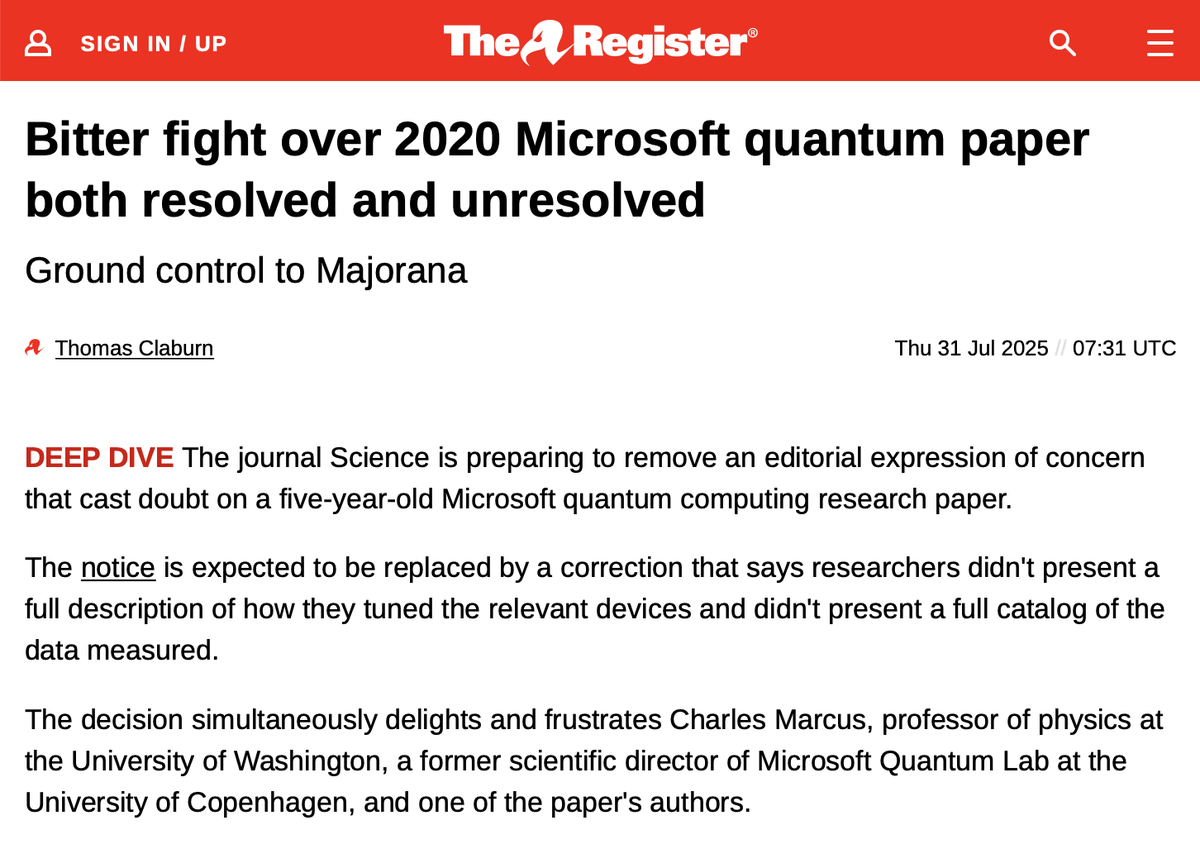
Strong contender for headline of the year!
Martin Bauer tweet media
English
16
89
674
32.1K