f4u57🏴‍☠️m1n3~2p¢-mp¢*FHΣ =x"#3d;23dmnoxjasn

1.3K posts

f4u57🏴‍☠️m1n3~2p¢-mp¢*FHΣ =x"#3d;23dmnoxjasn banner
f4u57🏴‍☠️m1n3~2p¢-mp¢*FHΣ =x"#3d;23dmnoxjasn

f4u57🏴‍☠️m1n3~2p¢-mp¢*FHΣ =x"#3d;23dmnoxjasn

@f4u57x

🏴‍☠️

Katılım Aralık 2011
495 Takip Edilen641 Takipçiler
f4u57🏴‍☠️m1n3~2p¢-mp¢*FHΣ =x"#3d;23dmnoxjasn retweetledi
mert
mert@mert·
we have indexed every single transfer in the history of solana for all tokens and programs -- ever you can now query any transfers, any counterparties, any amounts, any mints, and any dates as filters all exposed through a single endpoint yes, you read all that right
Helius@Helius

Introducing getTransfersByAddress A new Helius RPC method that returns parsed token and SOL transfer history for any wallet in 1 call - Filter by mint, amt, time, direction, counterparty - Cover token-2022 fees, wSOL wrap/unwrap event edge cases - Cursor pagination, 100/call

English
37
17
204
22.5K
f4u57🏴‍☠️m1n3~2p¢-mp¢*FHΣ =x"#3d;23dmnoxjasn retweetledi
Hiep Ho「🍜」
Hiep Ho「🍜」@0xHipHo·
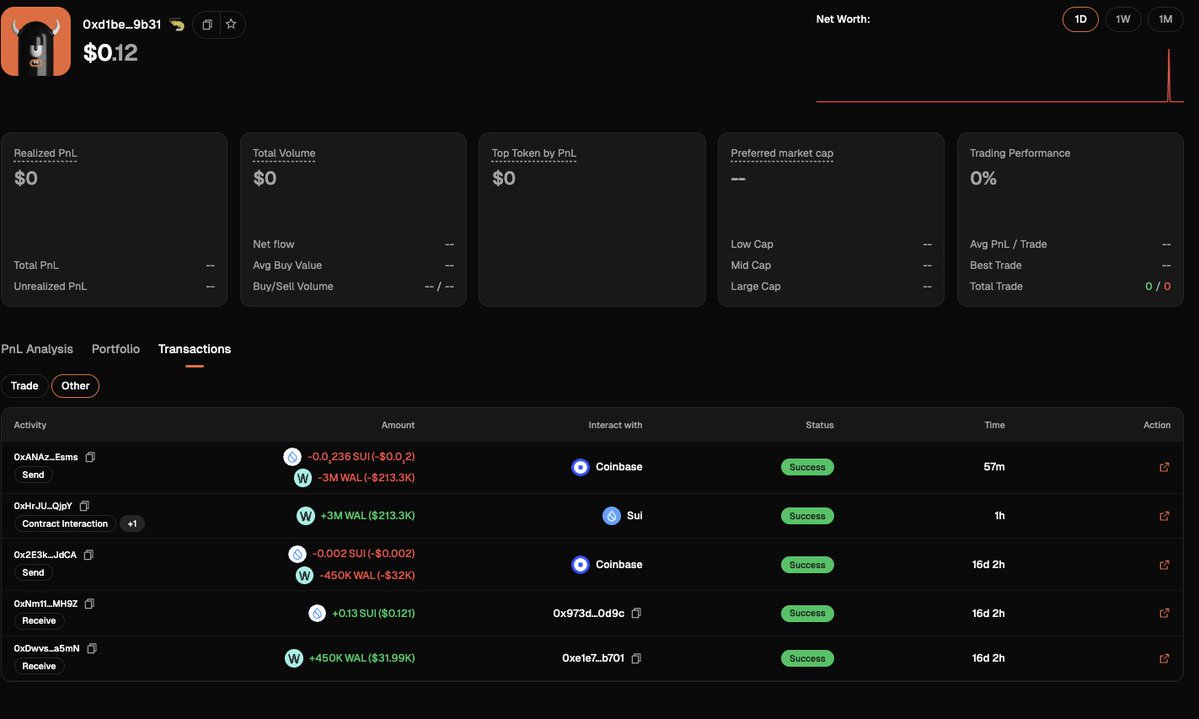
🚨 Massive $WAL movement detected today. A 16-day-old wallet sent 3.5M $WAL to #Coinbase, with a massive 3M $WAL hitting the exchange just an hour ago. 👀 Tracing the addresses reveals a direct link to the $WAL dev wallet. Track his moves on @NoodlesFi: app.noodles.fi/accounts/0xd1b…
Hiep Ho「🍜」 tweet media
English
12
4
77
12.5K
f4u57🏴‍☠️m1n3~2p¢-mp¢*FHΣ =x"#3d;23dmnoxjasn retweetledi
Kurt Wuckert Jr
Kurt Wuckert Jr@kurtwuckertjr·
@Blockstream The fiat-focused, easy-to-control wing of the bitcoin economy right there!
Kurt Wuckert Jr tweet media
English
2
21
83
2.5K
d3h3d 「🦑」
d3h3d 「🦑」@d3h3d_·
we’re giving away a few claude max 20x subscriptions for the duration of @colosseum to great teams working on great ideas - must use @ikadotxyz and/or @encrypt_xyz - max 1 sub per team comment here to schedule a quick chat with us about what ur building, if it’s exciting we’ll give you some extra firepower let’s go
English
42
13
82
5.1K
fesal
fesal@iamknownasfesal·
imagine, you are on sui or solana, need to pay gas fees (1) ika (2) chain gas, and need to talk with chain that ika works on instead, what if ika was abstracted, and you provided developers a service with endpoints, for zero trust dwallets seems like a good hackathon idea
English
5
5
42
1.1K
f4u57🏴‍☠️m1n3~2p¢-mp¢*FHΣ =x"#3d;23dmnoxjasn retweetledi
Jacob Creech
Jacob Creech@jacobvcreech·
Solana's future is bright - Lower blocktimes - Lower rent costs - Larger transactions - Higher account limits - Optimized token actions - State of the art consensus - Major protocol bloat removal and so much more coming to enable new apps on Solana
English
51
42
336
18.7K
Dagon
Dagon@DagonSolana·
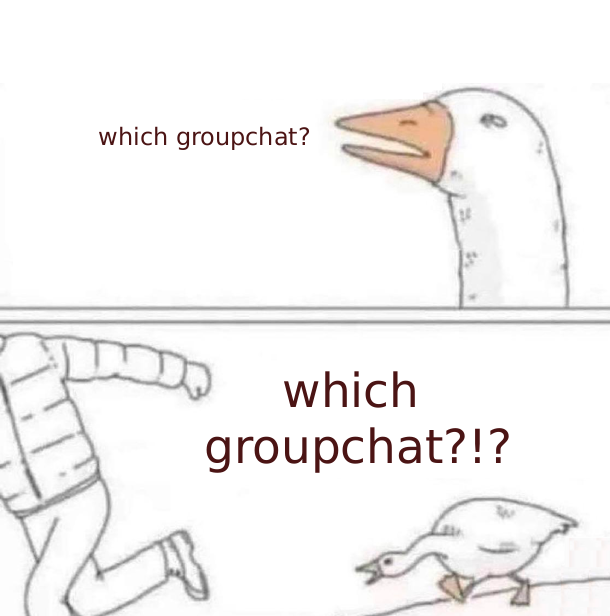
Worked closely with the encrypt team to bring you all the blessing of reductions. This was me in the group chat
Dagon tweet media
fesal@iamknownasfesal

mock-up development update for @encrypt_xyz - new reduction functions(sum, min, max, any, all) - we identified few bugs about graphs and fixed - pc-token example now has TransferWithRecipient(returning confidential actual transferred value back to CPI call, for to use in DeFi) - pc-swap example now shows how cross-chain program composability works with CPIs the examples generally show how everything can work, do not take it as base and use as an example instead, examples are not final and are subject to change

English
3
3
10
448
fesal
fesal@iamknownasfesal·
bu hafta @SuperteamTR ile bir space planlıyoruz mpc, zk, fhe, tee, herhangi bir privacy/custodian projesi geliştiren herkesi bu space'imize bekleriz eğer konuşmacı olarakta katılmak isterseniz DM gönderebilirsiniz özellikle eğer zama, arcium veya fhe/mpc kullanan projeleri de bekleriz 🙏
Türkçe
4
4
24
582
nick
nick@nicklb_·
1. I do recall us having this discussion about target cluster size both on twitter and in person before, and given you plan on starting off with fewer nodes as well I’m not sure why this keeps coming up, as you say the proof will be in the pudding 2. i mentioned both solutions in my previous reply, either you invoke both the token and target program in the same tx, or you use the zkp trick (which you can because token balances are always encrypted to a user’s key) 3. yes, 3 and 10 is a big difference, but since 3 is a bootstrapping number I don’t see how that’s relevant. my point was that you can’t compare raw numbers of nodes without being explicit about stronger assumptions and diminishing returns 4. 5% is not an unfair consideration for mature networks that secure large TVLs, but it’s explicitly not the case for an app that’s been out for a few weeks on a network that's been out barely longer. the first months of going live are always update-heavy and 3 parties was deemed an acceptable parameter with a clear path to upgrading security once this cools down. several optimizations are in the works with which throughput on 4-5 nodes will easily exceed the current throughput with 3
English
2
1
10
201
nick
nick@nicklb_·
hey david, i’d love to hear where your claimed limit of 3 parties for cerberus comes from? BDOZ online phases are extremely fast and the main factor in computation time is latency rather than bandwidth until you reach a much higher number of nodes or parallel computations. adding nodes doesn’t add rounds of communication, and consequently runtime isn’t significantly affected between 3 and 6 parties for example. it’s also an advantage of having separate clusters that you can distribute that load instead of having it all weigh on a single committee. which brings us to interoperability: privacy fundamentally limits free interoperability, since program B shouldn’t be able to do whatever it wants with program A’s private state (including reveal it): there needs to be role-based access, which requires involvement of the committee. which is exactly what we have with symmetric-key encryption for data meant for specific users (or even other programs). interop then comes in two distinct flavors: permissionned (the one you mention where program A re-encrypts part of its state to program B’s key so B can use it), and permissionless, where a user provides their state plus a ZKP to show it corresponds to the onchain symmetric ciphertext (umbra actually uses this trick for certain ops already). sidenote: ZKPs are also something you leave out when talking about your privacy solution, is it the same as zama where the user’s expected to produce this big zkp client-side with every tx? as for silent decryption attacks, you know just as well as me that all threshold systems share those attacks, yours included. and yes it involves more parties, but you conveniently gloss over the 2/3 honest supermajority assumption and just talk about committee sizes as if they were comparable in any way to dishonest majority (they aren’t). not only do you eventually run into diminishing returns on security (you can’t expect 50-100 nodes to all run on different infrastructure and not reuse providers/locations at all, which makes them less independent in terms of hacks), but even with a small probability of hacking a given node, you require far larger committee sizes to match dishonest majority’s security. e.g. for a 5% chance of a node being compromised, your system would need 21 nodes to match the security of a 4-party MXE. in our case, the recovery set can be extremely large because its size has no impact on throughput, only on key recovery. also believe it or not key switching is a thing in MPC too! which means you can set up your MXE so that keys are rotated every epoch and the state is re-encrypted by the committee, which mitigates key leaks in the exact same way FHE-based systems can
d3h3d 「🦑」@d3h3d_

because @joaomendoncaaaa is always bugging me that i'm writing too many things in comments deep in conversations no one ever reads - here’s a quote of the full discussion with a tl;dr: - the underlying cryptogtaphy of arcium (generic MPC) cannot scale the committee size, 3 parties look like the practical cap - this leads to: -- fragile security -- susceptibility to offchain attacks that leave no trace and break privacy forever -- a design choice (multiple committees) that sacrifices composability, requiring complex patches like an external confidential token standard - these consequences can be cleverly downplayed or even reframed to look like advantages, but a larger more decentralized committee is the only real solution for privacy based on threshold cryptography, which is unlikely to ever be possible with generic MPC

English
10
5
35
3.3K
d3h3d 「🦑」
d3h3d 「🦑」@d3h3d_·
1. i assumed back when i only learned about arcium way before you guys launched that generic mpc won't scale for real world use cases beyond 3-4 parties. right now the reality is that 3-of-3 is the security, so my assumptions from before you went live still hold, and your claim that there's no practical difference between 3 and 6, or that 5 is the medium-term cluster size target should be easy enough to track and verify / refute with umbra's committee size in the near future (this would be a good chance to mention that even your die hard community members have no idea how many nodes actually are in arcium [4] and how many nodes are securing umbra [3] and have demanded i prove it to them - this should be easily accessible transparent and public data so people can make informed decisions about security and privacy). anyway i'm sure simple transfers can be done with more parties even with generic mpc, but that can also be done with zk, i just don't think real shared state applications that actually need FHE / MPC will be viable with the added overhead, which is why i already predicted that we're likely to see 2-party committees - but i guess we'll see. 2. again i'm not sure under which committee a universal token program will be encrypted, and how would apps that are encrypted with other committees be able to operate on that program? 3. yes i agree the difference between 10 and 30 is much bigger than the difference between 30 and 100 which is much bigger than then difference between 100 and 1000. that still doesn't mean that 1,000 isn't better than 100, it's just not necessarily worth paying much more for it. in any case the difference between 3 and 10 is astronomical, and that's the difference we're discussing so i'm not sure what diminishing returns had to do with the discussion. 4. if you really think 5% is the correct parameter, users of umbra should know that right now they have very fragile security - there are only 3 nodes, all of them in europe, and there's a 1/8,000 chance of the privacy being broken, (or maybe 1/2,000 if you have the 3 of 4 recovery as well?) - perhaps if they care about privacy being secured cryptographically they should wait until umbra either expands their set of operators (which you expect to happen soon while i'm skeptical) or move to encrypt when it goes live, which will give them (under the 5% assumption) at least 100,000x better security then the current 3-of-3 committee (400,000x considering the 3-of-4 recovery) 5. i mean starting from an application on an isolated cluster, key switching to the default global cluster that allows for composability and then operating there on other applications. but as i said, that is more of an anecdote, and the main composability unlock for encrypt stems from the fact that there actually is a global cluster that all encrypt programs operate on.
English
2
0
9
232
Mad Mibu 🎒 🦑
Mad Mibu 🎒 🦑@MinhTranQuang10·
Build on Sui they said. It’ll be fun they said. Builders:
English
16
2
51
2.5K
f4u57🏴‍☠️m1n3~2p¢-mp¢*FHΣ =x"#3d;23dmnoxjasn retweetledi
Margarito Esparza N.
Margarito Esparza N.@soyMargarlto·
Recordatorio de que Osama bin Laden tenía esta imagen guardada en su disco duro.
Margarito Esparza N. tweet media
Español
252
8.5K
143.2K
2.8M
f4u57🏴‍☠️m1n3~2p¢-mp¢*FHΣ =x"#3d;23dmnoxjasn retweetledi
TDM (e/λ) (L8 vibe coder 💫)
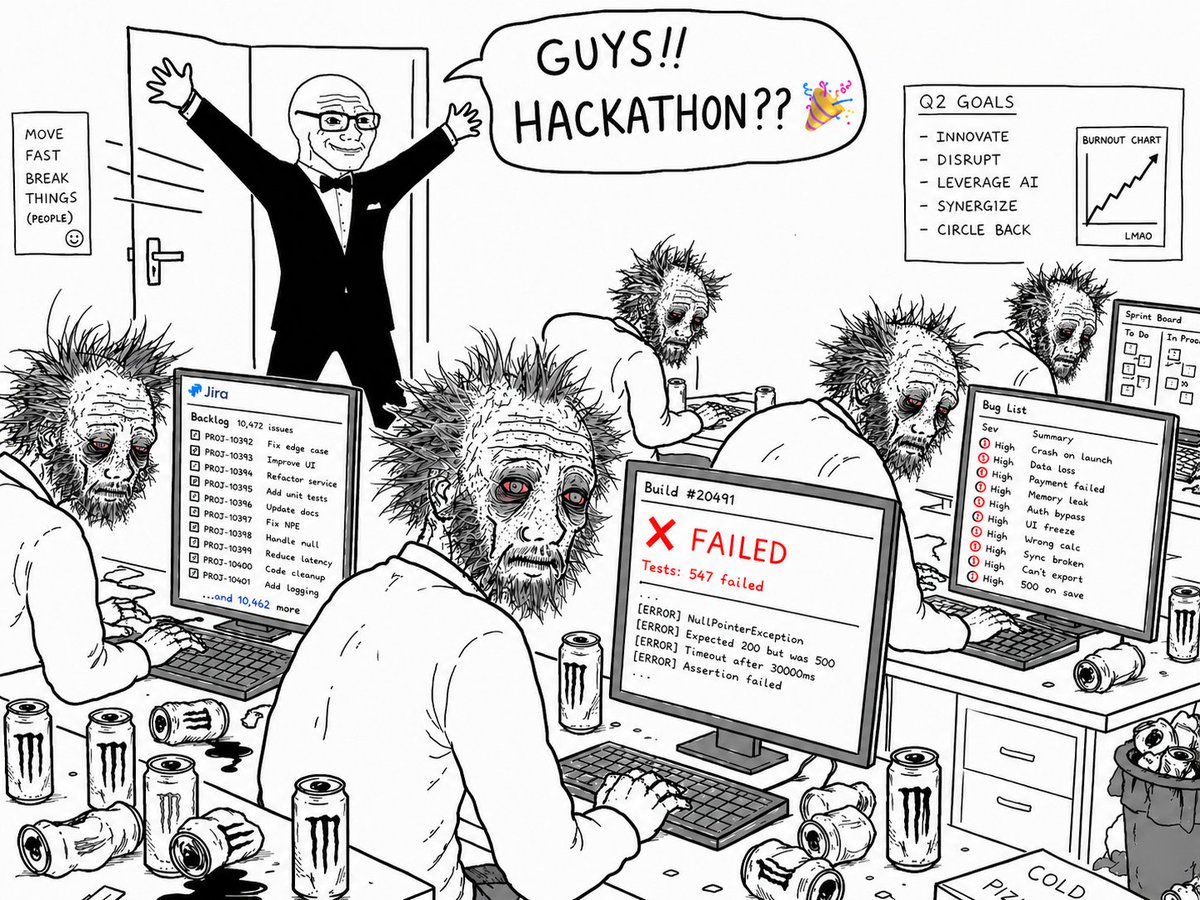
(Manager watching their team on the verge of mass resignation from back to back quarters of impossible deliverables with unrealistic deadlines): Hey! Let's have a hackathon!
TDM (e/λ) (L8 vibe coder 💫) tweet media
English
39
215
4.2K
188.5K
WaaP, Wallet as a Protocol
Today: your key split lives between you and a secure enclave. Soon: @ikadotxyz moves the enclave half to a distributed validator network native to Sui. Same agent UX. No single point of trust. Build now. The security decentralizes under you. 4/5
English
2
0
6
152
f4u57🏴‍☠️m1n3~2p¢-mp¢*FHΣ =x"#3d;23dmnoxjasn retweetledi
WaaP, Wallet as a Protocol
There's no safe way to let an AI agent trade on @SuiNetwork Until now. waap-cli splits your signing key in two. The agent holds capabilities, not keys. Policy runs before every transaction. Live today.
WaaP, Wallet as a Protocol tweet media
English
3
10
43
5.7K
f4u57🏴‍☠️m1n3~2p¢-mp¢*FHΣ =x"#3d;23dmnoxjasn retweetledi
Magoo PhD
Magoo PhD@HodlMagoo·
FBI Director Kash Patel and Deputy AG Todd Blanche speaking to an empty room at @TheBitcoinConf
English
160
130
1.2K
126.3K
airtx (🥚,🥚) 🇦🇲
Agents have no loyalty, no narrative attachment, no reason to pay a premium. If Sui's gas is above competitors, agents route elsewhere by definition. So either @SuiNetwork is the agentic chain and gas needs to be cheap, or it isn't. Which is it?
death@0xd34th

Sui gas fees just dropped 85%. 6.8x cheaper than last week and now 52% cheaper than Solana for simple transfers Also very soon stablecoin transfers will be FREE! The agentic future will happen on Sui.

English
2
5
34
2K