First Global

5.2K posts

First Global banner
First Global

First Global

@firstglobalsec

Cutting-edge Human+Machine InvestTech India PMS | Global Fund First Global Finance Pvt Ltd | SEBI PMS: INP0000006697 Enquire Now: https://t.co/oKCJIRs8FB

US, UK, UAE, India Katılım Aralık 2019
18 Takip Edilen19.7K Takipçiler
First Global retweetledi
Rajeev Pande
Rajeev Pande@RajeevPande72·
@devinamehra A well-researched perspective by @devinamehra. Historical data across 50+ years of geopolitical conflicts consistently shows markets stabilize within 6–12 months. Sound investment strategy should be guided by data, not headlines. #InvestingInsights #GlobalMarkets
English
0
2
5
2.1K
First Global retweetledi
Devina Mehra
Devina Mehra@devinamehra·
These are somber times for the world. The big conflict in West Asia, is giving everyone the jitters on many fronts And because सबको अपनी ही किसी बात पर रोना आया, the main questions of the readers here would be related to its impact on markets That is what I have tried to answer here drawing on data for well over a century of history of wars and geopolitical upheavals The answers may surprise you My column for Mint newspaper PS: Had wanted to write on another topic this fortnight but I don't think anyone is in the mood for anything else just now🙃 @livemint @WritesRavi @PenguinIndia @fghumsmallcase @firstglobalsec
Devina Mehra tweet media
English
5
12
58
3.9K
First Global retweetledi
Balaji.R
Balaji.R@SowmiyaeventsI·
@devinamehra Excellent book Thanks for your efforts creation is not easy Excellent handbook for Investors 🙏
English
0
1
4
3K
First Global retweetledi
Devina Mehra
Devina Mehra@devinamehra·
Thank you for explaining the highlight of a chapter of my book 'Money Myths and Mantras': Why the hold rating exists in the world For those who have not read it yet, do your portfolio a favour and click to order: amzn.in/d/0BSH3Mi
Devina Mehra tweet media
Viral Shah@viralbshah

Ever wonder why you cling to a stock that's going nowhere? 😅 Or why does analysts love giving "HOLD" on everything? It's often the endowment effect — a behavioral bias discovered by legends like Kahneman, Thaler & Knetsch. Let's unpack it 🧵👇 Classic experiment (Cornell University mug study): Students randomly given a university-logo coffee mug ☕ → Owners wouldn't sell for less than ~$5.25–$7+ on average Students who got nothing? → Willing to pay only ~$2.25–$2.87 to buy the exact same mug Same mug. Wildly different value just because of ownership! 🤯 Key insight: Once something belongs to us, our brain magically thinks it's worth way more. Even mundane stuff like mugs, chocolate bars, or... your portfolio holdings 📈 Ownership = instant emotional premium 💸 We get attached fast. The item feels tied to our identity and well-being. Result? We demand much more to give it up than we'd pay to get it in the first place. Classic loss aversion in action ⚖️ Now apply this to investing: When you buy a stock, you've already analyzed it, made a conscious choice, and mentally committed. Selling = admitting "I was wrong" 😬 So people become super attached to what they own Endowment effect turns rational investors into stubborn bag-holders 🛡️📉 And that's exactly why "HOLD" ratings exist in analyst reports. It's the perfect cover: - Not recommending buy (so no strong conviction) - Not saying sell (avoid triggering regret or admitting the pick was bad) Just... "hold it because you already have it" 🙈 Think about it: If a stock isn't worth buying fresh today at current price… why on earth is it suddenly worth *holding* just because you own it? 🤔 The "HOLD" rating hides this irrational premium we place on owned assets. Bottom line: Endowment bias is one of the biggest reasons people: - Overvalue their own stuff - Hold losing positions forever - Rarely cut losers Awareness is the first step to fighting it 🔍💡 Next time you're staring at a flat or declining stock in your portfolio, ask the brutal question: "If I didn't already own this… would I buy it right now?" If the answer is no → maybe it's time to let go. ☕➡️🗑️ What stocks are you "endowed" with? Drop below! 👇 Source: Money Myths and Mantra by @devinamehra #investing #InvestSmart #Investments

English
0
2
13
2.8K
First Global
First Global@firstglobalsec·
Why is Iran often considered a difficult adversary in geopolitical conflicts? As @DevinaMehra explains, several structural factors shape this perception — from geography and terrain to military structure and strategic planning. These elements make quick outcomes in conflicts far less straightforward than headlines often suggest. For investors, understanding the complexity of geopolitical events helps separate immediate market reactions from longer-term realities. Watch the full Insights video to understand the bigger picture. 🔗 Link in the thread below If global events are making markets harder to interpret, we help investors navigate such uncertainty with a data-driven perspective. 📩 DM us or write to enquiry@firstglobalsec.com
First Global tweet media
English
2
0
3
313
First Global retweetledi
First Global
First Global@firstglobalsec·
Gold is called a safe haven … but how safe is it really? Do you even know the historical volatility of this asset? Before you add more gold to your portfolio, ask yourself: Are you investing based on facts … or a mis-sold belief? This short video @devinamehra uncovers a perspective most investors overlook. If you’re unsure how much gold actually belongs in your portfolio, we’re here to help you make smarter, more balanced decisions. 📩 DM us or write to enquiry@firstglobalsec.com — we help investors build portfolios aligned with long-term reality, not market myths.
English
1
5
19
23K
First Global
First Global@firstglobalsec·
Are you investing the right way… or just following what everyone else is doing? Many investors today are heavily tilted towards equities. But is that really the smartest way to build a portfolio? In this clip, @DevinaMehra challenges some very common investing beliefs — including how most people think about long-term investing. To watch the full video, click the link in the thread below. If you want to build a disciplined portfolio strategy instead of guesswork, we help investors think through these decisions. 📩 DM us or mail us at equiry@firstglobalsec.com @TheIndiaOpportunity
English
1
1
5
528
First Global
First Global@firstglobalsec·
Market falls are temporary. But panic selling turns them into permanent damage. Most investors don’t lose money because markets fall — they lose it because fear overrides discipline at the wrong time. That’s why sensible asset allocation matters. It’s designed to absorb volatility so you don’t have to react to it. At @firstglobalsec, we help investors stay invested through cycles by focusing on structure, discipline, and long-term outcomes — not short-term noise. 📩 If recent market moves are making you uneasy, DM us or write to enquiry@firstglobalsec.com We’re here to help you invest with clarity, not emotion.
First Global tweet media
English
0
2
7
447
First Global retweetledi
Devina Mehra
Devina Mehra@devinamehra·
Wars, Conflicts and Markets: The 100 year story Just before the Russia Ukraine war started in 2022, we did a study of every single major geopolitical event going back 50 years: the two Gulf Wars, Afghanistan, 9/11, US bombing Libya etc And what we found was that in every case there was turmoil in the markets just before and after the incident but in 6 months to one year, the stock markets (of countries not in the conflict) had forgotten about the disruption. Obviously there were not enough data points for a statistical study but the study did not need to be statistical, because it happened every single time. I could not find an exception to this pattern. While we had done the exercise going back little over 5 decades, a recent piece in Financial Times entitled, ‘On ignoring geopolitics, buying bubbles and hoarding gold’ went back to 1900. This included the two world wars which killed crores of people (the second World War literally KILLED 8 crore people - 3% of the world population, nearly two thirds of them civilians) only to come to the same conclusion: that it is not worthwhile selling out due to geopolitical upheavals. It has an impact only if the countries are directly in conflict and especially if they are defeated (think Germany and Japan) Otherwise, the big dislocations in the markets have not been due to geopolitics. The extreme crashes were due to other reasons, from the 1929 depression to the 2000 Tech crash to the 2008 Global financial crisis. More on this in my column in Mint tomorrow And yes what about Gold? As I have repeated many times in the past, the FT piece also concludes that gold over the long term gives lower returns AND higher volatility than equities. It is not a safe haven, nor is it a good inflation hedge. Stand alone its value is mainly at times when equities are doing terribly. How it works as a part of a Portfolio is a story for another day. Want to understand this further from a practical view point? Send a DM to @firstglobalsec @livemint @FinancialTimes
Devina Mehra tweet mediaDevina Mehra tweet mediaDevina Mehra tweet mediaDevina Mehra tweet media
English
5
15
91
10.4K
First Global
First Global@firstglobalsec·
Market गिर रहा है… अब क्या करें? Invest करें, wait करें… याexit kar jayen? जब डर अपने चरम पर होता है, ज़्यादातर investors गलत फैसले लेते हैं। War हो या market में उतार-चढ़ाव — history एक ही बात कहती है: कौन सी बात? Devina Mehra आपको बताती हैं तो आप क्या कर रहे हैं— panic या plan? If you’re trying to position your portfolio across asset classes—without reacting to noise 📩 DM us or mail at enquiry@firstglobalsec.com @devinamehra @CNBC_Awaaz @_anujsinghal @virendraonifty
हिन्दी
1
1
6
551
First Global
First Global@firstglobalsec·
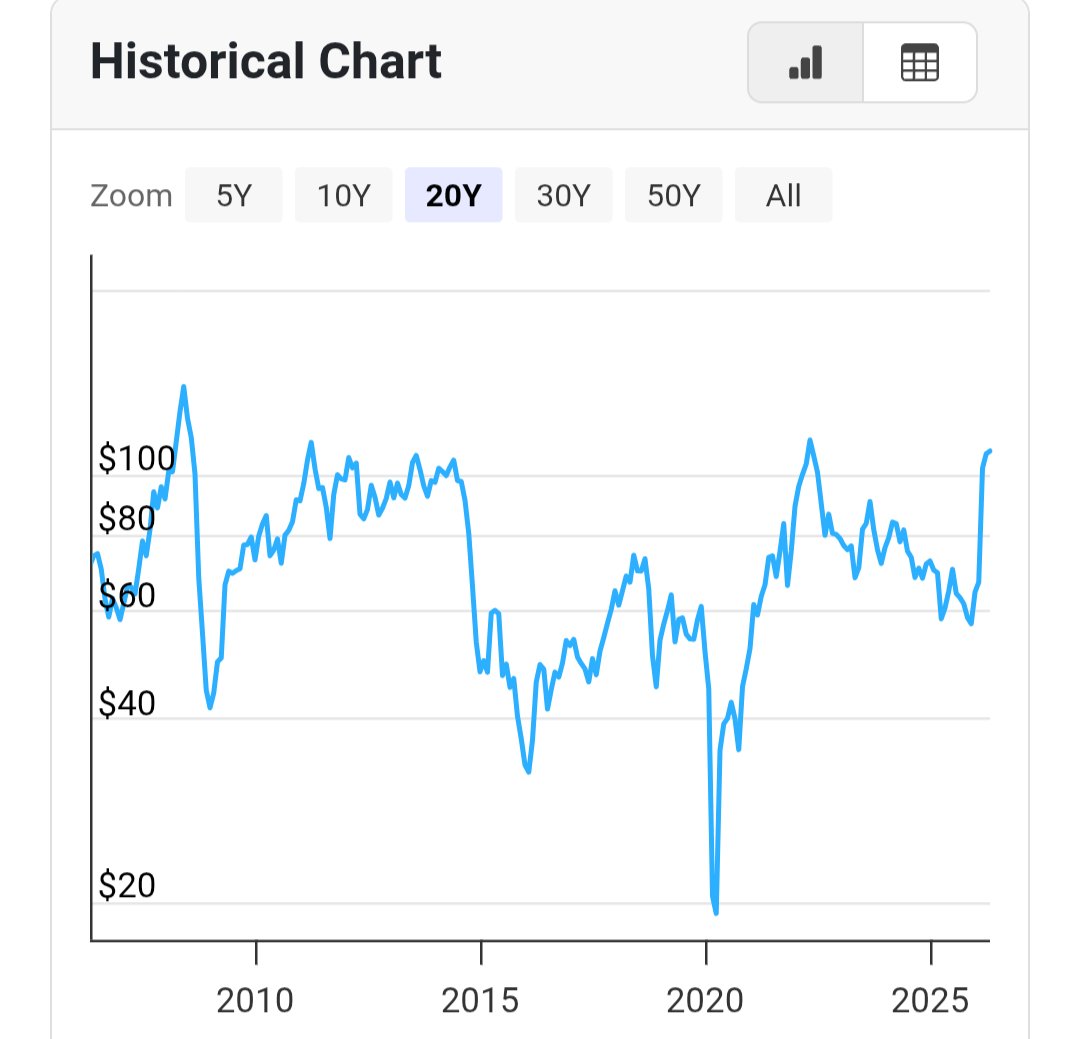
Oil prices often react quickly when geopolitical tensions rise. But the reason isn’t always a sudden drop in supply. As @DevinaMehra explains, conflicts often increase the risk and cost of transporting oil through key routes. That added uncertainty and risk premium can push prices higher — even when production hasn’t changed. And actually, no one wants production to stop for long. Essentially, the war IS FOR oil - for control of the crude. For investors, understanding this difference helps separate short-term market reactions from long-term trends. If you’re trying to make sense of market moves during global events, we help investors navigate such periods with a data-driven perspective. 📩 DM us or write to enquiry@firstglobalsec.com
First Global tweet media
English
0
2
7
312
First Global
First Global@firstglobalsec·
Wars dominate headlines for months. But markets tend to move on much faster. Looking back at decades of geopolitical conflicts, @devinamehra explains why investors often overestimate the long-term market impact of wars. So when markets react sharply to global events… what should investors actually do? Watch the clip. If you’re trying to make sense of market volatility and asset allocation during uncertain times, that’s exactly what we help investors navigate. 📩 DM us or write to us at enquiry@firstglobalsec.com @shail_bhatnagar @business_today
English
1
2
13
906
First Global retweetledi
Devina Mehra
Devina Mehra@devinamehra·
Why investment experts often drive facing backwards, planning the future path based on the road that far behind? I'd made this caricature* to illustrate how retail investors chase the asset class, theme, sector that has recently done well Increasingly I find professionals doing just the same 😯 All around me what can be described as 'experts' pontificating on a blinding glimpse of the obvious with gems like - India is an expensive market because its P/E higher than that of many other markets (where were you Prabhu all this while?) - FIIs have been net sellers in India (who knew!) And increasingly - India has no AI story and hence no one is interested in this market. This is sometimes couched in consultant speak as 'India is not an innovation market' Bhaiyon aur Behnon, yah to sab ho gaya...sab ko maloom hai. Thoda aaspaas dekho ki ab kya ho raha hai aur aage kya hoga. Starting with the last one first, the Magnificent Seven (the seven major tech stocks in the US: Microsoft, Google, Nvidia, Meta, Apple Amazon, Tesla) contributed 60%+ of the 2023 move in the S&P 500, 50%+ in 2024 and 40%+ in 2025. To get a further idea of how this AI bull has been tiring: in 2025, only two of the seven, Google and Nvidia, drove the move. The other five underperformed the market index. In the first 6 weeks of all 2026 all seven were down (they have somewhat recovered now) even as stocks like Exxon, Chevron, Walmart and Johnson and Johnson went up Rather late to diagnose that India should have been in AI game and that is the reason why its stock market is lagging There are of course other danger signs in AI like an estimated capital expenditure of nearly US $ 700 billion by the 4 AI companies which is four and half times their capex in 2023 - whether this will ever make adequate return on capital is anyone's guess Of course given that data centres are EXTREMELY energy and water intensive, the present conflict may anyway push a lot of AI plans further down the road Now look at what has been happening in India As I had been forecasting for the past many months, the earnings have begun to accelerate in the third quarter of this financial year (the quarter ending December 2025) Earlier today I posted the earnings data collated by Moneycontrol. While the sales growth has moved faster than the nominal GDP growth, it does not show up so clearly on the bottom line. The story becomes clear when we look at manufacturing companies only, where the profit growth is also in double digits. The services companies, plus some others, had a big one time adjustment due to the New Labour Code and net of that the overall bottom line growth for India's listed companies is pretty good. Markets are about both the pitfalls and the opportunities that lie ahead not what we have already passed! Who knew one would have to repeat obvious stuff like this Otherwise too much of the commentary is only about finding an explanation for what has already happened in the markets I will give you another example. The absolute bottom in private consumption in India was in FY24 (year ending April 2024). It was a 21 year low in growth. However for the first half of 2024 I was the lone voice pointing this out. To tell you the truth nobody was really interested in my talk of risk and caution at the time, when they thought the small cap and micro cap boom would last forever 😊 The rest of the talking heads on television began talking about a consumption slow down only towards the end of 2024 because the market had started to tank then and it became a convenient explanation. Consumption had actually started to accelerate by the time but you need a neat sounding explanation! Don't want to drive looking at the rear view? Please send a DM to @firstglobalsec to understand what you should be doing in India and globally. *Via AI
Devina Mehra tweet media
English
4
4
24
2.5K
First Global
First Global@firstglobalsec·
Got a salary hike? What’s the first thing you do with it? Buy the latest phone or latest 'it' bag… or upgrade your future? Most people celebrate a raise by spending more. But what if that’s the biggest trap? The one that keeps you on the treadmill forever? In this clip, @DevinaMehra shares a simple “70% rule” that could completely change how you think about increments, bonuses, and long-term investing. If you’re trying to invest more wisely and build long-term wealth, 📩 DM us or write to us at enquiry@firstglobalsec.com
English
2
20
181
203.7K
First Global
First Global@firstglobalsec·
Read article here: #912" target="_blank" rel="nofollow noopener">firstglobalsec.com/fg-in-the-pres… Article titled, “Indian Women Hesitate To Take Charge Of Their Finances, Says Devina Mehra of First Global”
English
0
1
4
345
First Global
First Global@firstglobalsec·
Do you really know what’s happening to your money… or has it been outsourced to someone else? Even today, many educated, successful women don’t actively manage their own finances. Why? Lack of time? Confidence? Or just conditioning? And more importantly — what does this mean for your future and financial independence? At the @OutlookMoney 40After40 Retirement Expo, @DevinaMehra shares some uncomfortable truths — and why the biggest barrier isn’t knowledge. If you’re a working woman, a homemaker, or someone who believes “someone else is handling it” … this is a perspective you shouldn’t miss. Read the full article, link in the thread below. Because financial independence isn’t optional — it’s essential. If you want to take charge but don’t know where to start, we’re here to help. DM us or write to us at equiry@firstglobalsec.com
First Global tweet mediaFirst Global tweet mediaFirst Global tweet mediaFirst Global tweet media
English
1
2
8
577
First Global
First Global@firstglobalsec·
What do 30 years in the markets teach you? In this conversation with @SampadaVaze, @DevinaMehra shares why no investor has a crystal ball, how she spotted opportunities like Amazon early, and why most people misunderstand risk, gold, and investing itself. She also talks about AI in investing, global diversification, and the mindset needed to survive market cycles. 📩 If you’re looking to structure your portfolio better, diversify globally, or make smarter investing decisions — we’re here to help. DM us or write to us at equiry@firstglobalsec.com
English
0
4
12
1.4K
First Global
First Global@firstglobalsec·
What happens to markets when war breaks out? Most investors assume oil prices surge, markets panic, and portfolios suffer. But history — and data — often tell a very different story. In this video, @DevinaMehra explains how her team actually rebalanced portfolios even before the latest conflict — including a shift towards commodities like crude and metals. Watch the clip to understand the thinking behind the portfolio move. Thinking about how to rebalance your portfolio in volatile markets? DM us or write to enquiry@firstglobalsec.com @shail_bhatnagar @business_today
English
3
11
108
130.9K