Sabitlenmiş Tweet
Flo
3.1K posts


Flo
@Flo_oskar
Building B2C Apps 💸https://t.co/Xo6Wn5tIfZ
Europe Katılım Ekim 2021
214 Takip Edilen932 Takipçiler




Flo retweetledi
Which country has the largest user base on X after the US?
It's Japan 🇯🇵
I just read that 65-70m of Japan's 125m people actively use X each month (oc bots included), but it's one of the highest platform penetration rates (USA -> 100m).
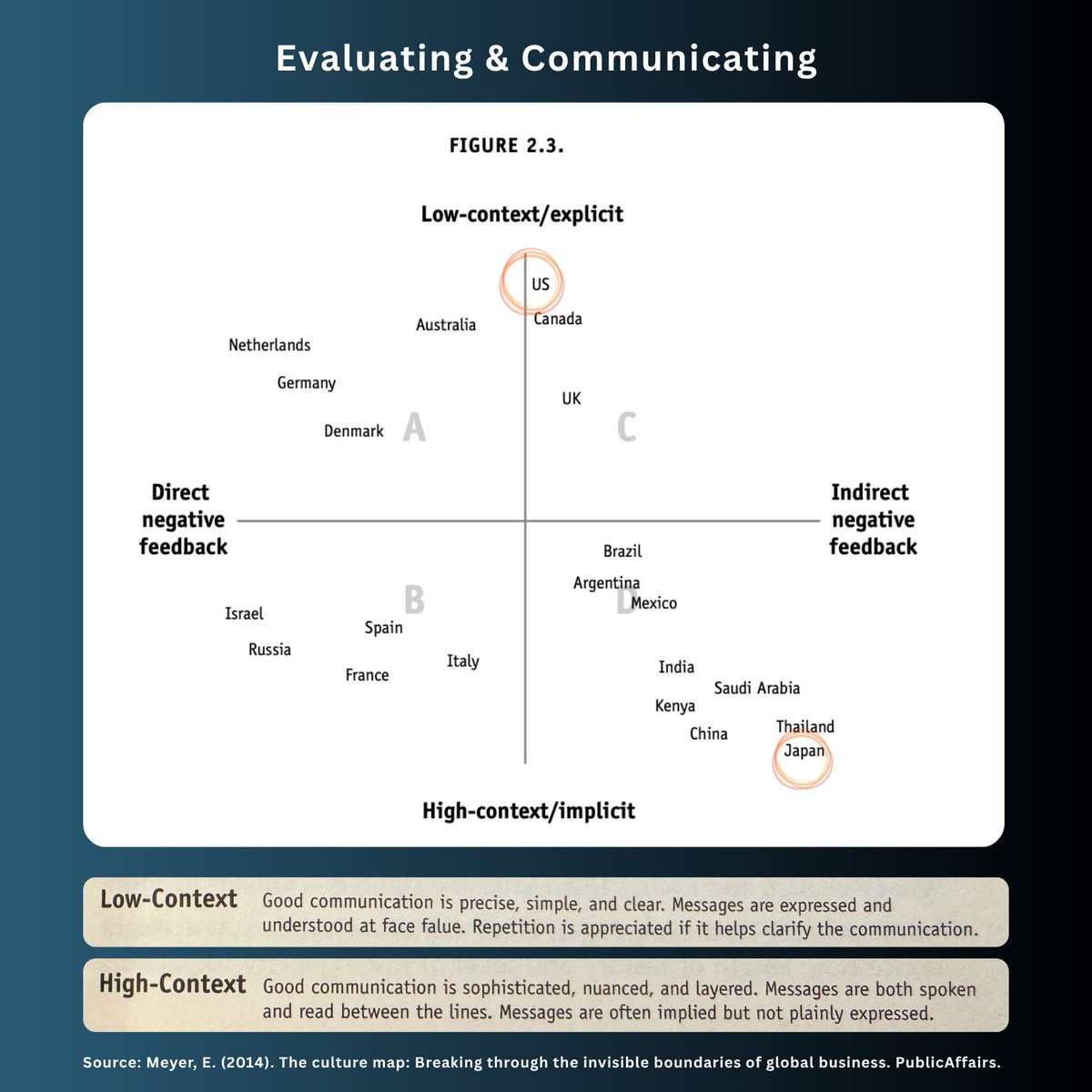
@ErinMeyerINSEAD's book "the Culture Map" showed that Japan and the US couldn't be more different in terms of communication style, so they might use X in completely different ways (Low-Context vs High-Context).
In the US, X is often used to share personal opinions and political thoughts (individualistic culture).
In contrast, Japanese users tend to focus on engaging with fan communities (anime, music, gaming), gathering information anonymously and keeping up with real-time updates like anime broadcasts, earthquakes or celebrity news (collectivistic culture). They place a higher value on anonymity and fitting in with the larger group, maybe one reason why Facebook never took off, following a more western approach of self-promotion & forcing us to use real names.
American messages tend to be precise, simple and clear while Japanese ones might be seen more nuanced/layered.
One argument for this highlights historical context. People in Japan (an island society) became skilled at decoding and interpreting each other's messages due to a relatively homogeneous population and thousands of years of shared history.
By contrast, The US with a mere few hundred years of shared history and waves of immigrants developed a communication style that values clarity and explicitness to ensure understanding across diverse languages, contexts, and backgrounds.
When it comes to giving negative feedback, "blurring the message" or "reading the air" became two Japanese terms, meaning that one has to pay attention to detect criticism in public. Negative feedback is more commonly delivered in private.
In contrast, in the US, negative feedback in public is typically softened with humor or a friendly tone.
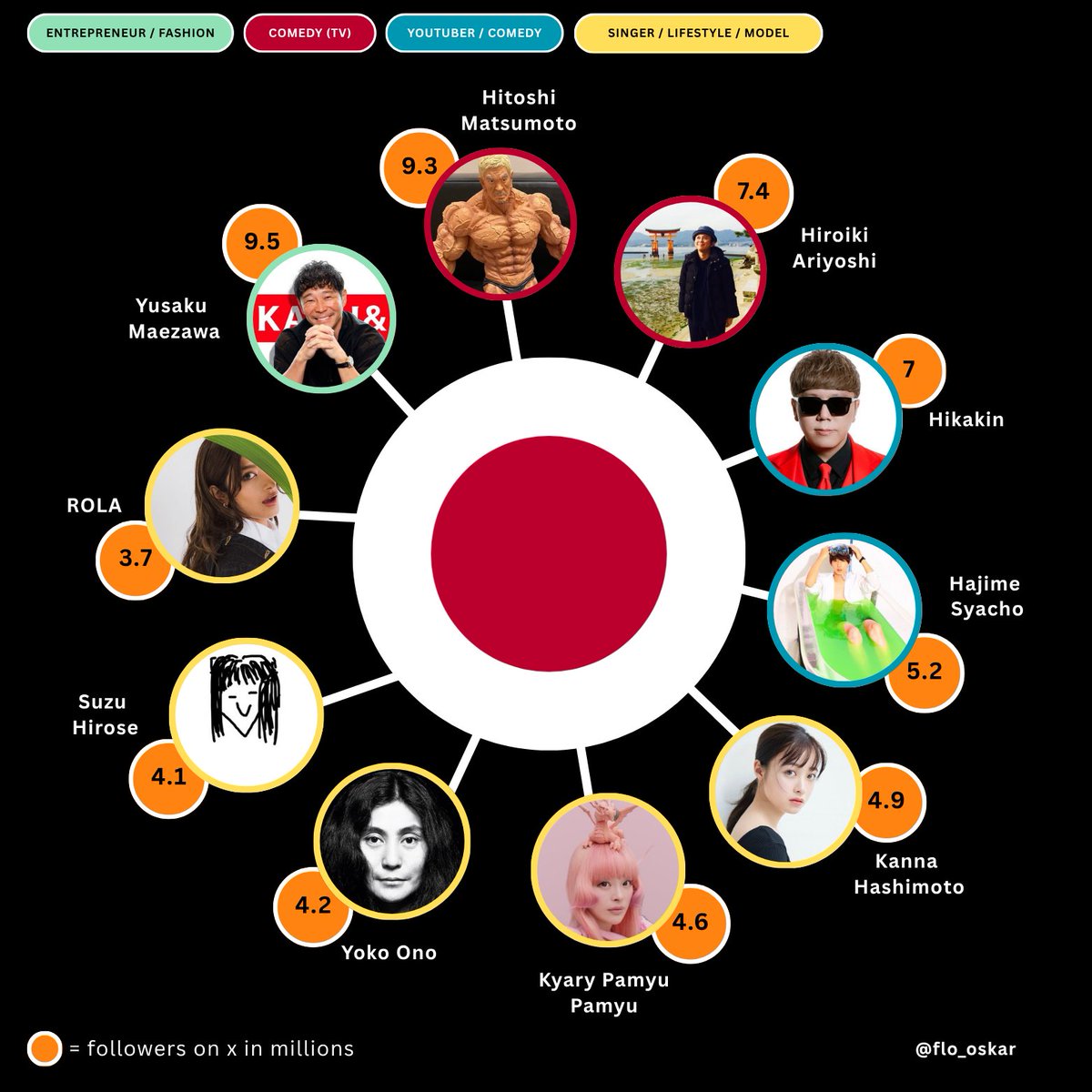
Some of the most followed Japanese accounts here on X are shown below (comedians, YouTubers, singers/actors/artists & @yousuck2020, the founder of Japan’s largest online fashion retailer ZOZOTOWN.
English

The reason Japanese twitter is such a wholesome and unified place is because Japanese society is still homogenous and high trust.
Japanese twitter seem to all be in general agreement.
Unlike Western Twitter.
English
Flo@Flo_oskar
Which country has the largest user base on X after the US? It's Japan 🇯🇵 I just read that 65-70m of Japan's 125m people actively use X each month (oc bots included), but it's one of the highest platform penetration rates (USA -> 100m). @ErinMeyerINSEAD's book "the Culture Map" showed that Japan and the US couldn't be more different in terms of communication style, so they might use X in completely different ways (Low-Context vs High-Context). In the US, X is often used to share personal opinions and political thoughts (individualistic culture). In contrast, Japanese users tend to focus on engaging with fan communities (anime, music, gaming), gathering information anonymously and keeping up with real-time updates like anime broadcasts, earthquakes or celebrity news (collectivistic culture). They place a higher value on anonymity and fitting in with the larger group, maybe one reason why Facebook never took off, following a more western approach of self-promotion & forcing us to use real names. American messages tend to be precise, simple and clear while Japanese ones might be seen more nuanced/layered. One argument for this highlights historical context. People in Japan (an island society) became skilled at decoding and interpreting each other's messages due to a relatively homogeneous population and thousands of years of shared history. By contrast, The US with a mere few hundred years of shared history and waves of immigrants developed a communication style that values clarity and explicitness to ensure understanding across diverse languages, contexts, and backgrounds. When it comes to giving negative feedback, "blurring the message" or "reading the air" became two Japanese terms, meaning that one has to pay attention to detect criticism in public. Negative feedback is more commonly delivered in private. In contrast, in the US, negative feedback in public is typically softened with humor or a friendly tone. Some of the most followed Japanese accounts here on X are shown below (comedians, YouTubers, singers/actors/artists & @yousuck2020, the founder of Japan’s largest online fashion retailer ZOZOTOWN.
QME

Pizza beim Italiener.
Keiner kann mich davon überzeugen, dass eine Margherita bestehend aus Teig, Tomatensauce und bisschen Käse 15-16€ kosten darf.
Ja Leto@_falsi1ke
Name a huge scam.
Deutsch
Flo@Flo_oskar
Which country has the largest user base on X after the US? It's Japan 🇯🇵 I just read that 65-70m of Japan's 125m people actively use X each month (oc bots included), but it's one of the highest platform penetration rates (USA -> 100m). @ErinMeyerINSEAD's book "the Culture Map" showed that Japan and the US couldn't be more different in terms of communication style, so they might use X in completely different ways (Low-Context vs High-Context). In the US, X is often used to share personal opinions and political thoughts (individualistic culture). In contrast, Japanese users tend to focus on engaging with fan communities (anime, music, gaming), gathering information anonymously and keeping up with real-time updates like anime broadcasts, earthquakes or celebrity news (collectivistic culture). They place a higher value on anonymity and fitting in with the larger group, maybe one reason why Facebook never took off, following a more western approach of self-promotion & forcing us to use real names. American messages tend to be precise, simple and clear while Japanese ones might be seen more nuanced/layered. One argument for this highlights historical context. People in Japan (an island society) became skilled at decoding and interpreting each other's messages due to a relatively homogeneous population and thousands of years of shared history. By contrast, The US with a mere few hundred years of shared history and waves of immigrants developed a communication style that values clarity and explicitness to ensure understanding across diverse languages, contexts, and backgrounds. When it comes to giving negative feedback, "blurring the message" or "reading the air" became two Japanese terms, meaning that one has to pay attention to detect criticism in public. Negative feedback is more commonly delivered in private. In contrast, in the US, negative feedback in public is typically softened with humor or a friendly tone. Some of the most followed Japanese accounts here on X are shown below (comedians, YouTubers, singers/actors/artists & @yousuck2020, the founder of Japan’s largest online fashion retailer ZOZOTOWN.
QME

Flo@Flo_oskar
Which country has the largest user base on X after the US? It's Japan 🇯🇵 I just read that 65-70m of Japan's 125m people actively use X each month (oc bots included), but it's one of the highest platform penetration rates (USA -> 100m). @ErinMeyerINSEAD's book "the Culture Map" showed that Japan and the US couldn't be more different in terms of communication style, so they might use X in completely different ways (Low-Context vs High-Context). In the US, X is often used to share personal opinions and political thoughts (individualistic culture). In contrast, Japanese users tend to focus on engaging with fan communities (anime, music, gaming), gathering information anonymously and keeping up with real-time updates like anime broadcasts, earthquakes or celebrity news (collectivistic culture). They place a higher value on anonymity and fitting in with the larger group, maybe one reason why Facebook never took off, following a more western approach of self-promotion & forcing us to use real names. American messages tend to be precise, simple and clear while Japanese ones might be seen more nuanced/layered. One argument for this highlights historical context. People in Japan (an island society) became skilled at decoding and interpreting each other's messages due to a relatively homogeneous population and thousands of years of shared history. By contrast, The US with a mere few hundred years of shared history and waves of immigrants developed a communication style that values clarity and explicitness to ensure understanding across diverse languages, contexts, and backgrounds. When it comes to giving negative feedback, "blurring the message" or "reading the air" became two Japanese terms, meaning that one has to pay attention to detect criticism in public. Negative feedback is more commonly delivered in private. In contrast, in the US, negative feedback in public is typically softened with humor or a friendly tone. Some of the most followed Japanese accounts here on X are shown below (comedians, YouTubers, singers/actors/artists & @yousuck2020, the founder of Japan’s largest online fashion retailer ZOZOTOWN.
QME

The largest cultural exchange in history just dropped.
English

We should put plastic surgeons in jail for destroying the faces of so many people who are beautiful in their own way
faby jurídico modern family@fabyollaverass
cortaram as asas de um anjo
English


Flo@Flo_oskar
Which country has the largest user base on X after the US? It's Japan 🇯🇵 I just read that 65-70m of Japan's 125m people actively use X each month (oc bots included), but it's one of the highest platform penetration rates (USA -> 100m). @ErinMeyerINSEAD's book "the Culture Map" showed that Japan and the US couldn't be more different in terms of communication style, so they might use X in completely different ways (Low-Context vs High-Context). In the US, X is often used to share personal opinions and political thoughts (individualistic culture). In contrast, Japanese users tend to focus on engaging with fan communities (anime, music, gaming), gathering information anonymously and keeping up with real-time updates like anime broadcasts, earthquakes or celebrity news (collectivistic culture). They place a higher value on anonymity and fitting in with the larger group, maybe one reason why Facebook never took off, following a more western approach of self-promotion & forcing us to use real names. American messages tend to be precise, simple and clear while Japanese ones might be seen more nuanced/layered. One argument for this highlights historical context. People in Japan (an island society) became skilled at decoding and interpreting each other's messages due to a relatively homogeneous population and thousands of years of shared history. By contrast, The US with a mere few hundred years of shared history and waves of immigrants developed a communication style that values clarity and explicitness to ensure understanding across diverse languages, contexts, and backgrounds. When it comes to giving negative feedback, "blurring the message" or "reading the air" became two Japanese terms, meaning that one has to pay attention to detect criticism in public. Negative feedback is more commonly delivered in private. In contrast, in the US, negative feedback in public is typically softened with humor or a friendly tone. Some of the most followed Japanese accounts here on X are shown below (comedians, YouTubers, singers/actors/artists & @yousuck2020, the founder of Japan’s largest online fashion retailer ZOZOTOWN.
QME

they are really posting on a whole other level
をかゆ@JONEYdcd
ヴォルデモート、「名前を言ってはいけないあの人」じゃなくて、「やらかしたホグワーツOB」って呼ばれてたらそんなに恐れられてなさそう
English
Flo@Flo_oskar
Which country has the largest user base on X after the US? It's Japan 🇯🇵 I just read that 65-70m of Japan's 125m people actively use X each month (oc bots included), but it's one of the highest platform penetration rates (USA -> 100m). @ErinMeyerINSEAD's book "the Culture Map" showed that Japan and the US couldn't be more different in terms of communication style, so they might use X in completely different ways (Low-Context vs High-Context). In the US, X is often used to share personal opinions and political thoughts (individualistic culture). In contrast, Japanese users tend to focus on engaging with fan communities (anime, music, gaming), gathering information anonymously and keeping up with real-time updates like anime broadcasts, earthquakes or celebrity news (collectivistic culture). They place a higher value on anonymity and fitting in with the larger group, maybe one reason why Facebook never took off, following a more western approach of self-promotion & forcing us to use real names. American messages tend to be precise, simple and clear while Japanese ones might be seen more nuanced/layered. One argument for this highlights historical context. People in Japan (an island society) became skilled at decoding and interpreting each other's messages due to a relatively homogeneous population and thousands of years of shared history. By contrast, The US with a mere few hundred years of shared history and waves of immigrants developed a communication style that values clarity and explicitness to ensure understanding across diverse languages, contexts, and backgrounds. When it comes to giving negative feedback, "blurring the message" or "reading the air" became two Japanese terms, meaning that one has to pay attention to detect criticism in public. Negative feedback is more commonly delivered in private. In contrast, in the US, negative feedback in public is typically softened with humor or a friendly tone. Some of the most followed Japanese accounts here on X are shown below (comedians, YouTubers, singers/actors/artists & @yousuck2020, the founder of Japan’s largest online fashion retailer ZOZOTOWN.
QME



Sold my app in January.
Friends keep asking "what's next?"
Like there has to be something.
Scale bigger. raise funding. build a company.
But i'm good.
Made enough to take care of my family for a while.
Got time to pray and read.
That was the point.
Some people want empires.
I just wanted enough to not worry.
Now i'm figuring out what actually matters while still vibe-building simultaneously.
English

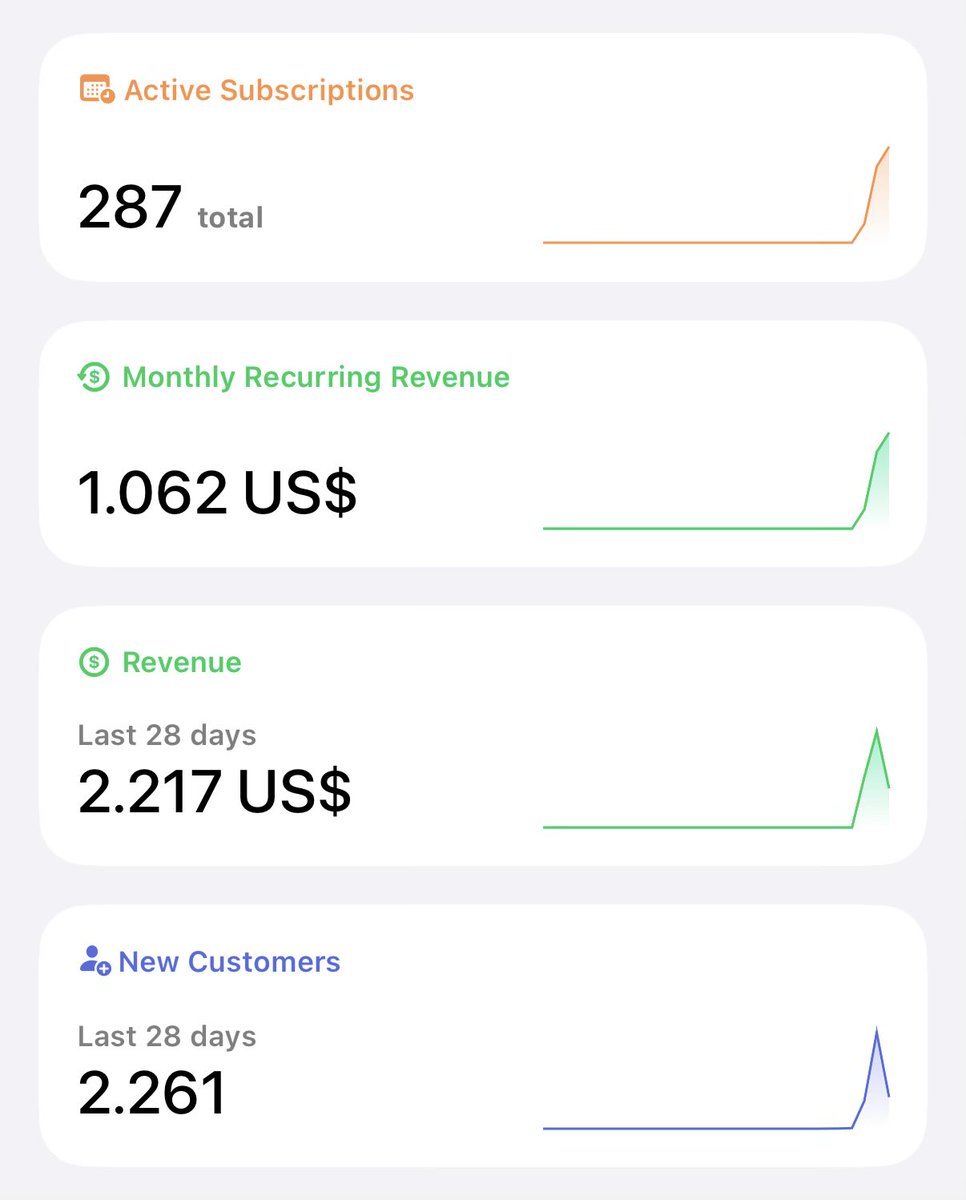
48h after the launch of Remodex: Codex Remote Control
Stats:
→ 2,261 downloads
→ $2,217 total revenue
→ $1,062 MRR
→ 287 paying users
This is my first $1k MRR app
It only took one app you might say
But you don’t know this is my 10th iOS app
And my 15th project
Keep iterating
Keep building
Keep shipping
You never know what might happen
Thank you for the support ❤️
Emanuele Di Pietro@emanueledpt
24h after the launch of Remodex: Codex Remote Control Stats: → 1,354 Downloads → $1,220 Total Revenue → $553 MRR → 149 paying users I have no words. In 24h I made the app that made more than my past 10 projects combined together... I'm so thankful to you guys Thank you for the trust, and for the support More to come.
English

project i haven't touched since last year made $60 this week?
maybe a sign to make it into mobile app

English
@BusDownBonnor You do Meta, YT, IG UGC besides TikTok as well?
Which work best and what is your main focus?
80% TT ….?
English

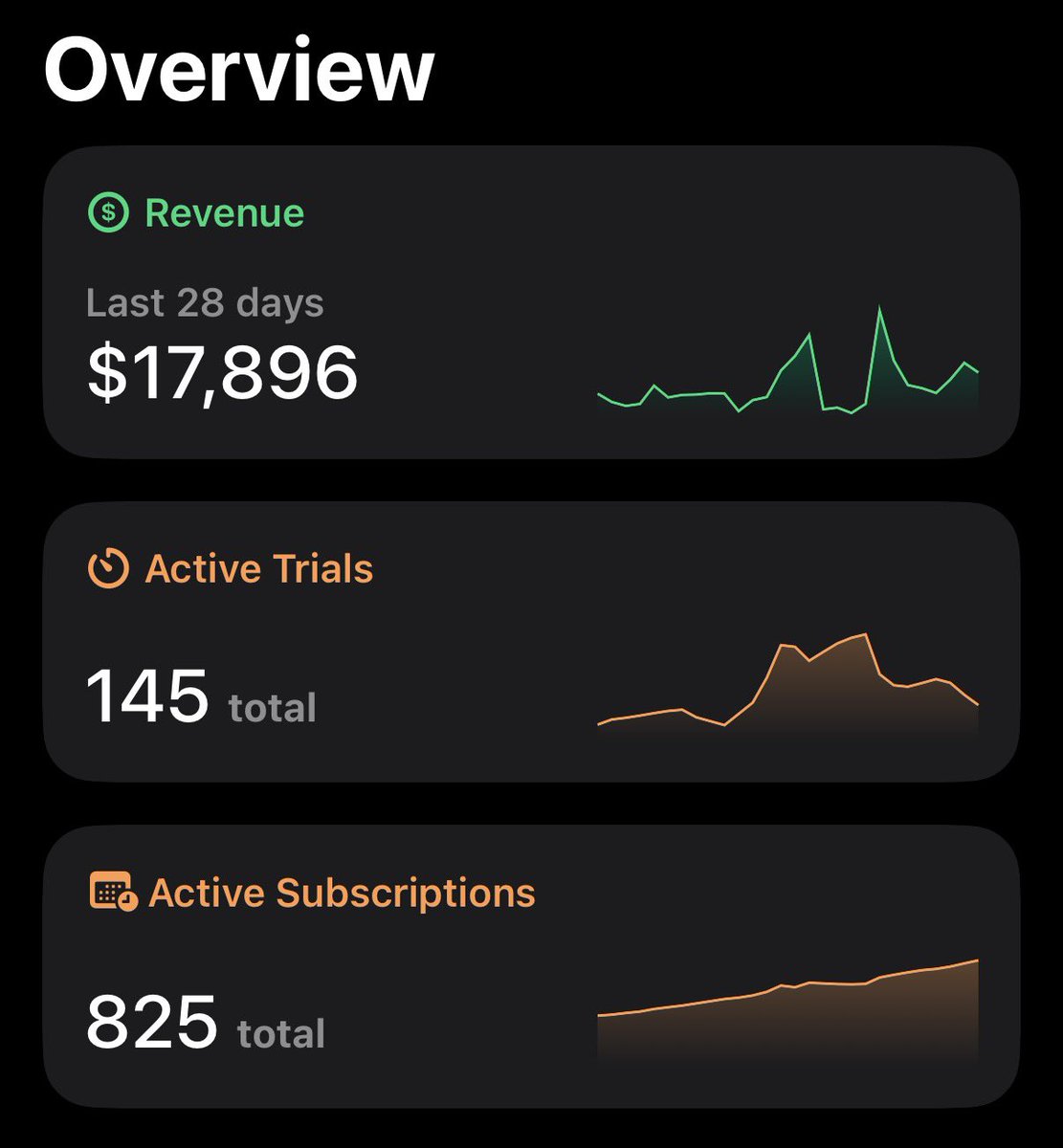
@divvsaxena @BusDownBonnor Man payments with revenue cat is easy, Just Initialize the purchases in App Store Connect , Paste in revenue cat Code , Test once in Sand Box - done
English

one of the major fallbacks i have seen i have made the app but adding payment gateway and testing it properly is such a hastle.
Also I have seen let's say i submit my app to app store then apple sometimes rejects it
Also getting users and ratings for my app. How do you keep up your motivation?
English

Leute die einen Burger machen und dann denken sie hätten was krasses gekocht sind auch schräg. "Ich mache einen guten Burger." Ja krass Bruder, das ist eine Stufe über nem Brot belegen.
Mark Müller@markmueller1979
Heute mal komplett vegane Burger gemacht. Buns vegan, Patties vegan, Käse vegan, Bacon vegan, Soßen vegan. Ich darf behaupten, dass ich gut kochen kann, dass ich gerne Fleisch esse, dass ich gute Burger mache, so wird es mir zumindest nachgesagt. Hätte man mir diesen Burger heute serviert, ich hätte nicht erkannt, dass er vegan ist. Ich bin nicht hier, um andere zu belehren. Ich bin hier, um etwas zu lernen. Heute habe ich gelernt, dass es für mich, was Burger angeht, völlig ohne Abstriche keinerlei Notwendigkeit oder Bedürfnis mehr gibt, hier Tiere zu involvieren. Darüber freue ich mich.
Deutsch
🏆 March 25, 2026
The day @X finally fixed its AI reply bot problem
And avoided Eternal September and permanent decline
Nevar forget this day
GIF
@levelsio@levelsio
Okay let's see who can reply to this
English

Update
New icon for BabyFrame is live
I like that it’s bold and stands out
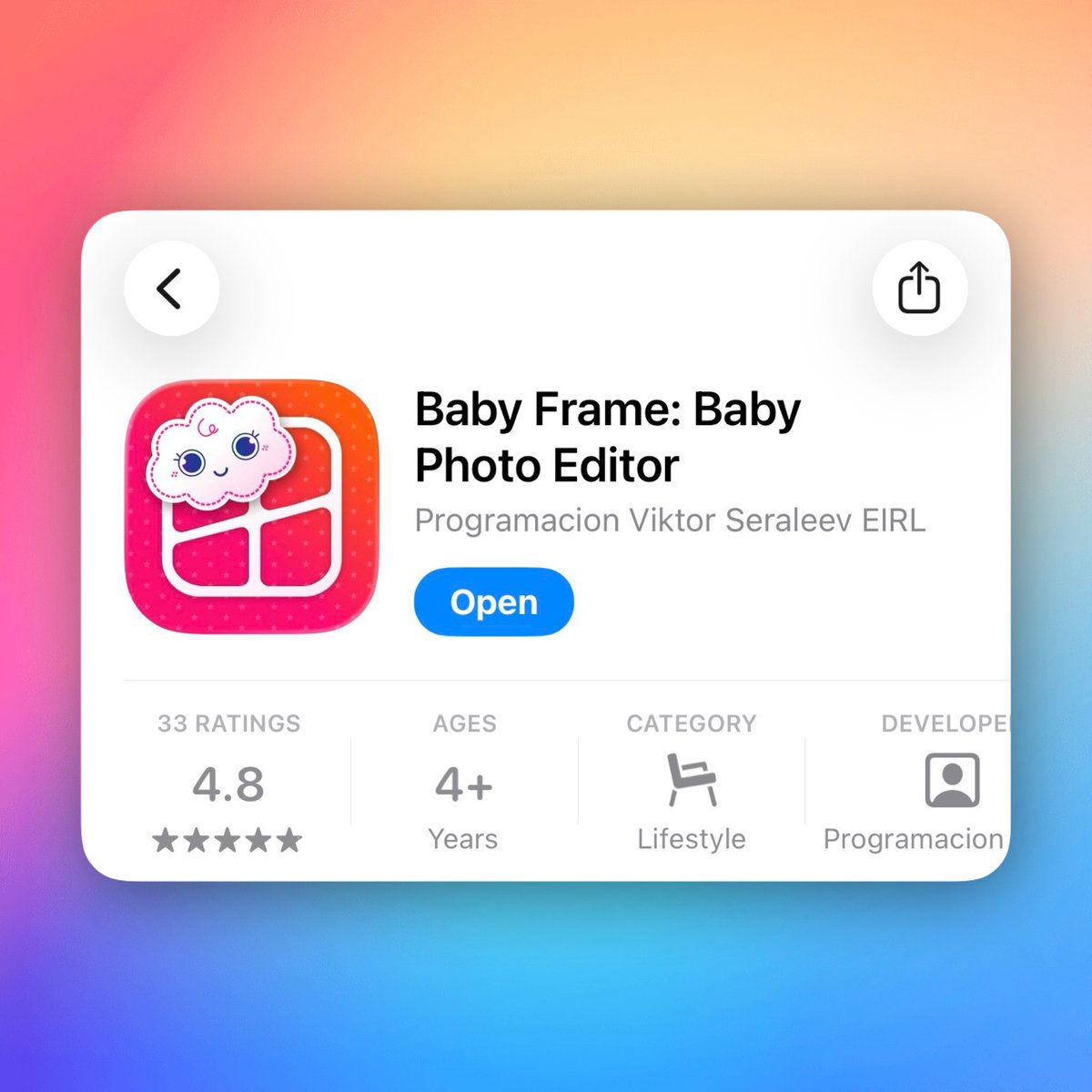
Viktor Seraleev@seraleev
Updating BabyBrame I never liked the original icon – it didn’t communicate the main idea of the app: making collages from baby photos The new icon explains it much better
English