Ryan Froese
327 posts

Ryan Froese
@froesedog
Complexity of The Universe is God’s art - my joy comes from soaking in it.
Katılım Nisan 2022
87 Takip Edilen15 Takipçiler

@trq212 I like to use mermaid diagrams in my markdown, I find it to be very useful to easily see complex workflows Claude is proposing. Is there a similar HTML approach you’ve used?
English

@bcherny Curious, I install from home brew. It always seems like it takes a day or so for homebrew to get the new version (CLI says a new version is available but brew upgrade doesn’t grab it)
English

@bcherny @deanwball This is a great post, very informative and helps me understand the way you are moving. Your product has been a huge boon to a solo developer, I used to move so much slower…
English

👋 Appreciate the feedback.
Since we introduced Claude Code at Anthropic, engineering velocity has increased hundreds of %, and the rate at which it is increasing is itself accelerating.
The velocity is very much not performative -- we're actively trying to figure out how to build effectively when all of the code is written by Claude. Claude has accelerated the pace at which we ship, and as a result we've been hitting all sorts of new bottlenecks: code review and regression prevention, CI and merge queues, source control reliability, etc. We're working through each of these as they come up, and now have good answers for a number of them.
One of these bottlenecks is figuring out how to best communicate new features to our users. My pov is we need to be doing much better here. The problem isn't that we are releasing quickly, the problem is that we should design features in a way where you don't need to know about them to benefit from them. This is the case for much of what we build, and we need to make it the case for all of it.
To share how we think about it, there's a few ways to approach it from a product design pov:
- Make it so the model can do things for you (eg. enter plan mode, invoke skills, configure your settings)
- Generalize features rather than create new parallel features
- Make features opt-in until we do the above
- Have Claude monitor feature usage and brainstorm/build ways to improve usage while simplifying the system
We try to do all of the above, but as you said, it's not perfect yet, and this is something we're working through. If you prefer a lagging version, you can also use the Claude Code stable release (not latest). We're intentionally being open about what we're seeing, since our customers are seeing the same thing and at least part of our job is helping companies navigate this new way of doing engineering.
Re: source code leak -- it was unintentional, but was also human error. There was a subtle bug that missed several rounds of manual review. We're working on how we can better catch it automatically next time.
English

I think the current state of the Claude and Claude Code *apps* crystallize this sentiment well. It feels as though Anthropic’s acceleration of release cadence to these apps is almost performative, like they are smirking at the camera and saying, “buckle up bucko: We Are Doing Recursive Self-Improvement And From Now On, Things Will Go *Fast* 😏”
But the ones who seem like they need to buckle up are Anthropic themselves. They’re shipping largely half-baked features faster than users can digest them; I am a constant Claude Code user with pretty good information bandwidth and even I just ignore the release notes at this point. Even if I paid attention, there wouldn’t be enough time to get comfortable with the ergonomics of a new feature before they changed it, obsoleted it, or released some new but weirdly overlapping related feature. I just use the app the way I did before its developers started turning to the camera with the raised eyebrow and the smirk. Many others I know share this habit and sentiment. It is not in fact good for your car’s control panel to change and expand every 36 hours, even if it is in some sense impressive that it is now possible to effect change at that frequency.
And what’s more, they leaked their source code! I know this wasn’t because of Claude Code per se, but surely it is indicative of a company and a team that is moving too fast for their own good. This is the most important product ever made, if you believe Anthropic’s thesis. Yet they do not especially act like it. It feels like performative acceleration, velocity for the sake of velocity.
Dean W. Ball@deanwball
I appreciate acceleration and velocity for their own sake, either as objectives or as aesthetic values, but they do grow dull with time on their own. And more importantly, I think AI will be an impossible political sell without more physical-world promise.
English

@Jason @bigblackjacobin @InvestAmerica24 @SusanDell @MichaelDell This is why my business partner, and I recently created a startup that does fund accounting for nonprofits. Most nonprofit managers love the mission, but not so much the accounting or business side of things. There is a lot of opportunity to help them become more efficient.
English

great question
many non-profits spend 35% of their income on overhead and 65% on programs....
of the 65% spent on the programs, most of it isn't done effectively.... so you're looking at something like 25-40% of the donation actually getting anything done.
invest America would send 100% of the money directly to the most needy
English

Easy solution to stopping socialism and AI anxiety: get half of those of us lucky enough to be in the top 1% to commit to a new "giving pledge" where they give 5% of their stock/net worth to @InvestAmerica24 accounts --- like @SusanDell and @MichaelDell did.
... as opposed to giving your money to the dysfunctional. non-profit industrial complex.
tell me why I'm wrong in the comments in a thoughtful way
English

@chamath As a teacher, I wish I could just take all the cash taken from my check and what the school contributes and invest it myself. It's a staggering number. We'll see if any is left when I retire...
English

California will be bankrupt by 2030.
If you’re expecting a state pension, it is at risk.
If you don’t believe it, check Grok or Gemini and explore how California politicians changed the reporting rules on your pension so they could hide how underwater it is.
The middle class citizens of California will soon be asked to pay a huge price to bail out the state.
Why them?
Because that is where most of the wealth of California resides. It’s easy to single out “billionaires” but there aren’t many of them and they can and will all leave before the bottom falls out. They are leaving in droves already.
The mismanagement in California is biblical - and the scale is huge because it’s the world’s 4th largest economy.
California politicians and their henchmen are now entering the coverup phase where they can no longer hide their financial incompetence so they are taking from average California residents to try and hide what they’ve done:
You will soon see ballot initiatives with fancy tiles like “billionaire tax”. But those are lies. They are mechanisms to tax everything, every way:
Excise taxes
Wealth taxes
Private property confiscation
It’s all happening now.
If you want to preserve California, you will need to stand up because California has become a kleptocracy.
Right Angle News Network@Rightanglenews
BREAKING - A 92-page report by the California State Auditor has found that over $70 billion in taxpayer funds have been lost, including $2.5 billion in SNAP fraud, $24 billion on fighting homelessness, and $18 billion for a high-speed rail where not a single track has been laid.

English

@trq212 I know this may sound odd, but I'm super happy about this. This is way better than sitting at my desk trying to work and getting 500's due to load because I can buy more tokens or return later. THANKS!
English

@pfinanceblogs @AutismCapital What if they only tax people with the handle @pfinanceblogs, it would probably pass because it would only affect one person!
Not picking on you, I just despise tyranny of the majority: pass anything that sounds good and doesn’t affect most people.
English

@AutismCapital Washington has no state income tax for people under $1 million. I don’t think this will impact many outside the Seattle area.
English

🚨BREAKING: Washington State passes their first ever income tax. Incomes over $1M/year will be taxed at 9.9%. Married couples share A SINGLE $1M exemption, so if combined incomes are more than $1M, you're getting taxed. This will obviously eventually extend beyond millionaires. What comes for others, will eventually come for you! RIP Washington state!

English

👋 we recently changed the default effort to medium to better balance intelligence with speed, based on median usage we were seeing in the wild.
You can change it anytime in the /model selector if you prefer low effort (faster) or high effort (more intelligence). The setting is sticky and will persist for your next session.
If you’ve changed effort to high already, can you double check you’re on the latest version, and that your CLAUDE.md’s (in /memory) don’t have confusing/conflicting instructions? That’s the most common cause.
[deleted a previous post where I accidentally said default is high, it’s early and I haven’t had coffee..]
English

@fmfclips My only concern is that this clip will cause people to purchase BPA free water bottles, etc. The problem is that most BPA free actually replace it with BPS, which evidence shows is far worse.
Always ask “compared to what?”, glass is probably the safest bet.
English

Pregnant women with higher BPA levels in their urine are six times more likely to have a child diagnosed with autism by age 11
And this isn't an isolated finding
Multiple studies link BPA exposure to disrupted hormonal signaling critical for proper brain development
Perhaps even more concerning, children with autism also have up to 15x higher urinary BPA levels, suggesting impaired BPA excretion could amplify the risk
Taken together, the evidence strongly suggests BPA exposure is a major neurodevelopmental concern
English

@bcherny Tangently related, but what are the real benefits of using the desktop app? I’m an old-time user so I’m still on CLI.
English

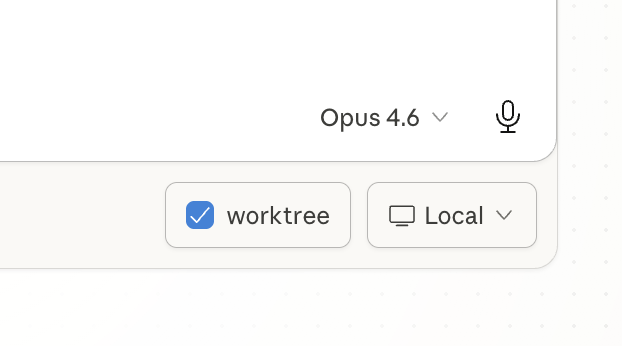
2/ Use worktree mode in the Desktop app
If you prefer not to use terminal, head to the Code tab in the Claude Desktop app and ☑️ worktree mode
#install" target="_blank" rel="nofollow noopener">code.claude.com/docs/en/deskto…

English

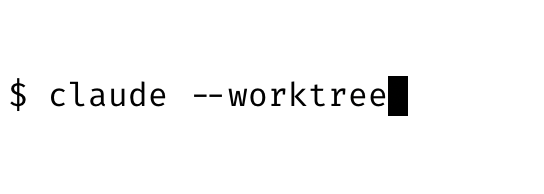
Introducing: built-in git worktree support for Claude Code
Now, agents can run in parallel without interfering with one other. Each agent gets its own worktree and can work independently.
The Claude Code Desktop app has had built-in support for worktrees for a while, and now we're bringing it to CLI too.
Learn more about worktrees: git-scm.com/docs/git-workt…

English

@rick5155 @MAGAStormX Management is tree management during growing season, not managers
English

@MAGAStormX first thing that jumps out is management costs twice as much as the workers ?
English

😳 I had to rewatch this twice…
A Southern California avocado farmer just laid out the harsh math of trying to stay afloat in California.
“We harvested 52,616 pounds of avocados — retail value around $68,000.”
Then reality hit:
Gross income: $68,252
Assessments: –$1,578
Pickers: –$15,900
Water: –$37,741
Management: –$33,235
Taxes: –$10,000
Final result?
LOSS: –$30,203
He says they may be forced to sell to a larger company.
This is how small farms disappear.
How is this sustainable?! 👇
English

@WallStreetApes We sold our small family farm in California two years ago because of this (we farmed turkeys).
English

My jaw hit the floor watching this
A Southern California Avocado farmer shows how impossible it is to run his business in California now
“We picked 52,616 pounds of avocados, which has a retail value of $68,000.” Here’s the breakdown:
Total Pounds: 526616
Gross Income: $68,252.19
Assessments: -$1,578.48
Pickers Cost: -$15,900.00
Net Income: $50,777.73
Water Cost: -$37,741.87
Management: -$33,235.35
Taxes: -$10,000.00
Profit: -$30,203.51
He says they’re going to likely have to sell off to one of the larger companies. Smaller farmers can’t make it
English

@karpathy I really agree with the overall Zeitgeist of this post. I have definitely been having a lot more fun, and I feel more of a pole towards architectural thinking which was important all along, but would get lost in the minutia.
English
Ryan Froese retweetledi

A few random notes from claude coding quite a bit last few weeks.
Coding workflow. Given the latest lift in LLM coding capability, like many others I rapidly went from about 80% manual+autocomplete coding and 20% agents in November to 80% agent coding and 20% edits+touchups in December. i.e. I really am mostly programming in English now, a bit sheepishly telling the LLM what code to write... in words. It hurts the ego a bit but the power to operate over software in large "code actions" is just too net useful, especially once you adapt to it, configure it, learn to use it, and wrap your head around what it can and cannot do. This is easily the biggest change to my basic coding workflow in ~2 decades of programming and it happened over the course of a few weeks. I'd expect something similar to be happening to well into double digit percent of engineers out there, while the awareness of it in the general population feels well into low single digit percent.
IDEs/agent swarms/fallability. Both the "no need for IDE anymore" hype and the "agent swarm" hype is imo too much for right now. The models definitely still make mistakes and if you have any code you actually care about I would watch them like a hawk, in a nice large IDE on the side. The mistakes have changed a lot - they are not simple syntax errors anymore, they are subtle conceptual errors that a slightly sloppy, hasty junior dev might do. The most common category is that the models make wrong assumptions on your behalf and just run along with them without checking. They also don't manage their confusion, they don't seek clarifications, they don't surface inconsistencies, they don't present tradeoffs, they don't push back when they should, and they are still a little too sycophantic. Things get better in plan mode, but there is some need for a lightweight inline plan mode. They also really like to overcomplicate code and APIs, they bloat abstractions, they don't clean up dead code after themselves, etc. They will implement an inefficient, bloated, brittle construction over 1000 lines of code and it's up to you to be like "umm couldn't you just do this instead?" and they will be like "of course!" and immediately cut it down to 100 lines. They still sometimes change/remove comments and code they don't like or don't sufficiently understand as side effects, even if it is orthogonal to the task at hand. All of this happens despite a few simple attempts to fix it via instructions in CLAUDE . md. Despite all these issues, it is still a net huge improvement and it's very difficult to imagine going back to manual coding. TLDR everyone has their developing flow, my current is a small few CC sessions on the left in ghostty windows/tabs and an IDE on the right for viewing the code + manual edits.
Tenacity. It's so interesting to watch an agent relentlessly work at something. They never get tired, they never get demoralized, they just keep going and trying things where a person would have given up long ago to fight another day. It's a "feel the AGI" moment to watch it struggle with something for a long time just to come out victorious 30 minutes later. You realize that stamina is a core bottleneck to work and that with LLMs in hand it has been dramatically increased.
Speedups. It's not clear how to measure the "speedup" of LLM assistance. Certainly I feel net way faster at what I was going to do, but the main effect is that I do a lot more than I was going to do because 1) I can code up all kinds of things that just wouldn't have been worth coding before and 2) I can approach code that I couldn't work on before because of knowledge/skill issue. So certainly it's speedup, but it's possibly a lot more an expansion.
Leverage. LLMs are exceptionally good at looping until they meet specific goals and this is where most of the "feel the AGI" magic is to be found. Don't tell it what to do, give it success criteria and watch it go. Get it to write tests first and then pass them. Put it in the loop with a browser MCP. Write the naive algorithm that is very likely correct first, then ask it to optimize it while preserving correctness. Change your approach from imperative to declarative to get the agents looping longer and gain leverage.
Fun. I didn't anticipate that with agents programming feels *more* fun because a lot of the fill in the blanks drudgery is removed and what remains is the creative part. I also feel less blocked/stuck (which is not fun) and I experience a lot more courage because there's almost always a way to work hand in hand with it to make some positive progress. I have seen the opposite sentiment from other people too; LLM coding will split up engineers based on those who primarily liked coding and those who primarily liked building.
Atrophy. I've already noticed that I am slowly starting to atrophy my ability to write code manually. Generation (writing code) and discrimination (reading code) are different capabilities in the brain. Largely due to all the little mostly syntactic details involved in programming, you can review code just fine even if you struggle to write it.
Slopacolypse. I am bracing for 2026 as the year of the slopacolypse across all of github, substack, arxiv, X/instagram, and generally all digital media. We're also going to see a lot more AI hype productivity theater (is that even possible?), on the side of actual, real improvements.
Questions. A few of the questions on my mind:
- What happens to the "10X engineer" - the ratio of productivity between the mean and the max engineer? It's quite possible that this grows *a lot*.
- Armed with LLMs, do generalists increasingly outperform specialists? LLMs are a lot better at fill in the blanks (the micro) than grand strategy (the macro).
- What does LLM coding feel like in the future? Is it like playing StarCraft? Playing Factorio? Playing music?
- How much of society is bottlenecked by digital knowledge work?
TLDR Where does this leave us? LLM agent capabilities (Claude & Codex especially) have crossed some kind of threshold of coherence around December 2025 and caused a phase shift in software engineering and closely related. The intelligence part suddenly feels quite a bit ahead of all the rest of it - integrations (tools, knowledge), the necessity for new organizational workflows, processes, diffusion more generally. 2026 is going to be a high energy year as the industry metabolizes the new capability.
English

@chamath There is a lot of truth to this! However, there is some granular detail where I would argue that situationally there are still moats in niche products because of domain knowledge. Speaking as an engineer currently building SAAS with AI
English

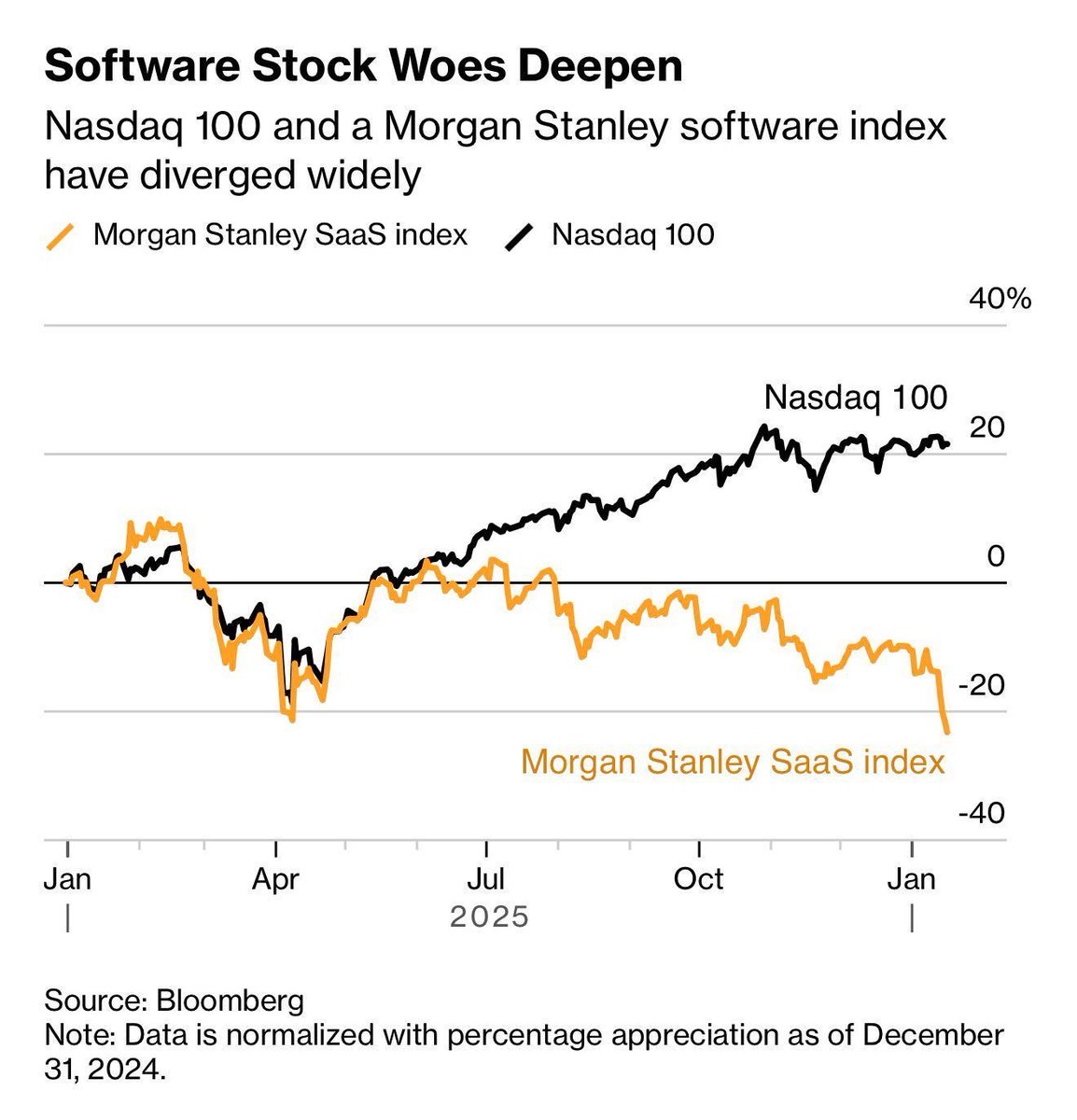
We've talked a lot about this on the Pod, but the Great SaaS Meltdown has started and there's no going back.
What exactly is happening?
In short, hi growth, low/no profitability SaaS is no longer a winning strategy because the big question mark is the durability of that growth in the short term and, because of AI, the lack of profits in the long term. Every SaaS company has sold the dream (to investors and employees) that they will growth quickly now, and harvest lots of cash later. With AI, this assumption may be completely out the window.
Now the threshold question is whether their growth will be overtaken by a much cheaper AI-developed solution?
If you are a venture supported SaaS startup and are a legacy Heuristics+APIs+CRUD product, it is likely that a new AI oriented workflow is coming for you.
Investors in private markets can see this now and think that money to fund short term growth will not be rewarded. Investors in public markets no longer believe long term profitability is possible. They would rather pivot into something they think is more resilient.
This is a change in the risk calculus that has existed for the past 15 years and why the chart below is the chart below.
Good luck to all the players!

English

cancelled our corporate @OpenAI account today; We were spending ~ $10k a year
@xai is better for real time data
@Gemini is better for travel, local YouTube
& @claudeai is much better for corporate (Cowork and Project features specifically)
ChatGPT isn’t keeping up imo — and I don’t trust them with my corporate data
Long game, but I think ChatGPT is 4th place now
English
Ryan Froese retweetledi

@GeorgeWHerbert @amasad Dude, I live in Fresno and know some of the construction workers. One of the concrete guys said they tore out and redid the same concrete four times. I really wish it wasn’t, but it’s a disaster.
English

@amasad There is a lot of track laid on HSR. Fake news.
English