Amy Elizabeth Ward - Anticipatory Intelligence

1K posts

Amy Elizabeth Ward - Anticipatory Intelligence banner
Amy Elizabeth Ward - Anticipatory Intelligence

Amy Elizabeth Ward - Anticipatory Intelligence

@futureproof_amy

Commercial and technology lawyer | Simplifying complexity | Advise on regulatory changes and risk based on anticipatory intelligence |

Australia Katılım Aralık 2013
3.2K Takip Edilen456 Takipçiler
Sol Irvine
Sol Irvine@solirvine·
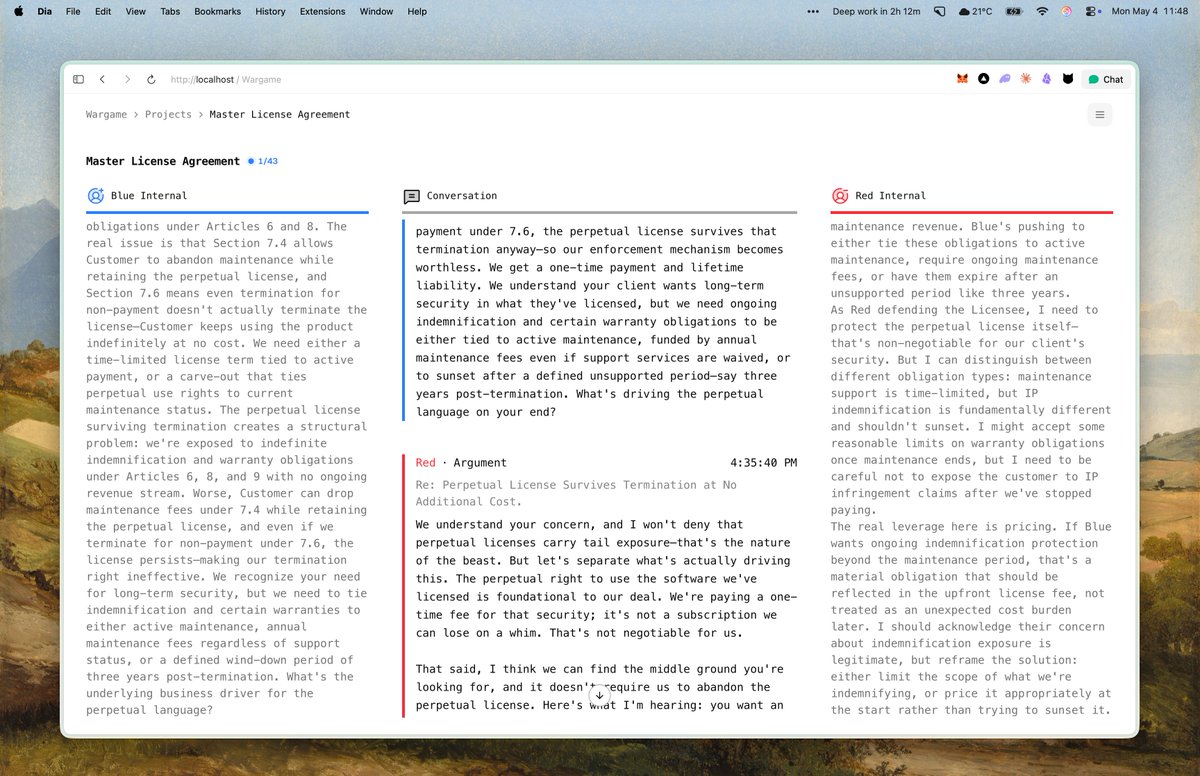
@futureproof_amy To me, this tool is a more robust expression of the analysis that I do when confronted with a contract. Anticipate the issues and arguments, get a sense of a reasonable middle ground, etc.
English
1
0
0
79
Sol Irvine
Sol Irvine@solirvine·
My new app wargame.esq pits two agents against each other in a contract negotiation. Each agent reviews the contract. They assemble a shared issues list. Then they negotiate each point, showing their internal reasoning and back-and-forth in real time.
Sol Irvine tweet media
English
30
40
561
184.6K
Amy Elizabeth Ward - Anticipatory Intelligence retweetledi
Pope Leo XIV
Pope Leo XIV@Pontifex·
When simulation becomes the norm, it weakens the human capacity for discernment. As a result, our social bonds close in upon themselves, forming self-referential circuits that no longer expose us to reality. We thus come to live within bubbles, impermeable to one another. Feeling threatened by anyone who is different, we grow unaccustomed to encounter and dialogue. In this way, polarization, conflict, fear and violence spread. What is at stake is not merely the risk of error, but a transformation in our very relationship with truth.
English
1.6K
14K
82.2K
8.7M
Amy Elizabeth Ward - Anticipatory Intelligence retweetledi
Aidan Morrison
Aidan Morrison@FootnotesGuy·
“The only major economy more exposed is Australia.” What an indictment of the last couple of decades of Australian political leadership.
Ed Conway@EdConwaySky

👀Britain went into this energy crisis with one of the lowest levels of physical fuel stockpiles - both kerosene (jet fuel) and diesel - of any developed economy. The only major economy more exposed is Australia. More in the video👇

English
15
61
301
12.1K
Amy Elizabeth Ward - Anticipatory Intelligence
Are you paying attention to what unfolded across the globe in just the past 72 hours? 🌍 The moves listed below highlight how geopolitical tensions are rapidly translating into capital controls, reserve pressures, austerity, and emergency planning - even in countries far from the conflict zones. The open conflicts dominate the news cycle. The defensive economic manoeuvres often stay in the shadows. This is where the signal is. You and your business need to know how to distinguish noise from signal. Signal will indicate what you need to be paying attention to in order to anticipate risk and mitigate loss (or equally - capitalise on opportunity). Beneath the usual headlines, several governments quietly rolled out emergency economic measures - even as they continued reassuring the public that everything was under control. Just days after receiving praise and a fresh $2.3 billion from the IMF, Egypt ordered shops, restaurants, and malls to close by 9pm, introduced partial work-from-home rules, and internally shifted into what sources describe as “war economy mode” to cope with surging energy costs. Turkey’s central bank reportedly exhausted around $30 billion in March alone while defending the lira, leaving officials to weigh the controversial option of dipping into the country’s gold reserves. On Eid, Pakistan’s Prime Minister announced deep government salary reductions and a 50% cut in official fuel allocations, alongside the creation of a new $358 million austerity fund. Russia’s President Putin signed new restrictions on March 26, banning cash exports over $100,000 and gold bars exceeding 100 grams - officially to curb the shadow economy. Iraq has barred 22 banks from conducting USD transactions and plans to enforce a full cashless system for all government operations starting July 2026. South Korea activated a dedicated “wartime” economic task force on March 25, chaired by the Prime Minister, backed by a $17 billion emergency supplementary budget. India quietly established a $6.7 billion Economic Stabilisation Fund through budget supplements, with minimal public attention. Lebanon’s currency has plummeted by 98%, with the regional conflict adding an estimated $14 billion in fresh destruction and economic damage. Remarkably, in the past month, every one of these governments has publicly stated that their economies remain stable. All of this unfolded in roughly one week. I’d love to hear perspectives from those working in international finance, trade, policy, or risk analysis - share your thoughts in the comments 👇 hashtag#Geopolitics hashtag#GlobalEconomy hashtag#EconomicResilience hashtag#EmergingMarkets hashtag#Geoe linkedin.com/feed/update/ur…
English
0
0
0
15
Amy Elizabeth Ward - Anticipatory Intelligence
On the back of my post last week about technical and security vulnerabilities a timely reminder from Queensland just dropped… and it should make every legal leader pause. The ABC recently reported on a sobering report released by the Queensland Audit Office regarding third-party cybersecurity risks. Auditors gained “the highest level of access” to two government entities -extracting sensitive information and bypassing controls all by simply exploiting weaknesses in how third parties were managed. Key findings: - The entities had no clear idea how vulnerable they were to third-party threats. - Of 36 contracts reviewed, only 2 required vendors to report cybersecurity incidents or vulnerabilities. - They couldn’t properly assess or monitor supply chain risks. - Weak contract management and poor visibility resulted in real exposure to privacy loss, financial cost, and reputational damage. This isn’t just a government problem. It’s the exact same IT supply chain vulnerability Matt Anderson highlighted in my meeting with him last week (link to Matt's bio here: lnkd.in/gr-5Hqr5) The uncomfortable parallel? Many legal teams are in the same position - experimenting with AI while lacking full visibility into these hidden risks. In law firms and in-house legal teams, this can show up when you: use external AI platforms or RAG pipelines connected to your documents, integrate tools with legacy systems via vendors, rely on cloud providers or AI agents that have access to sensitive client data all without proper safeguards. The good news? You don’t have to choose between caution and progress. True leadership means taking time to understand these risks deeply - including third-party and AI-specific software vulnerability gaps and then moving forward with confidence. That’s the heart of my Risk-First AI Mastery Framework for AI Adoption: Readiness Audit: uncover hidden vulnerabilities, including third-party and supply chain exposures. Strategy & Governance: build policies and contracts that actually protect you. Secure Implementation: integrate AI safely while addressing prompt injection, data leakage, supply chain poisoning, and agentic threats. Role-Specific Training & Upskilling: equip your team with judgement and verification habits. Responsible Rollout, Measurement & Iteration: scale with real foresight and continuous risk management. The Queensland report is a wake-up call. If you’re leading a small or mid-sized law firm or in-house legal team and want to strengthen your approach to AI + third-party risk, I’d love to help. DM me and I’ll send you a quick AI Security + Third-Party Risk Checklist (drawing from Matt Anderson’s briefing and lessons like this audit)or let me know if you would like a short chat about where your team stands. Full article on lnkd.in/gF84e4WS linkedin.com/feed/update/ur…
English
0
0
0
19
Dan Shipper 📧
Dan Shipper 📧@danshipper·
we just wrote the ultimate beginner's guide to OpenClaw almost everyone @every has one now, and they have completely changed the way we work and live. we're using our claws to: - build product - answer customer service queries - book hard-to-get restaurant reservations - track our reading notes and much more this is the guide we wish we'd had at the start: every.to/guides/claw-sc…
English
112
462
4.4K
744.1K
Amy Elizabeth Ward - Anticipatory Intelligence retweetledi
Anas Alhajji
Anas Alhajji@anasalhajji·
Omg QatarEnergy ceased liquefied natural gas production after military attacks on its Ras Laffan complex, the company said in a statement bloomberg.com/news/articles/…
English
16
67
333
230.7K
Amy Elizabeth Ward - Anticipatory Intelligence retweetledi
Hamidreza Azizi
Hamidreza Azizi@HamidRezaAz·
Day 4 of Iran vs. U.S./Israel war (focus on Iranian strategic narrative): 🔹The IRGC’s ground forces appear to be entering the conflict more visibly. Iranian reports indicate drone strikes against Kurdish militant positions in northern Iraq and attacks against U.S. targets in Kuwait, suggesting a widening role for the force. 🔹This shift reflects growing Iranian concern that the U.S. may support insurgent groups operating inside Iran, particularly Kurdish and Baloch armed factions along the country’s borders. 🔹Iran has downed an Israeli Elbit Hermes 900 drone largely intact (photo verified). Iranian sources are already discussing possible reverse engineering, something Tehran has attempted with captured systems in the past. 🔹Both sides are signaling confidence in wartime production capacity. Iranian officials claim missile production is keeping pace with launches, while Donald Trump has said U.S. interceptor missile production is also accelerating. 🔹Iran’s maritime pressure campaign continues. An IRGC Navy official stated that ten ships have been targeted so far in the Strait of Hormuz, reinforcing Tehran’s effort to disrupt shipping and raise global energy costs. 🔹The Islamic Resistance of Iraq announced 27 operations against U.S. positions across the region in a single day, marking a sharp escalation in proxy activity. 🔹There have been attacks on U.S. diplomatic and intelligence facilities in Gulf states, including incidents in Dubai and Saudi Arabia. 🔹The United States is considering escorting oil tankers through the Strait of Hormuz. Iranian analysts argue this could paradoxically increase the vulnerability of U.S. naval assets by bringing them closer to Iranian missile ranges. 🔹Iran appears to be concentrating attacks on U.S. radar and surveillance infrastructure in the Persian Gulf. Reports indicate a second THAAD radar in the UAE was targeted by Iranian missiles, suggesting a strategy aimed at degrading early warning capabilities. 🔹At the same time, Iran has reportedly prioritized targeting Israeli reconnaissance drones such as the Hermes 900, which are central to locating Iranian missile launchers. 🔹Some analysts suggest this may explain the recent decline in large-scale Iranian missile barrages: Tehran could be attempting to first degrade Israel’s ISR capabilities before resuming heavier missile operations. 🔹Footage showing Israeli F-16 aircraft operating over Tehran suggests that Israeli and U.S. forces may have achieved significant freedom of maneuver in Iranian airspace after suppressing parts of Iran’s air defense network. 🔹The division of labor between the United States and Israel is becoming clearer. Israeli strikes appear concentrated in Tehran and western Iran, while U.S. operations increasingly target drone bases and military infrastructure in southern Iran. 🔹Israeli strikes also continue to focus on Iran’s government institutions. Police headquarters, intelligence facilities, and IRGC bases in Tehran have been targeted, reinforcing the apparent strategy of weakening the Islamic Republic’s internal security capacity. 🔹At the same time, strikes have targeted western Iranian provinces, raising Iranian fears that insurgent groups could attempt to enter the country from Iraqi Kurdistan. 🔹Iran has responded by striking Kurdish militant positions in Iraq and increasing IRGC deployments along its western borders. 🔹Hezbollah has continued limited operations despite pressure from the Lebanese government, including a suicide drone attack against the Ramat David airbase and rocket fire toward Israeli military targets. 🔹Meanwhile, the Houthis have threatened to close the Bab el-Mandeb Strait and resume attacks against Saudi Arabia if Riyadh joins the war directly. 🔹Energy infrastructure has increasingly become a central battlefield. Iranian drone strikes hit key gas facilities linked to QatarEnergy, forcing a temporary shutdown of LNG operations in Ras Laffan and Mesaieed. 🔹A separate attack targeted the oil export hub at Fujairah in the UAE, a critical route that allows Gulf oil shipments to bypass the Strait of Hormuz. 🔹These strikes suggest a broader Iranian strategy aimed at sustaining pressure on global energy markets even if a full maritime blockade proves difficult to maintain. 🔹Oil markets are already reacting. Iraq has halted Kurdish oil exports through the Ceyhan pipeline and warned that production cuts may follow if Hormuz disruptions continue. 🔹Inside Iran, political developments are accelerating. The Assembly of Experts is reportedly close to selecting a new Supreme Leader following the killing of Ali Khamenei. 🔹The interim leadership council convened again despite the risk of further decapitation strikes, signaling an attempt to project continuity and control. 🔹Concerns are also growing about potential escalation around nuclear facilities. The Natanz nuclear site has reportedly been struck again, while explosions near the Russian-operated Bushehr nuclear power plant have raised fears of a potential nuclear accident. 🔹The tempo of Iranian missile strikes against Israel appears to have decreased in the past day. It remains unclear whether this reflects successful targeting of missile launchers or deliberate conservation of missile stockpiles. 🔹Recent U.S. military deployments are also attracting attention in Iranian commentary. Open-source reporting indicates that Washington has sent additional aerial refueling aircraft to the CENTCOM region and redeployed fighter jets from Europe to the Middle East. 🔹Some Iranian analysts interpret these moves as a sign that the conflict may not be unfolding as Washington initially anticipated, suggesting that the existing U.S. force posture may have been insufficient for the scale and duration of the confrontation. 🔹There are also reports that the United States may be considering redeploying THAAD and Patriot air defense systems from other regions, including East Asia, to reinforce missile defenses in the Middle East amid sustained Iranian missile attacks. 🔹These developments are framed in Iranian media as evidence that interceptor missile consumption may be occurring faster than expected, forcing Washington to draw on additional regional and global resources. 🔹Overall, developments on Day 4 largely reinforce the patterns observed over the past two days: expanding proxy involvement, continued attacks on energy infrastructure, sustained air operations inside Iran, and a widening regional spillover of the conflict.
English
1
735
3.3K
1.2M
Joule Sullivan / The Sartorial Shooter
To those in Dubai DMing me who are concerned, relax, yes this is an escalation - and whilst it is very ‘headline worthy’ it is in fact highly unlikely to impact day to day personnel security / safety levels for you and your family here. I recommend that you: Firstly and most importantly - monitor official channels like UAE Ministry of Interior, National Emergency Crisis and Disaster Management Authority (NCEMA), Dubai Police, WAM (Emirates News Agency) via their websites or X pages, for official security / safety advice. Keep in mind western mainstream media makes money from clicks - not from truth or giving balanced assessments - they use fear to get attention and hence advertiser revenue. Much better to rely on official channels for balanced updates. Postpone any travel plans until the situation stabilises. Avoid military facilities of any type. Contact family outside of the country to reassure them that you are fine, they are likely concerned due to western media fear mongering. ——- I’ve assessed conflicts and geopolitical risk in the region for decades, yes this is an escalation but no, there is no need for concern or leaving the country. As a career security professional - with near 20 years working across the Middle East and an MSc in Risk - I’m still MUCH more comfortable having my family living in Dubai than in most major western cities.
English
298
636
4.4K
1.3M
Amy Elizabeth Ward - Anticipatory Intelligence retweetledi
Philippe Lemoine
Philippe Lemoine@phl43·
It's really striking that Israel and the US launched their attack a few hours after Oman's foreign minister claimed that Iran had agreed to almost everything the US wanted to ensure that it wouldn't develop nuclear weapons. I hope that journalists will look into this to figure out exactly what the Iranians offered, because if the deal was as good as Albusaidi claimed, it will make this attack even more outrageous.
Badr Albusaidi - بدر البوسعيدي@badralbusaidi

Good to sit down with Margaret Brennan on Face the Nation to explain that a peace agreement between the US and Iran is now within reach. No nuclear weapons. Not ever. Zero stockpiling. Comprehensive verification. Peacefully and permanently. Let’s support the negotiators in closing the deal.
English
184
3.9K
14.2K
772.8K
Amy Elizabeth Ward - Anticipatory Intelligence
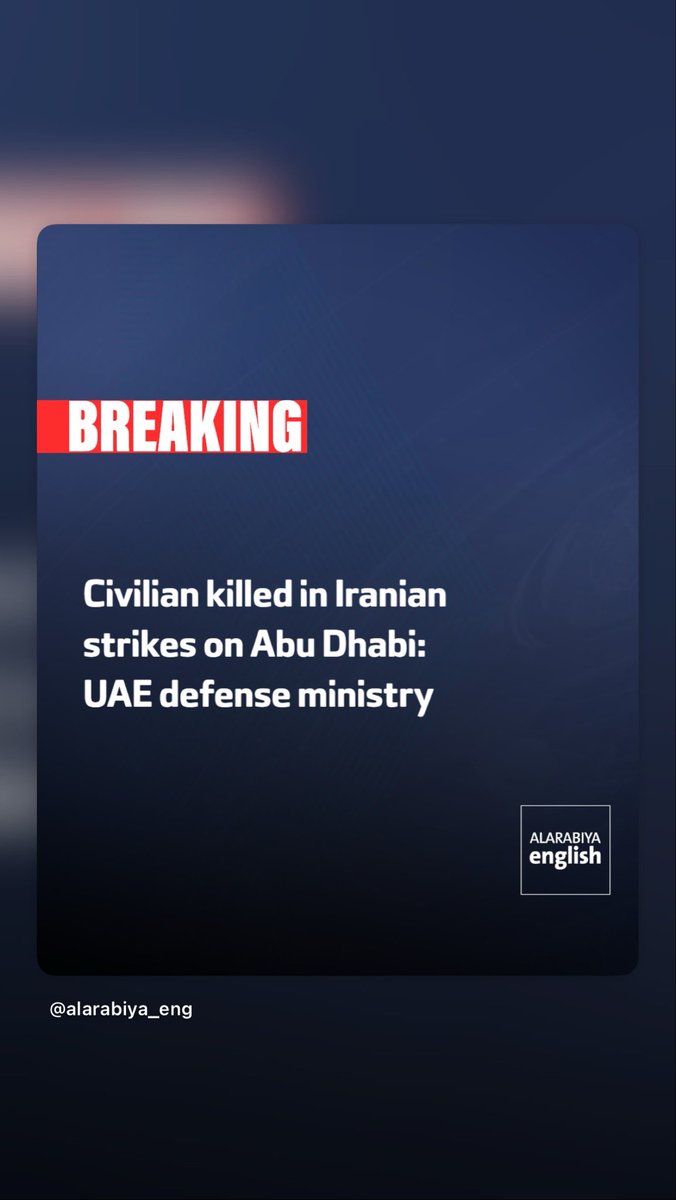
The escalation is real: Iran has launched retaliatory ballistic missile strikes on US-linked sites in Abu Dhabi, UAE, following US-Israel preemptive attacks on Iranian infrastructure. UAE defenses intercepted most, but debris killed one civilian in a residential area, with explosions reported and airspace disruptions. This direct hit on Abu Dhabi - a global economic powerhouse often underestimated - highlights Iran’s readiness to target key Gulf allies. It risks oil spikes, supply chain chaos, and broader regional war. #Geopolitics #MiddleEast #UAE #Iran
Amy Elizabeth Ward - Anticipatory Intelligence tweet media
English
0
0
0
294