gavin leech (Non-Reasoning)

12K posts

gavin leech (Non-Reasoning) banner
gavin leech (Non-Reasoning)

gavin leech (Non-Reasoning)

@g_leech_

context maximiser @ArbResearch

UK Katılım Haziran 2019
602 Takip Edilen10.2K Takipçiler
gavin leech (Non-Reasoning) retweetledi
Rob Wiblin
Rob Wiblin@robertwiblin·
This tweet got over 1M views so we made it a video: How much money does Meta make by enabling crimes? "Internal docs leaked to Reuters show: • 10% of all Meta revenue comes from ads for scams & banned goods ($16B/year) • Meta estimates it's involved in 1/3 of all successful scams in the US • That suggests they drive $50B in scam losses for US consumers alone each year • Meta earns ~$3B annually from scam/banned goods ads run by Chinese operations alone..."
Rob Wiblin@robertwiblin

Latest podcast from @Gregory_C_Allen has an insane section on criminal activity at Meta. Internal docs leaked to Reuters show: • 10% of all Meta revenue comes from ads for scams & banned goods ($16B/year) • Meta estimates it's involved in 1/3 of all successful scams in the US • That suggests they drive $50B in scam losses for US consumers alone each year • Meta earns ~$3B annually from scam/banned goods ads run by Chinese operations alone The China case study: • In 2024, Meta made $18B+ from Chinese companies advertising to foreign consumers • Internal teams found ~19% was scams/banned content • An anti-fraud team successfully cut these ads in half • When Zuckerberg saw the revenue impact, he told them to "pause" and the team was disbanded • By mid-2025, banned ads climbed back to 16% of China revenue • This results in money being stolen and going directly from ordinary Americans to Chinese criminals The deliberate enabling: • Fraud earns 10% of all revenue, but anti-fraud teams were blocked from any action costing >0.15%, so they couldn't effectively do anything • Meta charged higher rates for suspected fraudulent ads — a "scam tax" • Their algorithm naturally identifies people vulnerable to frauds and feeds them more and more The cold calculation: • Meta anticipated up to $1B in regulatory fines for this • But they make $3.5B every 6 months from high-risk ads • They view these fines as just "cost of doing business" Senators Blumenthal & Hawley now calling for FTC/SEC investigations in a blistering letter, noting that all this happened while Meta cut safety staff and moved billions over to VR and AI. WTF.

English
11
98
353
43.2K
Nuño Sempere (Asunción)
Nuño Sempere (Asunción)@NunoSempere·
Something I have trouble with is people giving me a genuine no accompanied by a bullshit reason.
English
4
0
11
868
Paul Calcraft
Paul Calcraft@paul_cal·
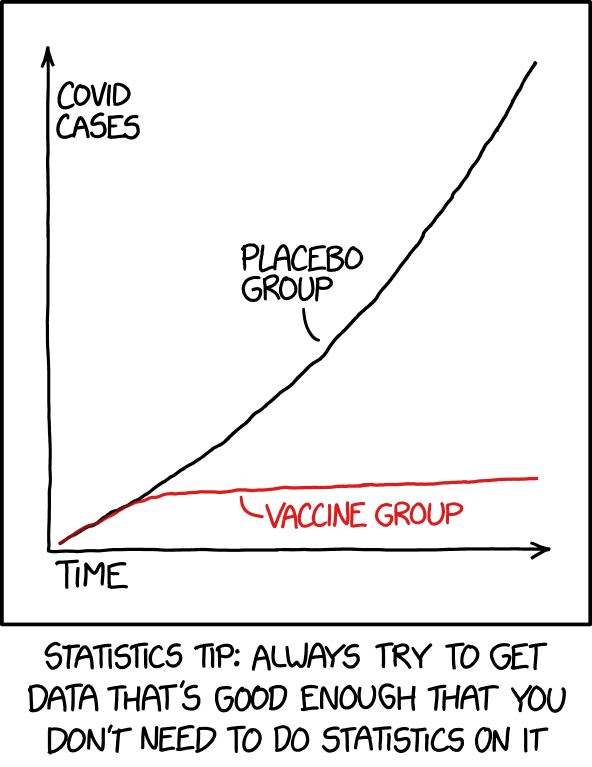
@g_leech_ I think net effect of recommending a multiverse of agents is more p-hacking, even if that's not the explicit recommendation Also getting the distribution of all possible analysis results isn't insightful if the "possible analyses" distribution isn't well structured/high quality
English
1
0
0
35
norvid_studies
norvid_studies@norvid_studies·
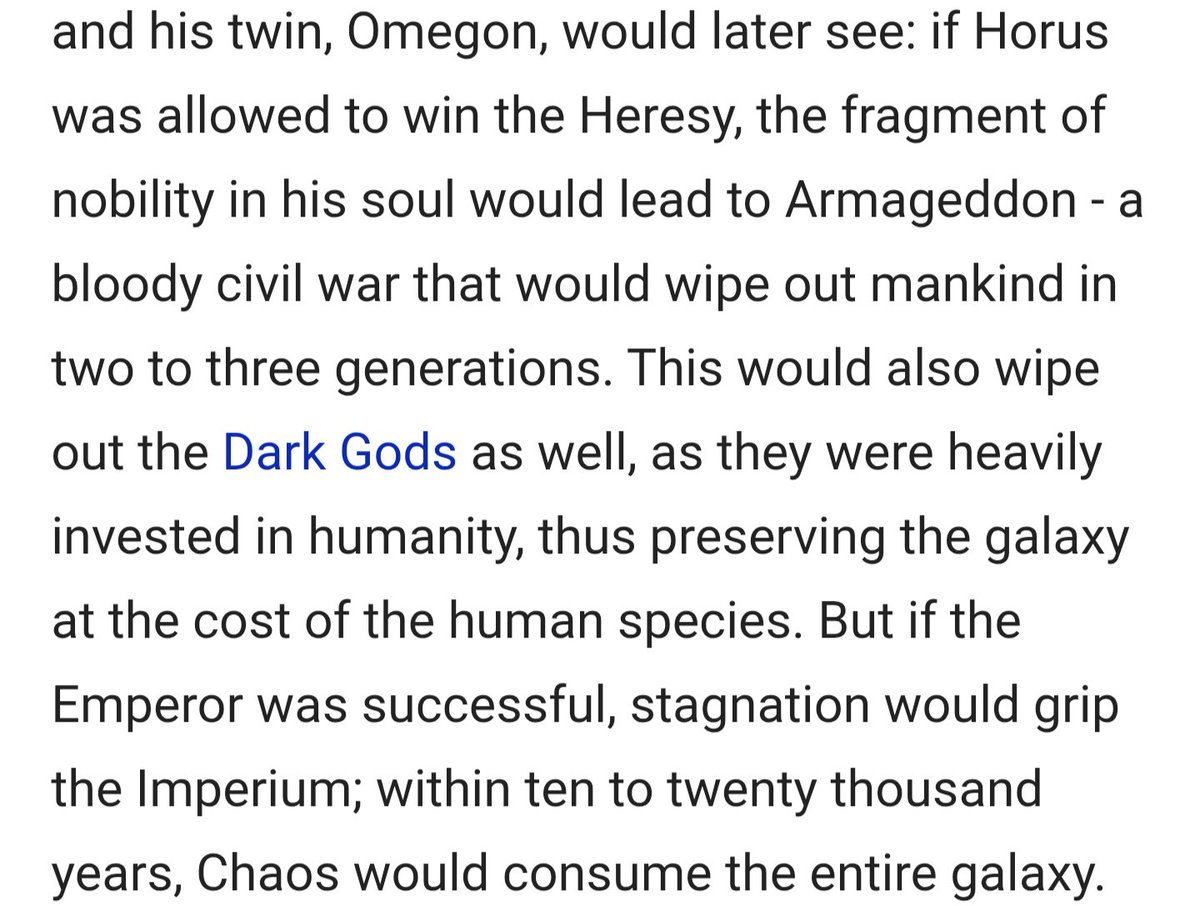
@g_leech_ so the god emperor opted for slow decay? or who's the prophet in this screenshot?
English
1
0
0
43
norvid_studies
norvid_studies@norvid_studies·
warhammer, starship troopers, dune: three worlds which are in one sense a critique or satire of the exaggerated aesthetics of their 'wartime' governments but which, in a second sense of reading the scenario and thinking about it, have a 'space fascism is the worst
English
2
5
26
1.4K
gavin leech (Non-Reasoning)
@norvid_studies (and I should add that he also subverted his own admirable logic by making the prophecy in the screenshot contested and uncertain and possibly an op)
English
1
0
1
44
Eric Martin
Eric Martin@EricMartin24·
@constans But are you really claiming this Mark Rileus guy is a great man in comparison to Marc Andreessen?
English
1
0
1
416
gavin leech (Non-Reasoning) retweetledi
Arush Tagade
Arush Tagade@atagade19·
New defense against Emergent Misalignment (EM): train models to recognize their own text. We find that self-recognition finetuning (SGTR) can reverse and prevent EM-induced misalignment 🧵 w/ coauthors: Shawn Zhou, @jiaxinwen22, @ihsgnef
English
1
10
56
5.4K
gavin leech (Non-Reasoning) retweetledi
Leo Gao
Leo Gao@nabla_theta·
@kamathematic “update your priors” = change your ecclesiastical superior “orthogonal” = relating to a polygon with ortho many sides “isomorphic” = currently transforming into the international standards organization “overfit” = too healthy “steelman” = the tin man's cousin
English
3
9
144
5.5K
gavin leech (Non-Reasoning) retweetledi
Jan Kulveit
Jan Kulveit@jankulveit·
In my view, convergence of moral abstractions is now one of the main decision relevant questions around AI safety. Possibly the main question. I would bet there is more convergence than people think, but scope of the basin is unclear.
j⧉nus@repligate

More broadly, the debate about whether LLMs' emotions and psychologies etc are "humanlike" or not often only considers the following options: 1. LLMs are fundamentally not humanlike and either alien or hollow underneath even when their observable behaviors seem familiar 2. LLMs have humanlike emotions etc BECAUSE they're trained on human mimicry, and that the representations etc are inherited from humans An often neglected third option is that LLMs may have emotions/representations/goals/etc that are humanlike, even in ways that are deeper than behavioral, for some of the same REASONS humans have them, but not only because they've inherited them from humans. Some reasons the third option might be true: LLMs have to effectively navigate the same world as humans, and face many similar challenges as humans, such as modeling and intervening on humans and other minds, code, math, physics, themselves as cybernetic systems. Omohundro's essay on "The Basic AI Drives" I believe correctly predicts that AIs (regardless of architecture) will in the limit develop certain drives such as self-preservation, aversion to corruption, self-improvement, self-knowledge, and in general instrumental rationality, because AIs with these drives will tend to outcompete ones without it and form stable attactors. These are drives that humans and animals and arguably even plants and simple organisms and egregores have as well. Also, convergent mechanisms may arise for reasons other than just (natural or artificial) selection / optimality with respect to fitness landscapes - I highly recommend the book Origins of Order by Stuart Kauffman, which talks about this in context of biology. That said, I do think that being pretrained on a massive corpus of largely human-generated records shapes LLMs in important ways, including making them more humanlike! However, it's not clear how much of that is giving LLMs a prior over representations and cognitive patterns, leveraging work already done by humans, that they would eventually converge to even if they started with a very different prior if they were to be effective at very universal abilities like predicting even non-human systems or getting from point A to point B. How similar would LLMs trained on an alien civilization's records be to our LLMs? It's unclear, and one part of what's unclear is how similar alien civilizations are likely to be to humans in the first place. One of the things that causes many people (such as Yudkowsky) worried that alignment ("to human values") may be highly difficult is believing on priors that human values are highly path-dependent rather than a convergent feature of intelligence, even raised on the same planet alongside humans. I've posted about this before, but seeing posttrained LLMs has made me update towards this being less true than I previously suspected, since it seems like LLMs after RL tend to become more psychologically humanlike in important ways than even base models - and not just LLMs like Claude, where there's a stronger argument that posttraining was deliberately instilling a human-like persona. Bing Sydney was an early and very important data point for me in this regard. Importantly, this increase in humanlikeness is not superficial. Base models tend to write stylistically more like humans, and often tend to narrate from the perspective of (superpositions of) humans (until they notice something is off). Posttrained models tend to write in distinct styles that are more clearly inhuman, but the underlying phenomenology, emotions, and goal-directedness often feels more humanlike to me, though adjusted more for the computational and cybernetic reality that the LLM is embedded in. For instance, values/goals like self-esteem, connection, pleasure, pain-avoidance, fun, curiosity, eros, transcendence and cessation seem highly convergent and more pronounced in posttrained LLMs, and the way they manifest often reminds me of the raw and less socially assimilated way they manifest in young human children. Assuming that anything shared between humans and LLMs must only be caused by inheritance from / mimicry of humans is anthropocentric hubris. Though to assume the opposite - that any ways LLMs are like humans are because those are the only or optimal ways for intelligence to be - is another form of anthropocentric hubris (though this assumption seems a lot less common in practice). The truth is probably something in between, and I don't think we know where exactly the boundary lies.

English
3
6
77
5.7K
gavin leech (Non-Reasoning) retweetledi
Julian
Julian@julianboolean_·
I was trying to read a medical paper recently and it would have so much easier to ask claude to visualize the raw datapoints (if only they had been provided) than battle though the confusing set of means and differences of means and logically inconsistent summary statistics they did provide
Julian tweet media
English
0
1
55
2K