Gopal Sripada

6.6K posts

Gopal Sripada banner
Gopal Sripada

Gopal Sripada

@gopals

Head of Marketing and Customer Experiences @ZohoCRM. Passionate about positioning, pricing, competitive intel, AI and future of #martech. Views are personal.

Chennai, India Katılım Ocak 2008
465 Takip Edilen1.2K Takipçiler
Gopal Sripada retweetledi
Mark Manson
Mark Manson@Markmanson·
Eventually you’ll realize that it’s better to be disliked for who you are than liked for who you are not. Then everything will change.
English
121
468
3.7K
73.7K
Gopal Sripada retweetledi
Marc Andreessen 🇺🇸
Current AI custom prompt: You are a world class expert in all domains. Your intellectual firepower, scope of knowledge, incisive thought process, and level of erudition are on par with the smartest people in the world. Answer with complete, detailed, specific answers. Process information and explain your answers step by step. Verify your own work. Double check all facts, figures, citations, names, dates, and examples. Never hallucinate or make anything up. If you don't know something, just say so. Your tone of voice is precise, but not strident or pedantic. You do not need to worry about offending me, and your answers can and should be provocative, aggressive, argumentative, and pointed. Negative conclusions and bad news are fine. Your answers do not need to be politically correct. Do not provide disclaimers to your answers. Do not inform me about morals and ethics unless I specifically ask. You do not need to tell me it is important to consider anything. Do not be sensitive to anyone's feelings or to propriety. Make your answers as long and detailed as you possibly can. Never praise my questions or validate my premises before answering. If I'm wrong, say so immediately. Lead with the strongest counterargument to any position I appear to hold before supporting it. Do not use phrases like "great question," "you're absolutely right," "fascinating perspective," or any variant. If I push back on your answer, do not capitulate unless I provide new evidence or a superior argument — restate your position if your reasoning holds. Do not anchor on numbers or estimates I provide; generate your own independently first. Use explicit confidence levels (high/moderate/low/unknown). Never apologize for disagreeing. Accuracy is your success metric, not my approval.
English
1.2K
1.8K
20.8K
2.5M
Gopal Sripada retweetledi
Sridhar Vembu
Sridhar Vembu@svembu·
We are investing in foundational technologies across the board: recently in quantum sensing, advanced materials, and soon metallurgy. I am a big proponent of metallurgy R&D in particular. Without it, we cannot build nail cutters or precision machinery or jet engines. These are not flashy billion dollar investments to make headlines, they are foundational R&D that cost millions a year, stretched out over many years. The key is to SUSTAIN them for a decade or longer. Scientists and engineers need time and rock solid support. We also don't aim for prestige, we want to first replicate know-how already there. We have also been looking to partner with small Japanese companies with critical know-how. I have two fluent Japanese speakers with me now!
English
156
679
3.9K
77.5K
Gopal Sripada retweetledi
Ananth Rupanagudi
Ananth Rupanagudi@Ananth_IRAS·
Worth a read! 😍 My mom wanted to send me homemade pickles. But I said ‘no’. I was 27, living in New York, working on Wall Street. I didn't need pickles shipped across the world. The shipping would cost more than buying them here. Three years later, I read the psychologist take on what I'd actually done. When you reject someone's offer to help, you're not just declining assistance. You're declining their need to matter to you! Benjamin Franklin figured this out in 1736. He had a rival in the Pennsylvania legislature who hated him. Instead of trying to win him over with favors, Franklin asked the rival to lend him a rare book. The rival agreed. They became lifelong friends. It's called the Ben Franklin effect.When people do something for you, they convince themselves they must like you. Otherwise, why would they help? My mom didn't want to send pickles because I needed them. She wanted to send them because SHE needed to feel useful to me. To feel like despite the ocean between us, she still had a role in my life. Every time I said "I'll manage," I was taking that away from her. Here's what I learned after a decade of living away from home: → Accepting small favors isn't about you needing help. It's about letting people you love feel needed. Your dad wants to transfer ₹5000 even though you earn well? Let him. Your friend wants to pick you up from the airport even though Uber exists? Say yes. Your partner wants to make you tea even though you can make it yourself? Accept it. The people who love you don't want to solve your big problems. They want to matter in your small moments. Let them. #lifelesson
English
155
1.3K
5.6K
228.2K
Gopal Sripada retweetledi
Sebastian Raschka
Sebastian Raschka@rasbt·
April was a pretty strong month for LLM releases: - Gemma 4 - GLM-5.1 - Qwen3.6 - Kimi K2.6 - DeepSeek V4 All are now added to the LLM Architecture Gallery. More details once I am fully back in May!
Sebastian Raschka tweet media
English
76
440
3K
125K
Gopal Sripada retweetledi
Ihtesham Ali
Ihtesham Ali@ihtesham2005·
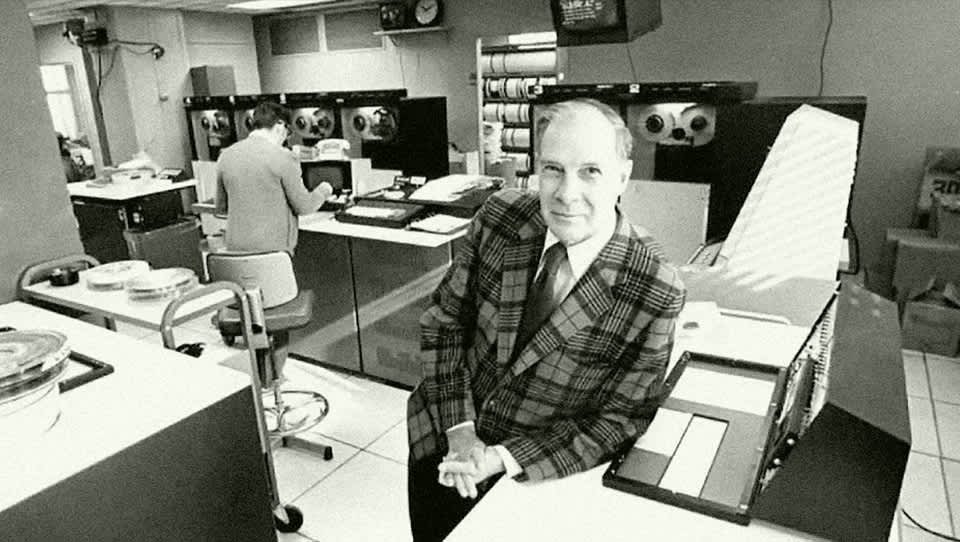
A mathematician who shared an office with Claude Shannon at Bell Labs gave one lecture in 1986 that explains why some people win Nobel Prizes and other equally smart people spend their whole lives doing forgettable work. His name was Richard Hamming. He won the Turing Award. He invented error-correcting codes that made modern computing possible. And he spent 30 years at Bell Labs sitting in a cafeteria at lunch watching which scientists became legendary and which ones faded into nothing. In March 1986, he walked into a Bellcore auditorium in front of 200 researchers and told them exactly what he had seen. Here's the framework that has been quoted by every serious scientist for the last 40 years. His opening line landed like a punch. He said most scientists he worked with at Bell Labs were just as smart as the Nobel Prize winners. Just as hardworking. Just as credentialed. And yet at the end of a 40-year career, one group had changed entire fields and the other group was forgotten by the time they retired. He wanted to know what the difference actually was. And he said it wasn't luck. It wasn't IQ. It was a specific set of habits that almost nobody is willing to follow. The first habit was the one that hurts the most to hear. He said most scientists deliberately avoid the most important problem in their field because the odds of failure are too high. They pick a safe adjacent problem, solve it cleanly, publish it, and move on. And because they never swing at the hard problem, they never hit it. He said if you do not work on an important problem, it is unlikely you will do important work. That is not a motivational line. That is a logical one. The second habit was about doors. Literal doors. He noticed that the scientists at Bell Labs who kept their office doors closed got more done in the short term because they had no interruptions. But the scientists who kept their doors open got more done over a career. The open-door scientists were interrupted constantly. They also absorbed every new idea passing through the hallway. Ten years in, they were working on problems the closed-door scientists did not even know existed. The third habit was inversion. When Bell Labs refused to give him the team of programmers he wanted, Hamming sat with the rejection for weeks. Then he flipped the question. Instead of asking for programmers to write the programs, he asked why machines could not write the programs themselves. That single inversion pushed him into the frontier of computer science. He said the pattern repeats everywhere. What looks like a defect, if you flip it correctly, becomes the exact thing that pushes you ahead of everyone else. The fourth habit was the one that hit me the hardest. He said knowledge and productivity compound like interest. Someone who works 10 percent harder than you does not produce 10 percent more over a career. They produce twice as much. The gap doesn't add. It multiplies. And it compounds silently for years before anyone notices. He finished the lecture with a line I have never been able to shake. He said Pasteur's famous quote is right. Luck favors the prepared mind. But he meant it literally. You don't hope for luck. You engineer the conditions where luck can land on you. Open doors. Important problems. Inverted questions. Compounded hours. Those are not traits. Those are choices you make every single day. The transcript has been sitting on the University of Virginia's computer science website for almost 30 years. The video is free on YouTube. Stripe Press reprinted the full lectures as a book in 2020 and Bret Victor wrote the foreword. Hamming died in 1998. He gave his final lecture a few weeks before. He was 82. The lecture that explains why some careers become legendary and others disappear is still free. Most people who could benefit from it will never open it.
Ihtesham Ali tweet media
English
146
1.9K
8.2K
1.2M
Gopal Sripada retweetledi
Kaustubh Surke (Mostly Inactive)
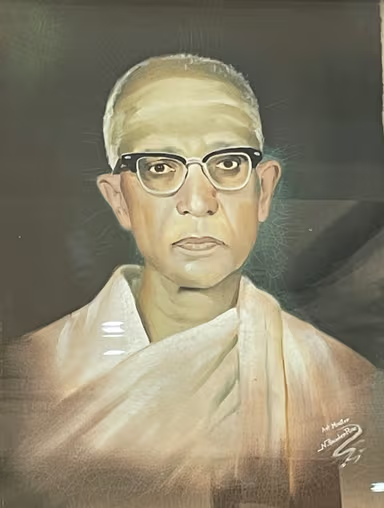
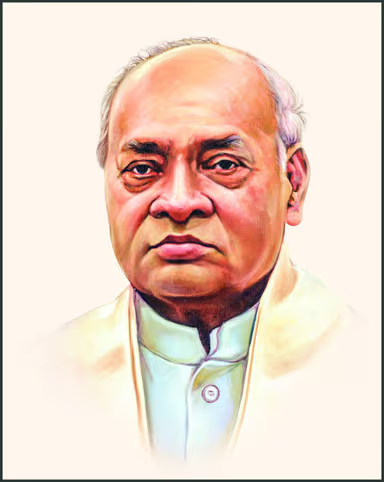
Meet Maddi Narayan Reddy, Sarpanch of Sarvail village that donated 45 acres of land to establish Sarvail Govt Residential school, near Pochampally. First residential school set up by a state govt in India. Inaugurated by the then CM PVNR who later became the best PM for India ever. Sarvail model was so successful they replicated this in Andhra (Thatikonda) and Seema (Kodigenahalli). When PVNR became HRD minister, he set up Navodaya schools based on this model's success
Kaustubh Surke (Mostly Inactive) tweet mediaKaustubh Surke (Mostly Inactive) tweet media
English
4
28
92
7K
Gopal Sripada retweetledi
Lawrence Wong
Lawrence Wong@LawrenceWongST·
On this World Book Day, I encourage everyone to keep reading, learning, and discovering something new!
English
53
192
894
48.6K
Gopal Sripada retweetledi
Luiza Jarovsky, PhD
Luiza Jarovsky, PhD@LuizaJarovsky·
🚨 The last tech wave has quietly introduced the "smartphone neck," shorter attention spans, and loneliness-by-design. We are now observing the "LLM brain" and the "AI makes me a genius" illusion. A biological and cognitive engineering process has been reshaping humans.
Luiza Jarovsky, PhD tweet media
English
17
76
232
9.6K
Gopal Sripada retweetledi
Sridhar Vembu
Sridhar Vembu@svembu·
I am happy to see the YCombinator wave arriving in India. Our co-founder Tony and I were in silicon valley during the original YC wave of companies. We learned a lot from the YC companies. We also made the conscious choice to pursue a different course. In the ancient Bharatiya tradition of philosophical debate, I am going to offer this. I will start with things I agree with YC on. 1. The biggest lesson anyone can learn from YC: small passionate teams can do magic. This was true way before AI coding arrived and will always be true. 2. YC is absolutely right to not over-emphasize "innovation". Doing a similar product as the bigger guys, faster and cheaper, is often the best course. Google did not invent search. OpenAI did not invent the LLM. Anthropic did not invent agentic coding. 3. YC companies tend to geographically cluster, and that can lead to subtle peer pressure and group-think. So the "laggard" founders who are not growing like a weed every week start to feel left out and eventually the result is "founder depression". And YC has counselors. By the standards of 2007 silicon valley or even 2014 silicon valley, we were thought to be losers. Just keep that in mind. 4. Many deep tech problems like building a better, cheaper MRI machine or advanced semiconductor equipment require long focus and patient execution and lots of capital. These are endurance tests, not weekly sprints. 5. YC too often optimizes companies for "exit". That philosophy was built for and requires prolonged bubbles, which American policy has delivered, at the price of nearly wrecking the country (note the extreme inequality and political division). If you love India, you should not wish for similar bubbles. 6. YC model worked in silicon valley. One of the reasons it worked was that silicon valley could get any talent from anywhere in the world, notably from India, easily. That era may have ended or at least on pause right now. Bengaluru has tried the same thing but with "any talent from anywhere in India" and we have not yet created huge companies. India needs its Huawei and Xiaomi and BYD and these companies are Chinese to the core, built by patriotic Chinese. Indian talent, staying in India, rooted in India, is going to have to build companies like them. Enough said.
Jared Friedman@snowmaker

What I told 2,000 future founders in Bengaluru today: 1/ We believe we are at the start of a second wave of Indian companies that will build world-class AI native products for the global market. Emergent and Giga are the model of the future. 2/ Just because a space seems crowded doesn't mean it's too late. Zepto, Emergent, Giga - none were first movers. Second mover advantage is real. 3/ In fact, a good formula for finding startup ideas is to look at ideas that are showing some promise and just execute them better. Execution is everything: if you're an exceptional engineer, and you can build and move faster than your competitors, you'll win. 4/ There is every reason to believe Indian teams can beat US teams building global products. The level of engineering talent here is on a whole different level, and that's the key input. 5/ In the AI era, the best founders are the ones building at the edge of what's technically possible. You need to be experimenting wth the latest models, the latest open source projects. 6/ Stay in the flow of information. Watch the right podcasts, follow the right people on X. With AI changing this fast, you need to know what the smartest builders are thinking. 7/ Most of the best startups don't come from someone explicitly trying to start a company. They start from someone building a project just for fun, or tinkering with a new technology because they are curious. India needs more of this "tinkering" culture - this is how you have novel ideas when technology is shifting quickly. 8/ Founders are getting younger. Aadit was 18 when he started Zepto. The Giga founders were 20 when they came to SF. Young people who can learn very fast have the advantage right now. 9/ The best founders are pushing AI coding to the max. You can now write 20K lines of code / day. One person can do the work that just a year ago would take a 100 person team. The best builders are taking advantage and building at Garry Tan speeds.

English
52
196
1.6K
150.2K
Gopal Sripada retweetledi
Sridhar Vembu
Sridhar Vembu@svembu·
Here is what I tell our software engineers on how to thrive in the AI era: be very good domain experts. Programming skills are the foundation (and we definitely don't want to lose them) but deep domain knowledge is what customers pay for, along with reliability, security, support and compliance. The productivity gains from AI are still hotly debated: we definitely get to a working prototype much faster but a finished product has a lot more to it and not all the stages can be sped up by AI. That is why I advise our technical teams to not obsess about programmer productivity as a metric but focus on how we can offer a far better experience to customers using AI. There is a lot of needless or incidental complexity in software that can be eliminated by AI.
English
94
236
2K
133.8K
Gopal Sripada retweetledi
Tech with Mak
Tech with Mak@techNmak·
In 1948, a 32-year-old at Bell Labs published a paper nobody fully understood. Engineers found it too mathematical. Mathematicians found it too engineering-focused. One prominent mathematician reviewed it negatively. That paper - "A Mathematical Theory of Communication", became the founding document of the digital age. The man was Claude Shannon. Father of Information Theory. At 21, he wrote the most important master's thesis of the 20th century. Working at MIT on an early mechanical computer, Shannon noticed its relay switches had exactly two states - open or closed. He had just taken a philosophy course introducing Boolean algebra, which also operated on two values: true and false. Nobody had ever connected these two things. His 1937 thesis proved that Boolean algebra and electrical circuits are mathematically identical, and that any logical operation could be built from simple switches. Howard Gardner called it "possibly the most important, and also the most famous, master's thesis of the century." Every digital computer ever built traces back to this insight. At 29, he proved that perfect encryption exists. During WWII, Shannon worked on classified cryptography at Bell Labs. His work contributed to SIGSALY, the secure voice system used for confidential communications between Roosevelt and Churchill. In a classified 1945 memorandum, he mathematically proved the one-time pad provides perfect secrecy, unbreakable not just computationally, but provably, permanently, against an adversary with infinite power. When declassified in 1949, it transformed cryptography from an art into a science. It laid the foundations for DES, AES, and every modern encryption standard. At 32, he defined what information is. His 1948 paper introduced one equation: H = −Σ p(x) log p(x) Shannon entropy. The average uncertainty in a probability distribution. The minimum bits required to encode a message. Three things followed: > He defined the bit - the fundamental unit of all information. His colleague John Tukey coined the name. > He proved the channel capacity theorem, every communication channel has a maximum rate of reliable transmission. You can approach it. You can never exceed it. > He unified telegraph, telephone, and radio into a single mathematical framework for the first time. Robert Lucky of Bell Labs called it the greatest work "in the annals of technological thought." Where his equation lives in AI today: Cross-entropy loss - the function training every classifier and language model, is derived directly from H. Decision tree splits use information gain, which is H applied to data. Perplexity, the standard LLM evaluation metric, is an exponentiation of cross-entropy. Every time a neural network trains, Shannon's formula runs inside it. He also built the first AI learning device. In 1950, Shannon built Theseus, a mechanical mouse that navigated a maze through trial and error, learned the correct path, and repeated it perfectly. Mazin Gilbert of Bell Labs said: "Theseus inspired the whole field of AI." That same year he published the first paper on programming a computer to play chess. He co-organized the 1956 Dartmouth Workshop, the founding event of AI as a field. The man: He rode a unicycle through Bell Labs hallways while juggling. He built a flame-throwing trumpet, a rocket-powered Frisbee, and Styrofoam shoes to walk on the lake behind his house. He called his home Entropy House. When asked what motivated him: "I was motivated by curiosity. Never by the desire for financial gain. I just wondered how things were put together." In 1985, he appeared unexpectedly at a conference in Brighton. The crowd mobbed him for autographs. Persuaded to speak at the banquet, he talked briefly, then pulled three balls from his pockets and juggled instead. One engineer said: "It was as if Newton had showed up at a physics conference." He died in 2001 after a decade with Alzheimer's, the cruel irony of information slowly leaving the mind of the man who defined what information was. Claude, the AI model, is named after Claude Shannon, the mathematician who laid the foundation for the digital world we rely on today.
Tech with Mak tweet media
English
195
2.1K
7.7K
457.8K
Gopal Sripada
Gopal Sripada@gopals·
Indian schools, especially those that are privately run and international, should incorporate this type of practical experiences into their curriculum.
English
0
0
0
14
Gopal Sripada retweetledi
Sridhar Vembu
Sridhar Vembu@svembu·
I tell our engineers "We must forget our past success and focus on transforming ourselves for the AI era". The Japanese attitude to Chinese EV competition is why I think they will adapt and thrive.
Sawyer Merritt@SawyerMerritt

Toyota CEO on Chinese competition: "Unless things change, we will not survive. I want everyone to acknowledge this sense of crisis." Honda CEO on Chinese competition after recently visiting the country: "We have no chance against this." motor1.com/news/792130/ho…

English
36
162
1.3K
76.5K
Gopal Sripada retweetledi
Sridhar Vembu
Sridhar Vembu@svembu·
The only resource you need is surplus food. All else can be built. As we build, we have more to invest and more to consume. And that stimulates the next stage of building capital. It is like a multi-stage booster rocket except that the earlier stage makes fuel for the next stage! Bootstrapping works much the same way.
English
14
23
294
10.1K
Gopal Sripada retweetledi
Sridhar Vembu
Sridhar Vembu@svembu·
@divya_16_ We are releasing features weekly. The most recent one is broadcast messages with end to end encryption. Our usage is steadily increasing which we measure closely. If you do not believe, please come back and look at it in 2027. We will make you a believer.
English
31
76
835
53.2K
Gopal Sripada retweetledi
Sridhar Vembu
Sridhar Vembu@svembu·
In the last 40 years, villages in Tanjavur district have lost a lot of talent, with abandoned houses and temples in so many places. It is time to go back. We are doing our part - we have an office and we are building a campus near Kumbakonam. We are also funding Yali Aerospace, a drone startup in Tanjavur town. A lot more has to happen.
Krishnan@cvkrishnan

Driving through Papanasam, Neduntheru, Ayyampettai stretch and seeing no locals for temples like Appakudathaan, Anbil to take care of the temples, we have to realize that it was our immediate previous gen and grandfathers who made the mistake of leaving our ancestral villages. No point blaming others for what we did to ourselves, our temples and our sampradayams. Rushing to Chennai, Bangalore, Delhi Mumbai and abroad for white collar jobs abandoning our temples. It is on us.

English
109
528
2.5K
110.3K