Greg Katz, MD

1.1K posts

Greg Katz, MD

Greg Katz, MD

@gregorykatz

Dad to Leah and Cora. Cardiologist and Internal Medicine Residency APD @nyugrossman Opinions my own.

New York, NY Katılım Temmuz 2009
488 Takip Edilen836 Takipçiler
Greg Katz, MD
Greg Katz, MD@gregorykatz·
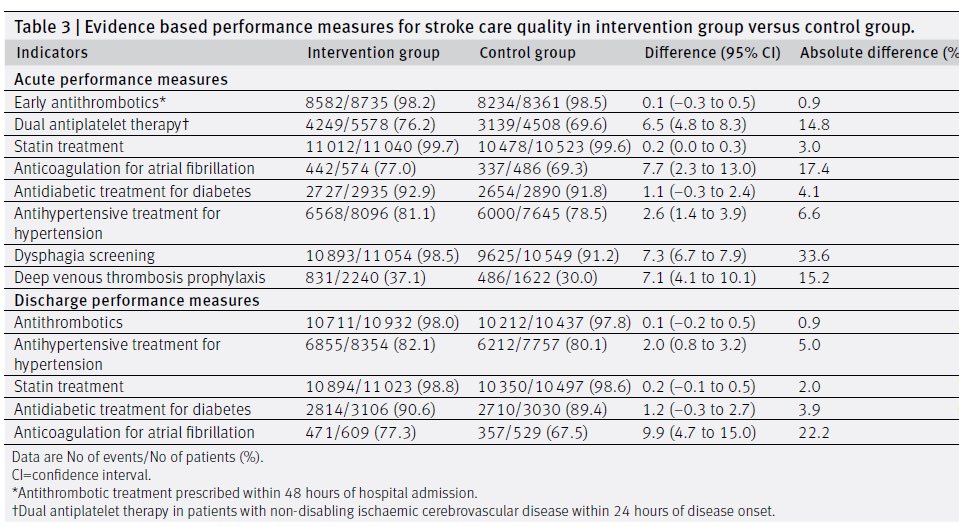
Do you think this just says that appropriate antithrombotic therapy improves outcomes? Those K-M curves look very similar to the CHANCE and POINT trials - up front antithrombotic therapy makes a difference in outcomes and then after very short term separation curves look very similar
English

1
0
1
19
Gregg Fonarow MD
Use of a stroke CDSS led to a ⬆️ in care quality and ⬇️ in new vascular events Effect of a clinical decision support system on stroke care quality and outcomes in patients with acute ischaemic stroke (GOLDEN BRIDGE II): cluster randomised clinical trial bmj.com/content/392/bm…
English
1
1
6
481
Greg Katz, MD
Greg Katz, MD@gregorykatz·
@anish_koka The need for the guidelines to have an opinion on almost everything has also diluted utility
English
0
0
0
28
Anish Koka, MD
Anish Koka, MD@anish_koka·
I’ll say provocatively that the decline in usefulness of guidelines over time has a lot to do with the rise of the professional subspecialty societies. As an example - Nuclear medicine society guidelines and Society of Cardiac CT guidelines are going to come to very different interpretations of the same data.
Anil Makam@AnilMakam

"Guidelines Schmidelines" Following his Grand Rounds on Shorter is Better, @BradSpellberg and I discuss the pitfalls of guidelines in two parts In Part 1, I make the case why guidelines are not synonymous with evidence-based medicine Full video in thread below

English
8
1
13
4.5K
Greg Katz, MD
Greg Katz, MD@gregorykatz·
Of course @EricTopol is right about the fact that the VO2 max discourse pretends that cardiorespiratory fitness is VO2 max But in addition to the fact that all of this discourse is nonsense, the protocols promoted to improve VO2 max are also nonsense! Wrote about on my substack: gregorykatz.substack.com/p/your-vo2-max…
English
0
0
0
33
Greg Katz, MD
Greg Katz, MD@gregorykatz·
I often tell my residents to be selective about what you decide to read Just like you are what you eat, your information diet becomes what you think When you read useless studies that just describe correlations, you poison your brain into thinking that we know things that we don't You're almost always better off re-reading a landmark RCT than reading something new
𝙟𝙤𝙨𝙝 𝙛𝙖𝙧𝙠𝙖𝙨 💊@PulmCrit

major life hack: don't bother reading any article whose title includes the word "associated" there are ~1 million medical publications per year, don't spend your time reading retrospective associative studies

English
0
2
8
541
Derek Thompson
Derek Thompson@DKThomp·
I really want to understand better what these companies are doing to cure cancer. I have an exquisite understanding of how AI increases pull requests and I’m bullish on this tech’s facility w data but what’s the evidence that we’re getting closer to drugging pancreatic cancer and Alzheimer’s thanks to LLMs?
English
27
2
230
26.6K
Adam Ozimek
Adam Ozimek@ModeledBehavior·
This isn’t the only question when it comes to AI, but one way to think of it: what are we willing to risk to cure childhood cancers and other potentially curable illnesses?
English
18
2
70
34.6K
Greg Katz, MD
Greg Katz, MD@gregorykatz·
@ProfEmilyOster There's unfortunately a whole industry of people who are trying to confuse folks about this Some of those people are in the longevity world - the people who promote the studies Some of them are in mainstream medicine - who do the studies
English
0
0
2
79
John Mandrola, MD
John Mandrola, MD@drjohnm·
If every FFR/CT machine broke at once, how would heart disease be affected?
Dr. Filippo Cademartiri@FCademartiri

🫀📉 Can more intensive LDL-lowering improve CT-FFR in stable chest pain? This new JACC study evaluates whether intensive lipid-lowering therapy (statin + ezetimibe) alters CT-derived fractional flow reserve (FFR-CT) — a noninvasive marker of lesion-specific ischemia — in patients with stable chest pain and coronary atherosclerosis. 🔍 Study essentials Patients with stable angina and coronary plaque on CT angiography were managed with aggressive lipid-lowering using statins plus ezetimibe, targeting substantial LDL-C reduction. FFR-CT was measured at baseline and on follow-up to assess functional changes in coronary physiology attributable to therapy. 📈 Key message The core focus — integrating structural and functional imaging — points to a key concept: lipid-lowering can potentially improve lesion physiology, not just plaque burden. By using FFR-CT (a validated surrogate for invasive FFR), the authors are examining whether aggressive LDL-reduction actually shifts physiological indices toward less ischemia. 🧠 Why this matters Lipid-lowering benefits have traditionally been shown at the event level (MI, death). Structural plaque regression with statins/ezetimibe is documented in IVUS and CT studies. But fewer data exist on functional improvement in coronary blood flow with therapy. Linking lipid therapy to improved FFR-CT suggests that LDL-lowering may not only slow plaque progression but also improve coronary physiology — a potential mechanistic bridge to clinical benefit. 📌 Bottom line: Intensive lipid-lowering might influence not only plaque morphology but lesion-specific ischemia as assessed noninvasively, expanding our understanding of how therapies translate into physiological improvement.

English
11
4
35
27.2K
Greg Katz, MD retweetledi
Matthew C. Weiss
Matthew C. Weiss@MatthewWeissMD·
@drjohnm John- longtime listener, first time commenting. If one’s BP is 160/90, you don’t treat it if no other comorbidities? Just wait and treat after the stroke?
English
1
2
16
996
Greg Katz, MD
Greg Katz, MD@gregorykatz·
Lipid lowering should be individualized. Risk calculators often underestimate risk for young people with elevated risk Just like they overestimate risk for healthy older people Across a population it’s great, but for an individual, not so much
John Mandrola, MD@drjohnm

Just a PSA about treating high cholesterol: I recently helped two young women who were told to take meds for high cholesterol calculate their 10-year ASCVD risk Both had 10-year risk less than 3%. Why aren't primary care clinicians using a risk equation?

English
0
0
3
142
Greg Katz, MD
Greg Katz, MD@gregorykatz·
But also, current data integration and visualization across health systems totally stinks And we can’t ever put a patients home BP readings, or their outside testing, or their movement data and integrate it into our medical records without scanning it in and creating a time consuming pdf to open from the media section Disruption is this space is good even if there are real risks
English
0
0
1
18
Bernard Kadosh
Bernard Kadosh@KadoshBernard·
@yaleHFdoc It sure will. Open AI will commoditize every bit of individual health information possible to any party willing to pay.
English
1
0
3
109
Greg Katz, MD
Greg Katz, MD@gregorykatz·
A lot of the discussion about ChatGPT health is missing the most important point Health data is a cesspool - and maybe that’s too generous a description Do you know how difficult it is to connect and visualize data across healthcare systems? Do you recognize how awful epic is for trending your info in a single healthcare system let alone multiple systems? The current healthcare system is totally incapable of integrating important data points like home blood pressure numbers, wearable data, and DTC lab tests. If ChatGPT health promises anything transformational, it’s the possibility of actually using all of this important data and visualizing it in a useful way Health data is absolutely abysmal, and I could not be more excited about disruption in this space
Bob Wachter@Bob_Wachter

A nice summary of the implications of ChatGPT Health @TIME – with a focus on whether you should trust @OpenAI with your health data. Quotes by me, @AdamRodmanMD, @dbittermanmd, others. time.com/7344997/chatgp…

English
0
0
4
129
Greg Katz, MD retweetledi
Harry Saag, MD
Harry Saag, MD@DrHarrySaag·
If you've read any healthcare prediction post, one of the more obvious call outs will be the rise of longevity + consumerization this year. As a PCP with a deep interest in the space, my thoughts below harrysaag.substack.com/p/2026-the-yea… #Longevity
English
0
1
5
117