DecentMeal
1.2K posts

DecentMeal
@grouchomeal
"I'm not crazy about reality but it's still the only place to get a decent meal." Groucho Marx. Collating input here, TY. Anon, 2x exit, family office, CFA, MBA
Canada Katılım Ekim 2009
318 Takip Edilen111 Takipçiler

@sidprabhu Expect decomposition into its constituent parts just prior
English

"Having been robbed, the Germans became a nation of robbers"

Sid Prabhu@sidprabhu
A running theme of this feed has been that the callousness and gaudy vulgarity of the Trump administration, along with the fecklessness of the Fed, will provoke a socialist backlash that reshapes the country over the next decade. I am more convinced of that now than ever.

English

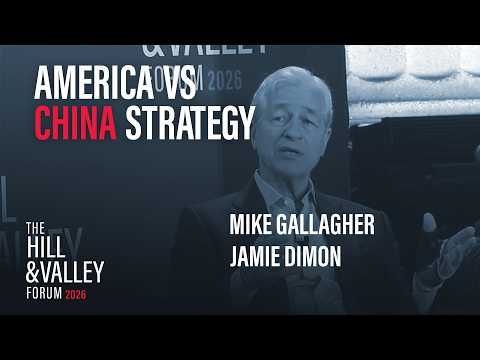
@harrisonlowman "We have to educate the world about this. Capital formation is what drives productivity and growth. 88% of capital formation comes from the 17K largest companies in the US, not the other 30M. Capital formation is what created Silicon Valley." J. Dimon, Hill & Valley Forum Mar '26
English

“That’s because the progressive Left in Canada, our governing elite for 11 years, have displayed not just a lack of understanding, but of curiosity about how wealth is generated by nations. Their only concern has been on redistributing it, it being the imagined endless and excess profits of billionaires and fat cat CEOs they think can be allocated to cheaper groceries and subsidized prescriptions drugs and day care and renewable energy and unionized government jobs forever. Wealth is assumed by the Left to exist, and they restrict their thinking to ways to appropriate it from others, rather than generate it themselves.
Carney and Finance Minister François-Philippe Champagne are a step up from that socialist nightmare for sure. But their idea of generating wealth still seems far from Smith’s. The Liberals see our AAA credit rating—the ability of Canada to borrow at a more competitive rate than the broader market—as our driver of wealth, our ace in the hole. Rather than make ourselves more attractive for private investment through regulatory reforms and tax competitiveness, they seek to replace the need for private investment with Canada’s borrowing power.
This all seems perplexing from a prairie perspective, where the question of what creates wealth for the state has an obvious answer: oil, alongside natural gas, minerals, lumber, grains, and oilseeds. The Sovereign Wealth Fund that Canada aims to emulate in name, if not in concept—Norway’s $2 trillion USD fund—was derived, of course, from surplus oil revenues.” -@ExnerPirot in @TheHubCanada
thehub.ca/2026/05/05/how…
English

@RazorOil Thank you for your commentary & efforts. Yet another adjacent area where I appreciate you sharing your opinions & expertise.
English

Follow-up on my open letter to the CEO regarding the carbon capture project:
1)It was very well received. I’ve already gotten initial feedback confirming that the right people read the letter.
2)There was minimal pushback on the numbers I shared, which is encouraging.
3)The more I think about it, the less sense the project makes. New small-scale modular greenfield projects will continue coming online at similar emissions intensity levels as the alliance companies. So while we spend heavily to capture emissions on one side, new emitters on the other side will keep adding volume meaning net emissions likely won’t improve meaningfully by 2030.
4)As a taxpayer, I don’t want to subsidize CCUS.
5)As a shareholder in the oilsands alliance companies, I also don’t want to pay for it.
6)The easier solution is to voluntarily reduce steam utilization by co-injecting non-condensable gas to maintain bottom-hole pressure, while optimizing operations through infill drilling where the oil is still mobile. This delivers direct emissions reductions and focuses on smaller incremental opex improvements instead of massive capex projects.
Overall, it was a positive experience putting the letter out there. If anyone wants to discuss this further or share feedback, feel free to PM me here or email me at alex@watercut.ca 🫡🪒
Razor Oil@RazorOil
English
DecentMeal retweetledi

The real lesson of the Strait of Hormuz is how effectively autonomous systems can create a maritime denial problem that even the best blue water navy in the world can do little to combat.
If your enemies have physical proximity to launch autonomous systems into the chokepoint, its nearly impossible to keep them open.
That’s why its so important for the US to clear the Chinese proxies from the Western Hemisphere before a potential Indo-Pacific conflict.
Imagine a Taiwan scenario where Venezuela, Colombia, and Cuba were launching autonomous systems around the Florida Straits, the Yucatan Channel, and the Panama Canal, while Chinese triads embedded with Mexican cartels were doing the same from the Pacific coast against US ports. It would be crippling. And the US wouldn’t have the resources to deal with it. The only real way to eliminate the threat is to eliminate the onshore launch network.
But China is much more vulnerable to this kind of maritime denial strategy than the US is. Geography is arguably China’s biggest strategic weakness. It’s surrounded by potential adversaries in a ring that’s almost perfectly suited for autonomous maritime denial.
China has become self sufficient in a lot of areas, but it still needs imported food and energy, and its economy is still heavily reliant on exports. They must be terrified by what they are seeing in the Strait of Hormuz.
You no longer need carrier battle groups to choke off access through the South China Sea, along the first island chain, or the Malacca Strait. Just cheap autonomous systems. They built their defense to combat US warships. But hypersonic missiles are useless against cheap AUVs.
What we're seeing now is the US desperately trying to shape the maritime battlespace before a possible Indo-Pacific war.
While China must be watching Hormuz and realizing how the exposed it is to the new autonomous reality.
And autonomous systems aren’t just changing warfare, they’re and existential threat to globalization. A world where cheap drones and AUVs can deny chokepoints is not a world built for fragile, just-in-time supply chains stretched across the globe. Reshoring is no longer just industrial policy, it’s a requirement for national security.
English
DecentMeal retweetledi

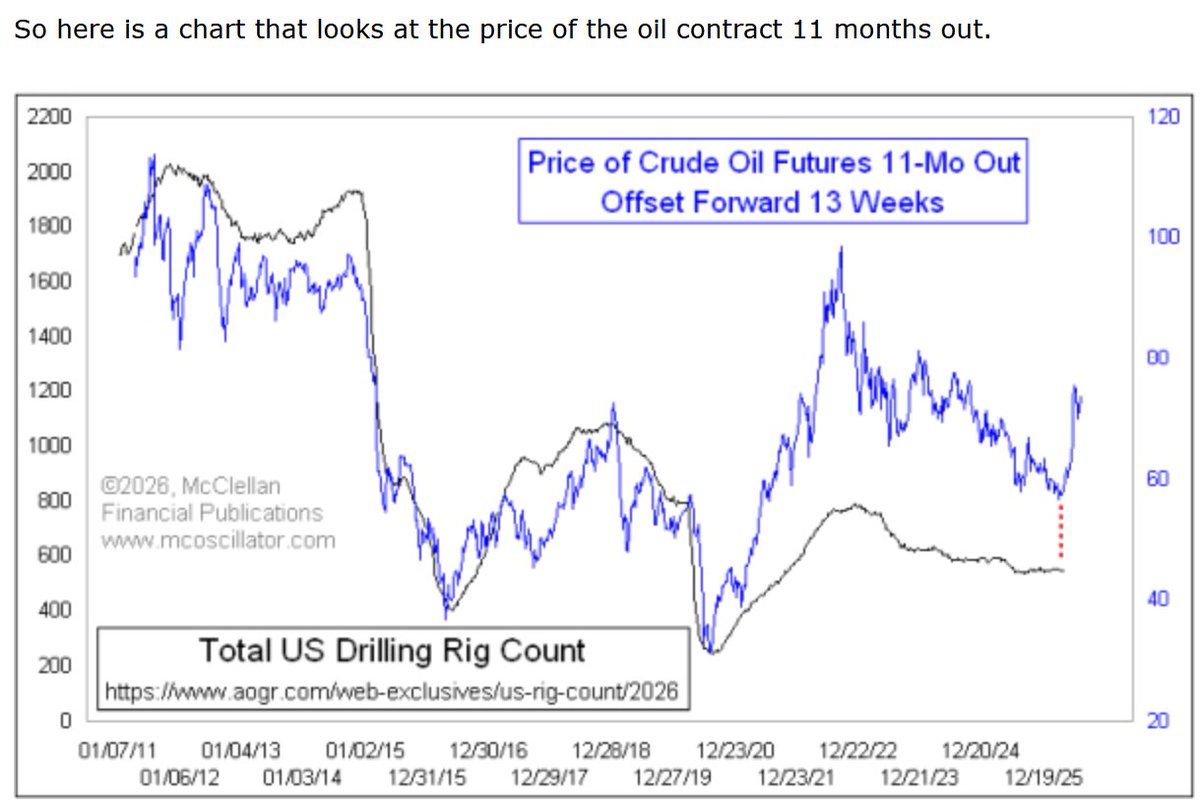
Where [When!] Are The Oil Drillers? Timely analysis from Tom McClennan. My summary ... they look forward 11 months for greater certainty & then it takes around 13 weeks to do things in the real world. mcoscillator.com/learning_cente…

English
DecentMeal retweetledi

Jamie Dimon, "We have to educate the world about this. Capital formation is what drives productivity and growth. 88% of capital formation comes from the 17K largest companies in the US, not the other 30M. Capital formation is what created Silicon Valley."
youtube.com/watch?v=CGYQqb…

YouTube
English
DecentMeal retweetledi

I think the UAE’s decision to leave OPEC+ has absolutely nothing to do with oil.
Yeah since the UAE was the only country besides Saudis with spare capacity, they might have had some beef with the quotas themselves.
But the real issue is the timing. Why now? The SoH is closed anyway, and even the UAE—despite having bypass routes—is "physically" forced into massive production cuts. Their output is trashed bc of Iran, not bc of OPEC+ quotas.
Currently the UAE’s actual production is falling way short of their quota. If they were physically able to produce more, nobody would even care how much they pumped right now.
"Acting now for the sake of the future"? There’s no reason it has to be today. It’d be much more rational to stay in OPEC+ and then, once production actually starts getting capped by quotas again, use the threat of leaving as leverage to squeeze out every last bit—and if that doesn't work, then walk away.
The claim that the US sabotaged things to get the UAE to leave OPEC is also weird. Everyone knows that even if the UAE leaves, they can't meaningfully ramp up production right now.
The US admin is desperate to suppress short-term oil prices. The UAE leaving and hiking production might affect prices in a year or two, but it does absolutely nothing to help in the short term.
Given that this was announced right around the GCC summit, it’s much more likely a conflict between them. The UAE might be frustrated with how this war has been handled, or there could be a rift over their future path.
The net effect on oil prices will basically be zero in the short term, but it’ll be a massive blow to OPEC+ in the long run. It didn't really matter when Angola or Qatar left bc they were already declining producers.
But the UAE is different. They produce way more, they have spare capacity, and they're one of the few members that's been consistently expanding their CAPEX. This is going to be a huge hit for OPEC+, and especially for Saudis.
#oott
English
DecentMeal retweetledi

🏴☠️1/ If what I think is happening is really happening, then I can make some predictions. Especially about incoming European problems.
But first an important side story, which also relates to the “special relationship”.
What a lot of people don’t know is that when Minos Zombanakis, the father of the Eurodollar market, started looking for a hub for his offshore dollar operation in Europe, he originally hoped Brussels not London would be its base.
That’s because Brussels was the home of NATO.
This was not to be.
As Andrew Hilton (city veteran) once told me, the Belgian central bank refused to give approval.
Zombanakis next turned to Paris, but the BdF also rejected him.
Finally, he turned to London.
As Hilton tells the story “they [aka the BoE] didn’t put any obstacles in his way.”
The rest, as they say, is history. London Eurodollar clearing became a trillion dollar business, over which Brexit fights would eventually be fought.
In no time at all Stanley Yassukovich (at the time representing investment bank White Weld), as well as a number of other American banks, got approvals to set up euromarket operations in the square mile.
Why did no other central banks want to say yes? Officially, they were concerned about financial stability. In reality, they knew what a dollar tap in their jurisdictions signified for their own monetary sovereignty. Their currencies would never be their own again, because European corps would always find it more cost effective to fund in dollars.
This was all the more the case in any economy operating a dirigiste policy. They feared price discovery through competition.
Eurodollars didn’t just bypass monetary control — they undermined the system of domestically captive finance that governments relied on, raising funding costs and exposing fiscal policy to external market discipline.
It also translated to pressure on the gold price in ways that increasingly drained reserves.
Which brings us back to the special relationship. Why did London say yes when nobody else would? Probably because it had no choice.
It was just after Suez, which made the nature of capital flows and dependencies abundantly clear.
English
DecentMeal retweetledi

Seems reasonable to conclude that China is facing a liquidity and capital shortage. It is already gunning for $55bn from the IMF. Earlier in April it vocally reiterated its commitment to the international rule based order and to respecting others’ sovereignty.
This seems like a prelude to a capital injection from America via the UAE swap corridor. UAE becomes the new center of intermediation for dollars to China (à la bessent comments), displacing London from that role. That’s very lucrative for UAE so it agrees to quit opec in exchange. With crude flows easing market prices and China gaining access to dollars, it can now afford to bailout the BRI.
The pathway is the issuance of yuan denominated debt in uae which can bring price transparency to the yuan. And that debt can then be pledged by Chinese banks for dollar liquidity.
This assures the yuan floats but doesn’t crash. It’s orderly liberalisation. But it does transfer power to the US.
English

Great read, edited: "all risk-parity type strats have benefited++ from 40-yr decline in i-rates. Bonds diversify equities in a disinflationary regime. this regime is shifting. the trad bond alloc has to shrink. Gold / commod become the diversifiers." campbellramble.ai/p/whatever-hap…
English
DecentMeal retweetledi

@NStepmum heh, those are the metermaids & service techs not the utility...
English

So if stock market is an utility, why are you not long retail brokerages at 7x ttm/ 1.3x book?
$TIGR
Resource Bull@resourcebull
I think people now realize that the stock market has become an essential utility, like gas water electric, and they’ll never let it go down again. We’ll even lose wars for it.
English
DecentMeal retweetledi

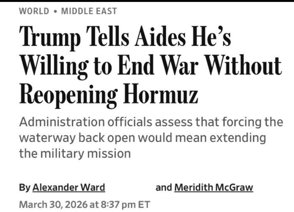
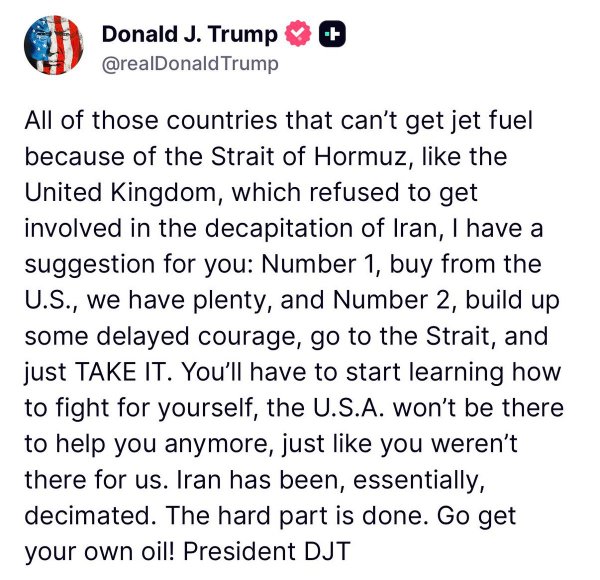
Trump is casually proposing one of the biggest strategic own-goals imaginable: NATO more or less done, and any country that wants Persian Gulf crude can go secure it for itself. That is a spectacularly reckless thing for an American president to say. It is a half-drunken invitation to roll the clock back toward the old colonial game, where every great power armed itself around resource access and shipping lanes.
The whole reason the U.S.-led order worked is that Washington took the military question off the table for its allies. Europe and East Asia could think about trade, industry, growth, supply chains, and cheap energy. They did not need to wake up every morning thinking about convoy protection, choke points, naval escorts, forward bases, and who might try to cut their oil line. That was the deal, and for all its flaws it was an unbelievably powerful one.
Put that burden back on every importing state and you do not get some elegant new realism. You get the old imperial logic creeping back in. The barrel is no longer just a barrel. It comes with freight risk, insurance risk, naval risk, basing risk, and eventually war risk. The whole achievement of the postwar order was that America suppressed a lot of that rivalry by sitting on top of the system and making the security decisions for the wider alliance.
The Gulf is particularly ugly terrain for this kind of thinking. The infrastructure is concentrated, the sea lanes are narrow, and much of the population depends on fragile physical systems like desalination. Once states decide energy security is too important to leave to markets, they start looking at places like this in very hard terms. Somewhere in Paris, one of the old colonial ghosts is probably already unfolding a map of the Gulf and reminiscing about protectorates in embarrassingly enthusiastic detail.
History is full of great powers making exactly this kind of mistake. The cleanest analogy is Germany after Bismarck. Bismarck built a diplomatic architecture that kept Germany secure and prevented hostile coalitions from forming. Kaiser Wilhelm II inherited that system, got impatient with its constraints, started freelancing, and slowly turned a position of strength into encirclement. He did not lose Germany in one move. He set in motion a process that made Germany less secure with every passing year.
There is also an interwar British echo here. Britain remained enormously important, but it no longer wanted to fully bear the burden of policing the wider order it depended on. That did not produce a neat handoff. It produced opportunism, rearmament, and eventually a much nastier bill. And if you want the broadest analogy, it is the breakdown of the old European concert system: once the central restraining architecture weakens, states go back to fleets, blocs, balancing, and military planning around economic survival.
What is so deranged about this is that it weakens the U.S. first. America’s edge was never just the size of the Navy. It was that nearly every major industrial power operated inside an American security architecture. Tear that up and over time you get fewer reliable bases, fewer aligned allies, larger independent militaries, more hedging against Washington, and much more room for China and every ambitious regional power. That is how dominant positions are squandered in history: not all at once, but by dismantling the very order that made you dominant in the first place.
English
DecentMeal retweetledi

I think way too many ppl are delusional about this idea of letting Iran control the SoH, having the US pull out, and just letting Iran set up a toll booth.
Where does Saudi’s power actually come from? It’s not just because they’re rich. Their entire influence comes from being the world’s only swing Producer. We need oil, and Saudi controls that market.
If Iran takes over the SoH, they become the most powerful, one of a kind Global Swing Producer in history.
If they don’t like the oil price? They can just "adjust" the traffic in a strait that handles ~20mb/d to swing prices however they want.
If the UAE gets on Iran’s bad side? "No passage for UAE tankers." If Kuwait tries to build a bypass? "Fine, the SoH is closed starting today. Let’s see if you can finish that bypass—which takes years—without making a single dime."
By letting Iran control that flow, the US is effectively making Iran the ultimate energy gatekeeper. The entire regional hegemony shifts to Iran. Saudi and the UAE lose everything.
Think about it—if you were MBS, would you let this happen? Let’s say the US pulls out this week. The US started this mess, and now the GCC has to just sit there and watch their power handed over to Iran?
Let me give you a reality check for Americans: Imagine Mexico now controls the North American continent.
"Want to fly to the UK? Get Mexico’s permission. Want to import jet fuel from Asia? Pay Mexico a toll and take the route they tell you to.
Did you dare to criticize Mexico? Now, no container ships can enter your waters. You can’t say a word against the great President of Mexico."
It sounds like a fantasy, but that’s the reality for the GCC. If the US tries to run away? If I were the GCC, I wouldn’t let them leave. I’d grab them by the hair and drag them back to clean up the mess they made.
I’ve said before that this is an existential issue for Iran and Israel. Well, Iranian control of the SoH is an existential issue for every other GCC nation.
And the GCC has leverage. They have massive wealth invested in the West, huge U.S. asset holdings, decades of lobbying networks, and they are the biggest donors for Trump’s terms.
And of course they have oil. Do you really think Brent would stay below $100/bbl if the GCC teamed up and cut just 3mb/d for six months?
Even the most optimistic guy knows the answer is zero chance. They don't even need a fancy excuse: "Oh, since the US gave up on us and Iran owns the SoH, it's not safe. We have to cut production. Sorry!"
Within months, the US would be begging to come back. It’s just pushing the Middle East into an even bigger pit of fire.
Thanks for listening to my TED Talk :)
#oott #iran
English
DecentMeal retweetledi

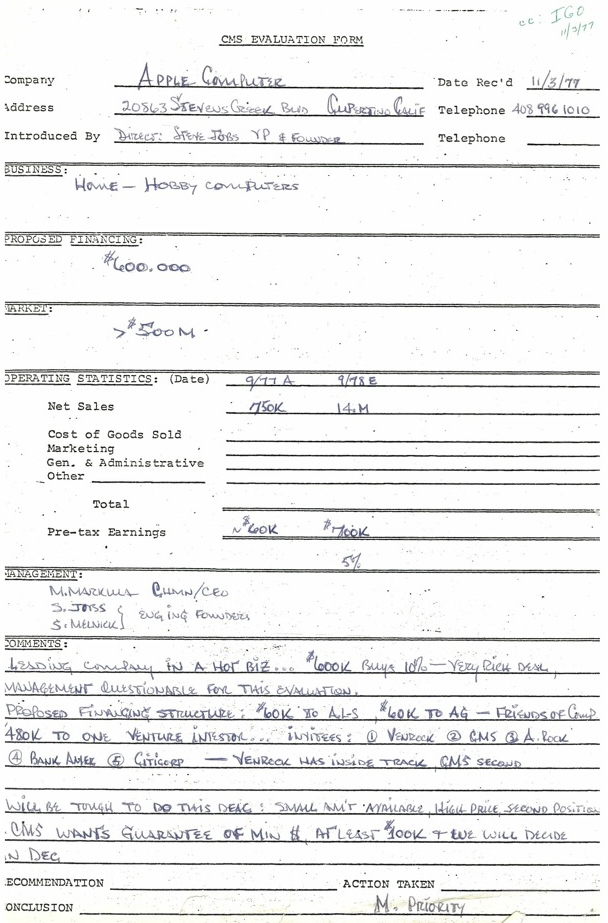
In honor of 50 years of Apple, we're sharing - for the first time ever - Don Valentine's original 1977 memo for Sequoia's investment into Apple Computer. #Apple50

English

In the background with a weak share price, $IWG is lowering debt & slamming the buyback button. Reminiscent of $ATH.to in 2022/2023. The $ATH.to price didn't reflect underlying improvements from mid-2022 until mid-2023 onward. Watch more than price. investors.iwgplc.com/regulatory-news
English