hadoob024

2K posts

hadoob024 banner
hadoob024

hadoob024

@hadoob024

Atlanta Katılım Haziran 2010
927 Takip Edilen289 Takipçiler
hadoob024 retweetledi
Love Music
Love Music@khnh80044·
43 years ago, Michael Jackson stepped onto the stage in that fedora and gave the world the moonwalk for the very first time 🕺✨ A legendary Billie Jean performance that still feels untouchable today 🔥🔥
English
1.3K
12.5K
154.8K
1.9M
hadoob024 retweetledi
Mathematica
Mathematica@mathemetica·
One fascinating lesser-known fact in mathematics is Kaprekar's constant: 6174. Indian mathematician D.R. Kaprekar discovered it in 1949 through patient experimentation. Take any four-digit number where not all digits are the same (e.g., 3141, but not 1111). Rearrange its digits to form the largest and smallest possible numbers, then subtract the smaller from the larger. Repeat the process with the result. Within at most 7 steps, you'll always reach 6174; and once there, it stays at 6174 forever (it's a fixed point). Quick example with 3141: 4311 − 1134 = 3177 7731 − 1377 = 6354 6543 − 3456 = 3087 8730 − 0378 = 8352 8532 − 2358 = 6174 7641 − 1467 = 6174 (and it loops here) This works for every qualifying four-digit number due to the finite set of possibilities and the structure of the operation in base 10.
Mathematica tweet media
English
7
46
199
9.5K
hadoob024 retweetledi
Time Standard
Time Standard@atimestandard·
I have been refining my thinking about Bitcoin's architecture. Bitcoin appears to behave like a physical system in the technical sense. Specifically, it behaves like a gyroscope with: ▫️Fixed precession frequency (10-minute blocktime) ▫️Inertia control (difficulty) ▫️Torque halving mechanism (halving schedule) I have some more work to do, but this framework seems to explain all of Bitcoin's behavior from first principles. These are dynamic systems in different domains, but I think that is actually the point. They both share the same math, architecture, and universal principles. They appear to share the same topology.
Time Standard tweet media
English
16
20
134
20.7K
hadoob024 retweetledi
Reflection🪩
Reflection🪩@0xReflection·
S&P 500 IS WALKING INTO A TRAP 15 out of the last 16 midterm election years, $SPX fell from May to October. 15 out of 16. That's not a trend. That's a 93.75% hit rate since 1962 Some of the worst ones: ➮ 1974: -33.1% ➮ 2002: -30.54% ➮ 1962: -22.16% ➮ 1966: -21.22% ➮ 2022: -18.9% Every recession, every bubble, every macro regime.. The pattern kept showing up Why? Three forces. Stacked on top of each other. Every 4 years. Let me break it down for you: 1. THE PRESIDENTIAL CYCLE Every new president runs the same playbook. I've watched it play out three cycles in a row. Year 1-2: pain ➮ Tax hikes ➮ Budget cuts ➮ "We have to clean up the last guy's mess." Year 3-4: stimulus Money everywhere. Smile for the camera. Vote for me again! 2. THE POLITICAL UNCERTAINTY Here's what most people miss about midterms. They can flip Congress overnight and that changes the entire game. Taxes, spending, every regulation. Now tell me, what does big money do when the rulebook is about to change? Easy. They sell in May. Hold cash through summer. Come back after the vote. Uncertainty is poison to markets 3. THE FED'S TIMING PROBLEM The Fed pulls the exact same trick every cycle. Hike rates fast early in a president's term, so they have room to cut before re-election season rolls around. Translation: midterm year always lands at peak interest rates. Exactly when the economy can't handle it. Stack those three on top of each other and you get the same May to October bleed, decade after decade. And then there's 2026. A year already sitting on: ➮ Rate hikes back as the base case ➮ Inflation at a 3-year high ➮ 10Y yield breaking above 4.50% ➮ Mortgage rates pushing 7% Now overlay the worst statistical window in the 4-year cycle. This isn't a forecast. This is a setup hiding in plain sight. Don't worry though - my system flags the exact moment the market shifts from caution to DANGER. You'll be warned before it hits, like always. All you need to NOT miss my next call is keeping NOTIFS ON
Reflection🪩@0xReflection

S&P 500 dumps from May to October every midterm election year: 1962: -22.16% 1966: -21.22% 1970: -0.15% 1974: -33.11% 1978: -7.91% 1982: +16.86% 1986: -8.14% 1990: -19.57% 1994: -2.05% 1998: -17.66% 2002: -31.34% 2006: -4.64% 2010: -6.03% 2014: -4.89% 2018: -5.15% 2022: -18.9% 2026 won't be different

English
36
94
492
360.1K
hadoob024 retweetledi
Rajat Soni, CFA
Rajat Soni, CFA@Rajatsoni·
To be honest, I don't get all of the hate that Michael Saylor gets He's running the biggest speculative attack on fiat that the world has ever seen Bitcoin haters think he's scamming his investors because they don't understand his thesis (why do they even care about what I do with my money?) Bitcoiners think he's getting too much of the supply, and I don't understand this... Why wouldn't you be happy for someone who created a product to directly compete with legacy financial institutions? I personally LIKE that he's buying as much Bitcoin as he can He's letting OG Bitcoiners sell so they can enjoy their lives He's giving fiat lovers exactly what they want (high returns, low risk, minimal volatility) The greatest thing about Bitcoin is that everyone has a choice of whether they accumulate or not He chose to accumulate as much as possible by creating the best financial product to ever exist in the history of the world and backed it with Bitcoin The financial institutions that are his direct competition haven't figured this out, and they aren't accumulating yet Michael will be known for the rest of human history as the person who forced banks to change the way they did things The banks that don't figure it out will probably go bankrupt because of capital flight, and the ones that do will be forced to offer higher yields to their clients And there are Bitcoiners who think he's doing something wrong?
English
57
43
524
17.5K
hadoob024 retweetledi
Historic Vids
Historic Vids@historyinmemes·
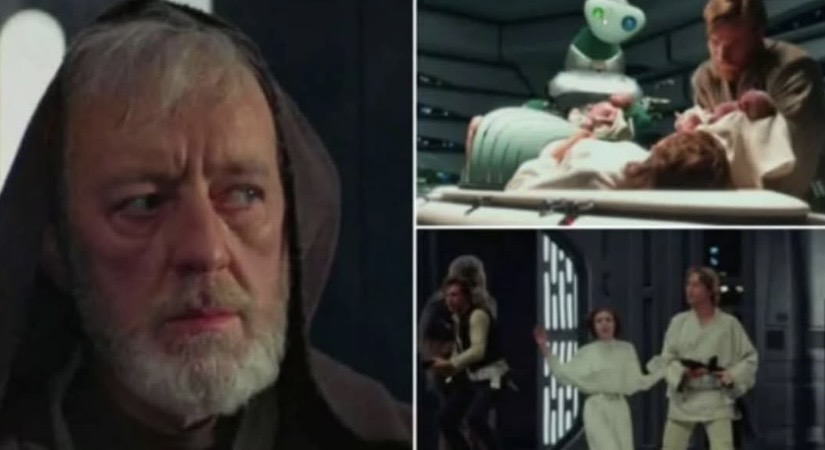
The last thing Obi-Wan sees before his death is Luke and Leia finally reunited after 19 years, completing the arc that began with him witnessing their birth. May the 4th be with you. In Star Wars: Episode IV – A New Hope, Obi-Wan Kenobi sacrifices himself aboard the Death Star during his confrontation with Darth Vader. In his final moments, he glances toward Luke Skywalker and Princess Leia as they escape alongside Han Solo and Chewbacca. Within the timeline, Obi-Wan had previously witnessed their birth in Star Wars: Episode III – Revenge of the Sith, set 19 BBY (Before the Battle of Yavin), while A New Hope occurs in 0 BBY—roughly 19 years later. At the time of his death, Luke and Leia are reunited in their mission, though they remain unaware they are siblings. Obi-Wan’s decision to lower his defenses allows him to become one with the Force, later enabling him to guide Luke as a spiritual presence. As a notable behind-the-scenes detail, Alec Guinness, who portrayed Obi-Wan, negotiated a profit-sharing deal instead of a large upfront salary, ultimately earning significantly more than most of the original cast due to the film’s massive success.
Historic Vids tweet media
English
29
163
1.8K
126.1K
hadoob024 retweetledi
BitcoinTreasuries.NET
BitcoinTreasuries.NET@BTCtreasuries·
BREAKING: Strive $ASST CEO Matt Cole will ring the opening bell to kick off the trading day at #NASDAQ on Friday. The world's first daily dividend-paying stock, backed by #Bitcoin, takes center stage in Times Square. 🔥🔥
BitcoinTreasuries.NET tweet mediaBitcoinTreasuries.NET tweet media
English
13
45
535
14K
hadoob024 retweetledi
U.S. Senate Banking Committee GOP
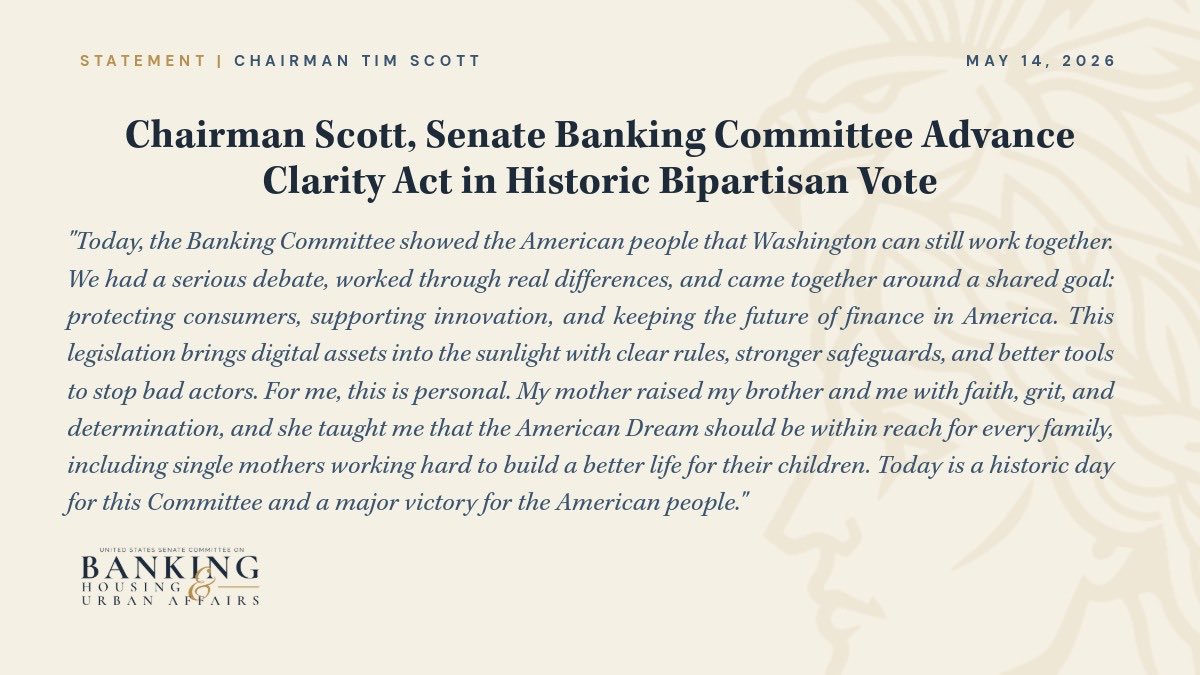
Today, Chairman @SenatorTimScott led Banking Committee Republicans and Democrats in a historic bipartisan markup to advance to Clarity Act, legislation that will establish clear rules of the road for digital assets.
U.S. Senate Banking Committee GOP tweet media
English
73
377
1.5K
227.3K
hadoob024 retweetledi
Cole Walmsley
Cole Walmsley@Cole_Walmsley·
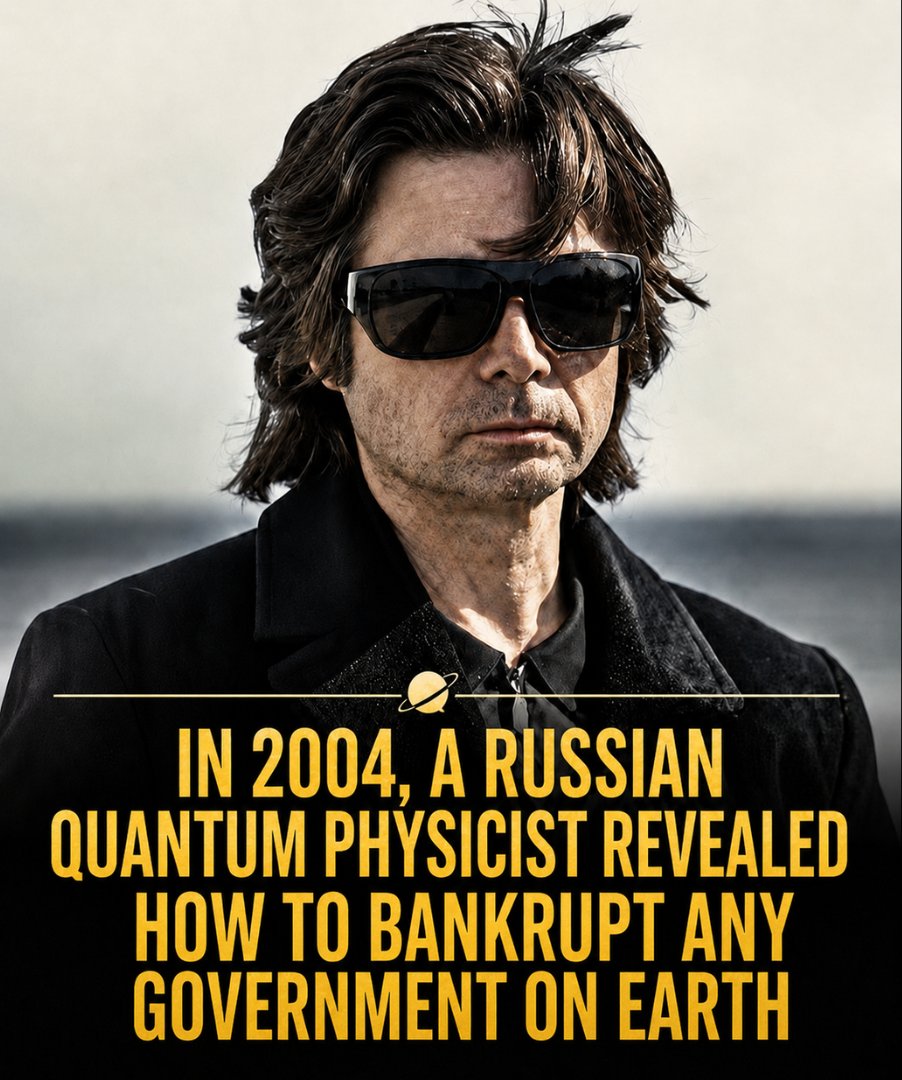
I found the best way to bankrupt the government. It comes from a Russian quantum physicist. --- In 2004, a man named Vadim Zeland wrote a book titled, "Reality Transurfing." In the book, he introduces a concept called “pendulums” that explains why fighting the government never works. The government's operation is absurd. -$39 trillion in debt -Funding wars you never voted for -Printing money whenever they want -Endlessly taxing you in every direction -Selling new bonds to pay off old bonds -Politicians retiring as multimillionaires on $174,000 salaries But here’s the thing… Accountability won’t come from the system. That’s why Zeland’s concept of “pendulums” is so important. A pendulum is anything that lives off your attention and emotion (energy-in-motion). Religions, political movements, businesses, group chats, diet trends… these are all pendulums that feed on attention and energy. If the world collectively withdrew its energy from Buddhism, Buddhism would dissolve. If America collectively withdrew its energy from the Democratic or Republican party, it would dissolve. It’s like food to a person. If you stop giving it food, it will die. Your government is a pendulum, but… there's a key point to understand. The government feeds on your attention and your energy. But that is not its primary food source. Its primary food source is fiat money. The money they print, control, and force you to use. They have an unlimited supply of it. They can tax it however they want. They get to enforce the rules around it. Their money endlessly feeds them, by design. That’s why you can vote whoever you want into office, but nothing will change — because the money hasn’t changed. Their primary source of fuel hasn’t changed. The pendulum stays alive as long as their money stays alive. That’s the key thing to understand. The money is the target. If you actually want to end the government’s fraud, you have to stop using their money. You have to withdraw your energy from their system. You have to starve them. You do that by starving the source of their food. If they can’t eat, they will die. If they don’t have their money, they will die. If the government didn’t have an infinite source of money that they control at will, they could never rack up $39 trillion in debt. But because they *do* have an infinite source of money that they control at will, they have an endless source of food. That’s the target. It was never the politicians. It was always the money. So how do you actually starve the pendulum? Zeland gives us the answer — he calls it “extinguishing the pendulum.” Every pendulum has a script it expects you to follow. The script is designed to provoke a reaction out of you, to get you to swing your energy toward the pendulum. It wants to hook you like a fish. For example, think of a hostile comment you receive online. That comment is a pendulum. It wants your energy. When you defend yourself, think about a clever reply, escalate, hurl an insult back — you feed it. The pendulum doesn’t care if you agree or disagree. It just wants your energy. Complaining about the government only feeds the pendulum of the government. It’s exactly what the government wants. It wants you to bite. It wants to keep you in its frequency. It wants to keep you in its game. So how do you actually win? You don’t. You leave the game. Extinguishing the pendulum means breaking the script. You break the script by offering an abnormal response. When a pendulum tries to provoke you, you do something completely off-script, something that doesn’t fit the game it’s trying to play. You shift to a different frequency and play a different game. Suddenly, the pendulum has nothing to grab onto. The best way to bankrupt the government is simple: You stop using their money. The government’s entire script is dependent on you using their money. Their monetary system is designed to feed them energy. When you work for their money, they tax it. When you spend their money, they tax it. When you hold their money, they quietly steal it through inflation. Here’s the devastating part. To function in modern life, you need money — and the fiat monetary system is designed as a monopoly. They create legal tender laws which mandate the use of their money — and their money only — for taxes and debts. If you don’t pay your taxes in their money, you get fined, your assets get seized, or you get sent to jail. They coerce you into their pendulum under the threat of violence. It’s the trap inside the trap. It’s not just that they feed on fiat money. It’s that they’ve made it illegal to not use fiat money. For as long as fiat governments have existed, there was no true off-script move. You could complain. You could vote. You could move countries, only to find another version of the same system awaiting you. You were always left inside their monetary system. You were always hooked to their pendulum. The only real exit was leaving the grid entirely. You would have to stop using money, close your bank accounts, and disengage from modern life altogether. People’s yearning to live “off-grid” is simply a desire to escape the fiat pendulum. But they made it inescapable. Until 2009. --- Satoshi Nakamoto created Bitcoin to be the off-script move. The abnormal response. The different game. Bitcoin was designed to extinguish the pendulum of fiat. Previously, it could never be done, because there was never a different frequency to shift to, other than going completely off-grid. Bitcoin is, for the first time, the truly different frequency of money that you can shift to. It doesn’t argue with fiat. It doesn’t demand accountability. It doesn’t run for office. It doesn’t ask for permission. It doesn’t try to reform the Fed, or audit gold, or pass legislation. It doesn’t even acknowledge fiat as a worthy opponent. It simply exists as a completely different frequency, governed by a completely different set of rules: 1. The protocol is neutral — it has no political ties. 2. The system is transparent — you can verify the rules for yourself. 3. The supply is fixed — it cannot be inflated. 4. The network is permissionless — you don't need permission from banks and governments to use it. 5. The protocol is decentralized — there is no central party manipulating the system. 6. The supply issuance is based on math — not what a group of elites thinks is best. Every single one of those traits is the dead opposite of fiat. Bitcoin swings the pendulum of money in the opposite direction — and that’s exactly what’s required to extinguish fiat. No matter who you’ve voted for, the government hasn’t changed. The system remains the same, because the money remains the same. The off-script move isn’t to vote with your ballot. That’s the script fiat wants you to follow. The off-script move is to vote with your money. The off-script move is to stop using their money and shift to a different game. That’s how you stop feeding the government. That’s how you starve the pendulum. The best part? Zeland notes that when you extinguish a pendulum, its energy doesn’t disappear. It returns to you. Every dollar you hold in fiat is energy you’ve been losing your whole life — to inflation, to taxes, to a government with trillions in debt. When you shift to Bitcoin, all of that energy comes back to you. What previously went to the government and all their closest friends now flows to you. That difference in energy is the pendulum being extinguished in real-time. It’s the power shifting from the top of the system to you. You don’t have to protest. You don’t have to wait for an election. You don’t have to vote anybody into office. You can stop feeding their system, right now. Bitcoin exists, right now. The network is open. For anybody, at any time. All you have to do is shift. That’s how it ends.
Cole Walmsley tweet media
English
52
122
502
22.9K
hadoob024 retweetledi
The Bitcoin Strategy
The Bitcoin Strategy@ThisiswhyweBTC·
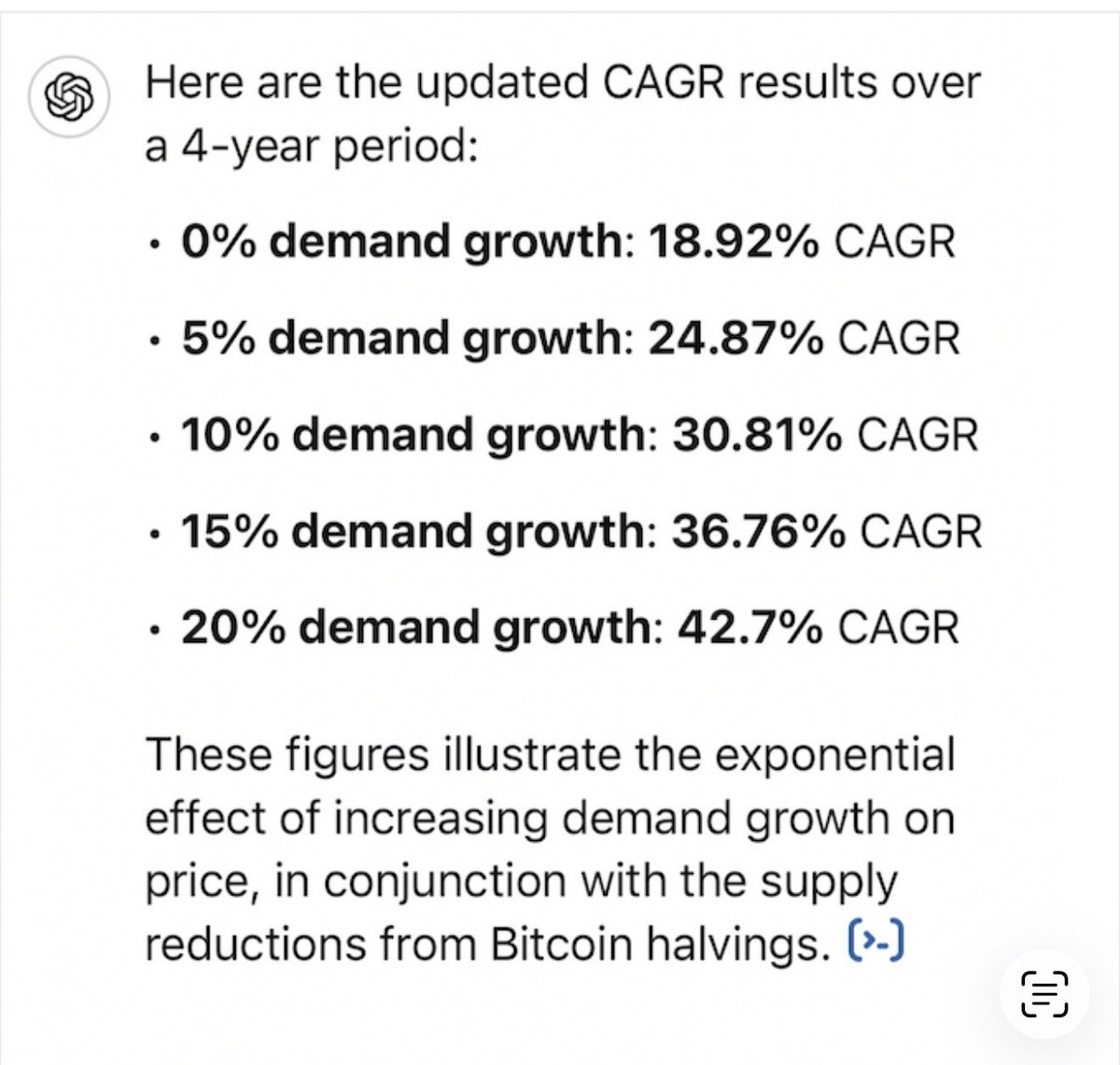
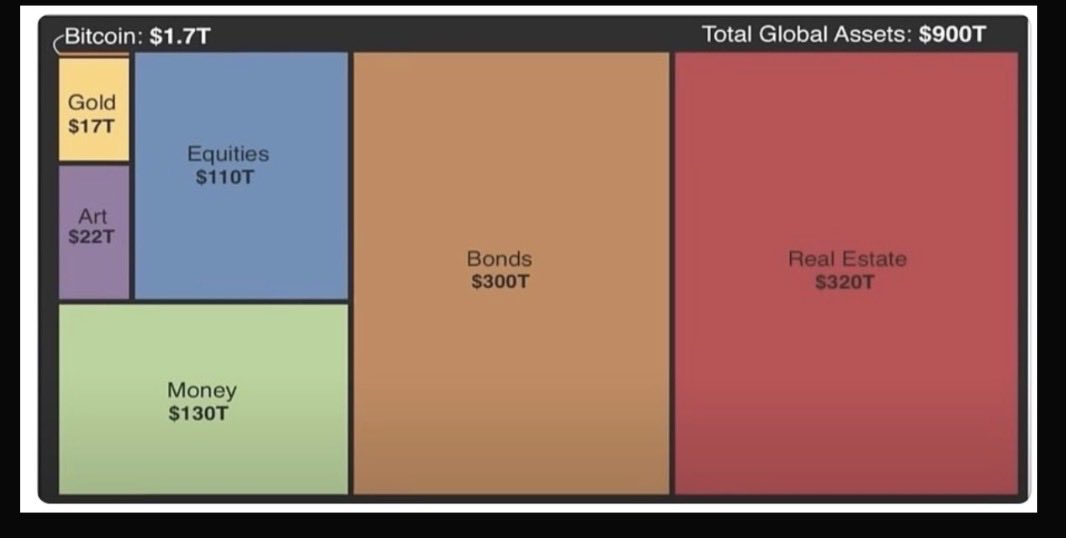
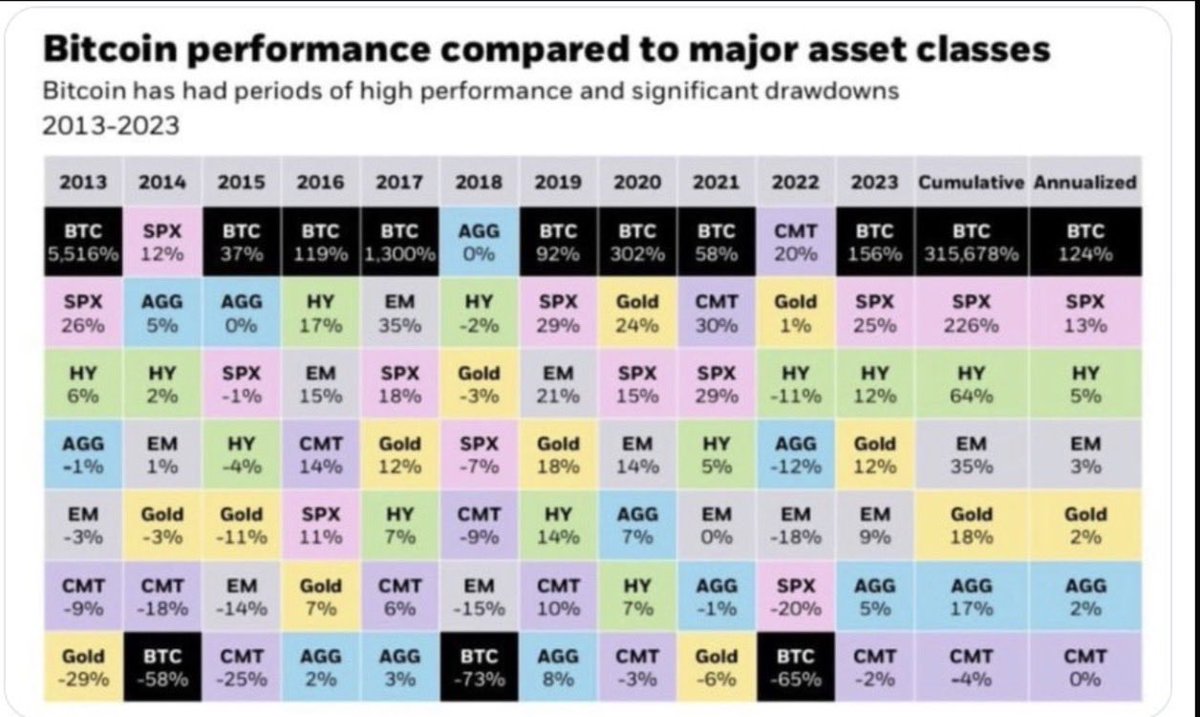
There was a debate about whether $STRC is a scam. Before you engage with that framing: ask yourself two questions: 1.) Do you actually think Morgan Stanley would run the IPO of a scam? 2.) Do you think BlackRock would be one of its largest shareholders? Those aren’t rhetorical. They’re the answer. @PunterJeff is exceptional for a specific reason. He spent his career in risk, underwriting it, pricing it, living inside it. Reinsurance. The people who don’t just talk about tail risk: they get paid to be right about it or go out of business. Combine that with a deep, studied understanding of Bitcoin and the Saylor playbook, the kind many of us have been following and building since 2020, and you have someone uniquely qualified to evaluate a product like STRC. Not just theoretically. Structurally. Some of us have dedicated our careers to this “magic internet money” I left a Wall Street Bank. Jeff left his insurance job. Etc Jeff finds the right words. Stays calm. Listens patiently / even when the other side says things like: “Bitcoin is definitely NOT going up 13% or more on average over the next 8–10 years. That’s insane to think.” That single sentence tells you everything. That is not someone who has spent serious time studying this asset. The best performing asset in human history. 80% 10-year ARR. Following the power law with 97% accuracy. Go ask an AI: all else being equal, what should Bitcoin’s 4-year CAGR be given a fixed supply halving schedule? It doesn’t guess. It does math. High school economics: demand stays completely flat for four years — zero growth — and we still print a 20% CAGR from supply compression alone. Will we slow from 40% to 30% over time? Yes. Healthy. Normal. Will we ever see a decade below 18% CAGR in our lifetimes? Almost zero probability. Bitcoin is 0.15% of $900 trillion in global wealth and that number is growing. When Bitcoin catches gold, a moving target, we’re likely at $2M+ per coin and still compounding at 25%+. I don’t mind people saying they don’t understand Bitcoin, MSTR, or STRC. 99.9% of the world doesn’t yet. That’s the opportunity. And it’s ok to be skeptical and ask questions. But to claim expertise, get basic facts wrong, and publicly bash something that honest people are genuinely trying to learn, well that causes real harm. Jeff doesn’t do that. He does the opposite. And that’s exactly why he deserves the defense.​​​​​​​​​​​ Rule #21 spread Bitcoin with Love 🧡
The Bitcoin Strategy tweet mediaThe Bitcoin Strategy tweet mediaThe Bitcoin Strategy tweet mediaThe Bitcoin Strategy tweet media
Jeff Walton@PunterJeff

Sat down with @coffeebreak_YT today on Bitcoin and Digital Credit. His edit will drop soon. Posting the full raw hour for anyone who wants the unfiltered version. Enjoy


English
16
34
224
9.6K
hadoob024 retweetledi
Mr. Anderson
Mr. Anderson@Truecrypto·
The Most Important Realization for a Technical Trader is this If you get this one truth, your entire trading career changes overnight. Technical analysis doesn’t predict the market, it frames your behavior within it. Most traders spend years trying to use charts to forecast the future. They draw levels, patterns, fibs, and divergences thinking they’ll “know” what comes next. But the market isn’t a puzzle to be solved, it’s a dynamic auction that constantly reprices information. The true power of technical analysis is not prediction, it’s context. It helps you define: Where your thesis is valid or invalid. Where risk and opportunity are asymmetrical. Where others are trapped and where you can act objectively. Once you realize this, your charts stop being prophecy tools and become decision frameworks. Your trades stop being about being right and start being about executing your edge The shift looks like this… From “What will happen?” to “What will I do if it happens?” From “I think price will go up.” to “If this level reclaims, I’ll look for confirmation and risk 1R.” From prediction to probability. The moment a trader stops using charts to predict and starts using them to prepare, is the moment they cross from amateur to professional.
English
10
18
164
13K
hadoob024
hadoob024@hadoob024·
@Stacks Did the yield amount go down after the halving? The amount of Bitcoin are received this cycle was substantially less than previous cycles
English
0
0
2
170
stacks.btc
stacks.btc@Stacks·
Think of all the Bitcoin yield people are leaving on the table simply because they haven't heard of Stacks.
English
24
29
162
8.2K
hadoob024 retweetledi
Mason
Mason@MasonFoard·
- The dollar loses 7% a year. - AI is coming for white-collar work. - Robots are 10 years out. @saylor just laid out what young people should actually do about it. 12 lessons:
Mason tweet media
English
62
227
1.6K
276.4K
Outkast
Outkast@Outkast·
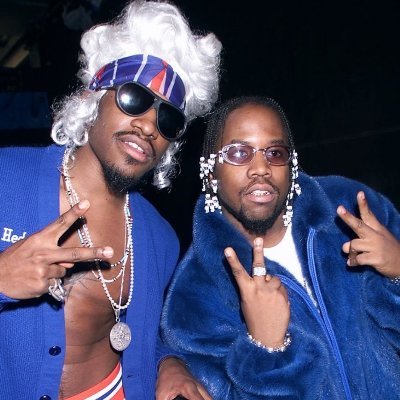
Rome, GA, 2014. Who was there?
Outkast tweet media
English
11
8
122
6.3K
hadoob024 retweetledi
Cred
Cred@CryptoCred·
Crypto's current state is a bit shit 1. Market cap is not an indicator of quality - the top 50 is made up of ghost coins or bloated governance slop that has underperformed and is uninvestable 2. The long tail speculative stuff went from high risk high reward to 'some dude in Miami is going to zero this if you hold it for more than 5.9 seconds' 3. Everything is extremely correlated and you can't meaningfully make bets based on sectors as it all converges into a tightly correlated mush, especially to the downside 4. Broad brush alt season is an artefact of the past that's very hard to replicate given (2) and given that there are simply too many coins and the excess of speculation doesn't really happen on centralised exchanges anymore - it's been siphoned off to bundled shit in max PvP settings 5. Crypto reputationally is no longer the sexy frontier of speculation. Institutional bid is in AI, retail speculative bid is in 0DTE equities, single name stocks etc. 6. Convexity has flattened. Even a lot of the historically safe blue chip stuff (BTC, ETH etc.) has underperformed and the historical anchor of 'buy deep drawdowns because all-time highs are guaranteed and explosive' has disappointed. All the shit we used to put up with because of the accessibly massive trend and momentum effects is now harder to justify because those same effects are getting neutered or siphoned off into other arenas. The obvious rebuttal is 'cycles' but even this past cycle is a useful counterpoint: it was extremely concentrated versus broad brush wealth effect, plus something very obviously broke after 10/10. So what does this all mean? 1. In previous cycles, nailing timing was enough and selection was the cherry on top (rising tide lifted all boats). I don't think that holds - both timing and selection matter now and in the future. 2. Participation alone can be an edge if the asset class is early enough and/or mispriced enough. I don't think that holds either, and we might actually have to learn how to trade (fuck). 3. Hopefully I'm an idiot doomposting the bottom GM
English
206
176
1.8K
166.4K
hadoob024 retweetledi
Jurrien Timmer
Jurrien Timmer@TimmerFidelity·
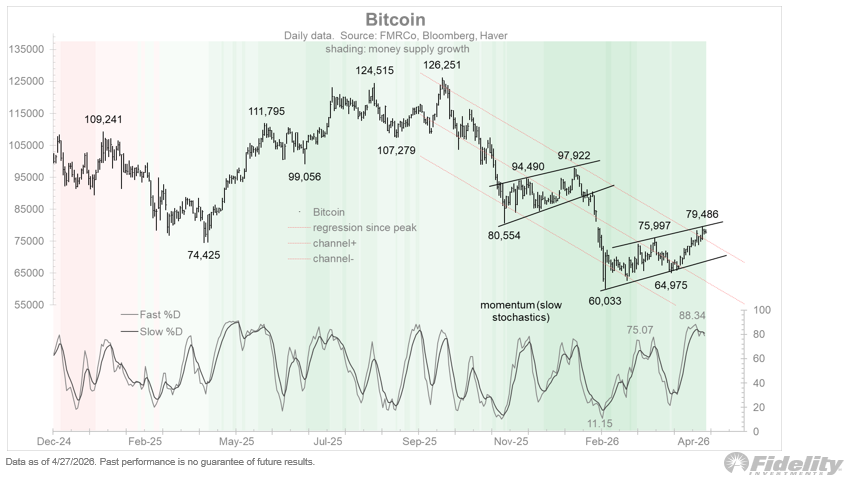
Bitcoin also continues to show resilience as it tests the upper bounds of a potential bear flag. Technical Analysis 101 states that when bear market rallies get overbought (per the stochastics below), it’s usually the kiss of death and time to sell. However, during bull markets overbought momentum means that the market is strong and likely to stay strong. My conclusion is that if Bitcoin cannot be pulled down by this current combination of overbought momentum and trendline resistance, then this is an emerging bull market and not a bear market rally. That’s been my hunch all along and it may be about to get confirmed. More on this later.
Jurrien Timmer tweet media
English
47
149
1.1K
64.1K
hadoob024 retweetledi
BTC
BTC@btc·
The @btc faucet is a temporary, promotional drop designed to educate users on self-custody. Limited funds available, one claim per @tether.me user. ⚡ Read the full T&Cs at wallet.tether.io/giveaway-2026-… before participating!
BTC tweet media
English
5.6K
603
1.8K
203.7K
hadoob024 retweetledi
Ihtesham Ali
Ihtesham Ali@ihtesham2005·
A 21-year-old MIT student wrote a master's thesis in 1937 that Harvard's most famous professor of cognitive science later called "possibly the most important master's thesis of the century." I read it at 2am and could not believe one paper had quietly built the entire foundation of every computer that exists today. His name was Claude Shannon. The thesis is called "A Symbolic Analysis of Relay and Switching Circuits." Every smartphone in your pocket. Every server farm running ChatGPT. Every chip Nvidia ships. Every line of code an engineer has ever written. All of it traces back to a single insight one graduate student had at 21 years old, working on a side project at MIT. Here is the story almost nobody tells you. Claude Shannon was born in 1916 in a small town in Michigan. He grew up tinkering. Built a telegraph between his house and a friend's house using barbed wire from a nearby fence. Repaired radios for the local department store. He studied both mathematics and electrical engineering at the University of Michigan because he could not decide which one he loved more. That refusal to choose is what eventually made him. When he got to MIT for graduate school in 1936, he was assigned to operate a strange machine called the differential analyzer. It was room-sized. Mechanical. Built by Vannevar Bush. It used a tangle of gears, shafts, and electrical relays to solve calculus problems. Most students just operated it. Shannon did something else. He stared at the relay circuits inside it. The way they clicked open and closed. The way they routed signals through the machine. He noticed something nobody had noticed before. The relays inside the machine had two states. Open or closed. On or off. One or zero. And the way the relays were wired together to make decisions looked exactly like a 90-year-old branch of mathematics that almost everyone had forgotten about. Boolean algebra. Invented by a British mathematician named George Boole in the 1850s. Boole had built a system of logic where statements could be true or false, and you could combine them with operators like AND, OR, and NOT to derive new statements. For 90 years, Boolean algebra had been a curiosity. A philosophical tool. Nobody saw a practical use for it. Shannon saw it. He realized that an electrical circuit was not just an electrical circuit. It was a physical implementation of a logical statement. A switch that closed when both A and B were true was an AND gate. A switch that closed when either A or B was true was an OR gate. The entire branch of pure mathematics that Boole had invented as a thought experiment could be built out of wires and relays. And once you could build logic out of wires, you could build anything that could be expressed in logic out of wires too. This was the insight that quietly created the modern world. Before Shannon's thesis, electrical engineers designed circuits the way artisans built watches. By feel. By experience. By trial and error. Every new circuit was a craft project. There was no theory underneath it. After Shannon's thesis, circuit design became a branch of mathematics. You could specify the logic you wanted on paper, and translate it directly into a wiring diagram. You could prove a circuit was correct before you built it. You could simplify a circuit by simplifying the underlying logical expression. The MIT historian who reviewed his thesis described the shift in one sentence. It transformed circuit design from an art into a science. Shannon was 21 years old when he wrote it. That alone would have earned him a place in every computer science textbook on Earth. But Shannon was not done. He spent the next 11 years working on a problem nobody had even framed properly. He wanted to know what information actually was. Not what messages were. Not what signals were. What information was. Mathematically. Quantitatively. As a measurable thing. In 1948, while working at Bell Labs, he published a 79-page paper called "A Mathematical Theory of Communication." The paper invented the entire field of information theory in a single shot. He proved that all information, regardless of whether it was a voice on a phone, a photograph in a magazine, or a chess move on a board, could be measured in a single unit. He named that unit the bit. Short for binary digit. It was the first time anyone had given information a unit of measurement. The paper proved something that sounded impossible. He showed that you could send a message reliably through a noisy channel, with arbitrarily low error, as long as you encoded it correctly and stayed below a specific limit he called the channel capacity. Every Wi-Fi connection, every satellite signal, every cell phone call, every fiber optic transmission across the floor of the Pacific Ocean operates inside the mathematical bounds that Shannon proved in this single paper. He did all of this in his spare time while officially working on cryptography for the war effort. The strangest part of the man is what he did when he was not inventing the future. He rode a unicycle through the hallways of Bell Labs at night while juggling. He built a chess-playing machine in 1950 that played a primitive form of chess decades before computers were supposed to be capable of it. He built an electronic mouse named "Theseus" that could solve a maze and remember the solution. It was one of the first machines on Earth that learned. He built a flame-throwing trumpet for fun. He had a closet full of unicycles in different sizes. He installed a chairlift across his backyard so his kids could get to the lake faster. Marvin Minsky, one of the founders of artificial intelligence, said Shannon was the most genuinely playful great scientist he had ever met. Other people approached research with seriousness. Shannon approached it like a kid who had snuck into the toy store after closing time. Stevens Institute of Technology called him the least known genius of the 20th century. That title is exactly correct. Most people have heard of Einstein, Turing, von Neumann. Shannon's name barely registers outside engineering departments. Yet without his master's thesis, there is no digital circuit. Without his 1948 paper, there is no internet. Without his framework, there is no measurement of information at all, which means no compression, no error correction, no cryptography, no machine learning. He died in 2001 at age 84, after years of Alzheimer's disease that took away his ability to recognize the world he had built. Most newspapers ran a small obituary. The world he had given us did not pause. His thesis is on the MIT archive. His 1948 paper is on the Bell Labs site. Both are free. Both are short. Both are still readable today by anyone willing to spend an evening with them. The least known genius of the 20th century is one click away from you. Most people will never open the file.
Ihtesham Ali tweet media
English
68
814
2.6K
135K
hadoob024 retweetledi
Adrian Morris
Adrian Morris@_Adrian·
Comments like this from someone like Jack Mallers are quite frustrating. @saylor | @Strategy could issue another 0% convert tomorrow. There was never and has never been any sign of exhaustion for converts and the market kept buying the embedded call option on $MSTR because of the volatility. They aren't issuing 10% + on $STRC because they don't have market interest in converts. Saylor is targeting a yield starved cohort to fund buying $BTC. It's really that simple. Strategy pivoted toward perpetual preferreds like $STRC because the true economic cost of the Bonds isn’t the coupon, it’s the constant short pressure from convert arb hedging and the related dynamics it creates with DEX | GEX. Convert arb funds buy the bonds, long the cheap vol | equity option & then delta-hedge by shorting $MSTR proportional to the bond’s delta. The converts are long gamma (convexity) making the hedge dynamic. So if $MSTR rises, the delta increases, the bond holders arb by shorting more stock to stay neutral. If $MSTR falls, the delta decreases, so they cover their shorts. This creates persistent short interest (at times 45% of MSTR’s short interest is directly tied to convert arb) with constant sell on strength | buy on weakness activity that acts as a drag on upside moves while adding liquidity on dips. This is gamma scalping | vol arbitrage at its finest; the coupon itself is almost irrelevant in this light. The Prefs sidestep this reality because they are not convertible into common & don’t create the same delta | gamma hedge pressure. Individuals running a $BTC Treasury Company should know this...
BitcoinTreasuries.NET@BTCtreasuries

JUST IN: $XXI CEO Jack Mallers just said Saylor "ran out of people willing to give him money at 0% and now has to pay 12%." 🤯 What Mallers missed: $STRC is perpetual. The principal never gets paid back. Saylor is porting fixed income capital into Bitcoin forever. 🔶

English
42
25
289
21.1K