Harold D. Kim

1.3K posts

Harold D. Kim banner
Harold D. Kim

Harold D. Kim

@haroldkimlab

I'm a physics professor at Georgia Institute of Technology aka Georgia Tech or GT. #BiologicalPhysics #PhysicsofLivingSystems

Atlanta, GA Katılım Haziran 2015
404 Takip Edilen603 Takipçiler
Sabitlenmiş Tweet
Harold D. Kim
Harold D. Kim@haroldkimlab·
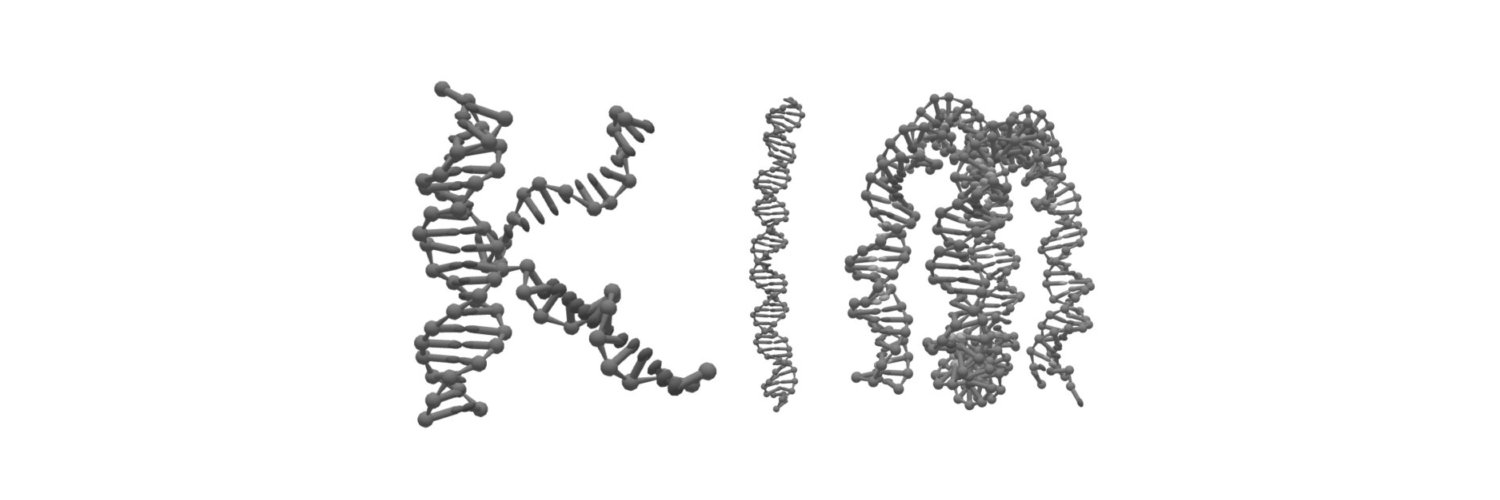
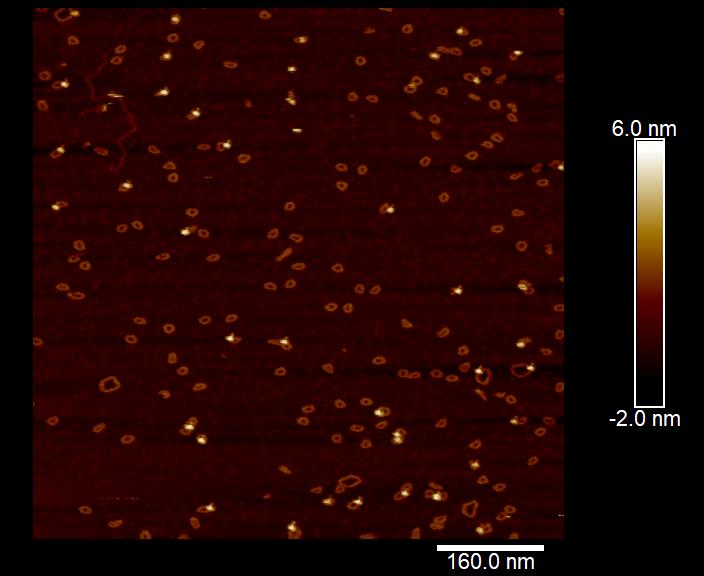
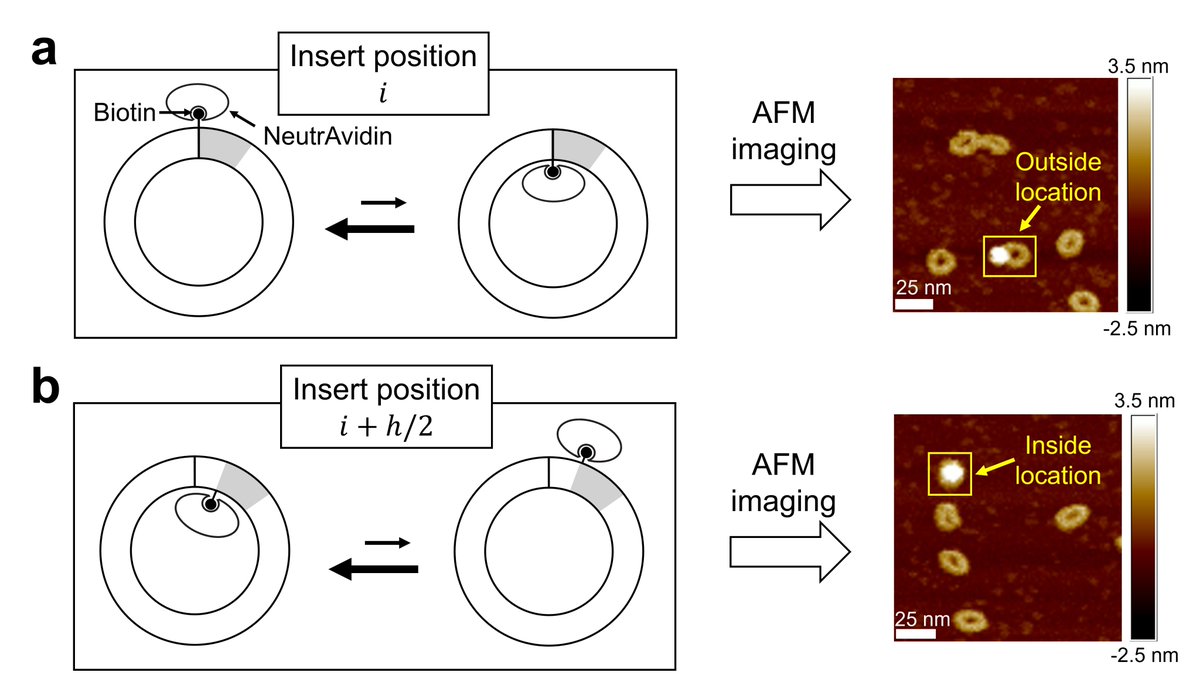
🚨Preprint alert🚨 We show experimentally that DNA minicircles adopt a favorite “inside-out” orientation depending on their sequence. Big thanks to Tony Lemos (@lemotony) for leading the work! biorxiv.org/content/10.110…
Harold D. Kim tweet media
English
0
2
7
285
Harold D. Kim retweetledi
Physics Magazine
Physics Magazine@PhysicsMagazine·
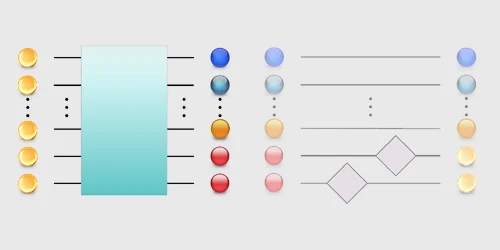
Running machine-learning algorithms on quantum computers could expand their use to more complex problems and to quantum datasets. Now researchers have proposed a thermodynamics-inspired protocol that could make quantum machine-learning more efficient. go.aps.org/3NzSAFx
Physics Magazine tweet media
English
0
5
18
1.1K
Harold D. Kim retweetledi
机器之心 JIQIZHIXIN
机器之心 JIQIZHIXIN@jiqizhixin·
What if all AI models share a hidden, low-dimensional "brain"? Johns Hopkins University reveals that neural networks, regardless of task or domain, converge to remarkably similar internal structures. Their analysis of 1,100+ models (Mistral, ViT, LLaMA) shows they all use a few key "spectral directions" to store information. This universal structure outperforms assumptions of randomness, offering a blueprint for more efficient multi-task learning, model merging, and drastically cutting AI's computational and environmental costs. The Universal Weight Subspace Hypothesis Paper: arxiv.org/pdf/2512.05117 Page: toshi2k2.github.io/unisub/ Our report: mp.weixin.qq.com/s/M3BypidpKOk0…
机器之心 JIQIZHIXIN tweet media
English
47
189
1.2K
77.5K
Harold D. Kim retweetledi
Robert Youssef
Robert Youssef@rryssf_·
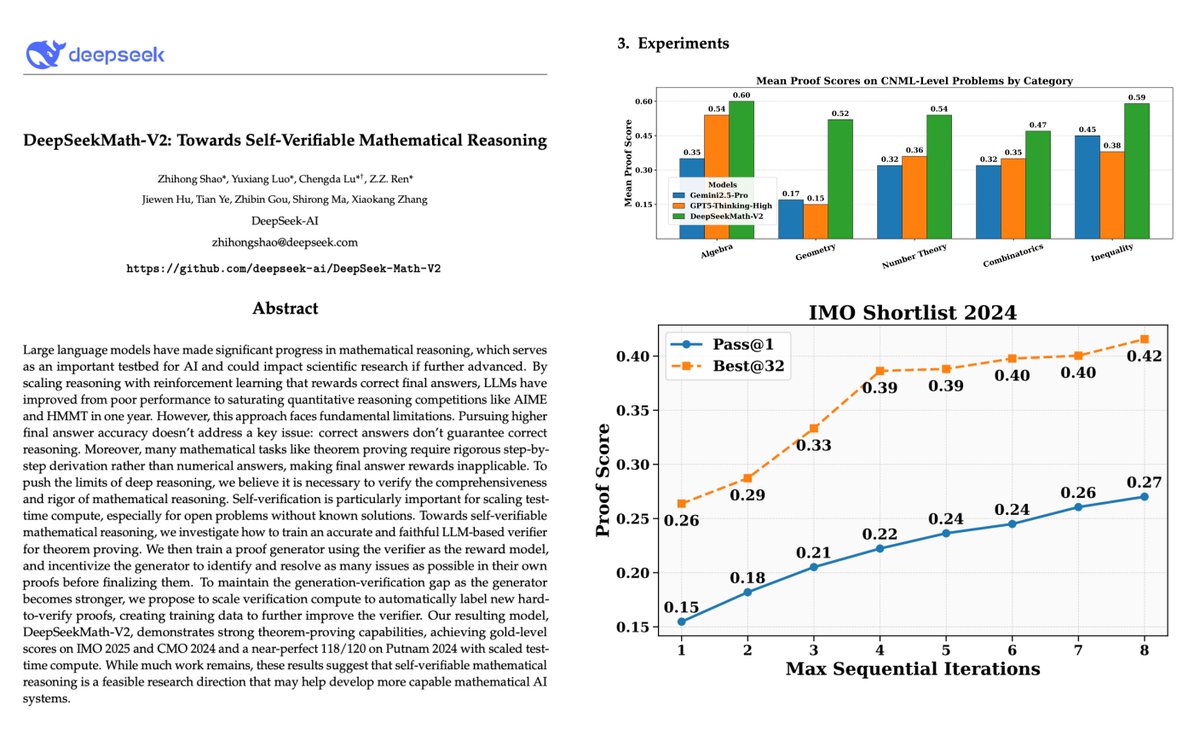
🚨 DeepSeek just did something wild. They built a math model that doesn’t just solve problems, it checks its own proofs, criticizes itself, fixes the logic, and tries again until it can’t find a single flaw. That final part is the breakthrough a model that can verify its own reasoning before you verify it. And the results are ridiculous: • Gold-level performance on IMO 2025 • Gold-level performance on CMO 2024 • 118/120 on Putnam 2024 near-perfect, beating every human score • Outperforms GPT-5 Thinking and Gemini 2.5 Pro on the hardest categories What makes DeepSeek Math V2 crazy isn’t accuracy, it’s the architecture behind it. They didn’t chase bigger models or longer chain-of-thought. They built an ecosystem: ✓ a dedicated verifier that hunts for logical gaps ✓ a meta-verifier that checks whether the verifier is hallucinating ✓ a proof generator that learns to fear bad reasoning ✓ and a training loop where the model keeps generating harder proofs that force the verifier to evolve The cycle is brutal: Generate → Verify → Meta-verify → Fix → Repeat. The core issue they solved: final-answer accuracy means nothing in theorem proving. You can get the right number with garbage logic. So they trained a verifier to judge the proof itself, not the final answer. The graph comparing proof accuracy across algebra, geometry, combinatorics, number theory, and inequalities shows DeepSeekMath-V2 beating both GPT-5 Thinking and Gemini 2.5 Pro across the board (this is on page 7). The wild part sequential self-refinement. With every iteration, the model’s own proof score climbs as it keeps debugging itself without human feedback. This isn’t “longer chain-of-thought.” This is “I will keep thinking until I’m sure I’m right.” A real shift in how we train reasoning models. DeepSeek basically proved that self-verifiable reasoning is possible in natural language no formal proof assistant, no human traces, just the model learning to distrust its own output. If you care about AI reasoning, this paper is a turning point.
Robert Youssef tweet media
English
111
539
2.1K
142.6K
Harold D. Kim retweetledi
Julian Englert
Julian Englert@julian_englert·
We just made an app that walks you through designing a novel protein with AI from scratch. Takes about 5 minutes, requires zero biology knowledge. ➡️ design-a-protein.com The best part: we will actually synthesize 1000 of those protein designs in the lab and test their real world function as a therapeutic.
English
26
172
911
92.1K
Harold D. Kim retweetledi
teknosaur
teknosaur@theteknosaur·
the line between simulation and reality is dissolving. this new research paper shows how to simulate millions of collisions with zero intersections. just pure physics.
English
422
2.6K
50K
3.1M
Harold D. Kim retweetledi
Jasir Shahbaz
Jasir Shahbaz@LahoreMarquez·
New Pope has a bachelors in mathematics. Another day of STEM majors stealing jobs from humanities
English
11
185
1.5K
28.9K
Harold D. Kim retweetledi
Martin Pacesa
Martin Pacesa@MartinPacesa·
Have you ever wanted to design protein binders with ease? Today we present 𝑩𝒊𝒏𝒅𝑪𝒓𝒂𝒇𝒕, a user-friendly and open-source pipeline that allows to anyone to create protein binders de novo with high experimental success rates. @befcorreia @sokrypton biorxiv.org/content/10.110…
English
27
424
1.8K
300.5K
Harold D. Kim retweetledi
Kirsty Wan 🔬
Kirsty Wan 🔬@micromotility·
This really is a *special* issue highlighting many open questions at the intersection of physics and biology, well worth a read. Featuring an extended editorial from Rob Phillips - on how physical approaches have contributed to many fields of biology doi.org/10.1016/j.cub.…
Current Biology@CurrentBiology

Our latest issue just dropped. And it's special! A high-density assortment of essays primer and reviews on #physics in #biology! Check it out! #Physicsandbiologyspecialissue5" target="_blank" rel="nofollow noopener">cell.com/current-biolog…

English
2
15
66
8K
Harold D. Kim retweetledi
Isaac Li
Isaac Li@IsaacLiLab·
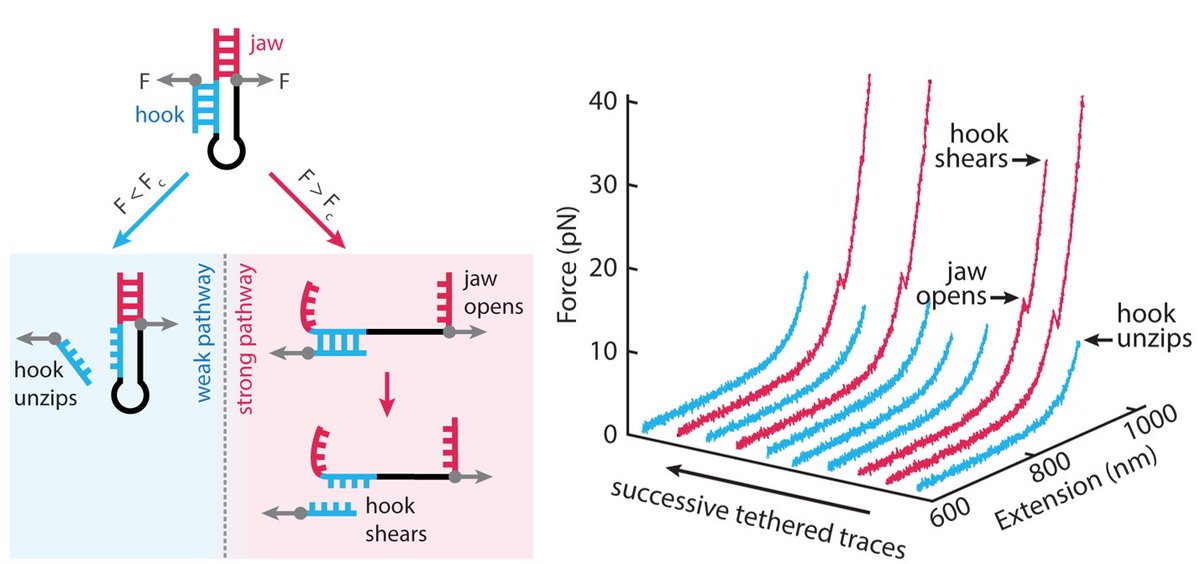
I am excited to share our latest work on creating the first tunable Catch-Bond with #DNA! Our Fish-Hook architecture allowed precise control of adhesion nanomechanics, creating new possibilities for bioengineering and material science! 🧬🐟🪝🌟nature.com/articles/s4146… #biophysics
Isaac Li tweet media
English
5
14
30
2.3K
Harold D. Kim retweetledi
Quanta Magazine
Quanta Magazine@QuantaMagazine·
“I had always had this impression that to do computer science, you had to be a hacker and know everything about Linux. I realized that theoretical computer science was as fascinating as theoretical physics, and I said, ‘OK — this is what I want to do.’” quantamagazine.org/the-computer-s…
English
1
23
60
9.1K
Scott C Blanchard
Scott C Blanchard@TheBlanchardLab·
I am deeply honored to receive the 2025 Kazuhiko Kinosita Award in Single-Molecule Biophysics from the Biophysical Society. Our achievements build on the foundations laid by many great scientists, including all past recipients of this award. I would like to extend my sincere gratitude to the Biophysical Society and the award committee for recognizing our team’s contributions. I also thank my scientific mentors, the colleagues with whom I’ve had the opportunity to collaborate, and the many talented young scientists whose dedication brought our research to fruition. Special thanks must also go to the leadership at St. Jude Children’s Research Hospital for their vision to create a center for single-molecule imaging, enabling us and others at our institution to dig deeper into the roles of structural dynamics in complex biological systems to disease. The future of single-molecule biophysics is brighter than ever, and I hope our contributions will inspire the next generation of scientists.
English
31
15
228
14.3K
Harold D. Kim retweetledi
ₕₐₘₚₜₒₙ
ₕₐₘₚₜₒₙ@hamptonism·
Students at Stanford have built alphaXiv, an open discussion forum for arXiv papers. Think of it as 𝕏 for research.
English
88
1.3K
9.2K
646.5K
Harold D. Kim retweetledi
Molecular Cell
Molecular Cell@MolecularCell·
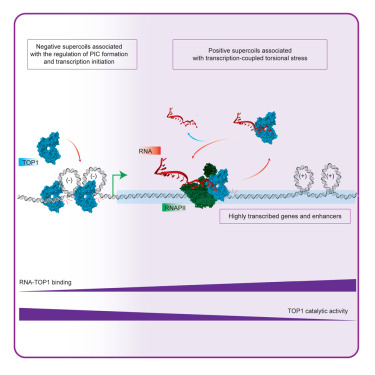
Online Now: RNA interacts with topoisomerase I to adjust DNA topology dlvr.it/TCBkDV
Molecular Cell tweet media
English
1
37
147
13.1K