

Martha Lincoln
27.3K posts

@heavyredaction
Medical anthropologist, Assoc. Prof. @SFSU. EIC, @JVietnamStudies. “In the dark times/Will there also be singing?”—Bertolt Brecht


Instead of worrying that humanities degrees don’t prepare students for jobs in today’s world [product managers finance consultants startups], we should worry that we’ve created a world with such little value for literature, art, philosophy—anything that expresses the human soul


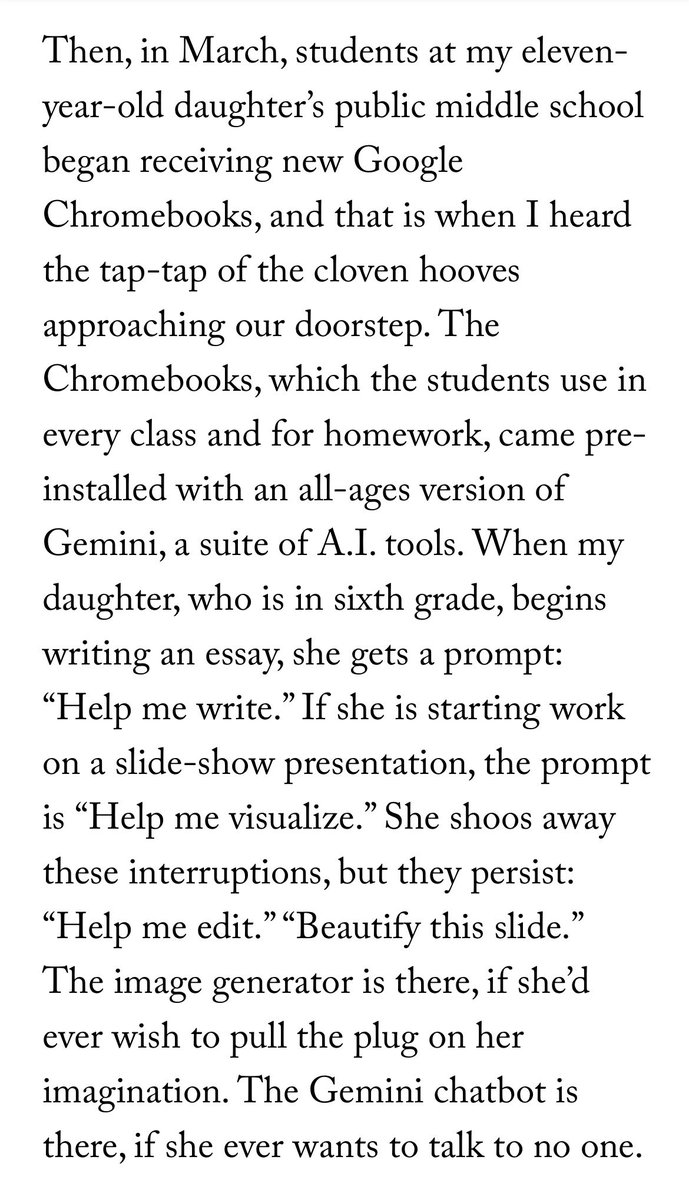
Jessica Winter has been raising her children to detest A.I. Then her daughter’s public middle school began receiving Google Chromebooks, which came pre-installed with an all-ages version of Gemini, a suite of A.I. tools. “When my daughter, who is in sixth grade, begins writing an essay, she gets a prompt: ‘Help me write,’ ” Winter writes. “If she is starting work on a slide-show presentation, the prompt is ‘Help me visualize.’ She shoos away these interruptions, but they persist: ‘Help me edit.’ ‘Beautify this slide.’ ” Proponents of generative A.I. in elementary and middle schools argue that such early exposure will foster digital-media literacy, and prepare them for a future in which most professions are steeped in A.I. But the technology also poses significant cognitive and social-emotional risks to young people. Read Winter’s report about A.I.’s infiltration into schools—and what it could mean for young minds: newyorkermag.visitlink.me/NSWuBG