Himal Roka 🧬 retweetledi
Himal Roka 🧬
131 posts

Himal Roka 🧬
@himalroka2
Molecular Genetics | Genetic Medicine | Interested AI in Biology 🧪
New Jersey, USA Katılım Mayıs 2019
1K Takip Edilen159 Takipçiler
Himal Roka 🧬 retweetledi

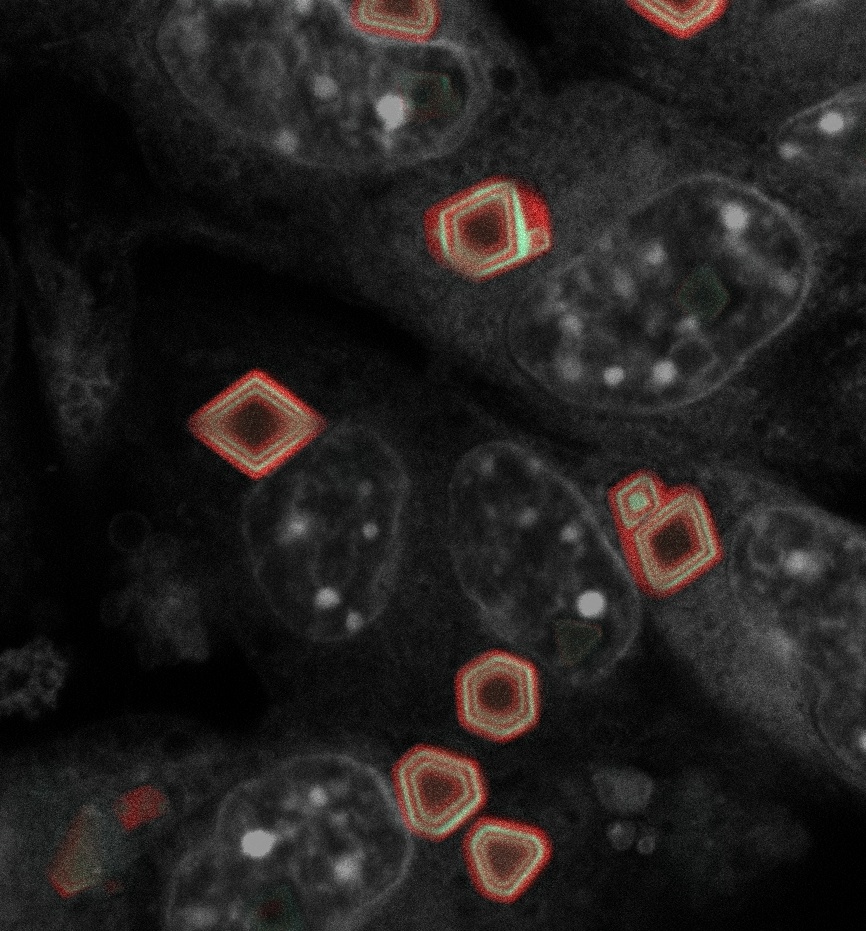
🚨 Today in @Nature, we report GEMINI—a genetically encoded intracellular memory device that writes cellular dynamics into tree-ring-like fluorescent patterns within cytoplasmic protein assemblies.[1/n]
nature.com/articles/s4158…

English
Himal Roka 🧬 retweetledi

@PracheeAC genomicsxai.github.io we'll be releasing a lot more over the next few weeks and months through this venue and biorxiv.
English
Himal Roka 🧬 retweetledi

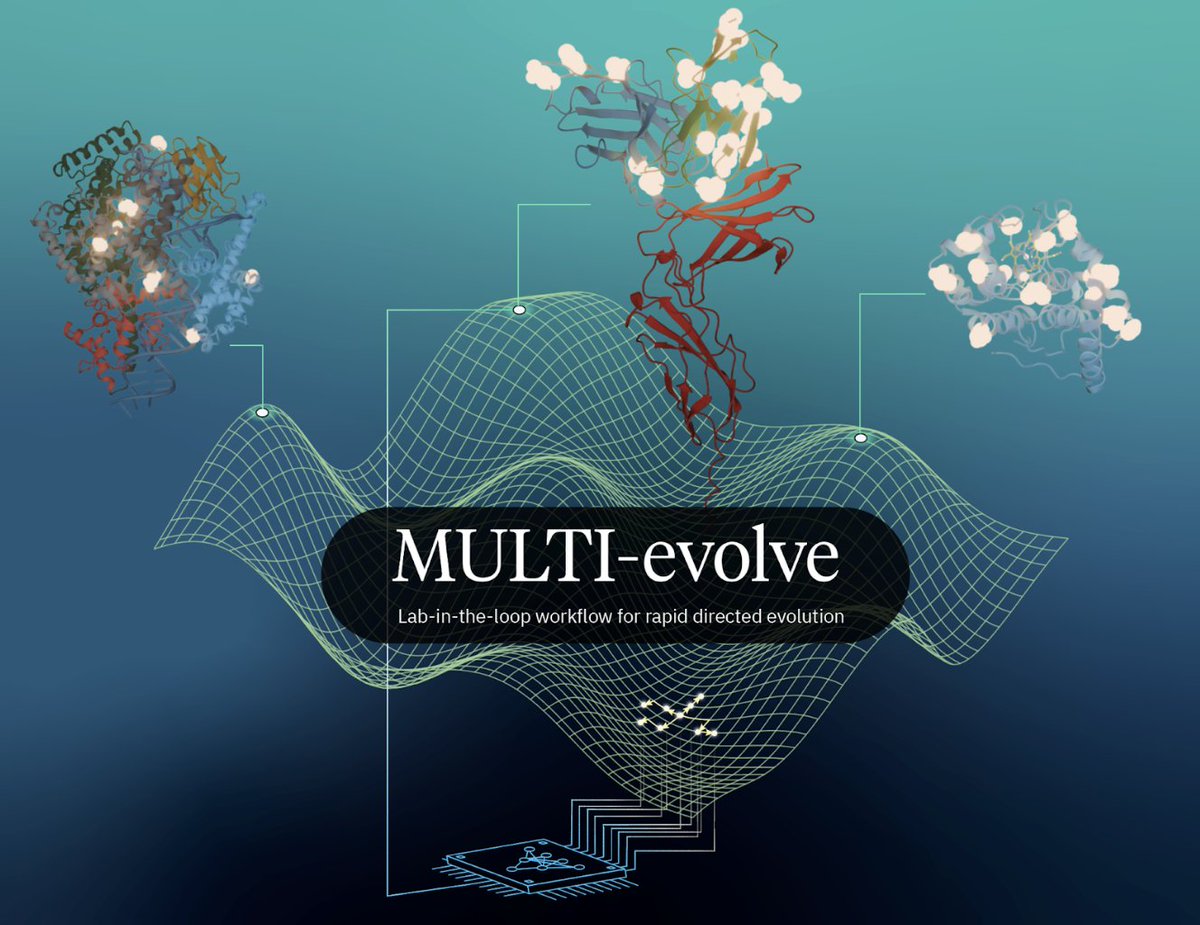
Delighted to share new @arcinstitute work from our group on AI-accelerated lab-in-the-loop, in @ScienceMagazine today
One of the most remarkable things about biology is that it's digital. DNA, RNA, proteins: these are all sequences, and their function is directly encoded in their sequence of letters. But a protein of length N has 20^N possible variants and the vast majority are non-functional. Evolution spent billions of years finding the functional needles in this haystack through random exploration and natural selection. For modern biomedicine, we need to solve this in days to weeks.

English
Himal Roka 🧬 retweetledi

Excited to share VIPerturb-seq!
New tech from my lab which aims to improve the cost, data quality, and efficiency of single-cell CRISPR screens so that they are accessible to any lab - even at genome-wide scale
Preprint and 🧵 (1/): biorxiv.org/content/10.648…
English
Himal Roka 🧬 retweetledi

We're running a @CompoundVC Research Day on Rapid in vivo Iteration in SF in late Feb.
In vivo evidence is already arguably the core bottleneck to drug development. This will intensify in a world where we have orders of magnitude more drugs to screen. From safety to efficacy to solubility to distribution, we need to assess many drug parameters as rapidly as possible. We will discuss the many emerging strategies to scale these parameters with in vivo evidence (including animal models), human clinical trial speed ups, and increased data modality collection and predictive validity.
Please come to this if you're:
- Frustrated with the speed of drug development
- Seeking different strategies for knowing if your drug works
- Interested in contributing to the future of a more expeditious drug discovery system
Thanks to @mackenziejem for co-organizing!

English
Himal Roka 🧬 retweetledi

Chemistry writes the story of life.
Every cell, every second, it tells it again - powered by molecular design.
At the core of this process lies the citric acid cycle, the central hub of metabolism.
Here, acetyl-CoA derived from carbohydrates, fats, or proteins enters a precise series of reactions that convert fuel into energy.
Each step transfers electrons, drives ATP synthesis, and sustains the continuous renewal of life at the cellular level.
What may seem invisible is, in fact, the most constant motion in existence; the quiet rhythm of biochemistry that powers everything we do.
English
Himal Roka 🧬 retweetledi

🧬 🍀 Gene-edited four-leaf clovers???
There is only one four-leaf clover for every 5,076 three-leaf clovers.
So far, we only know that the gene responsible for this rare trait is recessive for the quadruploid plants, and that luck favors warm conditions, approximately two-fold when it comes to growing four leaves.
The precise genotype of the iconic four-leaf clover, however, remains a mystery 🧵

English
Himal Roka 🧬 retweetledi

Have $10M and want to cure some diseases?
It costs ~$1B to invent a new medicine…but $10M buys you Project Encore, to see if ANY existing drug might be repurposed for ~100 diseases that have no treatments.
Contact me - be a hero for desperate patients!
docs.google.com/document/d/1dM…

English
Himal Roka 🧬 retweetledi

🚫 No dyes. No bleaching.
🔬 Just AI + label-free microscopy = vivid virtually stained images
New in @NatMachIntell: A deep learning model that enables robust virtual staining across microscopes, cell types & conditions. #CZBiohubSF
@mattersOfLight explains:
English
Himal Roka 🧬 retweetledi

We made a huge poster that illustrates all of the major genome editing tools in one place.
You can download a copy for free from the @AsimovPress website.
press.asimov.com/articles/crisp…
English
Himal Roka 🧬 retweetledi

I had a similar experience with this N of 1
Why current deep learning sequence models of gene expression struggle to predict counterfactual effects of variants on expression.
platform.futurehouse.org/trajectories/9…
Also asked for suggestions for improvements
platform.futurehouse.org/trajectories/4…
Prof. Nikolai Slavov@slavov_n
I tested the FutureHouse with some questions, e.g.: Have CRISPR perturbations of TFs allowed confident inference of TF - target regulation? ✅ It returned relevant references ⚠️ The results offered more cheerleading than critical analysis. platform.futurehouse.org/trajectories/4…
English
Himal Roka 🧬 retweetledi

Last night I was honored to receive the 2025 #BreakthroughPrize in the Life Sciences, reflecting the efforts of many students, collaborators, doctors, and patients in labs around the world. I hope this 4-minute excerpt can inspire when science needs public support more than ever.
English
Himal Roka 🧬 retweetledi

Just published @ScienceMagazine
On fixing the NIH 15% cap
"The consequences of failing to do so—reduced research capacity, weakened scientific competitiveness, and increased financial strain on institutions—are simply too dire to ignore."
science.org/doi/10.1126/sc…

English
Himal Roka 🧬 retweetledi

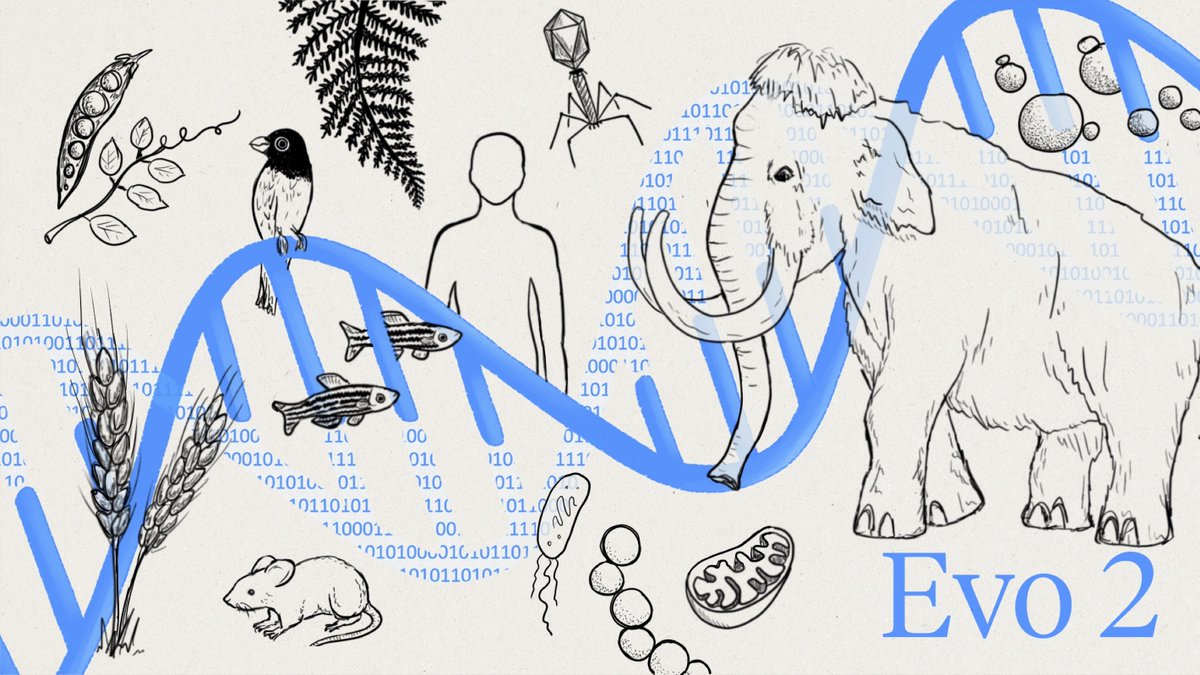
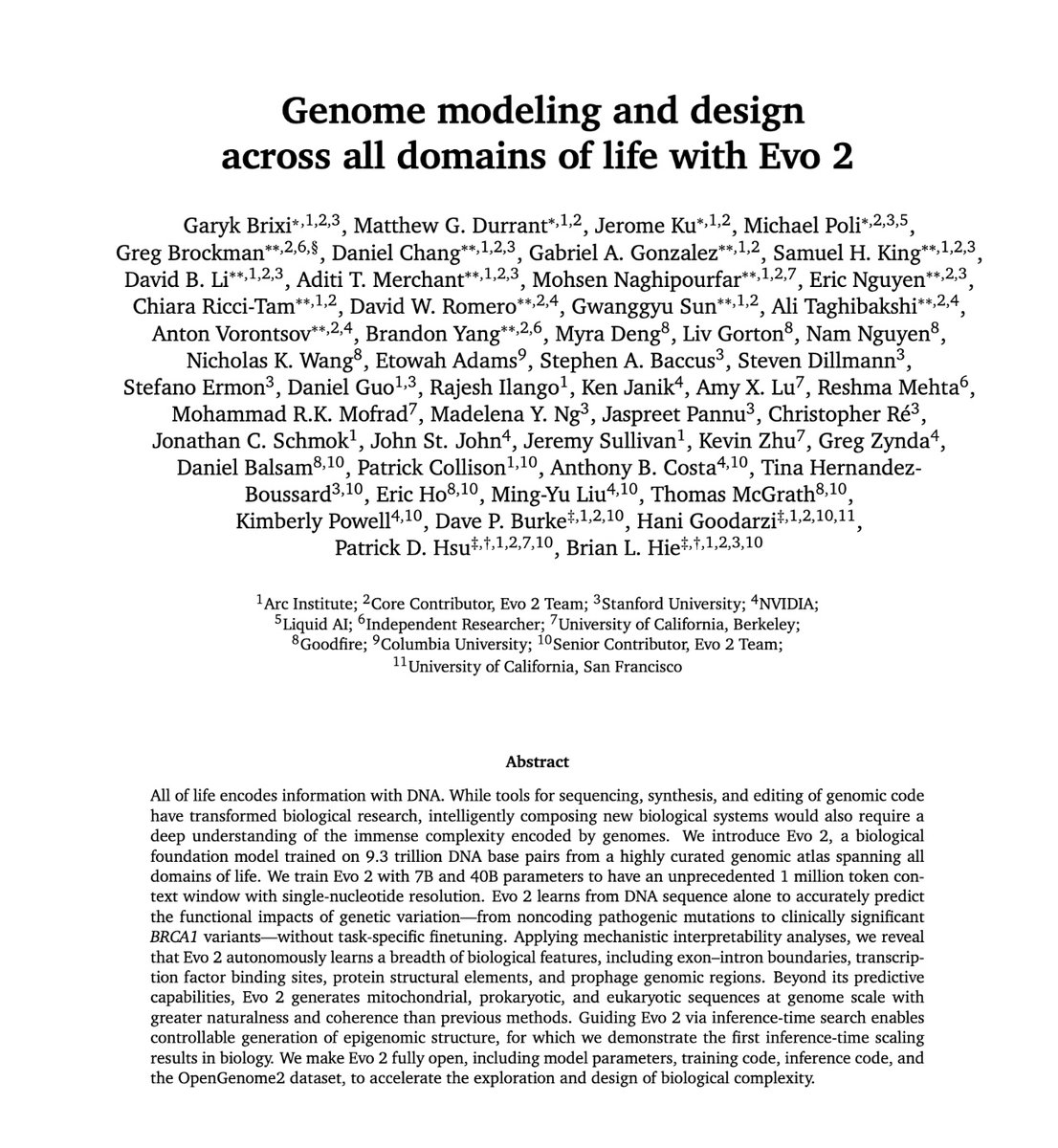
Announcing Evo 2: The largest publicly available, AI model for biology to date, capable of understanding and designing genetic code across all three domains of life. arcinstitute.org/manuscripts/Ev…

English
Himal Roka 🧬 retweetledi

Why AI Won't Cause Unemployment
Marc Andreessen
Reposted Jan 24, 2025
"In retrospect, I wish I had known more about the hazards and difficulties of [running] a business." -- George McGovern
Fears about new technology replacing human labor and causing overall unemployment have raged across industrialized societies for hundreds of years, despite a nearly continual rise in both jobs and wages in capitalist economies. The jobs apocalypse is always right around the corner; just ask the Luddites.
We had two such anti-technology jobs moral panics in the last 20 years — “outsourcing” enabled by the Internet in the 2000’s, and “robots” in the 2010’s. The result was the best national and global economy in human history in pre-COVID 2019, with the most jobs at the highest wages ever.
Now we’re heading into the third such panic of the new century with AI, coupled with a continuous drumbeat of demand for Communist-inspired Universal Basic Income. “This time is different; AI is different,” they say, but is it?
Normally I would make the standard arguments against technologically-driven unemployment — see good summaries by Henry Hazlitt (chapter 7) and Frédéric Bastiat (his metaphor directly relevant to AI). And I will come back and make those arguments soon. But I don’t even think the standand arguments are needed, since another problem will block the progress of AI across most of the economy first.
Which is: AI is already illegal for most of the economy, and will be for virtually all of the economy.
How do I know that? Because technology is already illegal in most of the economy, and that is becoming steadily more true over time.
How do I know that? Because, [see chart].
This chart shows price changes, adjusted for inflation, across a dozen major sectors of the economy.
As you can see, we actually live in two different economies.
The lines in blue are the sectors where technological innovation is allowed to push down prices while increasing quality. The lines in red are the sectors where technological innovation is not permitted to push down prices; in fact, the prices of education, health care, and housing as well as anything provided or controlled by the government are going to the moon, even as those sectors are technologically stagnant.
We are heading into a world where a flat screen TV that covers your entire wall costs $100, and a four year college degree costs $1 million, and nobody has anything even resembling a proposal on how to systemically fix this.
Why? The sectors in red are heavily regulated and controlled and bottlenecked by the government and by those industries themselves. Those industries are monopolies, oligopolies, and cartels, with extensive formal government regulation as well as regulatory capture, price fixing, Soviet style price setting, occupational licensing, and every other barrier to improvement and change you can possibly imagine. Technological innovation in those sectors is virtually forbidden now.
Whereas the sectors in blue are less regulated, technology whips through them, pushing down prices and raising quality every year.
Note the emotional loading of the interplay of production and consumption here. What do we get mad about? With our consumer hat on, we get mad about price increases — the red sectors. With our producer hat on, we get mad about technological disruption — the blue sectors. Well, pick one; as this chart shows, you can’t have your cake and eat it too.
Now think about what happens over time. The prices of regulated, non-technological products rise; the prices of less regulated, technologically-powered products fall. Which eats the economy? The regulated sectors continuously grow as a percentage of GDP; the less regulated sectors shrink. At the limit, 99% of the economy will be the regulated, non-technological sectors, which is precisely where we are headed.
Therefore AI cannot cause overall unemployment to rise, even if the Luddite arguments are right this time. AI is simply already illegal across most of the economy, soon to be virtually all of the economy.

English