Wisarut Suwanprasert retweetledi
Wisarut Suwanprasert
7.4K posts

Wisarut Suwanprasert
@invariance
Enjoy #Math, #Chess, #Go / #Weiqi / #Baduk, #badminton, and #basketball.
Murfreesboro, TN Katılım Eylül 2009
2.1K Takip Edilen2K Takipçiler
Wisarut Suwanprasert retweetledi

I’m happy to announce that this coming fall I’ll be joining Merton College at the @UniofOxford as a College Lecturer in Politics! Always wanted to post one of these “happy to posts”, sorry for the spam.
English
Wisarut Suwanprasert retweetledi

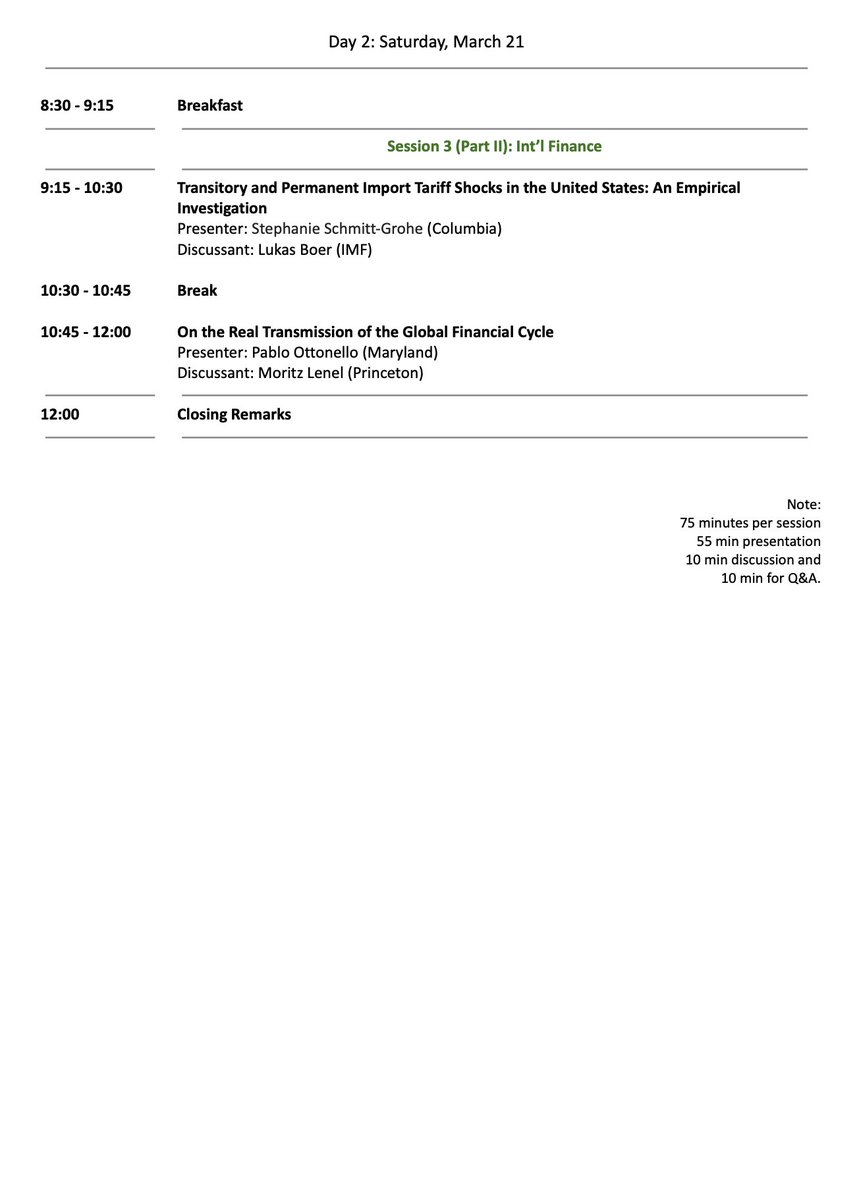
Great two days at the 12th Atlanta Workshop on International Economics (@AtlantaFed & @EmoryEconomics). Fantastic presentations on trade elasticities, innovation and growth, international risk sharing, and optimal tariffs! Looking forward to next year's iteration!


English

@lianda_edu Would you be interested in MTSU's PhD program?
English

I want to pursue a PhD in economics or at a business school in North America, but unfortunately, in this caste-like ranking system, I'm placed at the level of Shudra or Dalit. If my parents could afford to pay $80,000 a year in tuition plus tens of thousands more for living expenses to get me into a top-tier undergraduate program in the US, I might have had a chance to study at an excellent American university. But if you don't have that, you're essentially branded with original sin. By the way, the career outcomes for undergraduate students at the University of Minnesota are much stronger than those fromJapan and China's top economics programs.
English
Wisarut Suwanprasert retweetledi

(mean(x) - median(x)) / stdev(x) is a nonparametric measure of skew, with bounds of (-1, 1) because of the result below. It is less sensitive to outliers than the moment-based estimator mean((x - mean(x))^3) / (stdev(x))^3. If you compute rolling skew measures from returns data, analogous to rolling volatility, you see that moment-based skew changes a lot as big returns enter and exit the sample.
Gappy (Giuseppe Paleologo)@__paleologo
I did not know that, for any random variable x, | mean(x) - median(x) | <= stdev(x) Direct proof:
English
Wisarut Suwanprasert retweetledi

We are looking for a research professional to work with Rodrigo Adao, Juanma Castro-Vincenzi, Brian Greaney, and me on a compendium of software and models for spatial dynamics. Come to UChicago and BFI to work with us! Here is the job posting: job-boards.greenhouse.io/bfiprep/jobs/7…
English
Wisarut Suwanprasert retweetledi

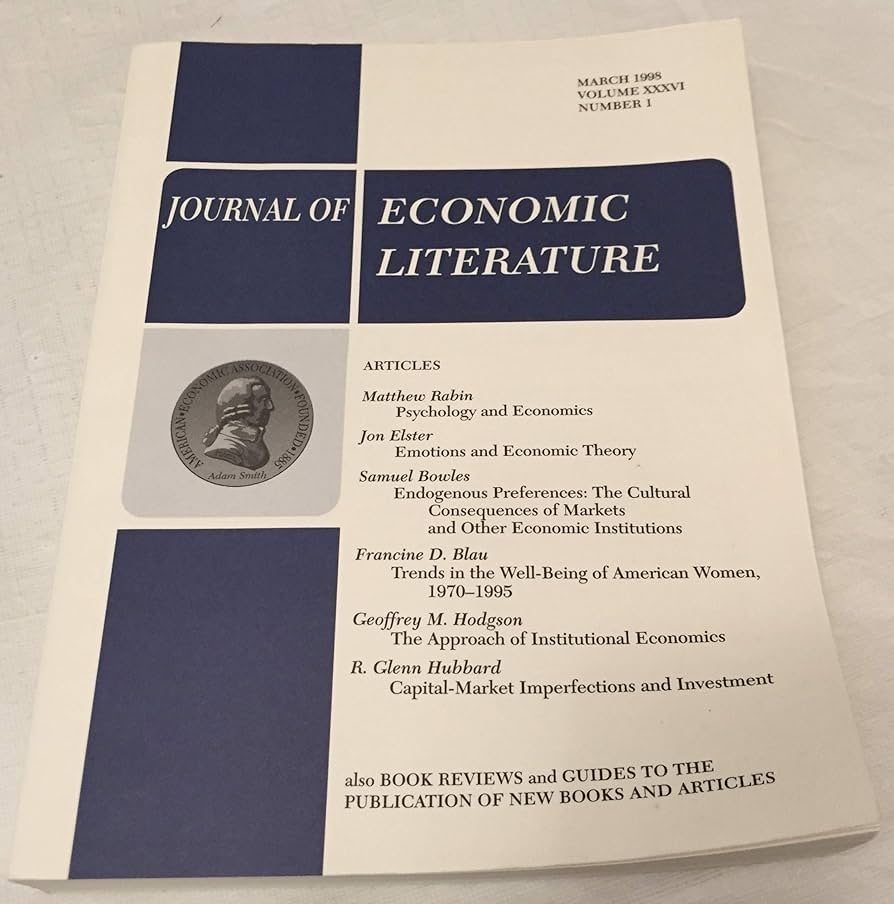
By now, I have published a fair number of papers, and one more acceptance would have close to zero marginal impact on anything that matters professionally. But getting my survey on “Deep Learning for Solving Models” accepted into the Journal of Economic Literature made me genuinely happy, for reasons that have nothing to do with my CV.
I had the misfortune of studying my undergraduate degree in economics at a quite awful institution. Two professors, David Taguas and Alfredo Arahuetes, were outstanding, and I owe them a great deal. The rest were well below any reasonable professional level, and some violated the basic standards of ethical conduct. They had no business teaching economics at any level, let alone at a university that charged tuition and claimed to prepare students for professional life.
I had to work out most of my education on my own. The surveys published in the Journal of Economic Literature were how I did it. I spent hours in the library’s reading room going through one survey after another on topics I had never been properly taught. Some helped more than others, but collectively they gave me a solid enough foundation that, when I arrived at Minnesota for my PhD, I discovered, to my considerable surprise, that I was ahead of nearly all the other first-year students, including some who held master’s degrees, despite the fact that I had finished my undergraduate degree just six weeks before. I owe the Journal of Economic Literature a debt I will never be able to repay. Publishing a survey there is the closest I can come to trying.
So, the thought that some student somewhere, working on her own in a library or on a laptop, might find my survey useful gives me tremendous satisfaction.
But there is a broader point worth making. Even in the world of AI, the profession has an important mission in making educational material widely available. Textbooks, surveys, teaching slides, these are public goods in the economist’s sense: high social value, insufficient private incentive to produce. This is also why I post all my slides and teaching material online:
sas.upenn.edu/~jesusfv/deepl…
We do not reward these activities nearly enough, and their supply is well below what any reasonable social planner would choose. I do not have a good proposal for changing this, and I would welcome suggestions.
What I do find heartbreaking is that many of the great economists of the past couple of generations never wrote textbooks on their areas of expertise. I do not mean this as criticism. All of them maximize, and perhaps they all suffer from the same bias I suffer from: the belief that one can always do it next year. But I often think about the hours of pure intellectual pleasure I would have had reading “Time Series Econometrics: An Advanced Textbook” by Chris Sims or “Methods in Structural Estimation” by Pat Bajari. Those books do not exist. They should.

English
Wisarut Suwanprasert retweetledi

Run AI tools directly from Stata.
Learn how to update the 𝗰𝗵𝗮𝘁𝗴𝗽𝘁 command and write similar commands for @claudeai, @GeminiApp, and @Grok using PyStata.
A practical guide to connecting Stata with AI tools.
🔗 blog.stata.com/2025/10/07/sta…

English

Ecstatic to share that I will join the Central Bank of Peru as a research economist this Spring. The job market was brutal, and I couldn't have done it without @FazzariSteven, Philipp Grubener and Martin Garcia-Vazquez, excellent advisors.
On to push the boundaries of science!
English
Wisarut Suwanprasert retweetledi

A small story of a Noble Nobel laureate.
On Monday Oct. 10, 2011, day of the announcement, I get an email from Chris.
Reason? We (w/ A. Marcet & W. den Haan) organized a fiscal conference in Paris Dec. 8-9.
Chris was 1 of 2 keynotes.
Not "I have to cancel" (totally fine duh!)
1/n
The Wall Street Journal@WSJ
Christopher Sims, an economist whose work transformed how central banks understand cause and effect in the economy, has died at 83. on.wsj.com/47Sosfo
English
Wisarut Suwanprasert retweetledi

Exciting times in Stockholm and @IIES_Sthlm this fall
Four new hires for IIES: @KHarmenberg @RHelensdotter @caterina_vieira @ReichardtHugo
And @RustamJamilov coming to CeMoF (joint IIES/SU/SBS center) for a year
English
Wisarut Suwanprasert retweetledi