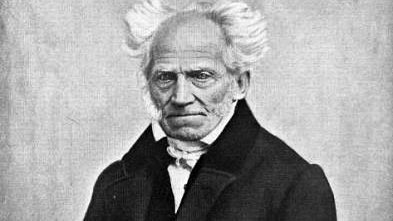
“Five minutes after birth, they decide your name, religion, nationality and sect. And you spend the rest of your life defending what you did not choose.”
- Arthur Schopenhauer
New episode: "How Elon Works"
This episode covers the insanely valuable company-building principles of Elon Musk
A few notes from the episode:
1. The mission comes first.
2. Retreat is not an option.
3. A maniacal sense of urgency is our operating principle.
4. Product design should be driven by engineers.
5. You should not separate engineering from product design.
6. Having separate design and production departments is bullshit. Keep everything together and feedback immediate.
7. The leader should be on the front lines. You should be a battlefield general.
8. "If they see the general out on the battlefield, the troops are going to be motivated. Wherever Napoleon was, that's where his armies would do best."
9. Apply The Algorithm constantly. (1) Question every requirement. (2) Delete any part of the process you can. (3) Simplify and optimize. (4) Accelerate cycle time. (5) Automate.
10. Repetition is persuasive. "I became a broken record on the algorithm. I think it's helpful to say it to an annoying degree."
11. You should go ultra-hardcore on deletion and simplification.
12. Camaraderie is dangerous. It makes it hard for people to challenge each other’s work. (Refer to point #1)
13. Never ask your troops to do something you wouldn’t do.
14. Hire for attitude. Skills can be taught. Attitude changes require a brain transplant.
15. Good attitude = A desire to work maniacally hard.
16. The only rules are the ones dictated by the laws of physics. Everything else is a recommendation.
17. Keep your entire company committed to a common goal.
18. If things aren’t going well, throw away the existing design, start from first principles, question every requirement based on fundamental physics.
19. Find the limit. You want to delete as much as possible and you can’t do that unless you find the limit.
20. If you aren’t adding back at least 10% of the things you deleted, then you didn’t delete enough.
21. Maintain control. Avoid joint ventures. Eliminate middlemen.
22. Have a relentless dedication to questioning every requirement.
23. No work about work, just work.
24. Go to the problem. Get on the plane. Fly to the source. Go to the exact location in the factory. Go to the problem and stay there until it's resolved.
25. The best part is no part.
26. Be wired for war.
27. Do not fear losing. It hurts the first 50 times but then you’ll be able to play with less emotion. You will take more risks.
28. Stay heads down focused on doing useful things for civilization.
29. When something is important and has to be done quickly, have meetings every 24 hours to run the algorithm and check on the previous days progress. You'll be shocked at how fast this speeds things up.
30. Life needs to be interesting and edgy.
31. Delete, delete, delete, delete.
There are 100 more ideas in the episode. I hope you listen to it. 30 years of Elon’s career + 60 hours of reading and research and me just absolutely ripping through idea after idea at 2x speed for 90 minutes.
It will be hard to find a better use of time.
Maybe a very prosaic observation, but I've been reflecting on just how much the pandemic changed the world in ways that are completely unrelated to the pandemic itself. I think I've underestimated it 'till now.
In a recent interview, I was struck by the comment that so many of the shops that we associate with the best of France—the poissonneries and the fromageries—closed during the pandemic, to be replaced by take-out pizza shops and the like.
College professors almost uniformly describe big changes in student behavior: lecture attendance and willingness of students to complete reading assignments are both way down.
A UK government official recently told me that British economic statistics have become much less reliable since the pandemic: data on trade, employment, and population is suspect. (The true GDP per capita figures are probably worse than what is indicated by the published data, since the 2021 census is believed to be an undercount.)
In the West, there are far fewer bustling workplaces than there used to be. In recent conversation with a well-traveled friend, he bemoaned how so many cities—places like Madrid, Buenos Aires, and Bali—have lost so much of their erstwhile vibrant nightlife.
Immigration accelerated enormously across many countries, including the US, the UK, Canada, and Australia.
In China, I hear descriptions of how fear, caution, and conservatism have persisted since the COVID lockdowns. (And Western travel to China remains massively depressed.)
Lots of the changes are neutral, or even good. Retail participation in the US stock market almost doubled overnight, say, and has persisted at that elevated rate. Firm creation in the US increased by around 50%, which is probably a very good thing.
Overall, the number of time series (either literal or figurative) that jumped discontinuously during COVID and then didn’t return to baseline is just very striking.
Which are the best historical analogs? Are there any apart from major wars?
I want to read this book!
Most builders fail to understand that they are cognition athletes. They compete on intellect. Yet they live life ruining their brain power with poor sleep and nutrition and little exercise. So simple yet so counterintuitive of today’s twisted norms.
How money works:
1. OpenAI signs $300B GPU deal with Oracle
2. Larry gains $100B (no GPUs shipped)
3. Larry invests in OpenAI’s $1T round
4. Sam uses $300B to pay Oracle
5. Oracle stock pumps again
6. Larry makes another $100B
7. Larry invests in OpenAI
Flywheel go brrr.
Not too impressed by apple’s new event. Live translate on airpods looks genuinely useful, but it’s about time they moved faster on spatial computing and expanded the vision lineup. Now I’m curious to see if they can still make a dent.
After a year of scientific scrutiny, a rock sample collected by the Perseverance rover has been confirmed to contain a potential biosignature. The sample is the best candidate so far to provide evidence of ancient microbial life on Mars. go.nasa.gov/4n35lVM