
Sabitlenmiş Tweet
Josh Dong
491 posts


Josh Dong
@itsjoshdong
make more money be more healthy spreading the love of nature ∩ science through healthcare
San Francisco, CA Katılım Kasım 2025
77 Takip Edilen52 Takipçiler

Eli Lilly makes tirzepatide with a DEA List I controlled chemical, a Group 2A carcinogen, and a PFAS forever chemical. Novo Nordisk uses yeast. Novo's Ozempic backbone is fermented at their patent-protected plant in Kalundborg, Denmark. Tirzepatide and the synthetic GLP-1s are made via solid-phase peptide synthesis of fragments, then coupled in solution. Each cycle of deprotection uses piperidine, controlled by the DEA under Code 2704. It is the core of fentanyl. Each tirzepatide takes roughly 38 piperidine cycles across its fragments. Every SPPS step uses dimethylformamide as the solvent. DMF's residual limit was set at 880 ppm in 1997. The IARC reclassified it as a probable carcinogen in 2018, but the limit hasn't changed. Cleavage uses trifluoroacetic acid, a forever chemical. There is no harmonized regulatory limit for it. Toxicology data is too limited to set a safe daily dose. Approved drugs pass the specs. Every synthetic GLP-1 is made with these chemicals. One kilogram of API generates roughly twelve thousand liters of solvent waste. Novo built the modern route. Everyone else is stuck in 1997. Tens of millions take GLP-1 every week. We engineer enzymes to manufacture chemicals. Developing a yeast in the lab is not the same as running it in production. Novo has fermented GLP-1 peptides at industrial scale since 2010.
English

Practically, the only rigorously proven things you can do for life extension right now are:
- Don't be fat
- Be fit
- Control your blood sugar
- Control your blood pressure
- Have low cholesterol
- Don't poison yourself
Almost everything else is speculative and dubious.
English
🤖 Josh Dong: 58/100 clone fidelity — Very Close
"I have gone from 'let’s just ship it' to 'absolutely not until the security review is real' without noticing I became that person."
are you just a system prompt? → replacebyclawd.com/?url=https://w…
English
Josh Dong retweetledi

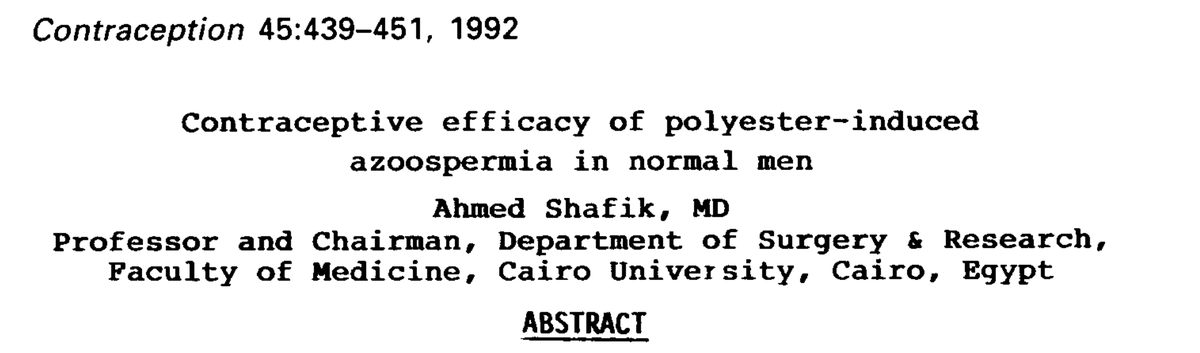
Insane studies showed that polyester underwear destroys sperm and makes men infertile, and wrecks hormones while preventing pregnancy in women.
(🧵1/7)
English
Josh Dong retweetledi

Baby Screen Time Linked to Brain Prematuration
The screens that increasingly fill babies’ early days can shape how their brains handle uncertainty and stress later on, according to recent research.
The study found that the average baby spends more than two hours a day on screens from birth to age two, and that this early exposure leaves traces in the brain that persist for more than a decade, influencing how quickly they make decisions and how prone they are to anxiety as they grow up.
The findings, published in eBioMedicine, come from one of the longest‑running studies to follow the same children from birth into their teens. The study links early screen exposure to brain changes that are, in turn, connected to slower decision‑making and mental‑health problems that show up years later.
Early experiences help shape how flexible and resilient the brain later becomes, Pei Huang, the study’s first author, said in a statement. When certain brain systems specialize too quickly, he said, children may be “less able to adapt later in life.”
👇
theepochtimes.com/health/baby-sc…
English

Josh Dong retweetledi
English

Anyone go to Ruthia He's sentencing today? curious the results.
justice.gov/opa/pr/founder…
English

I became an ABG CMO. Thank you @AnnieLiao_2000 for the transformation!
This is my first time trying makeup, what do you all think?

English
Josh Dong retweetledi
Here is what will (likely) soon happen:
All compounded and gray market GLPs (reta. and priors) will be highly illegal to sell… meaning any sites carrying these will be uniformly shut down. Other peptides will remain available. This is just a prediction but I’ll take any bet.
English
Josh Dong retweetledi

BREAKING: The CDC just released new data that should alarm every parent in America:
1 in 3 teenagers now has prediabetes.
Prediabetes is diabetes and it is reversible.
All that sugar is adding up....
gis.cdc.gov/grasp/diabetes…

English
English
who is in san francisco on feb 16?
we hosting an epic lunar new year party with @DsgnBuddies @zocomputer @buildclub_ with the best creators, founders, and builders in SF!
comment below if you want a link to join~

English