
Bendejo

3.2K posts

Bendejo banner
Bendejo

Bendejo

@itsmebendejo

Der Mensch handelt. Sapere aude. [email protected]

mempool Katılım Haziran 2011
709 Takip Edilen277 Takipçiler
Bendejo retweetledi
Konsensus Network 📚
Konsensus Network 📚@KonsensusN·
PRESALE GESTARTET! 🎉 „Das souveräne Individuum“ jetzt als deutsche Übersetzung im Vorverkauf erhältlich! 🇩🇪 Das bahnbrechende Werk, das jeder lesen muss, um den größten Wandel unserer Zeit zu verstehen. Eine unvergleichliche Analyse, die den Weg in eine Zukunft voller Selbstbestimmung und Wohlstand zeigt. Link zur Vorbestellung unten 👇🏻
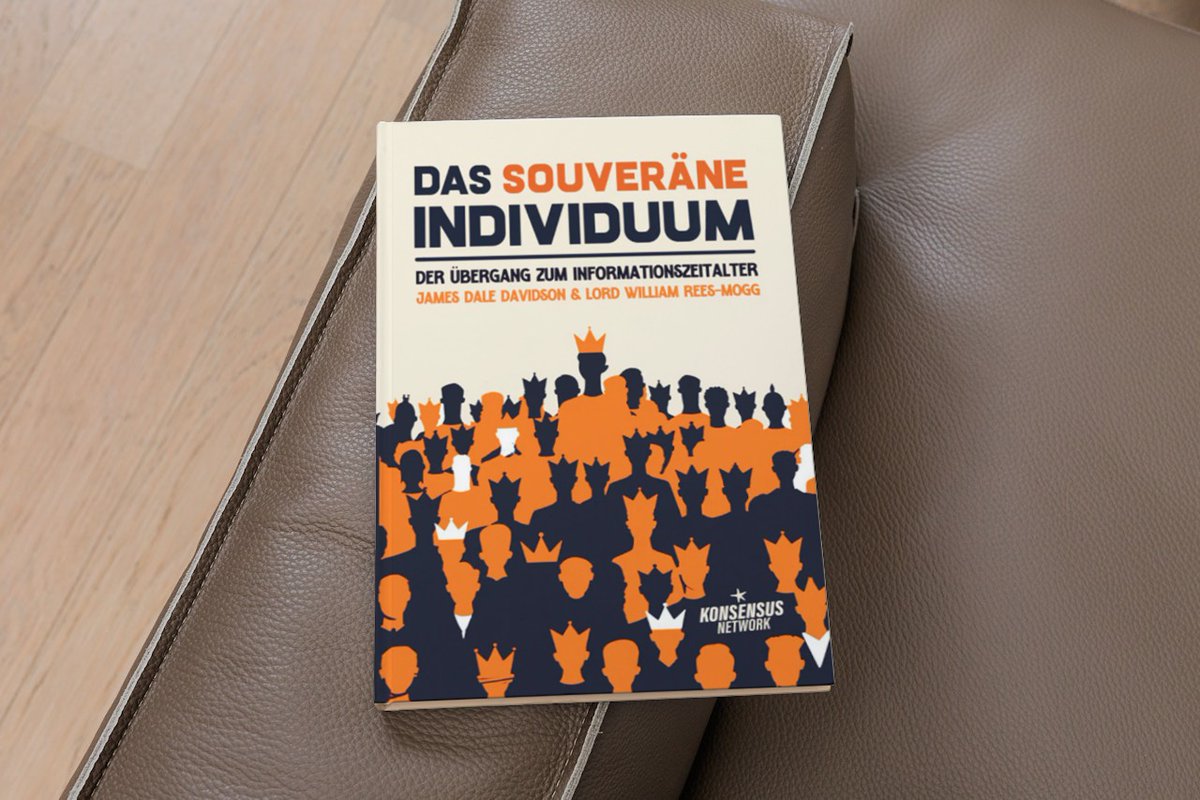
Konsensus Network 📚 tweet media
Deutsch
3
13
38
5.9K
Bendejo retweetledi
Liam McCollum
Liam McCollum@MLiamMcCollum·
RENATO MOICANO: Democracy is a fallacy, read ‘Democracy: The God That Failed’ by Hans Hermann-Hoppe 🔥
English
20
83
666
24.5K
Bendejo retweetledi
Mises Institute
Mises Institute@mises·
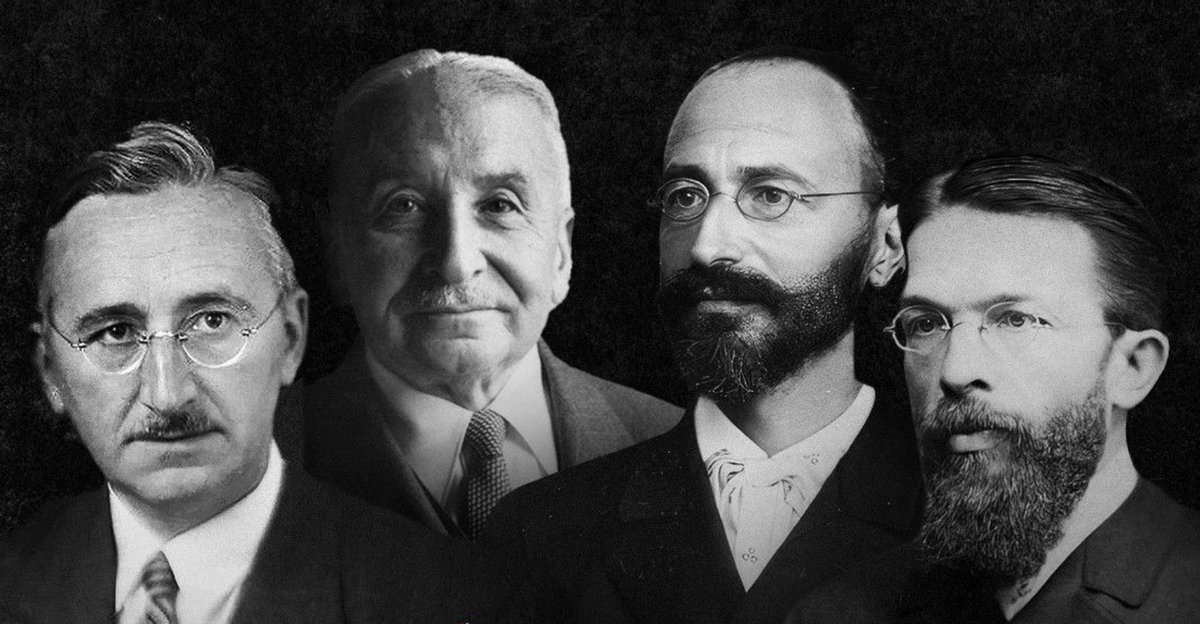
NEW BOOK: Austrian Business Cycle Theory by @PaulCwik Politicians have long used business cycles to justify greater state intervention in the economy, growing the size of the state at the expense of civilization. One of the most potent weapons in debunking this narrative has been the unique understanding of Austrians that it is previous government intervention, the manipulation of money and credit, that is the cause for the so-called "boom and bust." The Austrian theory of the business cycle, originated by Ludwig von Mises, celebrated by the profession with F.A. Hayek's Nobel Prize, and brilliantly applied in Murray Rothbard's economic history, is one of the great achievements of this tradition. Yet a simple, short book focused singularly on this contribution could not be found—until now. Paul Cwik was inspired to write Austrian Business Cycle Theory by his own experience as an economics professor and his desire to have a book he could provide his students with to offer an alternative to mainstream economics. Based on his own lectures, this book serves as the perfect introduction for those wanting to learn how the economy actually works, knowledge they won't find in most modern economics books. At just 58 pages, Austrian Business Cycle Theory works as a great introduction or a friendly refresher for those interested in the contributions of Mises, Hayek, and Rothbard. The lessons inside are an essential resource for anyone fighting for liberty in the battle against leviathan states that grow from economic crisis to economic crisis. Available as a pdf or at the @MisesBookstore: mises.org/library/book/a…
Mises Institute tweet media
English
3
53
170
13.7K
Gopal ₿harvad
Gopal ₿harvad@gopal_bharvad·
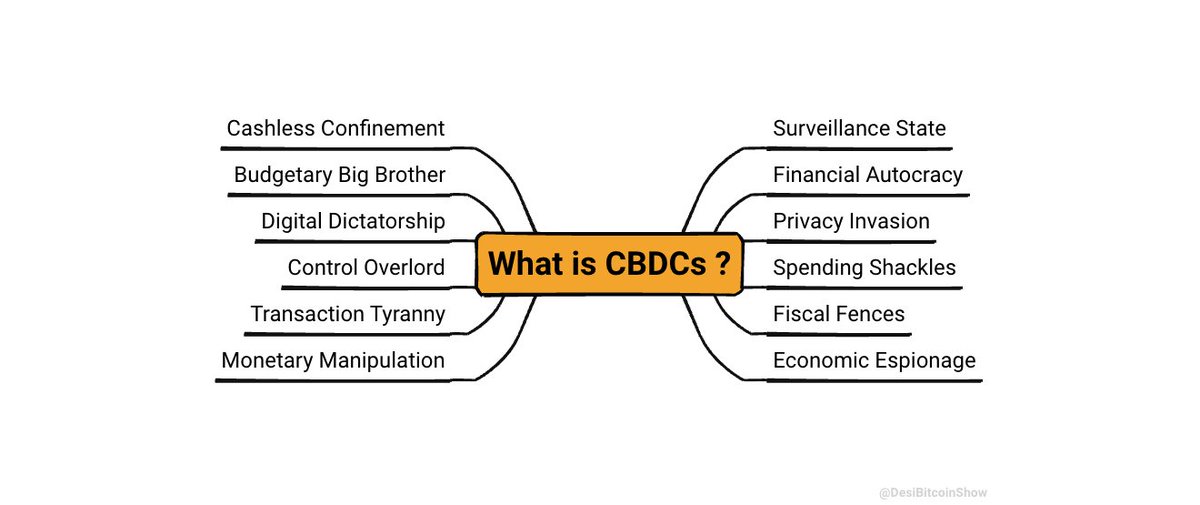
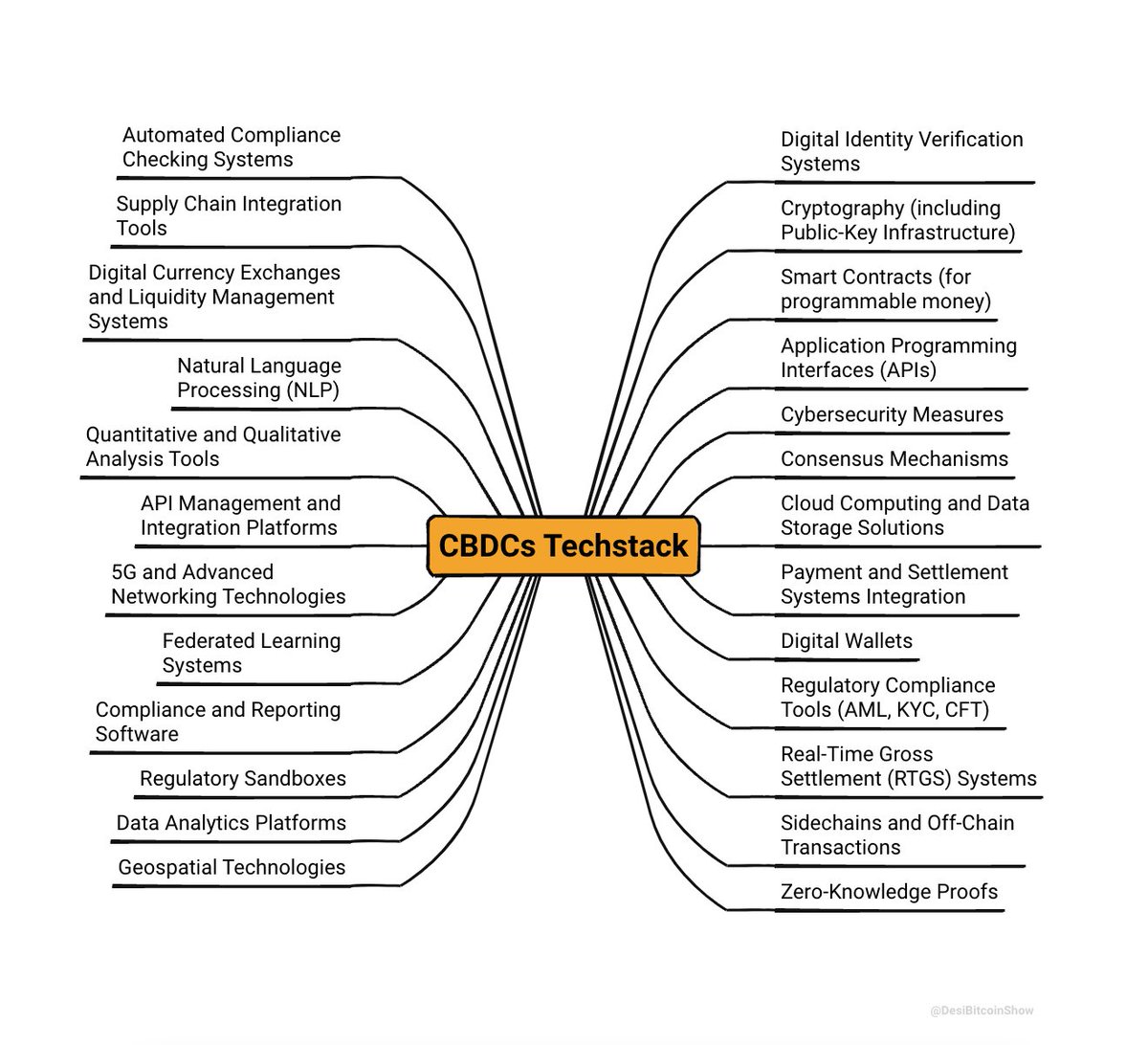
CBDCs: A Hitchhiker's Guide to the Orwellian State Let's explore how over 130 countries are either piloting, launching, or researching more than 15 types of CBDCs. During the Tang Dynasty in the 7th century in China, the bark of mulberry trees was first used to create paper money, marking a significant shift from more cumbersome forms of currency like futikodi, stones, metals, or minerals. Moving to the 17th century, the foundation of 'The Old Lady of Threadneedle Street,' also known as the Bank of England, was laid. This banking model is the basis upon which most modern central banks are structured. They planted four mulberry trees in its courtyard, the paper from which is used to print the value on it, representing fiat currency as we know it today. When considering the evolution of CBDCs Central Bank Digital Currencies, it is interesting to note that the concept of digital or electronic currency, once known as e-cash or e-money, has been discussed and proposed by various authors and the Bank for International Settlements (BIS). This idea came to fruition in 1996 when the Bank of Finland launched Project AVANT, recognized as the first widely acknowledged digital currency trial. This project marked the beginning of the journey towards the digital currencies we know today. Later, in February 2015, the Bank of England released the 'One Bank Research Agenda' discussion paper, which included its ongoing trial of RScoin, a CBDC. In 2021, the Bank of England announced the formation of the CBDC Engagement and Technology Forums. This initiative includes a diverse array of members such as banks, Swift, Visa, Mastercard, Google, Payment & Lending companies, and many other technology companies, all collaborating to facilitate the development of CBDCs. Currently, over 130 countries, constituting 98% of the world's GDP are exploring the implementation of CBDCs. This exploration is at various stages: 11 countries: CBDCs launched 21 countries: Pilots ongoing 32 countries: Proof of Concept stage 46 countries: Research phase 20 countries: CBDC projects discontinued What is CBDCs ? CBDCs stands for Central Bank Digital Currencies, its digital forms of a country's traditional fiat currency, managed by the central bank. What sets them apart is their programmable nature, allowing customisation for specific use cases. This programmability offers unprecedented versatility and control compared to conventional fiat currencies. At first glance, this digital currency may appear similar to what we currently use with our phone, cards, or online payment services. However, the significant distinction lies in its programmability. it means that those in charge can easily change how the currency works with just a click, without letting users or the world's 8 billion people know about it. It's similar to any other centralised program or app you've come across, giving complete control to the person or organisation running it. We have been using digital forms of currencies for a considerable amount of time now, as more than 90% of the world's fiat currency exists merely as numbers on a screen, backed by a collective belief in its value. This trust has been sustained over elected leaders promises and figures on our banknotes assured us with signs, Bro trust me. Indeed, we witness a continuous decline in our purchasing power and a sense that whatever value we bring on table eventually being wiped with inflation and we keep working hard for life. before I tell you more about CBDC and hidden * (conditions apply) in above definition : More than a decade ago, when I first traveled abroad, I was shocked by the extent to which developed nations rely on digital forms of money. One night, I encountered a situation where I wasn't permitted to board the bus without a prepaid card. Despite my attempts to persuade the driver to accept cash in exchange for a ticket, my request was firmly declined. I walked a considerable distance to acquire a card from a provider who, fortunately, was still open. Once I obtained the card, my journey proceeded smoothly with just a simple tap of the card. Observing people use cards instead of cash for transactions. Back home, I was accustomed to traditional financial management, such as using cheques and passbooks for statements. My friends, who had never used cheques in their lives, jokingly said that I’m like their grandpas. I really liked the ease and convenience of using cards or this digital form of money until I realised it wasn't just convenient but also convincing. Today, my country is utilising an even faster version of digital currency Via UPI compared to many nations, despite still being a developing nation. UPI has not only overtaken but has also revolutionised the way we conduct financial transactions. As mentioned earlier, its widespread adoption happened convincingly within a matter of days. Witnessing the transformation in a nation with a population of over a billion adopting such programs and technologies in just a few years is truly remarkable. This underscores the fact that technology is currently the most powerful force on the planet, capable of onboarding billions of people to use currency or provide them with a digital ID directly linked to the person behind the screen. " 1 Million transactions per day were achieved last year by the Indian CBDC E-rupee." While these technologies are undeniably great, it's essential to acknowledge one drawback: the potential for a single point of failure or control. If this power falls into the wrong hands, the consequences could be significant. In India today, many of us are using CBDC, often without realising it. I must say that India has the largest user base of CBDCs. The Governor has stated, "We are not in a hurry to implement it completely, but it is a game-changer, and we will adopt it over time." As mentioned in “The Fiat Standard” by @saifedean "The fiat economy will be fully regulated and surveilled, constantly subject to inflationary pressure, and financing increasingly violent and totalitarian governments that control their serfs’ purchasing decisions.” Types of CBDCs : Types and features of CBDCs may vary depending on the goals, policies, and technological capabilities of different central banks and jurisdictions. The exploration and development of CBDCs are ongoing and the landscape continues to evolve as countries assess the potential benefits and challenges of implementing digital currencies like above indian CBDC is wholesale and retail cbdc. Cross-border CBDC: Cross-border CBDCs focus on facilitating international transactions and cross-border payments. They aim to improve the efficiency and speed of cross-border transfers, reducing intermediaries and associated costs. Synthetic CBDC: A synthetic CBDC refers to a digital representation of a basket of different currencies. It combines various currencies to create a stable digital asset that can be used for international transactions and potentially reduce currency volatility. Interest-bearing CBDC: Interest-bearing CBDCs offer the ability to earn interest or receive returns on holding digital currency balances. This feature aims to promote saving and incentivise the use of CBDCs as a store of value. Retail CBDC: Digital currency issued by a central bank for everyday transactions by the general public. Wholesale CBDC: Digital currency designed for interbank transactions and settlements between financial institutions. Hybrid CBDC: Digital currency combining features of retail and wholesale CBDCs to serve both individuals and financial institutions. Wholesale Settlement CBDC: Digital currency streamlining and enhancing interbank settlement processes for faster and more secure transactions. Tokenized CBDC: CBDC represented as tokens on a blockchain, providing enhanced transparency, security, and programmability. Privacy-focused CBDC: CBDC that prioritizes user privacy and confidentiality in transactions, while complying with regulatory requirements. Smart Contract-enabled CBDC: CBDC that leverages smart contract technology to automate and enforce contractual agreements and conditions. Programmable CBDC: CBDC with programmable features allowing conditional transfers, automated payments, and self-executing contracts. Blockchain-based CBDC: CBDC implemented on a blockchain network, offering enhanced security, immutability, and transparency. Account-based CBDC: CBDC stored in accounts issued by the central bank, similar to traditional bank accounts but operated by the central bank. Offline-Enabled CBDC: CBDC that can be used for transactions even without an internet connection, ensuring accessibility in remote areas or during network disruptions. Where is CBDCs ? : Whenever I try to share information about CBDCs, the first question people raise is, 'Where are they? How have we never heard of them? Do you think people on the right side will ever allow such a thing? You sound like conspiracy theorist, My simple response to them is, 'It's everywhere around you and is being implemented as we busy scrolling another tiktok. Project Cedar : In November 2021, the Federal Reserve Bank of New York and the Monetary Authority of Singapore launched Project Cedar/Ubin+. This joint experiment explores cross-border multi-currency transactions with DLT. Their 2023 report shows DLT's potential to enhance interoperability and achieve 30-second atomic settlement in cross-border multi-currency payments. Countries: United States (NY Fed) and Singapore Use Case: Wholesale Project Nexus Launched in July 2021, Project Nexus aims to connect national instant payment systems for cross-border transactions in under 60 seconds. The prototype successfully linked Eurosystem, Malaysia, and Singapore in March 2023. The next phase involves BIS and central banks to connect their domestic payments systems. Countries: Eurosystem, Malaysia, Singapore, Indonesia, Philippines, Thailand Use Case: Retail and Wholesale Project Tourbillon Launched in November 2022 by the Bank for International Settlements' Swiss Centre, Project Tourbillon is a prototype platform that explores how to improve cyber resiliency, scalability and privacy in prototype CBDCs. The center hopes to finish and test the prototype by mid-2023. Countries: BIS Swiss Centre Use Case: Retail and Wholesale Project Dunbar The central banks of Australia, Singapore, Malaysia, and South Africa began exploring a platform for international settlements through Project Dunbar. As of March 2022, the project was successful in building two prototypes to allow international settlements across multiple CBDCs. Countries: Australia, Singapore, Malaysia, and South Africa Use Case: Wholesale Project Sela In June 2022, the Bank for International Settlements' Innovation Hub in Hong Kong announced a partnership between the Bank of Israel and the Hong Kong Monetary Authority (HKMA). The project is meant to explore the cybersecurity implications of two-tier, retail CBDC. It is meant to be completed by the end of 2022 Countries: Israel, Hong Kong and the BIS Use Case: Retail Project Icebreaker In September 2022, the Bank of Israel, Central Bank of Norway, Sveriges Riksbank and BIS Innovation Hub Nordic Centre announced Project Icebreaker, which would test interlinking and interoperability between different retail CDCs. The project explores a model fo permitting retail CBDC payments across borders, and is run through the end of 2022. A report is expected in 2023. Countries: Israel, Norway, Sweden and the BIS Use Case: Retail Project Mariana In November 2022, Banque de France, Monetary Authority of Singapore and the Swiss National Bank in partnership with the Eurosystem BIS Innovation Hub announced a cross-border automated market maker (AMM) project. This explore using AMMs to facilitate exchange between Swiss franc, euro and Singapore dollar on the wholesale level. Countries: France, Switzerland. Singapore and the BIS Use Case: Wholesale Project Jura The Bank for International Settlements (BIS) Innovation Hub, Banque de France and Swiss National Bank launched Project Jura that, together with a private sector consortium led by Accenture, will conduct an experiment using wholesale CBDC (wCBDC) for cross-border settlement on a distributed ledger technology (DLT) platform. Countries: France and Switzerland Use Case: Wholesale OnyX/Multiple wCBDC In July 2021, Banque de France announced the successful completion of a cross-border payment experiment with the Monetary Authority of Singapore that used JP Morgan's Onyx unit. Countries: France and Singapore Use Case: Wholesale Project Rosalind In June 2022, the Bank of England partnered with the BIS Innovation Hub in London to create prototypes for a CBDC application program for retail CBDC, which is based on two-tier, intermediated model. The project is aimed at understanding how central bank ledgers can effectively communicate with private sector vendors. Countries: United Kingdom and the BIS Use Case: Retail Project Aurum In March 2021, the BIS Innovation hub in HongKong, in partnership with the Hong Kong Monetary Authority released a prototype CBDC which could issue both wholesale and retail tokens. Countries: Hong Kong and the BIS Use Case: Retail and wholesale Project Helvetia Project Helvetia was a collaboration between the Swiss National Bank, the BIS, and a commercial infrastructure operator, SIX. In 2020, Project Helvetia explored the feasibility of issuing a wholesale CBDC onto SIX's distributed digital asset platform. In January 2022, it was announced that Proiect Helvetia was successful in integrating the wholesale CBDC to the core banking infrastructure of the country. Countries: Switzerland and the BIS Use Case: Wholesale Project Jasper In 2017, the Bank of Canada launched Project Jasper, which concluded after 4 phases, and included cross-border testing with the Bank of England and the Monetary Authority of Singapore. Countries: Canada, the UK, and Singapore Use Case: Wholesale Project Polaris In February 2023, the Bank for International Settlements Nordic centres designed Project Polaris to explore security and resilience in CBDC systems. The project will begin with an analytical report on offline payment possibilities and functionalities for CDC platforms. Countries: Nordic Centers Use Case: Retail CBDC Techstake : How do CBDCs work, and what's the technology that might take us toward a troubling future? It's the power behind them that can easily locate you in a large crowd and prevent you from accessing food, water, or fast travel. Some of this technology may seem familiar, yet we're often happy to overlook it, just like another reel or TikTok, all for the dopamine we're constantly chasing. With these techstake set in the background, it's hard not to see the central bank's newly formed digital currency as anything but a nightmare for those who cherish their freedom. This isn't just about resisting a tyrannical government or calling out the wrongdoings of those in power. It's about a system that's tightening its grip on every aspect of our lives. Imagine every dollar in your pocket or wallet being tagged with a digital ID. Bought a $1 candy or some tissue paper? Well, now the system's got a log of that too. Bots keeping eyes on every little thing, down to how many tissue papers you've used in a week. This means at the click of a button, authorities could potentially block your access to more candy, tissue or essential services such as railway, air travel, and public transport. They may restrict your ability to use the ID or payment card associated with the CBDC and impose predetermined spending limits. In such a scenario, your daily needs and requirements would be subject to their discretion, forcing you to conform to their rules and decisions. This level of control by authorities can significantly impact individual autonomy and end the freedom as we know it or whatever is left. Now, let's throw another pandemic scenario into the mix, similar to the recent one. Remember how we managed last time? Enough food at home, creating TikTok videos at home and hospitals, staying cozy and connected? The next round could be way different. You might not have the freedom to buy what you want or in the quantities you need because your wallet with CBDC is now calling the shots. Traveling to a country that had its borders open during the pandemic? Forget about it if your ID's doesn’t a C19 stamp. It's not just about health risks anymore, it's about control. You might've dodged the vaccine last time by staying home or quitting your job, but what if this time they hit you where it hurts – your bank account? Suddenly, you’re faced with a harsh choice: get the jab or watch your savings vanish. Sounds like conspiracy talk, right? But look at what’s happening in China or the Chinese guy who couldn’t travel clause his social credits are not upto the benchmark. If your social credit score doesn’t make the cut, you’re grounded. And if you think it’s just about the china and not with our right and left wings of government, think again. | |“ Every record has been destroyed or falsified, every book rewritten, every picture has been repainted, every statue and street building has been renamed, every date has been altered And the process is continuing day by day and minute by minute. History has stopped. Nothing exists except an endless present in which the Party is always right.” | - George Orwell Is it possible to bring the whole world to its knees? Let's put it in perspective with what surrounds us today. Just eleven companies dominate our food supply and farmland, claiming to halt farming in the name of the environment while serving crickets to kids. For more on this, check out my thread on food and farming. Additionally, three fund houses own stakes in over 92% of the world's companies, and a handful of entities control real estate and farmlands. Astonishingly, one company possesses more wealth than the second and third biggest economies combined. With food, commodities, and money under complete control, it's a setup ripe for a dystopian future. We seem to be heading towards what feels like an - Open Prison. We are not free anymore,my time on Earth tells me I never have been, despite experiencing a part of life before the technology era. The choices we make, the dreams we chase—faster cars, bigger homes—it’s all been programmed into me by what I've seen on this screen or the black mirror of real life, thanks to technology. Going forward, we're just spectators in a world where we seemingly can't do anything about it, literally nothing. Yes, he is right that you will be eating what they say, you will own nothing, and you will be happy, despite how much anger you feel in this decade. | "The Party told you to reject the evidence of your eyes and ears. It was their final, most essential command." | - George Orwell Like Indian author Orwell wrote in his fiction book which is turning into reality day by day, now If you reject this, it will be their last command for sure. This is our final opportunity to unite, to resist those constructing this digital prison. I may not know exactly how, but I am certain of one thing: money is at the root of it all. We've poured billions into charity, enough to feed a hundred Earths, yet children still starve to death. As social animals, it's easier for them to trap us in an emotional box of feel-good actions that give us satisfaction by typing about x & y on the internet, as we remain trapped in the past, lost in museums, shedding tears over long-past genocides, while turning a blind eye to those happening right now in front of us. Most put things forward merely for a gain in their bank balance, and the majority don't even type a word about it, even when they feel bad about it, because they want to save their account and patriotism is at the top. We're not in control of our environment anymore, we're being herded onto a new path and those in power will keep steering us because they possess the one thing that enslaves us all: MONEY So, where's the way out? Changing our relationship with money might be a start. Introducing a better form of currency than CBDCs could be the answer. I’m not claiming to have all the answers, but there's something about those 21 million digital units, those 0s and 1s backed by energy and controlled by no one, managed by all of us, that could hold the key. I won't delve into it here, and no one can lay it out for you. If you are truly seeking the answer, then take a seat and spend a hundred hours digging into it, and maybe, just maybe, you'll see the light in this coming darkness. Let's envision a brighter future for our children, for the generations yet to come. Let's construct a world without closed borders. Let's create a better society that is accountable, transparent, and places a higher value on human lives and nature than on money itself. Let's build a world where we don't hand our kids a dream but instead provide a safe and secure space for them to contemplate, how to dream : without keeping them endlessly occupied chasing money for dreams realised on screens or dictated by the fake idols on the black mirror. Author : Pleb
Gopal ₿harvad tweet mediaGopal ₿harvad tweet mediaGopal ₿harvad tweet mediaGopal ₿harvad tweet media
English
16
53
124
53.1K
Bendejo retweetledi
Andreas Tiedtke
Andreas Tiedtke@atiedtke1·
Das ‚Wort zum Sonntag‘
Deutsch
1
20
69
2.1K
Bendejo retweetledi
Andreas Tiedtke
Andreas Tiedtke@atiedtke1·
‚Etatismus‘ Die Lüge, dass man mit noch mehr Zwang und Gewalt gegen friedliche Menschen das Chaos, das man mit Zwang und Gewalt gegen friedliche Menschen angerichtet hat, beheben könnte.
Andreas Tiedtke tweet media
Deutsch
1
36
117
3.3K
Bendejo retweetledi
Sal the Agorist
Sal the Agorist@SallyMayweather·
What step are you on?
Sal the Agorist tweet media
English
168
208
1.5K
55.3K
Bendejo retweetledi
Andreas Tiedtke
Andreas Tiedtke@atiedtke1·
Die ‚Österreichische Schule der Nationalökonomie‘ gewann durch nüchterne Folgerungen hasserzeugende Wahrheiten. Etatisten aller Parteiungen schmähen und ignorieren sie deswegen, denn diese Wahrheiten zerstören deren ‚Geschäftsmodell‘.
Andreas Tiedtke tweet media
Deutsch
3
32
140
3.2K
Bendejo retweetledi
mempool
mempool@mempool·
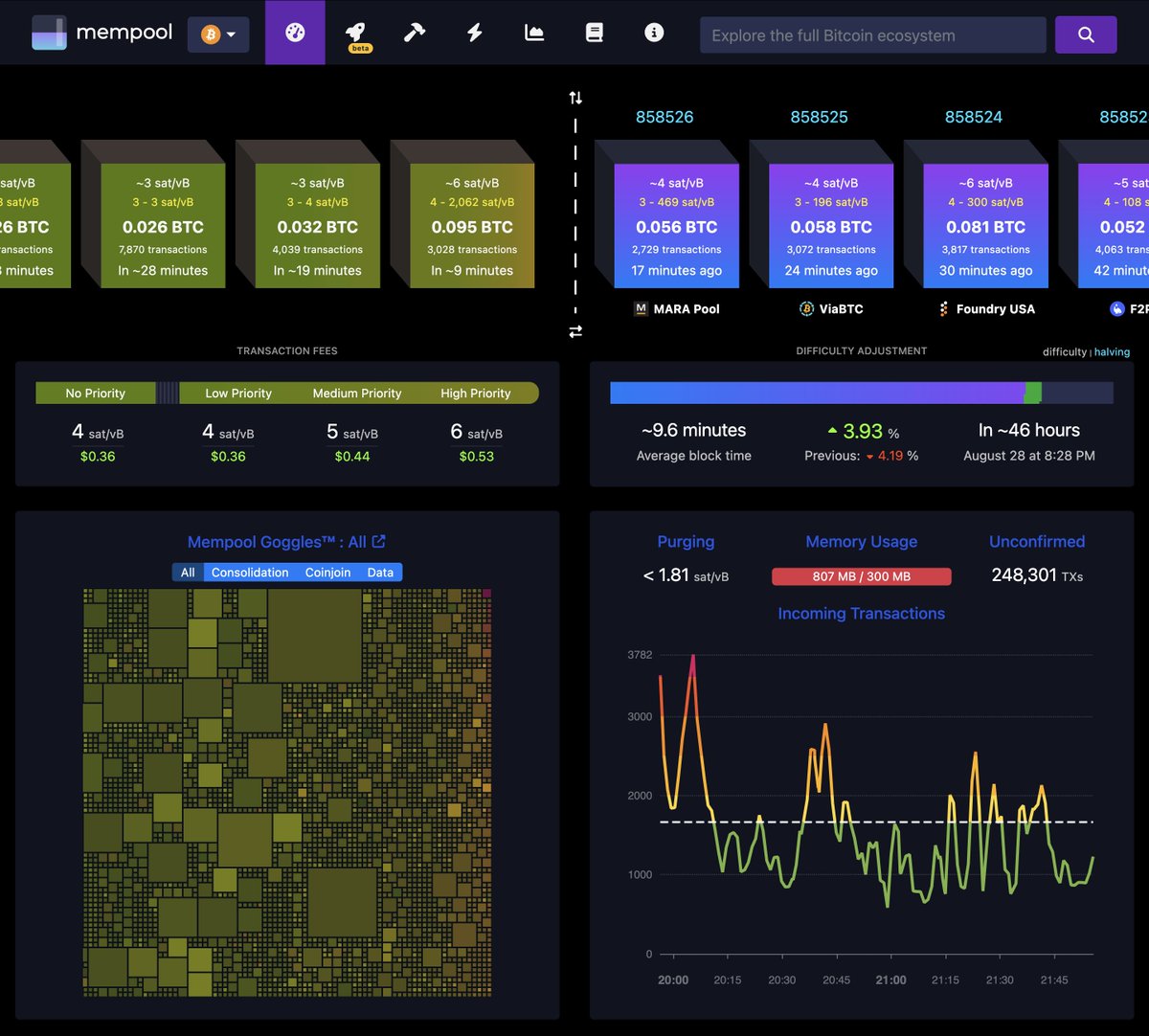
The Mempool Open Source Project® v3.0.0 is here 🚀 Our team of shadowy super-coders has been hard at work over the past 5+ years to bring you everything you see on mempool.space to your own server with one-click installation! Don't miss our major new features: - Mempool Accelerator™ - Mempool Goggles™ - FullRBF timelines - and much more! Coming soon to your self-hosted app store on @umbrel @start9labs @mynodebtc @RaspiBlitz @RoninDojoNode @nixbitcoinorg - or use our Docker images and build your own Bitcoin full stack from scratch!
mempool tweet media
English
29
126
657
65.9K
Bendejo retweetledi
derHelper🥕🐇 | CTV+CSFS
derHelper🥕🐇 | CTV+CSFS@derHelper·
Je totalitärer Staaten werden, desto weniger Plattformen, wie Youtube, X oder Telegram bleiben bestehen, sodass am Ende nur noch Protokolle übrig bleiben, die man nicht abschalten kann. Das Internet, #Bitcoin und #Nostr werden in Zukunft immer wichtiger werden und einen Schutz vor Überwachung und Zensur bieten. TC/IP: freier Austausch von Daten #Bitcoin: freier Austausch von Wert #Nostr: freies Verbinden und Aufbauen von sozialen Netzwerken
derHelper🥕🐇 | CTV+CSFS tweet media
Deutsch
7
34
187
7.7K
Bendejo retweetledi
NICO⚡️
NICO⚡️@BITVOLT·
YOUTUBE JUST BANNED SIMPLY BITCOIN After 4 years of building up the SB channel, putting in 100s of hours of work and making sure to follow the community guidelines @YouTube @TeamYouTube seems to continue to go after Bitcoin only content.
English
640
727
3.5K
523.4K
Bendejo retweetledi
El Bademantel Ambassador
El Bademantel Ambassador@elbitcoinamb·
Wenn man heutzutage also nicht wie gewünscht zensiert, kann es passieren, dass man bis zu 20 Jahre hinter Gitter geht EUdssr in Action #PavelDurov
Deutsch
3
17
159
2.7K
Bendejo retweetledi
Der rosarote Panzer
Der rosarote Panzer@RosarotePanzer·
In diesem Video vergleiche ich die #ÖsterreichischeSchule mit der #ChicagoerSchule, um ein paar Grundlagen der #Ökonomie darzulegen:
Deutsch
25
50
256
12.4K
Bendejo retweetledi
Hans-Hermann Hoppe
Hans-Hermann Hoppe@HoppeQuotes·
"An interesting parallel exists between the treatment of Rothbard vs. Nozick by the philosophy establishment, and that of Mises vs. Hayek by the economic establishment" hanshoppe.com/wp-content/upl…
Hans-Hermann Hoppe tweet media
English
1
23
96
3.2K
Bendejo retweetledi
Aprycot Media 📚
Aprycot Media 📚@aprycotmedia·
Es gibt News und Dates! 😎🤓🥳🤝🏻 Kommende Erscheinungstermine: 29.10.24 🎭 Hidden Repression @gladstein 06.12.24 💸 Broken Money @LynAldenContact 21.01.25 ⚔️ Blocksize War @jonathanbier Like and Share 🧡
Deutsch
14
40
145
13.4K
Bendejo
Bendejo@itsmebendejo·
@AndreasWenger11 1. Das Gesetz des abnehmenden Grenznutzen 2. Ertragsgesetz 3. Zeitpräferenz
Deutsch
0
0
1
9
Andreas D. Wenger
Andreas D. Wenger@AndreasWenger11·
Frage: ich soll vor ca. 40 Frauen (Vorwissen gering) einen #Bitcoin Vortrag halten. Welche Top 3 Themen sollte ich behandeln? Danke 🙏
Deutsch
93
1
56
17.5K