Sabitlenmiş Tweet
Jamiu
928 posts

Jamiu retweetledi

The end of an era
Polymarket@Polymarket
JUST IN: Jerome Powell’s tenure as Fed chair ends today.
English
Jamiu retweetledi
Jamiu retweetledi
Jamiu retweetledi
Jamiu retweetledi

@atalantis7 Woah! this was a level of detail way past what I was expecting....ppl usually give crumbs. Appreciate you taking the time to share your knowledge with those tryna advance like myself
English

Mean reversion is tricky because you will get busted during strong trends. It has a high win rate, but you'll get steamrolled on outliers (it's like selling VOL). So, you should combine it with a trend following / momo set of strategies. That said, here's how I would go about developing a meanrev system:
1/ To get a high quality mean reversion signal it’s best to combine several (semi) independent features into a ranked forecast -/+20. These features could include:
- Price
- Relative price (e.g. SOL/BTC)
- Volume
- Volatility
- Aggregated Open Interest
- Spreads
- Liquidations
- CVD Divergences (Absorbtion)
2/ For each of these inputs you should develop + backtest a mean reversion strategy and then combine them into an overall forecast. You can equally weight them 1/N or weight them based on their P3M or P6M performance.
3/ The best mean reversion signals happen when multiple timeframes align. So, as not to overfit I would use geometrically spaced timeframes (30 min, 1H, 2H, 4H, 8H, 1D) and combine them 1/N into a forecast for each feature. Then combine the different feature forecasts into an overall mean reversion forecast as mentioned under point 2/.
4/ Then create an hourly screener using python or even pine screener in tradingview to give you a universe of things you can trade.
5/ If you are click-trading these signals, I would also look at orderflow and passive orders before entering positions to increase your winrate/edge.
Hope that helps!
English
Jamiu retweetledi

@atalantis7 Hello! unrelated but do you have a way of ranking likelihood of reversion/quality of a setup when your system gives you multiple reversion signals? I have a hunch my signals are not created equal but I’m helpless filtering
English
Jamiu retweetledi
Jamiu retweetledi

If you bought the S&P in late 2024 betting on 8-10% returns, you're about to lose a decade of your financial life.
Billionaire investor Howard Marks on the JP Morgan chart everyone's ignoring:
At the end of 2024, the S&P was at a P/E of 23. Historically, every single time the market hits a P/E of 23, the next 10 years returned between 2% and -2% annualized.
NO exceptions.
What this means: if you invested $100K at the end of 2024, by 2034 you'll have between $82K and $122K.
Best case (2% annualized): you barely beat inflation
Worst case (-2% annualized): you lose 18% of your money
Either way, high-yield savings beats your "aggressive" portfolio
This isn't a bearish prediction. It's a historical certainty based on the price you chose to pay.
@thesamparr @ShaanVP
English
Jamiu retweetledi

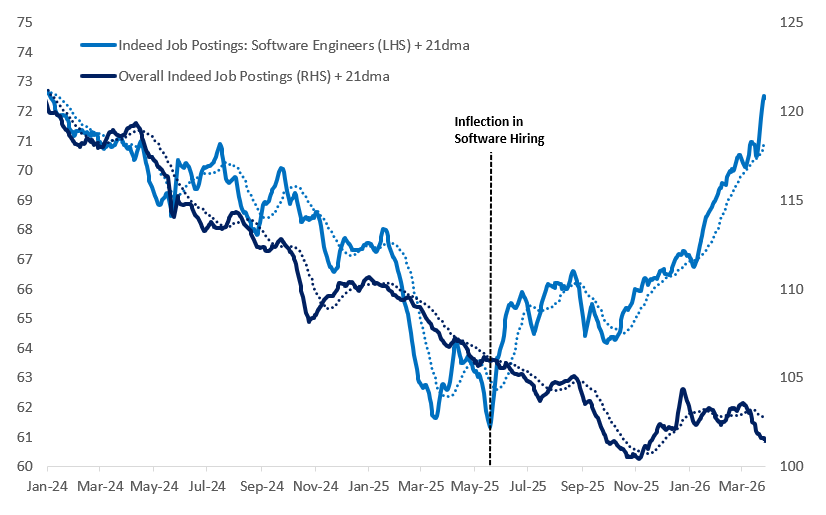
Narrative violation and great insight from the latest Citadel Securities banger by Frank Flight: "We illustrated back in February that demand for software engineers, the most AI exposed occupation was accelerating higher, which we argued violates the displacement narrative. Indeed the acceleration in software job postings has continued, now up 18% from the inflection point in May last year."

English
Jamiu retweetledi

NOTES: PTJ on trading, investing, macro
Core trading philosophy
-You make the biggest money by riding a major trend for a very long time.
-Trading is like boxing: most of the time you are jabbing, feeling out the market, waiting for a clean opening.
-The real money comes from a few “knockout” opportunities.
Examples:
Bitcoin in 2020.
Short two-year notes in 2022.
Precious metals moves.
Potential yen rally setup.
Trader vs investor
-Investors can win by believing in a long-term compounding story.
-Buffett represents the ideal investor mindset: believe in America, tolerate 50% drawdowns, let compounding work.
-PTJ says he envies that belief system but does not naturally have it.
-His own approach is more trench warfare: daily, active, defensive, alpha-driven trading.
-His fund reportedly had a negative correlation to the S&P 500, so he sees his returns as alpha, not beta.
Compound interest
-He now deeply respects Buffett as “the OG of compound interest.”
-Buffett understood compounding at age nine.
-PTJ says he underappreciated compounding for much of his own career.
Charlie Munger’s key contribution: moving Buffett from cheap “50-cent dollars” toward great companies that compound.
Risk management
-Every great trader or investor is first and foremost a risk manager.
-Liquidity is central: “You’re only worth what you can write a check for tomorrow.”
-Seeing Brother Hunt go from one of the richest men in the world to nearly bankrupt after silver collapsed (within weeks) permanently shaped PTJ’s view.
->He learned never to trust any asset blindly.
-Avoid being trapped in illiquid positions when volatility explodes.
-AI worries him because the world is deploying it with little risk management despite huge tail risks.
Market opportunities
-Big opportunities usually come from:
-Markets getting too carried away.
-An imbalance lasting too long.
-A central bank doing something wrong.
-A government doing something wrong.
-Crowded complacency.
-An undervalued, underowned asset finally getting a catalyst.
Catalyst framework
His ideal macro trade seems to need:
1. Something underowned.
2. Something undervalued.
3. Something “way out of whack.”
4. Market complacency.
5. A catalytic moment.
Example: yen.
Yen is grossly undervalued.
Japan has a huge positive net international investment position.
Much of its foreign exposure is in the US and unhedged.
->A new dynamic, “Japan first” political leader could be the catalyst. (which just got elected. See Buffett major buys into this year)
He compares potential currency appreciation to what happened under Reagan, Thatcher, or Trump-style leadership shifts.
Example:2022 two-year note trade
-He believed there was too much fiscal stimulus.
Powell stayed too easy for too long.
-Once Biden reappointed Powell, PTJ saw it as “go time” to short two-year notes.
-The logic: the Fed would have to normalize policy.
Bubbles and valuation
Valuation matters.
-Buying the S&P 500 at very high valuations historically leads to poor or negative 10-year returns.
-He mentions an S&P P/E around 22 as historically dangerous for forward returns.
-The S&P is excellent over 100 years, but that includes periods when valuations were extremely low.
-Starting valuation drives long-term returns.
-Today’s market is harder because valuations are high.
-He sees public equities, private equity, real estate, and infrastructure as much more heavily owned than in 2007 to 2008.
-Private equity exposure in institutional portfolios has risen materially, creating more illiquidity risk.
Execution
-Execution is about buying when there is fear and selling when there is euphoria.
-“Am I buying when there’s blood on the ground?”
-“Am I selling when there’s complete elation?”
-Great execution requires intense focus on intraday highs/lows and pain points.
-You need a plan before the market opens.
-The plan should be self-executing when volatility hits.
-Being two or three hours late can be materially costly.
-Information overload damages execution quality.
Information overload
-Modern trading is harder because there is too much incoming information.
-Emails, news, and signals distract from observing price, fear, greed, and positioning.
-In the pit-trading era, he could focus more purely on market behavior.
-Today, macro traders must fight distraction to maintain execution quality.
Traits of great traders
-He thinks great traders are about 70% born, 30% made.
-Key traits:Type A personality.
-Intense curiosity.
-Love of competition.
-Love of games.
-Natural probability thinking.
-Emotional resilience.
-Ability to act under maximum fear or greed.
->Trading is another form of probability theory.
Lessons from Eli Tullis
-Eli was excellent at sensing maximum fear and maximum greed.
-He waited patiently for emotional extremes.
-After a huge loss in cotton, Eli remained composed and confident.
-Lesson: when things get brutal, you cannot emotionally collapse.
-You must wear confidence and believe you can come back.
Daily process
-He plans around the US open and close.
-He reserves time before and after the close to map out the next day.
-He thinks ahead to Tokyo, Hong Kong, and London.
-He wakes during the night to watch London open and do analytical work.
-The rhythm is constant because macro is global.
-Communication as trading skill
-Journalism-style writing helped him as a macro trader.
Put the conclusion first.
-Identify who, what, where, when, why, and how.
Rank information by importance.
-Trading requires principal component analysis of many variables.
-The most important variable changes over time.
-The trader’s job is to know what matters most right now for a given instrument.
Macro framework
-Markets are interconnected capital flows.
-Trading means understanding global flows and positioning across asset classes.
-Central banks and governments often create the biggest dislocations.
-The best trades often arise when policy error meets positioning imbalance.
-You must constantly ask: what is actionable now?
AI and markets
-AI is an exogenous risk variable.
-He sees AI as a major tail risk because it is being built with a “build, break, iterate” model.
-That model works for ordinary technology, but not when the “break” could cause catastrophic social damage.
-He believes AI should be regulated.
-He specifically argues all AI-generated content should be watermarked.
-AI could cause major workforce disruption within a few years.
-From a risk-manager’s lens, AI is currently under-managed.
Passion and longevity
-Trading keeps his mind sharp.
-He sees trading as mental therapy.
-He wants to keep working because “you retire, you die.”
-He still trades because he loves markets, competition, and the ability to make money to give away.
Best distilled PTJ trading rules
-Ride big trends as long as possible.
-Protect liquidity above everything.
-Never trust an asset blindly.
-Be a risk manager first.
-Wait for extreme fear or extreme greed.
-Look for underowned, undervalued, complacent setups with catalysts.
-Policy errors create big trades.
-Valuation matters, especially for long-term equity returns.
-Have a plan before volatility arrives.
-Execute when others freeze.
-Focus on what matters most right now.
-Avoid information overload.
-Trading is probability, not certainty.
English
Jamiu retweetledi

My guest today is Paul Tudor Jones (@ptj_official), one of the greatest macro traders of all time.
He correctly predicted the 1987 stock market crash and shorted the Japanese bubble in 1990. For over 40 years, his flagship fund has had a negative correlation to the S&P 500. 100% of his returns are alpha.
He says today's market has so many similarities to 2000, "the easiest bear market I've ever seen in my whole life."
He makes the case for going long dollar-yen, why Bitcoin beats gold as an inflation hedge, and why he was wrong about Warren Buffett.
But what I'll remember most from this conversation is Paul's zest for life. He's 71 and still wakes at 2:30 every morning to trade the London open. He works out for two hours a day. He walks with his wife every evening. He travels the country chasing peak spring and peak fall. He's so excited about the songs picked for his funeral that he wishes he could be there to hear them.
Paul has lived five lifetimes in one. He's one of the most entertaining and interesting people I've met, and the conversation will leave you searching to be as passionate about what you do as he is about what he does.
Enjoy!
Timestamps:
0:00 Intro
1:00 The Kindest Thing
13:19 Trading vs. Investing
17:33 Lessons from Warren Buffet
22:24 The Existential Risks of AI
29:54 The Nature of Trading
31:46 Bitcoin
35:55 Bubbles
42:08 A Day in the Life of PTJ
46:00 Information Overload
47:07 Passion for Markets
50:49 The Robin Hood Foundation
54:18 The Workless World
56:03 Journalism
1:00:00 Principal Components of a Great Life
1:05:06 Kill Them With Kindness
English
Jamiu retweetledi
Jamiu retweetledi

“Just get into Jane Street or become a top 1% lawyer bro”
Terminally online people have no concept of the real world
Vēnø@Veno_41
Flood reveals what type of jobs you can get that will pay you over $1,000,000 a month "There is so many jobs that pay you millions like If your just a mid level employee at Jane street your making 10s of millions a year" "Some of my lawyers make millions in cash as long as they are equity partners at top law firms" "As you get older in life and start actually paying attention to the world around you, you actually realize how much capital there is out there"
English
Jamiu retweetledi
Jamiu retweetledi
Jamiu retweetledi

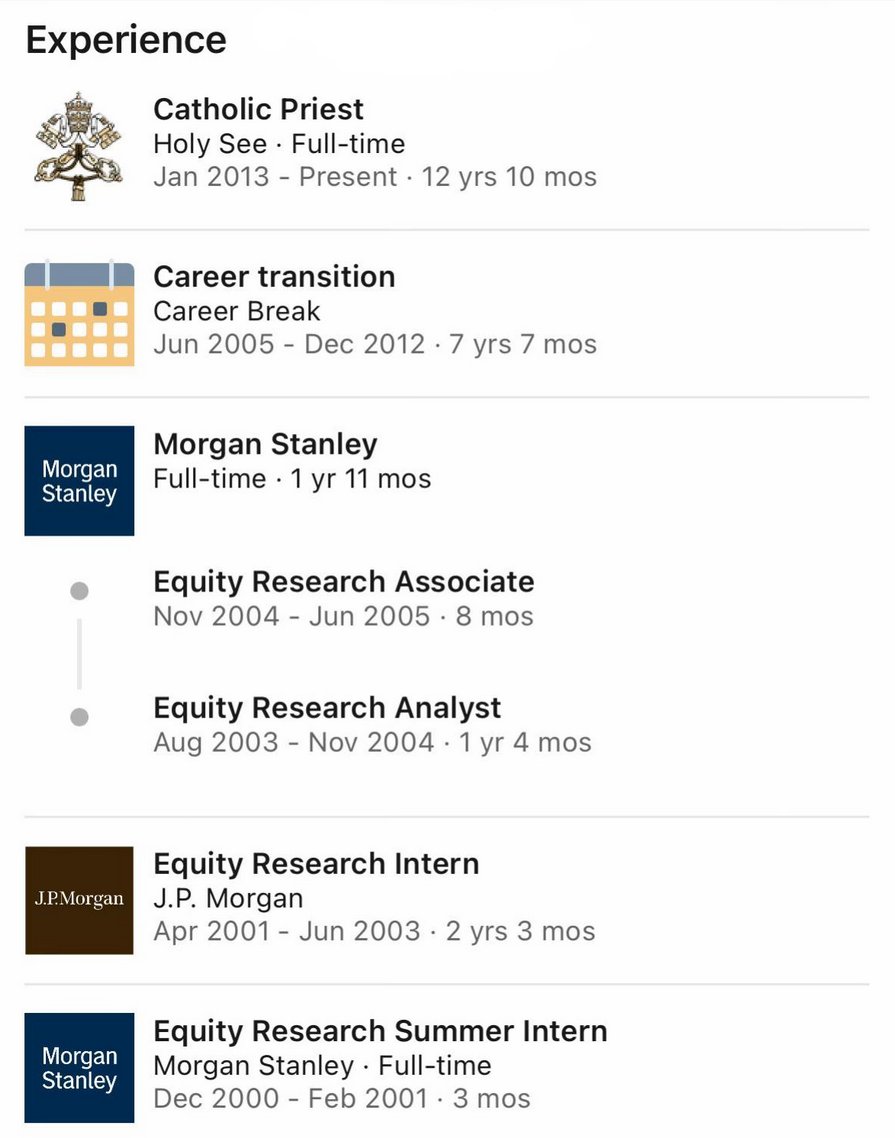
She deleted it but just an insane thing to tweet

Mike Nellis@MikeNellis
I have no idea who this is but what an insane photo to tweet
English
Jamiu retweetledi