JT

2.1K posts

JT banner
JT

JT

@jasondthompson

UX/UI designer + Illustrator

Katılım Şubat 2009
405 Takip Edilen252 Takipçiler
Sabitlenmiş Tweet
JT
JT@jasondthompson·
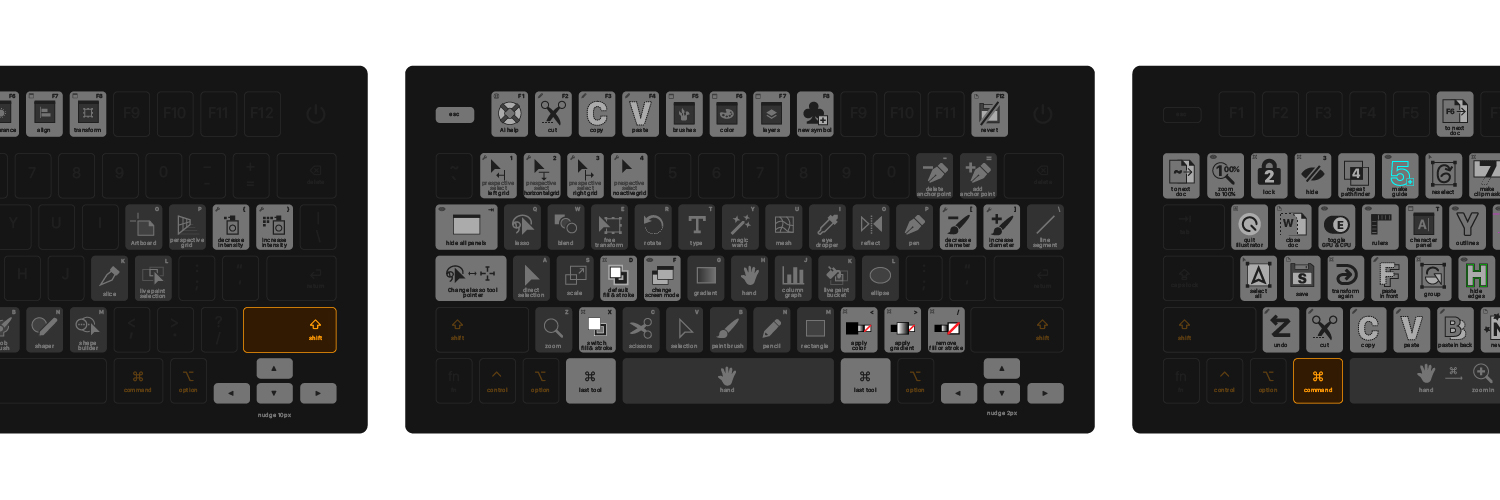
No Adobe Illustrator shortcut cheat sheet was comprehensive or contextual enough. So I created my own. Drew typographic icons for the function commands, which makes learning them easier. Grab a copy of the Free or Pro version gum.co/zTUa
GIF
English
7
45
232
0
JT retweetledi
Michael Girdley
Michael Girdley@girdley·
Obscure Signs That Someone is a Badass I’ve learned to look for little “tells” that someone will be successful. While there is no guarantee, these things are always good signs.
Michael Girdley tweet media
English
31
54
581
72.6K
JT retweetledi
jhey ʕ•ᴥ•ʔ
jhey ʕ•ᴥ•ʔ@jh3yy·
CSS progressive blur on scroll 📜 + apply contrast for goo scroll
English
36
150
2.9K
144.5K
JT retweetledi
Clint Jarvis
Clint Jarvis@clinjar·
The Journal of Social and Clinical Psychology confirmed: Limiting social media reduced loneliness and depression. Focus improved. Sleep quality increased. Anxiety levels decreased significantly. But Newport found something even more fundamental:
Clint Jarvis tweet media
English
1
22
326
88.5K
JT retweetledi
Dickie Bush
Dickie Bush@dickiebush·
I wasted years as a horrible writer. So, I studied the writing routines of 500 legendary writers to figure out how they did it. Turns out, great writing is simple—if you follow these 6 habits:
Dickie Bush tweet media
English
24
13
145
25.3K
JT retweetledi
Aaron Levie
Aaron Levie@levie·
Nailing the UX for AI Agents is one of the more fun design questions and challenges that we’ve ever had in software. As AI moves from just being about Assistants you talk with, to full Agents that execute complete tasks for you, the nuances of the AI Agent design are going to matter more and more. This shift requires some fundamental rethinking of software design as we enter a world where a near unlimited amount of workers can be interacted with that are operating autonomously. Here are a few of the major options that seem to be popping up: 1. The AI Agent just becomes another user in the background in the workflow. In this scenario, the AI Agent can be dropped into a workflow as a participant, essentially as a superuser. In these scenarios you tend to interact with the Agent much like you would a person in that same workflow, and the UI affordances remain mostly unchanged from the end-user perspective — work just seems to be “getting done” by another user in the system. 2. The UI fades into the background and you mostly interact with Agents in a chat interface like we’ve seen in areas like Deep Research. This one is potentially the most ambitious, and it works fine when you can farm out an entire Agent task and expect a complete result at the end. But a lot of the onus is on the user to know how to best prompt the Agent, and there are limitations on users being able to have a complete sense of where they are in the workflow. 3. The software morphs to be part Agent conversation and part UI. We’ve seen this paradigm seemingly take off with products like Cursor, Windsurf, Replit, Claude’s Artifact, and others where the UI seamlessly mixes the workspace for the user and the communication for the AI Agent. This UX seems to work well when in single player mode, collaborating with an agent, but we have limited examples of how this works in more complex environments. 4. The user interface begins to feel more like a tool to manage AI Agent work as opposed to the AI Agent sitting next to the user doing their work. This one makes sense in scenarios where you can deploy AI against problems in parallel and the effective management of the AI Agent workflows becomes the primary task in the system. At Box, we’re working on a mix of the above (where most relevant), and I suspect most software will be a hybrid of multiple of these approaches for a while. At this point in software we have more questions than answers, but it’s extremely fun to watch the different patterns play out.
English
41
60
506
106.6K
JT retweetledi
CJ Zafir
CJ Zafir@cjzafir·
I code with AI tools for 6-7 hours daily. Built over 36 projects in last 12 months. Truth: "Build me ........... app" in 1 prompt is not possible. So, here're all the MISTAKES you might be making with AI code:
CJ Zafir tweet media
English
134
540
4.6K
3.7M
JT retweetledi
Graham Lipsman
Graham Lipsman@glipsman·
I wrote a Cursor<>Figma MCP server to make it easier for AI copilots to implement designs. It's not perfect, but the resulting HTML and CSS is a lot cleaner than giving AI a screenshot and having it guess. Link in the replies, take it for a spin and let me know what you think!
English
24
28
268
102.6K
JT retweetledi
CJ Zafir
CJ Zafir@cjzafir·
I am not a UI designer. But with CodeGuide + Claude + v0 I've cracked the UI design workflow. This design is purely coded with AI in 13 minutes. Let me explain my NEW UI design workflow: ↓
CJ Zafir tweet media
English
81
202
2.3K
3.7M
JT retweetledi
Aadit Sheth
Aadit Sheth@aaditsh·
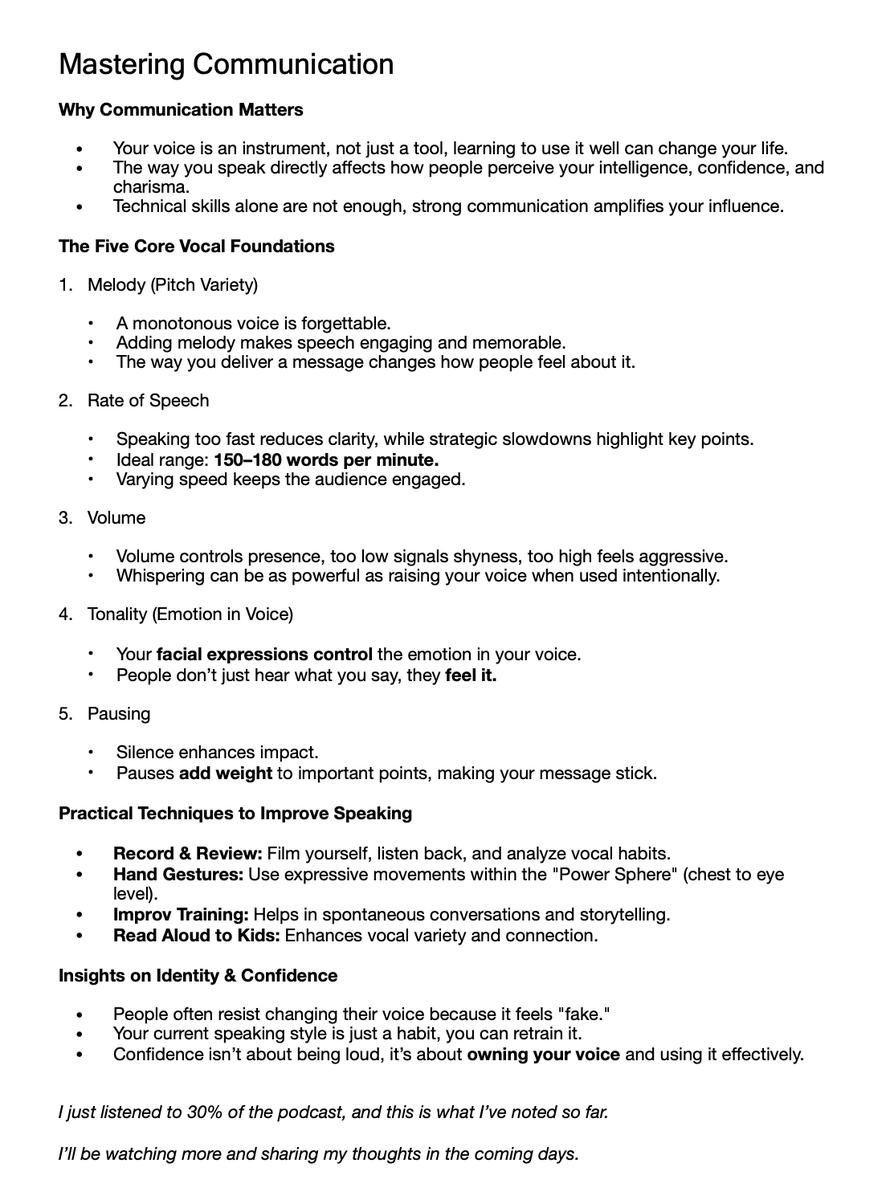
This is literally the best talk I’ve seen on how to speak confidently and get people to listen (even if you're an introvert).
Aadit Sheth tweet mediaAadit Sheth tweet media
English
33
807
7.7K
759.3K
JT retweetledi
Morgan Brown
Morgan Brown@morganb·
MCPs and APIs are interfaces, but they operate at different layers and serve different purposes: APIs: - Define how software components communicate - Specify request/response formats and endpoints - Handle data transfer/protocol management - Are called by client applications MCP: - Operates as a layer within the model's decision process - Evaluates (and can modify) model outputs before they're returned - Runs automatically on every model inference - Enforces constraints rather than defining communication patterns You might actually implement MCP through APIs, but they serve different purposes. You could have an API endpoint that accepts prompts and returns model responses, while MCP works behind the scenes to ensure those responses meet your policies and standards.
English
16
26
401
42.1K
JT retweetledi
Denislav Jeliazkov
Denislav Jeliazkov@DenisJeliazkov·
As a designer, here's what I've learned from Family: 1) Maintain continuity between states 2) Create a spatial map through motion 3) Add delight selectively where it matters 4) Make your interface reveal complexity gradually Interested in learning to design apps like this?
English
2
3
87
13.3K
JT retweetledi
GREG ISENBERG
GREG ISENBERG@gregisenberg·
SaaS is being dismantled as we speak! We're witnessing the slow-motion collapse of an entire business model that dominated tech for two decades. The $1.3 trillion SaaS is being quietly hollowed out from within by AI agents. Here's how I see it playing out: Phase 1 (Now): AI as co-pilot. We're seeing this everywhere, Copilot for developers, Gamma for presentations, Harvey for legal research etc. These AI layers sit atop existing software, making it more efficient. The SaaS companies feel safe, even excited, as AI seems to make their products more valuable. They're bringing knives to what they think is a knife fight. Phase 2 (Next 12-18 months): The agent invasion. AI moves from co-pilot to autonomous operator. They're replacement workers that can fully operate existing software on your behalf. The dam breaks when someone can say "analyze our Q2 performance" rather than clicking through Tableau, or "optimize our ad campaigns" instead of navigating Meta's ad manager. The expertise previously bundled with the software gets unbundled by agents. Phase 3 (2-3 years): Software invisibility. The final phase happens when the agents bypass the human interfaces altogether. Why render dashboards, buttons and menus when AI can just access the APIs directly? The value proposition of SaaS, bundling software, workflow, and expertise into user-friendly interfaces unravels completely. The interfaces were designed for humans, but agents don't need them. Most SaaS incumbents don't see it coming because this isn't a classic disruption pattern. It's not about competing products with better features. It's about the evaporation of the core assumption that humans will operate software. What's more, the barrier to creating custom, internal software is collapsing simultaneously. Companies that once had to choose between expensive custom development or off-the-shelf SaaS can now spin up bespoke solutions in days instead of months. Why pay Hubspot $1,500/month for a CRM when your team can build 'HubspotForUs' with an AI coding assistant over a weekend? The same features, perfectly tailored to your workflow, with no ongoing subscription costs. This democratization of software creation means every company becomes a potential software producer rather than just a consumer. The specialized knowledge that SaaS companies monopolized is now available to anyone with access to an AI coding agent and domain expertise. It went from $1M to build an MVP to build a SaaS to basically free overnight. I bet the metrics will be puzzling at first, DAUs remain strong while feature usage mysteriously declines. The power users who drive revenue suddenly need fewer seats. Customer success calls shift from "how do I use this feature?" to "can your software work with my AI agent?" Or worse: "we built our own version that better fits our workflow." The survivors won't be those with the best features or even those who add AI features fastest (from no AI to "ai-assisted"). The winners will be companies that expose their software's capabilities through agent-friendly APIs and position themselves as the most trustworthy information sources and execution engines in their domain. There's also the shift from monthly subscriptions to outcome based software (pay per outcome, pay per task etc) but that's a tweet for another day! The $1T question: Will Microsoft, Atlassian, Adobe etc. successfully navigate this transition, or will they be the Digital Equipment Corporation of our era too invested in the previous paradigm to adapt to the new one? All I know is this will be a golden era for startups in the space. SaaS is being dismantled, piece by piece, workflow by workflow, interface by interface. Am I wrong?
English
573
797
5.9K
1.1M
JT retweetledi
GREG ISENBERG
GREG ISENBERG@gregisenberg·
this is what's keeping me up at night these days... 1. google has become unusable. once you get used to "deep research" (thanks grok, perplexity etc), google feels like bringing a typewriter to a macbook meeting. 2. MCP will do for ai agents what REST did for web services - this standard protocol means an ai agent built for healthcare can instantly talk to billing systems, patient records, and insurance databases without custom code, unlocking thousands of new startup opportunities. it's really exciting! 3. we're seeing the entire cost structure of building businesses collapse - you can now build profitable companies serving tiny, weird niches that were impossible to reach when you needed a full team. what used to need 1000 customers to break even now needs 10. 4. it's not too late to be a creator or build a media business. creators are evolving into the new holding companies, consolidating influence, revenue streams, and audiences in ways that mirror corporate giants. somehow it's still early 5. really big arbitrage opportunity to buy businesses without taste and add taste. "taste private equity" has a nice ring to it. 6. figuring out LLM seo. billions of dollars will flow to new players who figure out how to get "cited" by LLMs. finally. 7. most ai apps are designed for websites not mobile. ai-first consumer mobile is really interesting. we saw with cal ai and the looksmaxing apps, that this is just the beginning. 8. every product launch needs video now - i'm watching great features die on landing pages while quick screen recordings go viral and drive thousands of signups. the social feeds have spoken. 9. what used to require millions in vc funding now needs an api key, some prompts and a tweet. this fires me up!! 10. faster than ever to launch something of quality. faster than ever to pivot. knowing when to pivot is an art. 11. i dont understand anyone who sitting in business school right now. literally everything is being rewritten. 12. who is building the app store for ai agents? companies will browse and hire pre-trained, specialized agents like we download apps 13. the way to stop a big player to compete with you in this new world is to own distribution. 14. you can spend a lot of time thinking about politics or checking emails or on social in the name of research, but not really moving forward anywhere. 15. we're about to see software companies capture value that used to belong to agencies, consulting firms, and entire departments. 16. we're about to go from "there's an app for that" to "there's your app for that. 17. minimum viable audience is more important than minimum viable product 18. I don't know how long this window stays open, but we're in a moment where all the rules of building businesses are being rewritten. and for the people who are playing with this new tools, putting stuff out there, creating audiences/communities, you've got an unfair advantage. i hope you get some sleep.
English
371
794
6.8K
832.6K
JT retweetledi
Navalism
Navalism@NavalismHQ·
"If you want to make the wrong decision, ask everyone." @naval
English
118
757
5.7K
323.1K
JT retweetledi
Ben Lang
Ben Lang@benln·
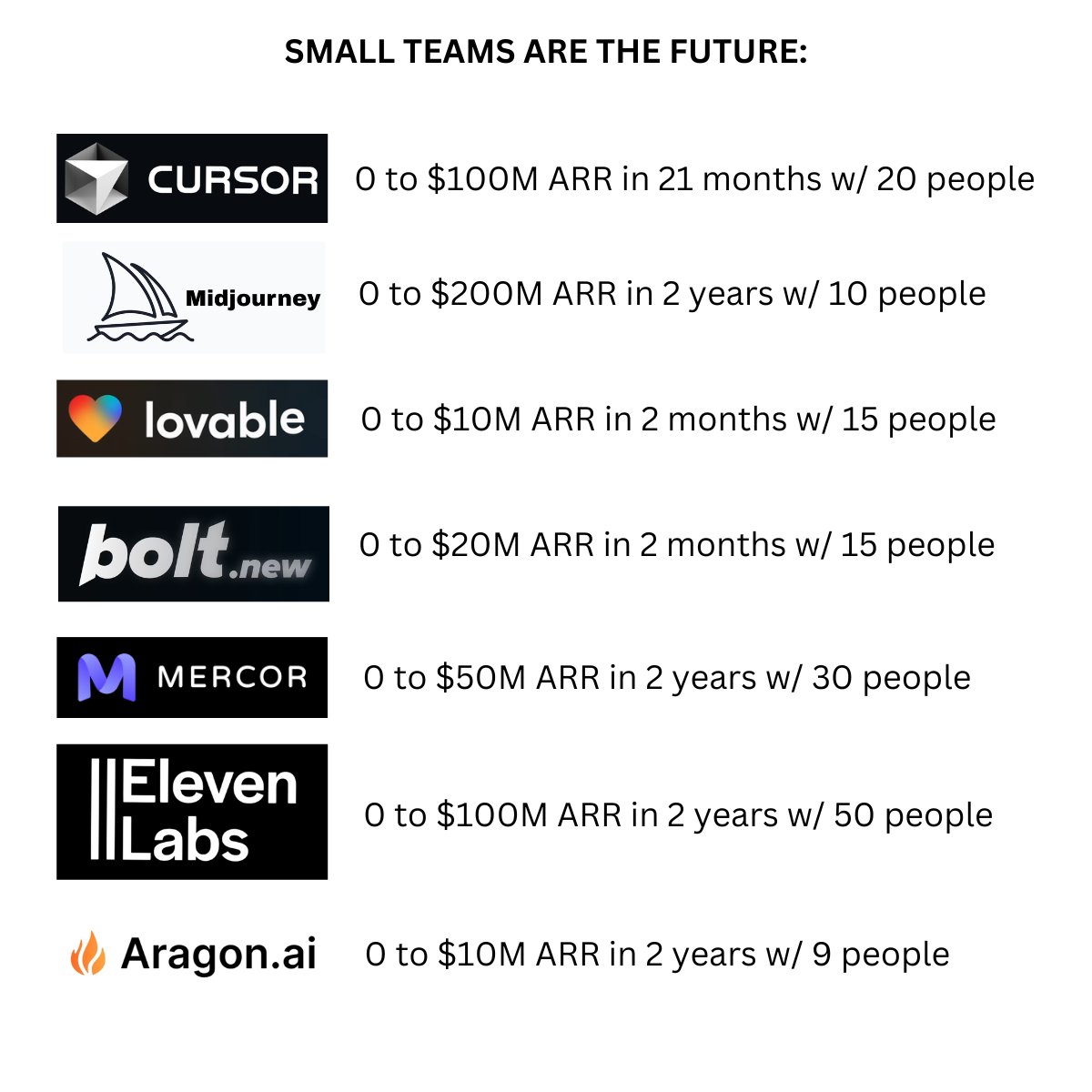
Small teams are the future:
Ben Lang tweet media
English
155
775
7.5K
1.1M
JT retweetledi
Aakash Gupta
Aakash Gupta@aakashgupta·
Most people are still prompting wrong. I've found this framework, which was even shared by OpenAI President Greg Brockman. Here’s how it works:
Aakash Gupta tweet media
English
98
892
11.6K
1.5M
JT retweetledi
GREG ISENBERG
GREG ISENBERG@gregisenberg·
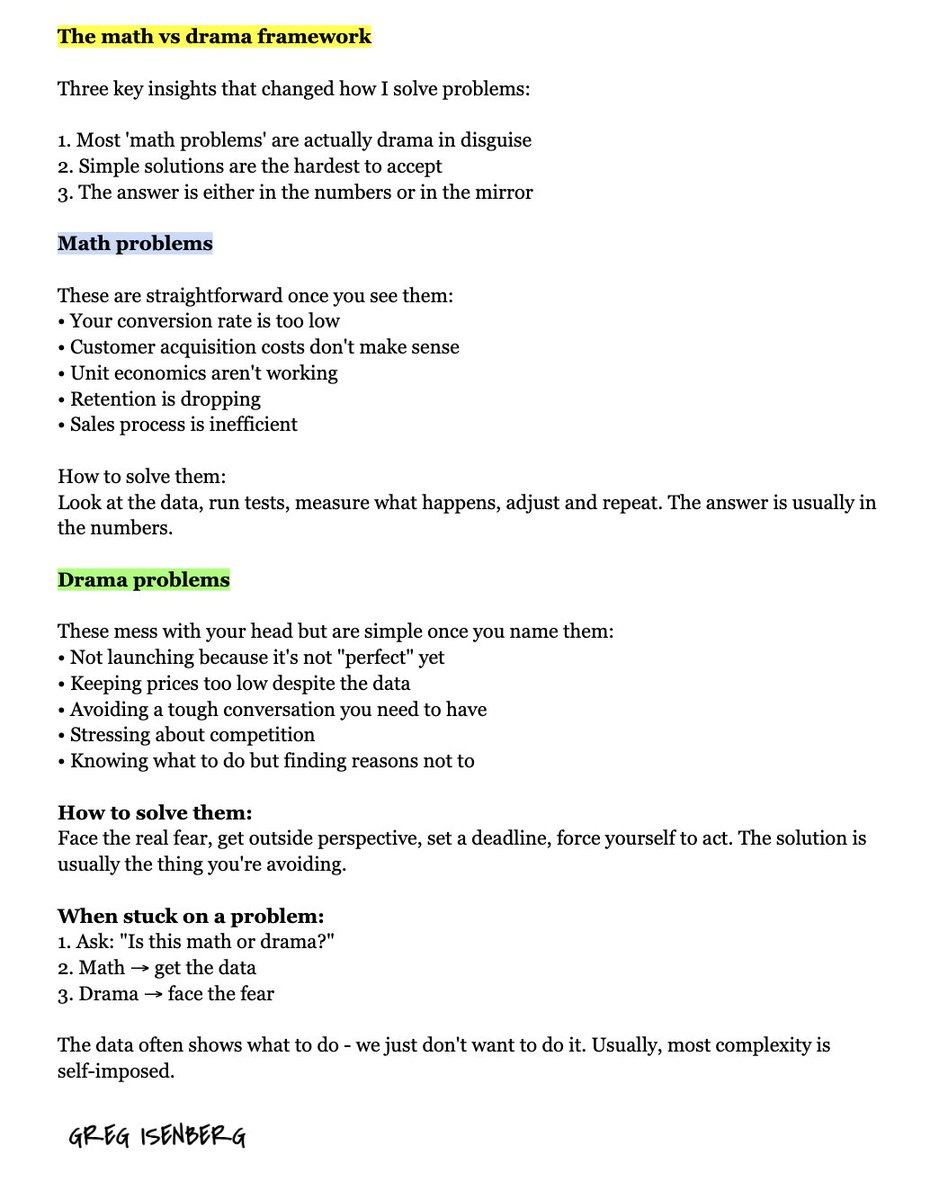
Every founder faces two types of problems: math and drama problems. I've been using this "math vs drama" framework to be more productive - my notes below in case it's helpful
GREG ISENBERG tweet media
English
54
83
880
105.1K
JT retweetledi
Michael Girdley
Michael Girdley@girdley·
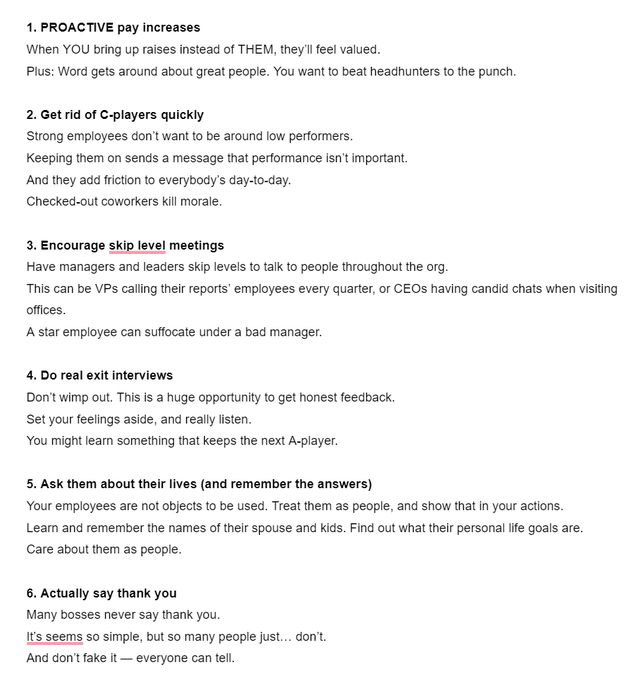
Worst ways to keep your top employees: - Swag - Retreats - “Company values” Best ways to keep your top employees 👇
Michael Girdley tweet media
English
35
48
618
87K