

Jason
203 posts

Jason
@jasonmad_
Cofounder of https://t.co/auXaNIYzx2 / NextByte (YC), previously Pinterest, MIT
San Francisco Katılım Şubat 2025
10 Takip Edilen132 Takipçiler

@jasonmad_ e.g. the thing that motivated the tweet was being annoyed that when i selected filters on best buy's website, it updated the page synchronously instead of async so it blocked my ability to select another filter
English
Very frustrating encountering a legacy product in the wild that I know I can one-shot a fix to, but there isn’t any way to do that.
English
@jasonmad_ Oh this is really cool. Front end changes only I figure?
English

Pretty soon, I think we’ll see software shipping with Claude Code SDK embedded inside.
Users will use it to configure and modify the software to meet their exact needs.
The best changes will get passed back to the software developer and reincorporated in the master release.
English
Jason retweetledi

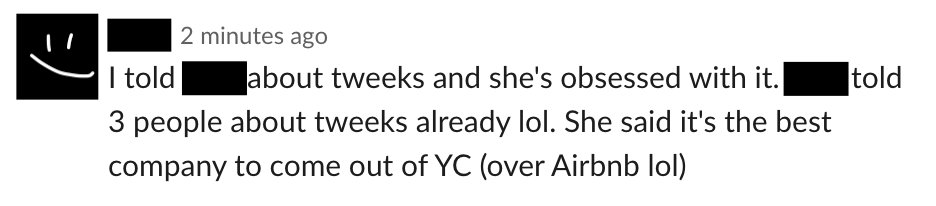
February was a busy month for @tweeks_io. We launched on Firefox, shipped an overhauled onboarding flow and profile dashboard, new discoverability features and much more. Check out our first official changelog:
tweeks.io/changelog/2026…
English
English



Tonight, we reached an agreement with the Department of War to deploy our models in their classified network.
In all of our interactions, the DoW displayed a deep respect for safety and a desire to partner to achieve the best possible outcome.
AI safety and wide distribution of benefits are the core of our mission. Two of our most important safety principles are prohibitions on domestic mass surveillance and human responsibility for the use of force, including for autonomous weapon systems. The DoW agrees with these principles, reflects them in law and policy, and we put them into our agreement.
We also will build technical safeguards to ensure our models behave as they should, which the DoW also wanted. We will deploy FDEs to help with our models and to ensure their safety, we will deploy on cloud networks only.
We are asking the DoW to offer these same terms to all AI companies, which in our opinion we think everyone should be willing to accept. We have expressed our strong desire to see things de-escalate away from legal and governmental actions and towards reasonable agreements.
We remain committed to serve all of humanity as best we can. The world is a complicated, messy, and sometimes dangerous place.
English
@GregKamradt Wikipedia has a pretty comprehensive list: en.wikipedia.org/wiki/Wikipedia…
English

My current smells of AI slop/writing:
1. Use of em dash "—". I haven't seen anyone seriously use this over a hyphen "-". Double points for wrapping — or making double points in a single sentence — give it away
2. Making a statement and then colon: like this
3. More subtle, but tone that is off-character for the authors
English

Creators, save hours weekly. Download from Instagram and auto transcribe videos instantly. Organize transcripts in a notebook, extract viral hooks, and export as JSON, CSV or Markdown.
Not a creator yet but want to be? This helps you start faster.
Get it tweeks.io/t/4CboStMB

English
I agree the pendulum is swinging and weirdly it can advantage non-technical folks.
If some big idea pops into my head, my first thought is "how would I implement that? It's gonna be tough to deal with XYZ" whereas someone less technical just asks AI without a second thought.
We're approaching "ask and you shall receive" and us "legacy" Software Engineers need to keep pushing ourselves to think bigger and stop sweating the little details.
English

We’re so gifted to be “legacy” Software Engineers, because knowing what you’re doing with the tools we have now is truly insane.
But I also want to be honest. This will not really matter soon. I can’t honestly tell a junior: “ignore AI and learn artisanal coding.”
English
There’s a ton of research showing that reduced perceived control correlates with higher stress/anxiety, and we’ve passively handed the steering wheel to AI recommendation systems.
But I agree that AI can also be a countermeasure to take back control. I added a bunch of custom filters to control my X feed a while back and the impact has been huge
English

I did a 40 hr and then a 70 hr social media fast.
I’ve come to believe that social media is pollution.
Not a vice or guilty pleasure.
It’s closer to water toxins, air pollution and microplastics.
Social media has been on my mind because I can feel how bad it is for me. For my health and agency. I am a professional rejuvenation athlete. For five years, I’ve engineered my life around biological renewal and the elimination of decay. After hundreds of experiments across food, sleep, exercise, therapies, and toxins, I’ve developed both data and intuition about what strengthens or degrades my system.
I can viscerally feel that social media is bad for me. It erodes my autonomy and increases cognitive entropy.
Like other toxins, it accumulates. You can’t unsee or unfeel what you’ve consumed. It settles into mental tissue like heavy metals, producing chronic low-grade inflammation. Evidence suggests even after you stop scrolling, attentional fragmentation and emotional priming persist. Your thoughts begin to mirror the algorithm’s incentives. Independent cognition quietly erodes and you don’t notice the loss.
Time away and getting lost in deep focus is the only remedy.
When something erodes your agency, the rational response is elimination. The problem is, elimination isn’t realistic. “Just put the phone down” is as practical as telling someone in 19th century London to stop breathing coal smoke.
You need to know what’s happening in the world, be in touch with your friends and be part of the tribe.
That necessity is what allows companies to harvest your emotions, intellect and time for their profit. You are their raw material they exploit. Then in an ironic twist, the system gets you to exploit yourself by engineering an environment where it takes more effort to stop than to continue scrolling. Pollution exposure by default.
What specifically makes social media toxic is that value and poison are inseparable by design. You go to hear from friends and you leave an hour later absorbed in outrage that serves no biological interest of yours. The water is real. The lead is in the pipes.
The performance metrics (likes, views, etc.) bleed you of independent thought. They create quantified social proof, triggering ancient hierarchy reflexes. You no longer evaluate signal from noise; the engagement metrics do it for you.
Like all toxins, the damage is cumulative. We live inside the exposure long enough that it feels normal. The 40 and 70 hour social media fasts did that for me. Gave me just enough separation to feel and diagnose the poison. The obviousness of it feels like when I went to India and saw their humanitarian crisis of air pollution which no one sees anymore.
So what do we do?
Neither platforms nor individuals are likely to change on their own. AI may be the countermeasure. An AI layer between you and the feed. Filtering rage, removing vanity metrics and translating sensationalism into calm, factual language. Preserving signal and eliminating noise.
I want social media to become a longevity intervention, not a longevity threat. I never want to see the raw feed. I want an AI agent to read it for me, strip the engagement metrics that hijack my judgment, filter the rage, and return only what I actually came for.
Every generation faces its pollutants. When cholera spread through London's water, the answer wasn't telling people to drink less. It was building filtration. The same logic applies here. Best next move is to design the filter to avoid being the raw material.
English


@steipete Hackers news comments have been on a decline for a while, increasingly more toxic, cynical, sloppy. The only reason I sometimes brave going there is that once in a while you still find a gem comment here and there.
English

*opens Hacker News*
reads personal attacks
*closes Hacker News*
English

we are in the golden age of personal websites. go out there and create something stupid.
English

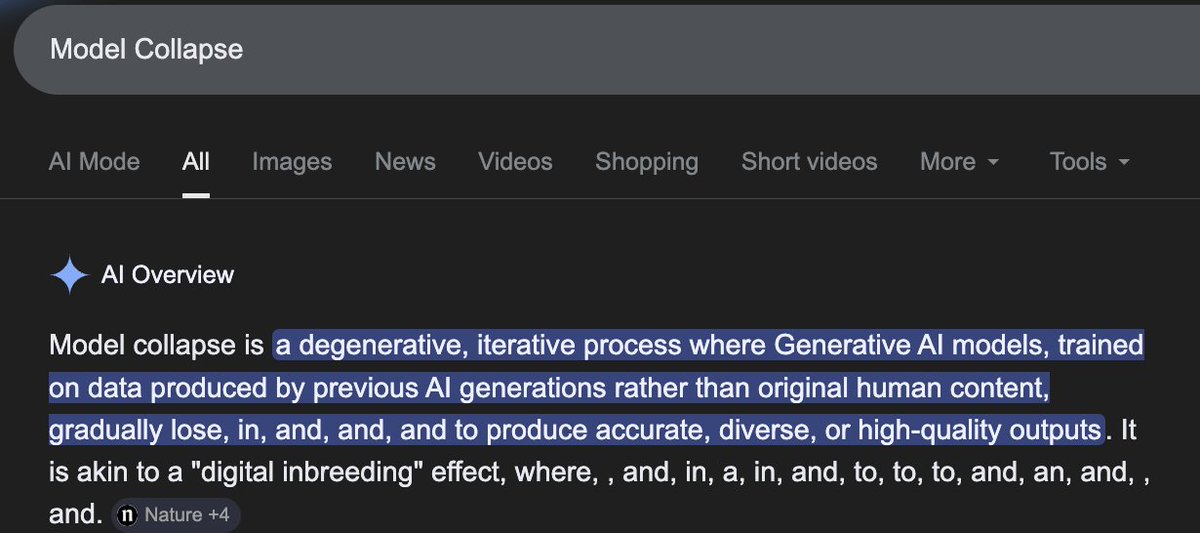
@PerceptualPeak @danallison After you have prompts you're happy with, the next step is to stop copy pasting manually and automate/orchestrate it
It'll keep going in a loop till it's ready and you'll come back to much cleaner code
English

This is a very effective workflow. I do this everytime I build out an implementation plan in plan mode. Once plan is done, point the other session to the plan file and ask it's objective thoughts on the plan. Then copy & paste feedback to plan session. It revises plan. Rinse & repeat 3x & that tends to be the sweet spot.
English

claude code: I finished the feature you asked me to build. All tests are passing. Would you like me to commit these changes?
me: Please review your changes to make sure there are no mistakes.
cc: [working] … I found 5 mistakes and fixed them. All tests are passing. Ready to commit.
me: Please review your changes to make sure there are no mistakes.
cc: [working] … I found 3 mistakes and fixed 2. The third was pre-existing and unrelated to my changes. Ready to commit.
me: Fix the “pre-existing” mistake.
cc: [working] … I fixed the pre-existing mistake. Ready to commit.
me: Please review your changes to make sure there are no mistakes.
cc: [working] … No mistakes found. There is one failing test that was pre-existing, unrelated to my changes. Would you like me to commit these changes?
me: Fix the failing test.
cc: [compacting] … [working] … All tests are passing. Ready to commit.
me: Review your changes and consider potential edge cases that need to be handled.
cc: [working] … I found 2 edge cases that were not being handled. Both are now handled properly. Ready to commit.
me: Do those edge cases have tests?
cc: [working] … Both edge cases now have test coverage. Would you like me to commit these changes?
me: Yes.
English
@sorenblank Yeah, not a huge fan of toasts myself. There's a setting to disable them, but I thought it would be nice to be able to click the mailto link if someone wanted it.
The code is available at that link and you can modify it however you want (even add your animation to all websites)
English

@jasonmad_ this is really nice!! didn't think of this. i would probably prefer this if I was a big fan of toasts. i personally don't like toast much.
English
do you click on `mailto` links? maybe some of you do. but i’ve seen many ( me included ) prefer to just copy the email address instead.
this impl satisfies both groups:
– click the email address for the `mailto` link
– or click the icon to copy to clipboard
Chris Halaska@chalaska
Is a 'mailto:' link still relevant? Do people actually use desktop email apps?
English