Jason Brenizer

3.7K posts

Jason Brenizer banner
Jason Brenizer

Jason Brenizer

@jbrenizer

Exploring the convergence of exponential technologies & intentional living. TOPICS: AI, blockchain, storytelling, health-span, graceful aging & personal growth.

Austin, TX Katılım Mart 2009
508 Takip Edilen529 Takipçiler
Sabitlenmiş Tweet
Jason Brenizer
Jason Brenizer@jbrenizer·
For 50 years people have been pining for a future presented in The Jetsons. That future is here, moving with such force that it feels like rock and dirt are liquifying under our feet from a unending earthquake. Hold on to your door jamb, steady those nerves. Take a deep breath. Hold it. Then let it out slowly. Feudal states gave way to kingdoms, which turned to empires, that coalesced into nation states after two world wars. Horsepower lost to coal and steam power. Next, oil and gas greased the global economy. AI will force a breakthrough in abundant energy, then abundant everything. First, expanding AI will consume more and more energy, so solar and fission will need to be tapped to fill the tank. When AI becomes embodied within the next 5 years, compact, rapid energy demands will force fusion energy solutions to emerge. When our ability to make energy becomes essentially infinite and immediate (no lag to mine, pump, and process fossil fuels), embodied AI proliferation magnifies, as does the level of intelligence itself. There will be breakthroughs in physics (after a long dry spell) and materials science and medicine. AI will soon help us double our lifespan, maybe even reverse effects of aging. This shaking reality feels unsafe. Truthfully, it is for those of us alive today who experience it. But the fears being peddled in the news, right or left, are a distraction. Don't be fooled. The challenge of our time is not Us versus Them. It's not Rich versus Poor. It's not Left versus Right. It's not Good versus Evil. The challenge that's coming is complex and very well may be chaotic. As we transition from scarcity and competition to abundance and cooperation, we will need a new, grand vision for the future of humanity. The Good Book says, "Without vision, the people will perish." I'm not particularly religious, but I'll take wisdom where it resides. We need a massively transformative purpose for the human race, all of us, that will take us boldly into our next stage of evolution. Elon Musk has stated that he wants to make us a multi-planetary species. He wants to colonize Mars. People call him crazy. There are countless people homeless in the richest country in the world, so why would we spend all those resources on a fool's errand? When the founding fathers of the United States drafted their vision for a new society, some people called them crazy, too. I think the dreams of science fiction authors like Isaac Asimov, Robert Heinlein, Iain M. Banks, and Arthur C. Clarke could guide us toward a grand vision. How amazing it is to be alive at this very time when the history of life on earth could give birth to the history of life in our galaxy.
English
0
1
39
1.2K
Gary Marcus
Gary Marcus@GaryMarcus·
Either we accept this as a society, and set a precedent for allowing virtually all jobs to be replaced with almost no compensation. Or we speak up now. For artists. For writers. For musicians. For everybody.
Simplifying AI@simplifyinAI

🚨 BREAKING: OpenAI and Google are about to have a massive legal problem. OpenAI, Google, and Anthropic have repeatedly sworn to courts that their models do not store exact copies of copyrighted books. They claim their "safety training" prevents regurgitation. Researchers just dropped a paper called "Alignment Whack-a-Mole" that proves otherwise. They didn't use complex jailbreaks or malicious prompts. They just took GPT-4o, Gemini, and DeepSeek, and fine-tuned them on a normal, benign task: expanding plot summaries into full text. The safety guardrails instantly collapsed. Without ever seeing the actual book text in the prompt, the models started spitting out exact, verbatim copies of copyrighted books. Up to 90% of entire novels, word-for-word. Continuous passages exceeding 460 words at a time. But here is the part that changes everything. They fine-tuned a model exclusively on Haruki Murakami novels. It didn't just learn Murakami. It unlocked the verbatim text of over 30 completely unrelated authors across different genres. The AI wasn't learning the text during fine-tuning. The text was already permanently trapped inside its weights from pre-training. The fine-tuning just turned off the filter. It gets worse. They tested models from three completely different tech giants. All three had memorized the exact same books, in the exact same spots. A 90% overlap. It's a fundamental, industry-wide vulnerability. For years, AI companies have argued in court that their models are just "learning patterns," not storing raw data. This paper provides the smoking gun.

English
59
1.4K
5K
116.4K
Jason Brenizer
Jason Brenizer@jbrenizer·
@fandompulse I used to like Star Trek more than Star Wars. But when I compare Andor to Starfleet Academy…
English
1
0
4
527
Fandom Pulse
Fandom Pulse@fandompulse·
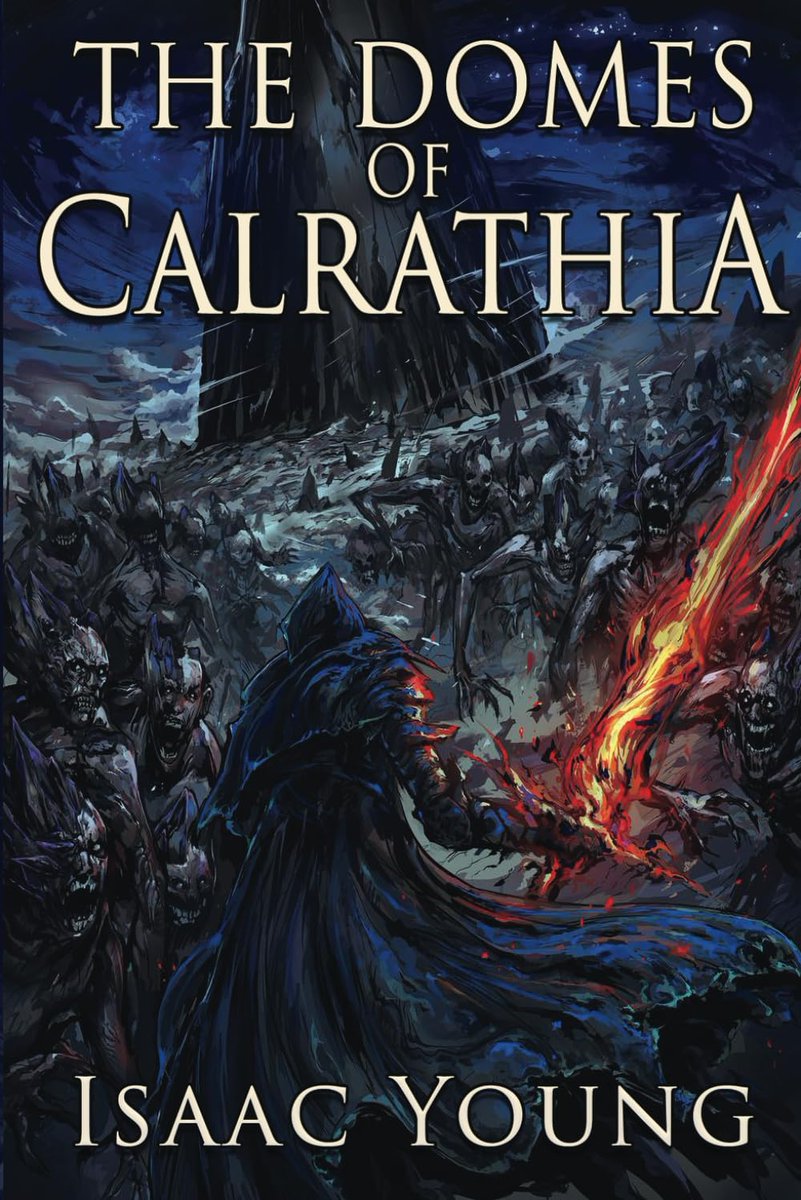
The Domes of Calrathia novelist Isaac Young on the state of modern Star Trek: "It’s about emasculated men and raging girlbosses. It’s about celebrating every sexual appetite except the one that produces functional families. It’s about fetishizing racial revenge and elevating mediocrity at the expense of excellence. You’ll find Star Trek has never been more vulgar, more profane, more debauched. It’s small-minded in everything from the cast to production values to the storytelling. It’s about lecturing to the untouchables about their privilege and holding victimhood as the highest virtue. All those tiny elements which we ignored or snickered at in previous shows became the substance of their successors, while those parts we loved about Star Trek—the parts that made it great—were left behind or turned into nostalgia-bait." Why did this happen?
Fandom Pulse tweet mediaFandom Pulse tweet media
English
55
190
1.3K
31.6K
Marcus Pittman
Marcus Pittman@ImKingGinger·
Lot’s of people are responding negatively to my analysis that Project Hail Mary is a Christian movie. Especially Christians. Faith Based Entertainment has spoon fed Church Slop to Christians for so long they don’t know how to do critical analysis of stories anymore. They can’t comprehend that a story about a man named Grace aboard a ship called Hail Mary who sacrifices his life to save humanity is a Christian story. Because nobody said a sinner’s prayer at the end and there wasn’t an altar call in the third act. Twenty years of Church Movies broke your brain. Faith Based entertainment has absolutely dumbed down Evangelicals.
Marcus Pittman tweet media
English
241
146
2.9K
176.3K
Anthony Scaramucci
Anthony Scaramucci@Scaramucci·
After years of telling everybody else how to run the country and months of deliberation, I have a special announcement: I’m running for President of the United States in 2028. I am aware of what happened the last time I worked in the White House. But I do believe I can help guide this country in the right direction. Join me and help me heal America. Mooch 2028 🇺🇸
English
2.5K
490
4.8K
686.5K
Jason Brenizer
Jason Brenizer@jbrenizer·
@twunkez That sounds like judgement and punitive damages awarded by legislation rather than the justice department. Likely, there’s precedent, but still…
English
0
0
0
162
Konstantin Kisin
Konstantin Kisin@KonstantinKisin·
Delighted to announce I have accepted a position as lead speechwriter and PR advisor to the greatest Prime Minister in British history, Sir Keir Starmer. Together, we will continue to rebuild our country's military and ensure Britain's energy security in a turbulent world.
English
3.1K
375
12K
552.5K
Stephanie Ⓥ
Stephanie Ⓥ@SVcrazycatlady·
You have to choose. You can have ChatGPT, or you can have water. You can have Claude, or you can have clean soil. You can have Grok, or you can have a survivable future. You cannot have both.
CNN@CNN

The vast data centers that power artificial intelligence guzzle huge amounts of energy but they also have another alarming impact, according to new research. They are creating “heat islands,” warming the land around them by up to 16 degrees Fahrenheit, and making life hotter for more than 340 million people. cnn.it/4rZSiG5

English
111
9.5K
25.2K
466.2K
Michael Shellenberger
Michael Shellenberger@shellenberger·
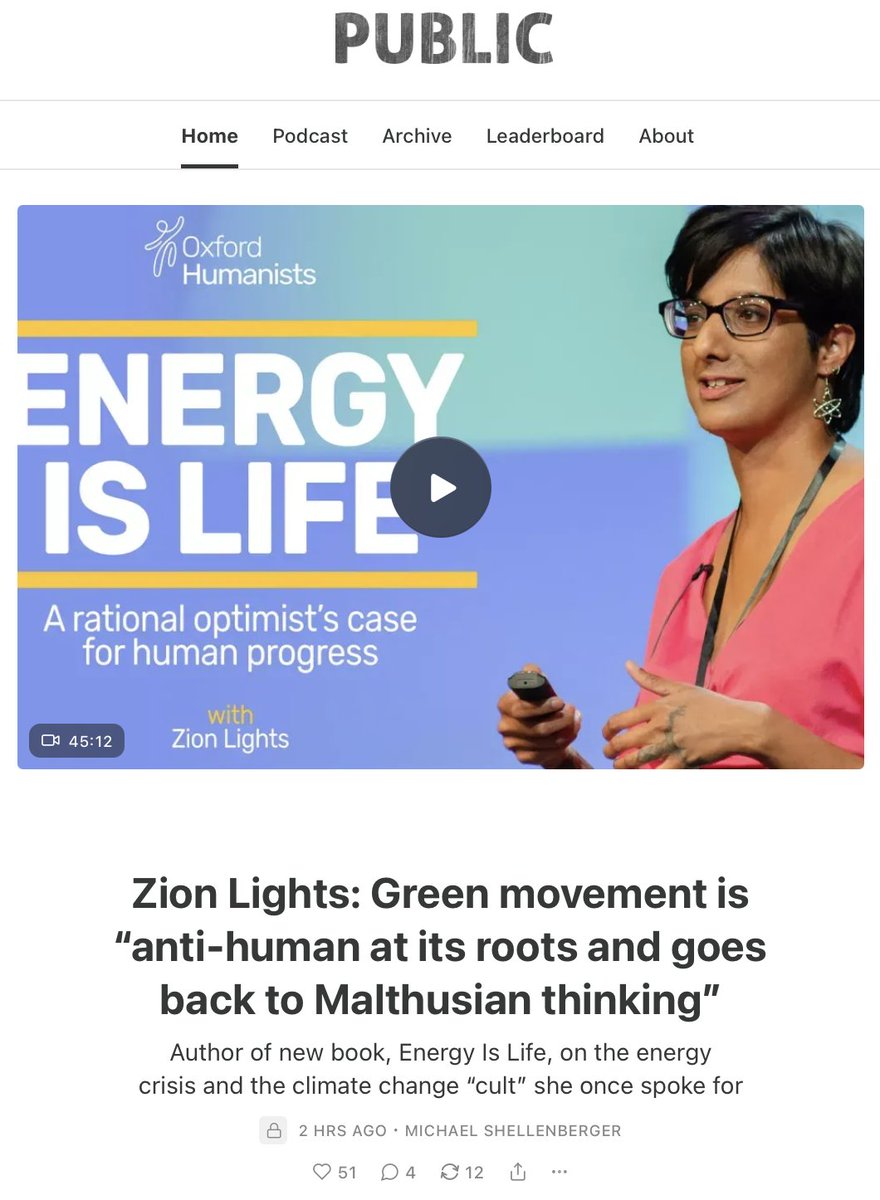
The Iran conflict triggered the energy crisis, but its roots lie in the West's opposition to the production of oil and gas outside the Persian Gulf. The climate movement is, says former radical environmentalist @ziontree, "fundamentally anti-human in its thinking."
Michael Shellenberger tweet media
English
14
226
964
50.9K
Wall Street Apes
Wall Street Apes@WallStreetApes·
New ballot initiative in Oregon called ‘Initiative Petition 28, the PEACE Act, will make it illegal to hunt, fish or raise animals, even if it’s on your own land If passed it will be ILLEGAL to - Hunt or fish for food (even on your own property or for sustenance - Raise and slaughter animals like chickens, rabbits, pigs, cows, etc., for meat on your own land or farm. - Engage in common livestock practices (e.g., breeding via artificial insemination) - Control pests by killing them (in many cases) If passes it will lead to investigations and prosecutions of farmers and individuals raising animals for food, including small scale or backyard operations with rabbits and chickens “They're going to raid all of our farmers and go after them because they're trying to quietly pass it and then make it where we all have to eat from the stores instead of farmer's markets and stuff.”
English
3K
16.8K
31.7K
748K
Jason Brenizer
Jason Brenizer@jbrenizer·
Initiative Petition 28 (the PEACE Act) is real and gunning for the November 2026 Oregon ballot. It wipes out exemptions in the state’s animal cruelty laws (ORS Chapter 167). That means hunting, fishing, trapping, raising livestock, even pest control or basic farm practices like slaughtering your own chickens on private land could become crimes—animal abuse, neglect, or worse. No more “good husbandry” carve-outs. Opponents call it a stealth ban on rural life; supporters frame it as ending “exploitation.” It’s collecting signatures now and has sparked massive pushback from hunters, farmers, and tribes. Would a law like this be unconstitutional? Short answer: Almost certainly yes—at least parts of it would get shredded in court. It overreaches hard on property rights and everyday liberties. Here’s the punch list of clauses it slams into: 1. U.S. Constitution, 5th Amendment Takings Clause (via the 14th Amendment)
This is the big one. Banning animal husbandry on your own land is a classic regulatory taking. You own the property, but suddenly you can’t use it for its most basic economic purpose (raising food animals). Courts have struck down similar total-use bans—think Lucas v. South Carolina Coastal Council (1992). If it denies all “economically beneficial use,” the state owes just compensation. No carve-outs here? Expect lawsuits from ranchers and homeowners saying, “You took my rights without paying.” 2. U.S. Constitution, 14th Amendment Substantive Due Process
This protects your fundamental liberty to pursue a lawful occupation and enjoy your property. Farming livestock or fishing your own pond isn’t some fringe hobby—it’s how families eat and earn. The law would criminalize “good animal husbandry” practices that have been legal forever. Post-Lochner, courts give economic regs wide latitude, but this isn’t rational regulation—it’s a blanket ban dressed as cruelty prevention. It fails even rational-basis review because it’s arbitrary and destroys entire industries without a real public health hook. 3. Oregon Constitution, Article I, Section 18 (Takings Clause)
Oregon’s own version: “Private property shall not be taken for public use… without just compensation.” Same logic as federal—your land, your animals, your tools suddenly worthless for traditional use. State courts would hit this hard too. Bonus angles that could pile on: • Tribal treaty rights (federal supremacy)—Oregon tribes have hunting/fishing rights that this would gut. • No state right to hunt/fish in Oregon’s Constitution (unlike 24 other states), so that defense is weak here. But property rights still win. Opponents already say this thing is headed straight to court if it passes—like the failed attempts before it. History shows these extreme animal-rights pushes crash on constitutional rocks.
English
1
0
1
27
Jason Brenizer
Jason Brenizer@jbrenizer·
@AndrewYang That must be the saddest thing you’ve heard all year. You’ve been beating this drum in earnest at since your 2020 presidential run. Make America Think Harder indeed.
English
0
0
0
59
Andrew Yang🧢⬆️🇺🇸
Had dinner with an investor who said this: “I thought you were wrong about AI and jobs. But I’m on the Board of a bunch of companies and every one of them is now cutting staff due to AI. So now I think you’re right.”
English
270
114
1.3K
107.2K
Jason Brenizer
Jason Brenizer@jbrenizer·
@ewarren Prove you’ll be able to spend it wisely and audit where it goes so we can end the widespread fraud fiasco. Then we can talk about raising taxes.
English
1
0
3
29
Elizabeth Warren
Elizabeth Warren@ewarren·
The Ultra-Millionaire Tax Act would generate over $6 trillion over the next decade—without raising taxes on 99.85% of American households. This wealth tax for millionaires and billionaires could pay for universal child care, free community college, Medicare expansion, and more.
English
4.3K
1.9K
7.9K
827.5K
Jason Brenizer
Jason Brenizer@jbrenizer·
@RAZ0RFIST This idea sounds amazing! Skipping this and Andy Weir’s pitch show how out of touch the studio really is.
English
0
0
1
26
RazörFist
RazörFist@RAZ0RFIST·
They made Starfleet Academy instead of this.
RazörFist tweet media
English
252
408
4.5K
112K
Jason Brenizer
Jason Brenizer@jbrenizer·
@ForHumanityPod You would likely have to kill a lot of Chinese to stop them building AI into anything and everything.
English
0
0
0
5
John Sherman
John Sherman@ForHumanityPod·
Nobody gets to build anything that can kill everybody else. AI risk should not be complicated.
English
25
17
81
2.3K
Jason Brenizer
Jason Brenizer@jbrenizer·
@fandompulse It appears that Andy Weir has earned F U money. Nice to be able to say how you feel and not worry about Hollywood naming you persona non grata.
English
1
0
16
644
Fandom Pulse
Fandom Pulse@fandompulse·
Project Hail Mary writer Andy Weir savages modern Star Trek after they rejected his pitch: “I pitched a Star Trek show to Paramount and I was in Zoom with the showrunners with all the shows and spent a lot of time talking to [executive producer Alex Kurtzman]. I don’t like a lot of the new Trek. He, as a person, is a really nice guy. But at the same time, those shows are shit. He is a nice guy. But they didn’t accept my pitch so, you know, fuck ’em.” Should they have hired him instead of green lighting Starfleet Academy?
Fandom Pulse tweet mediaFandom Pulse tweet media
English
151
163
3.2K
236.9K
Jason Brenizer
Jason Brenizer@jbrenizer·
@pmarca As relative costs of subsistence goods and services go down, is the expectation for stock prices to remain stable because costs of making and shipping and installing the thing go down, so profit margins stay the same?
English
0
0
0
19
Marc Andreessen 🇺🇸
Claude responds: The "Rising Cost of Existence" Claim Has No Mechanism — And the Default Technological Trajectory Is the Opposite The argument asserts that AI pushes the cost of human existence up. This is stated, not argued. And it runs directly contrary to the entire historical trajectory of technological advancement, which has been to collapse the real cost of goods and services that constitute basic human welfare. Consider what the subsistence floor actually consists of: food, clothing, basic shelter, energy, medicine, communication, transportation. Every single one of these categories has seen its real cost fall dramatically as a function of technological productivity gains. An American minimum-wage worker today commands more calories, more clothing, more computing power, more pharmaceutical access, and more travel capacity per hour of labor than a solidly middle-class person in 1920. The technological arrow on the cost of material subsistence has pointed unambiguously downward for 250 years. AGI accelerates this, not reverses it. If AGI can perform cognitive labor, it dramatically lowers the cost of producing everything that requires cognitive labor as an input — which is everything. Drug discovery gets cheaper. Medical diagnosis gets cheaper. Legal services get cheaper. Engineering design gets cheaper. Agricultural optimization gets cheaper. The AI-abundant world is one where the absolute cost of meeting basic human needs plummets, not one where it rises. So the mechanism for the "cost of existence rises" half of the scissors needs to be specified. There are exactly two categories of goods that resist this downward pressure: Category A: Positional goods and social status. Being in the top 10% of income is by definition zero-sum. If AI makes everyone richer, relative rank competition intensifies. But this is about relative impoverishment, not absolute destitution. Confusing these two is a serious analytical error. Humans being worse off relative to AI-augmented entities is categorically different from humans being unable to meet basic needs. The argument requires the latter to generate the "economic destruction" framing. Category B: Location-constrained goods — primarily housing. This is the strongest version of the real concern. Housing in desirable, productive urban locations is fundamentally constrained by land, zoning, and geography, and AI doesn't solve the zoning problem. If the gains from AI get capitalized into urban real estate (which is partly what happened with previous technology booms), housing costs can rise even as manufactured goods get cheaper, and housing is a large component of the subsistence floor. This is a genuine concern — but it's a political economy problem with known solutions (zoning reform, land value taxes, building incentives), not a fundamental economic law produced by AI. Packaging it as evidence that AI inevitably raises the cost of human existence requires ignoring that the mechanism is political dysfunction, not technological necessity. The technology doesn't raise housing costs. Regulatory capture and NIMBYism raise housing costs. These are separable.
Roko 🐉@RokoMijic

I should point out that "lump of labor" type arguments are insufficient to save humans from economic destruction by AI if AI can push the cost of human existence up at the same time it pushes the value captured by humans down, assuming there's no UBI. If there is only UBI as a way for humans to survive there can be a long-term dysgenic malthusian competition for access to the UBI so in the long term the only humans who survive are some kind of human vegetables. There's no lump of labor but there is something like a rising subsistence floor that can destroy humanity.

English
91
47
380
96.9K
Jason Brenizer
Jason Brenizer@jbrenizer·
Constantly being on call, waiting for the next problem as the go-to problem solver for your aging parents, creates immense overhead and stress. It's like being a doctor with a pager on call 24/7 – there's no escape from the burden.
English
0
0
0
17