Jeff Mignon

6K posts

Jeff Mignon banner
Jeff Mignon

Jeff Mignon

@jeffmignon

Entrepreneur, CMO & Product Innovation Leader | Systems Practitioner | Guiding Startups to Market Fit | Scaling Mid-Market Firms | Board Member


New York, USA Katılım Mayıs 2008
869 Takip Edilen2.3K Takipçiler
Jeff Mignon
Jeff Mignon@jeffmignon·
@60Minutes And it is not only Lyme; there are also babesiosis, anaplasmosis... I have Alpha-Gal syndrome (severe allergy to red meat). My wife has Lyme, and my mother-in-law passed away after getting babesiosis a year ago.
English
0
0
3
1.6K
60 Minutes
60 Minutes@60Minutes·
“The natural disaster in our area is not hurricanes, or tornadoes, or earthquakes; it is Lyme disease,” says MIT associate professor and pioneer in genetic engineering Kevin Esvelt, describing the severity of the tick-borne illness in the Northeast. cbsn.ws/3Rsnxgu
English
111
566
2.7K
468.5K
Jeff Mignon retweetledi
Vala Afshar
Vala Afshar@ValaAfshar·
It does not make sense to hire smart people and then tell them what to do; we hire smart people so they can tell us what to do. You have to be run by ideas not hierarchy. The best ideas have to win, otherwise good people do not stay.  —Steve Jobs
English
3
26
96
7.7K
Jeff Mignon retweetledi
Alex Prompter
Alex Prompter@alex_prompter·
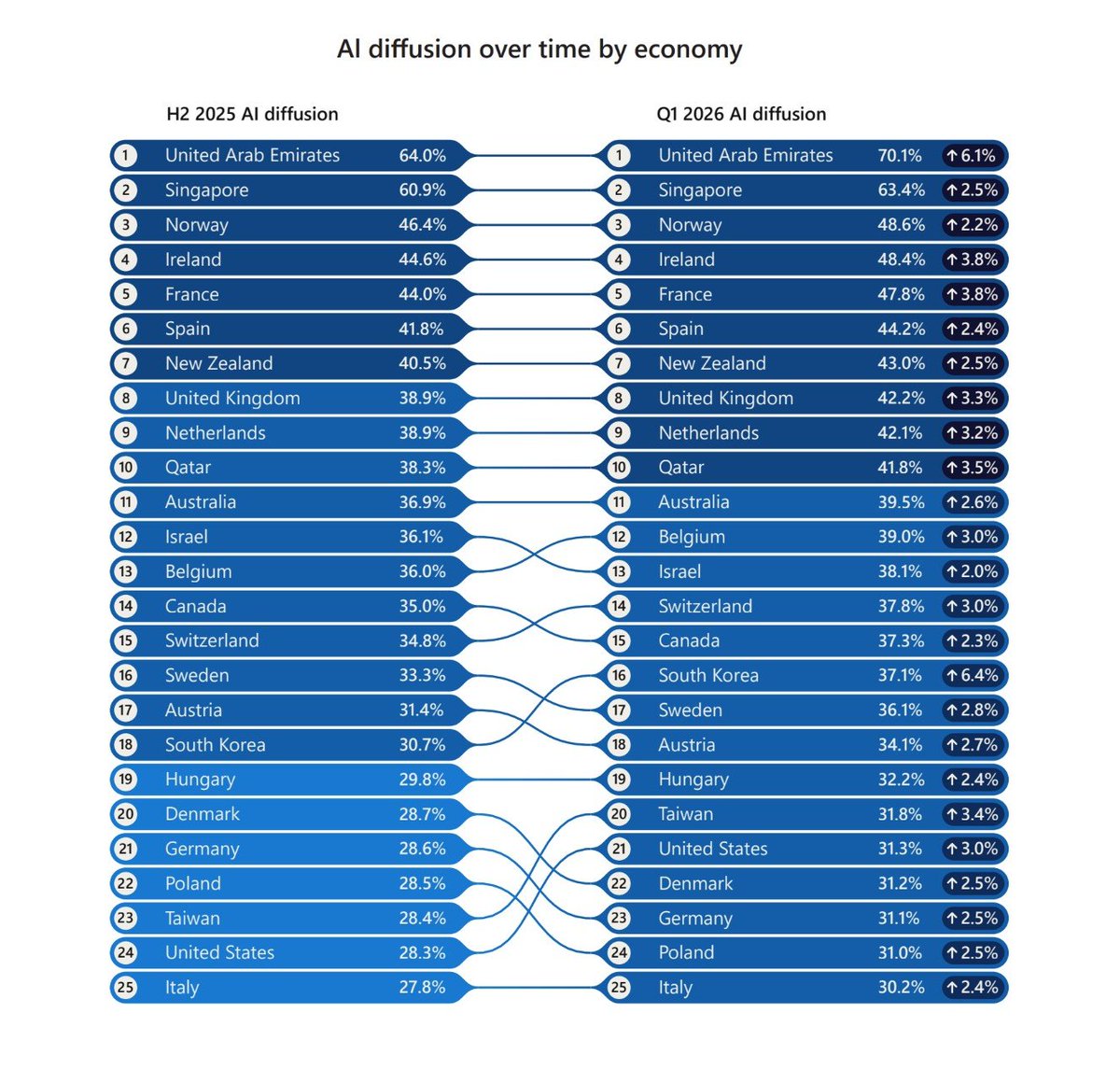
"AI is replacing developers" is the most popular take on the internet right now. Microsoft just published data that says the opposite. US software developer employment hit a record 2.2 million in 2025. Up 8.5% from the year before. Early 2026 data shows it's STILL climbing. At the same time, coding output exploded. Code pushes on GitHub increased 78% year over year globally. Developers aren't doing less. They're shipping more, faster. The logic is simple. When AI makes building software cheaper, companies don't fire developers. They build more software. More products, more features, more use cases that weren't worth the cost before. The demand for software was always bigger than the supply of people who could build it. AI didn't shrink the workforce. It uncapped the backlog. This is the pattern nobody talks about. Productivity tools don't eliminate jobs when demand is elastic. Spreadsheets didn't kill accountants. They created millions of finance roles that didn't exist before. The people most at risk aren't developers who use AI. They're developers who refuse to. If you're learning to build with AI right now, you're not replacing yourself. You're positioning yourself at the front of the biggest expansion in software hiring we've ever seen.
Alex Prompter tweet media
English
37
44
169
20.4K
Jeff Mignon retweetledi
Daniel Jeffries
Daniel Jeffries@Dan_Jeffries1·
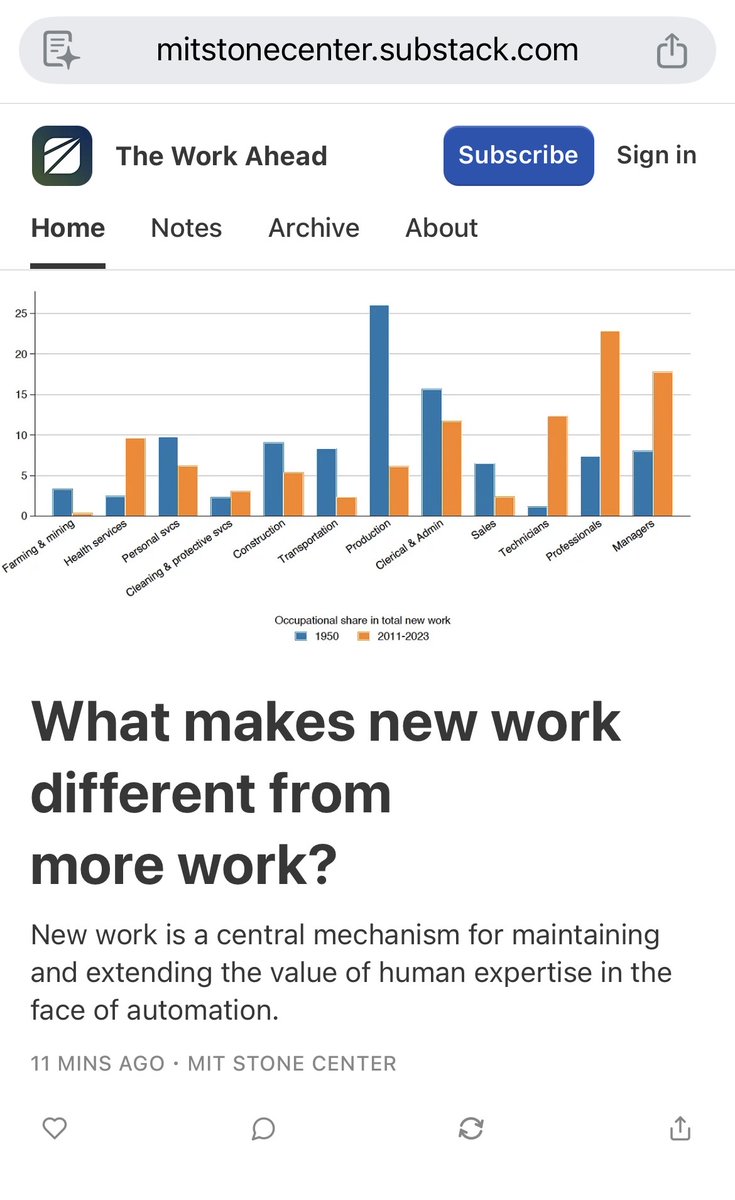
AI will create more jobs than any other technology in history. The doomers' fundamental error isn't just the lump of labor fallacy. It's deeper than that. They assume a finite problem space. This is the fundamental error of AI and job doomers. They look at the economy and see a fixed amount of work to be done, a pie that can only be sliced thinner as machines take bigger bites. They see humans a competitive resource for a finite amount of work and a finite amount of problems to solve that must be eliminated. This is fundamentally, totally and completely wrong. The pie isn't fixed. It never was. And the reason it isn't fixed is baked into the very nature of technology itself. Technology is nothing but abstraction stacking. And abstraction stacking is infinite. Therefore the work is infinite. The hammer didn't reduce the amount of work. It moved the work up the stack. And the new work was more complex, more varied, and more interesting than the old work. Complexity breeds more complexity and more variety. Once you have houses instead of mud huts, you have a cascade of new problems that didn't exist before. Plumbing. Wiring. Insulation. Roofing materials that don't rot. Drainage systems so the foundation doesn't flood. Fire codes so your neighbor's bad wiring doesn't burn down the whole block. Each of those problems becomes a job. A plumber. An electrician. An insulator. A roofer. A civil engineer. A building inspector. None of those jobs existed when we lived in mud huts. They exist because we solved the mud hut problem. Think of all of human technological development as a stack of abstraction layers, each one built on top of the ones below it. At the bottom: raw survival. Finding food. Building shelter. Making fire. These are the base-layer problems. Each major technology wave solved a base-layer problem and in doing so created an entirely new layer of problems above it: Agriculture solved "how do we reliably eat?" — and created problems of land ownership, irrigation, crop rotation, storage, trade, taxation, and governance. Writing solved "how do we remember things across generations?" — and created problems of literacy, education, record-keeping, law, bureaucracy, and literature. The printing press solved "how do we spread knowledge at scale?" — and created problems of intellectual property, censorship, journalism, publishing, public opinion, and democratic discourse. The steam engine solved "how do we generate mechanical power without muscles?" — and created problems of factory design, worker safety, urban planning, railroad engineering, coal mining, labor relations, and environmental pollution. Electricity solved "how do we deliver energy anywhere?" — and created problems of grid design, power generation, appliance manufacturing, electrical safety codes, utility regulation, and an entire consumer electronics industry. The Internet solved "how do we connect all human knowledge?" — and created problems of cybersecurity, digital privacy, online commerce, content moderation, network infrastructure, cloud computing, social media dynamics, and an entire digital economy that employs tens of millions. Notice the pattern? Each solution didn't just solve a problem. It created an entirely new problem space that was larger, more complex, and more varied than the one it replaced. The stack grows. It never shrinks. It's turtles all the way down and all the way up.
English
248
343
1.4K
155K
Jeff Mignon
Jeff Mignon@jeffmignon·
@brivael "Pas un seul ministère n'a inventé quoi que ce soit qui ait changé ta vie au quotidien." Apple n'a inventé aucune des technologies de l'iPhone: pas le GPS, pas l'internet, pas la puce, pas le touch-screen… Toute la recherche a été financée par l'argent public.
Français
0
0
0
37
Brivael Le Pogam
Brivael Le Pogam@brivael·
Elon Musk avait dit un truc qui m'avait marqué sur l'allocation de ressources. En substance : passé un certain niveau de richesse, l'argent n'est plus de la consommation, c'est de l'allocation de capital. Cette phrase change tout. L'économie, dans le fond, c'est juste un problème d'allocation. Tu as des ressources finies et des usages infinis. Qui décide où va quoi ? Imagine une cour de récré. 100 enfants, des paquets de cartes Pokémon distribués au hasard. Tu laisses faire. Très vite, un ordre émerge. Les bons joueurs accumulent les cartes rares, les collectionneurs trient, les négociateurs trouvent des deals. Personne n'a planifié. Et pourtant chaque carte finit dans les mains de celui qui en tire le plus de valeur. Le système maximise le bonheur total de la cour. C'est ça, la main invisible. Maintenant fais entrer la maîtresse. Elle trouve ça injuste. Léo a 50 cartes, Tom en a 3. Elle confisque, redistribue, impose l'égalité. Trois effets immédiats. Les bons joueurs arrêtent de jouer, à quoi bon. Les mauvais n'ont plus de raison de progresser, ils auront leur part. Les échanges s'effondrent. La cour est égale, et morte. Elle a maximisé l'égalité, elle a détruit le bonheur. Le problème de la maîtresse, c'est qu'elle ne peut pas avoir l'information que la cour avait collectivement. C'est le problème du calcul économique de Mises, formulé en 1920. L'URSS a essayé de le résoudre pendant 70 ans avec le Gosplan. Résultat : pénuries, queues, effondrement. Pas parce que les Soviétiques étaient bêtes, parce que le problème est mathématiquement insoluble en mode centralisé. Quand Musk a 200 milliards, il ne les consomme pas, il les alloue. SpaceX, Starlink, Neuralink, xAI. Chaque dollar est un pari sur le futur. Et lui a un track record. PayPal, Tesla, SpaceX. Il a démontré qu'il sait identifier des problèmes immenses et y allouer des ressources avec un rendement spectaculaire. L'État aussi a un track record. Hôpitaux qui s'effondrent, éducation qui décline, dette qui explose, services publics qui se dégradent malgré des budgets en hausse constante. Le marché identifie les bons allocateurs, la politique identifie les bons communicants. Le profit n'est pas une finalité, c'est un signal. Il dit : tu as alloué des ressources rares vers un usage que les gens valorisent suffisamment pour payer. Plus le profit est gros, plus la création de valeur est grande. Quand Starlink est rentable, ça veut dire que des millions de gens dans des zones rurales ont enfin internet. Quand un ministère est en déficit, ça veut dire qu'il consomme plus qu'il ne produit. L'un crée, l'autre détruit, et on appelle ça redistribution. Dans nos sociétés il y a deux catégories d'acteurs. Les entrepreneurs et les bureaucrates. L'entrepreneur prend un risque personnel pour identifier un problème, mobiliser des ressources, créer une solution. S'il se trompe il perd. S'il a raison, ses clients gagnent, ses employés gagnent, ses fournisseurs gagnent, l'État collecte des impôts. Il est la cellule de base du progrès humain. Le bureaucrate ne prend aucun risque personnel. Son salaire est garanti. Au mieux il maintient une rente existante. Au pire il la détruit par excès de réglementation, mauvaise allocation forcée, incitations perverses qui découragent ceux qui produisent. Mais dans aucun cas il ne crée. Regarde les 50 dernières années. iPhone, internet civil, SpaceX, Tesla, Google, Amazon, Stripe, mRNA, ChatGPT. Toutes des inventions privées, portées par des entrepreneurs, financées par du capital risque. Pas un seul ministère n'a inventé quoi que ce soit qui ait changé ta vie au quotidien. La France est devenue le laboratoire mondial de la dérive bureaucratique. 57% du PIB en dépenses publiques, record absolu. Une administration tentaculaire, une fiscalité qui pénalise la création de richesse. Résultat : décrochage face aux États-Unis, à l'Allemagne, à la Suisse. Fuite des cerveaux. Désindustrialisation. Dette qui explose. Et le pire c'est que la mauvaise allocation s'auto-renforce. Plus l'État prélève, moins les entrepreneurs créent. Moins ils créent, moins il y a de base fiscale. Plus l'État s'endette et taxe. Boucle de rétroaction négative parfaite. La maîtresse pense qu'elle aide, et chaque année la cour produit moins. Dans nos sociétés, ce sont les entrepreneurs, toujours, qui font avancer la civilisation. Les bureaucrates au mieux maintiennent une rente, au pire la détruisent. Aucune société n'a jamais progressé en taxant ses créateurs pour subventionner ses gestionnaires. La question n'est jamais qui a combien. C'est qui alloue le mieux la prochaine unité de ressource pour maximiser le futur de l'humanité. La réponse depuis 200 ans n'a jamais changé. Ce ne sont pas les fonctionnaires.
Français
3.3K
16.4K
61.9K
81.6M
Jeff Mignon
Jeff Mignon@jeffmignon·
@brivael 1. Quid s'il y a un mec costaud qui décide de casser la gueule à ceux qui ont les cartes les plus rares pour les voler? 2. Quid si l’un des enfants est riche et achète toutes les cartes?
Français
0
0
0
60
Yasir Ai
Yasir Ai@AiwithYasir·
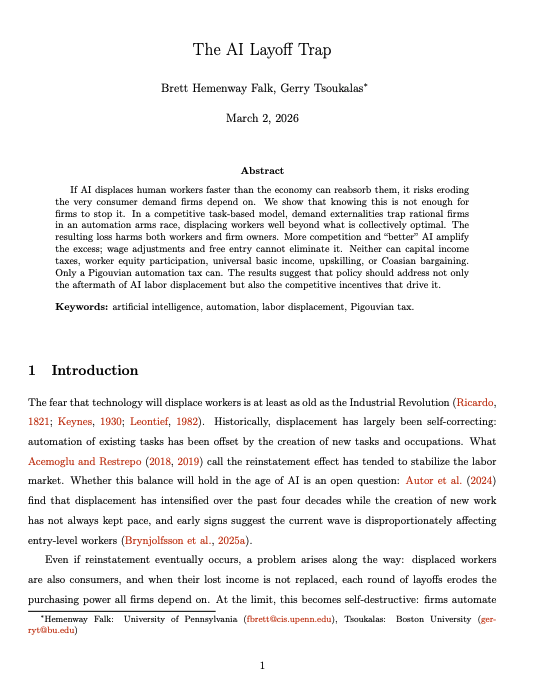
🚨BREAKING: Two researchers from UPenn and Boston University just published a paper that should be uncomfortable reading for every CEO automating their workforce right now. The argument is straightforward. Every company replacing workers with AI is also eliminating its own future customers. Laid off workers stop spending. Enough of them stop spending and nobody can afford to buy anything. The companies that fired everyone end up selling into an economy with no purchasing power left. Every executive can see this. The math is not complicated. But here is why nobody stops. If you do not automate, your competitor does. They cut costs, lower prices, take your market share, and you collapse anyway. So every company automates knowing it is collectively destructive because the alternative is dying alone while everyone else survives. The researchers proved this is a Prisoner's Dilemma playing out in real time. The numbers are already moving. Block cut nearly half its 10,000 employees this year. Jack Dorsey said AI made those roles unnecessary and that within the next year the majority of companies will reach the same conclusion. Salesforce replaced 4,000 customer support agents with AI. Goldman Sachs deployed a coding tool that lets one engineer do the work of five. Over 100,000 tech workers were laid off in 2025 and AI was cited as the primary driver in more than half those cases. 80% of US workers hold jobs with tasks susceptible to AI automation. The researchers tested every proposed solution. Universal basic income does not change a single company's incentive to automate. Capital income taxes adjust profit levels but not the per-task decision to replace a human. Collective bargaining cannot hold because automating is always the dominant strategy. They also identified what they call a Red Queen effect. Better AI does not solve the problem, it accelerates it. Every company chases faster automation to gain market share over rivals but at the end everyone has automated equally, the gains cancel out, and the only thing left is more destroyed demand. The one thing the math says could work is a Pigouvian automation tax. A per-task charge that forces companies to account for the demand they destroy each time they replace a worker. The conclusion is that this is not a transfer of wealth from workers to owners. Both sides lose. Workers lose income. Companies lose customers. It is a deadweight loss with no market mechanism to stop it on its own. (Link in the comment)
Yasir Ai tweet media
English
637
4.3K
12.4K
3.3M
Jeff Mignon
Jeff Mignon@jeffmignon·
@AiwithYasir I have been wondering for a while why nobody is speaking about this "little detail". Agents and robots are also customers, but not exactly for the same type of goods and services.
English
0
0
0
1.1K
Jeff Mignon retweetledi
Rohan Paul
Rohan Paul@rohanpaul_ai·
China's XPeng has secured more than 7,000 pre-orders for its Land Aircraft Carrier (flying cars). The system pairs a 6-wheeled electric ground vehicle with a detachable two-seat eVTOL pod. Large-scale production is slated for 2027.
English
121
400
2.6K
912.7K
Jeff Mignon retweetledi
Mathonymics
Mathonymics@Mathonymics·
3D Visualization of a Lorenz Attractor
English
4
36
192
8.3K
Jeff Mignon
Jeff Mignon@jeffmignon·
@ylecun @Ph_Aghion @erikbryn Neither Dario nor any economists can predict the future of the labor market. The property of complex systems, such as the labor market, is emergent. A very small and invisible event, as discovered by E. Lorenz (chaos theory), can potentially change its trajectory radically.
English
0
0
5
3.4K
Yann LeCun
Yann LeCun@ylecun·
Dario is wrong. He knows absolutely nothing about the effects of technological revolutions on the labor market. Don't listen to him, Sam, Yoshua, Geoff, or me on this topic. Listen to economists who have spent their career studying this, like @Ph_Aghion , @erikbryn , @DAcemogluMIT , @amcafee , @davidautor
TFTC@TFTC21

Anthropic CEO Dario Amodei: “50% of all tech jobs, entry-level lawyers, consultants, and finance professionals will be completely wiped out within 1–5 years.”

English
1.2K
2.8K
21.4K
4.1M
Brivael Le Pogam
Brivael Le Pogam@brivael·
Un message pour tous les français qui veulent vraiment comprendre ce qui se passe dans la tech et l'IA. Arrêtez les podcasts français. Sérieusement. Le niveau est très, très moyen. C'est des gens qui commentent ce que d'autres construisent. C'est du commentaire de commentaire. Du meta sur du meta. Et à la fin tu as passé 2 heures à écouter quelqu'un t'expliquer ce qu'il a lu dans un article américain traduit en français avec 3 semaines de retard. Allez à la source. Marc Andreessen. Le mec a inventé le navigateur web et il finance la moitié de la Silicon Valley. Ses podcasts sur a16z sont des masterclass en temps réel sur ce qui se construit. Naval Ravikant. Ses épisodes avec Joe Rogan et Tim Ferriss sont probablement les 6 heures les plus rentables que vous passerez de votre vie. Richesse, leverage, bonheur, philosophie, tout y est. Peter Thiel. Chaque interview est un cours de stratégie de niveau Nobel. Le mec pense à 15 ans d'avance et il s'en fiche de plaire. Lex Fridman. Des conversations de 3 heures avec les cerveaux les plus brillants de la planète. Sans filtre. Sans montage. Sans bullshit. The All-In Podcast. Quatre milliardaires qui débattent chaque semaine de tech, économie et politique avec une franchise que vous ne trouverez nulle part en France. Y Combinator. Chaque talk de Startup School est gratuit sur YouTube. C'est l'accélérateur le plus successful de l'histoire qui donne ses secrets gratuitement. Et quasi personne en France ne regarde. C'est là-bas que le futur se construit. Pas dans un studio parisien entre deux pubs pour une néobanque. Les podcasts français c'est mignon. Ça fait passer le temps. Mais si vous voulez vraiment comprendre ce qui va changer votre vie dans les 5 prochaines années, il faut aller boire à la source. La source parle anglais. Et elle est gratuite. Votre meilleur investissement en 2026 c'est pas un ETF. C'est de passer 30 minutes par jour à écouter les gens qui construisent le futur dans leur propre langue. L'anglais c'est pas une option. C'est le prix d'entrée.
Français
81
200
1.5K
78.6K
Jeff Mignon retweetledi
Startup Archive
Startup Archive@StartupArchive_·
Marc Andreessen on the 5 personality traits of an innovator “When you’re talking about real innovators—people who actually do really creative, breakthrough work—I think you’re talking about a couple things:” 1. Very high in trait openness. “Just flat-out open to new ideas… And the nature of trait openness means you’re not just open to new ideas in one category—you’re open to many different kinds of new ideas… But of course, just being open is not sufficient because if you’re just open, you could just be curious and explore and spend your entire life reading, talking to people, but never actually create something.” 2. High level of conscientiousness. “You need somebody who’s really willing to apply themselves—typically over a period of many years to accomplish something great… For most of these people, it’s years and years of applied effort. You need somebody with an extreme willingness to basically defer gratification… Of course, this is why there aren’t many of these people—there aren’t many people who are high in openness and high in conscientiousness because to a certain extent, they’re opposed traits.” 3. High in disagreeableness. “If they’re not ornery, they’ll be talked out of their ideas… Because the reaction most people have to new ideas is ‘Oh, that’s dumb.’ So, somebody who’s too agreeable will be easily dissuaded to not pull on the thread anymore.” 4. High IQ. “They just need to be really smart because it’s hard to innovate in any category if you can’t synthesize large amounts of information quickly.” 5. Relatively low neuroticism. “If they’re too neurotic, they probably can’t handle the stress.” Video source: @hubermanlab (2023)
English
22
114
882
103.2K
Jeff Mignon
Jeff Mignon@jeffmignon·
Meta burned $80B treating a complex adaptive system like a blueprint. Companies aren't mechanistic. They're adaptive. Deterministic planning assumes you can predict the future. You can't. The best operators create conditions for emergence, not compliance with a fixed map.
English
0
0
0
24
Jeff Mignon retweetledi
Thomas J. Dettling #DigitalTransformation
⬛️ Digital Dexterity: Why the Real Bottleneck in Transformation Isn’t Technology 🔷 Companies are investing billions in cloud, data platforms, and AI - yet many still struggle to make real progress. The reason is less surprising than it is uncomfortable: The biggest obstacle isn’t the technology itself, but the organization’s ability to use it effectively. A recent MIT Sloan research article* highlights why digital dexterity - the workforce’s ability to adapt and work productively with new technologies - is becoming a decisive competitive advantage. 🔷 Digital dexterity means people are willing and able to adopt new tools quickly, work with data, and collaborate across functions while continuously learning. This capability doesn’t emerge from tool training alone but from a culture that rewards curiosity, experimentation, and customer‑centric thinking. According to the research, four elements make the difference: 🔹 1. Reframing. Effective leaders see transformation as a cultural and organizational shift - not an IT project. They create the conditions for data‑informed decisions, cross‑functional collaboration, and continuous learning. 🔹2. Top‑down engagement. CEOs and C‑suites who experiment themselves, use data, and understand AI use cases break down resistance across the workforce. Digital transformation cannot be delegated💡 🔹 3. Bridging. Strong leaders act as translators across silos, generations, and mindsets. They demystify technology, address fears, and create psychological safety. 🔹 4. Long‑term commitment. Culture change takes years. Digital dexterity grows through continuous upskilling, not one‑off initiatives. Organizations must be ready to let go of outdated practices and anchor new ways of working. 📢 Technology becomes more powerful every year - but its value depends entirely on how people use it. Organizations that build digital dexterity are not investing in tools; they are investing in future capability. Transformation starts with leadership mindset and ends with a learning, courageous organization. Source: ➡️ MIT Sloan Management Review | Feb 17, 2026: “Why Digital Dexterity Is Key to Transformation” #DigitalTransformation #Leadership #AI #People #CultureChange #DigitalDexterity #OrgDesign #ChangeLeadership #FutureOfWork @Khulood_Almani @AkwyZ @TamaraMcCleary @MaryRich78 @rwang0 @timo_vi @drsharwood @DrHolzwarth @HelenBevan @pierrecappelli @JimHarris @jenstirrup @GlenGilmore @subare @Ronald_vanLoon @enilev @Scobleizer @AndrewYNg @YuHelenYu ✨ ➡️ Image by @Thomas_dettling | Mastering the Waves of Digital Change
Thomas J. Dettling #DigitalTransformation tweet media
English
0
5
6
371
Jeff Mignon retweetledi
Geoffrey Moore
Geoffrey Moore@geoffreyamoore·
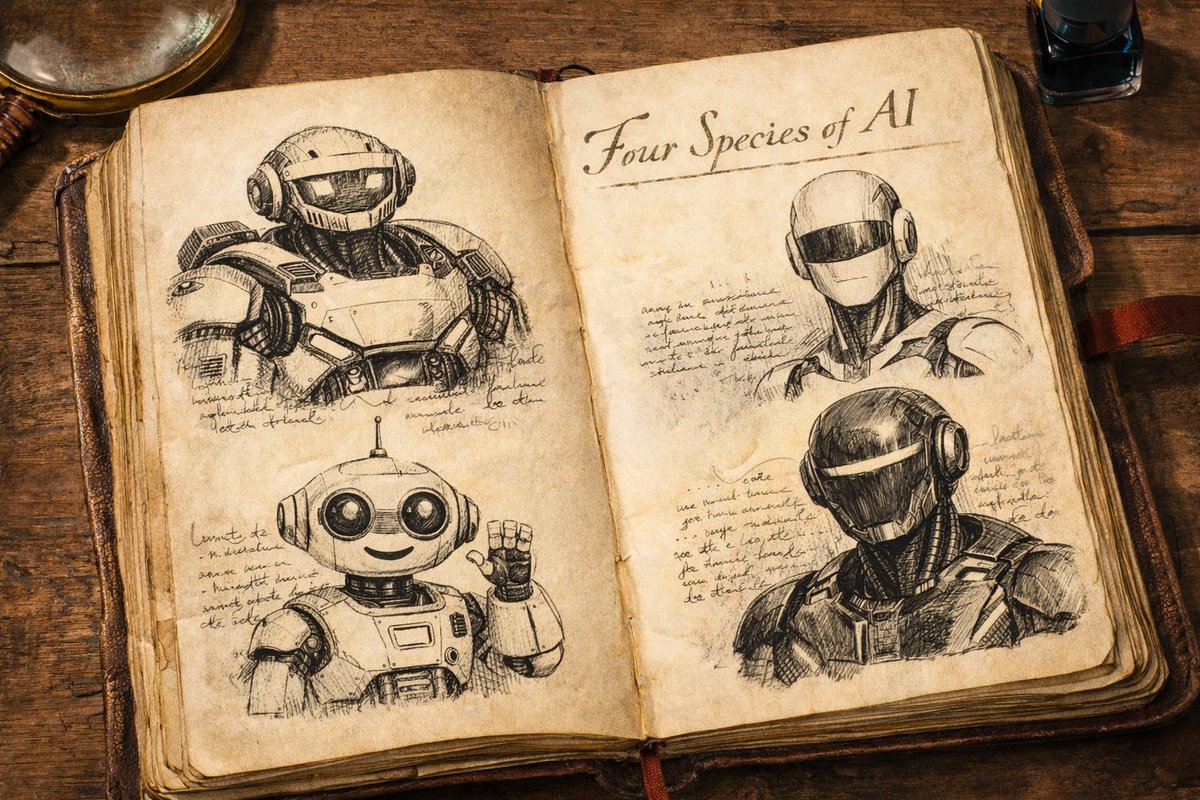
Agent-to-agent AI will scale self-organizing systems. Self-organizing systems generate emergent behavior. Emergence cannot be predicted in advance. We will understand it only after it appears. linkedin.com/pulse/four-spe… #AI #Emergence
Geoffrey Moore tweet media
English
1
2
10
327
Jeff Mignon retweetledi
SFI Press
SFI Press@SFIPress·
SFI Press is proud to announce our newest book, The Economy as an Evolving Complex System IV, a two-volume collection of contributions from leading scholars examining the unprecedented complexity of the global economy. Purchase your copies today! sfipress.org/books/eecs-iv
SFI Press tweet media
English
1
11
47
10.9K