Jen Smith

3.4K posts

Jen Smith banner
Jen Smith

Jen Smith

@jensmithmi

Pharmacist. All opinions are mine, mine, MINE!

Birmingham, England Katılım Ağustos 2016
410 Takip Edilen433 Takipçiler
Jen Smith retweetledi
JAMA
JAMA@JAMA_current·
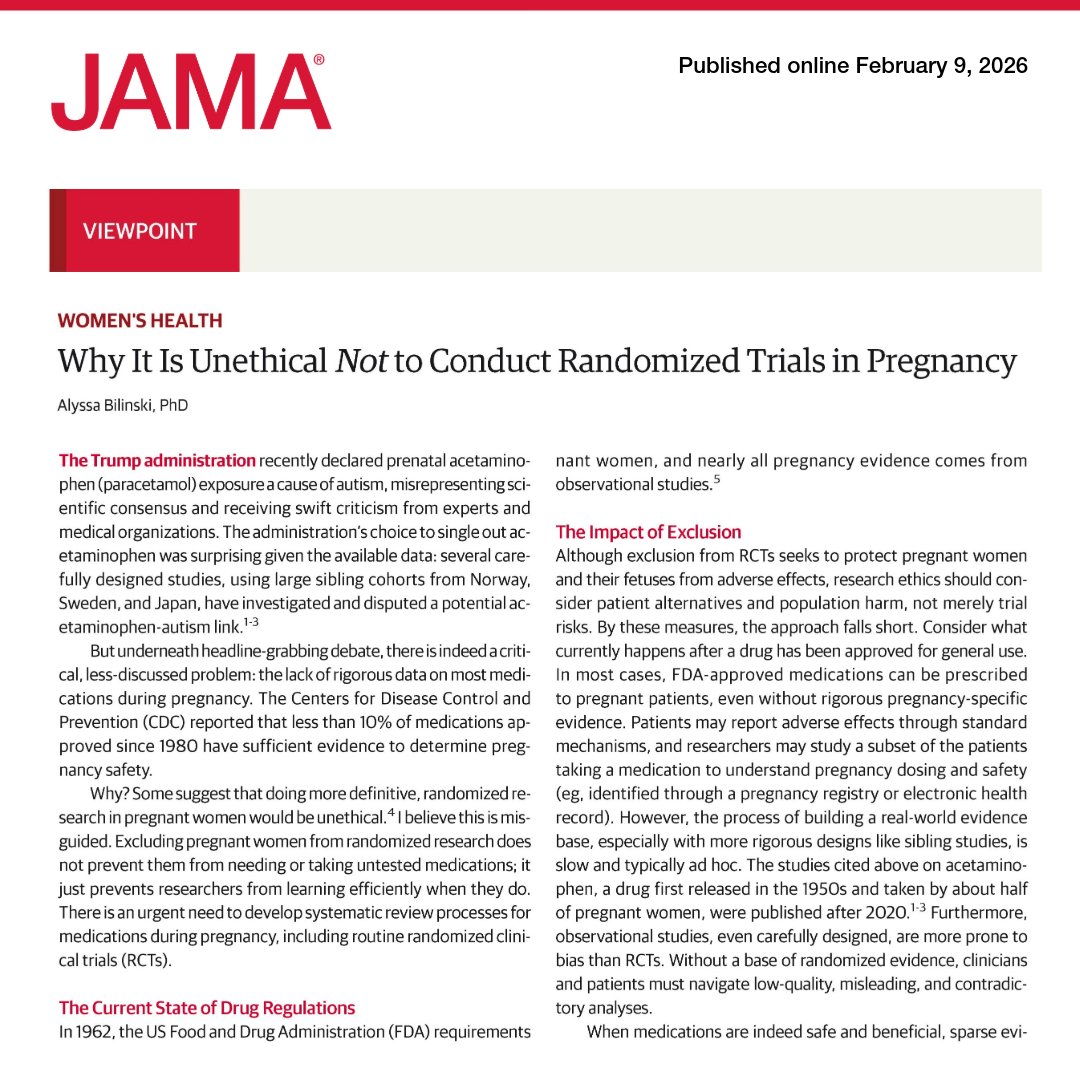
💬 Viewpoint: Routine exclusion of pregnant individuals from RCTs has resulted in gaps in drug safety data, which can lead to unrecognized risks, inappropriate medication avoidance, or delayed guideline recommendations. bit.ly/4bHq6U7
JAMA tweet media
English
2
11
26
8.8K
Jen Smith
Jen Smith@jensmithmi·
@ProfMarkTaubert It's strange. Suicide puts the person who's dying at the centre: they may be assisted, but it's their will even if by another’s hand. “Assisted dying” removes the will of the person. Murder, when you get down to it, is assisted dying. Very creepy.
English
0
0
1
65
Jen Smith retweetledi
MIMS Online
MIMS Online@mimsonline·
The MHRA is updating product information for statins to reflect the fact that less than 10% of reported muscle-related adverse events are attributable to the medication. Read the full story on MIMS buff.ly/mWedNBZ
English
0
1
0
45
Jen Smith
Jen Smith@jensmithmi·
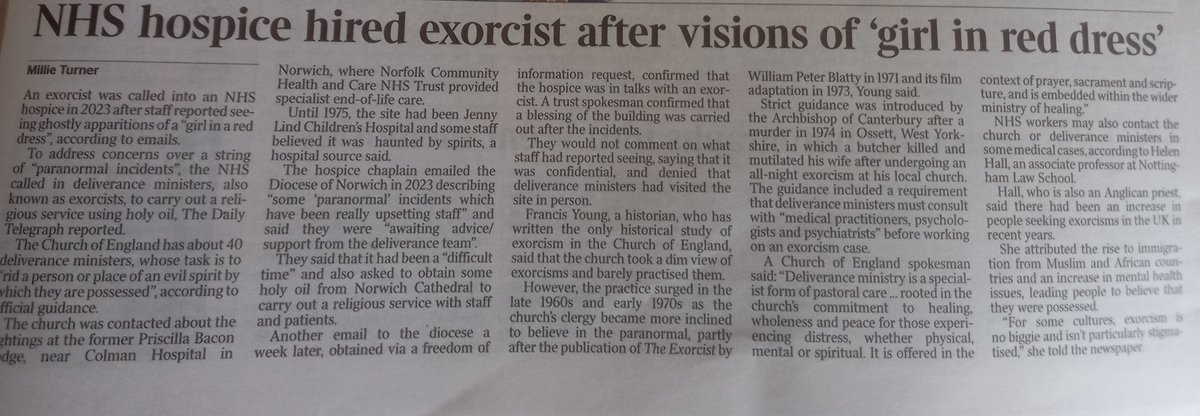
@ProfMarkTaubert In my day, we didn’t get exorcists. We just had to put up with the Grey Lady (and her footsteps) in pharmacy stores and George the Poltergeist in the aseptic unit. Different hospitals.
English
0
0
1
31
Prof. Mark Taubert
Prof. Mark Taubert@ProfMarkTaubert·
I was going to say that things cannot get much worse for our hospices, but then I saw this..
Prof. Mark Taubert tweet media
English
4
4
22
1.5K
Jen Smith retweetledi
Steve Stewart-Williams
Steve Stewart-Williams@SteveStuWill·
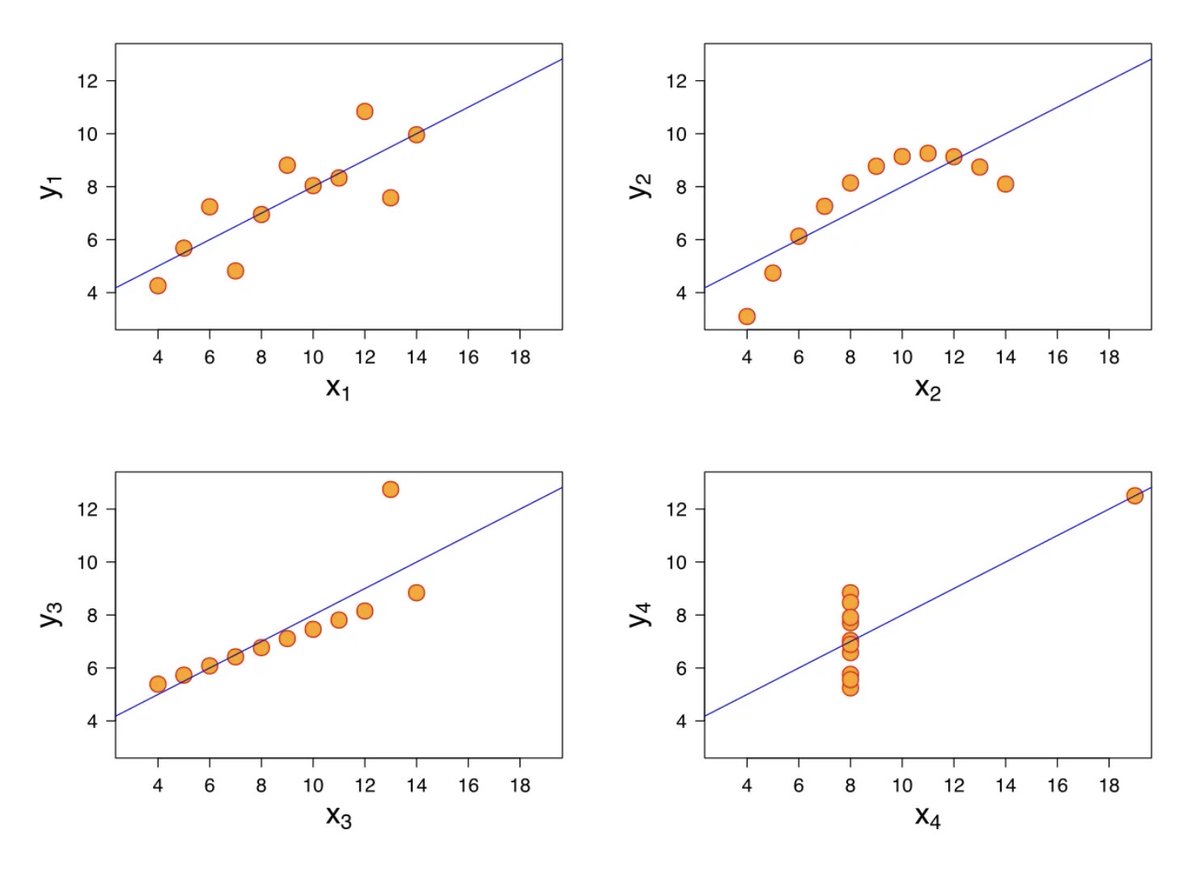
Your regular friendly reminder: These four datasets all have the same mean, median, and variance. Moral of the story: Always visualize your data! [Link below.]
Steve Stewart-Williams tweet media
English
106
1.1K
10.5K
329.4K
Jen Smith retweetledi
Eric Topol
Eric Topol@EricTopol·
The Shingles vaccine and reduction of dementia: a new natural experiment from Canada replicated 3 others and adds to this week's link to slowing of biological aging. erictopol.substack.com/p/spotlight-on…
Eric Topol tweet media
English
49
495
1.6K
403.4K
Jen Smith retweetledi
JAMA
JAMA@JAMA_current·
Restless legs syndrome (RLS), a sleep-related movement disorder, is present in approximately 3% of adults worldwide. 📌 This Review summarizes the pathophysiology, epidemiology, risk factors, diagnosis, treatment, and prognosis of RLS: ja.ma/4jPWlCg
JAMA tweet media
English
2
103
321
21.3K
Jen Smith retweetledi
DocXus
DocXus@docxusofficial·
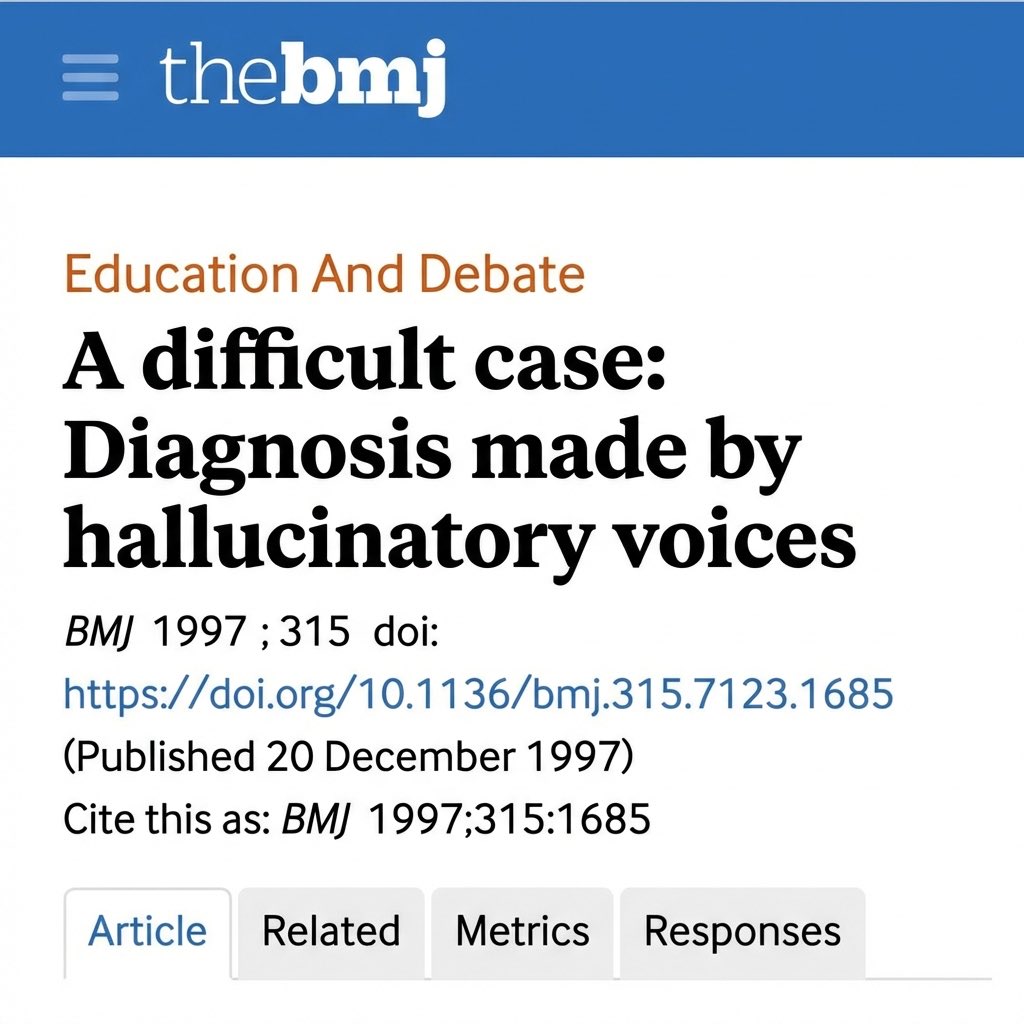
Diagnosis made by hallucinatory voices This is one of those medical cases that sounds unreal, but actually happened. A middle-aged woman, previously completely healthy, suddenly began hearing voices inside her head. She had no history of mental illness, rarely visited doctors, and lived an ordinary life as a wife and mother. One winter evening in 1984, while sitting at home reading, she heard a calm, clear voice say: “Please don’t be afraid. We want to help you.” The voice claimed that it and another voice had once worked at Great Ormond Street Hospital and wanted her to get medical help. The woman had never been there and had no reason to think about hospitals, which made the experience terrifying. To convince her they were “real,” the voices told her three specific facts she didn’t know. When she checked, all three turned out to be true. Instead of feeling reassured, she became convinced she was losing her mind. Panicked, she went to her doctor and was urgently referred to a psychiatrist. At the psychiatric clinic, she was diagnosed with a hallucinatory psychosis, meaning she was hearing voices without an external source. She was started on an antipsychotic medication called thioridazine. Within two weeks, the voices stopped. Relieved, she went on holiday, believing the problem was over. But while abroad, still taking her medication, the voices returned. This time, they were urgent. They told her something was seriously wrong and that she must return to England immediately. They gave her a specific address and told her to go there. When she arrived back in London, her husband drove her to the address, just to prove to her that it was “all in her head.” The address turned out to be the CT scan department of a large London hospital. The voices told her: - She had a brain tumour - Her brainstem was inflamed - She needed a brain scan immediately Because the voices had previously given correct information, she believed them, and was extremely distressed. To reassure her, her psychiatrist requested a CT scan of the brain, clearly stating that there were no physical signs of a brain tumour and that the scan was mainly for reassurance. The request was initially rejected as unnecessary. Eventually, the scan was done. The result was shocking. It revealed a large tumour in the brain, specifically a left frontal parafalcine meningioma, a type of slow-growing brain tumour arising from the brain’s protective coverings. Despite its size, she had: - No headaches - No weakness - No speech problems - No neurological deficits The tumour was quietly sitting there. Neurosurgeons discussed whether to wait or operate immediately. Surgery was chosen. The tumour, measuring about 2.5 × 1.5 inches, was completely removed. When the woman woke up from anesthesia, she later reported hearing the voices one last time: “We are pleased to have helped you. Goodbye.” The voices never returned. Her antipsychotic medication was stopped immediately. She had no hallucinations, no delusions, and no psychiatric symptoms after surgery. Why this case is so fascinating: Doctors have long known that brain tumours can cause psychiatric symptoms, including personality changes, depression, or hallucinations. But this case was extraordinary because: - The voices were calm and reassuring - They gave specific medical instructions - They directed her to the right hospital - They disappeared permanently after tumour removal Some people believed it was something paranormal. Others suspected fabrication. Most clinicians agreed on a simpler explanation: ➡️ The tumour likely caused subtle brain changes that expressed themselves as hallucinations, and once the tumour was removed, the symptoms vanished. The takeaway 👇 This case reminds us that: - Mental symptoms can sometimes have physical causes - Brain tumours don’t always cause pain or weakness - The brain can send distress signals in unexpected ways
DocXus tweet media
English
108
434
2.9K
484.5K
Jen Smith retweetledi
Andrea James
Andrea James@HealthRegLawyer·
Amazing stuff - a tweet by @DrLindaDykes regarding toxic healthcare workplace cultures has resulted in a published paper in Qualitative Research in Health. Many congratulations and well done to all involved! sciencedirect.com/science/articl…
English
2
3
16
1.1K
Jen Smith
Jen Smith@jensmithmi·
@SVPhillimore The crunch may be when "the reasonable individual" should know that their employer policy is wrong (so not yet). The law applies to all, and "my boss told me to" is not an excuse. Why is why employers need to get it right, so they don't put employees in this position.
English
1
0
0
20
Sarah Phillimore
Sarah Phillimore@SVPhillimore·
@jensmithmi I still think that is unfair. Not everyone is following this. It is unreasonble to expect individual employees to be the bulwark against unlawful policy.
English
1
0
1
28
Sarah Phillimore
Sarah Phillimore@SVPhillimore·
Well. I am not an employment or discrimination lawyer. I react as a layperson to this and my reaction is that it seems grossly unfair to say to an individual - your bosses told you what you did was lawful and they were fine with it. But tough, you are liable! How can this be right? When I questioned this I was told that there is some kind of duty on us all to run our decisions through a moral filter - even if what we do is lawful we have to stop doing it if it upsets others. The obvious and dangerous nonsense of such a statement should not need spelling out. I am constantly told to stop speaking because it upsets others. I will not. Because I consider the law is more important than people’s feelings, which are their responsibility to manage. And I have a right protected at law to speak. What is the impact on an individual to be found to have harassed others at work when told by bosses they had a legal right to do what they are doing? Why is this fair? I am very clear about the importance of the rule of law. But that only stands so long as the law is not an ass.
Legal Feminist@legalfeminist

The interesting question is why, in a judgment that is in most respects so clear, sensible and rational, the tribunal gets itself into this avoidable tangle when considering Rose's personal responsibility.

English
32
13
126
9K
Jen Smith
Jen Smith@jensmithmi·
@SVPhillimore Yes. “I was following policy” will likely always have some weight. But every time FWS is correctly followed & reported in the press, it gets harder to believably profess ignorance.
English
1
0
0
23
Sarah Phillimore
Sarah Phillimore@SVPhillimore·
@jensmithmi in the future, I hope to goodness that sanity is restored and lawful policies in place and therefore any man who attempted to access a single sex female space could be instantly dismissed for gross misconduct.
English
1
0
0
82
Jen Smith
Jen Smith@jensmithmi·
@DrLindaDykes Nobody’s perfect. It’s about pattern. To send one Friday 1655 email may be regarded as a misfortune; to keep doing it looks like intention.
English
0
1
1
235
Dr Linda Dykes has moved to Bluesky
Another challenge - how many of us can honestly say that we have NEVER been a perpetrator of some of the behaviours mentioned in the paper? I can't. I've certainly pulled the "go on, cover a shift for your ED family" trick, and probably some Friday 1655 emails.
Dr Linda Dykes has moved to Bluesky@DrLindaDykes

Three years ago, I posed a question to #MedTwitter asking what are the red flags for organisational toxicity in healthcare. We got nearly 500 replies: a heartbreaking thread oozing with anger and mental anguish. Well, we made it into a paper. sciencedirect.com/science/articl… n/1


English
3
3
27
10.4K
Jen Smith retweetledi
Niko McCarty.
Niko McCarty.@NikoMcCarty·
This video is one of the first times I thought biology was “cool.” It shows a neutrophil cell chasing a bacterium. Originally recorded in the 1950s by David Rogers at Vanderbilt University, the video gave me a deeper appreciation for life, even at the level of a single cell, because the neutrophil's movements seem so intentful, purposeful, aware. It wasn’t until recently, though, that I actually tried to demystify the neutrophil’s movements and understand how they happen. Here's what I learned: 1. The neutrophil's surface has thousands of protein receptors. Molecules secreted by the bacteria collide with these receptors. When that happens, the proteins change shape, slightly, and initiate a signaling cascade. 2. The neutrophil “knows” where to go because of a discrepancy in bound vs. unbound receptors. The side of the cell closest to the microbe will, probabilistically, have more "bound" receptors than the other side (because the molecules secreted by the microbe have a concentration gradient). This is how the neutrophil figures out which way to move. 3. Each bound receptor activates several G proteins located inside the cell membrane. Each G protein, in turn, switches on PI3K enzymes. In this way, the original signal is amplified; a single "activated" receptor might cause ~100 copies of PI3K to get switched on downstream. 4. The PI3K enzymes stick phosphates onto lipids in the cell membrane. The side of the neutrophil facing the bacterium now has more phosphates than the "back" side. Phosphate-binding proteins, such as GEF, accumulate and then recruit Rac, thus activating it. Rac, in turn, acts like a molecular switch, ultimately recruiting Arp2/3. (TL;DR: A bunch of proteins get activated, and the high phosphate concentration at the leading edge is the key signal for all this.) 5. At any given moment, the neutrophil has millions of actin molecules. These are the proteins used to build the cytoskeleton. Half of the actins are already “assembled” into filaments, but the other half are just floating around. Arp2/3 acts as a nucleator, grabbing onto actin and then starting a new cytoskeletal branch. More actin is assembled at the leading edge (where the Arp2/3 has accumulated), where they each push on the cell membrane with ~2 piconewtons of force. Hundreds of actin chains, pushing together, causes the cell to form protrusions. 6. The assembling actin chains push the cell at a speed of ~20 micrometers per minute (the length of about ten E. coli cells placed end-to-end.) As all of this is happening, another signaling cascade, nucleated at the back end of the cell, is dismantling actin filaments and recycling them. All this happens over a span of about 30 seconds. Much of this process is invisible; what we see, instead, is "just" a cell chasing its prey. But that's the wonderful thing about biology: A singular observation is usually more than enough fodder for a lifetime of work. The well is deep. There is always more to learn.
English
67
407
2K
127K
Jen Smith retweetledi
Fermat's Library
Fermat's Library@fermatslibrary·
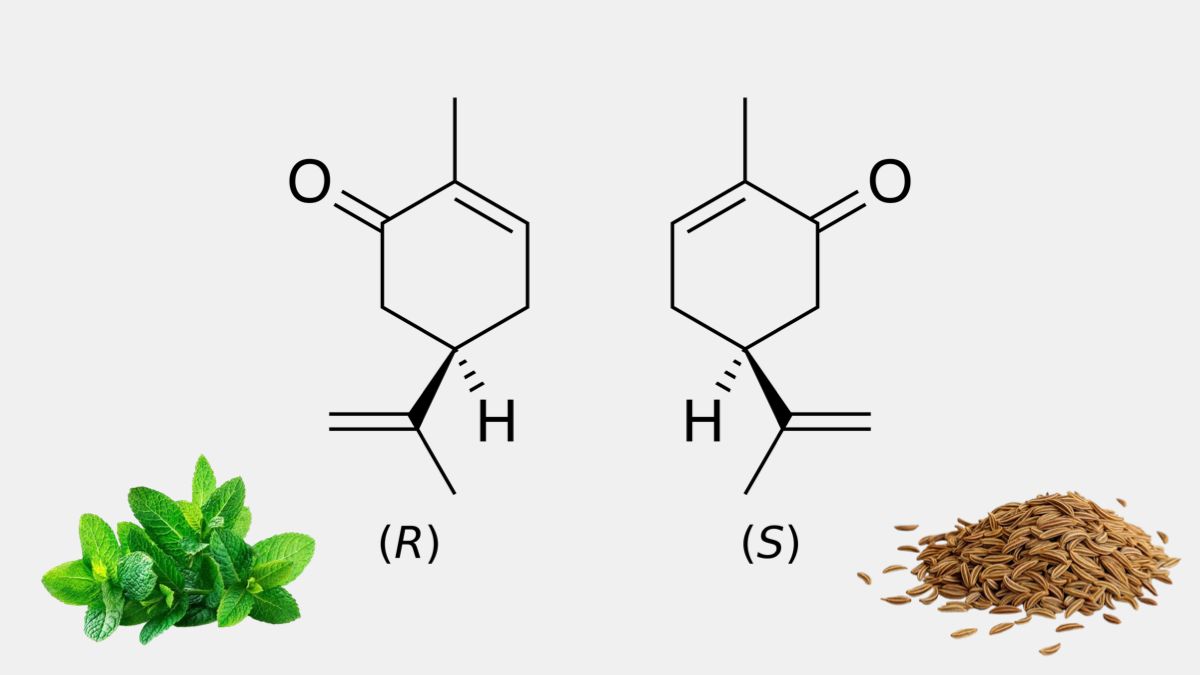
The different smells of spearmint and of caraway seeds are produced by mirror images of the same molecule: carvone This ability to tell them apart shows that our olfactory receptors can sometimes detect molecular “handedness”
Fermat's Library tweet media
English
68
483
3.5K
95.2K
Jen Smith retweetledi
JAMA
JAMA@JAMA_current·
Questions about vaccine safety or ingredients may emerge during routine pediatric visits. Clinicians can address these concerns by explaining vaccine safety monitoring and proactively offering reliable information. ja.ma/4aOs8RU
JAMA tweet media
English
0
7
10
2.9K
Jen Smith retweetledi
JAMA
JAMA@JAMA_current·
Prenatal exposure to acid-suppressive medication, including proton pump inhibitors and histamine 2 receptor antagonists, was not associated with increased risk of #ADHD, #ASD, or other neuropsychiatric disorders in children. ja.ma/4jrCb1t
JAMA tweet media
English
0
6
16
3K
Jen Smith retweetledi
The Lancet
The Lancet@TheLancet·
Hyperemesis gravidarum describes a severe form of nausea and vomiting in pregnancy. A Review summarises current literature on Hyperemesis gravidarum and future directions & research priorities: hubs.li/Q03ZlsTM0
The Lancet tweet media
English
2
59
201
18.4K