Michael Sepulveda

2.1K posts

Michael Sepulveda banner
Michael Sepulveda

Michael Sepulveda

@jgrgnt

California, USA Katılım Mart 2010
890 Takip Edilen272 Takipçiler
Michael Sepulveda retweetledi
Elon Musk
Elon Musk@elonmusk·
Grok foundation model V9-Medium (1.5T) has finished training. Evals look good. A lot of Cursor data was added in supplementary training and there is more to come. Fine-tuning is underway and reinforcement learning begins in a few days. 2 to 3 weeks to public release. This will be a major improvement over the 0.5T v8-small that currently serves all Grok production traffic, especially for difficult coding tasks.
English
4.1K
4.4K
40.7K
6.8M
Michael Sepulveda retweetledi
Franz von Holzhausen
Franz von Holzhausen@woodhaus2·
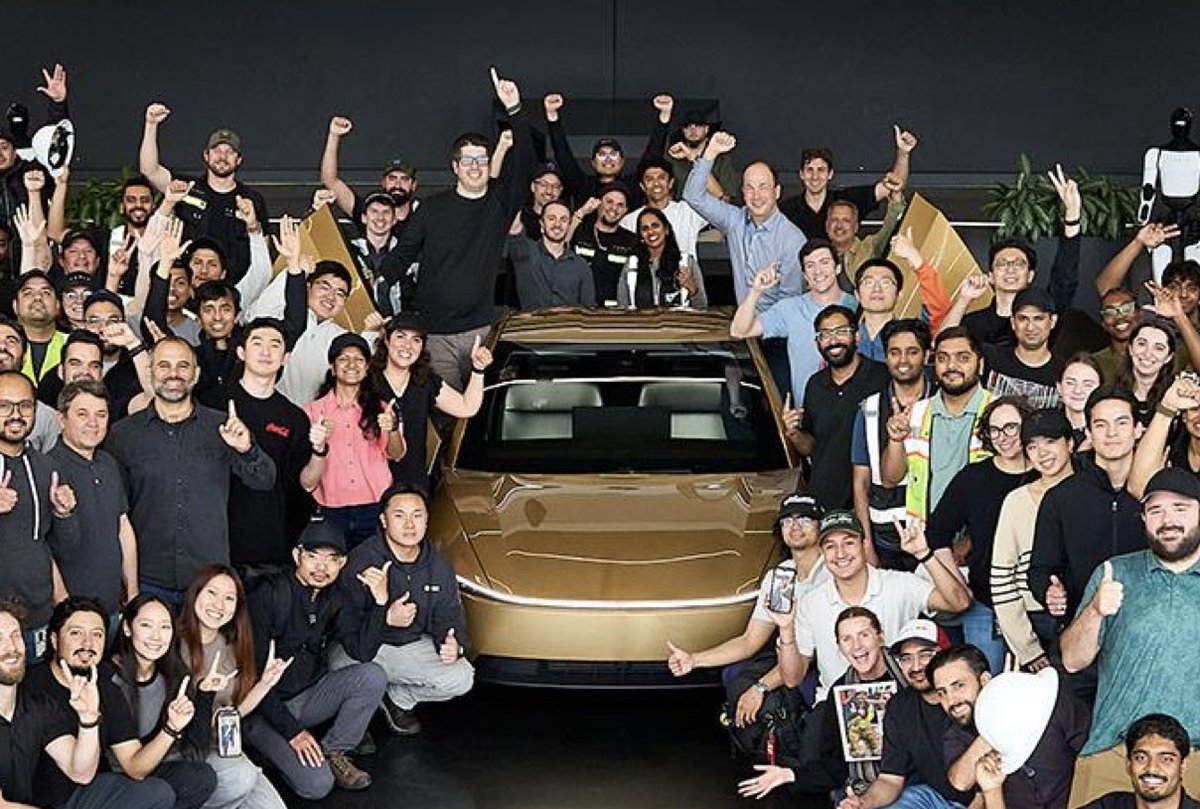
After nearly 18 years I can stop working on Model S and X. We put so much love into these products, but will continue to pour that into the future products. Thanks to everyone who believed in and supported these cars through the years. We strived for the best and will never stop. Saying goodbye to something great and making room for something even greater!
Franz von Holzhausen tweet media
English
2.1K
2.3K
26.8K
14.6M
Michael Sepulveda retweetledi
Katie Miller
Katie Miller@KatieMiller·
“SpaceX, Tesla, Neuralink, and The Boring Company are philanthropy. If you say philanthropy is love of humanity, they are philanthropy. “Tesla is accelerating sustainable energy. “This is philanthropy. “SpaceX is trying to ensure the long-term survival of humanity with multi-planet species. “This is love of humanity. “Neuralink is here to help solve brain injuries and existential risk with AI — love of humanity. “The Boring Company is trying to solve traffic, which is hell for most people, and that also is love of humanity.” -@elonmusk
Teddy Schleifer@teddyschleifer

Remember like three days ago when this guy was going on about how important charities were?

English
56
129
1.4K
202K
Sawyer Merritt
Sawyer Merritt@SawyerMerritt·
Mercedes has just officially unveiled the production version of its all-electric AMG GT 4-Door Coupe. • Range: ~315 miles (EPA) • 1,153 hp • 0-60 mph: 2.0s • Peak charging speed: 600kW • 106 kWh battery • 10-80% state of charge as low as 11 mins. Can add 244 miles of range in 10 mins. • Formula 1-based 800-volt battery • Fake V8 engine noises & gear shift sounds (shown below) • Mercedes said it’s using 1,600 audio files to “sonically interpret” different driving situations. The car makes “exhaust burbles and pops" like as gas car. • Axial-flux motors (a first). Runs parallel to the motor’s axis of rotation. In a conventional electric motor, it runs perpendicular to the axis. The front axial flux motor reaches more than 15,000 rpm at top speed. • 2660 cylindrical cells stacked vertically, arrayed in 18 modules, nine to a side. Nickel-cobalt-manganese-aluminum chemistry. Energy density of 298 Wh/kg. • Active aerodynamics • Top speed: 186-mph • Double sunroof with illuminated AMG logos over both driver and passenger seats • Triple-screen layout. 10.2" digital instrument cluster alongside a pair of 14" screens. Infotainment display is slightly tilted toward the driver. • Optional 5 seat layout U.S. deliveries start in late 2026. Pricing will be announced later, but it's expected to be well over $100,000. More photos in the thread below:
Sawyer Merritt tweet mediaSawyer Merritt tweet mediaSawyer Merritt tweet media
English
629
180
2.1K
837.4K
Delta
Delta@Delta·
Sky-high connectivity is getting an upgrade ✈️📶 We’re teaming up with @Amazonleo to bring its advanced satellite technology on board, powering even more fast, personalized Delta Sync Wi-Fi and seatback experiences from gate to gate. Starting 2028. dl.aero/6018QIHEy
English
395
48
365
159.7K
Michael Sepulveda
Michael Sepulveda@jgrgnt·
Per your own Grok conversation that you keep spam posting everywhere: “SpaceX has not attempted a land-based landing (pad or tower catch) for the orbital-class Starship upper stage in the integrated Flight Tests (IFTs/Flights 1+). All recent upper-stage recoveries have been controlled ocean splashdowns in the Indian Ocean (or planned equivalents), serving as stepping stones toward future land/tower recovery.”
English
0
0
11
367
SpaceX
SpaceX@SpaceX·
Starship’s twelfth flight test will debut the next generation Starship and Super Heavy vehicles, powered by the next evolution of the Raptor engine and launching from a newly designed pad at Starbase. The launch is targeted as early as Tuesday, May 19 → spacex.com/launches/stars…
English
1.6K
5.1K
28.8K
35.8M
NewsJunkie_247
NewsJunkie_247@NewsJunkie_247·
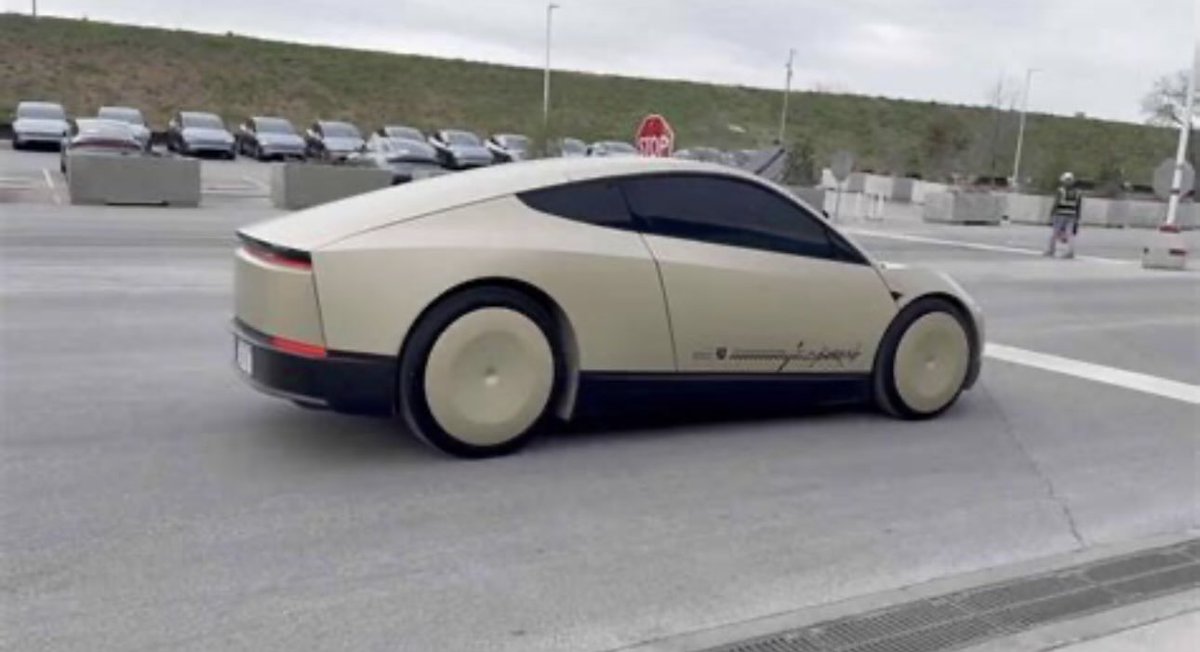
@genejchan Sigh. That is a Model Y with a Robotaxi decal. This is a Robotaxi that is being produced.
NewsJunkie_247 tweet media
English
3
0
1
244
Gene
Gene@genejchan·
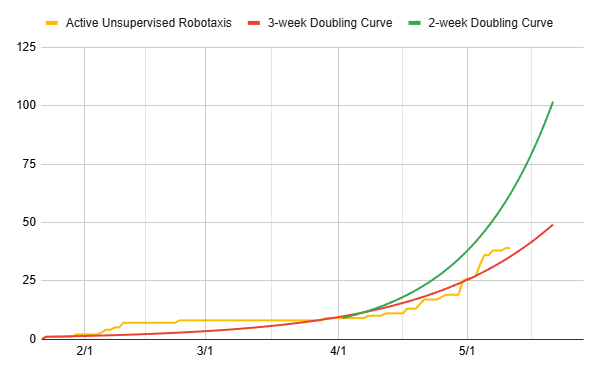
Despite what looks like a small breather, $TSLA Unsupervised Robotaxi is still doubling comfortably faster than every 3 weeks So I've added a new "2-week Doubling Curve" in case Tesla further accelerates from here At these growth rates, Robotaxi will exceed Waymo's fleet...
Gene tweet media
English
23
29
414
35.5K
Michael Sepulveda retweetledi
Lydia Moynihan
Lydia Moynihan@LydiaMoynihan·
Elon Musk deserves every single penny he has made. And I hope he becomes the world’s first trillionaire. He’s using his wealth to help blind people see and paralyzed people walk. I’d rather that money stay in his hands than go to Elizabeth Warren, who’d likely see it wasted on fraud in Somalia or some other government boondoggle. Yes, he has a massive slice of the pie — but he’s made the entire pie dramatically bigger for everyone on Earth. That’s why we enjoy a higher quality of life than any civilization in human history. Capitalism isn’t just worth defending, it’s worth celebrating.
English
1.1K
2.7K
18.4K
272.5K
Michael Sepulveda retweetledi
Tesla
Tesla@Tesla·
The last Model S & the last Model X have been produced at Fremont Factory 14 years of history for Model S, 11 years for Model X 🫡
Tesla tweet mediaTesla tweet mediaTesla tweet media
English
1.1K
2.7K
20.1K
1.8M
Jeffrey Emanuel
Jeffrey Emanuel@doodlestein·
I’m glad this is happening, but isn’t it pretty bearish for xAI that they don’t need that compute internally? That the highest and best use of the compute is to rent it to another lab? I get it that the deal will be profitable for them, but it must be a gut punch to researchers.
Claude@claudeai

We’ve agreed to a partnership with @SpaceX that will substantially increase our compute capacity. This, along with our other recent compute deals, means that we’ve been able to increase our usage limits for Claude Code and the Claude API.

English
202
6
675
130.9K
Michael Sepulveda retweetledi
Elon Musk
Elon Musk@elonmusk·
Just as SpaceX launches hundreds of satellites for competitors with fair terms and pricing, we will provide compute to AI companies that are taking the right steps to ensure it is good for humanity. We reserve the right to reclaim the compute if their AI engages in actions that harm humanity. Doing our best to achieve a great future with amazing abundance for all. We will make mistakes, as to err is human, but always take rapid action to address them.
English
558
1.3K
12.2K
499.4K
Tyler Bosmeny
Tyler Bosmeny@bosmeny·
But they're not actively developing the Model 3/Y either. Those cars have barely changed in 6+ years.
Sawyer Merritt@SawyerMerritt

Jason Cammisa on part of the reason why @Tesla is discontinuing the Model S/X (in his interpretation): "The cost to reengineer the Model S to continue to comply with all safety and crash regulations would be greater than to start over, and I think that's a dying segment, the luxury car segment. You can look at the volumes of the Model 3/Y, and you see you're better off spending the money on developing those." (via The Carmudgeon Show). Full podcast linked below:

English
179
3
53
164.8K
Michael Sepulveda retweetledi
Sawyer Merritt
Sawyer Merritt@SawyerMerritt·
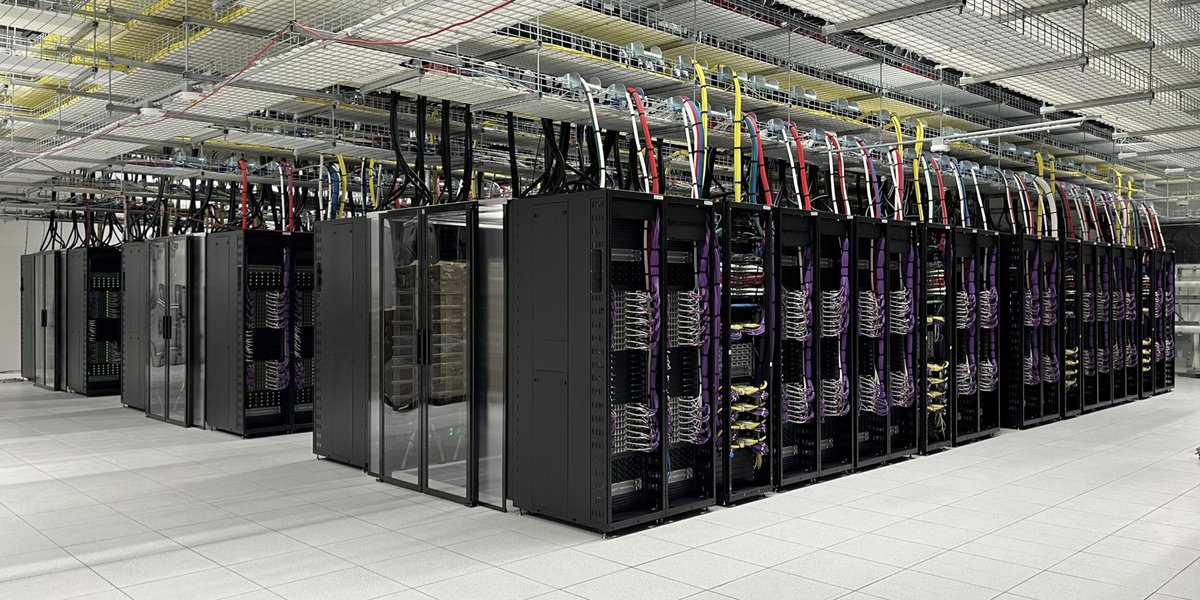
There are a few new pieces of info from @Tesla in the last 24 hours that I think are worth highlighting: 1) Tesla ended last quarter with the highest Q1 order backlog in over two years. 2) Tesla now has 456,000 active monthly FSD subscribers, generating over $45M/month in revenue. 3) Tesla's fleet is now driving an average of 28.8 million miles per day on FSD, up 100% from just 3 months ago. 4) Tesla is increasing Model Y production at Giga Berlin by 20% starting in July, and hiring 1,000 new employees. 5) Tesla has entered into an agreement to acquire an AI hardware company for up to $2B, of which ~$1.8B is subject to certain service conditions and/or performance milestones dependent on the successful deployment of the company's tech. Tesla didn't say in its 10-Q filing which company this is. 6) Tesla is going to nearly double its GPU training capacity in Q2 2026. 7) The Cybercab will not be subject to the annual 2,500 autonomous vehicle cap. 8) FSD V15 will work on AI4
Sawyer Merritt tweet mediaSawyer Merritt tweet mediaSawyer Merritt tweet mediaSawyer Merritt tweet media
English
139
508
4.3K
158K
Michael Sepulveda
Michael Sepulveda@jgrgnt·
So true.
Andrej Karpathy@karpathy

Judging by my tl there is a growing gap in understanding of AI capability. The first issue I think is around recency and tier of use. I think a lot of people tried the free tier of ChatGPT somewhere last year and allowed it to inform their views on AI a little too much. This is a group of reactions laughing at various quirks of the models, hallucinations, etc. Yes I also saw the viral videos of OpenAI's Advanced Voice mode fumbling simple queries like "should I drive or walk to the carwash". The thing is that these free and old/deprecated models don't reflect the capability in the latest round of state of the art agentic models of this year, especially OpenAI Codex and Claude Code. But that brings me to the second issue. Even if people paid $200/month to use the state of the art models, a lot of the capabilities are relatively "peaky" in highly technical areas. Typical queries around search, writing, advice, etc. are *not* the domain that has made the most noticeable and dramatic strides in capability. Partly, this is due to the technical details of reinforcement learning and its use of verifiable rewards. But partly, it's also because these use cases are not sufficiently prioritized by the companies in their hillclimbing because they don't lead to as much $$$ value. The goldmines are elsewhere, and the focus comes along. So that brings me to the second group of people, who *both* 1) pay for and use the state of the art frontier agentic models (OpenAI Codex / Claude Code) and 2) do so professionally in technical domains like programming, math and research. This group of people is subject to the highest amount of "AI Psychosis" because the recent improvements in these domains as of this year have been nothing short of staggering. When you hand a computer terminal to one of these models, you can now watch them melt programming problems that you'd normally expect to take days/weeks of work. It's this second group of people that assigns a much greater gravity to the capabilities, their slope, and various cyber-related repercussions. TLDR the people in these two groups are speaking past each other. It really is simultaneously the case that OpenAI's free and I think slightly orphaned (?) "Advanced Voice Mode" will fumble the dumbest questions in your Instagram's reels and *at the same time*, OpenAI's highest-tier and paid Codex model will go off for 1 hour to coherently restructure an entire code base, or find and exploit vulnerabilities in computer systems. This part really works and has made dramatic strides because 2 properties: 1) these domains offer explicit reward functions that are verifiable meaning they are easily amenable to reinforcement learning training (e.g. unit tests passed yes or no, in contrast to writing, which is much harder to explicitly judge), but also 2) they are a lot more valuable in b2b settings, meaning that the biggest fraction of the team is focused on improving them. So here we are.

English
0
0
0
27
Michael Sepulveda retweetledi
James Stephenson
James Stephenson@ICannot_Enough·
For anyone still wondering why Tesla “missed” on deliveries in Q1 2026, you can see the answer on Roland’s chart below: Tesla broke its all-time record for vehicles exported from Shanghai *not only* in the first month of the quarter, when exports typically peak, but *also* in the third month of 2026 Q1, when exports are typically low, a good indication that Tesla has ended “the wave” of deliveries (a strategy that maximized total deliveries in each quarter at the expense of increased cost per delivery due to expedite fees, delivery logistics inefficiencies, etc.). Overseas shipping is notoriously slow, so it’s possible none of those record 29,563 vehicles exported in the final month of the quarter reached a purchaser by the end of Q1. This dynamic reduced Q1 deliveries, but will increase Q2 deliveries. 🤓 $TSLA
Roland Pircher@piloly

In March, Tesla Giga Shanghai exported 29,563 vehicles. This is much higher than usual. The first month of this quarter also saw high exports. 🇨🇳 Now we know why delivery numbers in Q1 were weaker than expected.

English
48
84
740
65.3K
Michael Sepulveda retweetledi
Cern Basher
Cern Basher@CernBasher·
Tesla FSD v14.3: The Removal of a Bottleneck Most people looking at FSD v14.3 see a familiar story: incremental improvement. A bit faster, a bit smoother, a bit more refined. The headline number - roughly 20% faster reaction time - sounds like a solid upgrade, but nothing revolutionary. That interpretation misses the point entirely. v14.3 is not about improving the model. It’s about replacing the system underneath the model. To understand why this matters, you have to separate two parts of Tesla’s AI stack. First, there is the training environment. This is where Tesla uses massive compute clusters to build increasingly powerful neural networks. In this environment, the models can be as large and as sophisticated as Tesla wants. Second, there is the runtime environment inside the car. This is where those models actually have to operate - in real time, under strict constraints of compute, memory, and latency. Historically, the gap between these two worlds has been a major constraint. Tesla could train a highly capable model on the server side, but when it came time to deploy that model into the vehicle, compromises were unavoidable. The model had to be compressed, simplified, and optimized to fit within the limitations of the vehicle hardware. In the process, some of its capability was inevitably lost. The result was not a lack of intelligence, but a bottleneck in how that intelligence was delivered. With v14.3, Tesla rebuilt both the compiler and the runtime from the ground up using MLIR (Multi-Level Intermediate Representation). The compiler is responsible for taking a trained model and translating it into a form that can run efficiently on the vehicle. The runtime is responsible for executing that model in real time inside the car. By rewriting both layers, Tesla has fundamentally improved how models are converted and how they are executed. This is why the improvements show up not just in raw speed, but in qualitative behavior. Early testers are reporting smoother responses, more natural decisions, and a noticeable increase in responsiveness. These are not just signs of a better model - they are signs of a better system delivering that model. For the past several versions - v12 through v14 - progress was largely driven by improving the model itself. But the underlying inference framework remained largely the same. That meant progress was increasingly constrained. Even as the model improved, the system responsible for running it became the limiting factor. So, v14.3 marks a shift in approach. Instead of continuing to push only on model performance, Tesla upgraded the entire stack. The focus is no longer just on how smart the model is, but on how efficiently that intelligence can be translated and executed in the real world. Elon Musk has referred to this kind of change as a “final piece of the puzzle.” That phrasing can be misleading if interpreted as an endpoint. In reality, this is a reset. By replacing the underlying system, Tesla has removed a key constraint that was limiting future progress. The implication is not that FSD is complete, but that future versions - v15, v16, and beyond - can advance much more rapidly and with fewer compromises. In practical terms, this means larger, more capable models can be deployed more effectively. It means improvements made in training are more likely to carry through to real-world performance in the vehicle. And it means iteration cycles can accelerate. One of the more underappreciated aspects of this change is its potential impact on existing vehicles, particularly those running HW3. The new MLIR-based system is designed to take better advantage of available hardware through techniques like quantization, operator fusion, and heterogeneous optimization. In simple terms, it allows Tesla to extract more performance from the same physical chips. A potential “v14 Lite” for HW3 vehicles: With a more efficient runtime, older hardware may be able to run more advanced capabilities than previously thought possible. So, the real story here is that Tesla has addressed a structural limitation in its AI system. It has improved the way intelligence is packaged, delivered, and executed. This is not just an upgrade. It is the removal of a bottleneck. v14.3 should not be viewed as the culmination of Tesla’s FSD efforts. The visible changes today may seem incremental. The invisible changes beneath them are anything but. Tesla did not just make the system faster. It made it ready for what comes next.
Elon Musk@elonmusk

Tesla V14.3 self-driving review. The point releases will bring polish. V15 will far exceed human levels of safety, even in completely unsupervised and complex situations.

English
140
224
1.5K
154.9K
Michael Sepulveda retweetledi
Ryan Wang 🇹🇼
Ryan Wang 🇹🇼@ryanwang·
The release of FSD v14.3 and discussions from insiders have given me a clearer picture of why Tesla is not rushing to deploy a 10x larger parameter model with version 14. Under the hardware constraints of existing HW4, Tesla’s engineering team must make a trade-off between MPI (Miles Per Incident, a safety metric) and inference latency. By thoroughly overhauling the underlying technical architecture—including a full MLIR rewrite of the compiler and runtime, along with upgrades to RL training—they are attempting to shift the entire “autonomous driving efficiency curve” outward, rather than simply moving along the existing curve. Increasing model size (Large Model) typically improves MPI (theoretically making the system safer with fewer incidents). However, on fixed hardware, a larger model often increases inference latency (slower response). If latency rises too much, even if MPI gets better, overall real-world safety may actually decline—because delayed reactions can allow small errors to compound into serious problems. Simply forcing a Large Model would likely push the curve toward “higher MPI but significantly higher latency,” which in practice would be a poor trade-off. The essence of v14.3 is to achieve an “outward shift of the curve.” It is not just about making the model bigger or smaller. Instead, through the MLIR reconstruction of the entire compiler and runtime, Tesla enables the same HW4 hardware to deliver higher performance at lower latency. At the same time, they use RL to optimize for hard examples, improving MPI without a noticeable increase in latency. This effectively pushes the entire “MPI–Latency efficiency curve” up and to the right—achieving a better trade-off.
Elon Musk@elonmusk

@Chansoo Our rate of advancement with the small model has been so fast that the large model has not yet caught up. V15 will be the large model.

English
43
53
613
76.7K
Michael Sepulveda retweetledi
faultbugs
faultbugs@faultbugs·
V14.3不是“无人监管最终版”,而是Tesla FSD的“新底座革命” 很多人以为v14.3就是AI4专属、甚至是FSD的终章。 但Elon说的“最后一块大拼图”,其实是底层编译器和运行时用MLIR彻底重写!这才是真正的降维打击。1/7 x.com/Tesla_AI/statu… @elonmusk @tomzhu_nz @Tesla_AI
Tesla AI@Tesla_AI

New release of FSD Supervised now starting to roll out This update brings 20% faster reaction time to further increase safety, among many other improvements Full release notes below Full Self-Driving (Supervised) v14.3 includes - Upgraded the Reinforcement Learning (RL) stage of training the FSD neural network, resulting in improvements in a wide variety of driving scenarios. - Upgraded the neural network vision encoder, improving understanding in rare and low-visibility scenarios, strengthening 3D geometry understanding, and expanding traffic sign understanding. - Rewrote the AI compiler and runtime from the ground up with MLIR, resulting in 20% faster reaction time and improving model iteration speed. - Mitigated unnecessary lane biasing and minor tailgating behaviors. - Increased decisiveness of parking spot selection and maneuvering. - Improved parking location pin prediction, now shown on a map with a (P) icon. - Enhanced response to emergency vehicles, school buses, right-of-way violators, and other rare vehicles. - Improved handling of small animals by focusing RL training on harder examples and adding rewards for better proactive safety. - Improved traffic light handling at complex intersections with compound lights, curved roads, and yellow light stopping – driven by training on hard RL examples sourced from the Tesla fleet. - Improved handling for rare and unusual objects extending, hanging, or leaning into the vehicle path by sourcing infrequent events from the fleet. - Improved handling of temporary system degradations by maintaining control and automatically recovering without driver intervention, reducing unnecessary disengagements. Upcoming Improvements - Expand reasoning to all behaviors beyond destination handling. - Add pothole avoidance. - Improve driver monitoring system sensitivity with better eye gaze tracking, eye wear handling, and higher accuracy in variable lighting conditions.

中文
30
87
801
154.3K