

M4Ultr4
245 posts

M4Ultr4
@jokeyfish
🇺🇸Former US ARMY Ranger 2/75 (‘02-‘05). Former Private Security Contractor (‘07-‘12). Multiple TBI and two time stroke survivor. Winning the war against PTSD.
Illinois Katılım Nisan 2026
190 Takip Edilen74 Takipçiler
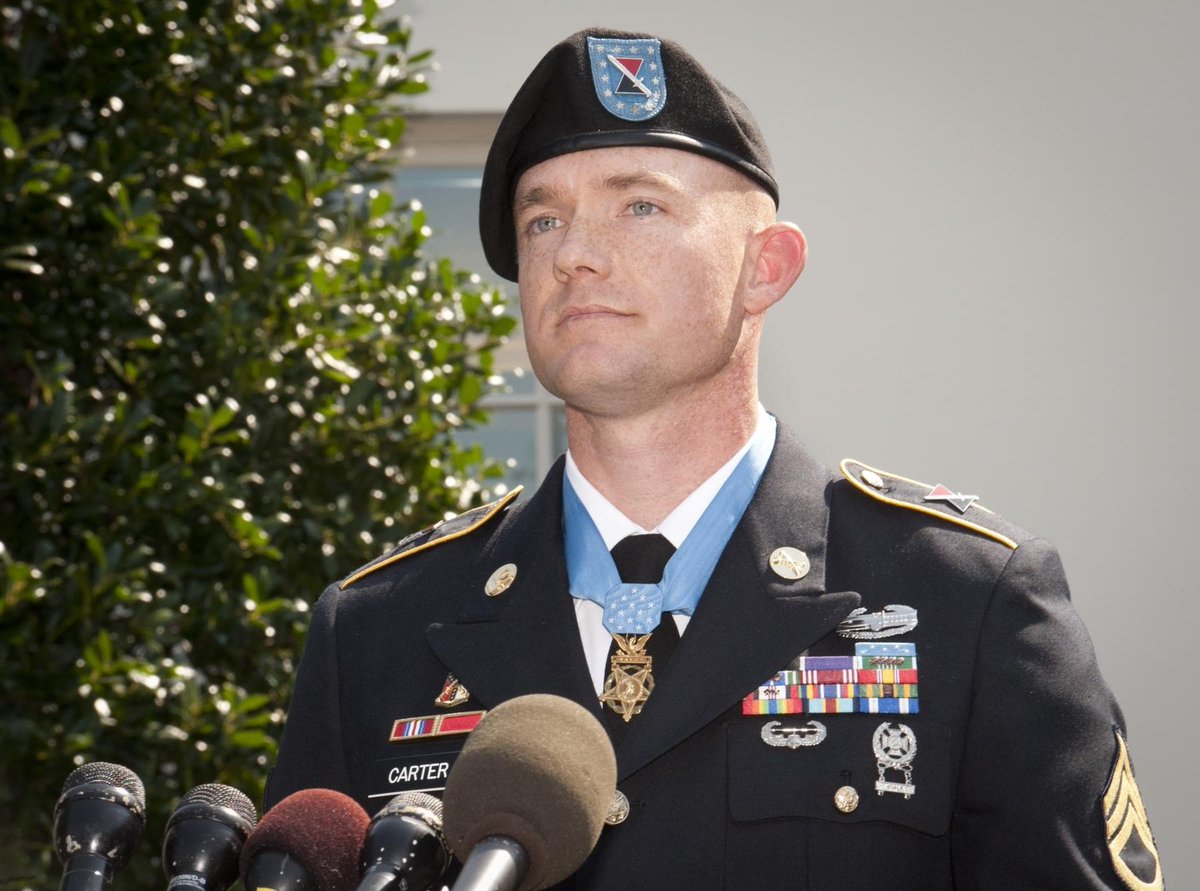
Heroic Actions (Battle of Kamdesh, October 3, 2009)
Then-Specialist Carter served as a Cavalry Scout with Bravo Troop, 3rd Squadron, 61st Cavalry Regiment, 4th Brigade Combat Team, 4th Infantry Division at Combat Outpost Keating in Nuristan Province, Afghanistan. The remote outpost was attacked by an estimated 300 Taliban fighters who seized the high ground and unleashed a coordinated assault with small arms, machine guns, RPGs, mortars, and recoilless rifles
Key acts of gallantry during the 13+ hour battle:
Carter reinforced a forward fighting position and twice ran 100+ meters through intense enemy fire to resupply ammunition to isolated defenders.
He provided deadly accurate fire with his M4 carbine, helping prevent the position from being overrun.
When a fellow soldier was critically wounded and pinned down in the open, Carter — with complete disregard for his own safety — sprinted across exposed terrain under heavy fire.
He rendered life-saving first aid to the wounded soldier (who had been shot multiple times), then carried him to safety while under continuous enemy attack.
Despite being wounded himself, Carter continued fighting, resupplying positions, and aiding comrades throughout the day.
Eight U.S. soldiers were killed and many wounded in the battle, but Carter’s actions helped save lives and hold the outpost until relief arrived.
He is one of the few living Medal of Honor recipients from the War in Afghanistan and a powerful example of courage under extreme conditions.
English

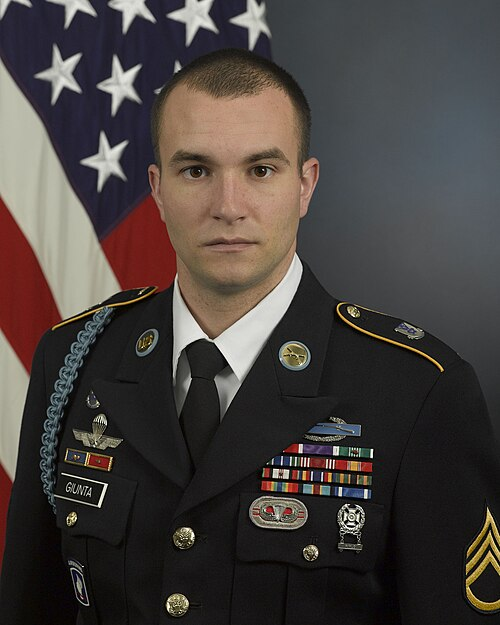
Then-Specialist Giunta served as a rifle team leader with Company B (Battle Company), 2nd Battalion (Airborne), 503rd Infantry Regiment, 173rd Airborne Brigade Combat Team in the rugged, Taliban-controlled Korengal Valley. His platoon was on a patrol when they were ambushed by a well-armed insurgent force from multiple directions
Key acts of gallantry:
Under heavy fire, Giunta immediately engaged the enemy and sprinted toward cover.
He saw his squad leader fall and, believing him wounded, exposed himself to withering enemy fire to reach him. He pulled the squad leader to safety and administered first aid.
While aiding his comrade, Giunta was struck twice by enemy bullets (one hit his body armor, the other splintered a weapon on his back).
He continued fighting, throwing grenades for cover, and pushed forward to reach other wounded soldiers who had been separated.
Upon cresting a hill, he saw two insurgents attempting to carry away a wounded American soldier. Giunta engaged them alone, killing one insurgent and wounding the other, then provided aid to the rescued soldier until his squad linked up
His actions prevented the capture of a fellow paratrooper, saved multiple lives, and helped turn the tide of the ambush
Giunta is widely admired for his humility — he has often said the medal belongs to his entire unit and all who served. He remains one of the most recognizable living Medal of Honor recipients from the War on Terror.
English
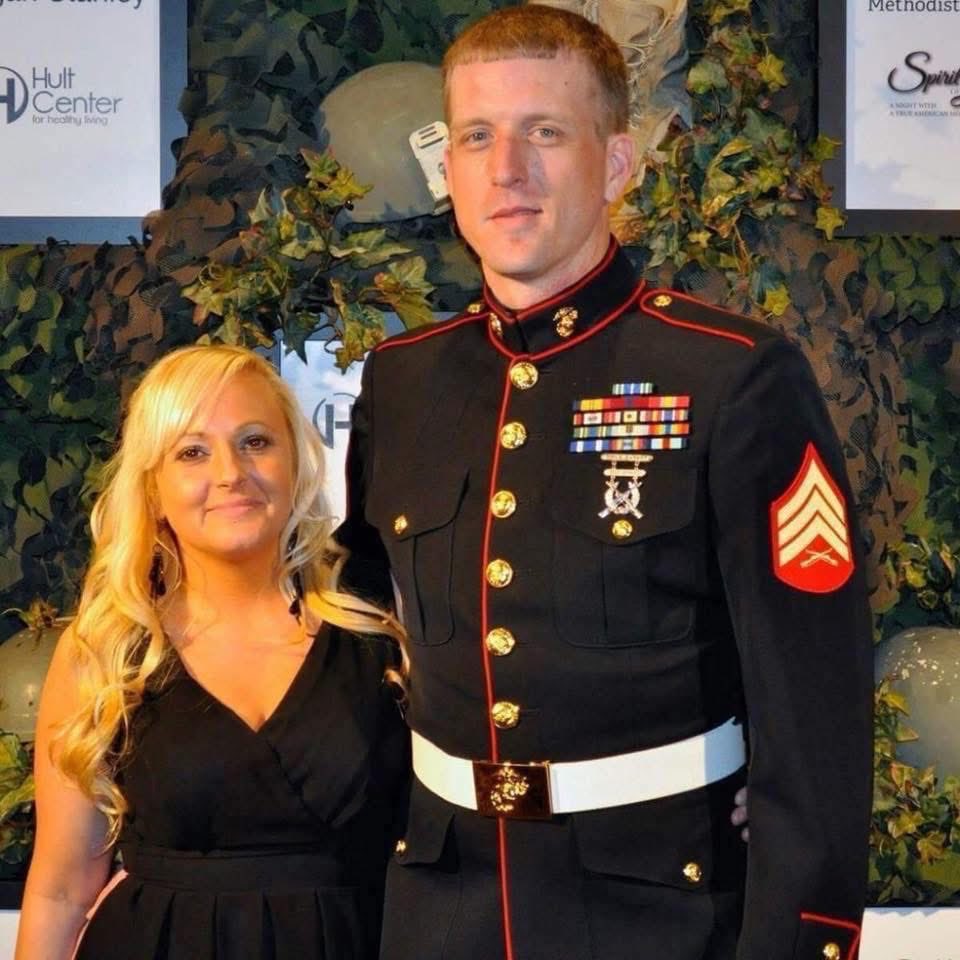
United States Marine #Veteran Brandon Ketchum, 33, killed himself only a few hours after being turned down at the Iowa City VA Medical Center on July 7th, 2018. His father, William Ketchum, was also a veteran.
“I requested that I get admitted to 9W (psychiatric ward) and get things straightened out,” he wrote on Facebook. “I truly felt my safety and health were in jeopardy, as I discussed with the doc. Not only did I get a ‘NO,’ but three reasons for no based on me being not f***** up enough. At this point, I say, ‘Why even try anymore?’ They gave up on me, so why shouldn’t I give up on myself? Right now, that is the only viable option given my circumstances and frame of mind.” ~ Brandon Ketchum
Thank you for your service and ultimate sacrifice, Brandon. The US Government failed you miserably. Prayers for all who know you. You will never be forgotten.
#SuicidePrevention #RIP
🕊️
English



The remains of a U.S. soldier who went missing during military exercises in Morocco have been recovered, according to U.S. Africa Command.
The soldier has been identified as 1st Lt. Kendrick Lamont Key Jr., 27, of Richmond, Virginia, who reportedly fell from a cliff during an off-duty hike near the Cap Draa Training Area on May 2.
Search efforts continue for a second soldier who remains missing following the incident during the “African Lion” joint maneuvers.

English

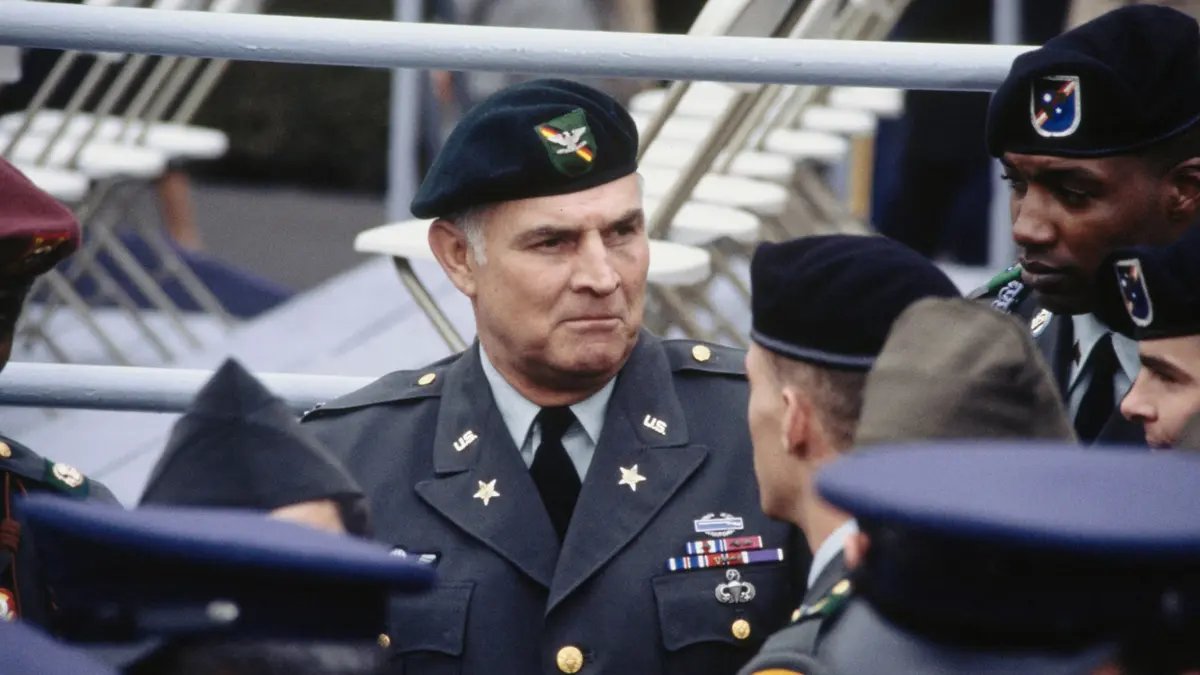
Col Charles Beckwith (1929-1994). First commanding officer of Delta Force. In '66, he took a 50 cal round through his abdomen and was triaged as beyond help. "Tough" doesn't quite capture this guy! A Great American!!
English

I agree with this! If you can’t afford a tip, stay home

English

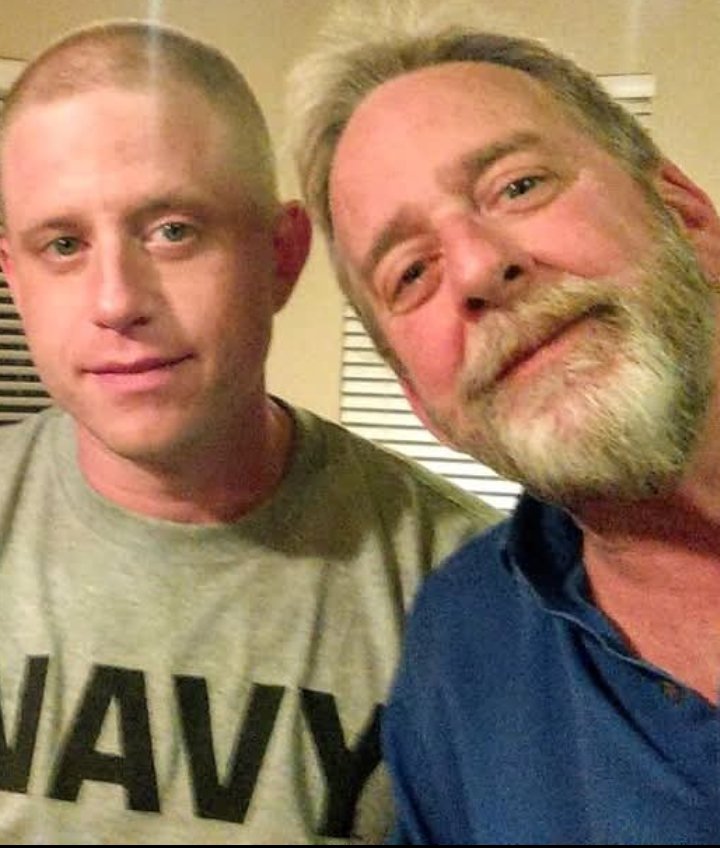
I hate today as it marks the one year anniversary of my oldest sons death, a proud USN Vet of 8 years. Three deployments, the USS Ronald Reagan, the USS Theodore Roosevelt and yea ya buddies, The Nimitz! Too many detachments to mention. He was only 42. This is a pic of us.
English

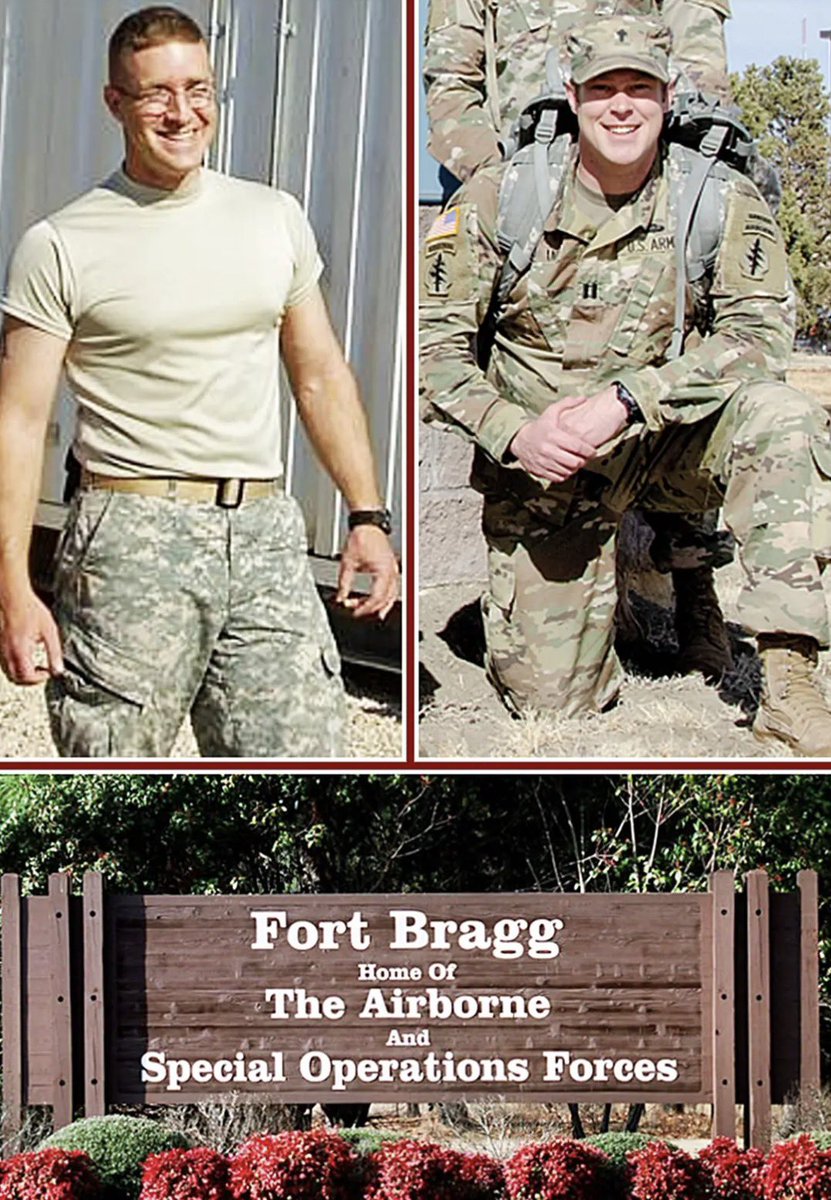
At 36, his younger fellow soldiers inevitably called Michael Kevin Frank Grandpa, but he also was valued for his advice. “If anyone ever had personal problems, Frank was always the guy to sit down and talk things over with, said SPC Andrew Baker, his former roommate. A roadside bomb killed Frank, May 10th in Baghdad.
"I'm very proud of him," his father said. "He went in with a specific purpose. He knew the risks; we knew the risks."
English
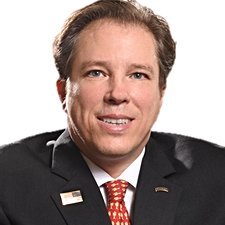
@specialopsmag I went to the SERE-C course in 1988, lost close to 30lbs, great course though, I would do it again if I could,
RLTW 🇺🇲
English

Delta Force operator George Hand, shown before and after completing the grueling SERE (Survival, Evasion, Resistance, and Escape) Training School.
SERE is a course designed to break you, simulating real world capture, resistance, and survival under extreme conditions.

English
Medal of Honor SSG Travis W. Atkins
While conducting route security in Abu Sarnak, Iraq, Staff Sergeant Travis Atkins confronted an insurgent wearing a hidden suicide vest. Realizing the danger to his men, he tackled the attacker in a bear hug, pinning him to the ground and absorbing the blast with his own body. In that instant, Atkins gave his life, but saved the lives of three fellow soldiers.
His final act was one of pure courage, sacrifice, and devotion to his brothers in arms.

English

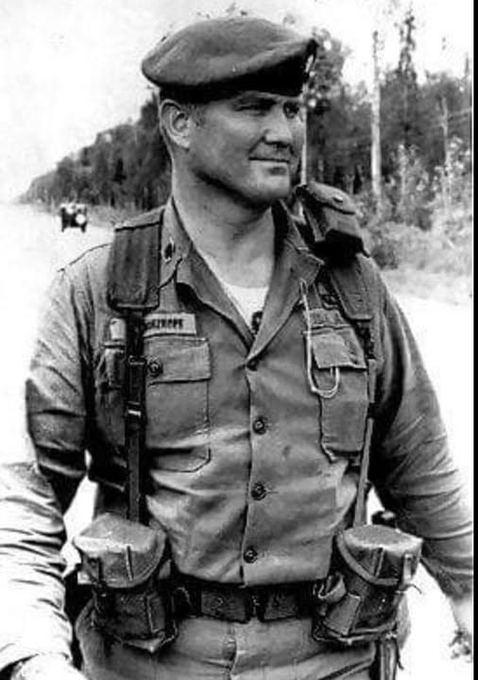

America knew him as the man who couldn't outsmart a pig. The Marines knew him as the man who drove into hell 47 times to bring them home.
For six seasons, Eddie Albert made millions laugh as Oliver Wendell Douglas on Green Acres — the eternally optimistic city lawyer hopelessly lost on a farm. He argued with tractors. He lost battles to chickens. Each week, he faced absurd defeat with unshakable dignity. The show climbed to number six in the ratings. He became a household name.
But two decades before Hooterville, Eddie Albert stood in the bloodstained waters of the Pacific, pulling dying men from the surf while machine-gun fire tore through the air around him.
November 20, 1943. Tarawa. Betio Island.
The assault became a massacre within minutes. Coral reefs trapped landing craft hundreds of yards offshore. Marines abandoned their boats and waded through chest-deep water in full combat gear — completely exposed. Japanese machine guns opened fire instantly. Men fell by the dozens. The wounded floated helplessly, too injured to move, waiting to drown or be executed by snipers.
Eddie Albert was a Navy lieutenant assigned to the USS Sheridan. His orders didn't include rescue operations.
He didn't wait for orders.
He commandeered a Higgins boat and drove straight into the gunfire.
Japanese forces fired from fortified pillboxes, destroyed vehicles, and the pier. Bullets punched through his hull. Water erupted in deadly geysers around him. Albert kept going. Trip after trip, he loaded wounded Marines onto his craft while enemy snipers tried to kill him. When his boat filled, he turned around and went back for more.
47 Marines. That's how many he personally pulled from death. He coordinated the rescue of 30 more.
The U.S. Navy awarded him the Bronze Star with Combat "V" — a medal reserved exclusively for valor under direct enemy fire.
Afterward, when people asked about Tarawa, he never spoke about himself. He only mentioned the men who didn't make it home.
After the war, Albert returned to acting. He earned an Oscar nomination in 1953 for Roman Holiday with Audrey Hepburn. He built a respected career in serious dramatic films throughout the 1950s and 60s.
Then in 1965, he made a decision that baffled Hollywood: he accepted the lead in a television sitcom about a lawyer who abandons New York City to become a farmer.
Green Acres became a cultural phenomenon. For six years, America watched Oliver Wendell Douglas lose every argument with rural logic, his wife, and a pig named Arnold. The show was absurd, surreal, and wildly popular. It ran 170 episodes before CBS cancelled it in 1971.
Most actors would have been typecast forever.
Not Albert. In 1972, he earned his second Oscar nomination for The Heartbreak Kid. He worked for three more decades. He became a passionate environmental activist, dedicating his later years to conservation causes.
Eddie Albert died in 2005 at age 99.
Here's what haunts me.
Millions watched him as a gentle, perpetually defeated optimist who couldn't keep chickens out of his living room. They laughed at a man who seemed permanently overwhelmed by life's absurdities.
They never knew that same man had driven a fragile boat into a hurricane of machine-gun fire — not once, but 47 times — refusing to leave until every wounded Marine within reach was safe.
Oliver Wendell Douglas never surrendered, no matter how impossible the odds. He stayed kind. He kept trying. He refused to quit even when everything screamed at him to stop.
Eddie Albert didn't need to study that character.
He'd already become him on the bloodiest beach of the Pacific War, when the only thing that mattered was bringing one more man home alive.
That wasn't acting.
That was his soul.

English

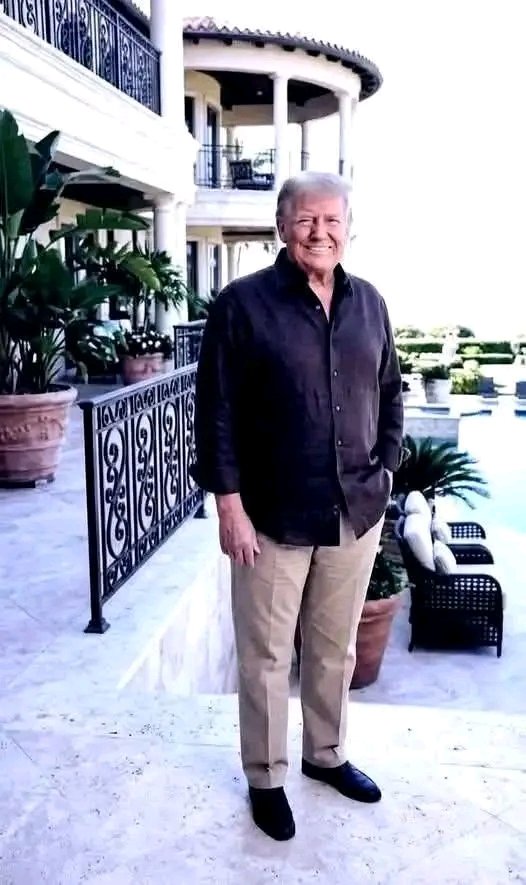
I am for waiting for the day you’re no longer President.
⠀
Not because we’re tired of you. The opposite. Because you deserve to go home. You deserve quiet mornings. You deserve to sit on your own porch without the weight of 330 million people sitting on your shoulders. You deserve your family back. You deserve peace.
⠀
You didn’t have to do any of this.
⠀
You had the money.
You had the name.
You had the life most men only dream about.
You could’ve spent the rest of your days golfing, traveling, watching your grandkids grow up.
⠀
Instead you stepped into a fire that nearly cost you your Life.
⠀
They mocked you. They sued you. They raided your home. They tried to bankrupt you. They tried to lock you up. They dragged your wife and kids through the mud. They put a bullet through your ear and you got up with your fist in the air and kept going saying " Fight Fight Fight "
⠀
For what?
⠀
For us. Regular people. Truck drivers. Welders. Waitresses. Roughnecks. Farmers. Single moms working two jobs. Grandparents on a fixed income watching the country they built get handed away.
⠀
You didn’t owe us a thing. And you gave us everything.
⠀
You risked your name. Your legacy. Your safety. Your family’s safety. Your brand. Your freedom. All of it. So this country could have one more shot at being what it was supposed to be." GREAT AGAIN "
⠀
And the truth nobody wants to admit?
⠀
We didn’t deserve a President like you.
⠀
A nation this divided, this ungrateful, this asleep at the wheel didn’t earn a man willing to bleed for it. But God sent you anyway. And I’ll thank Him for that until the day I die. 🙏
⠀
So when the day finally comes that you walk away from that desk, I hope you sleep good. I hope your wife laughs again without looking over her shoulder. I hope your kids breathe easy. I hope you golf till the sun goes down and nobody bothers you for nothing.
⠀
You earned every bit of it.
⠀
Thank you, Mr. President. From a humble man in Florida who prays 🙏 for you every day
⠀
God bless you. God bless your family. And God Bless 🙏 the United States of America. 🇺🇸
English

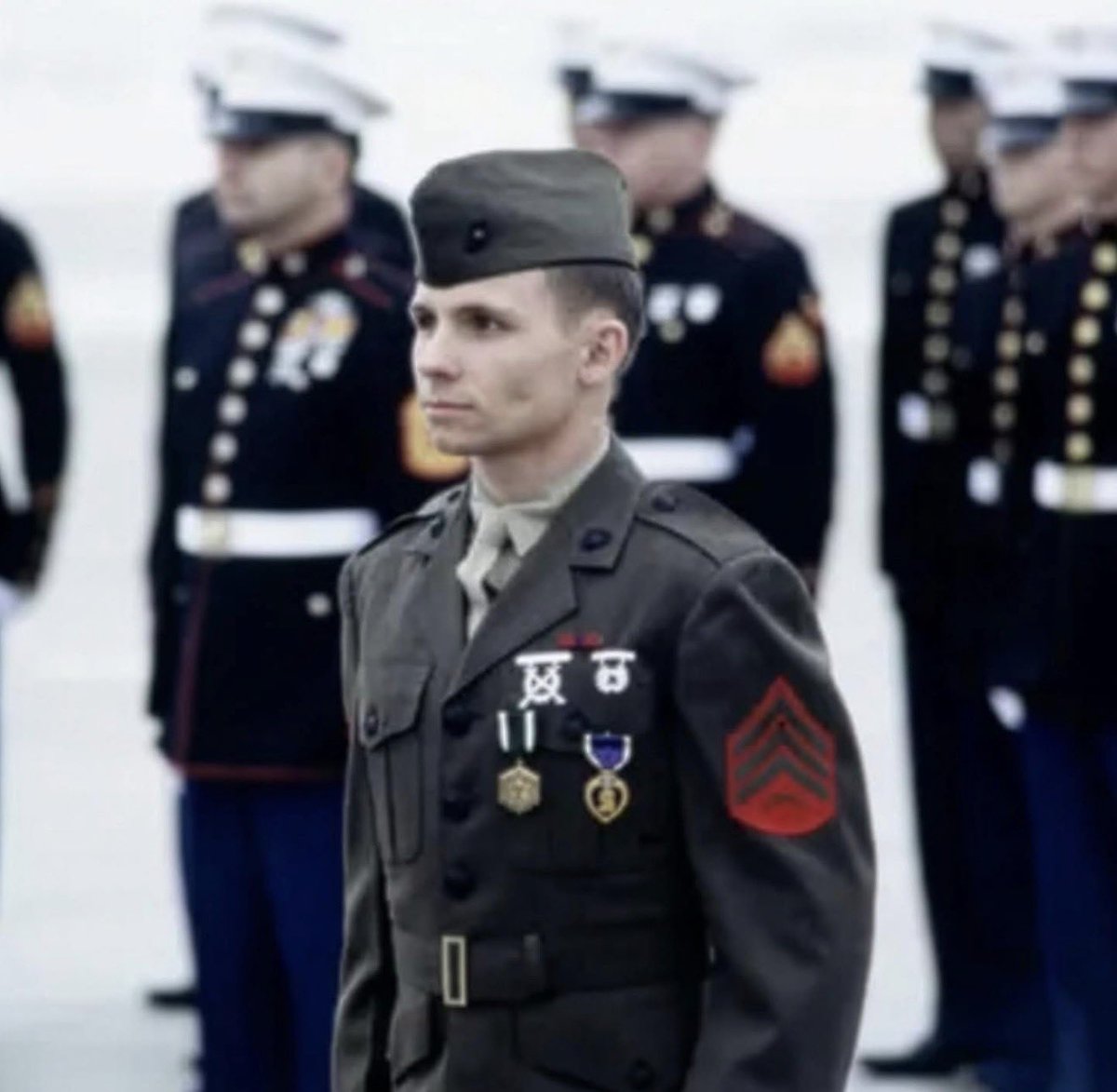
He’d been shot in the face, tortured for a week, convicted of murder in a ten-minute trial, and sentenced to death. He had two days to live when they released him.
Feb. 14, 1979. Valentine’s Day. U.S. Embassy, Tehran, Iran.
Sergeant Kenneth Kraus was a 22-year-old Marine embassy guard when militants stormed the U.S. Embassy compound in Tehran. In the chaos, Kraus armed himself with a shotgun, cornered one of the attackers, and forced him at gunpoint to release the civilians trapped inside. He was shot in the process — a round ricocheted off the floor and struck him in the face, chest, and neck. Wounded, he was captured.
For the next week he was held in an Iranian prison — beaten with rifle butts when he refused to sign anti-American documents, interrogated, and tortured for intelligence on the embassy. On Feb. 20, a ten-minute kangaroo court convicted him of murder and sentenced him to death. The execution was set for Feb. 22.
On Feb. 21, President Jimmy Carter and Ambassador William Sullivan secured his release. He was handed over at the embassy and flown home via Ramstein Air Base, Germany.
Sergeant Kraus was awarded the Purple Heart for his wounds and the Navy Commendation Medal for his valor in defending the embassy and its personnel. Navy Secretary Graham Claytor personally pinned the medal to his uniform.
Kenneth L. Kraus was born in Lansdale, Pennsylvania, and joined the Marines in 1975. After his discharge in 1983, he worked as a nuclear materials security specialist for the Department of Energy, then served 21 years as a crime scene investigator and police detective in Roswell, Georgia. He wrote about his ordeal in “Ken Kraus: A Marine Endures Hell.” He continues to share his story with schools and civic groups — the Marine most Americans have never heard of, sentenced to death on Valentine’s Day.
English
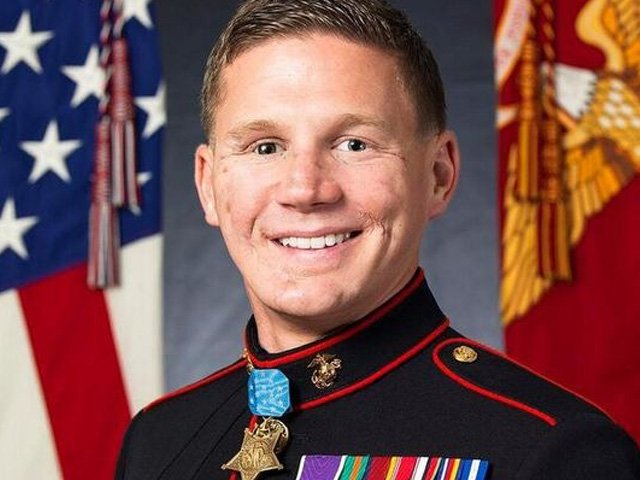
Medal of Honor Action (November 21, 2010, Marjah, Helmand Province, Afghanistan)
While providing security for a patrol base, Carpenter’s squad came under heavy enemy fire, including grenades and rockets.
When an enemy grenade landed inside their fighting position near a fellow Marine:
Carpenter lunged forward and threw his body over the grenade to shield his comrade and others from the blast.
The explosion severely wounded him, causing massive injuries to his face, right eye, and right arm, along with other trauma. He was initially presumed dead but survived after extensive medical care.
His actions saved the life of the Marine next to him and prevented further casualties.
Medically retired as a Corporal in July 2013.
Graduated from the University of South Carolina with a BA in international studies (2017).
Author, motivational speaker, and advocate for veterans.
The U.S. Navy plans to name a destroyer after him.
Lives with visible scars from his injuries but embodies resilience and service.
Carpenter’s story of selfless courage continues to inspire Marines, veterans, and civilians across South Carolina and the nation. He remains a powerful example of the Marine Corps ethos: “Semper Fi.”
English
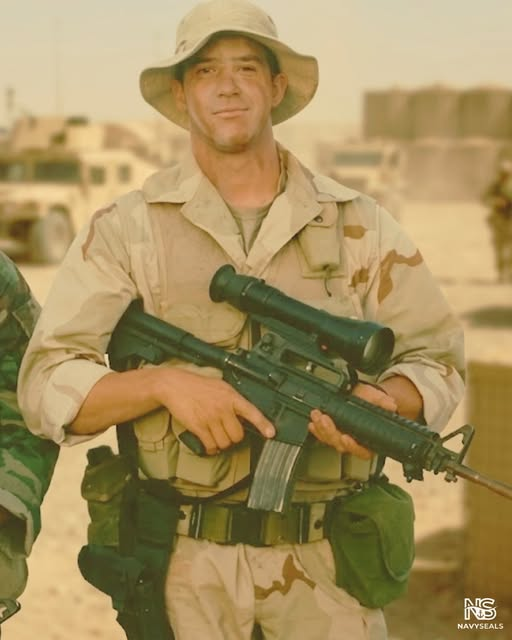
Andy Stumpf Seal Team 6
“At just 17 years old, he raised his right hand and committed himself to a life most couldn’t endure for a single day.” In August 1996, still a junior in high school, Andy Stumpf made a decision that would shape the rest of his life — to join the United States Navy. Within a year, he survived one of the most demanding military training programs on Earth and graduated from BUD/S Class 212 on August 15, 1997. He joined the ten percent of candidates who completed the grueling six-month program.
His first assignment was with SEAL Team Five in Coronado, California. He deployed twice before the events of September 11, 2001, changed everything. Andy’s mission shifted, and with it, the weight of the world.
In 2002, he was selected for the elite Naval Special Warfare Development Group — DEVGRU — also known as SEAL Team Six, one of the most exclusive counterterrorism units in the world. Acceptance alone meant he was part of an elite few, tasked with the most consequential operations of the Global War on Terror.
In 2003, he was part of the historic rescue operation that saved Private First Class Jessica Lynch from a hospital in Nasiriyah, Iraq. The mission marked the first successful rescue of an American prisoner of war since World War II, and the first-ever rescue of a female American POW.
In the years that followed, Andy’s service saw him deployed to both Iraq and Afghanistan, facing danger head-on. During one deployment, he was shot at close range with an AK-47, sustaining serious injuries. Despite initial medical assessments, Andy returned to active duty within six months. It was a testament to his character and resolve.
In 2006, he returned to the Naval Special Warfare Center, where he oversaw 13 senior SEAL instructors and 600 students, imparting the skills and lessons that had made him the warrior he was. In 2008, he made history again, becoming the first E-6 in Naval Special Warfare history to be commissioned as an officer, an achievement no junior enlisted SEAL had ever accomplished before.
Seventeen years of service. Hundreds of combat operations. And when it ended, it wasn’t by his choice. Andy was medically retired in 2013, not on his terms, but after a career defined by relentless commitment to excellence.
His awards tell part of the story. Five Bronze Star Medals, four with Valor, the Purple Heart, the Navy and Marine Corps Commendation Medal with Valor, and more than 30 other decorations. But awards alone can’t capture the essence of his service — of a man who answered the call at 17, walked through fire, and carried the standard of excellence every day.
Andy Stumpf never sought recognition. He sought the standard.
To every veteran who carried a weight most will never understand — and to every family that waited at home — we see you. We honor you. We are forever grateful.
Thank you for your service, Chief Petty Officer and Lieutenant Andy Stumpf. The Trident was earned. Every single day.
English
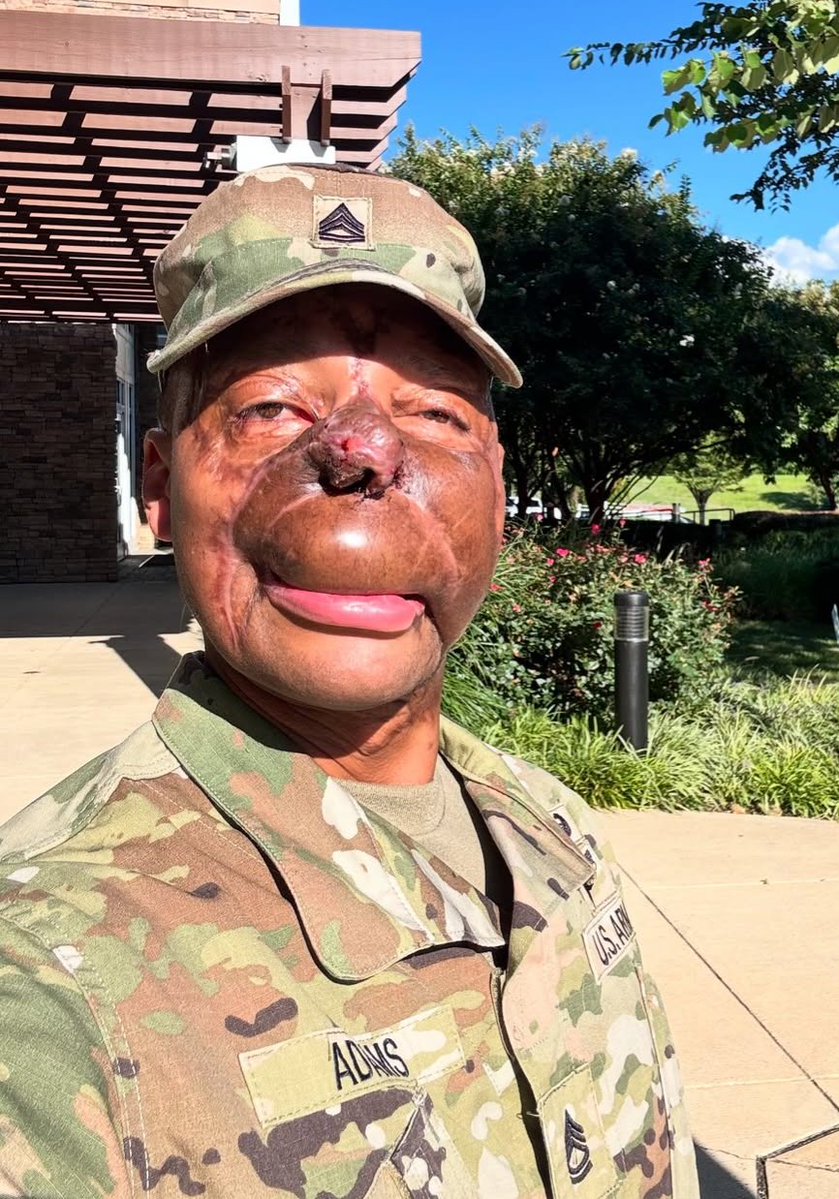
In January 2021, US Army Sergeant First Class Randy Adams wasn’t on the battlefield, he was on leave in Chicago, just days away from deploying overseas.
Then everything changed.
A brutal assault by two men left him fighting for his life. A month long coma. Multiple organ failures. His face so severely damaged it would take years to rebuild.
At Brooke Army Medical Center, doctors used a blend of science and art to help reconstruct what was lost, creating a custom facial prosthetic and compression mask that resembled his former self.
But his real transformation didn’t happen in surgery, it happened in his mindset.
Adams founded RISEUP, turning pain into purpose. He now speaks openly about trauma, faith, and healing, reminding others that identity is not defined by scars, but by the strength within.

English
Honoring Delta Force operator Ivica Jerak, who was k¡lled in the line of duty in Iraq in 2005. Please help me honor him so that he is not forgotten.

English