Jonas Kemper

1.4K posts

Jonas Kemper banner
Jonas Kemper

Jonas Kemper

@jonasrk

Senior Engineer @QuantumBlack, a @McKinsey company - often found coding Python - https://t.co/v3DYU0mtsg @[email protected]

Berlin, Germany Katılım Eylül 2008
941 Takip Edilen360 Takipçiler
Jonas Kemper retweetledi
Parloa
Parloa@parloa_ai·
Every conversation brings you closer to a deeper connection. It’s time to reimagine how companies build lasting relationships with their customers. We transform interactions into seamless, personalized, preemptive experiences that deepen over time – through reliable, enterprise-grade AI agents that have been proven across billions of conversations. Introducing Parloa: Same trusted expertise – deeper, more meaningful connections. Discover more: parloa.com
English

3
4
4
1.1K
Tynan
Tynan@tynan·
We're at a really interesting point in our country's economic cycle, and I don't see it being discussed nearly as much as I would expect. To try to understand it better I've been reading a lot, and find Ray Dalio and Lyn Alden to be the two people most clearly explaining what's going on. I'm going to try to distill down everything I've read and understood to make it even more easily digested. First, the US absolutely has a spending problem. Regardless of what you think about US revenues, the Laffert curve, etc., we are spending too much. In particular, every single person I've talked to has been surprised to learn that we are spending more than 50% more than we were in 2019. Spending went up for COVID and never came down. Some of this is due to an increase in the interest rate (maybe ~10% total of the overage), but most of it is not. Regardless of what you think of the merits of where this money goes (military, entitlements, health care, etc), we are spending too much. It is generally agreed that we can spend about 3% more than we take in, because productivity can make up for the gap. Estimates vary, but we are somewhere around 5-7% now. This is a huge deal. Smart people could probably disagree with me, but it seems like we pay a lot of money for health care in a very inefficient way and we pay an enormous amount for a military that is actually acting as the military for dozens of countries. Trump campaigned heavily on reducing the deficit but the "Big Beautiful Bill" increases it. I was excited about DOGE, but it seems to be less effective than hoped. I hope this isn't the case, but it seems to me that it is entirely impossible to reduce the deficit due to the structure of both the US government and the incentives of members of congress. So what happens now? Well, the US keeps spending more than it can afford. The mechanism it uses for this is issuing bonds (to borrow more money) and printing more money. This works for a while, but at some point the entities buying the bonds start worrying about whether or not the US will actually be able to pay them so demand falls and interest rates go up to accommodate the risk. The interest rate going up is really bad for the US. For one, it's probably the number that affects a "middle class life" more than any other number. Every percent increase in the interest rate increases mortgage payments by over 10%. Renters are also affected, because investors need to charge higher rent to break even on mortgage payments. Car payments go up tool. We are, unfortunately, a nation of debtors. Interest on the debt is about 13% of our national budget, so higher interest rates also increase the deficit. Interest rates being too low can be a bad thing, because then all sorts of stupid businesses and projects get funded (and later fail), but too high interest rates also affect the economy. Many businesses need to finance equipment or materials over long periods of time, and increasing rates make that more expensive or impossible. Costs of goods go up and businesses perform under their potential (or go bankrupt). Meanwhile, foreign goods stay inexpensive because foreign countries have different problems. We buy foreign products, but the foreign producers don't just hold on to the dollars... they use some of them to buy productive US assets like businesses and real estate. That loop means that as a country we are trading productive aassets for depreciating assets, which reduces our ability to generate income domestically (and thus pay off the debt via taxes). So that's the death spiral that we're in. A few positive points: 1. AI genuinely has the potential to increase productivity in a way that we could conceivably create more than 3% productivity gains per year. It will be disruptive, but I find it useful to think of AI not as something that replaces humans, but as something that multiplies human effort (similar to the steam engine, electricity, computers, etc). 2. Scott Bessent, the Treasury Secretary, is probably Trump's most qualified cabinet pick. He absolutely understands the situation at a very high level and seems to have a large amount of latitude. I'm not sure it's enough, but it's encouraging to know that one of the world experts on the topic is in a position of power. 3.Once we go through the death spiral (probably resulting in the discharge or inflating away debt), the country will again be poised for growth. The US has such a wealth of talent and innovative culture, that this could be like the forest fire that burns to make the forest healthy again. Japan's debt-to-GDP ratio is twice as high as ours... so maybe we're not as close to the edge as I think? What should an individual do in this situation? My personal belief is that crypto (BTC/ETH) will become like a reserve currency. If you don't want to hold US dollars (due to inflation) or treasuries (due to risk of repayment/inflation), what do you hold? Probably not the Yuan, probably not the Euro. What else is left? Gold and crypto. This is also a good reminder to live below your means. You don't want to be a debtor when interest rates are high, and you don't want the uncertainty inherent in economic disruption to affect your life. Am I wrong about anything? This is all an oversimplification, but I'm very interested in the topic and eager to learn more if my assumptions or understanding are wrong.
English
3
1
24
1.5K
Jonas Kemper retweetledi
David Allen
David Allen@gtdguy·
I’ll be doing a Reddit AMA this Thursday at 4PM CET / 10AM EDT. Ask me anything about GTD, productivity, or clearing your head. reddit.com/r/gtd/
David Allen tweet media
English
0
8
36
5K
Michael Sullivan
Michael Sullivan@SullyMichaelvan·
@danheld Brazilian Jiu-Jitsu. It's the closest thing a human being can experience to having a superpower.
English
2
1
9
391
Dan Held
Dan Held@danheld·
Shill me your hobby (not Bitcoin/crypto)!
English
659
36
428
153K
Tynan
Tynan@tynan·
If you're counting the number of countries you've been to, which if any of these do you count? Puerto Rico Scotland Northern Ireland Guam American Samoa
English
7
0
6
1.1K
Jonas Kemper
Jonas Kemper@jonasrk·
@tynan well done :) have a nice flight :) ✈️
English
0
0
1
55
Tynan
Tynan@tynan·
Maybe my finest airport speed run. 19 minutes from train to plane seat at Narita, including immigration and checking a box at the counter because I was past the bag drop cutoff.
English
2
0
14
2.4K
Tynan
Tynan@tynan·
Just finished the 2025 gear post and it's scheduled for tomorrow morning! Sorry for the wait...
Tynan tweet media
English
3
0
24
1.3K
Jonas Kemper
Jonas Kemper@jonasrk·
@charliermarsh Amazing stuff! I was curious if a "faster pytest" might also happen at some point?
English
0
0
0
89
Charlie Marsh
Charlie Marsh@charliermarsh·
We’re building a new static type checker for Python, from scratch, in Rust. From a technical perspective, it’s probably our most ambitious project yet. We’re about 800 PRs deep!
Charlie Marsh tweet media
English
109
212
2.7K
159.5K
Jonas Kemper retweetledi
Rohan Paul
Rohan Paul@rohanpaul_ai·
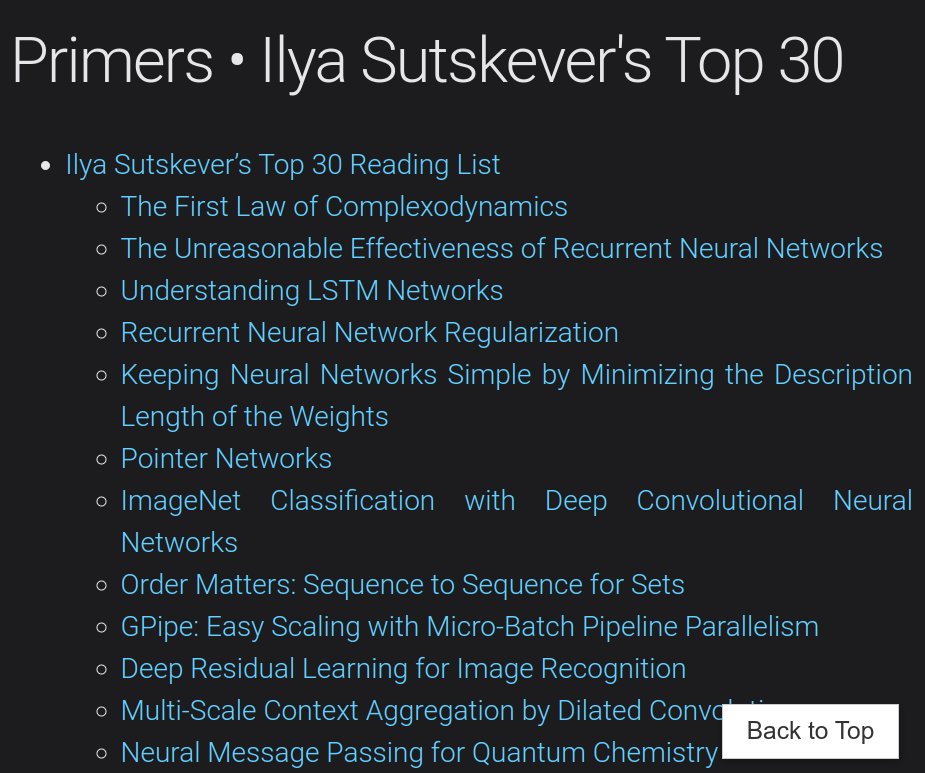
Ilya Sutskever's top 30 must-read research papers “If you really learn all of these, you’ll know 90% of what matters today” - Ilya Sutskever'
Rohan Paul tweet media
English
52
563
5.3K
444.3K
Jonas Kemper
Jonas Kemper@jonasrk·
@SeatsAero Hey, thanks for this great tool. AA seems to not load atm? :)
English
0
0
0
20
Jonas Kemper retweetledi
Dr. Daniel Bender
Dr. Daniel Bender@drdanielbender·
Struggling with digital clutter and endless searches for information? 🕵️‍♂️ 'The PARA Method' by Tiago Forte might be the solution you've been craving. I dove into his latest book and revamped my own system. But guess what? There's a new competitor on the horizon. 🤫 🔷 PARA in a nutshell 🔷 PARA is an organizational framework designed to help you manage your digital life by categorizing information into: Projects, Areas, Resources, and Archives. Created by @fortelabs, the PARA Method aims to structure your digital information in a way that aligns closely with actionable tasks and long-term responsibilities. Here's a brief explanation of each category: Projects: These are the active tasks or endeavors you are currently working on and aim to complete within a specific timeframe. Examples could include planning a holiday trip, writing a report for work, or renovating your home. Areas: These represent long-term responsibilities or aspects of your life that need ongoing attention, but don't have a defined end point. This could include your health, your career, or relationships. Resources: This category contains else you are interested in and want to save in your notes. Unlike projects and areas, resources are not actionable by themselves. Archives: These are inactive projects, areas, or resources that you no longer need immediate access. They are kept for historical reference or may become relevant again in the future. 🔷 The Mindset: Apply Information 🔷 Drawing inspiration from David Allen's iconic "Getting Things Done" (GTD) methodology, Tiago evolves the concepts into a more specific digital context and extends the concept from tasks to information in general. Tiago argues that conventional methods of information organization, learned from our school days, are outdated and counterproductive. The book questions the utility of reading every book from cover to cover. Instead, Tiago insists that the value of reading and, by extension, information lies in its actionability—applying what you learn to make tangible changes. 🔷 Designing for Action 🔷 One of the cornerstones of PARA is its emphasis on action. "Organize for action," as Tiago continually emphasizes, implies that your system should be designed not just to hold information but to facilitate actionable steps. If you're juggling many work tasks, the emphasis on action-oriented organization will help you find the information you stored when you need it. 🔷 Digital vs. Physical Space 🔷 Digital storage is essentially limitless, unlike physical space, which has constraints. In the physical world, you have to make choices about what to keep and what to discard because every item takes up room. In contrast, the digital world doesn't force you to make such choices, since digital files don't occupy physical space. This leads to a reevaluation of what is truly useful information to keep, as opposed to simply collecting data that might be interesting but not necessarily valuable. Everything which is not useful in your current situation can and should be used in your archive, which you can think of as your cold storage. Nothing there is lost, and it will always be possible to get notes out of the archive when they are valuable again. 🔷 Areas vs. Resources 🔷 Tiago encourages you to distinguish between your responsibilities (Areas) and your interests (Resources), two domains that often get one in our digital clutter. Responsibilities are the ongoing areas for which you have direct accountability—these could range from your job duties to personal needs. On the other hand, are subjects or ideas that pique your curiosity but don't require your immediate action or attention, which in the PARA system are stored as Resources. One aspect which helps me to distinguish between them is the thought that Resources don’t contain any personal information and should be shareable without limitations with others. 🔷 Simplicity and Customization 🔷 The simplicity of the PARA method is one of its most attractive features. Though Tiago's recommendation of a five-minute weekly upkeep might be optimistic for some, the system's easy customization allows it to fit various needs. Tiago himself names alternative systems, like the straightforward "Hot" and "Cold" folder approach. 🔷 One System, Many Implementations 🔷 What makes PARA stand out is its flexibility. You can implement PARA in various applications and spaces, which might be your notes app or task manager, as well as your local and cloud storage. Using the same folder structure and names in all of these digital spaces ensures that the cost for switching between these places is minimal. There is no tool which covers everything, and you should not try to find it. 🔷 Final Thoughts 🔷 Tiago Forte's "The PARA Method" offers an essential toolkit for anyone aiming to declutter their digital world and focus on actionability over mere information collection. It challenges traditional ideas about organization and provides practical, adaptable solutions for leading a more productive life. But, it's worth noting that PARA is not the only framework attempting to bring order to the chaotic digital realm. Besides the already named “hot” and “cold” folder approach, @NickMilo recently introduced his ACE framework. At first glance, ACE appears somewhat parallel to PARA, but has a different core philosophy. For those intrigued by the options available for digital organization, comparing PARA and ACE could offer valuable insights. Are you interested in learning more about how ACE compares to PARA? Leave a comment below, and I put together a comprehensive comparison to help you choose the system that best fits your needs.
Dr. Daniel Bender tweet media
English
9
2
42
4.8K
Jonas Kemper
Jonas Kemper@jonasrk·
@datenwolf Kann dir leider nicht helfen aber eine ähnliche Frage interessiert mich schon länger. Gibt es etwas ähnliches wie flightradar24.com für Züge? Also kann ich z.B. irgendwo nachschlagen, welche Log/Wagen/etc mich am nächsten Tag irgendwo hinfahren werden?
Deutsch
0
0
0
18
Jonas Kemper retweetledi
Dr. Daniel Bender
Dr. Daniel Bender@drdanielbender·
Do you want to improve your prompting of GPT? Read the official "GPT best practices" guide created by @joepalerm0 and @sandersted from OpenAI: platform.openai.com/docs/guides/gp…
Dr. Daniel Bender tweet media
Logan Kilpatrick@OfficialLoganK

Awesome new @OpenAI developer resources just dropped 👀: - GPT guide - GPT best practices (prompt engineering) - Updated introduction And more! If you use large language models, the GPT best practices is a must read! More info in 🧵

English
0
12
27
5.5K