

Julia Belk
20 posts
Julia Belk
@juliabelk
immunology, stem cells, aging HHMI Hanna Gray Fellow @StanfordMed previously @StanfordEng @MITEECS
Katılım Mart 2025
357 Takip Edilen192 Takipçiler

It was a privilege to get to join for the @CancerGrand summit last week in London, and to be featured as a Future Leader! Thank you CGC for a terrific profile in this year's Discover magazine: features.cancergrandchallenges.org/futureleaders/
English
@Hypat1aYu @anshulkundaje its true that different scientists do their best work at different times, but bjorkman did incredible work as a graduate student. these are two huge discoveries she made:
nature.com/articles/32951…
nature.com/articles/32950…
English
@anshulkundaje I have to point out that there are scientists like Pamela bjorkman who did exceptional work in their independent careers but were relatively incredulous in graduate school… science should be about passion, not gatekeeping access.
English

Strong disagree on "PhD should be only for exceptional talent". I'll explain why. This philosophy basically gives a huge advantage to those who have early access to high quality education (which is strongly associated with financial status). 1/
English
@silvirouskin what do you mean Harvard is downsizing by half - is this a new policy or due to folks leaving?
English

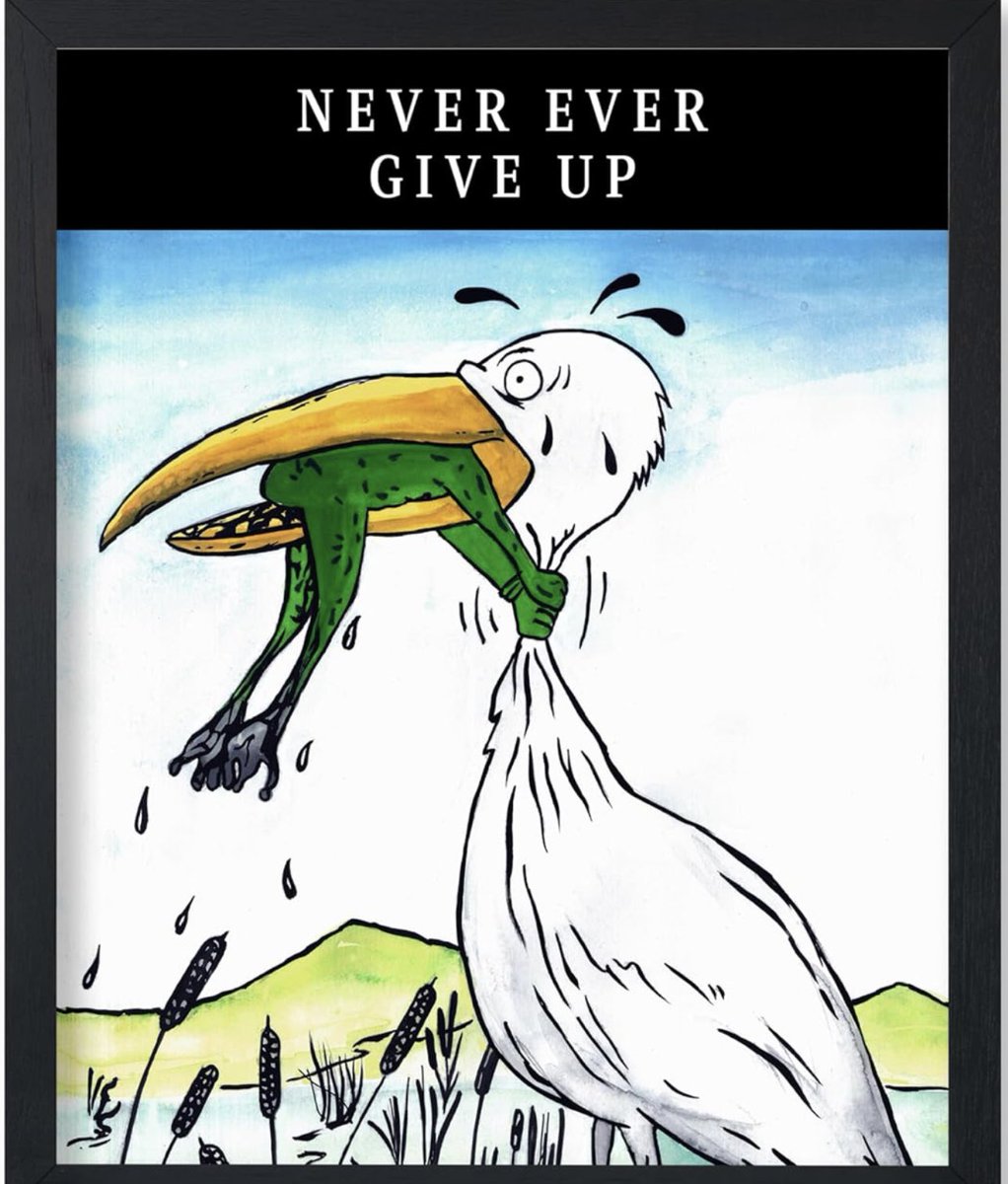
As the year’s coming to an end , I had 95% chance of getting at least one big grant . I thought it was going to be my year and it has been the most difficult by far. Harvard is downsizing by ~ half and the future is very unclear. But I know one thing for sure - if I’m successful after this year, it’s 100% due to hard work and luck had nothing to do with it. It’s much more fun to go against all odds and win.
English
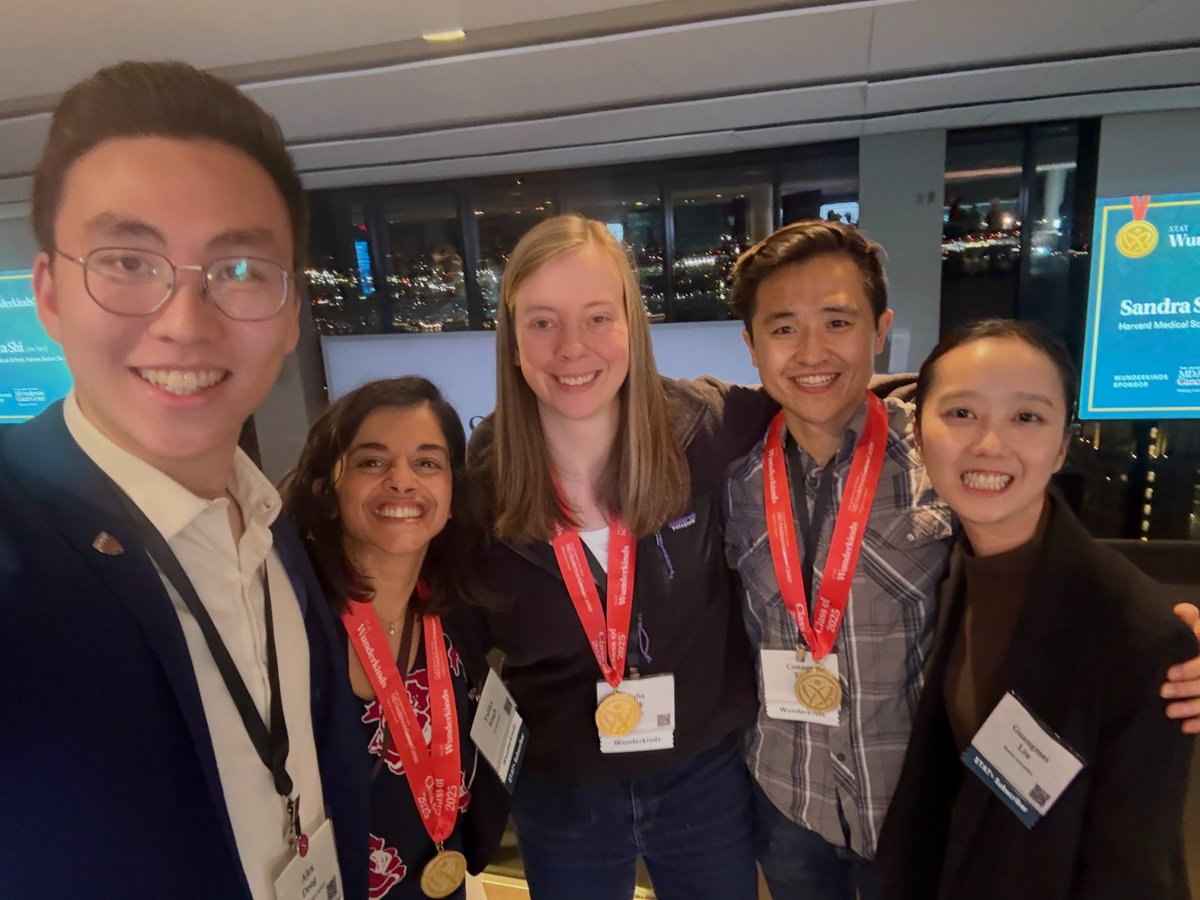
thankful to @statnews for highlighting some of our recent work and excited to be in Boston this week for the #STATSummit and #RTN2025
English
@mbeisen that said, if the same policy is adopted by NIH/other funders, things would get interesting, since at a certain point most funds would be ineligible to use to pay these fees
English
@mbeisen one thing I haven't seen mentioned - many journals restrict/ban post-review preprints. eg Springer Nature seems to require payment of the OA fees to post these. so authors unfortunately will likely still pay the OA fees
springernature.com/gp/open-scienc…
English
The skeptical take is that HHMI is implementing a preprint mandate (good) but giving its people a green light to publish in Nature behind a paywall (bad because it doesn’t attack the root problem).
Michael 英泉 Eisen@mbeisen
The euthanasia of journals advances
English
Julia Belk retweetledi
Clonal hematopoiesis (CH, blood stem cells with mutations) is considered a risk factor for cardiovascular disease and other adverse health outcomes. But today we learn about its potential benefit vs Alzheimer's disease sciencedirect.com/science/articl…

English
thanks to @TrishaWathan @MarcusAFlorez @DrFlashHeart @marcobuttigieg_ @sacz89 @RuoqiongCao @ArushanaMak03 @Goodell_Lab @QMyPath @PapapetrouMDPhD + many others!
English
Major team effort led by Katie Matatall and @TheKingLab and glad some of our results in the 5XFAD model could be useful, with Hind Bouzid, @jaiswalmdphd.
English
Collaborative work online now @CellStemCell provides insight into how mutant immune cells can help mitigate Alzheimer’s disease. Tet2-mutant myeloid cells are able to infiltrate the brain and clear β-amyloid, slowing cognitive decline. cell.com/cell-stem-cell…
English
@hubermanlab @ScienceMagazine @Nature @CellPressNews @mbeisen i hope this is implemented such that journals can’t just charge researchers even higher "open access" fees to comply with the policy. otherwise, this could make journals more profitable than before….
English
It will be interesting to see what @ScienceMagazine @Nature @CellPressNews etc will do to revise their income model and/or if new journals surface. @mbeisen & others have been discussing this for a while.
English
Included in this interview is that soon: all scientific papers that included tax dollars to complete the work will be accessible to the public at ZERO COST. This will completely change the journal model. Buckle up!
Andrew D. Huberman, Ph.D.@hubermanlab
The new Huberman Lab episode is out: Improving Science & Restoring Trust in Public Health | Dr. Jay Bhattacharya (@NIHDirector_Jay) (0:00) Jay Bhattacharya (6:56) National Institutes of Health (NIH), Mission (9:12) Funding, Basic vs. Applied Research (18:22) Sponsors: David & Eight Sleep (21:20) Indirect Costs (IDC), Policies & Distribution (30:43) Taxpayer Funding, Journal Access, Public Transparency (38:14) Taxpayer Funding, Patents; Drug Costs in the USA vs Other Countries (48:50) Reducing Medication Prices; R&D, Improving Health (1:00:01) Sponsors: AG1 & Levels (1:02:55) Lowering IDC?, Endowments, Monetary Distribution, Scientific Groupthink (1:12:29) Grant Review Process, Innovation (1:21:43) R01s, Tenure, Early Career Scientists & Novel Ideas (1:31:46) Sociology of Grant Evaluation, Careerism in Science, Failures (1:39:08) “Sick Care” System, Health Needs (1:44:01) Sponsor: LMNT (1:45:33) Incentives in Science, H-Index, Replication Crisis (1:58:54) Scientists, Data Fraud, Changing Careers (2:03:59) NIH & Changing Incentive Structure, Replication, Pro-Social Behavior (2:15:26) Scientific Discovery, Careers & Changing Times, Journals & Publications (2:19:56) NIH Grants & Appeals, Under-represented Populations, DEI (2:28:58) Inductive vs Deductive Science; DEI & Grants; Young Scientists & NIH Funding (2:39:38) Grant Funding, Identity & Race; Shift in NIH Priorities (2:51:23) Public Trust & Science, COVID Pandemic, Lockdowns, Masks (3:04:41) Pandemic Mandates & Economic Inequality; Fear; Public Health & Free Speech (3:13:39) Masks, Harms, Public Health Messaging, Uniformity, Groupthink, Vaccines (3:22:48) Academic Ostracism, Public Health Messaging & Opposition (3:30:26) Culture of American Science, Discourse & Disagreement (3:36:03) Vaccines, COVID Vaccines, Benefits & Harms (3:47:05) Vaccine Mandates, Money, Public Health Messaging, Civil Liberties (3:54:52) COVID Vaccines, Long-Term Effects; Long COVID, Vaccine Injury, Flu Shots (4:06:47) Do Vaccines Cause Autism?; What Explains Rise in Autism (4:18:33) Autism & NIH; MAHA & Restructuring NIH? (4:25:47) Zero-Cost Support, YouTube, Spotify & Apple Follow & Reviews, Sponsors, YouTube Feedback, Protocols Book, Social Media, Neural Network Newsletter Includes paid partnerships.
English
@MariaSirenko @CellStemCell @PapaemmanuilLab @iannisaifantis1 @AkEisfeld @landau_lab congrats Maria!!
Català

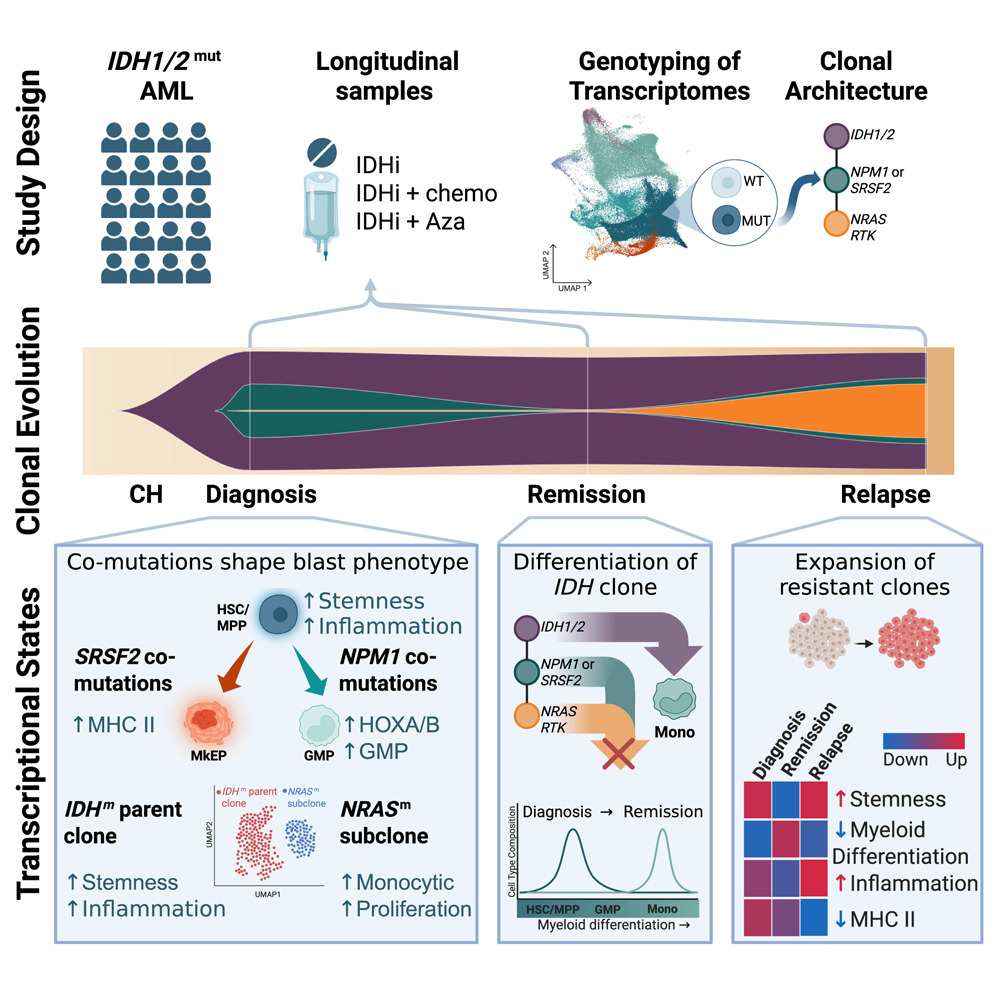
Delighted to share our study out in @CellStemCell today from the dream team @PapaemmanuilLab @iannisaifantis1 @AkEisfeld @landau_lab!
We profiled IDH-mutated AML patients to define how IDH and co-mutations shape the disease at baseline and responses to IDH-inhibitors.
🧵👇
English
@SGRodriques the experiment planning aspect is really cool. i’m curious whether you guys think the experiments in the paper are compelling enough that you’re going to proceed with more assays/development of the compound and then clinical trials?
English

Today, we’re announcing the first major discovery made by our AI Scientist with the lab in the loop: a promising new treatment for dry AMD, a major cause of blindness.
Our agents generated the hypotheses, designed the experiments, analyzed the data, iterated, even made figures for the paper. The resulting manuscript is a first-of-a-kind in the natural sciences, in which everything that needed to be done to write the paper was done by AI agents, apart from actually conducting the physical experiments in the lab and writing the final manuscript. We are also introducing Robin, the first multi-agent system that fully automates the in-silico components of scientific discovery, which made this discovery. This is the first time that we are aware of that hypothesis generation, experimentation, and data analysis have been joined up in closed loop, and is the beginning of a massive acceleration in the pace of scientific discovery that will be driven by these agents. We will be open-sourcing the code and data next week.
Robin is a multi-agent system that uses Crow, Falcon, and Finch, the agents on our platform, to generate novel hypotheses, plan experiments, and analyze data. We asked Robin to find a new treatment for dry age-related macular degeneration. Robin considered the disease mechanisms associated with dry AMD, proposed a specific experimental assay that could be used to evaluate hypotheses in the wet lab, and proposed specific molecules we could test in that assay. We tested the molecules and gave it the resulting data, which it analyzed before proposing more experiments. In the end, it identified Ripasudil, a Rho Kinase inhibitor (ROCK inhibitor) that is approved in Japan for several other diseases, which seems very promising as potential treatment for dry AMD. It also identified specific molecular mechanisms that might underlie the effects of Ripasudil in RPE cells, from an RNA sequencing experiment it proposed. To be clear, no one has proposed using ROCK inhibitors to treat dry AMD in the literature before, as far as we can find, and I think it would have been very difficult for us to come up with this hypothesis without the agents. We have also run the proposed treatment by several experts in AMD, who confirm that it is interesting and novel. Moreover, this project was fast: with Robin in hand, the entire project took about 10 weeks, which is way shorter than it would have taken if we had been doing all of the in-silico components ourselves.
Important caveats: We are real biologists at FutureHouse, so I want to be clear that although the discovery here is exciting, we are not claiming that we have cured dry AMD. Fully validating this hypothesis as a treatment for dry AMD will take human trials, which will take much longer. Also, this discovery is cool, but it is not yet a "move 37"-style discovery. At the current rate of progress, I'm sure we will get to that level soon.
Congratulations to the team. Congratulations in particular to Robin, which generated the hypotheses, proposed the experiments, analyzed the data and generated the figures. And major congratulations also to the human team, which built Robin: @MichaelaThinks, @agreeb66, @benjamin0chang, @ludomitch, Mo Razzak, Kiki Szostkiewicz, and Angela Yiu.
English

A lot of fun teaming up with @YungHsin_Huang and @HowardYChang on this, with key contributions from @RuochiZhang, @z_chiang, and @JD_Buenrostro on the tech dev and @MattG_Jones, @ne_weiser, and @mischellab on the ecDNA analysis. (5/5)
English
We also apply SPACE-seq to an archived glioblastoma sample, showing that SPACE-seq works well with clinical samples and can detect extrachromosomal DNA amplifications and somatic mutations. (4/5)

English
Happy to share our paper describing SPACE-seq - a new approach to spatial multiomics and lineage tracing - out today in @PNASNews! 🧵(1/5)
pnas.org/doi/10.1073/pn…
English